Twisted Acacia (Vachellia schaffneri)
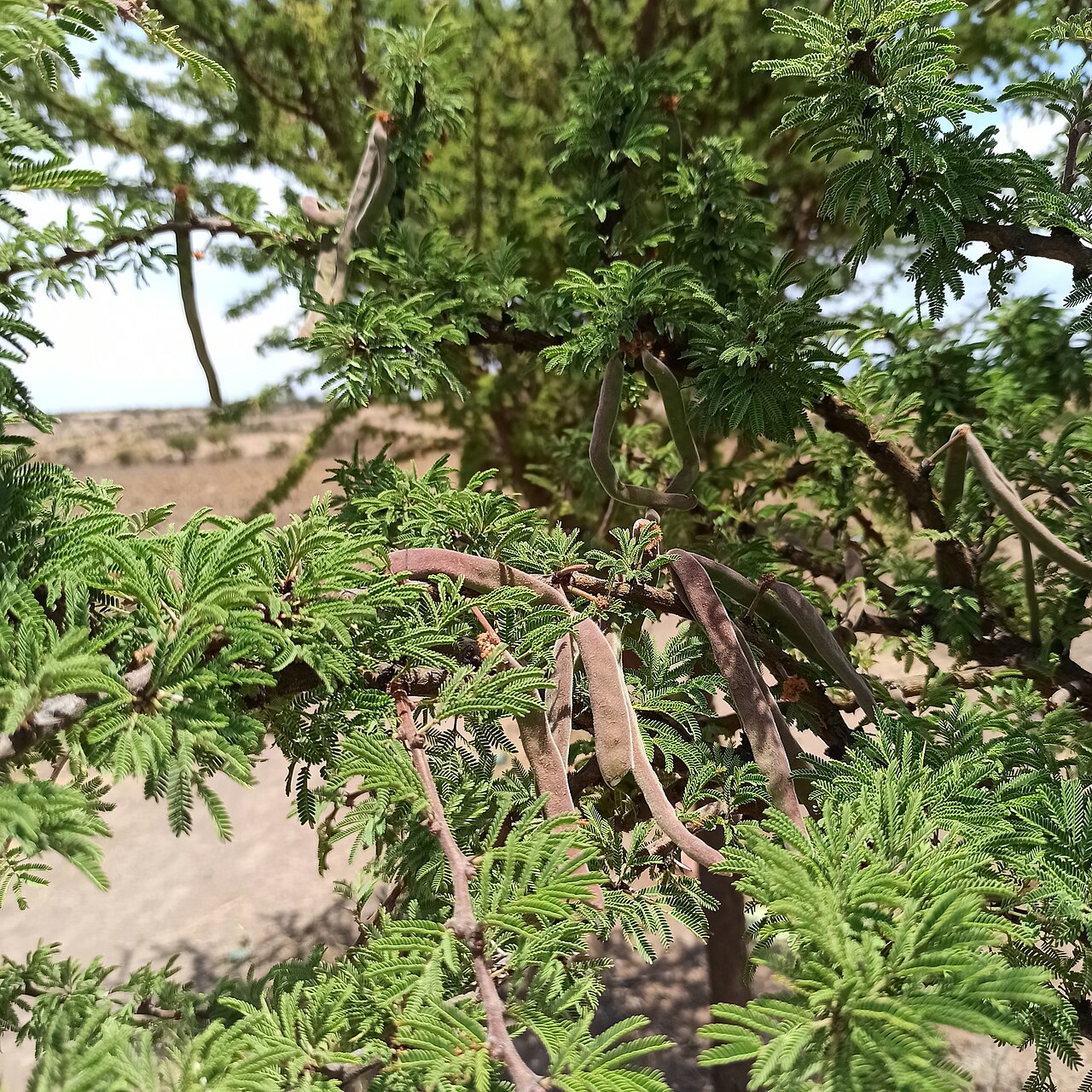
Vachellia schaffneri (formerly Acacia schaffneri), commonly called Twisted Acacia, Schaffner’s Wattle, or huizache chino, is a thorny, fine-leaved small tree found at the very northern edge of its range in the brushlands of South Texas. Its common name comes from its most memorable feature: slender, pale seed pods that twist and coil into loose spirals as they dry, hanging and rattling on the branches long after the leaves and flowers of the season have gone.
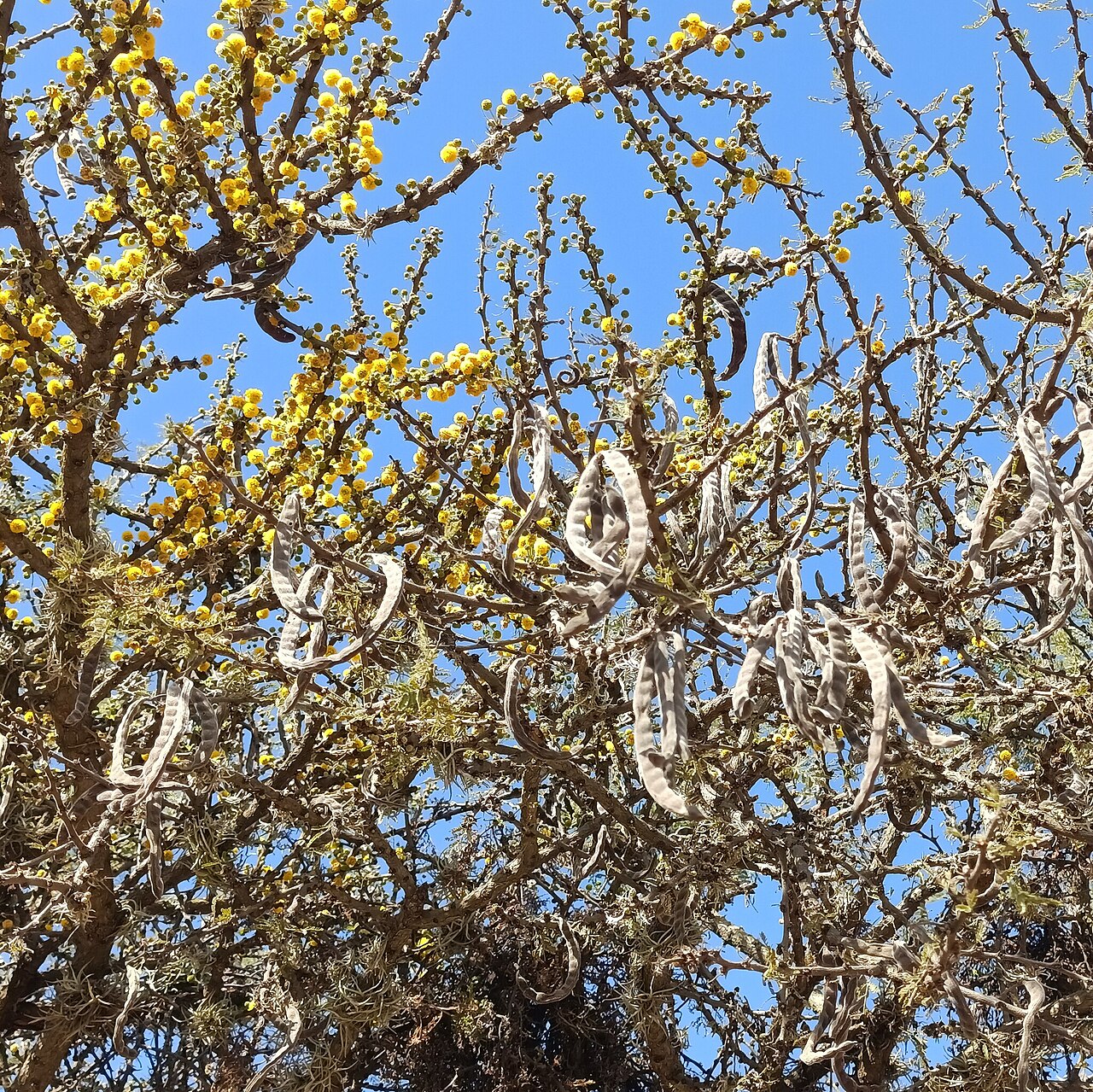
In late winter and early spring, Twisted Acacia puts on one of the showier blooms of the South Texas thornscrub — round, golden-yellow puffball flower heads that cover the fine, fern-like foliage before most other thornscrub shrubs have broken dormancy, making it an early and reliable nectar source for bees emerging from winter.
Twisted Acacia is a smaller relative of the much more common huisache (Vachellia farnesiana) and shares a similar thorny, ferny look, but it is a distinct, true South Texas native in its own right, valued for its early bloom, drought tolerance, and the sculptural, twisting character of its dried seed pods.
Identification
Twisted Acacia grows as a thorny, many-branched shrub or small tree, typically 10 to 25 feet tall, with an open, airy canopy of fine, compound foliage.
Bark & Stems
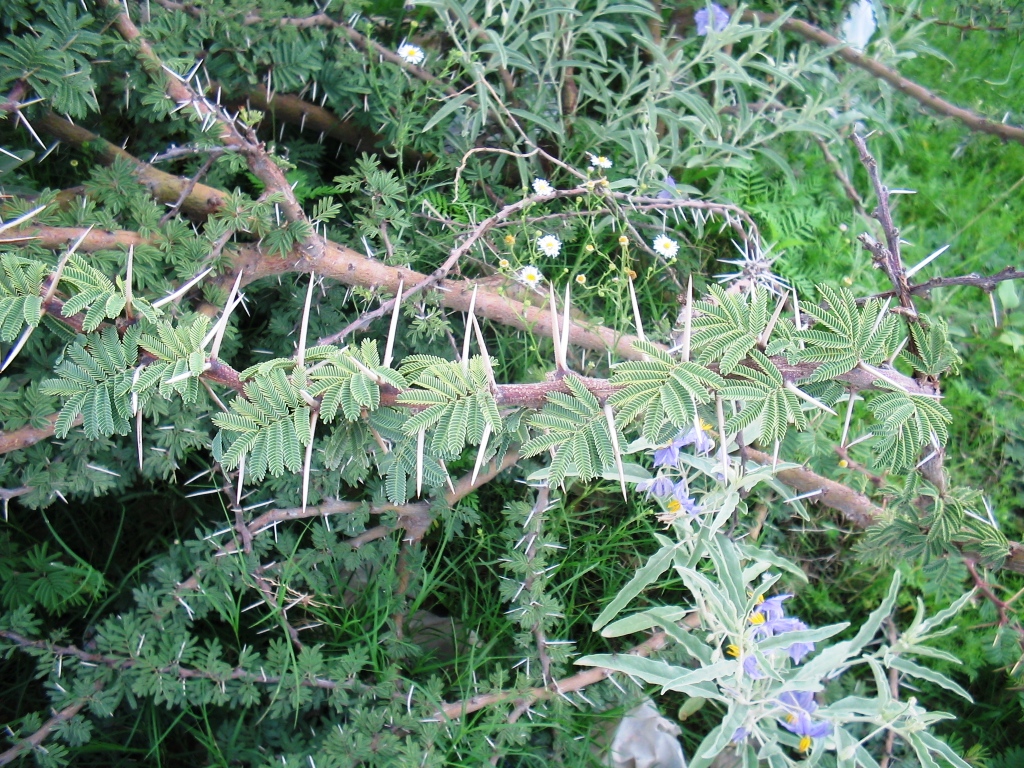
Bark is gray to grayish-brown, roughening with age. Paired, straight, whitish-gray thorns (modified stipules) are present at the nodes along the branches, a feature shared with many Vachellia species and useful for distinguishing thorny thornscrub trees from their spineless neighbors.
Leaves
Leaves are bipinnately compound, fine and fern-like, with numerous small, narrow leaflets arranged in rows along each division, giving the foliage a soft, feathery texture typical of the acacia and mimosa group of legumes.
Flowers
Flowers are tiny but packed into dense, round, golden-yellow to orange puffball heads about 1/2 inch across, blooming heavily from February through April, often before other thornscrub species have leafed out. The flowers are fragrant and conspicuous against the bare or newly leafing branches, and they draw a strong early-season bee response.
Fruit & Seeds
The fruit is a long, narrow, flattened legume pod that twists and curls into loose coils and spirals as it dries and matures — the single most distinctive identification feature of the species. The fuzzy, persistent pods contain numerous hard, dark seeds and are readily eaten by livestock, especially goats and sheep, when available late in the season.
Quick Facts
| Scientific Name | Vachellia schaffneri (syn. Acacia schaffneri) |
| Family | Fabaceae (Legume/Pea) |
| Plant Type | Deciduous to Semi-Evergreen Shrub / Small Tree |
| Mature Height | 10–25 ft (3–8 m) |
| Mature Spread | 10–20 ft |
| Growth Rate | Moderate |
| Sun Exposure | Full Sun |
| Water Needs | Low once established |
| Soil Type | Clay, caliche, or sandy loam; well-drained |
| Soil pH | Neutral to alkaline |
| Bloom Time | February–April |
| Flower Color | Golden-yellow to orange |
| Fall Color | None notable |
| Fruit | Narrow legume pods that twist into loose coils when dry |
| Deer Resistant | No (thorny but browsed by livestock and deer) |
| USDA Hardiness Zones | 9a–11 |
Native Range
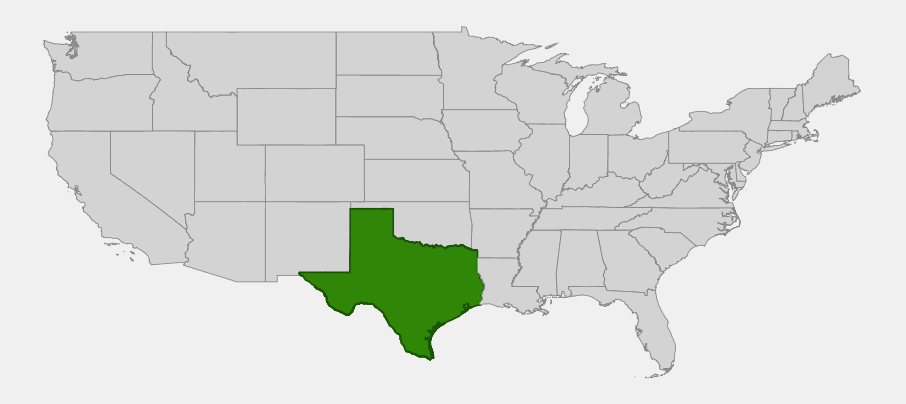
Twisted Acacia is native to South Texas, where it reaches the northernmost edge of a range centered in Mexico. In the United States it is documented in the Tamaulipan thornscrub brushlands of South Texas, growing alongside the dense mix of thorny legumes typical of the Rio Grande Plain.
Within its Texas range, Twisted Acacia grows in mixed-brush plant communities on a variety of soils, generally thriving in full sun on open, well-drained ground. It is less common and more localized in Texas than its close relative huisache, reflecting its position at the margin of a primarily Mexican distribution.
Because it sits at the northern edge of its range and is not reliably cold-hardy farther north, Twisted Acacia should be planted only within South Texas, not used as a general thornscrub substitute elsewhere in the state.
📋 Regional plant lists featuring Twisted Acacia: South and West Texas
Growing & Care Guide
Twisted Acacia is a tough, sun-loving thornscrub tree that, once established, needs very little from the gardener beyond occasional pruning to manage its thorny branches.
Light
Full sun is essential for strong growth, the heaviest flowering, and the most compact form. Plants grown in too much shade become sparse and bloom poorly.
Soil & Water
Twisted Acacia tolerates clay, caliche, or sandy loam as long as drainage is adequate, and it does not want wet feet. Water young plants through their first growing season or two; established trees are drought tolerant and, as a nitrogen-fixing legume, generally need no fertilizer.
Planting Tips
Plant from containers in spring, giving the tree 10 to 20 feet of eventual spread and keeping it away from walkways or play areas because of its thorns. It works well as part of a mixed thornscrub planting alongside other native legumes that share its sun and drainage preferences.
Pruning & Maintenance
Prune to remove dead wood and to shape young plants, wearing heavy gloves because of the thorns. Established trees tolerate hard pruning and resprout well after storm or freeze damage.
Propagation
Propagate from seed collected from dry, twisted pods; scarifying or briefly soaking the hard seed coat improves germination, as with most legumes in the acacia group.
Landscape Uses
- Early-season pollinator tree for late-winter and spring bee activity
- Thornscrub restoration plantings in South Texas
- Wildlife hedgerow combining thorny cover with seasonal bloom
- Xeriscaping for low-water South Texas gardens
- Specimen planting for the sculptural, twisted dried seed pods
Wildlife & Ecological Value
Twisted Acacia’s early bloom time and thorny structure make it a disproportionately valuable thornscrub species for wildlife relative to its modest size.
For Pollinators
The heavy February-to-April bloom arrives earlier than many other thornscrub plants, giving native bees and honeybees a reliable, abundant nectar and pollen source as they emerge from winter dormancy, before most of the surrounding brushland has begun flowering.
For Birds
The thorny, dense branching offers secure nesting sites for small thornscrub birds, and seed-eating species take advantage of the seeds contained in the twisted pods through the dry season.
For Mammals
Livestock, especially goats and sheep, and native browsers readily eat the foliage and seed pods, particularly late in the season when other forage becomes scarce, making Twisted Acacia a meaningful part of the forage base in the brush country where it grows.
Ecosystem Role
As a nitrogen-fixing legume, Twisted Acacia contributes to soil fertility in the thornscrub community, and its early bloom helps anchor the start of the pollinator season in South Texas brushland each year.
Cultural & Historical Uses
In Mexico, where Twisted Acacia is far more common and widespread, its wood has long been used as fuel for cooking fires and for fence construction, valued for burning well and for its durability as fencing material in rural ranching areas. Livestock producers have likewise long relied on the foliage and seed pods as supplemental browse for goats and sheep, particularly during the leaner parts of the year.
The plant’s foliage and seeds carry a notably high protein content for a wild browse species, which partly explains its long-standing value as livestock forage across its range, from the South Texas brushlands into central Mexico.
Today in South Texas, Twisted Acacia is gaining attention less for ranching use and more as an ornamental native valued for its early, abundant bloom and the unusual, twisting form of its dried seed pods — a conversation-piece feature in native plant gardens.
Frequently Asked Questions
Why is it called “Twisted Acacia”?
The name comes from the narrow seed pods, which coil and twist into loose spirals as they dry on the tree — a distinctive feature that sets this species apart from straighter-podded relatives.
Is Twisted Acacia the same as huisache?
No, though they are closely related Vachellia species that share a similar thorny, fine-leaved look. Huisache (Vachellia farnesiana) is more widespread in Texas; Twisted Acacia is a separate species found at the northern edge of its range in South Texas.
When does Twisted Acacia bloom?
Typically February through April, earlier than many other South Texas thornscrub plants, making it an important early-season nectar source for bees.
Can livestock eat Twisted Acacia?
Yes — goats and sheep in particular browse the leaves and eat the fuzzy seed pods, which have a notably high protein content, and the plant has a long history as supplemental forage in ranching areas of its native range.
Is Twisted Acacia cold-hardy?
Not reliably outside USDA zones 9a–11. It sits at the northern edge of a primarily Mexican range, so it should be planted only within South Texas.

Looking for a nursery that carries Twisted Acacia?
Browse our native plant nursery directory: Texas