Black Dalea (Dalea frutescens)
Dalea frutescens, known as Black Dalea or Black Prairie Clover, is a small, finely textured deciduous shrub native to the limestone hills and dry prairies of Texas, Oklahoma, and New Mexico. A member of the pea family (Fabaceae), it is prized by native-plant gardeners for a late-season burst of color: unlike most Texas natives, which peak in spring, Black Dalea saves its showiest bloom for late summer and fall, when its wiry branches fill with small, vivid magenta-purple flowers right as many other plants are winding down.
The common name “Black Dalea” comes from its foliage, not its flowers — the tiny, gray-green, pinnately compound leaves darken and turn nearly black as they dry, a trait noted by early Texas botanists. In the garden it forms a low, rounded mound rarely more than 3 feet tall, with slender, wiry stems and fine-textured leaves that give the whole plant an airy, soft appearance even in the heat of a Texas summer.
Black Dalea thrives on neglect. It asks for full sun, rocky or caliche soil, and essentially no irrigation once established, making it one of the better low-water shrubs for Hill Country, Trans-Pecos, and high-desert gardens from central Texas through the Edwards Plateau and west into southern New Mexico. Its fall nectar is an important late-season resource for pollinators preparing for migration or winter dormancy.
Identification
Black Dalea is a small, rounded, multi-stemmed shrub typically 2 to 3 feet tall and slightly wider, with an open, airy branching habit. Its fine, almost ferny texture distinguishes it at a glance from coarser-leaved Texas shrubs like cenizo or agarita.
Bark & Stems
Young stems are slender, wiry, and reddish to straw-colored, often dotted with small resinous glands that can be seen (and smelled) up close. Older growth develops thin, gray-brown bark. The overall branching is twiggy and somewhat open rather than dense.
Leaves
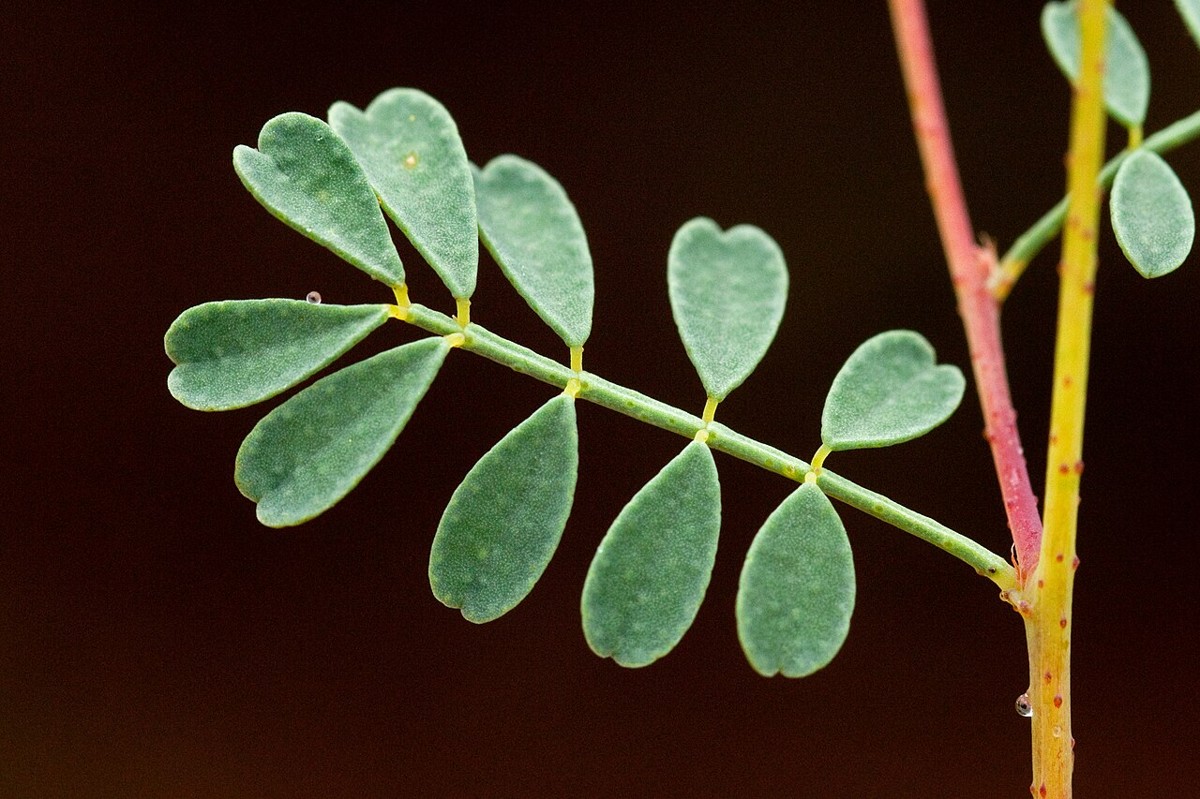
Leaves are pinnately compound, about ½ to 1 inch long, with 7 to 17 small, narrow, gray-green leaflets dotted with resinous glands. The foliage has a distinctive, slightly resinous scent when crushed. As described in the common name, the leaves characteristically dry to a dark, near-black color, a useful identification clue on older or pressed specimens.
Flowers
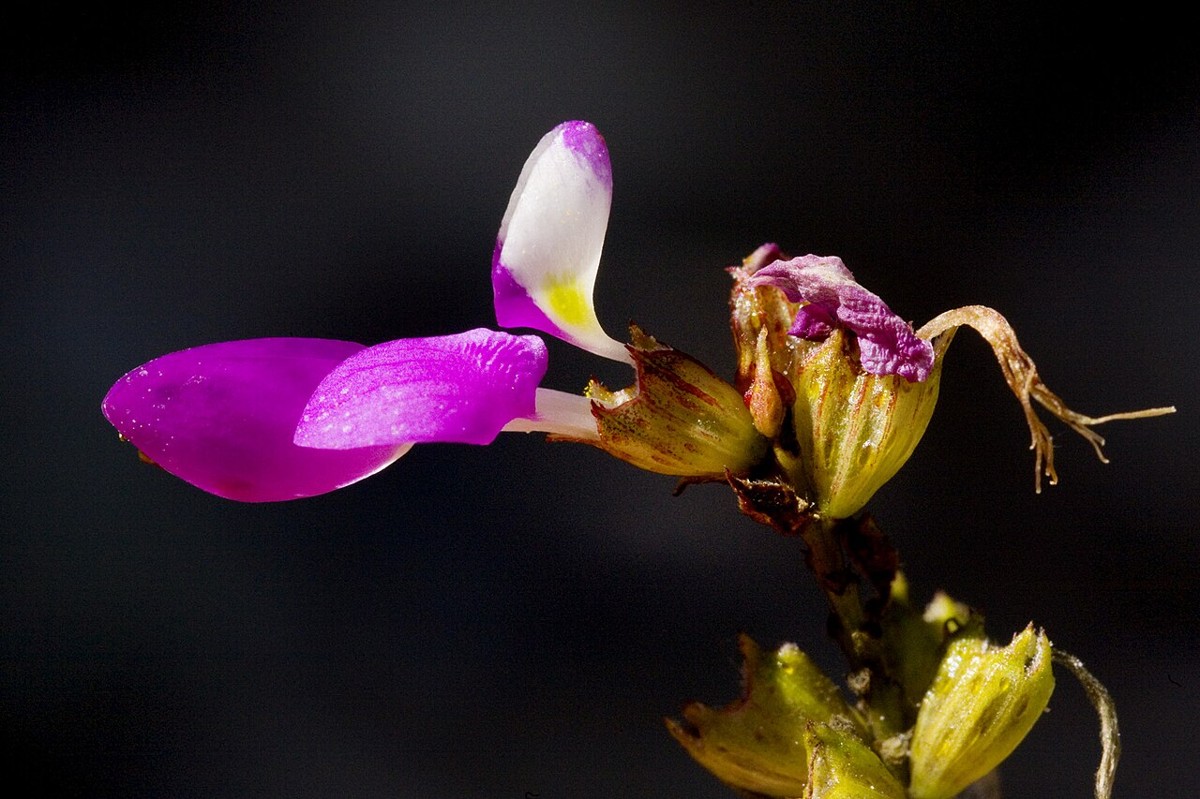
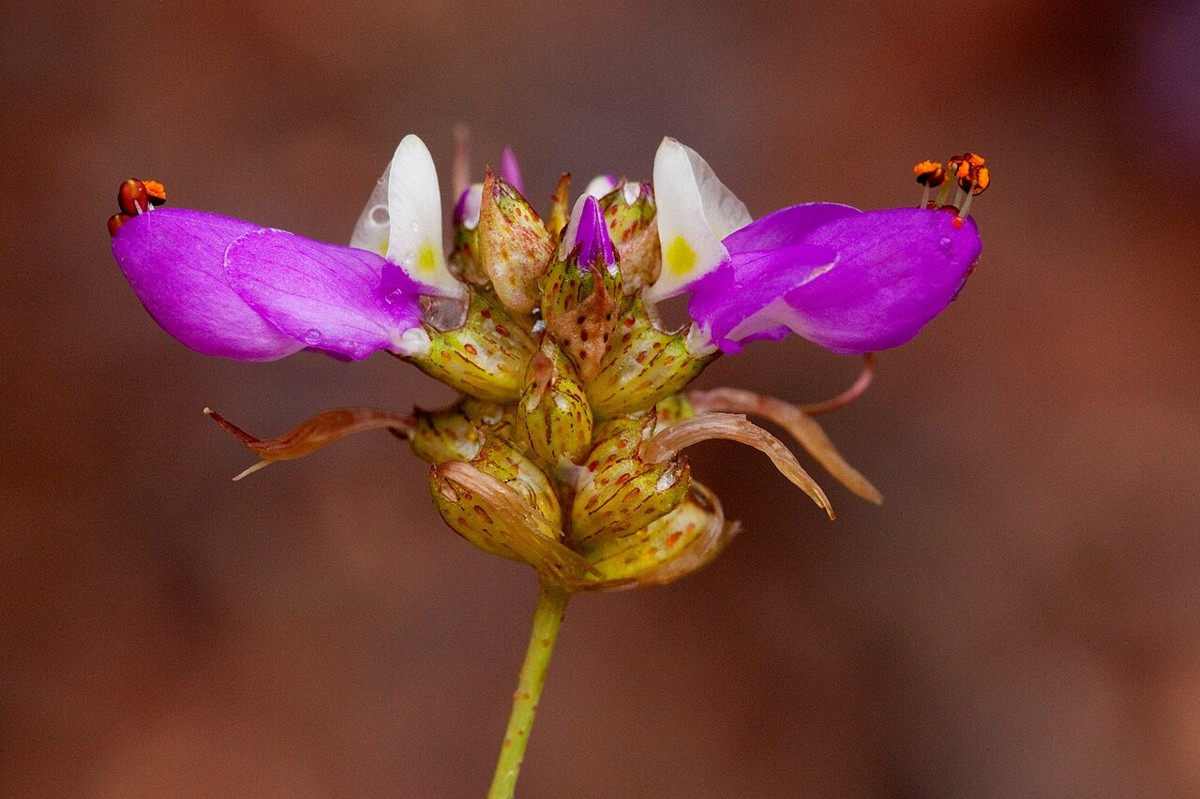
Flowers are small, pea-shaped, and borne in dense, cone-like spikes at the branch tips. Each individual flower is a rich magenta to reddish-purple, with a contrasting white-and-yellow banner petal and protruding orange-tipped stamens that give flowering branches a lively, two-toned look. Bloom is heaviest from August through October, later than most other Texas native shrubs, making it an important late-season nectar source.
Fruit & Seeds
After flowering, small, inconspicuous, single-seeded pods form within the dried flower spikes. They are easily overlooked and are not a significant ornamental feature, though they do provide minor seed for birds foraging through the dried flower heads over winter.
Quick Facts
| Scientific Name | Dalea frutescens |
| Family | Fabaceae (Pea/Legume) |
| Plant Type | Deciduous Shrub |
| Mature Height | 2–3 ft |
| Mature Spread | 3–4 ft |
| Growth Rate | Moderate |
| Sun Exposure | Full Sun |
| Water Needs | Low |
| Soil Type | Rocky, caliche, limestone; well-drained |
| Soil pH | 7.0–8.5 (neutral to alkaline) |
| Bloom Time | August – October |
| Flower Color | Magenta-purple with white/yellow banner |
| Fall Color | Foliage dries dark gray-black |
| Fruit | Small, inconspicuous single-seeded pods |
| Deer Resistant | Yes |
| USDA Hardiness Zones | 7–9 |
Native Range
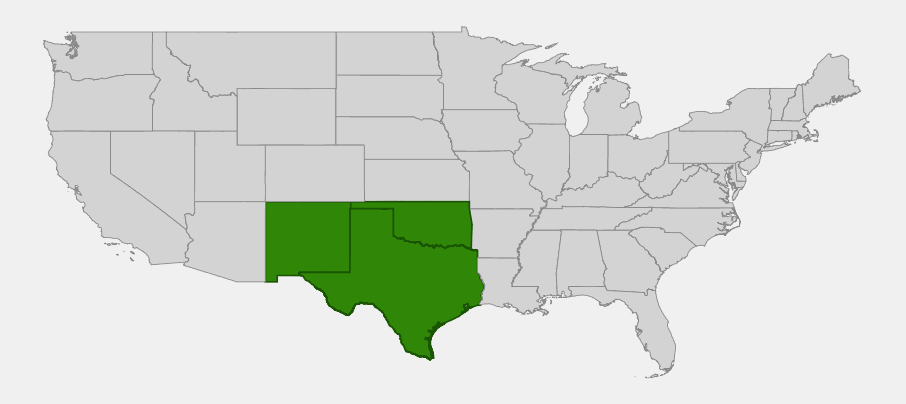
Black Dalea is native to the limestone and caliche country of central, western, and southern Texas, extending north into southwestern Oklahoma and west into southeastern New Mexico, with its range continuing south into northeastern Mexico. Within Texas it is widespread across the Edwards Plateau, Rolling Plains, Trans-Pecos, and South Texas Plains, reaching its greatest abundance on dry limestone hills and prairie edges.
It grows on rocky, calcareous soils — limestone outcrops, caliche banks, and thin prairie soils over bedrock — typically in open grassland, brushland, and juniper-oak woodland edges. It is frequently found alongside agarita, cenizo, and little bluestem, favoring sites too dry and rocky for most competing vegetation. Elevation ranges from near sea level in South Texas to roughly 6,000 feet in the higher Trans-Pecos and New Mexico portions of its range.
Outside this Texas–Oklahoma–New Mexico core, Black Dalea does not occur naturally, and it should not be relied upon to naturalize in moister, more acidic, or more northerly climates; its late-summer bloom and drought tolerance are specifically adapted to the hot, dry conditions of its home range.
📋 Regional plant lists featuring Black Dalea: South and West Texas, Arizona & New Mexico
Growing & Care Guide
Light
Plant Black Dalea in full sun. It flowers most heavily with at least six hours of direct light and becomes thin and sparse-blooming in shade.
Soil & Water
Like most Daleas, this shrub wants lean, fast-draining, alkaline soil — rocky, caliche, or limestone-derived ground is ideal. Poor drainage and rich, moisture-retentive soil are far more likely to kill it than drought. Water during establishment for the first growing season, then rely on natural rainfall; established plants are highly drought tolerant.
Planting Tips
Plant in fall or early spring. Choose a raised bed, slope, or naturally rocky site with excellent drainage, and resist the urge to amend the soil with compost or rich organic matter. Space plants 3 to 4 feet apart for a loose informal hedge or massed planting.
Pruning & Maintenance
Black Dalea benefits from a light trim in late winter or early spring to remove old, woody growth and encourage a fuller, more compact shape. It can become leggy with age; an occasional harder cutback every few years helps rejuvenate older plants.
Propagation
Propagate from seed, scarified lightly to improve germination of the hard seed coat, or from semi-hardwood cuttings taken in summer. Like many legumes, it may benefit from inoculation with rhizobium bacteria when grown in soils where it has not previously grown.
Landscape Uses
- Late-summer and fall color in xeriscape and rock gardens
- Low, informal border or mass planting
- Pollinator garden for late-season nectar
- Caliche and poor-soil restoration plantings
- Companion planting with ornamental grasses and other low-water natives
Wildlife & Ecological Value
For Pollinators
Black Dalea is an important late-season nectar source, blooming in August through October when many other Texas natives have finished flowering. Bees, including numerous native solitary bee species, and butterflies rely on its magenta flower spikes to fuel up before winter or migration.
Birds
While the seed crop is modest, dried flower spikes and seed pods provide minor winter forage for seed-eating birds such as sparrows foraging through brushy prairie edges.
Mammals
Black Dalea is generally left alone by deer, making it a reliable choice in areas with heavy browsing pressure. Its dense low form offers some cover for small wildlife.
Ecosystem Role
As a nitrogen-fixing legume, Black Dalea improves soil fertility on the thin, rocky prairie and limestone sites where it grows, supporting the broader community of native grasses and forbs that share its habitat.
Cultural & Historical Uses
Early Texas botanical surveys noted Black Dalea’s distinctive habit of drying to a dark, nearly black color — the source of its common name — and it has long been recognized by ranchers and naturalists across the Edwards Plateau and Trans-Pecos as a reliable late-summer bloomer on otherwise parched limestone range.
Unlike some of its Dalea relatives, Black Dalea does not have a well-documented history of Indigenous medicinal or utilitarian use; its primary historical significance has been ecological and, more recently, horticultural.
In recent decades, as native and low-water landscaping has grown in popularity across Texas, Oklahoma, and New Mexico, Black Dalea has become an increasingly common nursery offering, valued specifically for extending the native garden’s bloom season into fall when most other shrubs have gone quiet.
Frequently Asked Questions
When does Black Dalea bloom?
Black Dalea blooms later than most Texas native shrubs, typically from August through October, making it a valuable source of late-season color and pollinator nectar.
Why is it called “Black” Dalea if the flowers are magenta?
The name refers to the foliage, not the flowers. Black Dalea’s fine, gray-green leaflets characteristically dry to a dark, nearly black color, a trait noted by early botanists describing the species.
How much water does Black Dalea need?
Very little once established. It is adapted to rocky, fast-draining limestone and caliche soils and generally needs only natural rainfall after its first growing season; overwatering or heavy soil are more likely to harm it than drought.
Is Black Dalea deer resistant?
Yes, it is generally considered deer resistant, making it a dependable choice for Hill Country and Trans-Pecos gardens with significant deer pressure.
Can Black Dalea be grown outside Texas, Oklahoma, and New Mexico?
It is hardy in USDA zones 7–9 and can be grown in similarly hot, dry, alkaline-soil climates elsewhere in the Southwest, but it is not native beyond its Texas–Oklahoma–New Mexico range and performs best where summers are long, hot, and dry.
Looking for a nursery that carries native plants for your area? Check these regional native plant nursery directories: Texas, New Mexico & Oklahoma.