
Variableleaf Collomia (Collomia heterophylla)
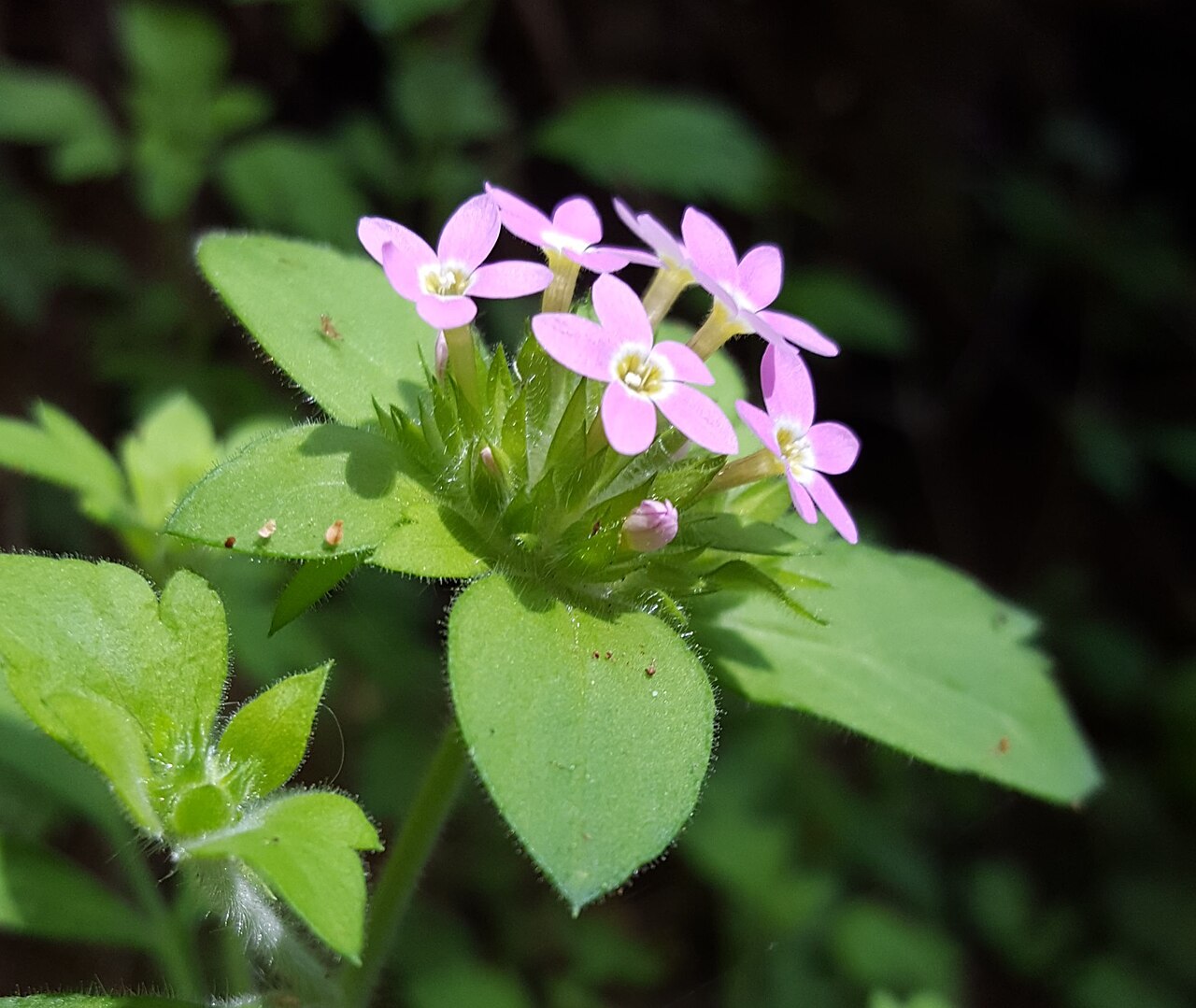
Collomia heterophylla, known as Variableleaf Collomia or varied-leaf collomia, is a small annual wildflower of the phlox family (Polemoniaceae) native to the Pacific Northwest and northern and central California. It usually stands only 2 to 10 inches tall and carries tight clusters of small pink, lavender or white trumpet-shaped flowers among leafy, sticky-hairy bracts from spring into summer. It grows in open woods, forest edges, gravelly stream banks and sandy or rocky openings, from near sea level into the mountains.
The name heterophylla means “different leaves,” and it fits: the lower leaves are deeply cut, almost fern-like, while the upper leaves and bracts are broader and only toothed or entire. That mix of leaf shapes on one small plant is the easiest way to recognize it. Like other collomias, its seeds turn slimy when wet, which helps them stick to the soil where they land.
Variableleaf collomia is not a showy border plant, but it is a charming, easy annual for native wildflower meadows, woodland edges and rock gardens in its home range. Once established it reseeds on its own. Sow seed from a native seed supplier or a responsible local collection rather than digging wild plants.
Identification
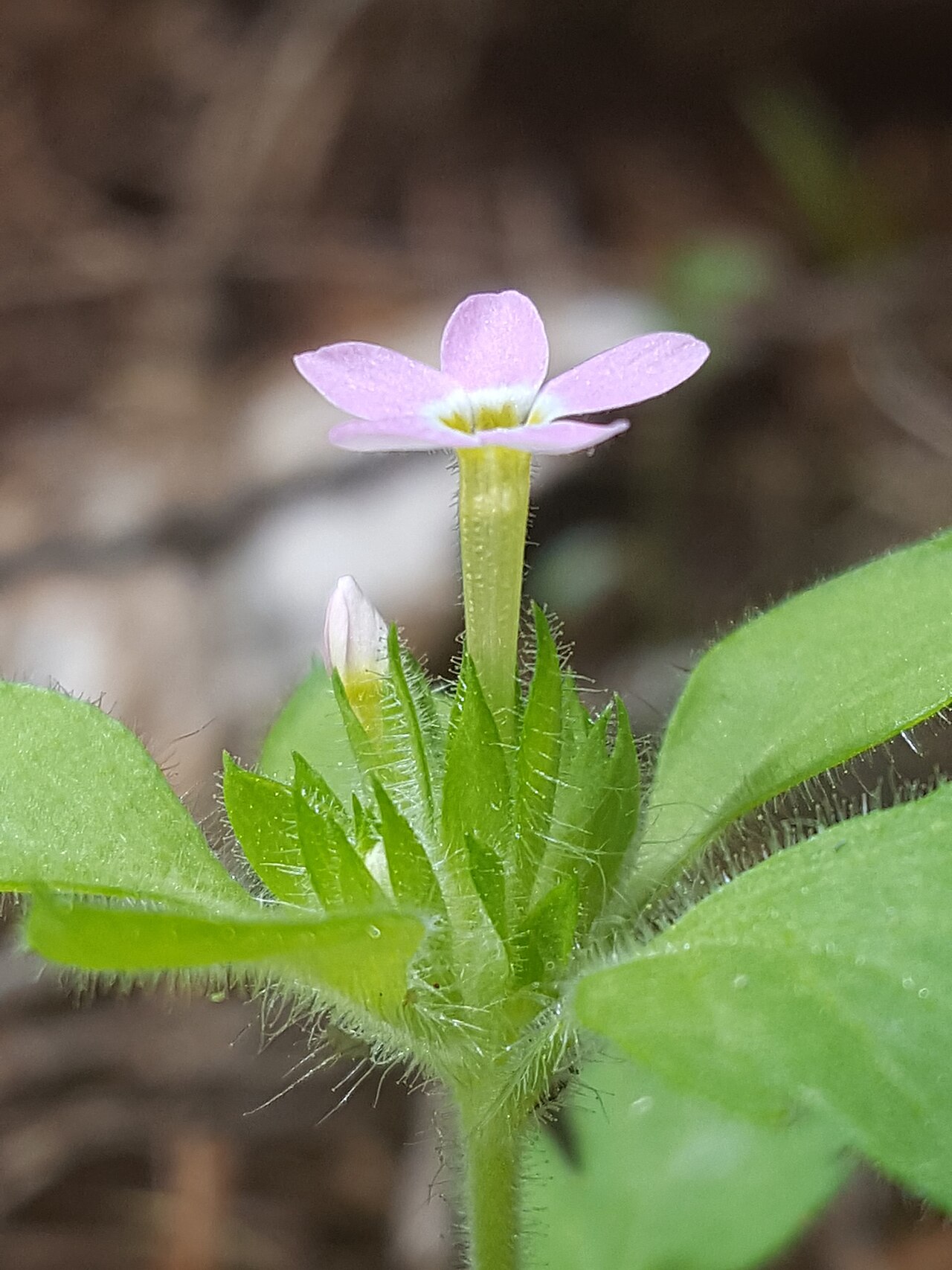
Look for a low, branching, hairy annual with crowded heads of small pink to lavender tubular flowers sitting in a ruff of leafy bracts, and a mix of finely divided lower leaves and broader upper leaves.
Growth Habit
Plants are annuals from a slender taproot. The stems are usually 2 to 10 inches tall (occasionally taller in rich, shaded sites), simple in small plants or branching from the base in larger ones, and often reddish. Stems and leaves are covered in soft and glandular hairs, so the plant feels slightly sticky.
Leaves
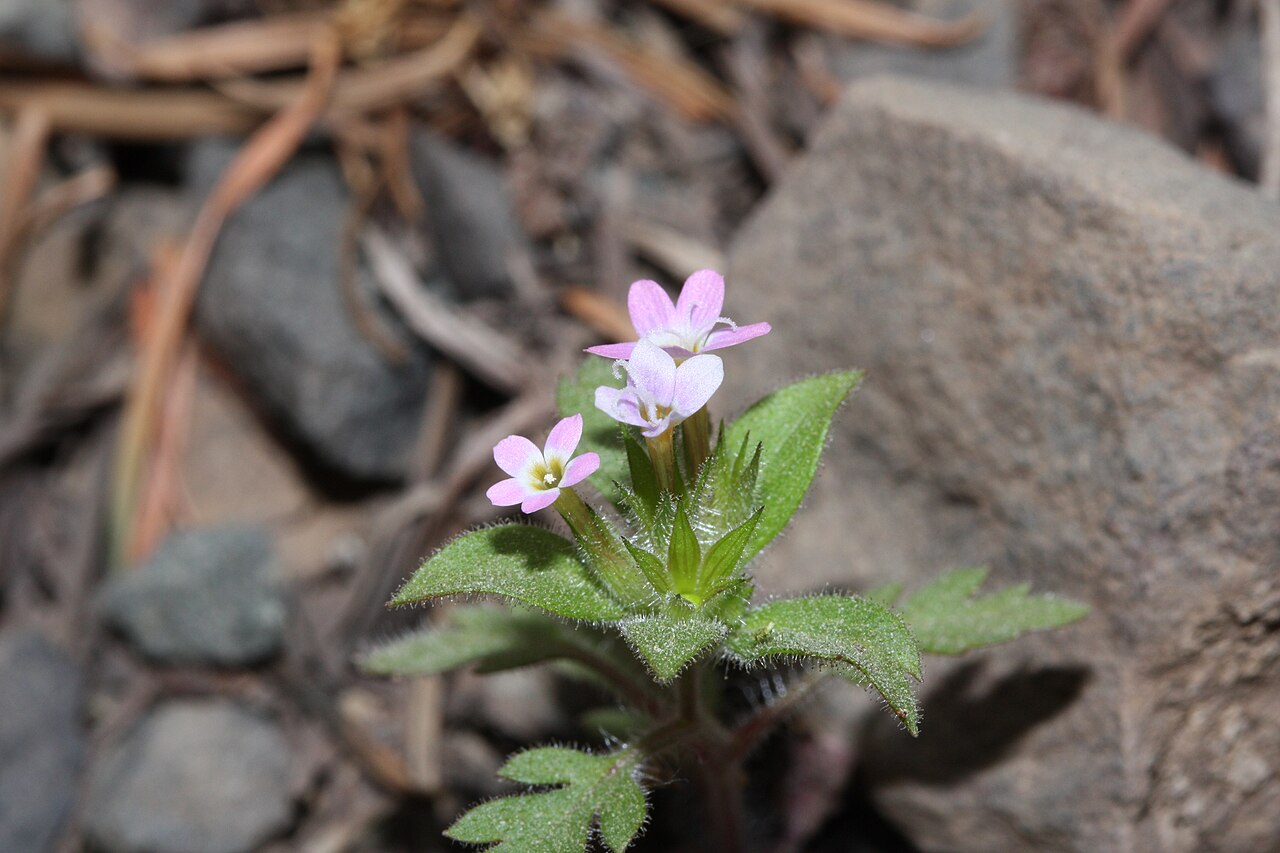
The leaves are alternate and very variable, which is where the plant gets its name. Lower leaves are usually pinnately lobed or deeply divided into narrow, toothed segments, looking almost like a small fern frond. Leaves higher on the stem are lance-shaped to oval with a few teeth, and the uppermost leaves and bracts around the flower clusters are often broad and nearly entire. In shady, moist spots the upper leaves can be quite broad and bright green.
Flowers
The flowers are crowded in small, head-like clusters at the stem tips and in the upper leaf axils, surrounded by leafy bracts. Each flower has a narrow tube about 1/3 to 1/2 inch long that opens to five small, spreading lobes. Color ranges from pink and rose-lavender to pale purple or nearly white, often with a paler or yellowish throat. Flowers appear from about April to July, depending on elevation.
Fruit & Seeds
The fruit is a small, three-chambered capsule held inside the persistent calyx. Each chamber holds one or a few seeds. When the seeds get wet, their coats release a sticky mucilage, a trait shared by other collomias that helps anchor the seed on the soil surface.
Look-alikes
Grand collomia (Collomia grandiflora) is a related annual of the same region, but it is much taller (often 1 to 3 feet), has narrow, mostly undivided leaves, and bears larger salmon to pale orange flowers. Small-flowered collomia (C. linearis) has narrow, entire leaves and smaller pink flowers. Gilias and navarretias can look similar, but most have uniformly divided leaves or spiny bracts; the combination of dissected lower leaves and broad upper leaves points to variableleaf collomia.
Quick Facts
| Scientific Name | Collomia heterophylla |
| Family | Polemoniaceae (phlox family) |
| Plant Type | Annual wildflower |
| Mature Height | 2–10 in (occasionally to 15 in) |
| Mature Spread | 2–8 in |
| Growth Rate | Fast (completes its life cycle in one season) |
| Sun Exposure | Full sun to part shade |
| Water Needs | Moist in spring, dry in summer |
| Soil Type | Sandy, gravelly or rocky, well-drained |
| Soil pH | Slightly acidic to neutral (about 5.5–7.0) |
| Bloom Time | April–July |
| Flower Color | Pink, lavender or white |
| Fall Color | None (annual; dies after setting seed) |
| Fruit | Small capsule; seeds turn sticky when wet |
| Deer Resistant | Unknown; too small to be a common browse target |
| USDA Hardiness Zones | Annual; grows in about zones 6–9 within its range |
Native Range
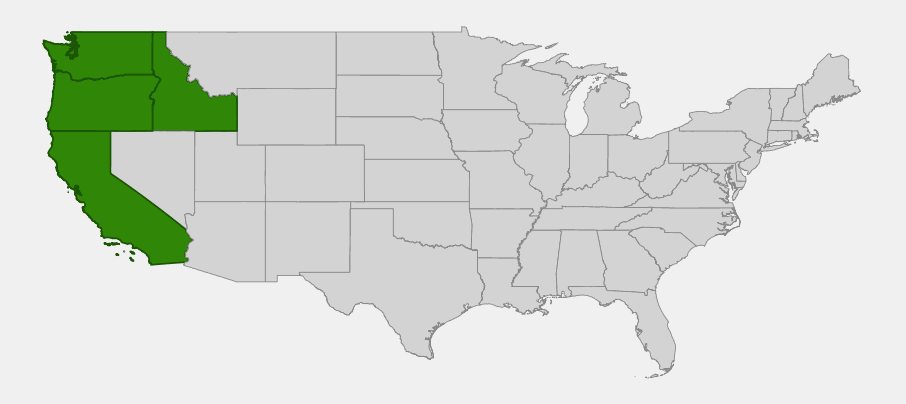
Variableleaf collomia is native to western North America from southern British Columbia south through western Washington and Oregon into northern and central California. USDA PLANTS lists it as native in California, Idaho, Oregon and Washington, and in British Columbia, where it grows mainly in the southwest of the province, including southern Vancouver Island and the lower Fraser Valley.
It is most common west of the Cascades, in the Puget Trough, the Willamette Valley, the Coast Ranges, the Klamath and Siskiyou Mountains and the foothills of the Cascades. In California it grows in the North Coast Ranges, the Klamath region, the Cascades and the Sierra Nevada foothills, reaching south to about the San Francisco Bay region. Inland, it reaches northern Idaho and the eastern slopes and canyons of the Cascades in Washington and Oregon.
Typical habitats are open coniferous and mixed woods, oak woodland, forest clearings and burns, gravel bars and sandy stream banks, rocky slopes and road cuts, from near sea level to middle elevations in the mountains. It often appears in moist spring soils that dry out in summer.
📋 Regional plant lists featuring Variableleaf Collomia: Idaho, Eastern Oregon & Eastern Washington · Western Oregon & Western Washington · California & Nevada
Growing & Care Guide
Variableleaf collomia is grown from seed like other western spring annuals. It is easy where its needs are met: fall-sown seed, moist winter and spring soil, open ground without heavy competition, and a dry summer after it sets seed.
Light
Full sun to part shade. In hot inland gardens it does best with some afternoon shade or the dappled light of open trees. In the cool maritime Northwest it tolerates full sun.
Soil & Water
It prefers well-drained sandy, gravelly or rocky soil, but tolerates loam if it is not compacted. Rain usually supplies all the water it needs in its native range. In a dry spring, an occasional deep watering will extend flowering. It needs no fertilizer; rich soil produces leafy plants with fewer flowers.
Planting Tips
Sow seed in fall on bare, raked soil and press it in lightly, or barely cover it with a dusting of soil. Fall sowing lets winter rain and cold prepare the seed, and seedlings come up in late winter or spring. Thin crowded seedlings to a few inches apart. Sow it where it will not be smothered by grasses or vigorous perennials.
Pruning & Maintenance
No pruning is needed. Let plants set and drop seed before pulling the dry stems in summer. Keep a few patches of bare or lightly mulched soil so the seedlings have room to come up next year.
Propagation
Grow it from seed. Collect the ripe capsules when the plants start to dry and turn tan, and store the seed dry until fall sowing. Collect only a small portion of the seed from any wild population, and only where it is permitted.
Landscape Uses
- Wildflower meadows: a low, early annual between grasses and taller perennials
- Woodland edges: fills gaps in dappled shade under oaks and conifers
- Rock gardens: small enough for gravelly pockets and slopes
- Pollinator gardens: an early nectar source for small bees and flies
- Restoration: useful in seed mixes for open woods and disturbed slopes
Wildlife & Ecological Value
Variableleaf collomia is a small plant, but like other spring annuals it contributes to the early-season flower supply in western woods and meadows.
For Pollinators
The small tubular flowers are visited by small native bees, bee flies and other small insects that can reach the nectar in the narrow tube. The plants can also set seed on their own when pollinators are scarce.
For Birds
The small seeds are probably eaten by ground-feeding birds such as juncos and sparrows along with seeds of other annuals, but there is little specific information.
For Mammals
It is too small to be important browse. Small rodents may eat the seeds.
Ecosystem Role
As a quick-growing annual it colonizes bare soil after floods, fires, landslides and other disturbances, holding soil for a season and adding to the diversity of open woodland and streamside plant communities.
Cultural & Historical Uses
The genus name Collomia comes from the Greek kolla, “glue,” a reference to the sticky mucilage the seeds produce when wet. The species was described by William Jackson Hooker in 1828 from material collected in the Pacific Northwest by David Douglas, the Scottish botanist who introduced many western plants to British gardens.
There are no well-documented food or medicinal uses of variableleaf collomia. Its value today is mainly ecological and as an attractive small wildflower for native plant gardens in the Pacific Northwest and California.
Collomias, together with gilias, phloxes and Jacob’s ladders, belong to the phlox family, a group that is especially diverse in western North America. Botanists have studied collomia seeds as an example of how mucilage helps seeds stick to the ground, absorb water and resist being washed or blown away.
Frequently Asked Questions
Is variableleaf collomia an annual or a perennial?
It is an annual. Each plant germinates, flowers and sets seed in a single season, and the population returns from seed.
Why is it called variableleaf collomia?
The lower leaves are deeply divided and almost fern-like, while the upper leaves are broader and only toothed or entire. The Latin name heterophylla also means “different leaves.”
How is it different from grand collomia?
Grand collomia is much taller, with narrow, undivided leaves and larger salmon to pale orange flowers. Variableleaf collomia is small and has pink to lavender or white flowers.
When should I sow variableleaf collomia seed?
Sow in fall on bare soil and press the seed in lightly. Winter rain and cold help it germinate in spring.
Does variableleaf collomia grow in Idaho?
Yes. USDA PLANTS lists it as native in Idaho, where it grows in the northern part of the state, as well as in California, Oregon, Washington and British Columbia.

Looking for a nursery that carries Variableleaf Collomia?
Browse our native plant nursery directory: California · Idaho · Oregon · Washington

