
Fairy Mist (Pterostegia drymarioides)
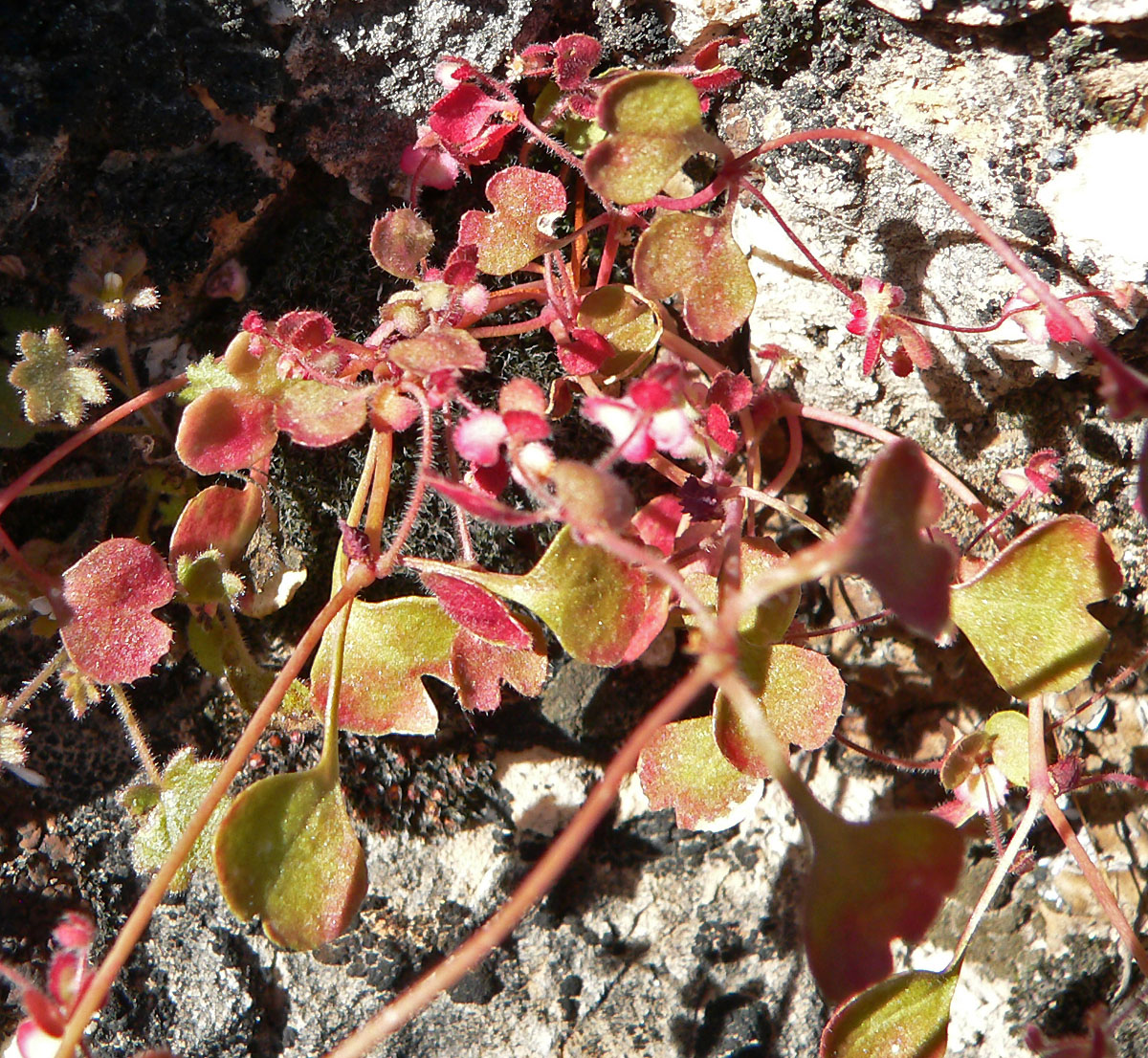
Pterostegia drymarioides, known as Fairy Mist, woodland threadstem, fairy bowties or woodland pterostegia (the USDA name), is a tiny, delicate annual of shady slopes, rock crevices and woodland floors in the American Southwest and California. Its thread-thin, trailing stems carry pairs of small, fan-shaped leaves that are notched at the tip, and in spring the plants weave into soft, lacy mats that look like a green or rosy mist on the ground.
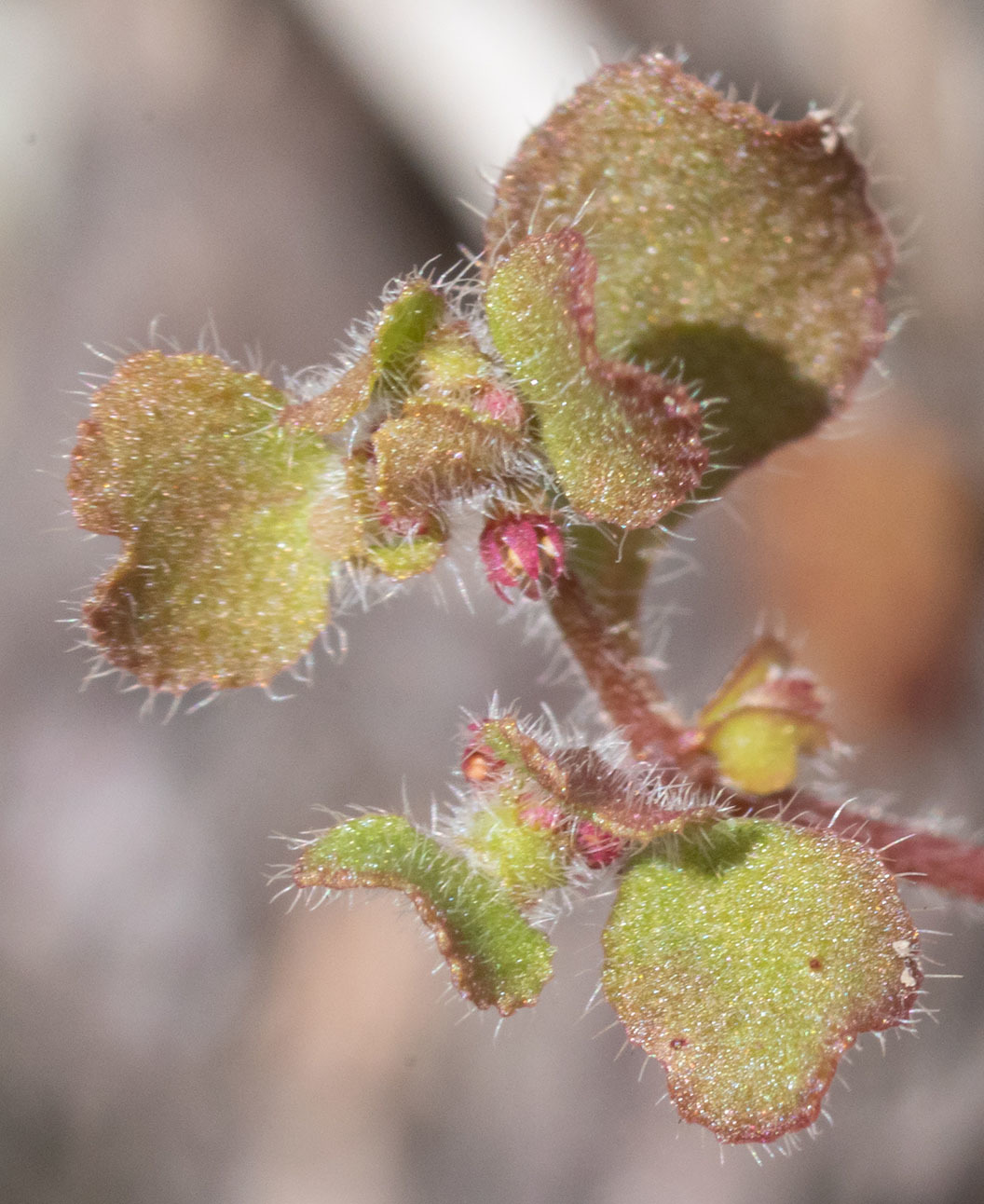
It is the only species in the genus Pterostegia, a member of the buckwheat family (Polygonaceae). Its most distinctive feature is not the flower, which is minute, but the papery, two-winged bract that wraps each flower and fruit. As the fruit ripens, the bract enlarges into a little net-veined “bowtie”, which gives the plant one of its common names and its genus name, from the Greek for “winged covering”.
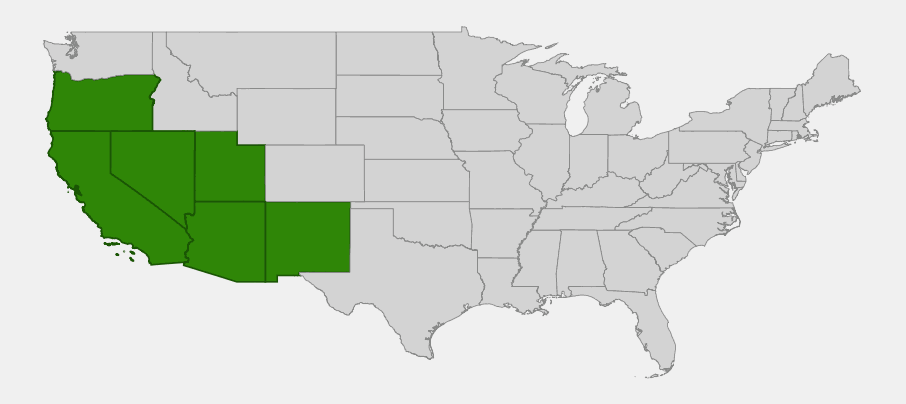
Fairy mist grows from southwestern Oregon through California to southern Nevada, southwestern Utah, Arizona and New Mexico, and south into Baja California and northwestern Mexico. It is easy to overlook, but common in the right places. This guide covers how to identify it, where it grows, how to encourage it in a native garden, and its role in the spring wildflower community.
Identification
Fairy mist is a plant of small details. Look in shady spots under shrubs and boulders in late winter and spring for a low tangle of hair-thin stems, paired notched leaves and tiny, winged bracts.
Growth Habit
It is a cool-season annual that germinates after fall or winter rain. The slender, finely hairy stems branch repeatedly and trail across the ground or scramble up through other plants, usually spreading a few inches to about 2 feet. The plant itself rarely stands more than a few inches tall. In full shade it stays bright green; in sun or as it dries, the stems and leaves often turn red or pink.
Leaves
The leaves are opposite, on short stalks, and only about 1/8 to 3/4 inch long. Each blade is fan-shaped to rounded, with a notch or two lobes at the tip, so a pair of leaves can look like small butterfly wings. The leaves are thin and finely hairy.
Flowers
The flowers are tiny, about 1/16 inch, with six yellowish to pink tepals, and sit in the leaf axils inside a small bract. They are easy to miss without a hand lens. Bloom time is mainly February to June, varying with elevation and rainfall.
Fruit & Seeds
The real show is the fruiting bract. It enlarges around the single small, dark seed-like fruit (an achene) and develops two rounded, papery, net-veined wings, often tinged pink or red. These “bowties” dry and break off with the fruit inside, and they can catch the wind or stick to passing animals.
Look-alikes
At a glance, fairy mist can be mistaken for chickweed or other small, weak-stemmed plants of shady ground. The species name drymarioides means “like Drymaria“, a genus of small plants in the pink family with similar rounded leaves. The notched, paired leaves and the two-winged, net-veined bracts around the flowers and fruit set fairy mist apart from all of them.
Quick Facts
| Scientific Name | Pterostegia drymarioides Fisch. & C.A. Mey. |
| Family | Polygonaceae (buckwheat family) |
| Plant Type | Annual wildflower (trailing) |
| Mature Height | 1–4 in |
| Mature Spread | 6–24 in |
| Growth Rate | Fast (annual) |
| Sun Exposure | Part shade to shade |
| Water Needs | Low; winter-spring moisture only |
| Soil Type | Well-drained sandy, gravelly or rocky soils, often with leaf litter |
| Soil pH | About 6.0–8.0 |
| Bloom Time | February–June |
| Flower Color | Tiny; yellowish to pink |
| Fall Color | None; annual, dries by early summer |
| Fruit | Achene inside a papery, two-winged bract |
| Deer Resistant | Not well documented |
| USDA Hardiness Zones | 7–10 (grows as a cool-season annual) |
Native Range
Fairy mist is native to western North America. USDA PLANTS lists it in Oregon, California, Nevada, Utah, Arizona and New Mexico. It also grows in Baja California and northwestern Mexico. California is the center of its range, where it is widespread from the North Coast Ranges and Sierra Nevada foothills to the Transverse and Peninsular Ranges and into the deserts.
Outside California it is more local. In Oregon it reaches its northern limit in the southwestern part of the state, west of the Cascades. In Nevada it grows in the south, around the Las Vegas area, and in Utah it is known from the far southwestern corner near St. George. In Arizona it is found mainly in the central and western parts of the state, and it reaches New Mexico at the eastern edge of its range.
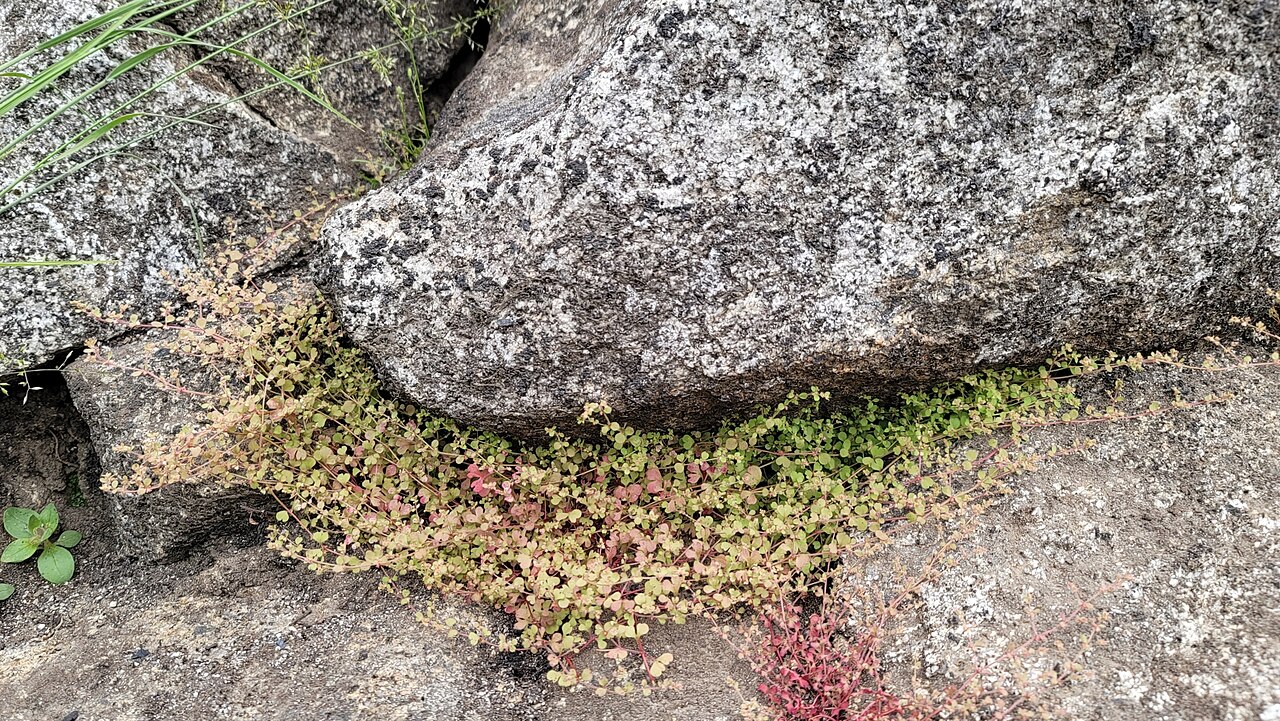
It favors shaded, sheltered places: the north sides of rocks and boulders, the understory of oak woodland and chaparral, canyon walls, grassy slopes under shrubs and, in the desert, shady crevices and washes. It grows from near sea level to the lower mountains, occasionally into montane conifer woodland.
📋 Regional plant lists featuring Fairy Mist: Utah & Western Colorado · Arizona & New Mexico · Western Oregon & Western Washington · California & Nevada
Growing & Care Guide
Fairy mist is not a typical nursery plant, and seed is rarely sold. In native gardens within its range it usually arrives on its own, or persists from wild populations, in shady corners under oaks and shrubs. Learning to recognize it lets you keep it instead of weeding it out.
Light
It grows best in part shade or light shade, such as under oaks, beside boulders or on north-facing slopes. It tolerates more sun where it gets some afternoon shelter, and it often turns red in brighter light.
Soil & Water
It prefers loose, well-drained sandy, gravelly or rocky soil, often with a little leaf litter. Like other cool-season annuals, it relies on fall, winter and spring rain and needs no summer water. It finishes its life cycle and dries up as the soil dries in late spring or early summer.
Planting Tips
If you can obtain seed from a local, ethical source, scatter it in fall on bare, shaded ground or in rock crevices and leave it to the winter rains. It fits naturally in woodland and rock gardens with miner’s lettuce, goldback fern and other small shade-loving natives. Never collect from small or protected populations.
Pruning & Maintenance
No pruning is needed. Leave the dried plants in place until the winged bracts have shed so the plants can reseed. Avoid heavy mulch, raking and weeding in shady areas in winter and spring, when the seedlings are tiny.
Propagation
It is grown only from seed. The fruits drop with their papery bracts in late spring. Where a colony is established, it usually renews itself each year if the soil is left undisturbed.
Landscape Uses
- Woodland and shade gardens: a soft, lacy groundcover under oaks and shrubs in spring
- Rock gardens: fills shady crevices and the bases of boulders
- Habitat restoration: a native annual of oak woodland, chaparral and canyon understories
- Nature study: fascinating winged bracts to examine with a hand lens
- Wild gardens: persists in undisturbed corners of native landscapes
Wildlife & Ecological Value
Fairy mist is a small, short-lived plant, but it is part of the spring understory that helps hold soil and shelter small creatures on shaded slopes.
For Pollinators
The flowers are tiny and inconspicuous. Their pollination is not well studied; small insects may visit them, and self-pollination is likely common, as in many small annuals.
For Birds
Ground-foraging birds such as sparrows and towhees may pick up the small fruits, but the plant is not known as an important food source.
For Mammals
Small rodents may eat the fruits. The plants are too small to be significant browse for deer.
Ecosystem Role
Fairy mist forms a thin, living cover on shaded soil in late winter and spring, helping to protect it from erosion and adding to the diversity of the herb layer in oak woodland, chaparral and desert canyons. The papery, winged bracts help the fruits disperse by wind or by catching on fur and feathers.
Cultural & Historical Uses
The genus was named by the botanists Friedrich Fischer and Carl Anton von Meyer in the 1830s from specimens collected in California. Pterostegia comes from the Greek pteron, wing, and stege, covering or roof, describing the winged bract that covers the fruit. The species name drymarioides compares it to Drymaria, a genus of small plants in the pink family.
Its names reflect how differently people see it. “Woodland threadstem” describes its thin, trailing stems, while “fairy mist” captures the hazy effect of a colony carpeting a shaded slope, and “fairy bowties” refers to the two-winged fruiting bracts.
Fairy mist is a favorite of naturalists and wildflower photographers in California, who look for it on spring walks in oak woodlands and canyons. It is one of many small annuals that reward a slow look at the ground.
Frequently Asked Questions
Why is it called fairy mist?
Its fine, trailing stems and tiny leaves form soft, lacy mats on shaded ground that look like a green or rosy mist. It is also called woodland threadstem and fairy bowties.
Is fairy mist a buckwheat?
Yes. It is in the buckwheat family (Polygonaceae), and it is the only species in the genus Pterostegia.
Where does fairy mist grow?
It grows in Oregon, California, Nevada, Utah, Arizona and New Mexico, and in northwestern Mexico, on shady slopes, under shrubs and oaks and in rock crevices.
What are the little “bowties” on fairy mist?
They are papery, two-winged bracts that wrap each tiny flower and enlarge around the fruit as it ripens. They help the fruit disperse.
Can I grow fairy mist?
It is rarely sold, but it often appears on its own in shady, undisturbed corners of native gardens within its range. Let it reseed and avoid raking or heavy mulch there in winter and spring.

Looking for a nursery that carries Fairy Mist?
Browse our native plant nursery directory: Arizona · California · Nevada & New Mexico · Oregon · Utah

