
Dewdrop (Dalibarda repens)
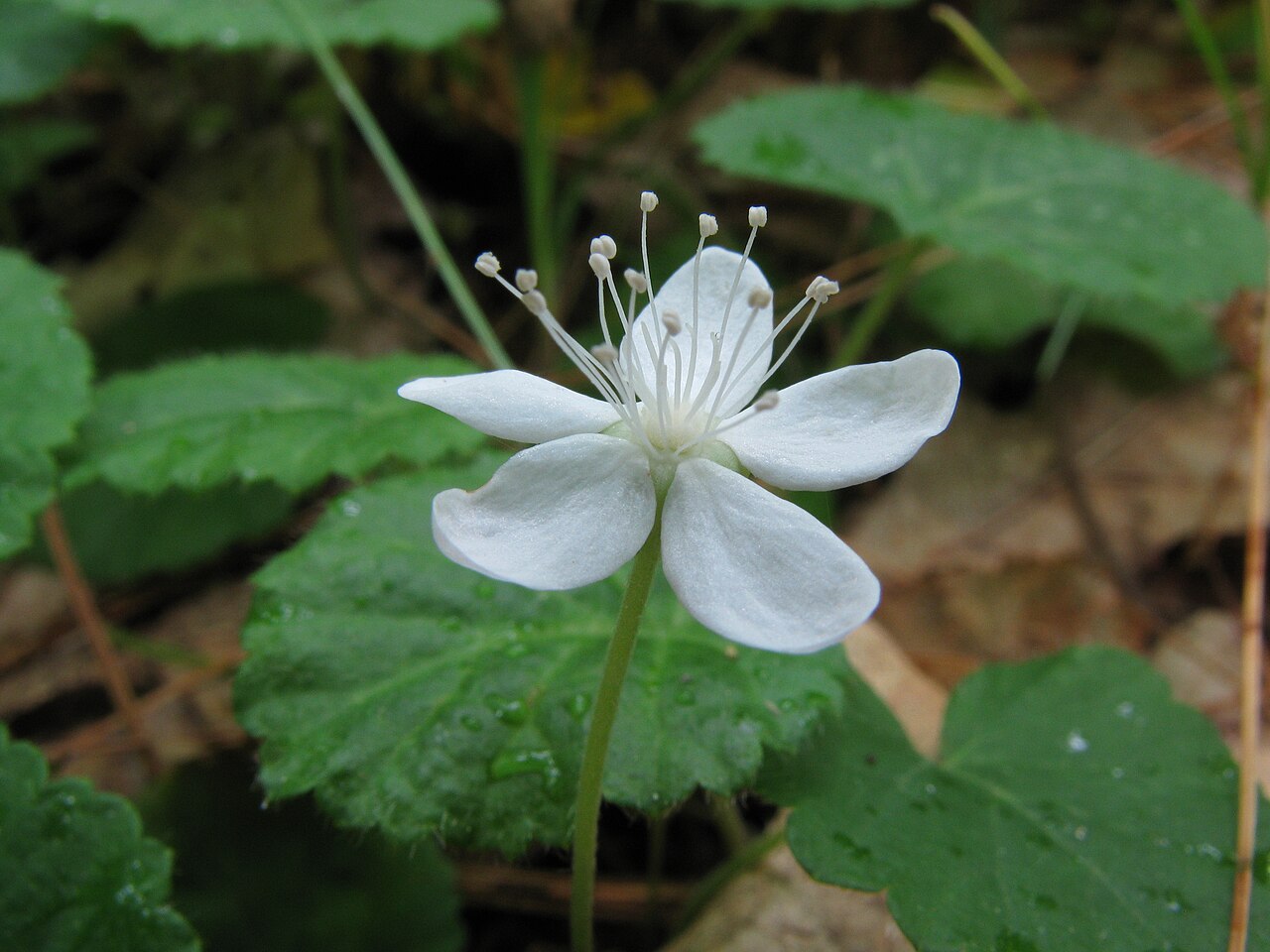
Dalibarda repens, known as Dewdrop, is a small, creeping perennial of cool, moist northern woods and boggy ground. It belongs to the rose family (Rosaceae) and is a close relative of raspberries and blackberries: many botanists now place it in Rubus as Rubus repens, while USDA PLANTS keeps it in its own genus as Dalibarda repens. Other common names include robin runaway (the USDA name), false violet and star violet.
At a glance, dewdrop looks like a violet. It forms low mats of round, heart-shaped, softly hairy leaves only 2 to 5 inches tall, spreading by slender runners across moss and leaf litter. From June into August it sends up single white flowers on reddish stalks, each with five petals and a spray of long stamens. Closer to the ground and hidden under the leaves, it also makes small flowers that never open and pollinate themselves.
In the garden, dewdrop is a charming groundcover for shady, cool, acidic, humus-rich spots: under conifers, along a woodland path or at the edge of a bog garden. It is not a plant for hot, dry or alkaline sites. Buy plants from a native plant nursery and never dig them from the wild, since it is uncommon at the southern and western edges of its range.
Identification
Look for a low, violet-like mat of round, scalloped, hairy leaves in cool, mossy woods, with single white flowers with five petals and many stamens in summer.
Growth Habit
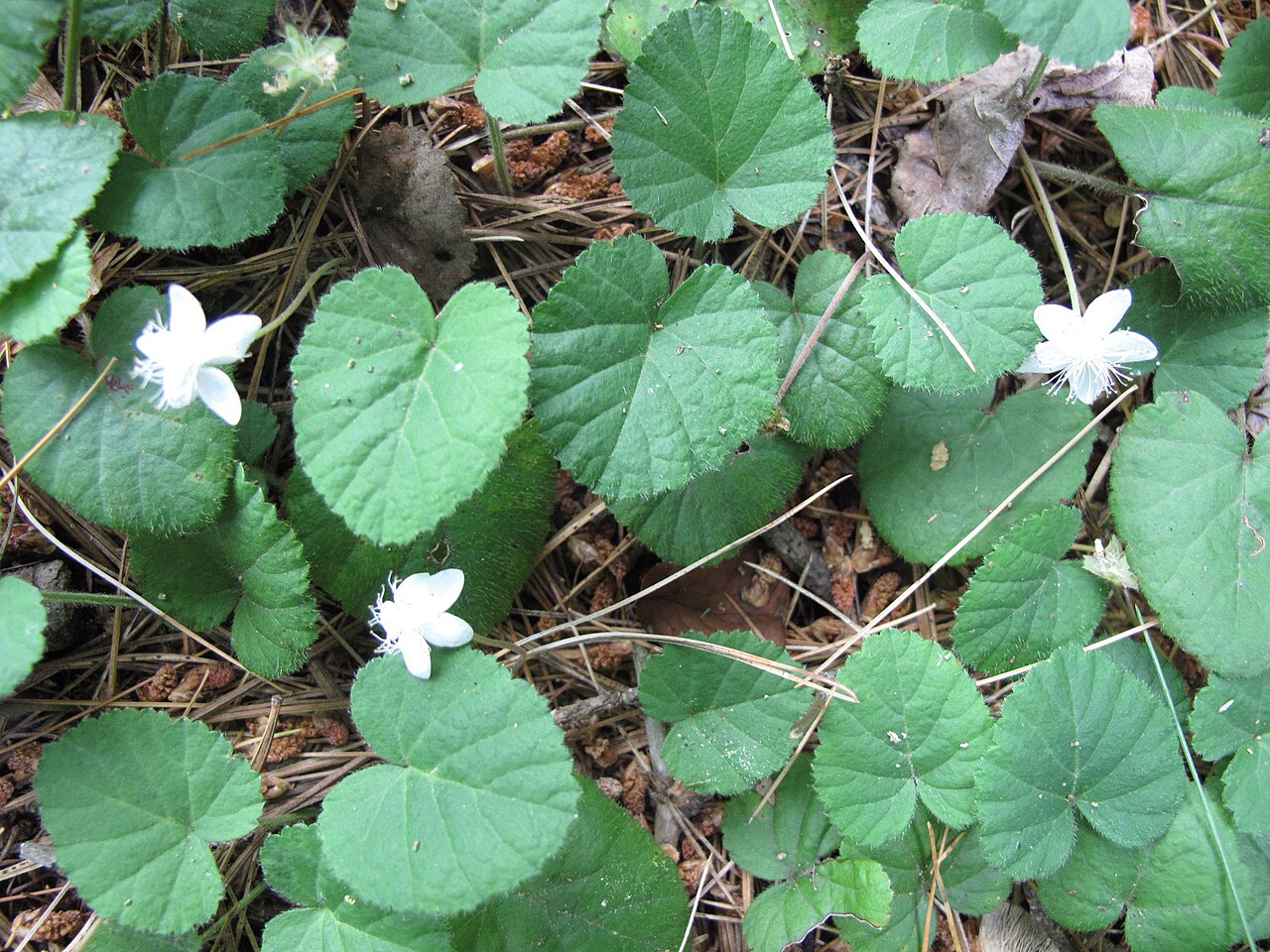
Dewdrop is a stemless-looking perennial that grows only 2 to 5 inches tall. It spreads by slender, hairy, creeping stems (runners) that root at the nodes and end in tufts of leaves and flowers. Over time it forms loose patches several feet across. The leaves stay green late into the fall and often persist under snow, so the plant is described as semi-evergreen.
Leaves
The leaves are simple and basal, on hairy stalks 1 to 4 inches long. The blades are round to heart-shaped, about 1 to 2 inches long, dark green and finely hairy on both surfaces, with blunt tips and evenly scalloped (crenate) edges. The veins are slightly sunken, giving the leaf a lightly quilted look.
Flowers
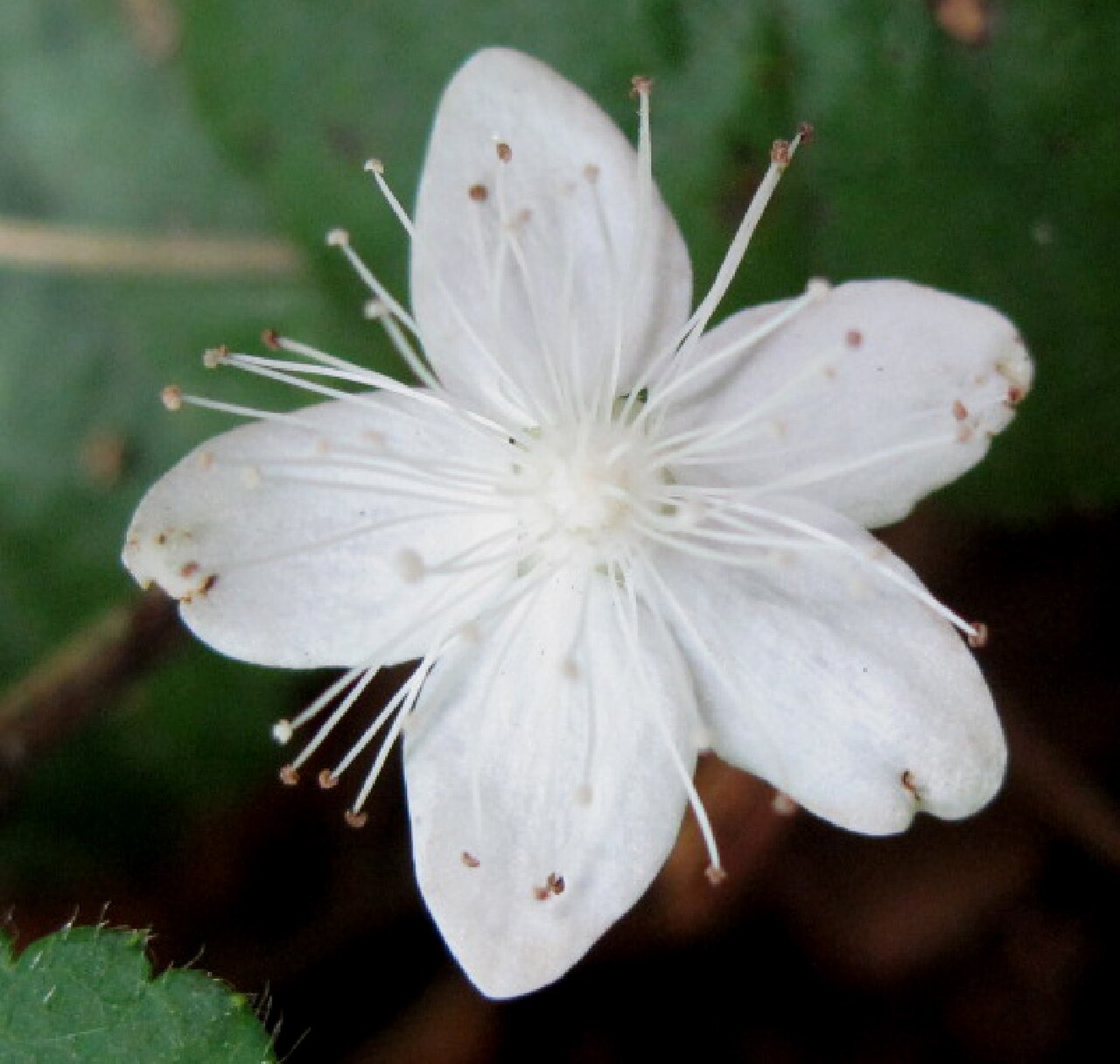
The showy flowers appear from June to August, one per stalk, on slender reddish stalks that rise just above the leaves. Each flower is about 1/2 inch across, with five white, rounded petals, a hairy calyx and 30 or more long white stamens. These open flowers are usually sterile or set little seed. Most seed comes from small, petal-less, cleistogamous flowers on short, down-curved stalks hidden beneath the leaves.
Fruit
The fruit is a cluster of a few small, dry, whitish drupelets (achene-like seeds) about 1/8 inch long, held within the persistent calyx. Unlike its raspberry relatives, dewdrop produces no juicy berry.
Look-alikes
Violets (Viola), such as sweet white violet, have similar heart-shaped leaves, but their flowers are bilaterally symmetrical with a spur, while dewdrop flowers are radially symmetrical with five equal petals and many stamens. Violet leaf teeth are usually more pointed and curve upward. Threeleaf goldthread grows in the same habitats but has shiny leaves divided into three leaflets. Barren strawberry has three-part leaves and yellow flowers.
Quick Facts
| Scientific Name | Dalibarda repens (syn. Rubus repens, Rubus dalibarda) |
| Family | Rosaceae (rose family) |
| Plant Type | Creeping herbaceous perennial groundcover |
| Mature Height | 2–5 in |
| Mature Spread | 1–2 ft or more by runners |
| Growth Rate | Slow to moderate |
| Sun Exposure | Part shade to full shade |
| Water Needs | Medium to high; consistently moist |
| Soil Type | Humus-rich, mossy forest soil, peaty bog edges |
| Soil pH | Acidic (about 4.5–6.0) |
| Bloom Time | June–August |
| Flower Color | White |
| Fall Color | Leaves stay green late; semi-evergreen |
| Fruit | A few small, dry, whitish drupelets |
| Deer Resistant | Not well documented; low and seldom browsed |
| USDA Hardiness Zones | 3–7 |
Native Range
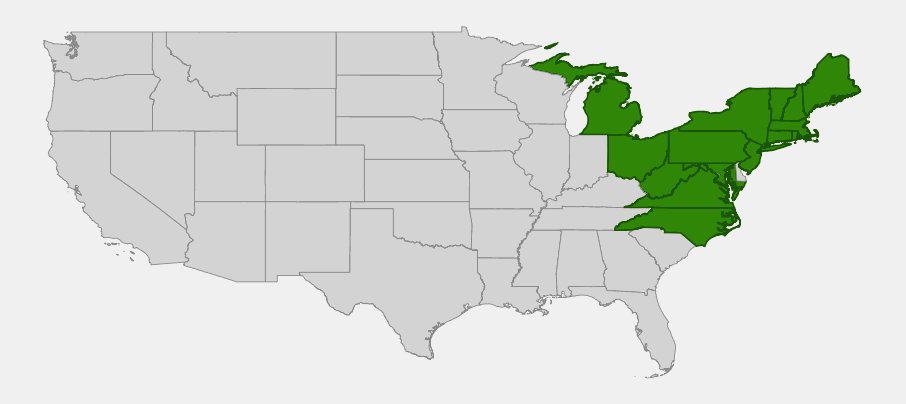
Dewdrop is a plant of northeastern North America. USDA PLANTS lists it as native in Canada and the lower 48 states and records it from 15 states, from Maine and New England west through New York, Pennsylvania and Ohio to Michigan, and south through New Jersey, Maryland, West Virginia and Virginia to the mountains of North Carolina. In Canada it grows in Ontario, Quebec, New Brunswick, Nova Scotia and Prince Edward Island.
It is most common in northern New England, the Adirondacks and the northern Great Lakes, and becomes scattered and uncommon toward its southern and western limits in Ohio, Maryland, Virginia, West Virginia and North Carolina, where it is usually found at higher elevations. Some older references mention Minnesota, but USDA PLANTS does not record it there, and this page follows the USDA range.
Dewdrop grows in cool, moist, shady places with acidic soil: mossy coniferous and mixed hardwood forests, hemlock and spruce woods, swamp edges, the drier margins of bogs, stream banks and damp, shady trail sides. It often grows among mosses and other small evergreen groundcovers.
📋 Regional plant lists featuring Dewdrop: New York, Pennsylvania & Northern New Jersey · Ohio & Indiana · Michigan, Wisconsin & Eastern Minnesota · Connecticut, Massachusetts & Rhode Island · New Hampshire, Maine & Vermont · Maryland, Virginia & West Virginia · Delaware, Southern New Jersey & Long Island · North & South Carolina
Growing & Care Guide
Dewdrop is a delicate, slow groundcover for gardeners who can give it the cool, moist, acidic conditions of a northern forest floor. Where it is happy, it knits into a soft mat that flowers on and off through summer.
Light
Part shade to full shade. Bright, dappled shade under conifers or high-branched hardwoods suits it best. Direct afternoon sun scorches the leaves and dries the soil it needs.
Soil & Water
Plant in moist, humus-rich, acidic soil with plenty of leaf mold or decayed conifer needles. Peaty bog margins and mossy ground are ideal. Keep the soil evenly moist; dewdrop does not tolerate drought, heat or alkaline soil. A mulch of shredded leaves or pine needles helps keep roots cool.
Planting Tips
Plant in spring or early fall, about 8 to 12 inches apart, with the crowns at the soil surface. It does best in regions with cool summers and grows poorly in the hot, humid lowland South. Pair it with other small northern groundcovers such as partridgeberry, goldthread and checkerberry.
Pruning & Maintenance
Little care is needed. Keep aggressive groundcovers and fallen debris from smothering the small plants, and water during dry spells. Leave the leaves in place over winter; they protect the crowns.
Propagation
The easiest method is to root runners: pin a runner tip to moist soil and sever it once it has rooted, or lift and replant small rooted sections in spring. Seed from the hidden cleistogamous flowers can be sown fresh in fall outdoors for natural cold stratification, but germination and growth are slow.
Landscape Uses
- Woodland groundcover: a low, soft mat for cool, shady, acidic soil
- Bog and wet garden edges: grows on the drier margins of bog gardens
- Shady paths and rock edges: fills gaps between mossy stones
- Native moss gardens: combines well with mosses and tiny evergreen plants
- Summer interest: single white flowers from June into August
Wildlife & Ecological Value
Dewdrop is a small part of the northern forest floor, but it adds to the dense carpet of low plants that shelters soil life and small animals.
For Pollinators
The open flowers, with their many stamens, are visited by small bees and flies for pollen. Because most seed comes from self-pollinating hidden flowers, the plant does not depend on pollinators to reproduce.
For Birds
The dry fruits are small and few. Ground-foraging birds in northern woods use the cover of low mats like this one, but dewdrop is not an important food plant for birds.
For Mammals
Small mammals may eat the seeds. The low, hairy leaves are not known as a major browse plant for deer or hares.
Ecosystem Role
Along with mosses, goldthread and partridgeberry, it helps form the living groundcover of cool, acidic forests, protecting soil from erosion and keeping it moist. Like many forest-floor plants, it spreads mainly by runners and builds slowly expanding clonal patches.
Cultural & Historical Uses
The genus name Dalibarda honors Thomas-François Dalibard (1709–1778), a French botanist who also became known for his experiments with lightning and electricity, carried out after reading Benjamin Franklin. Linnaeus named the plant Dalibarda repens in 1753; repens means “creeping.”
The name “dewdrop” is said to come from the small white flowers glistening against the dark leaves, and “false violet” from its violet-like leaves. The origin of “robin runaway” is not well recorded, though “runaway” fits its creeping runners. Its relationship with raspberries is not obvious at first glance, but the flowers and fruit structure show its place in the rose family.
Botanists have long debated whether dewdrop deserves its own genus. DNA studies show it is nested within the brambles, which is why many recent floras call it Rubus repens. It is one of very few brambles with no prickles and no juicy fruit.
Frequently Asked Questions
Is dewdrop a violet?
No. It looks like a violet because of its round, heart-shaped leaves, but it is in the rose family. Its flowers have five equal petals and many stamens, unlike the spurred, irregular flowers of violets.
Is dewdrop the same as golden dewdrop?
No. Golden dewdrop (Duranta erecta) is an unrelated tropical shrub. Dewdrop (Dalibarda repens) is a tiny northern woodland groundcover.
Is dewdrop evergreen?
It is semi-evergreen. The leaves stay green late into fall and often survive under snow, but older leaves are replaced each year.
Can I grow dewdrop in my shade garden?
Yes, if the soil is cool, moist, acidic and rich in organic matter. It struggles in hot summers, drought or alkaline soil.
Why does dewdrop rarely set seed from its showy flowers?
Most seed comes from small, closed, self-pollinating flowers hidden under the leaves. The showy white flowers mainly attract insects and set little seed.

Looking for a nursery that carries Dewdrop?
Browse our native plant nursery directory: Connecticut · Maine, Maryland, Massachusetts & Michigan · New Hampshire, New Jersey, New York, North Carolina & Ohio · Pennsylvania, Rhode Island, Vermont & Virginia · West Virginia

