
Creeping Snowberry (Gaultheria hispidula)
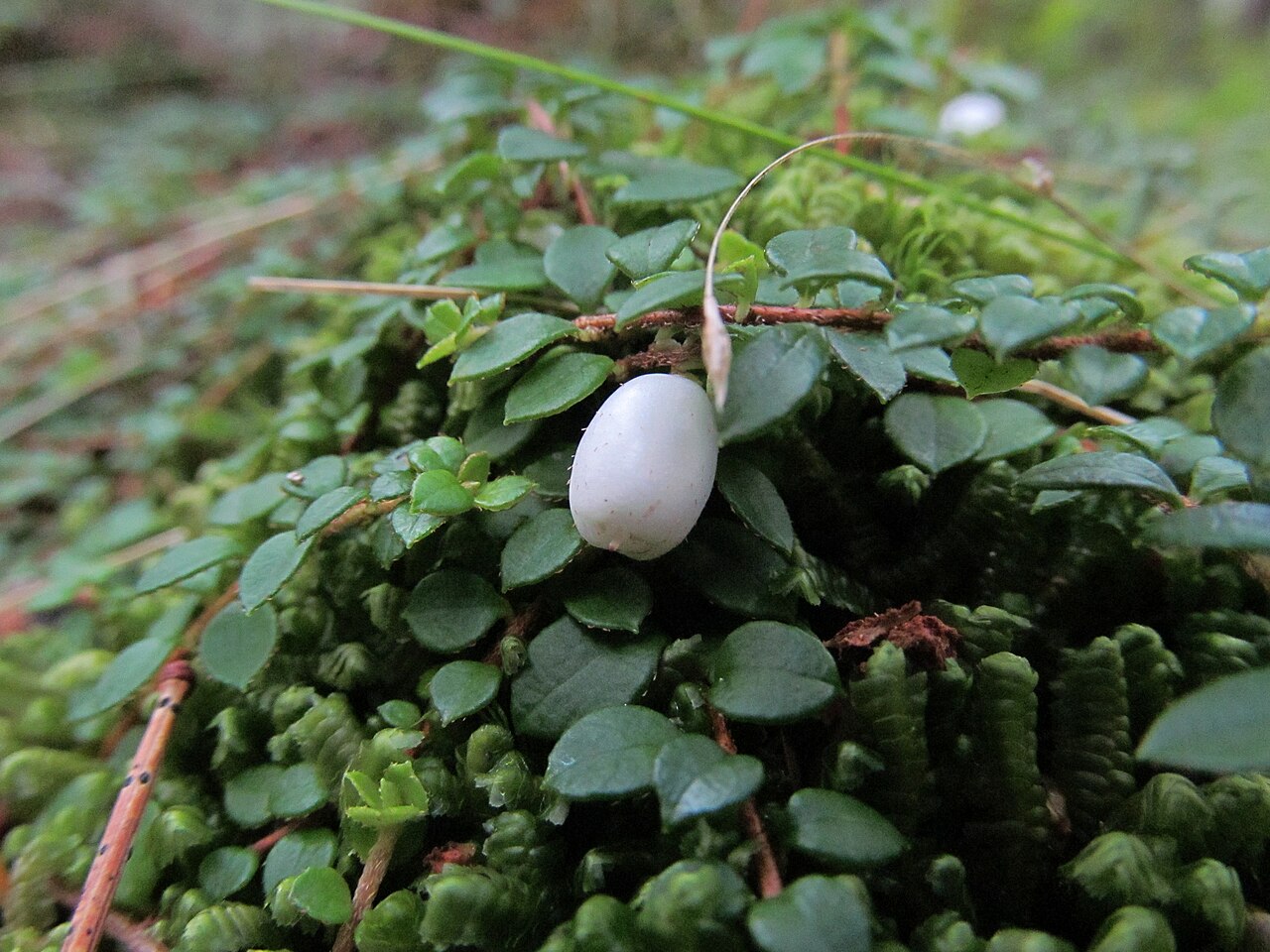
Gaultheria hispidula, known as Creeping Snowberry (USDA: creeping snowberry), is a tiny, evergreen, creeping shrub of cool, mossy northern forests and bogs. It belongs to the heath family (Ericaceae) and is a close relative of wintergreen (Gaultheria procumbens). Older books list it as Chiogenes hispidula. Other names include moxie plum, maidenhair berry and, in Quebec, petit thé (“little tea”).
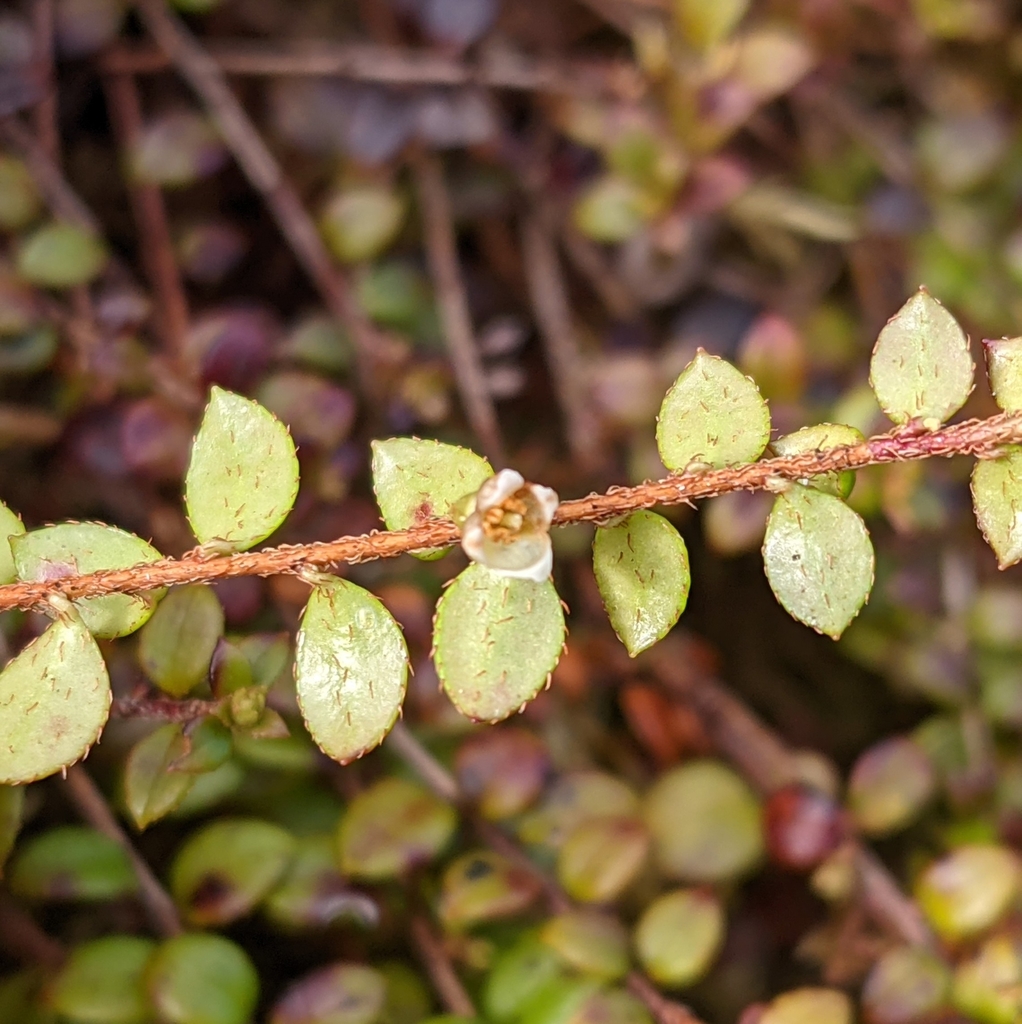
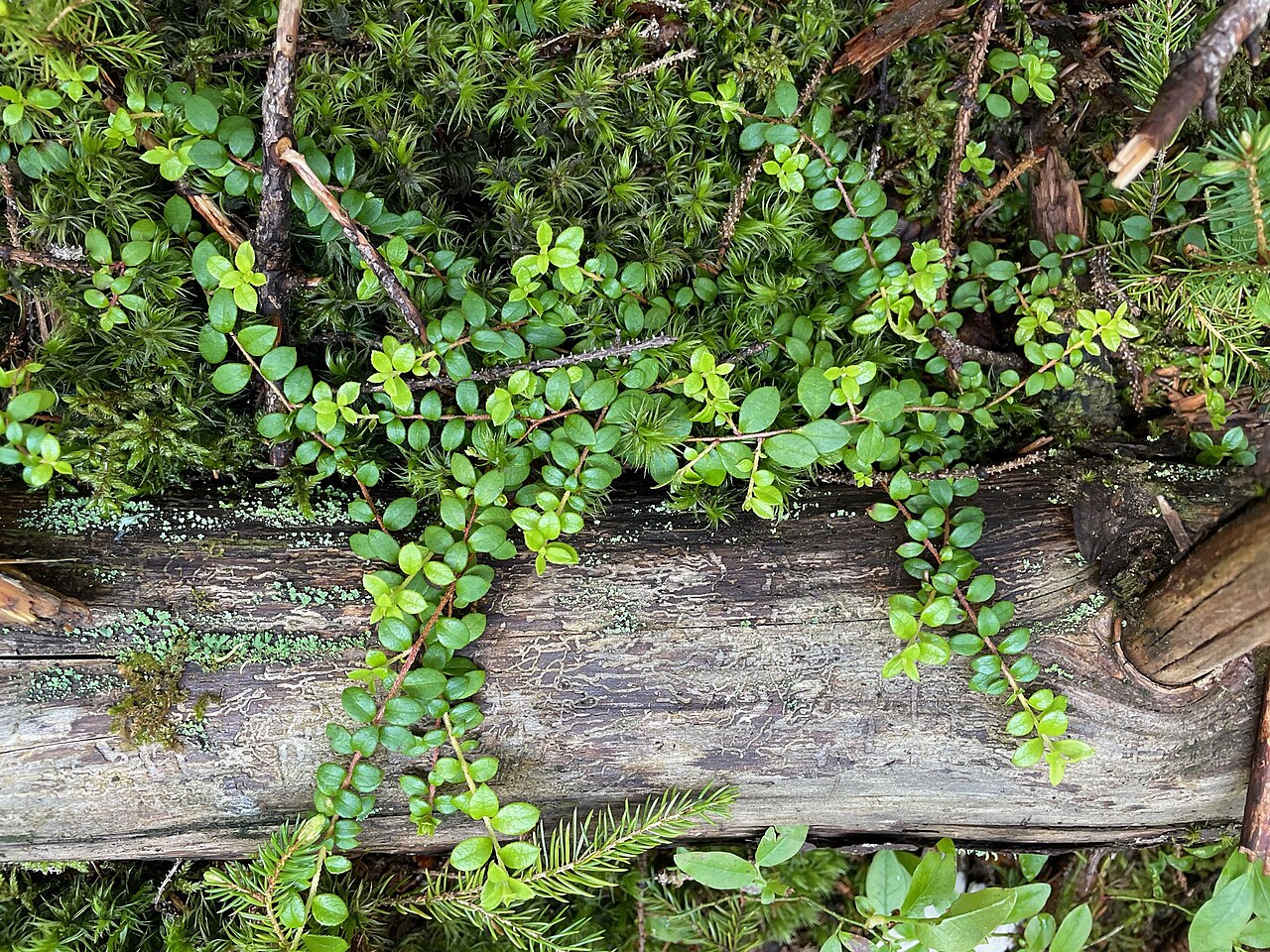
Its thread-like stems creep over moss, rotting logs and peat, forming flat, lacy mats only an inch or two high. They are lined with two rows of tiny, oval, leathery leaves less than 1/2 inch long. In late spring, minute white bell-shaped flowers hang beneath the stems, and by late summer they become snow-white, juicy berries that taste and smell of wintergreen. The stems and leaf undersides are covered with stiff brown hairs, which gives the plant its species name, hispidula (“slightly bristly”).
Creeping snowberry is a quiet but charming groundcover for cool, shady, acidic gardens in the North, especially under conifers and on mossy logs. It is slow to establish and needs consistently cool, moist conditions. It is listed as sensitive in Washington, where it reaches its western limit. Buy nursery-propagated plants and never dig them from bogs or forests.
Identification
Look for a flat, evergreen mat of tiny, oval, alternate leaves on slender, bristly stems creeping over moss, logs or peat, with pure white berries in late summer.
Stems
The stems are very slender and woody at the base, creeping along the ground or over moss and logs for 4 to 16 inches and rooting as they go. They are covered with flattened, rusty-brown bristly hairs. Plants rise only about 1 to 3 inches high.
Leaves
The leaves are alternate, evergreen and closely spaced in two rows, about 1/8 to 3/8 inch long, oval to nearly round, with a pointed tip and edges slightly rolled under. They are thick and dark green above and paler beneath, with scattered brown bristles on the underside. Crushed leaves have a faint wintergreen scent.
Flowers
In May and June, single flowers hang from the leaf axils on the underside of the stems, where they are easy to miss. Each is a tiny, white, bell-shaped corolla only about 1/8 inch long, deeply divided into four lobes, set above two small green bracts.
Fruit
The fruit, ripening in August and September, is a round to egg-shaped, snow-white, juicy berry about 1/4 to 3/8 inch long, often dotted with a few small bristles. It has a mild wintergreen flavor. The berries are much larger than the flowers and stand out against the dark leaves.
Look-alikes
Partridgeberry has opposite, rounded leaves with a pale midvein, paired white flowers and red berries. Twinflower has opposite, toothed leaves and pink, paired, bell-shaped flowers on upright stalks. Small cranberry (Vaccinium oxycoccos) has pointed leaves with whitened undersides and red berries, and grows in open sphagnum bogs. Checkerberry (wintergreen) is a relative with much larger, upright leaves and red berries.
Edibility & Safety
The berries are edible and have a mild wintergreen taste, and the leaves have been used for tea. Like wintergreen, the plant contains methyl salicylate, a compound related to aspirin, so people who are allergic to aspirin or taking blood thinners should avoid using it as tea. Eat only small amounts, and be certain of your identification.
Quick Facts
| Scientific Name | Gaultheria hispidula |
| Family | Ericaceae (heath family) |
| Plant Type | Creeping evergreen subshrub |
| Mature Height | 1–3 in |
| Mature Spread | 4–16 in per stem; forms slowly expanding mats |
| Growth Rate | Slow |
| Sun Exposure | Part shade to full shade |
| Water Needs | Medium to high; cool, constantly moist soil |
| Soil Type | Moss, peat, rotting wood, acidic humus |
| Soil pH | About 4.0–5.5 (acidic) |
| Bloom Time | May–June |
| Flower Color | White |
| Fall Color | Evergreen; leaves may bronze in winter |
| Fruit | Snow-white, wintergreen-flavored berry, August–September |
| Deer Resistant | Moderate; rarely browsed because of its low growth |
| USDA Hardiness Zones | 2–6 |
Native Range
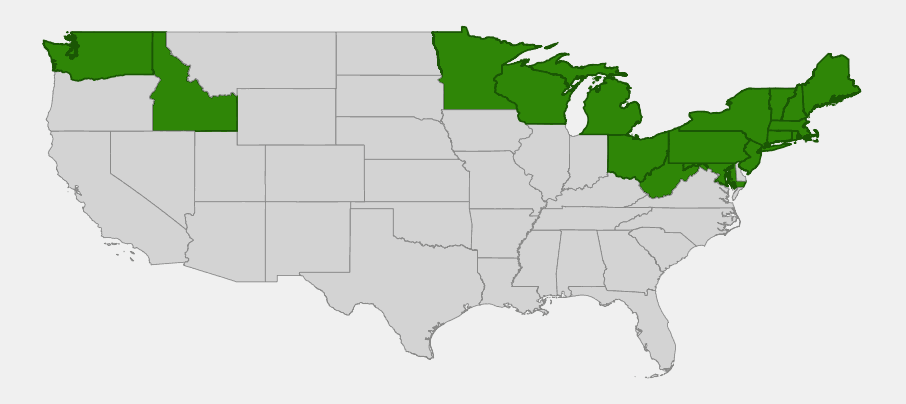
Creeping snowberry is a plant of the boreal forest across northern North America. USDA PLANTS lists it as native in Canada, Saint Pierre and Miquelon and the lower 48 states. In Canada it ranges from British Columbia and Alberta east through the Prairie Provinces, Ontario and Quebec to the Maritimes, Newfoundland and Labrador. The Lady Bird Johnson Wildflower Center summarizes its range as Labrador to British Columbia, south to New Jersey, West Virginia, Michigan, Minnesota and northern Idaho.
In the United States it is most common in northern New England, the Adirondacks, northern New York, and the northern parts of Michigan, Wisconsin and Minnesota. It extends south in cool bogs and mountain forests through southern New England, Pennsylvania and New Jersey, with scattered southern outposts in northern Ohio and in the mountains of Maryland and West Virginia. In the West it reaches northern Idaho and northeastern Washington, east of the Cascades, where it is rare and is listed as sensitive in Washington.
Typical habitats are sphagnum bogs, cedar and spruce swamps, mossy hummocks, cool, damp conifer and mixed forests, and rotting logs and stumps on the forest floor. It needs cool summers, constant moisture and acidic, organic soil.
📋 Regional plant lists featuring Creeping Snowberry: New York, Pennsylvania & Northern New Jersey · Idaho, Eastern Oregon & Eastern Washington · Ohio & Indiana · Michigan, Wisconsin & Eastern Minnesota · Connecticut, Massachusetts & Rhode Island · New Hampshire, Maine & Vermont · Maryland, Virginia & West Virginia · Delaware, Southern New Jersey & Long Island
Growing & Care Guide
Creeping snowberry is a plant for patient gardeners in cool northern climates. It needs shade, cool roots and constantly moist, acidic, organic soil, conditions found under conifers, on mossy logs and in bog gardens. It is offered only occasionally by native plant nurseries. Buy nursery-propagated plants; never dig them from the wild, where they are slow to recover and protected in some states.
Light
Part to full shade. It grows best in dappled light under conifers or on the north side of a building or rock. Hot afternoon sun dries and scorches it.
Soil & Water
Use acidic, humus-rich soil with plenty of peat, leaf mold or decayed wood, kept evenly moist at all times. It thrives on top of a mossy, rotting log or stump and in the hummocks of a bog garden. Water during dry spells, using rainwater if your tap water is hard. Do not lime or fertilize heavily.
Planting Tips
Plant in spring in a cool, sheltered spot, pressing the stems gently onto moist moss or peat so they can root. Mulch with pine needles or shredded conifer bark. Combine it with other small woodland plants such as twinflower, goldthread, bunchberry and mosses rather than with vigorous groundcovers that would smother it.
Pruning & Maintenance
It needs no pruning. Keep fallen leaves from burying the mats, and pull out weeds by hand. It does poorly in hot, humid summers and is best in zones 2 to 6 and at higher elevations.
Propagation
Cut rooted stem sections from established mats and pin them onto moist peat or moss. Seeds from fresh berries can be sown on moist, acidic medium after cold stratification, but germination and growth are slow.
Landscape Uses
- Shade groundcover: tiny evergreen mats under conifers in cool northern gardens
- Moss and log gardens: trailing over mossy stumps, logs and rocks
- Bog gardens: on sphagnum hummocks with other small bog plants
- Woodland restoration: boreal and conifer-swamp understory plantings
- Wild foods: small wintergreen-flavored white berries
Wildlife & Ecological Value
Creeping snowberry is a small but useful part of the boreal forest floor, feeding birds and small mammals and hosting a northern butterfly.
For Pollinators
The tiny flowers are visited by small bees and flies. The Lady Bird Johnson Wildflower Center lists it as a larval host plant for the bog fritillary (Boloria eunomia), a butterfly of northern bogs.
For Birds
Spruce grouse, ruffed grouse and thrushes eat the berries, along with other ground-feeding birds of northern forests.
For Mammals
Red-backed voles, chipmunks, red squirrels and other small mammals eat the berries. White-tailed deer and moose sometimes nibble the evergreen leaves in winter.
Ecosystem Role
Its evergreen mats help bind moss and decaying wood on the forest floor and in bogs. Like other heaths, it depends on mycorrhizal fungi to take up nutrients from acidic, nutrient-poor soils, and it is an indicator of cool, moist, undisturbed conifer forest.
Cultural & Historical Uses
In Quebec and the Maritimes, the leaves were traditionally steeped as a mild, wintergreen-flavored tea, which explains the French name petit thé. The berries were eaten fresh by Indigenous peoples and settlers in the northern forests, and they are still enjoyed as a trail nibble by hikers.
The plant was long placed in its own genus, Chiogenes, from Greek words meaning “snow offspring,” a reference to its white berries. Botanists later moved it into Gaultheria, alongside wintergreen and salal, because of its similar flowers, fruit and wintergreen chemistry.
The old New England name “moxie plum” or “moxie berry” is sometimes connected with the Maine-born soft drink Moxie, whose flavor is based on gentian root. The connection is uncertain. What is certain is that the plant’s spicy wintergreen taste made it a familiar treat for generations of people in the North Woods.
Frequently Asked Questions
Are creeping snowberry berries edible?
Yes. The white berries are edible and taste mildly of wintergreen. Eat them in small amounts, and avoid the leaf tea if you are allergic to aspirin or take blood thinners.
Can I grow creeping snowberry in my garden?
Yes, in cool northern gardens with shade and constantly moist, acidic, organic soil. It does best on mossy logs, under conifers or in a bog garden, and struggles in hot, humid summers.
Is creeping snowberry the same as the snowberry shrub?
No. Common snowberry (Symphoricarpos) is an upright shrub in the honeysuckle family with white berries. Creeping snowberry is a tiny, ground-hugging evergreen in the heath family.
Where does creeping snowberry grow in the West?
It reaches northern Idaho and northeastern Washington, east of the Cascades, where it is rare. Washington lists it as a sensitive species.
Why is it called hispidula?
The name means “slightly bristly,” for the stiff brown hairs on its stems, leaf undersides and sometimes its berries.

Looking for a nursery that carries Creeping Snowberry?
Browse our native plant nursery directory: Connecticut · Idaho · Maine, Maryland, Massachusetts, Michigan & Minnesota · New Hampshire, New Jersey, New York & Ohio · Pennsylvania, Rhode Island & Vermont · Washington · West Virginia & Wisconsin