Western Columbine (Aquilegia formosa)
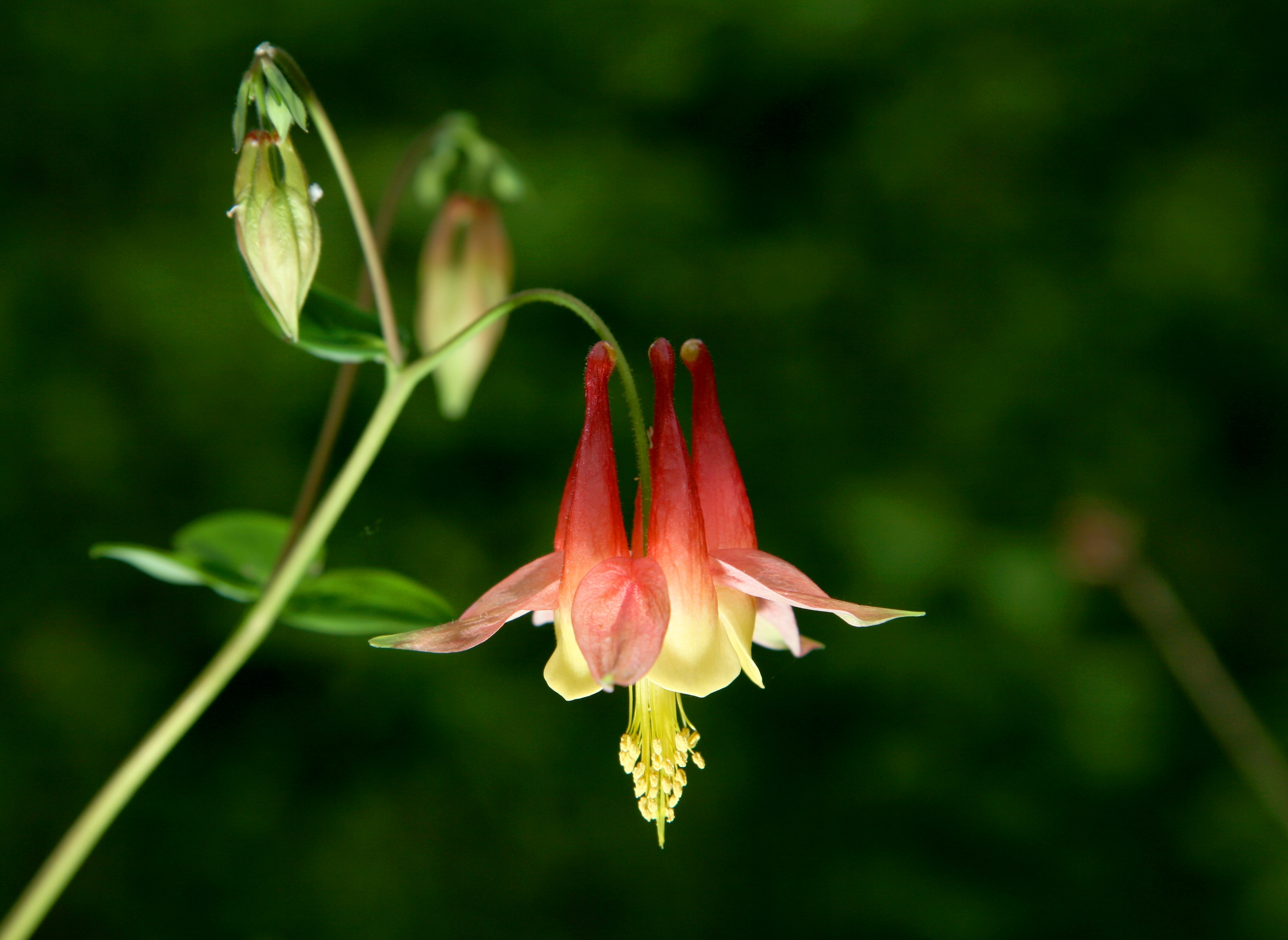
Aquilegia formosa, commonly known as Western Columbine, Red Columbine, or Sitka Columbine, is one of the most enchanting and distinctive wildflowers of the Pacific Northwest. This graceful perennial herb captivates observers with its unique spurred flowers that combine brilliant red sepals with bright yellow petals, creating a stunning two-toned display that seems to dance above delicate, blue-green foliage.
Found naturally from Alaska to California and east to Utah and Colorado, Western Columbine brings alpine beauty to lower elevation gardens while serving as a bridge between mountain wildflower communities and cultivated landscapes. Its preference for cool, moist conditions and partial shade makes it perfectly suited to Pacific Northwest gardens, where it can naturalize in woodland settings and provide long-lasting color from late spring through summer.
Beyond its ornamental appeal, Western Columbine plays important ecological roles as a specialized hummingbird flower. The distinctive spurred petals have co-evolved with hummingbirds, making this plant a cornerstone species for supporting these important pollinators in native plant communities throughout the region.
Quick Facts
| Scientific Name | Aquilegia formosa |
| Family | Ranunculaceae (Buttercup) |
| Plant Type | Herbaceous Perennial |
| Mature Height | 2–3 ft |
| Spread | 1–2 feet |
| Growth Rate | Moderate |
| Sun Exposure | Full Shade to Part Shade |
| Water Needs | Low to High |
| Soil Type | Moist, well-drained, humus-rich |
| Soil pH | 5.5–7.0 (slightly acidic to neutral) |
| Bloom Time | May – August |
| Flower Color | Red sepals, yellow petals |
| Flower Size | 1–2 inches across |
| Self-Seeds | Yes (readily naturalizes) |
| Attracts | Hummingbirds, long-tongued bees |
| USDA Hardiness Zones | 3–8 |
📋 Regional plant lists featuring Western Columbine: Alaska · Intermountain West · Western Oregon & Western Washington
Identification
Western Columbine is unmistakable among Pacific Northwest wildflowers, with its distinctive architecture and striking color combination making it instantly recognizable.
Flowers
The flowers are the plant’s most distinctive feature — complex, nodding blooms that combine red sepals with yellow petals and long, straight spurs extending backward. Each flower is 1-2 inches across, with five red sepals that form the outer “petals” and five yellow petals that are actually modified into spurs containing nectar. The prominent stamens extend beyond the petals, creating an elegant, airy appearance.
Leaves
The foliage is equally distinctive, consisting of compound leaves divided into three leaflets (ternately compound), with each leaflet further divided into rounded lobes. The leaves are blue-green to gray-green with a delicate, almost ethereal appearance that complements the flowers perfectly.
Growth Form
Western Columbine forms neat clumps 1-3 feet tall, with the distinctive flowers held on thin stems well above the foliage. The plant has a graceful, cottage garden appearance that works beautifully in both naturalized and formal garden settings.
Native Range
Native range of Western Columbine. USDA (County-Level Data)
Western Columbine has an impressive range extending from Alaska south to Baja California and east to Utah and Colorado. This broad distribution reflects the species’ adaptability to various mountain and coastal environments throughout western North America.
The species typically grows in moist woods, meadows, and along streams from sea level to subalpine elevations. It shows a preference for cool, moist conditions with some protection from intense sunlight, making it particularly well-suited to Pacific Northwest conditions.
Growing & Care Guide
Western Columbine is generally easy to grow in Pacific Northwest gardens when its basic requirements are met. Success depends on providing the cool, moist conditions it prefers in its native habitats.
Site Selection
Choose a location with partial shade to filtered sun and protection from hot afternoon sun. Morning sun with afternoon shade is ideal. The plant prefers cool root zones and benefits from locations that remain relatively cool even during hot summer weather.
Soil Requirements
Western Columbine performs best in rich, humusy soil that remains consistently moist but well-drained. Amend heavy soils with compost or leaf mold to improve drainage, while sandy soils benefit from organic matter to increase water retention.
Western Columbine demonstrates the remarkable adaptability that characterizes Pacific Northwest flora. Over millions of years, species like Aquilegia formosa have evolved specific strategies for thriving in the region’s unique climate patterns, developing characteristics that allow them to make the most of wet winters and navigate dry summers with remarkable efficiency.
The ecological relationships surrounding Western Columbine illustrate the complex interconnections that define healthy Pacific Northwest ecosystems. From soil microorganisms to large mammals, countless species depend on the resources and habitat structure provided by native plants like Aquilegia formosa. These relationships have developed over thousands of years, creating intricate webs of interdependence that support regional biodiversity.
Understanding Western Columbine’s role in natural succession helps explain its value in restoration and landscaping applications. As ecosystems recover from disturbance or as gardens mature, different species play important roles at different stages. Western Columbine contributes to community development in ways that support both immediate ecosystem function and long-term ecological resilience.
Climate change adaptation strategies increasingly recognize the importance of native species like Western Columbine in building landscape resilience. Plants that have evolved locally possess genetic diversity and physiological adaptations that help them respond to environmental variability. By incorporating native species into both natural and designed landscapes, we support ecosystems’ capacity to adapt to changing conditions.
Planting & Establishment
Plant in spring or fall, spacing plants 12-18 inches apart. Seeds can be direct-sown in fall or stratified and started indoors. The plant readily self-seeds in favorable conditions, often creating naturalized colonies over time.
Maintenance
Deadhead spent flowers to prevent excessive self-seeding or leave seed pods to mature if you want natural regeneration. Cut back foliage after it dies down in fall or early spring. The plant may go semi-dormant during hot, dry summer weather but typically rebounds with fall rains.
Wildlife & Ecological Value
Western Columbine is superbly adapted for hummingbird pollination, with its long spurs, red coloration, and hanging orientation perfectly matching hummingbird feeding preferences and capabilities.
Hummingbird Magnet
The tubular spurs contain nectar that’s accessible primarily to hummingbirds, making this plant a cornerstone species for hummingbird gardens. The extended blooming period provides consistent nectar from late spring through summer.
Other Pollinators
Long-tongued bees, butterflies, and sphinx moths may also visit the flowers, though hummingbirds are the primary pollinators. The complex flower structure represents millions of years of co-evolution with specific pollinator types.
Seed Production
The seeds are consumed by various small birds and mammals, while the foliage provides habitat for beneficial insects and their predators.
Cultural & Historical Significance
Western Columbine has been admired by people throughout its range for centuries. Indigenous peoples recognized its beauty and incorporated it into their cultural traditions, though unlike some plants, it was not widely used medicinally due to the toxic compounds found in columbine species.
The plant has become an important symbol of mountain wildflower beauty and is often featured in wildflower guides and botanical illustrations representing the flora of western North America.
Garden Design Applications
Western Columbine works beautifully in several garden contexts:
Hummingbird Gardens: Essential for any garden designed to attract hummingbirds, providing both nectar and the vertical structure hummingbirds prefer.
Woodland Gardens: Perfect for naturalizing in shade gardens alongside native ferns, wild ginger, and other woodland species.
Cottage Gardens: The informal, graceful appearance fits perfectly with cottage garden aesthetics while supporting native wildlife.
Perennial Borders: Adds delicate texture and unique color combinations to perennial plantings in partial shade locations.
Rock Gardens: Suitable for larger rock gardens and alpine-style plantings, especially in cooler, moister positions.
Looking for a nursery that carries Western Columbine?
Browse our native plant nursery directory: Oregon · Washington
Frequently Asked Questions
How fast does Western Columbine grow?
Western Columbine exhibits a moderate to fast growth rate under favorable conditions, typically establishing well within the first few growing seasons. Growth rate varies significantly based on site conditions, with optimal growth occurring in locations that closely mimic the plant’s natural habitat preferences. In suitable conditions with adequate moisture and appropriate light levels, you can expect steady annual growth.
Is Western Columbine deer resistant?
Like most Pacific Northwest natives, Western Columbine may be browsed by deer and elk, particularly in areas with high wildlife pressure or limited alternative food sources. However, as a native species that co-evolved with these herbivores, it typically recovers well from browsing damage. In areas with consistently heavy deer pressure, young plants may benefit from temporary protection during establishment.
What wildlife does Western Columbine support?
Western Columbine provides valuable habitat and food resources for a wide variety of Pacific Northwest wildlife, including native birds, beneficial insects, small mammals, and pollinators. The plant’s role in supporting biodiversity makes it an excellent choice for wildlife gardens, restoration projects, and any landscape designed to provide ecosystem services.
When is the best time to plant Western Columbine?
In the Pacific Northwest, fall planting (September through November) is typically most successful for native plants, as it allows root system establishment during the mild, wet winter months. Spring planting (March through May) can also be successful, though plants may require supplemental watering during their first summer dry season.
Where can I buy Western Columbine?
Western Columbine is available from native plant nurseries throughout Oregon and Washington. When possible, seek out locally-sourced stock grown from regional seed sources, as these plants will be better adapted to your specific area’s climate, soil conditions, and wildlife communities. Many restoration supply nurseries also carry the species for larger-scale projects.