
Yellow Star-Tulip (Calochortus monophyllus)
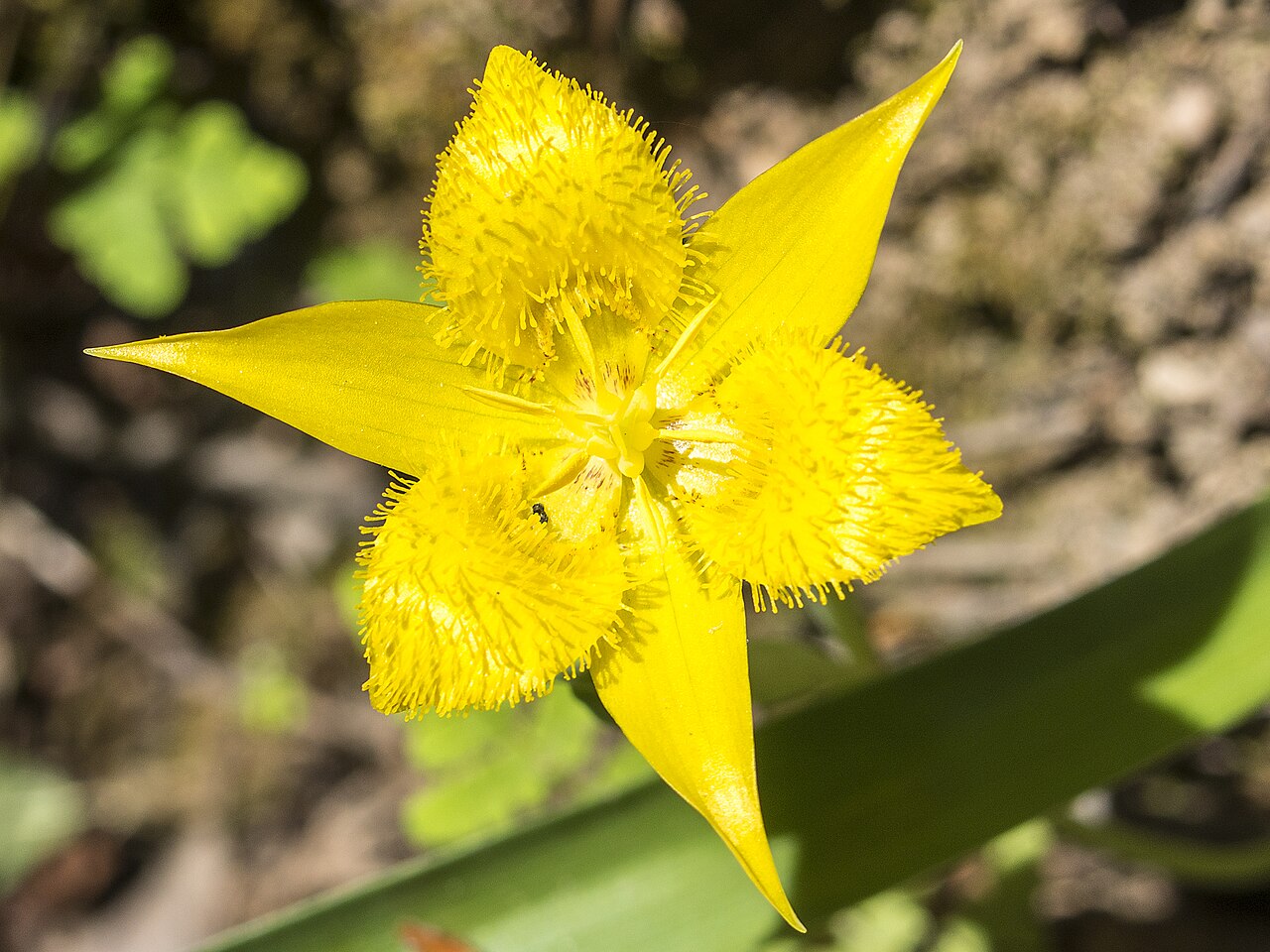
Calochortus monophyllus, known as Yellow Star-Tulip, is a small spring-blooming bulb in the lily family (Liliaceae) that grows only in California. It is found in the foothill oak woodlands and lower pine forests of the western Sierra Nevada and the southern tip of the Cascade Range, from Shasta County south to about Tulare County. In April and May it opens upright, cup- to star-shaped flowers of bright golden yellow on short stems.
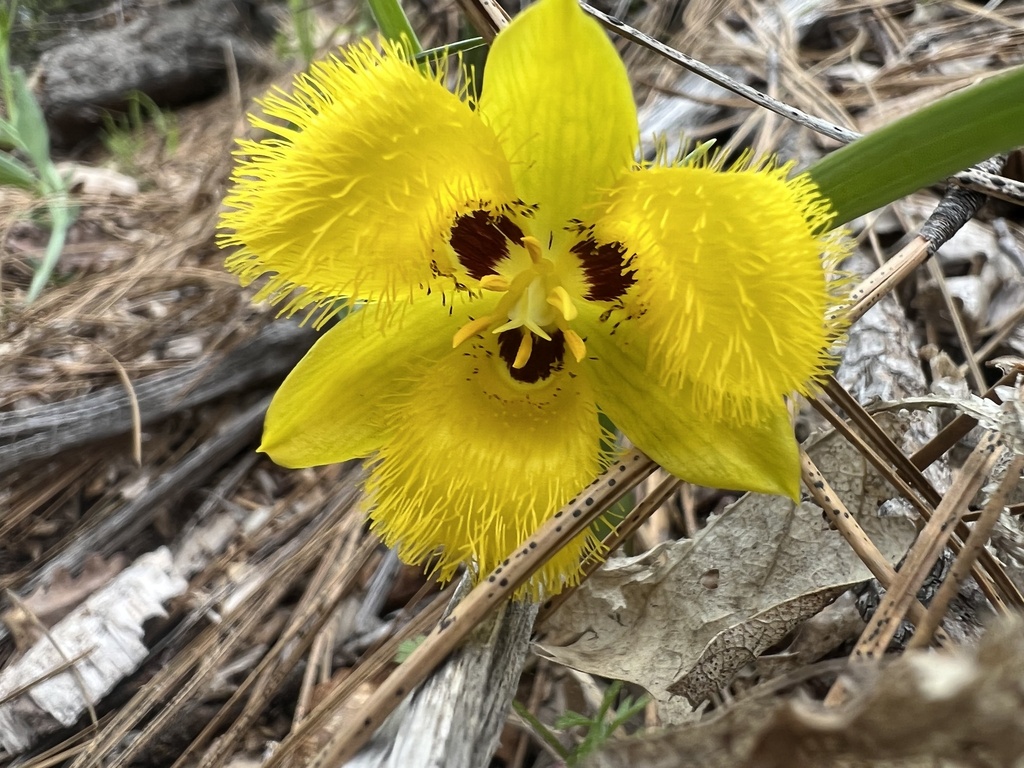
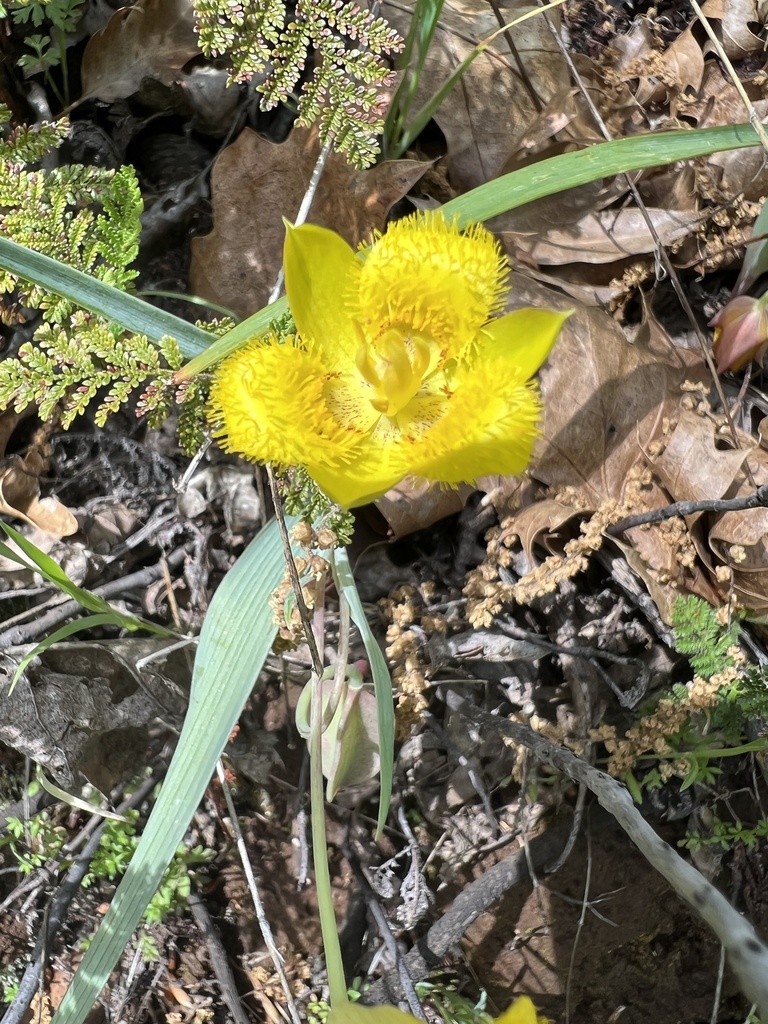
What sets it apart is the inside of its petals, which is covered in a dense coat of long yellow hairs, giving the flowers a fuzzy, almost furry look. The petal bases often carry dark reddish-brown spots. The species name monophyllus means “one leaf,” for the single long, grass-like basal leaf that stays green when the plant blooms.
Yellow star-tulip is a jewel for California native bulb collectors and foothill gardeners, but it is uncommon in cultivation. NatureServe ranks it as globally vulnerable. Buy bulbs or seed only from nurseries that propagate them, and never dig wild bulbs: bulbs taken from the wild rarely survive and every one removed reduces a limited wild population.
Identification
Look for a small foothill bulb with one long, flat basal leaf and one to several upright yellow flowers whose petals are thickly covered inside with yellow hairs.
Growth Habit
A perennial from a small, deep bulb. Each spring it produces a single long basal leaf and a slender, sometimes branched flowering stem up to about 8 inches (20 cm) tall. After the seeds ripen in early summer the plant dies back and the bulb rests through the dry season.
Leaves
The basal leaf is flat, narrow and grass-like, about 4 to 12 inches (10 to 30 cm) long, and does not wither at flowering, unlike that of many other Calochortus. A few much smaller leaves may grow along the stem.
Flowers
Each stem carries one to six erect, open, bell- to star-shaped flowers about 1 inch across. The three narrow, pointed sepals and three broad, rounded petals are all bright to deep yellow. The inner faces of the petals are densely covered in long yellow hairs, and the petal bases often have dark reddish-brown spots near a small, hairy nectar gland. Flowering is mainly in April and May.
Fruit
The fruit is an upright or nodding, three-angled capsule that ripens in late spring or early summer and splits to release flat seeds.
Look-alikes
Diogenes’ lantern (Calochortus amabilis) has nodding, globe-shaped yellow flowers and grows mainly in the Coast Ranges. Yellow mariposa lily (C. luteus) is taller, with larger, cup-shaped flowers that are not hairy inside. Other yellow foothill bulbs, such as golden brodiaeas (Triteleia), have clusters of six-tepaled flowers at the stem tip.
Quick Facts
| Scientific Name | Calochortus monophyllus |
| Family | Liliaceae (lily family) |
| Plant Type | Perennial bulb (summer-dormant) |
| Mature Height | 4–8 in |
| Mature Spread | 2–4 in |
| Growth Rate | Slow |
| Sun Exposure | Part shade to full sun |
| Water Needs | Moist in winter and spring; dry in summer |
| Soil Type | Well-drained loam, clay loam or rocky soil |
| Soil pH | Slightly acidic to neutral (about 5.5–7.0) |
| Bloom Time | April–May |
| Flower Color | Bright yellow, often with red-brown spots |
| Fall Color | None; dormant |
| Fruit | Three-angled capsule |
| Deer Resistant | No; deer, gophers and rodents eat plants and bulbs |
| USDA Hardiness Zones | 7–9 |
Native Range
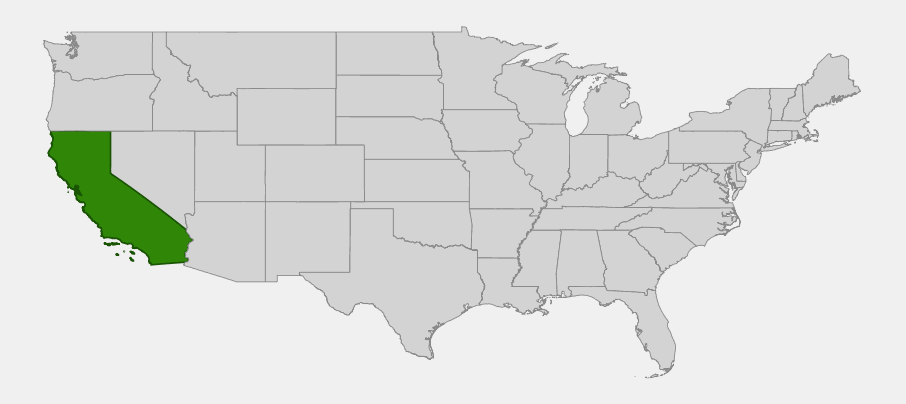
Yellow star-tulip is endemic to California. Its range is the foothills of the western Sierra Nevada and the southern end of the Cascade Range, from Shasta County south through Butte, Yuba, Nevada, Placer, El Dorado and Amador Counties to Tuolumne County, with scattered records farther south to about Tulare County.
USDA PLANTS also lists Oregon, but California floras, Wikipedia and iNaturalist observations treat it as a California endemic, and no verified Oregon populations are known, so this page treats it as native to California only.
It grows in interior oak woodland, foothill chaparral openings and lower yellow pine forest, usually in partial shade under oaks and pines or on grassy openings, at elevations of roughly 1,000 to 4,000 feet. It grows on clay, loam and rocky soils that are moist in spring and dry out completely in summer.
📋 Regional plant lists featuring Yellow Star-Tulip: California & Nevada
Growing & Care Guide
Yellow star-tulip is a specialist bulb for gardeners in California and similar summer-dry climates, or for collectors who grow it in pots. It needs winter moisture, sharp drainage and a completely dry summer rest.
Light
Part shade to full sun. In hot inland gardens, the light shade of oaks or pines, as in its natural habitat, keeps flowers fresh longer.
Soil & Water
Plant in well-drained loam, clay loam or gritty soil. Water lightly in winter and spring if rains fail, then stop watering once the leaf yellows in early summer. Summer water causes bulbs to rot.
Planting Tips
Plant bulbs in fall, about 2 to 3 inches deep, in groups. In gardens with summer irrigation or heavy, wet soil, grow it in deep pots of gritty mix and keep the pots dry from June to October. Protect bulbs from gophers with wire baskets. Use only nursery-grown bulbs or seed; never dig bulbs from the wild.
Pruning & Maintenance
Let the leaf die back naturally so it can feed the bulb for next year. Mark the planting spot so the dormant bulbs are not dug up or watered by accident in summer.
Propagation
Grow from seed sown in fall in deep pots, left outdoors for natural winter chilling. Seedlings take three to five years to reach flowering size. Mature bulbs sometimes produce small offsets.
Landscape Uses
- Native bulb gardens: golden spring flowers for summer-dry gardens
- Oak woodland gardens: under the open shade of oaks and pines
- Rock gardens and containers: small scale and sharp drainage
- Pollinator support: spring pollen for native bees
- Where to see it: Sierra Nevada foothill trails in April and May
Wildlife & Ecological Value
Yellow star-tulip is part of the rich spring bulb flora of California’s foothill woodlands.
For Pollinators
Native bees, beetles and flies visit the flowers. The hairy petals and nectar glands at the petal bases are typical of mariposa lilies, which are pollinated mainly by bees and beetles.
For Birds
It provides little direct food for birds, but the insects it attracts are part of the spring food supply in foothill woodlands.
For Mammals
Pocket gophers, ground squirrels and other rodents dig and eat Calochortus bulbs, and deer browse the flowers and leaves.
Ecosystem Role
As a summer-dormant bulb, it uses the short wet season to grow, flower and set seed, adding to the diversity of the herb layer under oaks and pines. Like many California foothill wildflowers, it often blooms well after fire, when competing plants are reduced.
Cultural & Historical Uses
The genus name Calochortus comes from the Greek for “beautiful grass,” referring to the grass-like leaves. The species was first described by the English botanist John Lindley under the name Cyclobothra monophylla and later moved to Calochortus.
California Indian peoples dug and ate the bulbs of several Calochortus species. Today, wild bulbs should be left in place; many Calochortus species have small or declining populations.
The fuzzy-petaled star-tulips are among the most distinctive of the roughly 70 Calochortus species, a genus that is especially diverse in California and includes mariposa lilies, fairy lanterns and cat’s ears.
Frequently Asked Questions
Where does yellow star-tulip grow?
Only in California, in the foothill oak woodlands and lower pine forests of the western Sierra Nevada and southern Cascades, from Shasta County south to about Tulare County.
Why are the petals hairy?
The dense yellow hairs on the inside of the petals are a feature of star-tulips and cat’s ears. They may help guide or hold insect visitors near the nectar glands.
Can I dig yellow star-tulip bulbs from the wild?
No. Wild bulbs rarely survive transplanting, and digging them harms limited wild populations. Grow it from nursery-propagated bulbs or seed.
When does yellow star-tulip bloom?
Mainly in April and May, after which the plant goes dormant for the summer.
Does yellow star-tulip need summer water?
No. It needs a dry summer rest; summer watering usually causes the bulbs to rot.

Looking for a nursery that carries Yellow Star-Tulip?
Browse our native plant nursery directory: California

