Tools Every Maine Gardener Needs for a Successful Growing Season
Last updated: August 30, 2026
Gardening in Maine isn’t for the faint of heart. The rocky soil, short growing season, and unpredictable weather make it a real challenge.
To get anywhere, you’ve got to have the right gear. The essential tools every Maine gardener should have include a sturdy spade, quality pruning shears, and a durable rake.
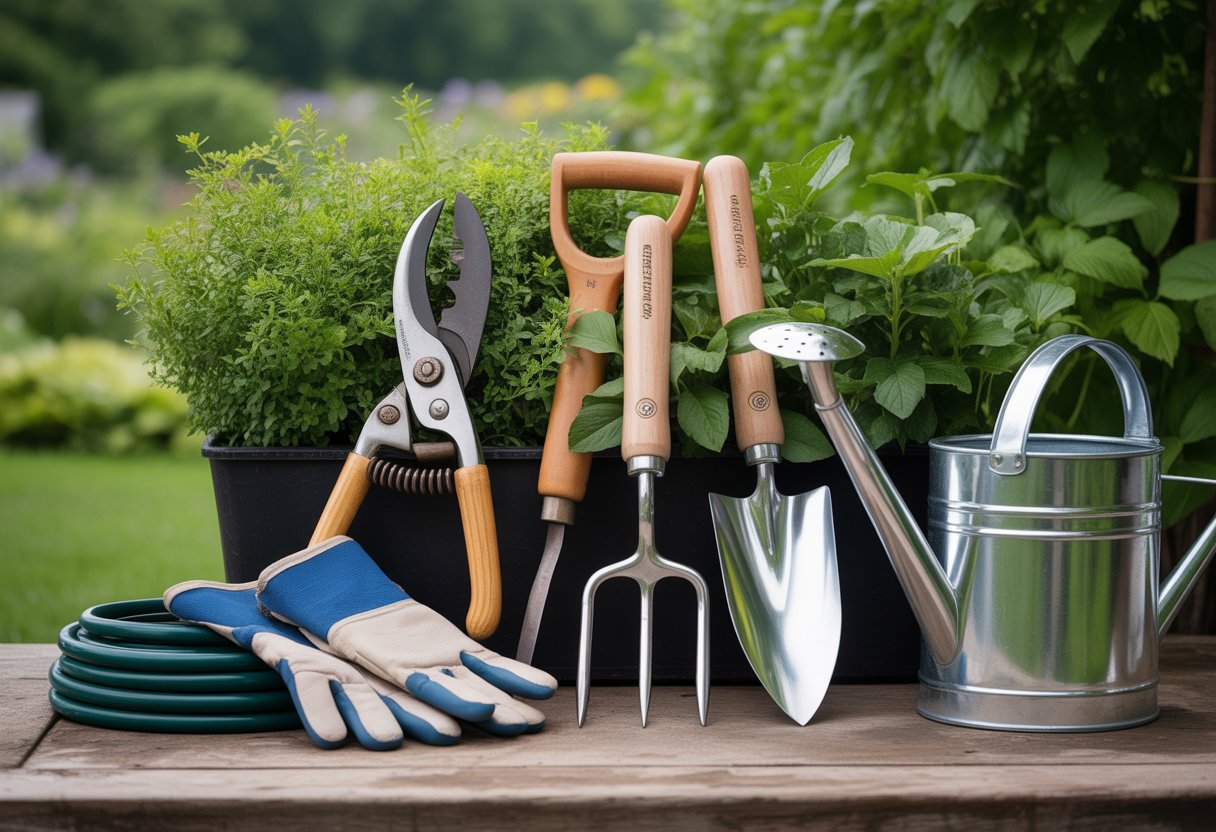
These tools tackle tough ground, help keep plants healthy, and make prepping for planting and cleanup a lot less stressful.
If you know what to invest in, you’ll save yourself a ton of time and effort. It just makes gardening more enjoyable—trust me.
Essential Hand Tools for Maine Gardeners
Maine gardeners lean on a handful of specific hand tools that really suit the state’s tricky soil and climate. You’ll want cutting tools, digging gear, cleaning gadgets, and some protective stuff to help with planting, pruning, and regular maintenance.
Pruners and Shears
Pruners are a must for shaping plants and getting rid of dead or sick branches. Bypass pruners cut cleanly—kind of like scissors—so you don’t crush stems.
Loppers come in handy for thicker branches, giving you extra reach and muscle. Hand pruners and snips handle smaller stems, which is great for detail work in flower beds and veggie patches.
Pruning shears come in all shapes and sizes. Look for ones with sharp, rust-resistant blades and handles that actually feel good in your hand.
Digging and Lifting Tools
The garden fork breaks up Maine’s rocky soil and deals with compacted earth. Pair it with a sharp spade for slicing through soil and roots—super useful for transplanting and edging.
Hand trowels and soil knives make planting and precision digging way easier. A good trowel has a tough blade and a handle that won’t hurt your wrist. Soil knives, with their pointed edges, do a bit of everything: cut sod, slice roots, open bags—you name it.
Rakes and Hoes
Rakes aren’t all the same. Leaf rakes with flexible tines sweep up fallen leaves, while garden rakes with stiff tines help level soil and break up clumps.
A solid, well-balanced rake really speeds up cleanup and soil prep. Garden hoes help battle weeds and stir up the soil. Different types, like the Dutch or stirrup hoe, let you skim just under the surface, cutting weeds without yanking up your good plants.
Protective Gear and Accessories
Gloves save your hands from thorns, splinters, and the general grime of gardening. Go for ones that are tough but let your hands breathe, and reinforced fingertips are a plus.
Kneeling pads can be a lifesaver if you’re out there planting or weeding for hours. Tool sharpeners keep your pruners in shape, making sure you get clean cuts that don’t hurt your plants.
Don’t forget a good sun hat and something to drink—Maine weather can surprise you, and it’s easy to lose track of time outside.
Watering and Transport Solutions
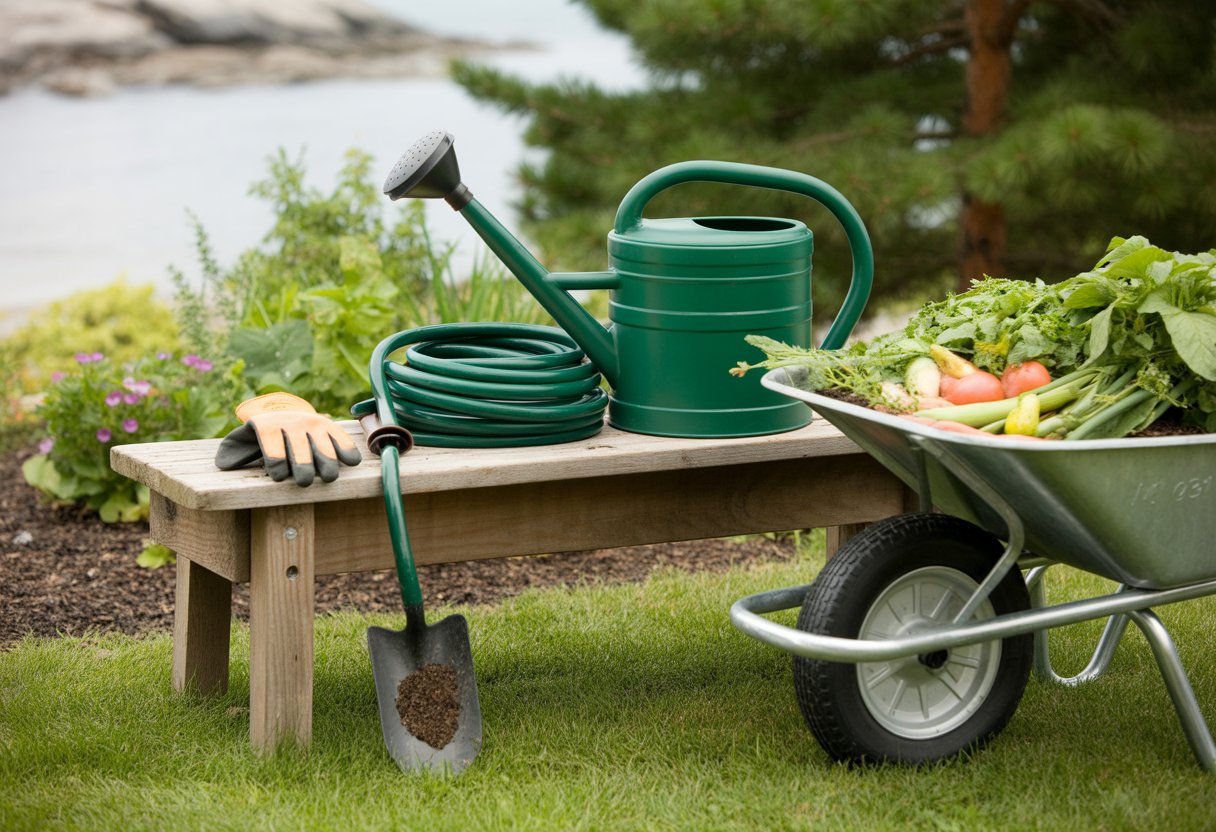
Getting water, soil, and plants from point A to point B is half the battle in a Maine garden. The right equipment saves your back and keeps the whole operation running smoother.
You’ve got to think about durability and how well your gear handles Maine’s rough terrain and weather.
Watering Cans and Wands
Watering cans are perfect for delicate seedlings and containers. Go for heavy-duty plastic or galvanized metal—they last longer in Maine’s damp climate.
Most cans hold between 1 and 3 gallons, which is a good balance between weight and not having to refill every two seconds. Watering wands help you reach tall plants or hanging baskets and let you control the water flow.
Models with adjustable nozzles let you switch from a gentle shower to a stronger spray, so you don’t blast your plants to bits. Long wands mean less bending, which your back will thank you for.
Both cans and wands should resist rust and UV damage since they’ll probably live outside. Easy-to-clean designs help prevent clogs, especially with Maine’s mineral-heavy water.
Wheelbarrows and Carts
A sturdy wheelbarrow is a game-changer for hauling soil, mulch, plants, and tools around. Steel tubs are tough but heavy, while polymer tubs are lighter and won’t rust, though they can crack in the cold.
Pneumatic tires make it easier to roll over Maine’s bumpy ground. Two-wheeled carts add stability and carry more without tipping over, which is handy for big pots or a pile of tools.
Look for ergonomic handles and tires that are easy to swap out when they go flat. The size you need depends on your garden—small yards need compact wheelbarrows, while bigger properties call for larger models or carts.
Tractors for Larger Gardens
If you’re working a big plot or have hilly, uneven ground, a tractor can be a lifesaver. Compact utility tractors with attachments like loaders or tillers help with prepping soil, hauling, and clearing debris.
Think about horsepower, what attachments you’ll need, and how much fuel it burns. Diesel engines are popular for their durability and grunt, especially in tough conditions.
Four-wheel drive helps if you’re dealing with mud or hills. Easy maintenance, available parts, and local dealer support all matter in Maine.
A tractor can cut your labor time dramatically, but it’s a big investment—and you’ll need a spot to park it.
Soil, Plant, and Pest Management Tools
You can’t ignore soil quality or pests if you want your Maine garden to thrive. The right tools help you prep the ground and fight off bugs and diseases without going overboard.
Soil Preparation and Fertilization
A sturdy hand trowel and garden fork break up Maine’s clay-heavy soil. Soil testers check pH and nutrients, so you’ll know whether to add lime or a specific fertilizer.
Slow-release fertilizers with balanced N-P-K numbers work for most Maine gardens. Compost spreaders or broadforks mix organic matter in evenly, and raised bed mixers help drainage and root health.
Pest and Disease Control Equipment
Sprayers apply insecticides right where you need them, keeping pests like aphids and Japanese beetles in check. Gloves and masks are a must when using chemicals.
Maine’s humid summers can bring mold and fungus, so a fungicide sprayer is sometimes necessary. Sticky traps and row covers block bugs without chemicals, and battery-powered foggers let you cover big areas fast.
A simple magnifying lens can help you spot problems early, before they get out of hand.
Special Considerations for Maine Gardens
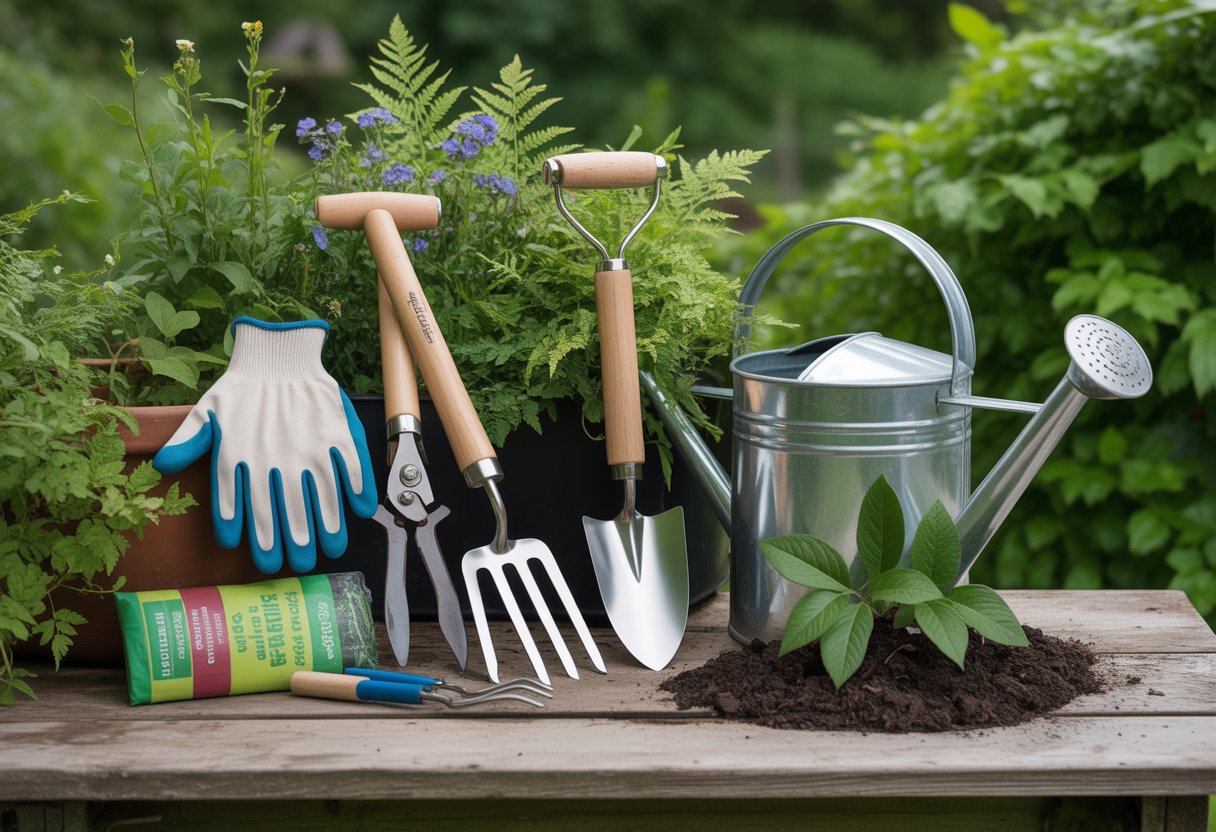
Maine’s rocky soil, changing weather, and unique crops mean you’ve got to pick your tools carefully. The right gear makes a noticeable difference in how smoothly things go.
Recommended Tools for Flowers, Herbs, and Vegetables
For flowers, sharp pruning shears and a transplanting trowel are key. You’ll want to make clean cuts and move seedlings without wrecking their roots.
A soil knife is handy for dealing with Maine’s rocks. Herbs do best with herb scissors and lightweight snippers for quick harvesting.
Raised beds help drainage, so a broadfork is great for loosening soil without disturbing roots. For veggies, you’ll need a sturdy hoe for weeding and cultivating.
A watering wand with adjustable flow keeps seedlings happy. Cold frames and row covers protect early crops from Maine’s sneaky frosts.
| Crop Type | Recommended Tool | Purpose |
|---|---|---|
| Flowers | Pruning shears, soil knife | Precise cuts, rock handling |
| Herbs | Herb scissors, broadfork | Harvesting, soil aeration |
| Vegetables | Hoe, watering wand, row covers | Weeding, gentle watering, frost protection |
Learning from Coastal Maine Botanical Gardens
Coastal Maine Botanical Gardens shows off methods that really fit the local climate. They lean toward native plants with tough root systems that handle rocky soil and salty air.
Their gardeners use ergonomic tools to cut down on strain from repetitive work. Hand tools with cushioned grips and long handles seem to get a lot of love here.
The gardens spread mulch everywhere to keep moisture in and block out weeds. I’ve noticed they don’t skimp on this step.
They also use water-efficient irrigation to help plants during dry spells. Honestly, watching their approach could help anyone pick better tools and manage a garden that can handle Maine’s unpredictable coast.