Black Huckleberry (Gaylussacia baccata)
Gaylussacia baccata, commonly known as Black Huckleberry, is a low-growing native deciduous shrub that ranks among the most ecologically significant and historically cherished fruit-bearing plants of eastern North America. A member of the Ericaceae (heath) family and a close relative of blueberries, Black Huckleberry has been prized for millennia — by Indigenous peoples, colonial settlers, wildlife, and modern foragers alike — for its small, intensely flavored dark berries. The genus Gaylussacia is named in honor of the French chemist Joseph-Louis Gay-Lussac, a tribute that belies the plant’s deeply American identity.
Black Huckleberry forms dense, suckering colonies in acidic, well-drained soils of forests, woodland edges, and rocky outcrops throughout much of the eastern United States, from the Great Lakes and New England south through the Appalachians into the Deep South. In Maryland, Virginia, and West Virginia, it is a characteristic understory shrub of oak-hickory forests, pitch pine barrens, and rocky ridgetops — often one of the dominant shrubs where it occurs. Its ability to thrive in poor, acidic soils where few other shrubs flourish makes it an important ecological pioneer and a keystone species in dry forest understories.
The berries — botanically true drupes containing 10 hard, seed-like nutlets — are smaller and darker than blueberries and have an intense, somewhat earthy sweetness that many consider superior for cooking. Black Huckleberry is widely regarded as the ancestral stock from which commercial blueberries were eventually developed. Today, the plant is experiencing renewed interest both as a native landscape shrub and as a foraged fruit, and its exceptional wildlife value — providing food for dozens of bird species, bears, foxes, and deer — makes it one of the most important native shrubs of the eastern forest.
Identification
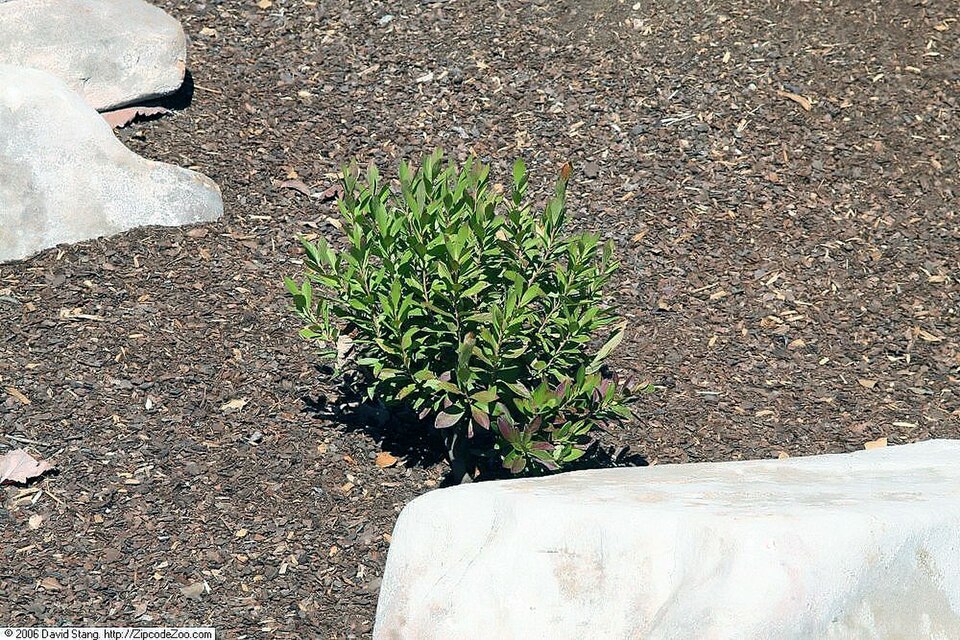
Black Huckleberry is a low, spreading deciduous shrub, typically 1 to 3 feet tall (30–90 cm), occasionally reaching 4 feet in ideal conditions. It spreads by underground rhizomes to form dense colonies — a key characteristic that distinguishes it from blueberries in the landscape. The overall form is irregular and somewhat stiff, with many slender branches.
Leaves
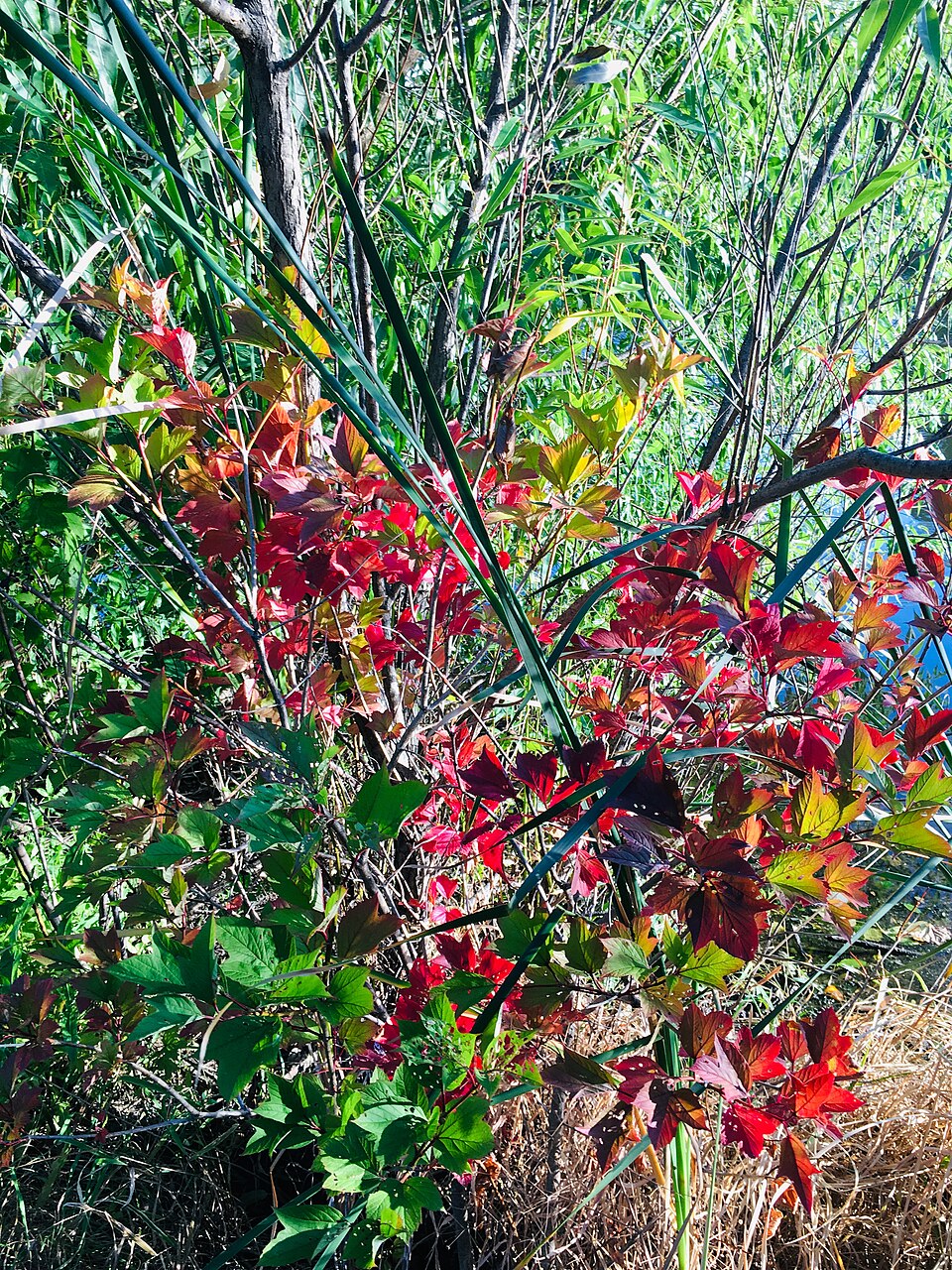
The leaves are alternate, simple, oval to elliptic, 1 to 2.5 inches (2.5–6 cm) long and ½ to 1.5 inches (1–4 cm) wide, with smooth, entire margins. One of the most diagnostic features of Gaylussacia is that the leaves are covered on both surfaces (especially the underside) with tiny resin dots or glands — visible under magnification — which give the leaves a slightly sticky feel and a distinctive fragrance when crushed. The upper surface is bright green and slightly shiny; the underside is pale green. Fall color is often brilliant red to orange-red, providing excellent autumn landscape interest.
Flowers
The flowers appear in April to June, before or just as the leaves fully expand. They are small, cylindrical to urn-shaped (5–7 mm long), drooping in racemes of 3 to 8 flowers, and range from white to pink-tinged. Each flower has 5 fused petals forming the characteristic urn shape of the heath family. The flowers are a valuable early nectar source for native bees, particularly bumblebees and specialist bee species that are oligolectic on Ericaceae.
Fruit
The fruit is a small, round drupe, 6–9 mm in diameter, that ripens from red to deep blue-black from July through August. Unlike blueberries — which have many tiny seeds — huckleberries contain 10 large, hard, seed-like nutlets (actually pyrenes), which gives them a slightly crunchy texture when eaten. The berries are sweet and flavorful, with a more intense taste than most commercial blueberries.
Quick Facts
| Scientific Name | Gaylussacia baccata |
| Family | Ericaceae (Heath) |
| Plant Type | Deciduous Shrub |
| Mature Height | 1–3 ft |
| Sun Exposure | Part Shade to Full Shade |
| Water Needs | Low to Moderate |
| Bloom Time | April – June |
| Flower Color | White to pink-tinged |
| Fruit | Deep blue-black berries (edible) |
| Fall Color | Brilliant red to orange-red |
| USDA Hardiness Zones | 3–7 |
Native Range
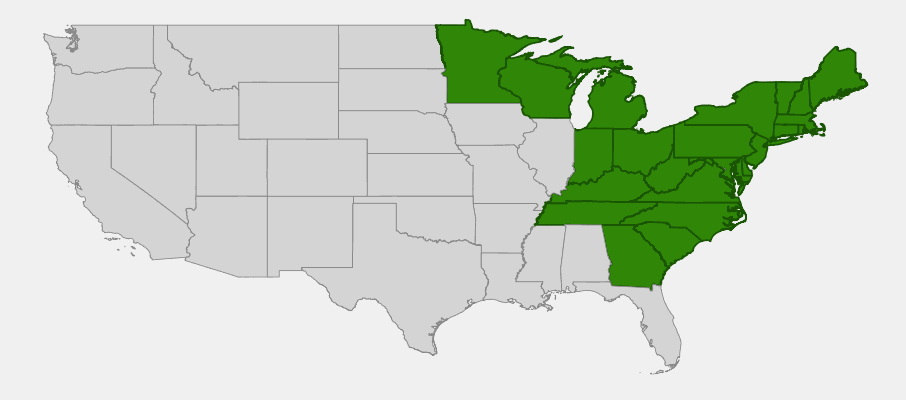
Black Huckleberry is native to a broad swath of eastern North America, from southern Canada south through New England, the Mid-Atlantic, Appalachians, and Great Lakes region, and extending into parts of the Southeast. In Maryland, Virginia, and West Virginia it is a widespread native understory shrub of dry to mesic upland forests, particularly common in the Piedmont, Ridge and Valley, and Appalachian Plateau regions on acidic, rocky or sandy soils.
In the Mid-Atlantic region, Black Huckleberry is a characteristic species of Appalachian oak forests, pitch pine-oak barrens (where they occur), and rocky ridge forests. It is frequently a dominant understory plant on dry ridgetops where thin, acidic soils limit competition from other species. In Virginia’s Blue Ridge and the Allegheny Mountains of West Virginia, it forms extensive colonies, particularly where periodic fire historically maintained open conditions in the understory.
At its northern limit, Black Huckleberry grows in boreal forest edges and on rocky outcrops in Quebec and Ontario. At its southern limit, it occurs in mixed deciduous forests and rocky uplands in parts of Georgia and Alabama. Throughout its range, it is most abundant in areas with naturally acidic, nutrient-poor soils derived from sandstone, granite, or quartzite parent material.
📋 Regional plant lists featuring Black Huckleberry: Maryland, Virginia & West Virginia
Growing & Care Guide
Black Huckleberry is a rewarding native shrub for naturalistic landscapes with acidic soil — once established, it is long-lived, low-maintenance, and provides four seasons of interest: spring flowers, summer fruit, brilliant fall color, and persistent winter structure.
Light
In nature, Black Huckleberry grows under partial to full shade of forest canopies, and it is well adapted to these conditions in the garden. However, it also performs well in partial sun (4–6 hours direct light) and will produce more flowers and fruit with greater sun exposure. In full shade, it remains attractive but blooms and fruits less prolifically. It is one of the most shade-tolerant native fruiting shrubs available for the Mid-Atlantic region.
Soil & Water
Acidic soil is essential — Black Huckleberry requires a pH of 4.5 to 6.0 and struggles in neutral or alkaline soils. It thrives in the same conditions that suit blueberries: well-drained, organic-rich, sandy or rocky acidic soils. Once established, it is notably drought tolerant and needs minimal supplemental watering. In clay soils or alkaline conditions, amend heavily with sulfur and organic matter (pine bark, peat) before planting or choose a different site.
Planting Tips
Plant Black Huckleberry from container stock or rooted divisions in spring or fall. Choose a site with acidic soil — under mature oaks or pines is often ideal, as the organic matter from their leaf litter maintains natural soil acidity. Mulch with oak leaf litter or pine needles to maintain moisture and acidity. For berry production, plant multiple individuals to ensure cross-pollination, though the plant does produce some fruit without cross-pollination.
Pruning & Maintenance
Black Huckleberry requires very little maintenance. Remove dead or damaged branches in late winter. The plant benefits from occasional thinning of old stems (every 5–7 years) to encourage vigorous new growth from the base. It is naturally adapted to periodic fire, which stimulates robust resprouting — a hard cutting-back to 6 inches in late winter can rejuvenate older, declining colonies, mimicking the effect of a ground fire.
Landscape Uses
- Native woodland garden — natural fit under oaks, hickories, and pines
- Edible landscape — one of the finest native edible fruit shrubs for the Mid-Atlantic
- Wildlife garden — berries and cover for dozens of species
- Dry shade planting — one of few native shrubs thriving in dry, shaded sites
- Erosion control on slopes — rhizome network stabilizes acidic, erodible soils
- Fall color accent — brilliant red fall foliage in sun-exposed colonies
Wildlife & Ecological Value
Black Huckleberry is a keystone plant for wildlife in eastern forest ecosystems, providing essential food and habitat for a remarkable diversity of species across all seasons.
For Birds
The berries are eagerly consumed by dozens of bird species, including American Robin, Gray Catbird, Eastern Towhee, Hermit Thrush, Veery, Wood Thrush, Cedar Waxwing, Northern Mockingbird, Ruffed Grouse, Wild Turkey, and many others. The dense, branchy structure of huckleberry colonies provides excellent nesting habitat for ground-nesting and low-nesting birds including Ovenbird, Prairie Warbler, and various sparrow species.
For Mammals
Black Bears are particularly important consumers of Black Huckleberry, and the plant is a major component of the pre-hibernation diet of bears throughout the Appalachians — including in the mountains of Virginia and West Virginia. Foxes, raccoons, opossums, skunks, and White-tailed Deer also consume the berries. The dense thickets provide escape cover and thermal refugia for small mammals including Eastern Cottontail, chipmunks, and voles.
For Pollinators
The urn-shaped flowers are visited by bumblebees, which perform buzz pollination (sonication) to release pollen — the same technique used for blueberry pollination. Several specialist native bee species (oligolectic bees) in the family Andrenidae are dependent on Ericaceae pollen as their primary food source, making plants like Black Huckleberry essential for the survival of these specialist pollinators. Blueberry Bees (Habropoda laboriosa) and several Andrena species are among the most important visitors.
Ecosystem Role
In dry Appalachian forest understories, Black Huckleberry often forms the dominant shrub layer, creating a mid-height structural tier that supports nesting birds, provides cover for mammals, and protects soils from erosion and moisture loss. Its rhizome network stabilizes hillside soils, and its leaf litter — combined with the acid-forming properties of its foliage — helps maintain the acidic soil chemistry that characterizes oak and pine forest ecosystems. After disturbance (logging, fire, windthrow), Black Huckleberry is often one of the first woody plants to resprout and recolonize, playing a critical role in forest recovery.
Cultural & Historical Uses
Black Huckleberry holds a distinguished place in the cultural heritage of eastern North America. Indigenous peoples throughout the plant’s range harvested the berries extensively — fresh, dried, and preserved — as a staple fruit food. The Haudenosaunee (Iroquois), Abenaki, Cherokee, and many other nations had traditions of harvesting huckleberries from communally managed forest lands, and berry-picking was a major seasonal activity that brought communities together. Dried huckleberries were mixed into pemmican, dried cakes, and stews as a year-round food source.
European colonists quickly adopted huckleberry gathering as well, and by the 18th and 19th centuries, wild huckleberry harvesting was a beloved cultural tradition throughout the rural northeastern and Appalachian United States. Mark Twain immortalized huckleberries in American literature through the character of Huckleberry Finn, whose very name evokes the wild, free-spirited association of the plant with the American frontier. The phrase “I’m your huckleberry” — meaning “I’m your man for this job” — entered American vernacular from this cultural association with toughness and self-sufficiency.
In botanical history, Black Huckleberry played an important role in the development of the commercial blueberry industry. Early 20th century research into the genetics of native Vaccinium (blueberry) species drew extensively on knowledge of Gaylussacia ecology and genetics, and wild huckleberry populations have contributed to understanding of Ericaceae adaptation to acidic soils. Today, Black Huckleberry is increasingly planted in native plant gardens and ecological restorations, where it is valued not only for its ecological contributions but as a living link to centuries of human-plant relationship in the eastern forests.
Frequently Asked Questions
Are Black Huckleberries edible?
Yes — and they are delicious. The berries are sweet, slightly tart, and more intensely flavored than most commercial blueberries. They can be eaten fresh, baked in pies and muffins, made into jams and preserves, or dried for trail mix and cooking. The 10 hard seed-like nutlets inside each berry are edible but give the fruit a slightly crunchy texture. Note: the berries are distinct from the toxic “buckbrush” or “snowberry” species sometimes called huckleberry in error.
Why won’t Black Huckleberry grow in my garden?
The most common reason is soil pH — Black Huckleberry requires acidic soil (pH 4.5–6.0) and will struggle or die in neutral or alkaline conditions. Test your soil pH before planting and amend with sulfur if needed. The plant also prefers well-drained soils and dislikes heavy clay or waterlogged conditions.
How does Black Huckleberry differ from blueberries?
The main differences are: (1) Huckleberry fruits contain 10 hard, seed-like nutlets; blueberries contain many tiny seeds. (2) Huckleberry leaves have resin dots (visible as tiny yellow dots under magnification); blueberry leaves do not. (3) Black Huckleberry tends to grow in drier, shadier conditions than most blueberry species. Both belong to the heath family (Ericaceae) but are in different genera (Gaylussacia vs. Vaccinium).
How long does it take Black Huckleberry to produce fruit?
Container-grown plants typically begin producing some fruit in their second or third year. Established colonies may take 3–5 years to produce abundantly. The plant is long-lived once established — many wild colonies are estimated to be decades or even centuries old.
Can Black Huckleberry grow in full sun?
It tolerates partial sun well and may actually produce more berries with more sun exposure, but it prefers part shade to full shade and may show drought stress in full sun during hot, dry summers unless adequately mulched. In the wild, it most commonly grows in light to moderate forest shade.

Looking for a nursery that carries Black Huckleberry?
Browse our native plant nursery directory: Maryland · Virginia · West Virginia