SW Coral Bean (Erythrina flabelliformis)
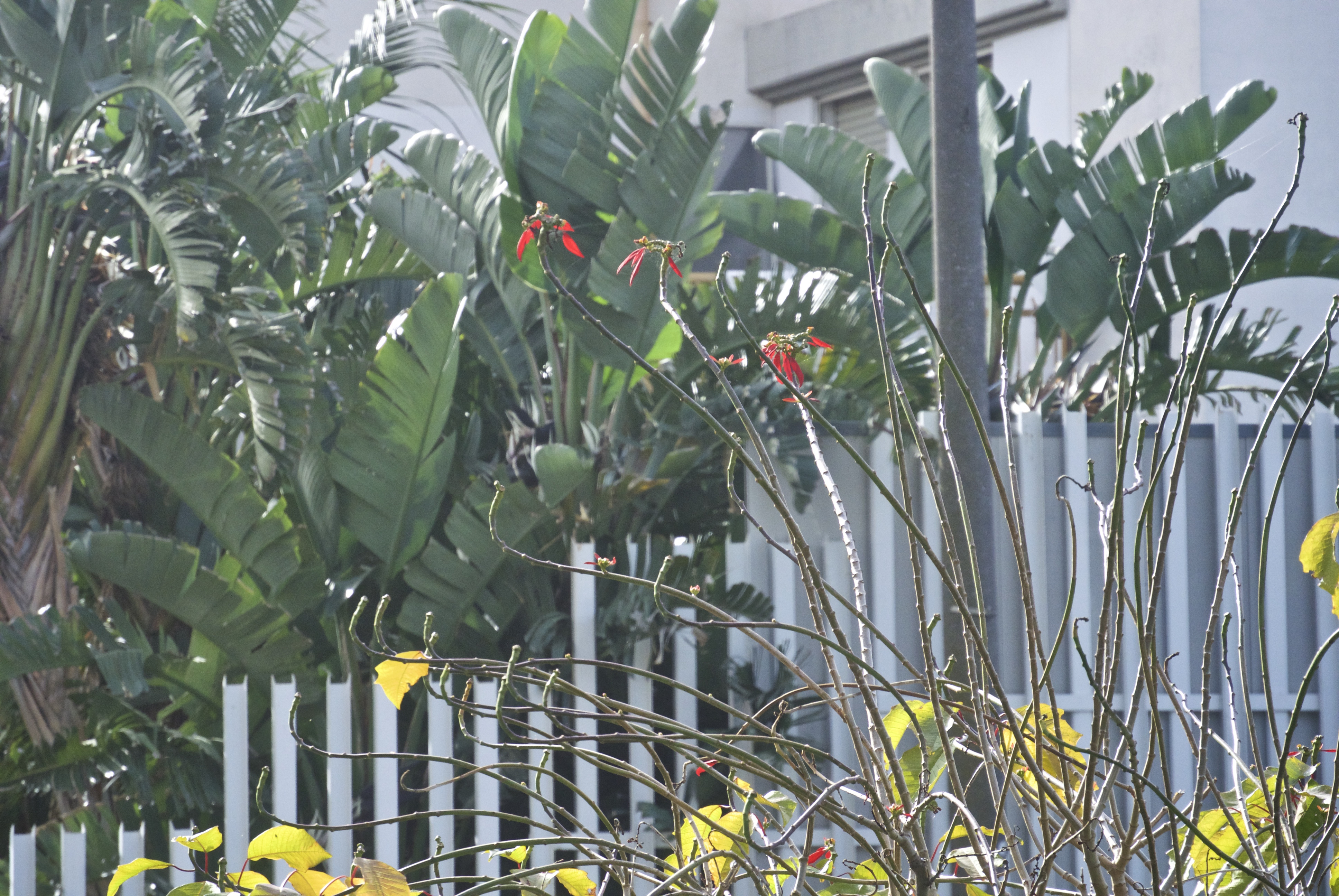
Erythrina flabelliformis, commonly known as Southwestern Coral Bean or SW Coral Bean, is one of the most visually spectacular native shrubs and small trees of the desert Southwest — its clusters of brilliant scarlet, tubular flowers blazing from bare branches in early spring before the leaves appear make it one of the most striking floral displays in the Sonoran Desert plant community. This deciduous member of the legume family (Fabaceae) is native to the Sky Island mountain ranges and desert grasslands of southern Arizona, southern New Mexico, and adjacent Chihuahua, Mexico, where it grows on rocky canyon slopes, rocky desert grasslands, and along dry washes at middle elevations.
The brilliance of the flowers is matched by the drama of the seeds: brilliant scarlet-red beans nestled in dark brown pods, so visually striking that they have been used for centuries as jewelry and ceremonial adornments by Indigenous peoples throughout the Southwest and Mexico. These seeds, while beautiful, are highly toxic — containing several alkaloids including erythraline and hypaphorine that can cause serious poisoning if ingested. The Tohono O’odham name for this plant translates roughly as “the one with the dangerous seeds,” a practical warning for foragers. Despite the toxicity, the seeds’ vivid color makes them irresistible as decorative objects, and they remain popular for beadwork and jewelry making.
In the garden, Southwestern Coral Bean is a plants for those who want spectacular seasonal color with minimal water. It goes dormant in winter, leafs out in late spring, and produces its brilliant flowers as one of the first signs of the desert spring. The hummingbirds are attracted to the flowers from the moment they open, and a healthy SW Coral Bean in bloom is one of the most dramatic wildlife spectacles a desert garden can offer. Its deep-rooting habit and extreme drought tolerance make it an excellent choice for dry slopes, rocky gardens, and wildlife habitat plantings throughout the Arizona sky island region and similar elevations.
Identification
SW Coral Bean typically grows as a large, multi-stemmed deciduous shrub, occasionally reaching small tree form with a single dominant trunk. Mature plants usually stand 6 to 10 feet tall with a similar spread, though exceptional specimens in favorable canyon sites can reach 15 feet. The overall form is open and spreading, with several main stems arising from a woody base and branching loosely.
Bark and Branches
The trunk and main branches are greenish-gray to grayish-brown, smooth to slightly rough, and armed with small, recurved prickles (not true thorns) along the stems. These prickles are hooked and can catch on skin and clothing — a useful identification feature. The stems are somewhat succulent in texture, storing water as an adaptation to the dry season. Young green stems photosynthesize, contributing to the plant’s energy budget even when leafless.
Leaves
The leaves emerge after or during the flowering period. Each leaf is pinnately trifoliate — composed of three leaflets on a central stalk. The leaflets are broadly triangular to diamond-shaped, 1 to 3 inches long and wide, with a distinctive fan-like or rhombic shape that gives the plant its species name (flabelliformis = fan-shaped). Leaflets are smooth, bright green on top, paler below. The leaf stalks often have small prickles. The plant drops its leaves in late fall and remains bare through winter and early spring.
Flowers & Fruit
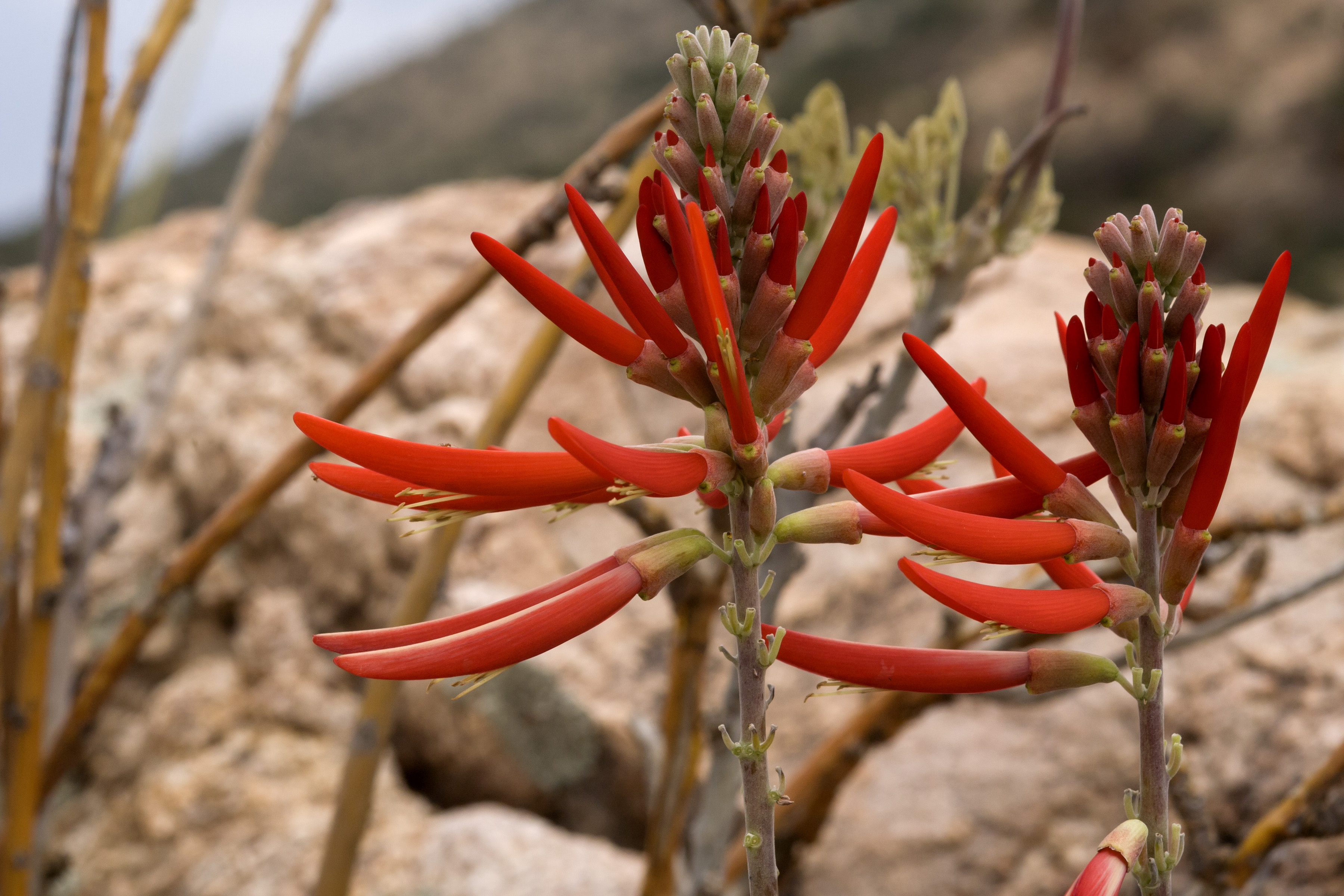
The flowers appear in March and April, before or at the same time as the earliest leaves. They are brilliant scarlet red, 1.5 to 2 inches long, tubular, and arranged in dense upright clusters (racemes) at the ends of branches. The standard petal is large and folded backward, creating the characteristic Erythrina silhouette. The flower form is perfectly designed for hummingbird pollination — deeply tubular with abundant nectar, but too narrow for most bees to access easily. The flowers last several weeks and are replaced by large, brown woody pods that contain 1 to 8 seeds. The seeds are brilliant scarlet red to orange-red with a black hilum (seed scar), extremely hard, highly glossy, and about 0.5 to 0.75 inch long. Despite their beauty, all parts of the plant are toxic — especially the seeds.
Quick Facts
| Scientific Name | Erythrina flabelliformis |
| Family | Fabaceae (Legume) |
| Plant Type | Deciduous Shrub / Small Tree |
| Mature Height | to 10 ft |
| Sun Exposure | Full Sun |
| Water Needs | Low (Drought Tolerant) |
| Bloom Time | March – April (before leaves) |
| Flower Color | Brilliant scarlet red |
| Seeds | Scarlet-red; TOXIC — do not ingest |
| USDA Hardiness Zones | 8–11 |
Native Range
Southwestern Coral Bean is native to the borderland region of the southwestern United States and adjacent Mexico, with its US distribution centered in the “Sky Island” mountain ranges of southern Arizona and the Chihuahuan Desert grasslands of southern New Mexico. In Arizona, it occurs primarily in Cochise, Santa Cruz, Pima, and Graham counties — the southeastern corner of the state where the sky island ranges create pockets of cooler, higher-elevation habitat. In New Mexico, it occurs in the southern desert grasslands and in the foothills of the Organ, Peloncillo, and Florida Mountains.
Within its range, SW Coral Bean prefers rocky canyon slopes, desert grassland margins, and dry washes at elevations between 2,500 and 6,000 feet — above the hot Sonoran Desert flats but below the cool coniferous forest zone. It is most common in the transition zone between desert grassland and oak woodland, where summer monsoon rains provide more moisture than the low desert but the climate is still warm and arid. The species extends south through Chihuahua and Sonora, Mexico, becoming more common at higher elevations into the Sierra Madre Occidental.
The sky island distribution of SW Coral Bean is of biogeographic significance — these isolated mountain ranges, separated by desert “seas,” function as islands for plant and animal communities with Mexican tropical affinities. SW Coral Bean is one of several plants that connect the biodiversity of the US sky islands with the Sierra Madre Occidental of Mexico, making it part of the Madrean Archipelago — a globally recognized biodiversity hotspot.
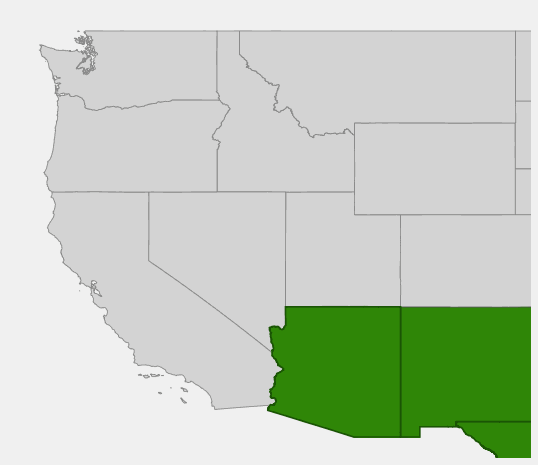
📋 Regional plant lists featuring SW Coral Bean: Arizona
Growing & Care Guide
SW Coral Bean is a rewarding plant for gardeners in the right climate — southern Arizona, New Mexico, and similar borderland conditions. It is not suitable for gardens that experience hard freezes regularly (below about 15°F), as the woody stems will be killed back to the ground, though the plant may resprout from the root if the root crown remains unfrozen. In the right climate, it is surprisingly easy and provides spectacular spring color.
Light
Full sun is preferred. SW Coral Bean thrives in the full, intense sun of the desert Southwest and produces its best flowering in maximum light. In partial shade, flowering is reduced and the plant becomes more open and leggy. South or west-facing exposures with plenty of reflected heat from rock walls or boulders mimic its natural canyon habitat and promote vigorous growth.
Soil & Water
SW Coral Bean performs best in well-drained, rocky or sandy soils. It is notably drought tolerant once established, relying on its deep, tuberous root system to access subsoil moisture during dry periods. Water deeply once every 2–3 weeks during the first growing season to establish roots, then reduce to once a month or less. Established plants in southern Arizona do well with only supplemental summer irrigation during the monsoon season. Avoid overwatering — wet soil causes root rot. Rocky soils that warm quickly in spring promote earlier flowering.
Planting Tips
Plant from containers in spring or early summer. Choose a site with full sun and good drainage, ideally on a rocky slope or in a raised bed. The plant is dormant and leafless in winter and early spring — don’t assume it has died if you receive it in this state. New growth begins in late spring, typically March or April, often with the flower clusters appearing before the leaves. Be patient with establishment — the plant invests heavily in root development in the first year and may produce limited top growth initially.
Pruning & Maintenance
Little pruning is needed. Remove dead or damaged stems in late spring after new growth shows. If the plant is killed back by frost (stems die but root is alive), cut dead stems to the ground in spring and new growth will emerge from the base. The prickles on the stems make pruning work a bit uncomfortable — wear thick gloves and long sleeves. Keep in mind that seeds and all parts of the plant are toxic; wear gloves when handling pods and seeds, and keep away from children and pets.
Landscape Uses
- Spectacular spring color — brilliant scarlet flowers before the leaves make it a showstopper
- Hummingbird garden — essential for Broad-billed and Costa’s Hummingbirds in spring
- Rocky slope planting in sky island and desert grassland zones
- Wildlife habitat garden emphasizing native plant diversity
- Mixed desert shrub border with Ocotillo, Desert Willow, and Apache Plume
- Sky island and borderland restoration projects
Wildlife & Ecological Value
SW Coral Bean is among the most hummingbird-attractive plants native to Arizona, and its ecological role extends well beyond that single relationship.
For Hummingbirds
The brilliant scarlet, tubular flowers of SW Coral Bean are essentially designed by evolution for hummingbird pollination — the deep, narrow tube excludes most bees while perfectly accommodating the bill and tongue of hummingbirds. In spring, Broad-billed Hummingbirds, Costa’s Hummingbirds, Anna’s Hummingbirds, and migrating Rufous and Black-chinned Hummingbirds all visit the flowers avidly. The blooming period coincides with the spring hummingbird migration through Arizona, making SW Coral Bean a critical refueling station for migrating birds passing through the sky island corridors.
For Other Birds
The open, branchy structure of SW Coral Bean provides nesting and perching habitat for Phainopepla, Black-throated Sparrows, and other desert-dwelling species. The seeds, despite being toxic to mammals, appear to be consumed by certain bird species without ill effect — cardinals and other large-billed birds have been observed eating the seeds, possibly tolerating the alkaloids better than mammals do.
For Pollinators
While the flowers are primarily adapted for hummingbirds, carpenter bees and other large native bees sometimes “rob” nectar by piercing the base of the flower tube. Various butterflies and moths also visit the flowers for nectar. The trifoliate leaves are larval food for certain butterfly caterpillars.
Ecosystem Role
As a legume, SW Coral Bean fixes atmospheric nitrogen through root nodule bacteria, enriching the soil and benefiting neighboring plants. The woody stems and root crowns create structural habitat for reptiles and small mammals, and the plant plays a role in stabilizing rocky slopes against erosion. Its presence in the sky island plant community signals undisturbed, high-quality habitat.
Cultural & Historical Uses
The brilliant scarlet seeds of Southwestern Coral Bean have been prized as ornamental objects across a vast region of the Americas for thousands of years. Archaeological sites throughout the Southwest and Mexico have yielded coral bean seeds in burial contexts, suggesting they held ceremonial and symbolic significance. The seeds’ intense red color associates them with blood, fire, and vitality in many Indigenous symbolic systems. The Zuni, Hopi, Tohono O’odham, and various Mexican Indigenous groups used coral bean seeds in necklaces, bracelets, and other adornments. In Mexico and Central America, seeds of related Erythrina species are still widely used in traditional jewelry making.
Despite the seeds’ beauty, their toxicity was well known to Indigenous peoples, and this knowledge was transmitted carefully across generations. The Tohono O’odham used the seeds medicinally in very small doses — the alkaloids erythraline and hypaphorine have neuromuscular effects that can be beneficial in controlled doses as muscle relaxants and sedatives. Several Erythrina species have been used in traditional medicine as fish poisons, arrow poisons, and in ritual contexts where their narcotic properties were deliberately exploited. The wood was used for carving and as fuel, and the leaves and bark have been used in various parts of the range for veterinary and medicinal applications.
Today, SW Coral Bean is increasingly cultivated as a dramatic ornamental for desert and sky island gardens. It is valued by native plant enthusiasts for its ecological significance — particularly its role in supporting hummingbirds during spring migration — and for its extraordinary floral display. Nurseries specializing in Arizona native plants offer container-grown specimens, and the plant is sometimes found in botanical garden collections throughout the Southwest. Its placement on the Arizona Native Plant Society’s favored list reinforces its importance for native wildlife gardens in the sky island region.
Frequently Asked Questions
Are SW Coral Bean seeds really toxic?
Yes, highly toxic. The seeds contain several alkaloids including erythraline, hypaphorine, and erysopine that can cause serious poisoning — symptoms include nausea, vomiting, diarrhea, respiratory depression, and in severe cases, paralysis or death. Keep seeds away from children and pets. Wear gloves when handling pods. The seeds are safe to use in jewelry and crafts as long as they are not ingested.
Will SW Coral Bean come back after a hard frost?
It depends on the severity. The stems are damaged by freezes below about 28°F and killed by sustained temperatures below 20°F. However, the root system is more cold-hardy than the stems, and plants with established roots often resprout vigorously from the base after a hard freeze. In USDA zone 8 (minimum 10–20°F), expect die-back to the ground in hard winters but recovery each spring. In zone 9 and warmer, the stems may survive winter intact.
When does SW Coral Bean bloom?
In southern Arizona, flowers typically appear from late February through April — before or just as the leaves are emerging. The blooming period can last 4 to 6 weeks. Established plants in optimal conditions tend to bloom more heavily than young or stressed plants. The brilliant scarlet flowers appearing on bare branches are one of the most dramatic early-spring displays in the desert garden.
Is SW Coral Bean the same as Eastern Coral Bean?
No. Eastern Coral Bean (Erythrina herbacea) is a related species native to the southeastern United States. It is smaller, typically herbaceous (dying to the ground each winter), and has a different distribution. The scientific name is different, the flower form is slightly different, and the ecology differs. Erythrina flabelliformis is the species native to the Madrean sky island region of Arizona, New Mexico, and Mexico.
Where can I buy SW Coral Bean?
SW Coral Bean is available from nurseries specializing in Arizona native plants. It is not commonly found at general garden centers. Check the Arizona native plant nursery listings on Plant Native for sources in your area.

Looking for a nursery that carries SW Coral Bean?
Browse our native plant nursery directory: Arizona