
Sweet White Violet (Viola blanda)
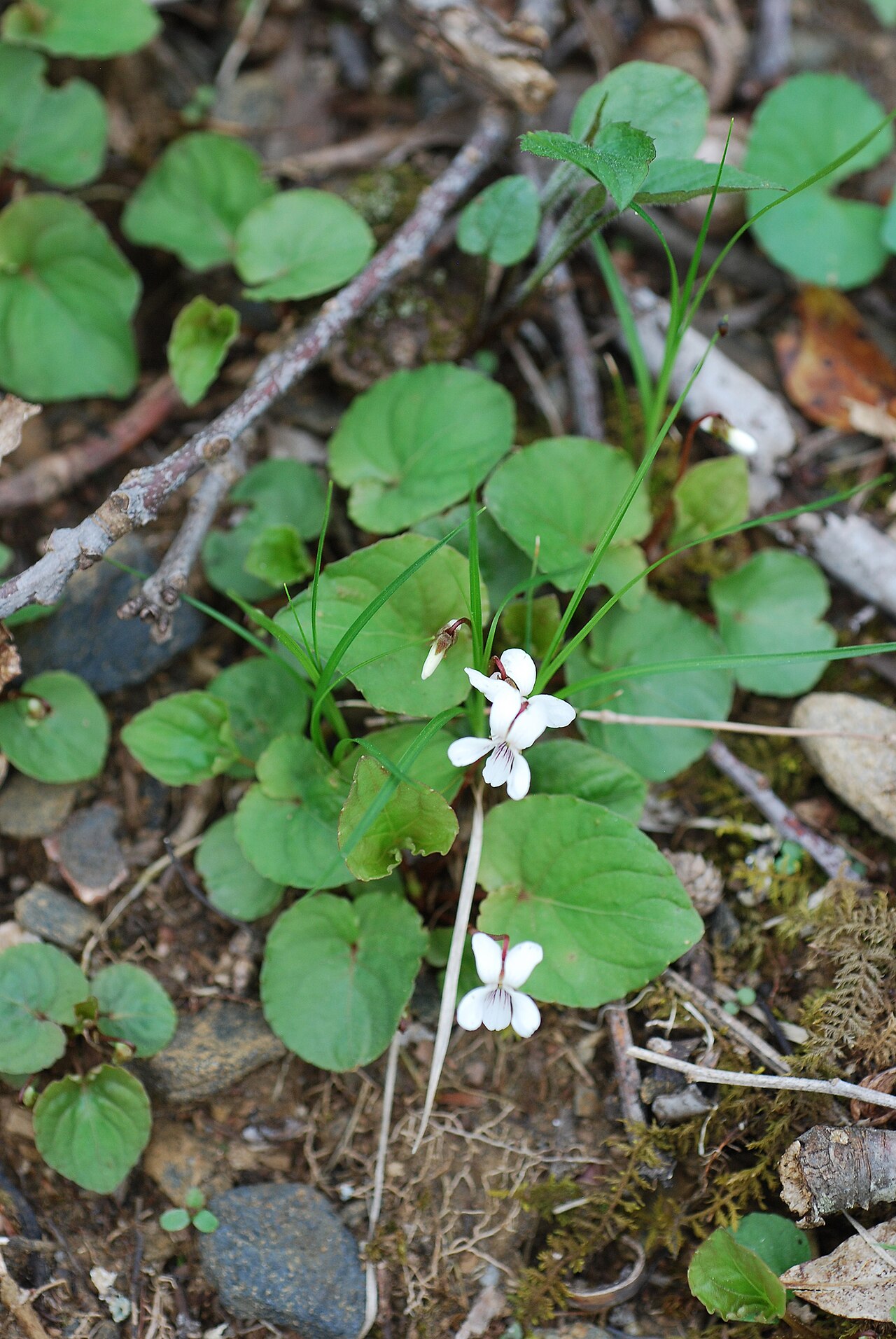
Sweet white violet (Viola blanda) is a small native perennial whose white flowers reward close attention. Purple-brown lines decorate the lower petals, and the upper petals may curl or bend back. Beneath the flowers, low heart-shaped leaves and fine runners allow the plant to develop into a patch in suitable woodland soil.
It is a useful choice for moist, lightly shaded spaces where a small groundcover will not be overwhelmed. The flowers are fragrant, but the plant is too low to behave like a large, perfumed shrub: place it where you can approach the planting and notice the details. Its scale suits the edge of a woodland path, a protected native border, or a small garden devoted to spring plants.
The name has been interpreted differently by botanists. This guide follows the broad Viola blanda treatment used by Flora of North America and the regional Go Botany account, including plants sometimes separated as Viola incognita or a variety. For restoration or a narrowly defined botanical collection, check the current local treatment and the provenance of nursery stock rather than assuming that every historical label describes an identical taxonomic unit.
Identification
Low Growth & Runners
The plant has a short rhizome and produces slender stolons that can root at nodes and connect small rosettes. There is no woody stem or bark. A patch may therefore consist of linked plants as well as seedlings. Avoid repeatedly digging between rosettes merely to keep every individual separate, because the connections are part of its normal growth. The colony is low and can be hidden by oversized neighboring perennials.
Leaves
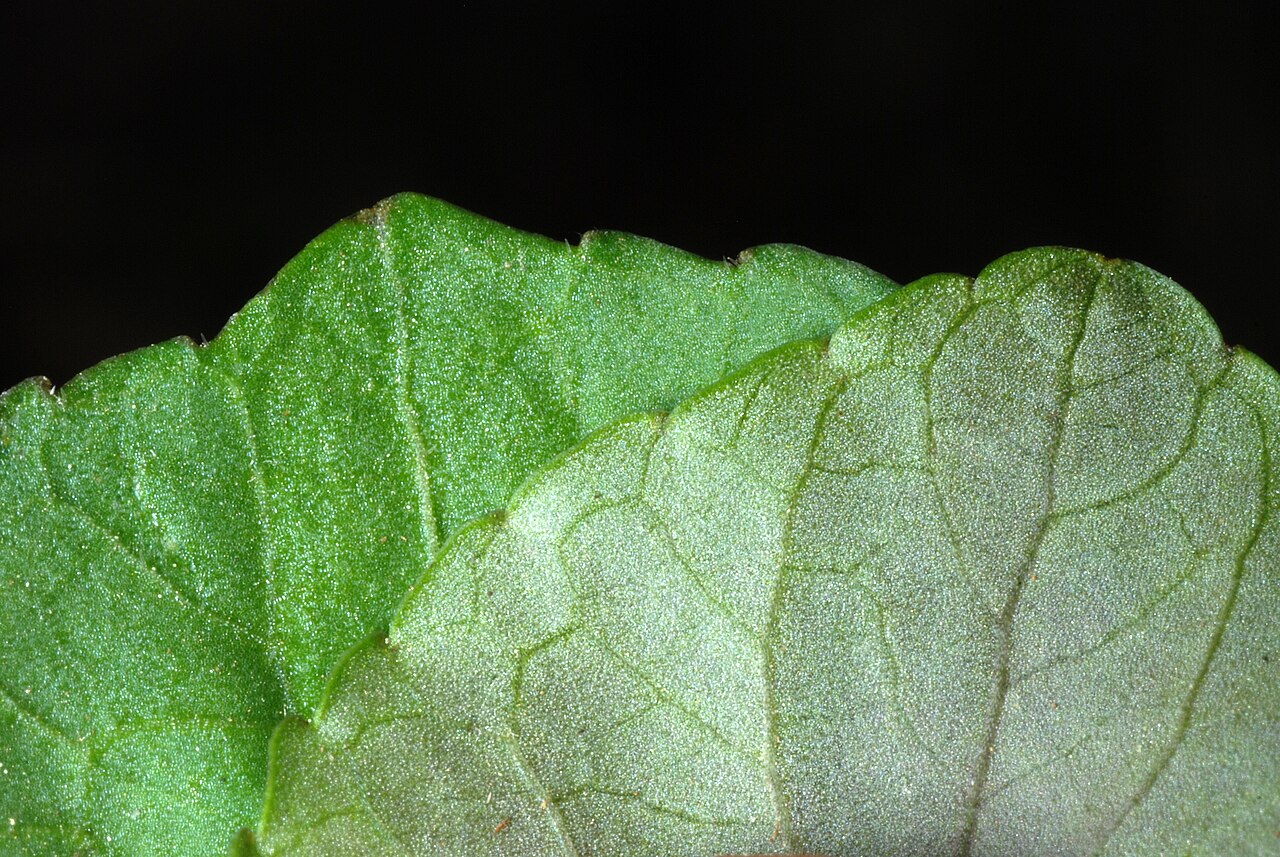
The basal leaves are rounded to heart-shaped, with a distinct notch at the base and fine teeth along the edge. Hairiness and tip shape vary within the broad treatment used here. Leaf stalks and parts of the foliage may have a reddish cast, but color is not a sufficient identification character. Look at leaf shape, hairs, flowers, runners, and habitat together, especially when comparing this plant with other small white violets.
White Flowers
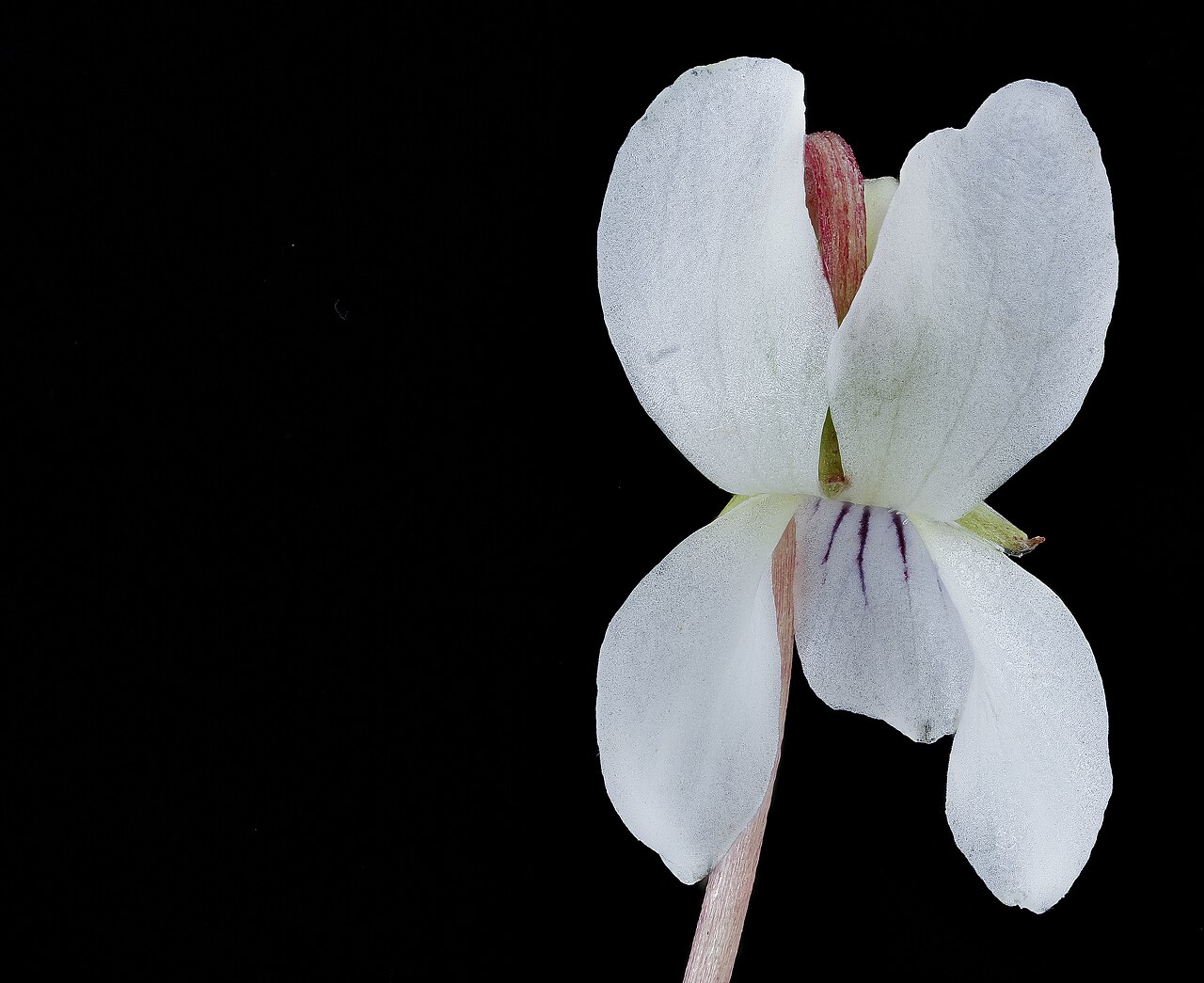
The flowers are carried singly on slender leafless stalks. Five white petals form the familiar violet shape, with darker veins on the lower portion and a short spur at the back. Upper petals often appear narrower or more reflexed than those of other white violets. Fragrance can be noticeable at close range. Photograph the flower from the front and side if seeking identification help, since one view may hide the spur or petal arrangement.
Capsules & Summer Growth
After flowering, small dry capsules contain the seeds. The plant also produces inconspicuous self-pollinating flowers, and summer runners can extend the patch. These later stages are easy to overlook if the garden is inspected only during the showy spring bloom. Keep some open, suitable soil and a light litter layer where natural recruitment is welcome, while preventing stronger neighbors from covering the low foliage completely.
Similar White Violets
Northern white violet and kidney-leaved violet can resemble sweet white violet, and species boundaries in this group require care. Runner production, leaf proportions, hairs, and capsule characters may be important. A white flower alone cannot establish the identity. Use a regional key and retain the nursery’s botanical name and provenance information. When a plant is intermediate or incompletely documented, seek expert identification instead of assigning a name from a single attractive photograph.
Quick Facts
| Scientific Name | Viola blanda Willd., in the broad Flora of North America treatment |
| Family | Violaceae |
| Plant Type | Native stoloniferous herbaceous perennial |
| Mature Height | Typically 3–6 inches in garden use; botanical descriptions include taller specimens |
| Mature Spread | Approximately 9–12 inches initially; runners can broaden a colony |
| Growth Rate | Moderate in suitable moist woodland conditions |
| Sun Exposure | Partial shade or dappled woodland light |
| Water Needs | Moist, drained soil; occasionally wet conditions tolerated |
| Soil Type | Organic woodland soil; adaptable to several textures when moisture is suitable |
| Soil pH | Acidic conditions preferred |
| Bloom Time | Spring into early summer, depending on region |
| Flower Color | White with darker lower-petal veins |
| Fall Color | Deciduous; no dependable showy autumn color promised |
| Fruit | Small dry capsule with numerous seeds |
| Deer Resistant | Reported resistant by NC State; no plant is damage-proof |
| USDA Hardiness Zones | 2–7 in NC State horticultural guidance |
Native Range
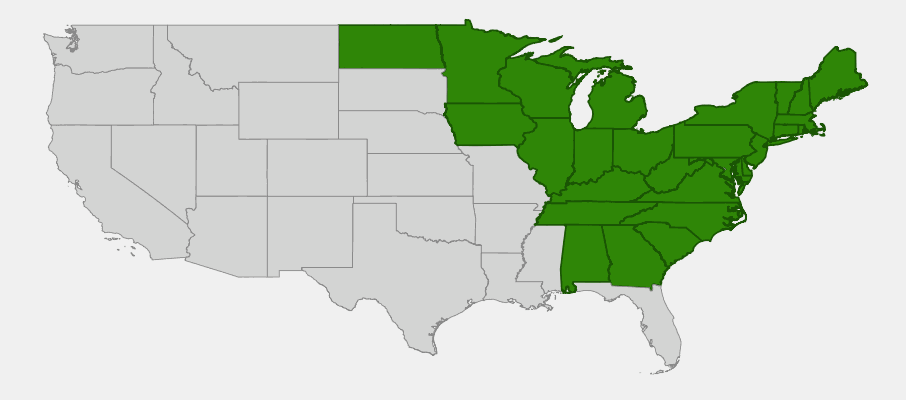
In the broad Flora of North America treatment, sweet white violet occurs across parts of Canada and the eastern and north-central United States. The U.S. state list in that flora agrees with the distribution summarized by NC State and supplies the states shaded in this guide. All six New England states are included in the regional Go Botany account.
Taxonomic interpretation matters when comparing range maps. Some newer treatments recognize Viola incognita separately, while Flora of North America discusses the unresolved boundary and includes it within Viola blanda. This map represents the broad account, not a claim that every mapped record belongs to a narrowly defined segregate. For a local restoration specification, use the current regional flora and verified source material.
Natural settings include rich woods, stream-associated forests, swamps, and some shaded disturbed places. The common thread is a protected, adequately moist root environment. The presence of the species in a state does not make every garden bed suitable: a dry exposed border and a leaf-enriched woodland hollow can differ more than two towns within the same climate zone.
📋 Regional plant list: New England
Growing & Care Guide
Choose a Close-View Position
The flowers and foliage are small, so place the plant near a path or low viewing point rather than behind taller border plants. Partial shade or dappled woodland light suits it. A deciduous canopy can provide spring light followed by summer protection. Check the actual afternoon exposure and soil moisture before planting; a site described simply as shade may still be too dry beneath dense tree roots.
Prepare the Root Environment
Use moist, well-drained soil with organic matter appropriate to a woodland planting. Several soil textures can work, but compacted, stagnant, or repeatedly dry conditions are poor substitutes. Add leaf mold gently when needed and avoid major digging through existing tree roots. Do not apply lime as a routine treatment: the species is associated with acidic conditions, and an amendment should respond to an actual soil test rather than a general garden habit.
Plant at Nursery Depth
Keep the crown near its original soil level and water after planting to settle the surrounding soil. Do not bury the small rosette under a thick mulch layer. A discreet label is useful because tiny plants can be mistaken for weeds when not flowering. Keep enough space around the new plant that it can establish runners without immediately competing with an aggressive groundcover.
Water During Establishment
Check moisture beneath the surface litter and around the root ball. Brief rain may wet only the top layer, while nearby tree roots continue to draw water from below. Water gently when needed and allow excess to drain. Once established, the colony still benefits from attention during prolonged drought. The goal is a consistent woodland moisture supply, not alternating severe dryness with a large corrective soaking.
Retain Useful Litter
A thin, loose leaf layer can protect the soil, but heavy mats may conceal or suppress the small rosettes. Lift obstructing clumps carefully without raking through the runners. A defined garden edge can provide visual order while leaving the interior biologically useful. Repeatedly exposing bare soil around every plant is unnecessary and can make a naturally moist bed dry more quickly.
Let the Patch Develop
Runners and seedlings can gradually expand the planting. Decide where that spread is welcome and remove excess plants gently from boundaries if necessary. Do not promise a fixed mature diameter for an indefinitely spreading colony. In a mixed woodland bed, check that small spring neighbors are not being crowded and that the violet itself is not buried under stronger later growth.
Propagation & Nursery Choice
Choose propagated stock with a reliable botanical label. Because the blanda-incognita group has different treatments, ask how the nursery identifies its material if regional provenance matters. Established garden runners or divisions can be moved with roots attached, keeping them moist throughout the process. Seed requires attention to its dormancy and freshness; obtain a species-specific method rather than using instructions for annual pansies.
Maintenance & Problems
Heavy fertilizer is not the first response to a weak plant. Check light, moisture, competition, and disturbance before changing soil fertility. Inspect chewed leaves or declining growth closely to identify the cause. Some feeding can be part of the plant’s ecological role, while a persistently unsuitable site calls for relocation or a different species. Avoid broad pesticide treatments that affect the insects the native planting is intended to support.
Landscape Uses
- Low colonies beside a moist shaded woodland path.
- A small-scale groundcover among compatible native shade plants.
- A spring-fragrance planting where flowers can be viewed close to the ground.
- A teaching collection illustrating runners, basal leaves, and violet identification.
Wildlife & Ecological Value
Larval Food & Flower Visitors
NC State identifies sweet white violet as supporting fritillary butterfly larvae and attracting bees and butterflies. That means its foliage has value even when a few leaves are not cosmetically perfect. Allow appropriate insect activity and include other flowering natives for later seasons. A small violet patch is one useful component of a broader habitat garden, not a complete food supply by itself.
Violet Specialists
Some bees specialize on the genus Viola. This is a reason to preserve a diversity of locally appropriate violets, but it is not a guarantee that every specialist will visit a particular garden. Observe visitors and avoid unsupported species-by-species claims. The USGS flower photograph included here comes from work associated with bee documentation, providing a close view of the floral structure without implying that every local bee uses this species equally.
Woodland Groundcover
The low foliage and runners occupy part of the woodland ground layer and can coexist with modest companions when space is managed thoughtfully. Keep the soil surface protected and avoid repeated cultivation. Use propagated plants rather than stripping a wild colony, and remember that taxonomic precision and local provenance become particularly important when planting into a natural area rather than an ornamental garden bed.
Cultural & Historical Uses
The common name sweet white violet refers to the pale fragrant flowers. The plant has appeared in botanical literature under several related names, and older regional lists may combine forms that a modern specialist treats separately. This is not merely a spelling issue: a narrow identification may require more characters than are available in a general garden photograph.
Flora of North America treats Viola incognita within a broad Viola blanda account and discusses the uncertainty, while Go Botany distinguishes varieties within that broader species. More recent regional treatments can differ. Keeping the source and taxonomic scope visible is more accurate than silently presenting one map as the only possible interpretation.
The guide does not recommend food or medicinal use. A historical reference to a violet does not identify an unfamiliar plant in a garden, and common names can encompass different species. The practical value here is a responsibly sourced woodland perennial whose flowers, runners, and seasonal changes can be enjoyed without disturbing natural populations.
Frequently Asked Questions
Is sweet white violet a good dry-shade plant?
Not reliably. It prefers moist, protected soil. Shade alone does not compensate for severe root-zone dryness.
Why are some plants labeled Viola incognita?
Botanists differ in how they divide this group. This guide uses the broad Flora of North America treatment; consult a current local flora when a narrower identification is important.
How does the patch spread?
Slender stolons can root at nodes and connect rosettes. Seedlings may also contribute where conditions are suitable.
Can I identify it from a white flower alone?
No. Several native violets have white flowers. Compare leaves, hairs, runners, flower structure, and capsules using a regional key.
Should I remove all fallen leaves?
No. Keep a light protective layer, removing only thick mats that block the small plants. Rake gently or work by hand to avoid damaging runners.
Does it need heavy feeding to flower?
A suitable moist root environment and appropriate light are more important starting points. Investigate those conditions before adding fertilizer.
Sources & Further Reading
- NC State Extension: Viola blanda
- Flora of North America: Viola blanda
- Go Botany: Viola blanda
- Ohio University violet treatment: Viola blanda
- USDA PLANTS: Viola blanda
Find Native Plants
Ask growers about nursery propagation and regional provenance. Browse our Maine native plant nurseries, New Hampshire native plant nurseries, Vermont native plant nurseries, Connecticut native plant nurseries directory for suppliers.