
Woodland Poppymallow (Callirhoe papaver)
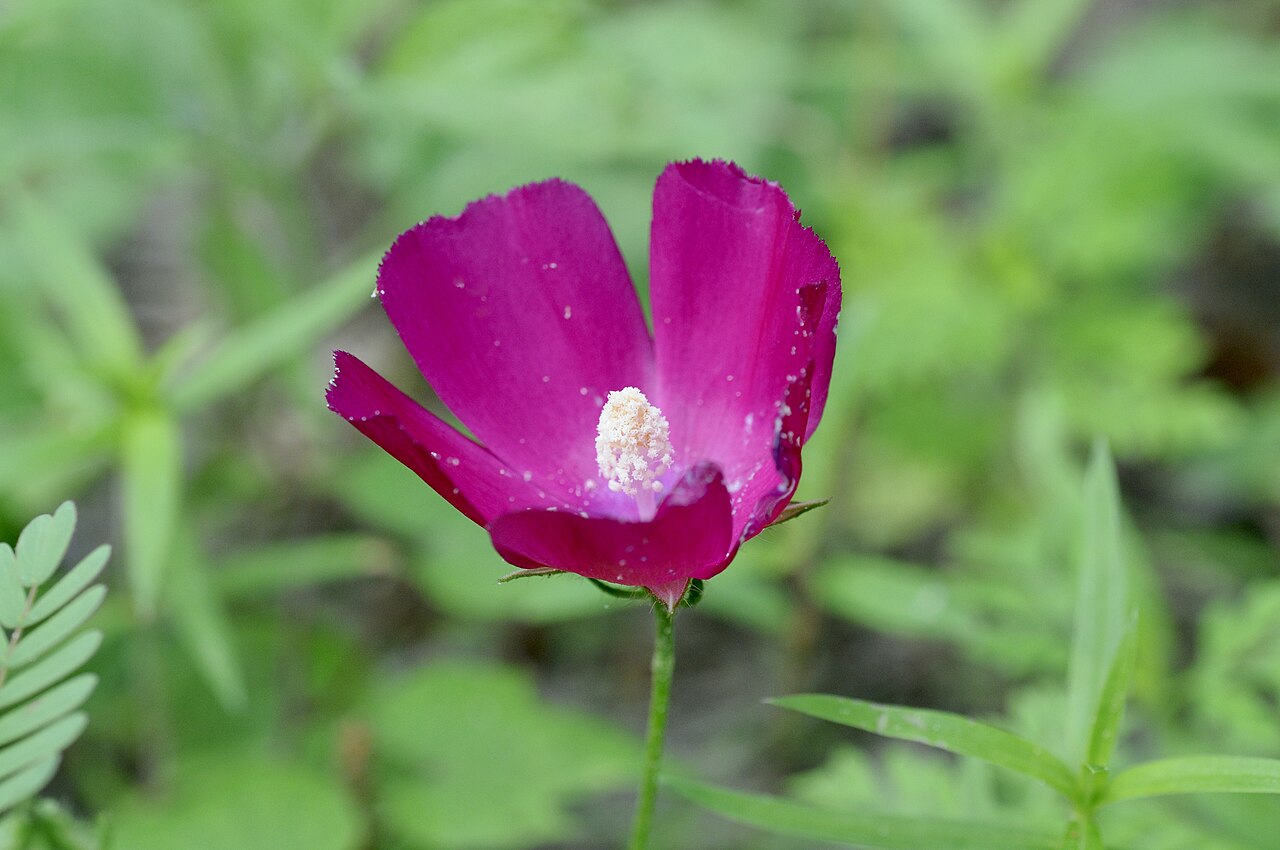
Woodland poppymallow brings a strong splash of wine-purple to a relatively low native planting. Its broad five-petaled flowers stand on slender stalks above deeply divided leaves, while the stems can spread farther than the plant rises. The flower is bold enough to notice from a path, but the leaf shape and fruit reveal that this is a mallow rather than a true poppy.
Callirhoe papaver is the species covered here. Other poppymallows, including Callirhoe involucrata and Callirhoe bushii, can appear in nursery searches, and similar flower color does not make them interchangeable. Use a complete botanical label and match that species to the native range shown below.
For our Arkansas–Louisiana–eastern Oklahoma–eastern Texas list, the distinction is important: current Kew records include Arkansas, Louisiana and Texas, but not Oklahoma. A place in a multi-state table is not proof of nativity in all of its states. The page also notes the species’ special conservation status in Florida, where garden demand should be met through nursery propagation.
Identification
Flowers with a pale center
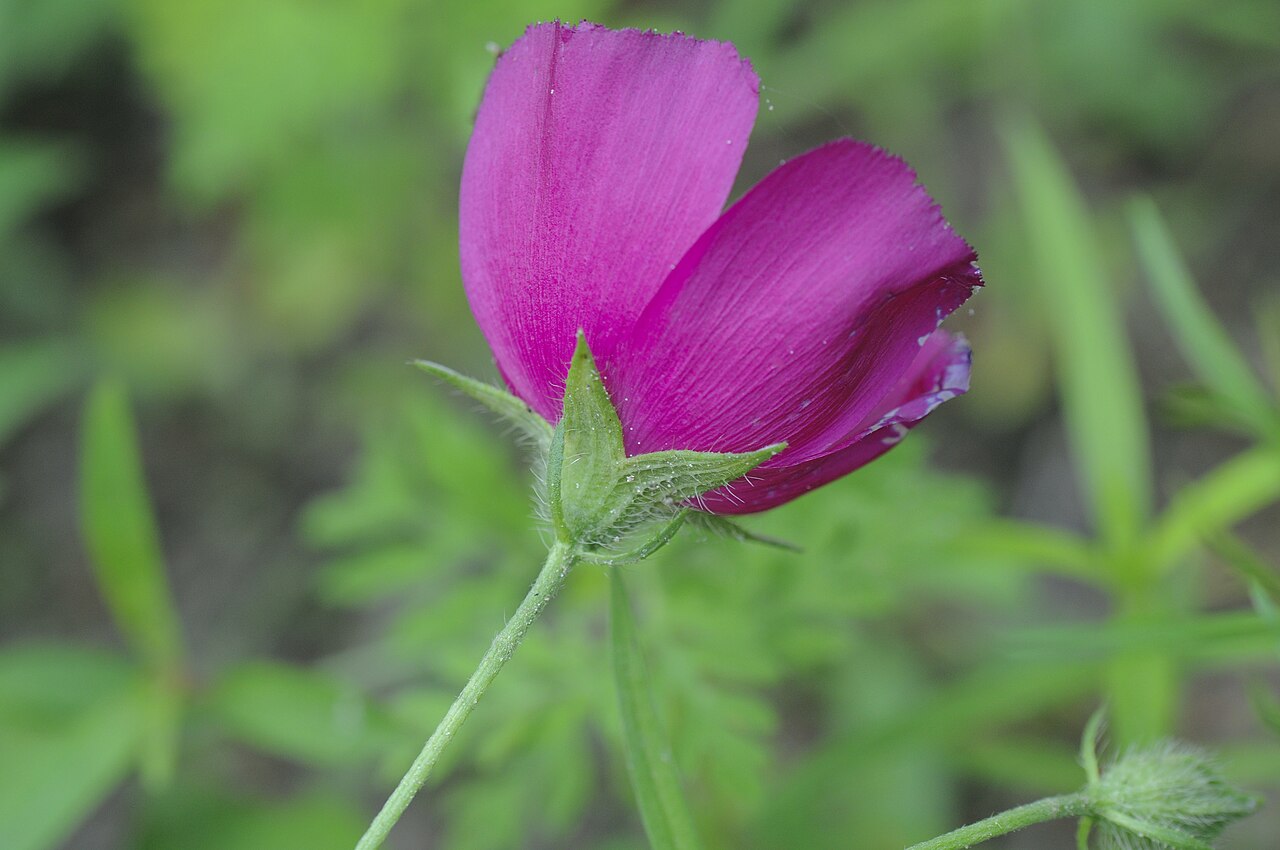
The showy flower has five broad petals, commonly wine-red, crimson or purple, with a pale area toward the center. Flowers are held individually on slender stalks and can be a few inches across. Color changes with lighting and camera settings, so compare structure as well as shade. A side view helps reveal the supporting parts that a frontal photograph hides.
Bracts and calyx
Below the petals are the green calyx and additional bracts. These details are useful when comparing related mallows. Avoid deciding the species from a cropped flower image with no leaves or supporting structures. A whole-stem photograph, a flower from the front and a flower from the side make a much stronger identification set.
Divided leaves
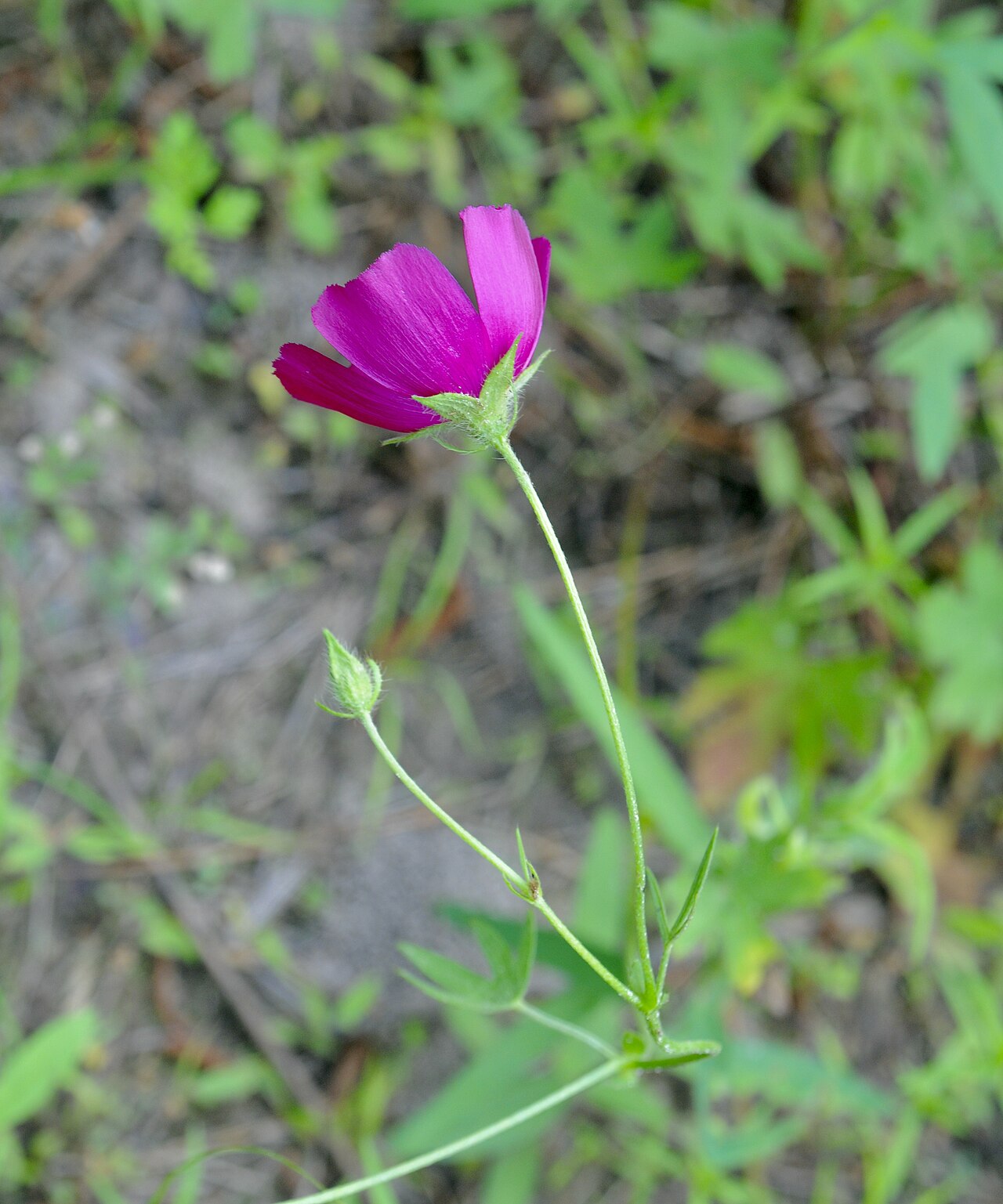
Leaves are arranged alternately and are divided into several narrow lobes, often with long stalks. The combination of leaf dissection and flower form gives the plant a light texture even when the flower color is intense. Look at mature leaves from more than one point on the plant, since size and outline can vary.
Spreading stems and seasonal growth
The plant is usually much lower than a shrub, but its stems can extend horizontally beyond the crown. This is useful beside an open edge where the stems have room, and less useful among small plants that could be covered. It is a herbaceous, often short-lived perennial, not a permanent woody mound or a dependable evergreen carpet.
Fruit and related species
After flowering, the dry fruit separates into one-seeded units. This segmented fruit belongs to the mallow family’s structure and is not a poppy capsule. Historical and nursery references may use different common names, so retain Callirhoe papaver in planting records. Do not merge records for C. involucrata or C. bushii merely because they also have purple flowers.
Quick Facts
| Scientific Name | Callirhoe papaver (syn. Malva papaver) |
| Family | Malvaceae |
| Plant Type | Short-lived herbaceous perennial |
| Mature Height | About 1–2 feet; stems can extend farther horizontally |
| Mature Spread | Spreading stems may occupy several feet; allow room around the crown |
| Growth Rate | Seasonal growth; often short-lived rather than a permanent woody plant |
| Sun Exposure | Sun to partial shade; flowering depends on the site |
| Water Needs | Dry to moderately moist, in well-drained soil |
| Soil Type | Sandy, well-drained soils are a good starting point |
| Soil pH | Acidic to near-neutral conditions described in regional horticultural accounts |
| Bloom Time | Spring into early summer; Texas accounts commonly give March–July |
| Flower Color | Wine-red, crimson or purple with a pale center |
| Fall Color | Seasonal foliage; winter dormancy rather than evergreen cover |
| Fruit | Dry segmented fruit splitting into one-seeded units |
| Deer Resistant | No dependable deer-resistance claim; monitor local browsing |
| USDA Hardiness Zones | Florida Native Plant Society lists 8a–9a for its Florida context; verify suitability elsewhere |
Native Range
The current Kew native distribution includes Alabama, Arkansas, Florida, Georgia, Louisiana, Mississippi and Texas. The map is a state-level overview of that treatment. It does not imply that the plant is widespread within every colored state, and it does not include Oklahoma simply because our regional table includes that state in its heading.
Florida illustrates why local conservation information matters. The Florida Wildflower Foundation describes a restricted occurrence and state endangered status. A species can have a broader range elsewhere and still need strong protection in a particular state. Do not collect wild plants or seed without the necessary authority; nursery-propagated stock is the appropriate garden source.
Within the documented range, match the plant to drained sandy or open-woodland conditions rather than choosing by flower color alone. A locally appropriate seed source and county-level botanical records are especially important in habitat restoration. For a home border, the same evidence helps distinguish a responsible native planting from simply growing a plant that tolerates the climate.
Native Range at a Glance
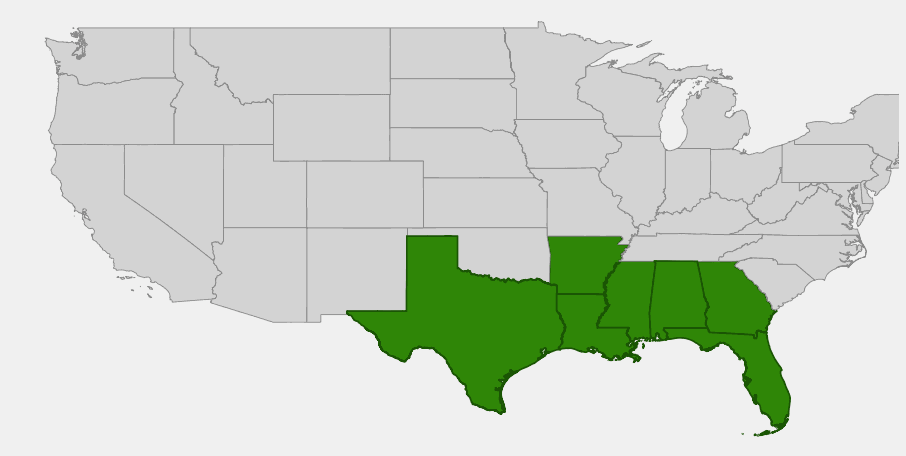
| U.S. States | Alabama, Arkansas, Florida, Georgia, Louisiana, Mississippi, Texas |
| Mexico / Canada / Other Range | Native range in this treatment is in the southeastern and south-central United States |
| Ecoregion | Sandy open woods, edges and open habitats within the documented range |
| Elevation Range | Check local habitat records; no universal elevation band is used here |
| Habitat | Well-drained sandy ground, open woodland and sunny edges |
| Common Associates | Locally appropriate open-woodland herbs and grasses; avoid smothering groundcovers |
Explore our regional native-plant lists: ARLA regional list. These lists cover several states; each species has its own native range.
Growing & Care Guide
Choose a drained, open position
Start with sandy or otherwise well-drained soil in sun or partial shade. An open woodland edge is not the same as a dark, root-filled space beneath a dense canopy. Check both soil moisture and actual light before planting. If the site remains wet after rain, choose a species adapted to that condition instead of trying to solve the mismatch with extra attention.
Leave horizontal room
A plant only one or two feet high can still spread stems over a much wider area. Place it where that habit contributes to the design, such as an open edge, rather than where it will cover tiny neighbors. Keep stems off a frequently used walking surface. A low wall or rocky edge can work when the crown itself remains in suitable soil and drainage.
Water a new plant, then adjust
Water the root ball at planting and monitor it while roots move into surrounding soil. Once established, let watering reflect rainfall and the site rather than keeping the ground constantly damp. Dry-site tolerance should not be confused with the ability of a newly planted plug to survive complete dehydration.
Keep the crown recognizable
Because the plant is seasonal and can be short-lived, keep a simple record of its location and source. Avoid burying the crown under repeated mulch additions. When the foliage is absent, a small marker prevents accidental digging. If a plant disappears, check the site and its expected life history before assuming that a pesticide or fertilizer would have prevented the loss.
Propagation and replacement planning
Use correctly identified nursery plants or seed and follow the supplier’s current germination instructions. Seed handling for a related mallow should not automatically be applied to this one. In a garden relying on its color every year, plan for observation and occasional replacement rather than promising a permanent planting from one original individual.
Conservation and garden sourcing
Ask whether stock is nursery propagated and keep the botanical name on the invoice or label. This is particularly important for material advertised from Florida. A beautiful flower does not justify removing it from a restricted wild population. Where the species is not locally native, choose a suitable native alternative if ecological restoration is the purpose.
Landscape Uses
- A low, colorful accent on a well-drained edge with space for spreading stems.
- A sandy native wildflower border using plants appropriate to the local state and county.
- An open-woodland planting where sufficient light reaches the flowering stems.
- A conservation teaching garden demonstrating nursery propagation and the difference between statewide range and local rarity.
Wildlife & Ecological Value
For Pollinators
The flowers are visited by bees, and Florida native-plant accounts also note a relationship with checkered skipper larvae. A garden can retain some leaf damage rather than treating every chewed area as a failure. Identify an insect before responding, and avoid spraying open flowers where visiting pollinators are feeding.
For Birds
This plant should not be promoted as a major berry source for birds; its fruit is dry and segmented. Its place in a wildlife garden is principally as part of a diverse flowering and foliage layer. Combine it with other locally native plants that supply cover and food at different seasons.
For Mammals
There is no basis here for a universal deer-proof label. Observe browsing and protect new plants if necessary. Also distinguish browsing from stems broken by foot traffic or pets. The remedy for a plant placed across a busy path is usually a better planting position, not an insecticide or a claim that the species is difficult.
Ecosystem Role
The strongest conservation benefit comes from preserving wild habitat while obtaining plants through legitimate propagation. A garden specimen does not replace a natural population and its associated community. Keep that distinction visible when sharing seed or plants, especially where the species has a restricted state distribution.
Cultural & Historical Uses
The name poppymallow describes a visual resemblance while retaining the plant’s mallow connection. Its five broad petals can suggest a poppy at first glance, but the foliage, supporting floral structures and segmented fruit tell a different botanical story.
Common names such as woodland poppymallow and poppy mallow are useful garden language, but they are not substitutes for the scientific name. Related species have been combined or separated in different treatments, and nursery search results may mix them. Clear labeling prevents a colorful but wrongly identified photograph or plant from entering a collection.
This guide makes no edible or medicinal recommendation. The practical human value is ornamental and educational: a distinctive native flower, an example of careful regional selection and a reason to support nurseries that propagate plants rather than removing them from wild sites.
Frequently Asked Questions
Is woodland poppymallow a true poppy?
No. It belongs to Malvaceae, the mallow family. Its segmented fruit and other structures distinguish it from a true poppy.
Is it the same as purple poppy mallow, Callirhoe involucrata?
No. Similar common names and flower colors can conceal different species. Buy and record the full scientific name.
Does it belong in Oklahoma because it is on the regional list?
Do not assume that. The Kew native-state treatment used here includes Arkansas, Louisiana and Texas but not Oklahoma. Use local botanical evidence for an Oklahoma native planting.
Will it remain as evergreen groundcover?
No. It is a seasonal herbaceous plant, often described as short-lived. Plan for dormant periods and possible replacement rather than expecting a permanent evergreen mat.
Can I dig one from a wild Florida population?
Use nursery-propagated stock instead. Florida lists the species as endangered, and collecting can harm restricted populations as well as raise legal restrictions.
Sources & Further Reading
- Kew Plants of the World Online: identity, synonyms and native distribution
- USDA PLANTS profile
- Florida Wildflower Foundation: Woodland Poppymallow
- Florida Native Plant Society: Callirhoe papaver
- Native Plant Society of Texas: Callirhoe papaver
- Florida Wildflower Foundation: species information sheet
Find Native Plants Near You
Ask a native-plant nursery for correctly identified, nursery-propagated stock and information about regional provenance. Match the plant to your site rather than collecting it from a wild population.
Arkansas native plant nurseries · Louisiana native plant nurseries · Texas native plant nurseries