
Lovely Penstemon (Penstemon venustus)
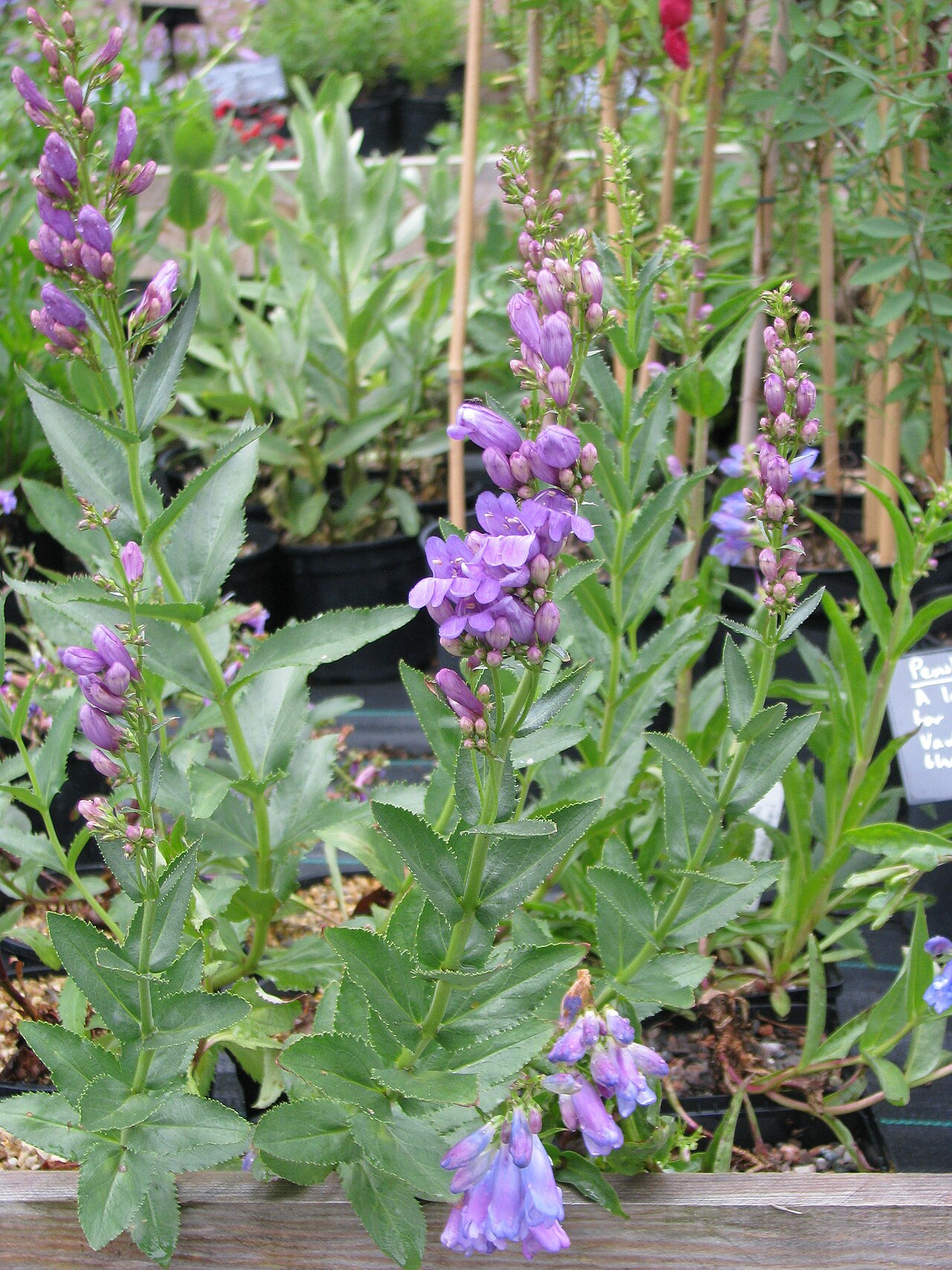
Lovely penstemon has the substance of a small subshrub and the floral display of a showy perennial. Numerous shoots rise from a persistent base, carrying broad, opposite, often toothed leaves and lavender-purple flowers. It is also called elegant beardtongue, Blue Mountain penstemon and Venus penstemon. These names refer to Penstemon venustus, not a hybrid selected merely for a similar purple flower.
This plant belongs naturally to the inland Northwest around the meeting of Washington, Oregon and Idaho. It has also been planted and become established elsewhere, including along roads. That history makes it especially important to separate occurrence from nativity. A vigorous roadside patch in Colorado or a cultivated photograph from Utah is not evidence that those states belong on its native-range map.
For gardeners in the appropriate region, the appeal is both visual and practical: substantial leaves, a rounded shape and conspicuous flower tubes work well in an open border. Give it room for branching and use a sunny, freely draining site. A tiny new plant in a nursery pot does not reveal the eventual clump, and its native status does not make it immune to wet soil or crowding.
Identification
Woody base and stems
The species forms a persistent, somewhat woody base with multiple ascending or upright stems. Northwest descriptions commonly put stems at 30–80 cm, and mature garden clumps can approach three feet. It is a subshrub rather than an annual flower spike. Some older shoots may remain structural while new growth carries the season’s flowers, so examine live buds before cutting the plant back aggressively.
Leaves
Opposite leaves are a conspicuous feature: many are lance-shaped to broadly oblong, several centimeters long and distinctly serrated, though margins vary. Compared with narrow-leaved royal penstemon, the foliage appears fuller and more substantial. Most leaves are on the stems rather than making a broad basal rosette. The combination of toothed leaves, growth form and flower characters is more useful than relying on the common name lovely.
Flowers
Lavender to violet tubes cluster toward the upper parts of the stems. They are commonly about 2.5–3.8 cm long and open into a two-lipped mouth. Fine hairs along the corolla edges and details of the stamens help specialists distinguish the species. Inspect a flower closely without assuming every long purple beardtongue is this plant. The show can shift with elevation and weather, so a precise calendar date is less useful than the broad late-spring-to-summer season.
Fruit and identification limits
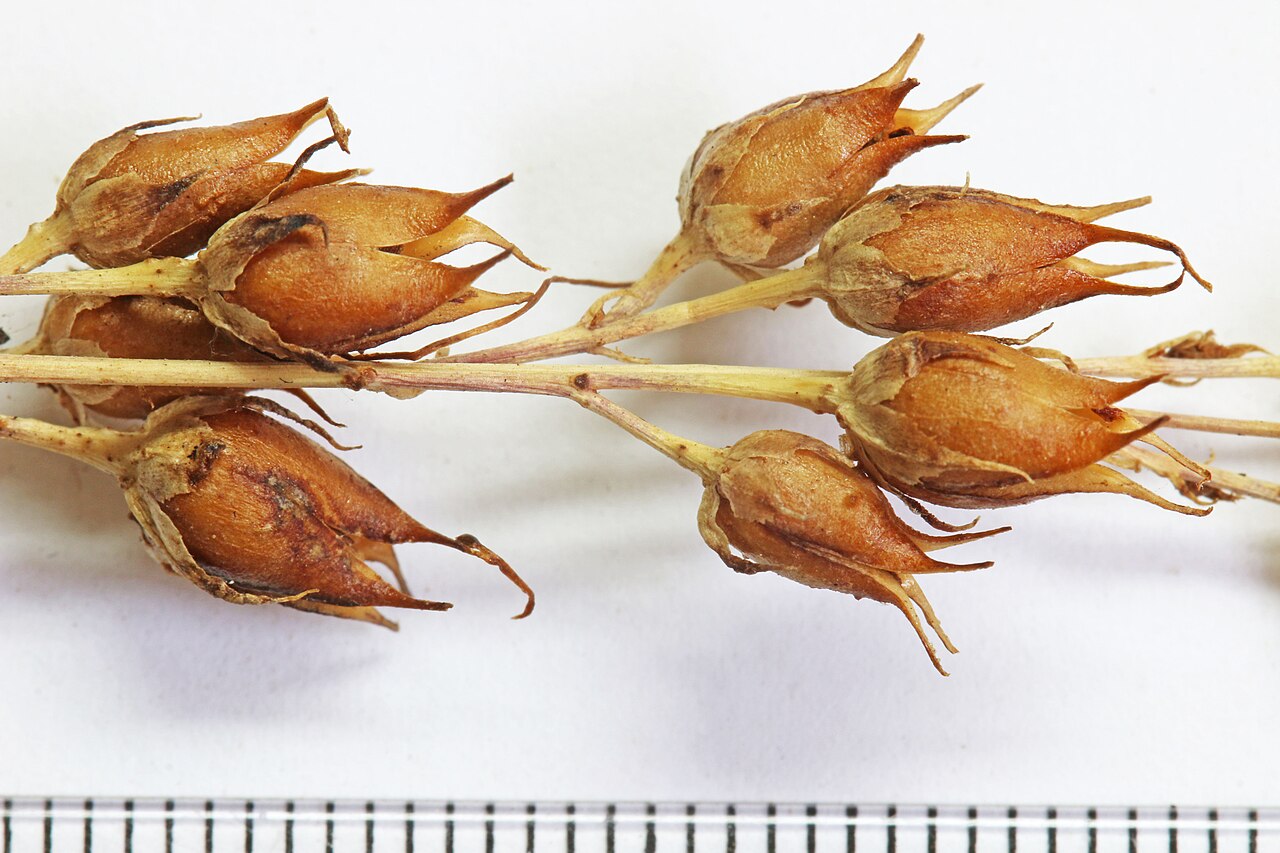
Brown capsules replace the flowers as seed matures. A dry capsule photograph shows the enduring pointed calyx around the fruit and helps connect the seed stage to the flowering plant. Garden hybrids or species grown together may complicate identification of self-sown offspring. Keep the original label and provenance, and ask for a botanical check if seedlings look different; an attractive volunteer is not necessarily a verified P. venustus.
Quick Facts
| Scientific Name | Penstemon venustus |
| Family | Plantaginaceae |
| Plant Type | Perennial subshrub with a persistent woody base |
| Mature Height | Commonly 12–32 inches; vigorous plants may approach 3 feet |
| Mature Spread | Rounded clump; allow space for branching rather than treating it as a narrow spike |
| Growth Rate | Seasonal growth from an established crown |
| Sun Exposure | Full sun on an open site |
| Water Needs | Low to moderate with drainage; water during establishment |
| Soil Type | Rocky or gravelly well-drained soil; avoid a saturated crown |
| Soil pH | No single numerical target adopted; use site testing before amendments |
| Bloom Time | May–August, depending on locality and elevation |
| Flower Color | Lavender, purple to violet |
| Fall Color | Green foliage may persist; fall color is not its main feature |
| Fruit | Dry capsules |
| Deer Resistant | Not reliably deer-proof |
| USDA Hardiness Zones | Use locally tested nursery stock; winter drainage and provenance matter |
Native Range
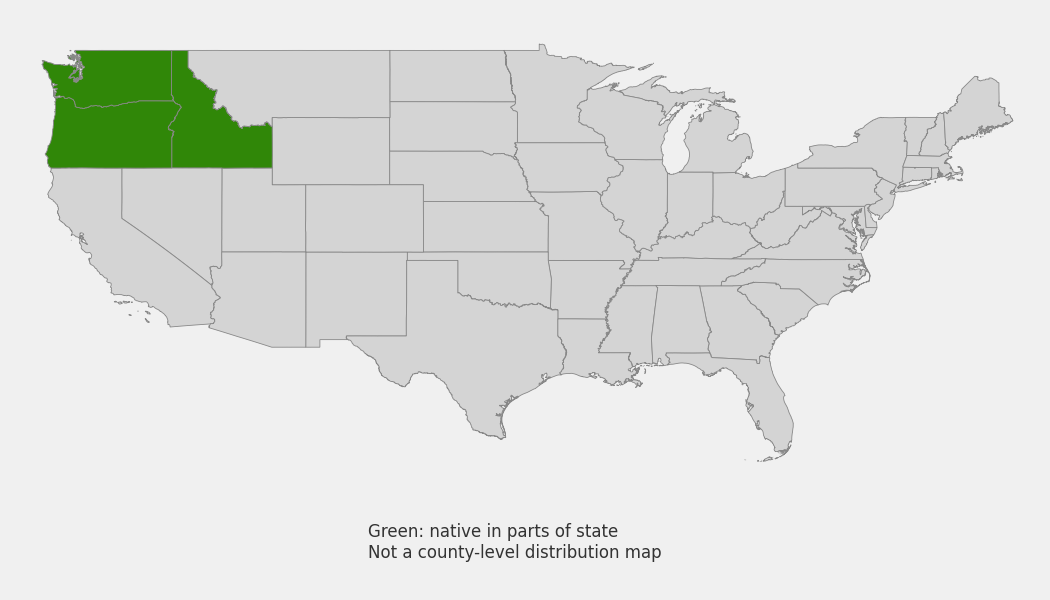
The native map deliberately shades Idaho, Oregon and Washington, reflecting the species’ core indigenous inland Northwest range. The Burke Herbarium specifically distinguishes its native Blue Mountains occurrence in southeastern Washington from introduced occurrence in central Washington. Even inside a shaded state, locality matters.
Broader occurrence descriptions can extend toward California and Utah, but they should not automatically be read as wholly native distribution. The Rocky Mountain Biological Laboratory-hosted Southwest Colorado Wildflowers account explains the use of this species in roadside revegetation and its adventive occurrence in California, Utah and Colorado. This guide does not shade those introduced states as native.
Open rocky slopes, foothills and moderate mountain elevations provide the basic ecological setting. When choosing plants for a garden, match exposure and drainage; when choosing material for habitat restoration, also match local origin. The photographs here include cultivated plants, clearly captioned as such. They illustrate identification and garden use, not evidence for the species’ native boundaries.
📋 Regional plant list: Idaho, Eastern Oregon and Eastern Washington
Growing & Care Guide
Light
Give the plant full sun and an open position, with room for air to move through the clump. Shade from a rapidly growing companion can turn a promising sunny planting into a poor flowering site over time. Plan for the mature plants around it. Where summers are exceptionally hot, a locally experienced nursery can advise on exposure, but do not exchange a cool root zone for dense overhead shade as a universal remedy.
Soil and water
A rocky-slope species needs oxygen around its roots as well as moisture. Use a freely draining site and water thoroughly during establishment, checking the original nursery root ball because it can dry at a different rate from surrounding soil. Reduce irrigation as roots extend rather than abruptly abandoning a new plant. Repeated saturation near the crown is a warning sign. Avoid placing it on the same frequent irrigation circuit as turf or moisture-loving vegetables.
Planting and spacing
Set the plant at its original crown depth in a prepared, weed-free area. Allow for a rounded clump rather than positioning several plugs almost on top of one another for immediate fullness. Inspect a mature specimen or ask the nursery about its particular stock if precise spacing is important. Water after planting and monitor through the first hot spell. Mulch should not conceal the woody base or trap constant dampness against it.
Pruning and maintenance
Remove dead flower stems when the display finishes if tidiness is important, while retaining enough stems for seed if desired. In spring, first identify living buds on the persistent base. Cutting blindly into old wood is less sensible than removing clearly dead growth and shaping gradually. Avoid excessive nitrogen: lush crowded growth is not the goal in a rocky-slope plant. Watch for weeds and seedlings at the edges of the clump where open soil favors establishment.
Propagation and responsible spread
Seed is a practical propagation route, but obtain instructions for the actual source and keep seed lots labeled. Outdoor fall sowing is an option for small trials in cold-winter climates; protect pots and monitor moisture without waterlogging them. The species’ ability to establish from seed outside its native range is a reason for care, not a reason to spread it indiscriminately. Do not scatter garden seed along trails or roads, and remove unwanted volunteers outside a planned garden.
Landscape Uses
- A lavender-flowered centerpiece in an inland Northwest native border.
- An open rocky bank with compatible, non-smothering companions.
- A pollinator observation planting near a path, with enough space for a rounded mature clump.
- A nursery-propagated demonstration of Blue Mountains flora within the appropriate region.
Wildlife & Ecological Value
For pollinators
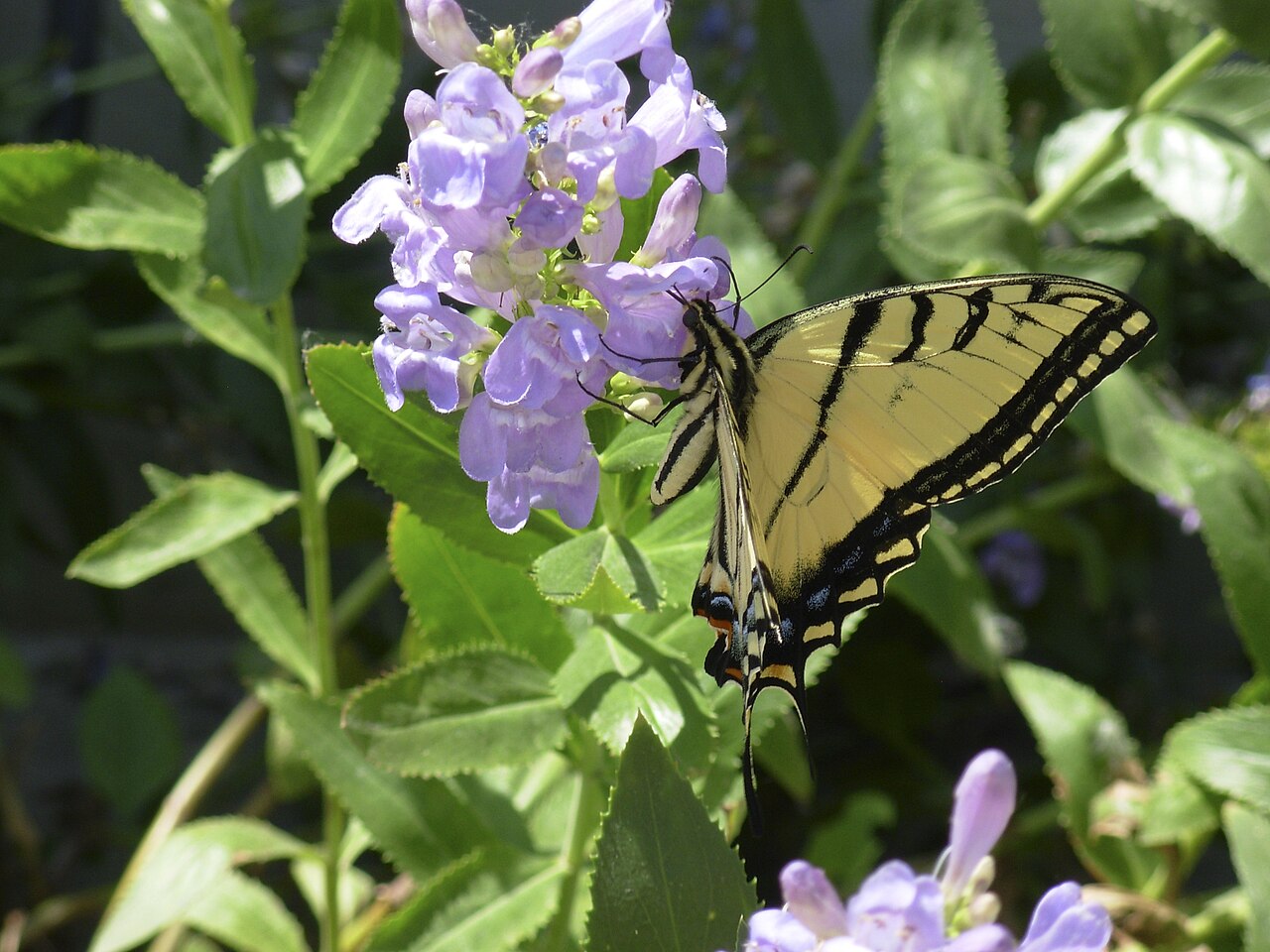
The flowers are visited by a range of insects, and the selected USDA garden photograph shows a swallowtail using blossoms. A photographed visit demonstrates use, not exclusive pollinator dependence. Place flowering plants in a group where practical and provide other locally appropriate species across the season. Preserve access to blooms and avoid routine insecticide applications on flowers. Watching how visitors enter the flower is a useful way to learn the plant’s ecology.
For birds
The main contribution is part of a structurally varied plant community and the insects it supports. Lovely penstemon is not a fleshy-fruited shrub, and this guide does not promise a specific bird will eat its seed. Combine it with regional grasses and woody plants if your goal includes nesting cover or winter resources. Retaining some dry stems can be useful, provided it fits site maintenance and disease conditions.
For mammals
Browsing pressure varies by location and season. Protect young plants if deer or rabbits repeatedly remove shoots, and do not assume a native ornamental is automatically unpalatable. Nor should garden suitability be confused with human or animal edibility. The species is grown here for flowers and ecological diversity, not as a culinary or medicinal crop.
Ecosystem role
Within its indigenous region, this perennial adds a flowering component to open-slope vegetation. Outside that region, its establishment history shows why native-to-North-America is too broad a standard for restoration. Choose local species for natural-area work and maintain accurate labels. In a garden, manage self-sowing thoughtfully and do not distribute seed as locally native unless you can document that claim.
Cultural & Historical Uses
David Douglas collected the plant in northwestern North America, and the name was published by John Lindley in 1830. The epithet venustus conveys charm or beauty, reflected in common names such as elegant and lovely penstemon. Those names describe its appeal, but they are not substitutes for the scientific identity on plant records.
Its horticultural success has had a geographic consequence: roadside plantings and revegetation have extended its occurrence beyond the indigenous Northwest. The Colorado account documents identification of an established roadside population and carefully distinguishes it from the state’s native flora. That is a useful lesson for anyone using photographs or map dots as evidence of native range.
No unverified traditional food or medicinal use is assigned here. The well-supported modern uses are ornamental planting, study and, in suitable circumstances, revegetation. For a home garden, obtain nursery material and preserve the collection-region information; for conservation projects, seek locally appropriate advice rather than treating a widely sold seed lot as a universal native mix.
Frequently Asked Questions
Is lovely penstemon native to Colorado?
The roadside occurrences discussed in the cited Colorado account are introduced. This guide maps its native core in Idaho, Oregon and Washington, not every state where it now grows.
Are Venus and Blue Mountain penstemon the same species?
Those are common names used for Penstemon venustus. Always verify the scientific name, especially when a nursery offers many similar purple-flowered penstemons.
Does it have to be cut completely down each spring?
No blanket hard-pruning rule is appropriate for its persistent woody base. Identify live buds, remove dead growth and prune conservatively rather than cutting indiscriminately into old wood.
Can it grow in a regularly watered flowerbed?
It may do well if drainage is excellent and irrigation is moderate, but constant saturation is a poor match. A leaner open bed is usually a more logical choice than a wet, crowded border.
Can I use seed collected from garden volunteers for restoration?
Not without confirming identity, source and project suitability. Garden seedlings may lack provenance or may differ from the parent, and restoration requires more than an attractive flower.
Sources & Further Reading
- Burke Herbarium — Penstemon venustus
- Southwest Colorado Wildflowers / RMBL — native versus introduced range
- Colorado State University Extension — Growing Penstemons
- USDA PLANTS — PEVE2
Find Native Plants
Ask growers about nursery propagation and regional provenance. Browse our ID native plant nurseries, OR native plant nurseries, WA native plant nurseries directory for suppliers. Explore the native nursery finder.