Whipple’s Penstemon (Penstemon whippleanus)
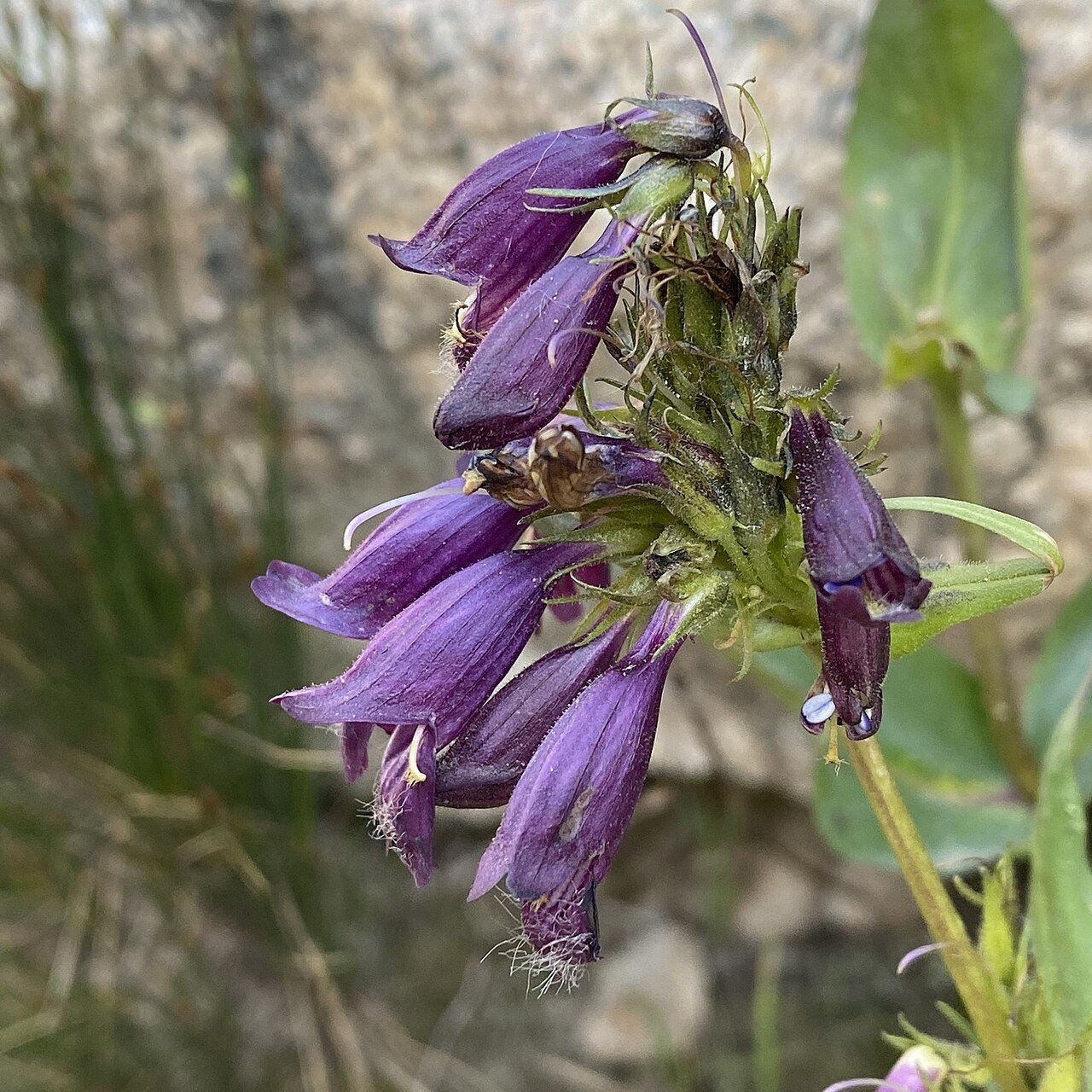
Whipple’s penstemon brings a different palette to a native planting: drooping, dusky purple flower tubes instead of the brilliant blue or scarlet associated with many beardtongues. Some populations produce pale flowers, but creamy white is not a reliable description of the species as a whole. It is a mountain perennial whose seasonal rhythm and water needs deserve attention before it is assigned to a generic dry rock garden.
Penstemon whippleanus is native across parts of the central western mountains, including Idaho, but it is not native to Oregon or Washington in the Kew distribution treatment used here. Its presence in an Idaho–eastern Oregon–eastern Washington regional table must therefore be read carefully. The table now carries that distinction, so a gardener does not mistake a regional list heading for proof of nativity in all three states.
A plant from a cool subalpine setting may tolerate cold well yet struggle with heat, winter wetness or badly timed irrigation in a low-elevation garden. Choose propagated material from a compatible source and start with a small trial. Give it sun or partial shade, adequate seasonal moisture and an aerated root zone; success depends on reproducing the important parts of the habitat, not simply selecting a plant because the flowers are unusual.
Identification
Stems and seasonal habit
Several leafy stems arise from a perennial crown, generally producing a relatively compact cluster rather than a woody shrub. Stature varies with site and elevation; roughly 8–24 inches is a useful regional planning range. In mountain settings the apparent growing season may begin well after lowland gardens are active. Do not declare a dormant crown dead merely because spring has arrived on the calendar; look for sound buds and appropriate local timing.
Leaves
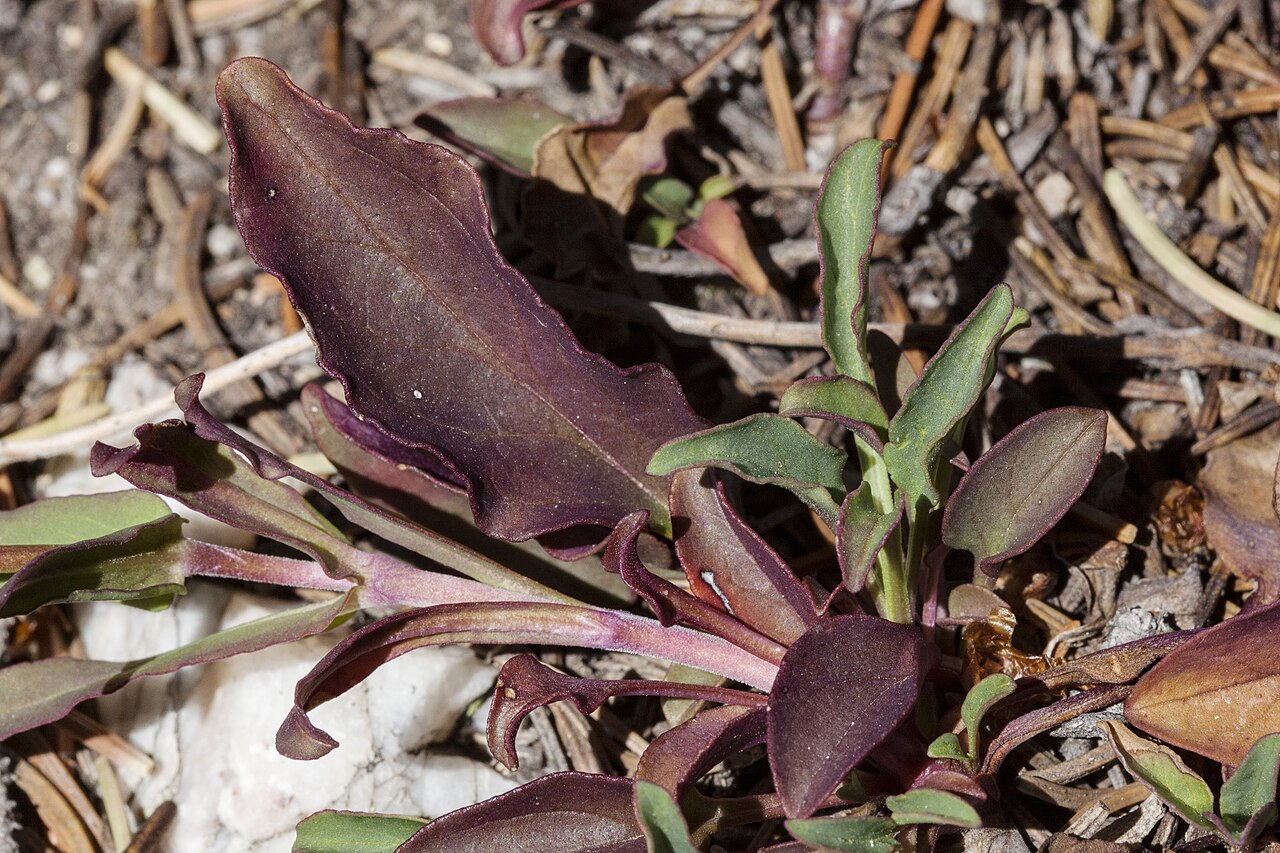
Leaves are opposite, and the upper pairs sit close to or clasp the flowering stem. Lower leaves can be broader and stalked. Their shape and the arrangement of leaves along the shoot are useful when separating a genuine plant from another dark-flowered penstemon. Foliage can take on reddish tones, as one of the New Mexico photographs shows, but that coloring alone is neither a disease diagnosis nor a taxonomic character sufficient for identification.
Flowers
Flower clusters carry tubular blossoms that often hang or angle outward, with a dark purple to wine-colored exterior and lighter internal details. Pale or white forms also occur. The calyx has pointed lobes and the floral surfaces can be hairy. Use a complete flowering shoot and close views, not a nursery color name, for identification. A cultivated selection described as black should not be treated as the color of every wild population.
Fruit and related names
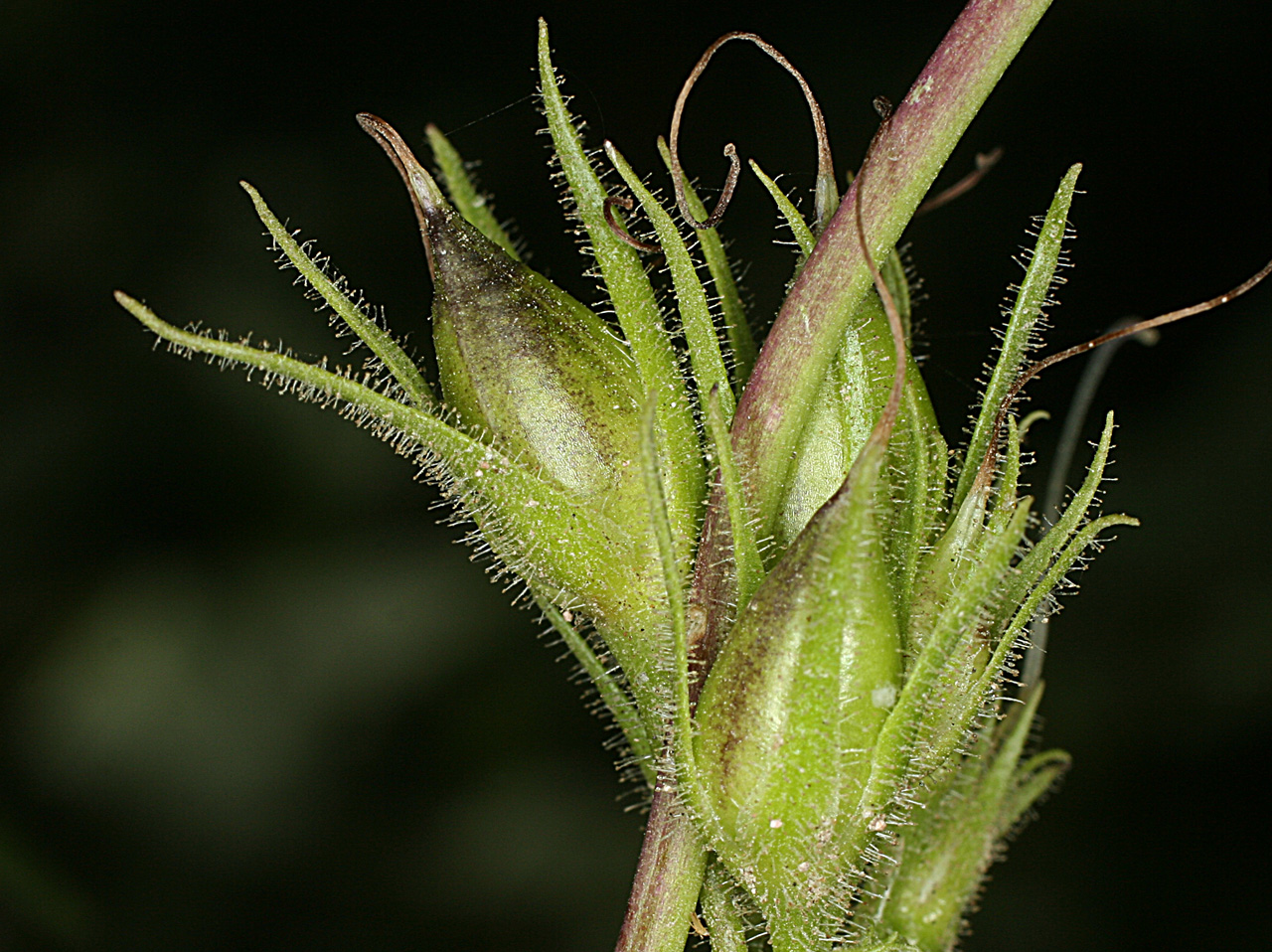
As flowers finish, dry capsules develop within the persistent calyx. The close-up from New Mexico illustrates that seed stage without substituting a different species. Kew lists historical synonyms including Penstemon arizonicus, P. pallescens and P. stenosepalus; those names should be reconciled rather than automatically creating separate garden identities. A label reading only purple penstemon is too vague for restoration or reliable propagation records.
Quick Facts
| Scientific Name | Penstemon whippleanus |
| Family | Plantaginaceae |
| Plant Type | Herbaceous perennial of mountain sites |
| Mature Height | About 8–24 inches; stature varies with elevation and site |
| Mature Spread | A clustered perennial crown rather than a spreading groundcover |
| Growth Rate | Seasonal growth after winter; timing follows mountain climate |
| Sun Exposure | Sun to partial shade; afternoon protection can help in warmer gardens |
| Water Needs | Average seasonal moisture with drainage; avoid permanent saturation |
| Soil Type | Well-drained mountain loam or rocky soil with some moisture retention |
| Soil pH | No universal numerical optimum established; match a suitable local soil |
| Bloom Time | Summer, commonly July–August at mountain elevations |
| Flower Color | Dusky purple or wine-purple; some plants pale cream or white |
| Fall Color | Green or sometimes reddish foliage aging to brown |
| Fruit | Dry capsules enclosed by persistent pointed calyx lobes |
| Deer Resistant | No deer-proof claim; protect vulnerable new plants |
| USDA Hardiness Zones | Cold-mountain origins; use provenance and local experience rather than a blanket zone promise |
Native Range
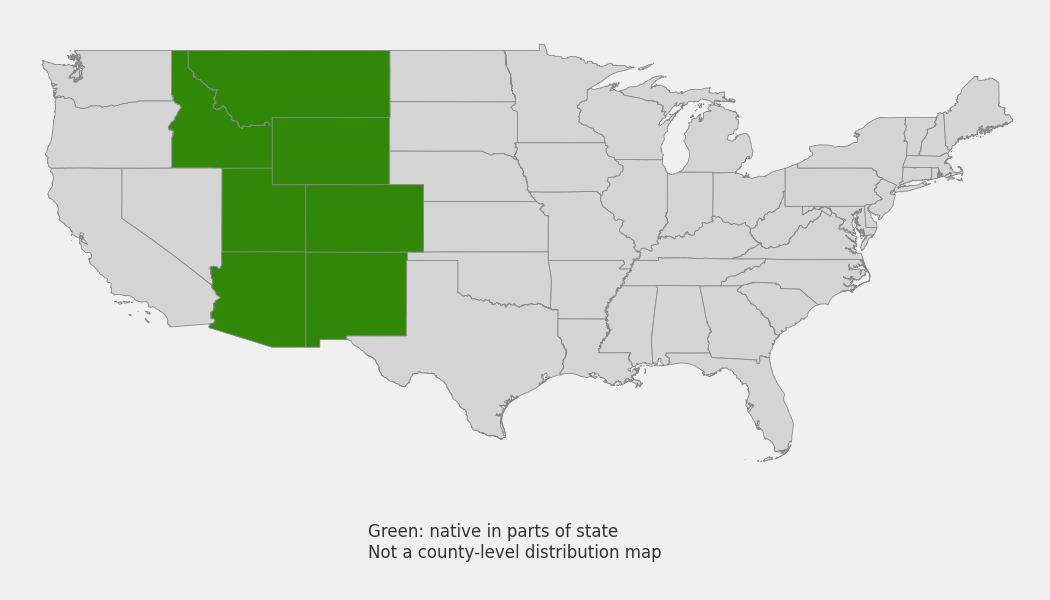
Plants of the World Online lists Arizona, Colorado, Idaho, Montana, New Mexico, Utah and Wyoming as native states. Those seven are shaded on the map. Oregon and Washington are deliberately not shaded, even though the plant has appeared in our broader regional horticultural table. A species can be suitable for a garden without being native to that garden’s state.
The USDA Forest Service describes Whipple’s penstemon on high-elevation rocky or partly shaded sites, including openings associated with spruce–fir vegetation. Such habitats may be moist during snowmelt and relatively cool through the growing season. That is different from a hot paved courtyard or a winter-waterlogged coastal bed, and the difference helps explain why a plant can fail despite apparently suitable hardiness.
At the scale of an individual project, confirm county records, elevation and seed source. Southwestern mountain populations and northern mountain populations should not automatically be treated as equivalent planting material. The map summarizes native presence within states; it does not model habitat suitability or show continuous occupation between mountain ranges.
📋 Regional plant list: Idaho, Eastern Oregon and Eastern Washington
Growing & Care Guide
Light
Use sun to partial shade, with the balance adjusted to climate. In a cool mountain setting an open exposure is reasonable; in a warmer lowland garden, protection from the hottest afternoon conditions may help. Dense shade is not the same as a cool mountain opening. Watch stem strength and flowering rather than assuming that more shade always reduces stress. Avoid locations where competing shrubs close over the plant within a year.
Soil and water
Provide seasonal moisture in a soil that can drain surplus water. Colorado extension guidance identifies this species as adaptable to moister conditions than many dryland penstemons, but that is not a recommendation for stagnant water. During establishment, check the root ball itself and water before it becomes completely desiccated. Once rooted, adjust to rainfall and the site’s drying pattern. If the plant wilts in wet soil, more water may worsen the underlying problem.
Planting tips
Choose a moderate planting window and handle roots gently. Keep the crown at the original nursery depth and avoid burying it in a thick mulch layer. Prepare enough surrounding soil for roots to leave the plug, remove aggressive weeds and water the planting in. A small clump near accessible paths is easier to monitor than a specimen hidden among large grasses. Label the source and planting date so you can distinguish establishment losses from longer-term site incompatibility.
Pruning and seasonal care
Leave healthy leaves after flowering and remove spent stalks selectively. If you want seed, retain a few stems until capsules mature. Delay heavy spring cleanup until new growth is evident, especially where snow lingers. A compact dormant plant can be damaged by unnecessary probing or tugging. Keep fallen debris from forming a constantly damp mat against the crown and investigate rot if stems collapse abruptly rather than fading naturally at season’s end.
Propagation
Use documented seed or nursery-propagated plants. For seed, obtain a protocol appropriate to the lot; cold-winter outdoor sowing in labeled, protected pots is a useful trial but not a promise of immediate germination. Keep seedlings moist enough to establish without keeping the medium saturated. Preserve seed-source records, and do not release garden-grown material into nearby natural populations. A dark-flowered garden seedling may be interesting but requires identity and provenance checks before conservation use.
Landscape Uses
- A cool mountain perennial border with suitable seasonal moisture.
- A partly shaded rock garden where roots drain and summer heat is moderated.
- A close-view pollinator planting within the native region.
- A small trial of documented mountain-provenance material before larger-scale planting.
Dale A. Zimmerman Herbarium
Western New Mexico University Department of Natural Sciences — Wikimedia Commons, CC BY-SA 4.0.
Wildlife & Ecological Value
For pollinators
The flowers add a summer resource in mountain plantings and can be watched at close range to learn which local visitors use them. Avoid extrapolating a specialist relationship from another penstemon without evidence. A varied planting with overlapping flowering seasons is more useful than relying on one dark-flowered species alone. Keep pesticide drift away from flowering stems and tolerate ordinary insect activity unless it demonstrably threatens establishment.
For birds
As a small perennial, its contribution is primarily part of a varied vegetation layer and associated insect life. It does not replace fruiting shrubs or substantial nesting cover. Retain some standing stems where they are sound and compatible with garden maintenance, but avoid unsupported claims of particular bird diets. Match the broader plant community to the birds and habitat actually present at the site.
For mammals
Native status is not a guarantee against browsing or a statement of edibility. Where new growth is repeatedly clipped, use a simple physical barrier while the crown establishes. This guide does not recommend Whipple’s penstemon as a food or livestock forage. Plant selection for wildlife habitat should be distinguished from offering a plant directly to animals.
Ecosystem role
Mountain flowering plants occupy specific climatic and soil niches. Conserving this species means more than growing any penstemon in any western state: it includes protecting habitat, locally adapted populations and appropriate seed movement. In a garden, retain its source information and choose companions that do not overwhelm it. In natural areas, leave plants in place and follow formal local guidance for any restoration or collection.
Cultural & Historical Uses
Asa Gray published the name Penstemon whippleanus in 1862. It has also appeared under several other scientific names, a reminder that horticultural and botanical records can refer to the same species differently. The accepted-name and synonym references provided here make older labels interpretable without multiplying the number of supposed native plants.
The dusky flower color has made it appealing to gardeners seeking something different from bright blue beardtongues. That appeal should not obscure its mountain ecology. A plant selected only by bloom color may be placed in a hot, heavily irrigated border that bears little resemblance to its original habitat. Thoughtful siting is part of honoring the species, not an optional detail.
No traditional medicinal or culinary use is inferred here from the genus. Botanical history and garden interest can be described without inventing a human-use claim. Use nursery propagation, accurate labeling and photographs to share the plant’s character, and avoid digging wild plants from mountain sites where recovery can be slow.
Frequently Asked Questions
Are the flowers normally creamy white?
White or pale forms occur, but dusky purple and wine-purple are characteristic and widely documented. The regional table now reflects the range rather than describing cream as the usual species-wide color.
Is this an Oregon or Washington native?
Not according to the Kew distribution treatment used here. It is native in Idaho and other central western mountain states; the regional table now states the limitation.
Can I grow it in full sun?
Yes in suitable cool conditions, while partial shade can help in warmer gardens. Soil moisture, heat and drainage need to be considered together rather than interpreting exposure as a single fixed rule.
Does a mountain origin mean it never needs summer water?
No. Mountain plants can depend on snowmelt and cool soils. Establishment and dry spells may require water, though continuous saturation is also harmful.
Should I use a very rich soil to make it flower?
Not automatically. Begin with suitable drainage, light and source selection. Excess fertilizer cannot compensate for a hot, wet or crowded site.
Sources & Further Reading
- Kew POWO — Penstemon whippleanus and native distribution
- USDA Forest Service — mountain plant descriptions
- Colorado State University — Native Herbaceous Perennials
- Colorado State University Extension — Growing Penstemons
- USDA PLANTS — PEWH
Find Native Plants
Ask growers about nursery propagation and regional provenance. Browse our ID native plant nurseries, OR native plant nurseries, WA native plant nurseries directory for suppliers. Explore the native nursery finder.