Orange Globemallow (Sphaeralcea munroana)
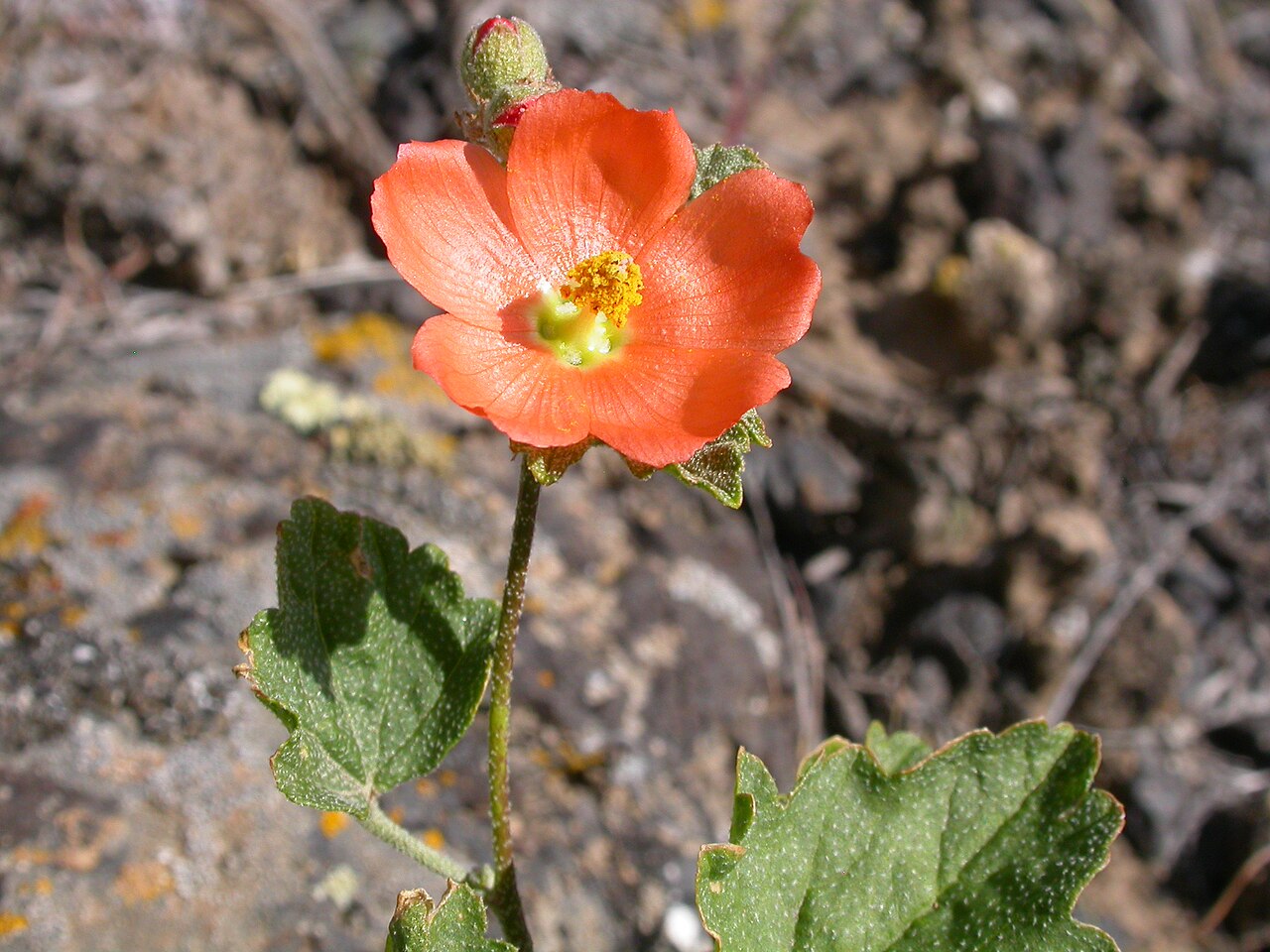
Orange globemallow lights up a dry western planting with small, bowl-shaped orange flowers carried above softly hairy gray-green leaves. The accepted name is Sphaeralcea munroana, also known as Munro’s globemallow. The older regional table spelling Sphairalcea was a typographical error, not a separate genus or another species; it has been corrected so readers and plant suppliers can find the right plant.
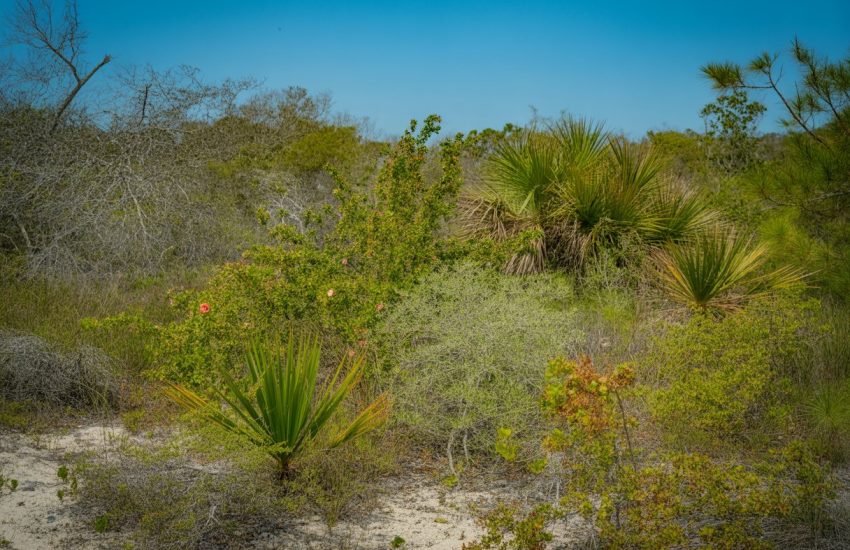
This is a perennial with a substantial taproot and persistent crown, sometimes described as a small subshrub. Several slender flowering stems create an open, informal silhouette rather than a dense bedding mound. In sagebrush and other dryland communities, the orange flowers can seem especially vivid against pale soil and muted foliage. Give a garden specimen the same basic advantages: sunlight, root space and drainage.
The species is valuable for native bees, including specialist globemallow visitors, but its wildlife role is not a reason to ignore provenance. Several orange-flowered Sphaeralcea species overlap or resemble each other. Use documented nursery material and a scientific label, and do not assume every orange mallow photographed in the desert is Munro’s globemallow. This page separates native distribution from introduced occurrence and explains the limits of a state-level map.
Identification
Root, crown and stems
A long, sturdy taproot supports a woody branching crown and several upright stems. Typical height is around 20–80 cm, with a somewhat broader range in floristic descriptions. Stems may look pale because of their small hairs. The plant is not an annual that must be replanted every season, but abundance and persistence can vary with weather and recruitment. Avoid pulling mature plants to inspect the root; use visible characters and documented source material.
Leaves
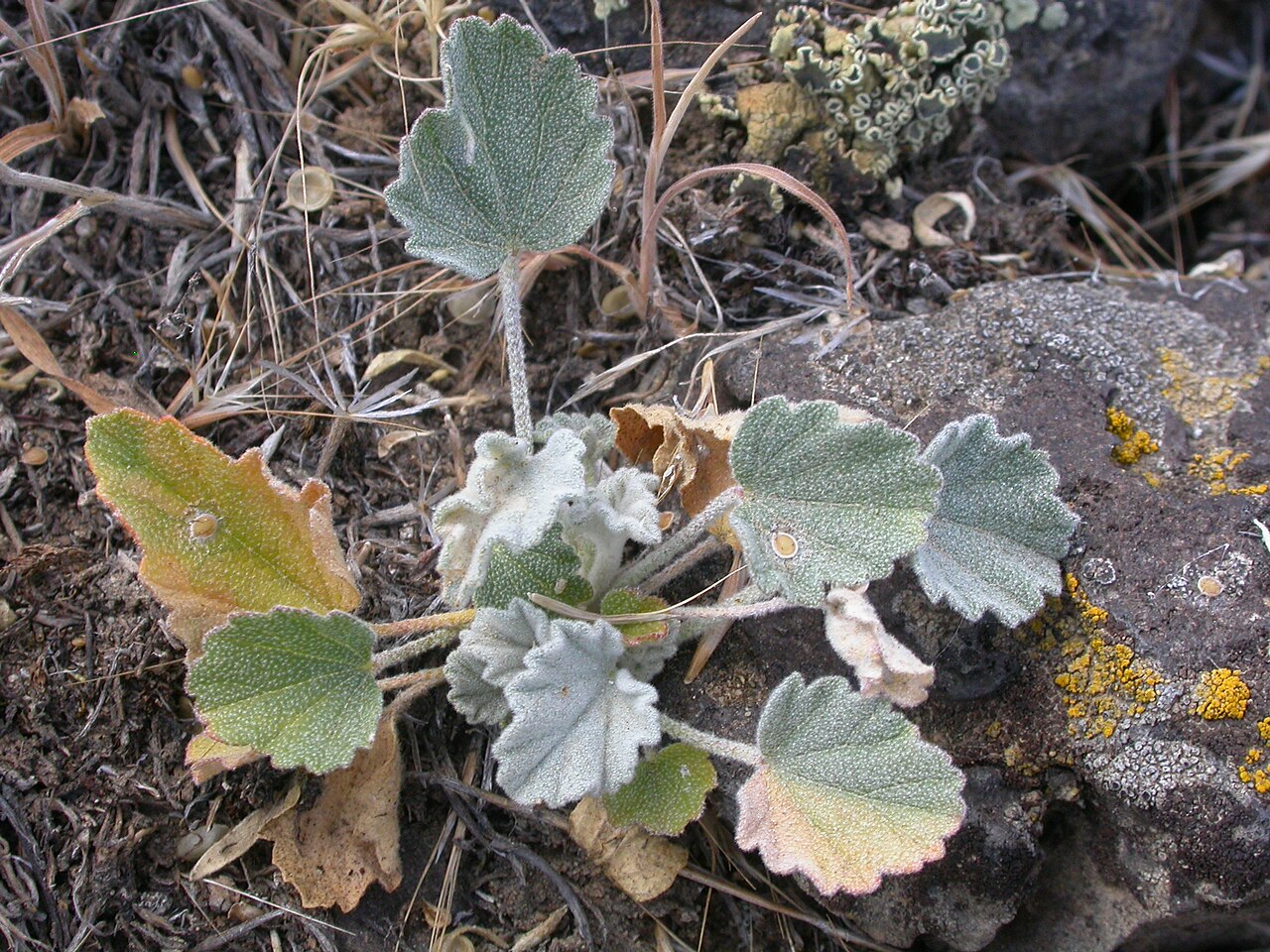
Leaves occur alternately along the stems, with stalks and broadly triangular to rounded outlines. Margins are toothed and often shallowly lobed. Fine star-shaped hairs produce the characteristic gray-green surface and can be seen more clearly with magnification. Leaf shape varies enough that a single leaf is not a foolproof species test. Photograph leaves together with flowers and mature fruit if asking a botanist to separate similar globemallows.
Flowers
Five overlapping petals form an orange cup, with a conspicuous central column of many stamens. Flowers and buds occur in groups associated with the upper leaves, allowing a plant to carry buds, fresh flowers and fading blooms together. Color ranges from apricot or pale orange to a deeper reddish orange. It is the mallow flower structure, not just the color, that separates the plant from unrelated orange garden perennials.
Fruit, seed and lookalikes
The dry fruit is divided into small segments arranged around a central axis. Mature fruit characters help distinguish closely related globemallows, and the literature notes difficult boundaries and possible intergradation among some species. Do not use this guide’s photographs as a license to identify every similar roadside plant with certainty. For seed collection or restoration, seek a flowering and fruiting specimen determination and retain its source record.
Quick Facts
| Scientific Name | Sphaeralcea munroana |
| Family | Malvaceae |
| Plant Type | Perennial forb or small subshrub with a woody crown and taproot |
| Mature Height | Usually about 8–32 inches; broader descriptions reach roughly 35 inches |
| Mature Spread | Open, branching clump; varies with site and age |
| Growth Rate | Spring-active perennial; recruitment varies with seasonal conditions |
| Sun Exposure | Full sun |
| Water Needs | Low after establishment; dry to average, well-drained conditions |
| Soil Type | Sandy, gravelly, rocky or clay-loam soils with drainage |
| Soil pH | Match local soil; no universal numerical optimum used here |
| Bloom Time | Usually May–August, with timing set by climate and moisture |
| Flower Color | Apricot-orange to reddish orange |
| Fall Color | Gray-green foliage can persist seasonally; not selected for fall color |
| Fruit | Rounded segmented dry fruit with small seeds |
| Deer Resistant | Can be browsed heavily; not deer-proof |
| USDA Hardiness Zones | USDA guide reports hardiness to Zone 4; verify local stock and site suitability |
Native Range
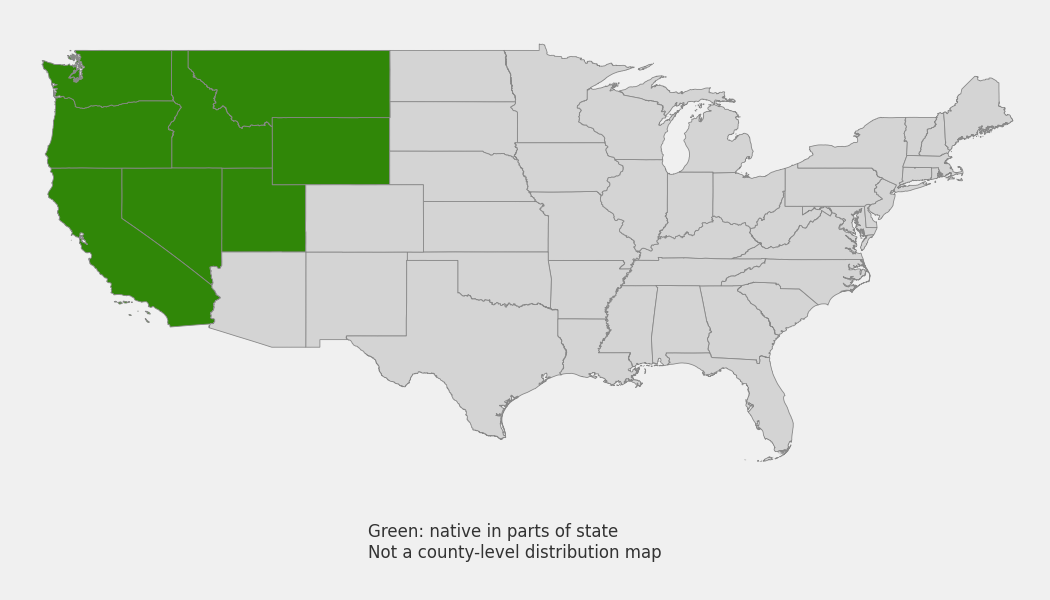
Kew’s native distribution includes British Columbia and the western states of California, Idaho, Montana, Nevada, Oregon, Utah, Washington and Wyoming. Colorado is listed as introduced in that treatment and is not shaded as native here. The U.S. map does not depict Canadian provincial boundaries; British Columbia remains part of the written range.
The species is strongly associated with interior dryland country, including areas east of the Cascades. The Western Forbs synthesis describes desert plains and lower mountain slopes, with a broad elevation span from low interior sites to uplands. Native-state shading is deliberately coarse: California occurrence, for example, is much more restricted than the map’s full state polygon suggests.
In a garden, assess exposure, soil and winter drainage before planting. In restoration, go further and verify local occurrence, identity and seed source. Globemallow names and species boundaries can be complicated, so an attractive seed mixture labeled simply desert mallow is not a substitute for a documented taxon appropriate to the project.
📋 Regional plant list: Idaho, Eastern Oregon and Eastern Washington
Growing & Care Guide
Light
Choose full sun with room for the open stems to develop. A shaded irrigated border may produce a plant, but it does not match the exposed dryland setting that makes this species useful. Observe how nearby shrubs will grow and keep them from closing over the crown. On a small property, a sunny mineral-soil border can be more appropriate than a crowded flowerbed enriched for moisture-loving ornamentals.
Soil and water
The plant can occupy several soil textures, so well-drained should not be read as sand only. What matters is that water does not remain stagnant around roots and crown. Water a new plug carefully until its roots extend into the surrounding soil, then reduce irrigation according to rainfall and plant response. A taproot does not give a newly planted seedling instant access to deep moisture. Avoid using leaf wilt alone as a watering signal when the root zone is already wet.
Planting tips
Use nursery-grown plants and keep the crown at its original depth. Young plants are easier to establish without disturbing a developed taproot. Prepare a weed-free site, water the planting in and monitor for browsing as well as drying. Leave enough room to see the entire flowering clump rather than hiding it among much taller plants. If soil is compacted, improve the planting area appropriately rather than creating a small, heavily amended basin that collects water.
Pruning, browsing and seasonal appearance
After flowering, retain some stems for seed if desired and trim others for a neater appearance. Cut back dead growth when you can distinguish it from the living crown. The plant can look less lush during dry periods; do not force continuous fresh foliage with excessive irrigation. Deer can browse the foliage substantially, so protect a new planting where needed. A plant sold as drought-adapted should not also be advertised as universally deer-resistant without evidence.
Propagation
Seed has a hard coat, and scarification is an important issue in globemallow propagation. Ask the supplier whether the lot is already treated and follow a documented method rather than improvised harsh treatment of the whole packet. Test a small portion first, label containers and keep the germination medium moist but aerated. Hard-seed behavior can spread emergence over time. For restoration, match seed identity and provenance and prepare for weed competition; seed treatment alone does not guarantee establishment.
Landscape Uses
- Orange flower accents among locally native bunchgrasses and sagebrush.
- A dryland pollinator bed with exposed soil patches appropriate for ground-nesting bees.
- An open sunny bank where drainage and local provenance are suitable.
- A demonstration garden showing the difference between native globemallows and unrelated ornamental mallows.
Wildlife & Ecological Value
For pollinators
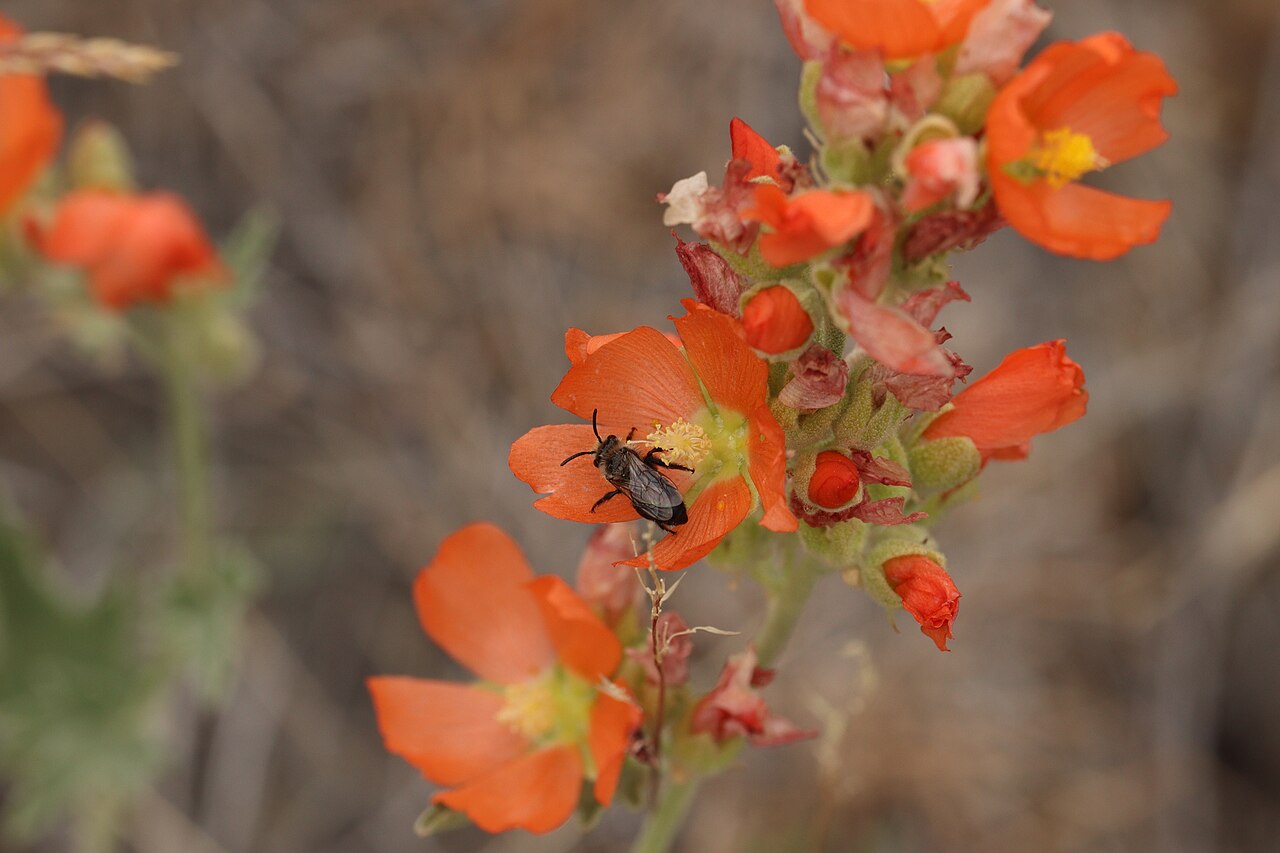
USDA guidance records both generalist visitors and bees specializing in globemallows and related plants. Providing several plants and a seasonally varied floral community is more useful than treating one orange flower as a complete pollinator garden. The selected Washington photograph shows a globemallow bee visiting a blossom. Protect flower access and avoid spraying during bloom. Where appropriate, retain small undisturbed soil areas instead of covering every surface with fabric and deep mulch.
For birds
The ecological literature describes globemallow as part of western wildlife food webs, including use of flowers or foliage and the insects associated with the plant. That does not mean a home planting guarantees a visit from a particular bird. Build the larger habitat with suitable shrubs, grasses and seasonal resources. Retaining some seed-bearing stems can complement that planting, but the plant is not a replacement for nesting cover or a berry-producing shrub.
For mammals
Browsing is a real possibility: the USDA plant guide notes that deer can remove much of the foliage. Protect small plants if establishing them in a heavily browsed garden. Native mammals using a plant does not establish that people or pets should eat it, and this guide offers no medicinal preparation or feeding recommendation. Evaluate browsing in context rather than blaming every clipped stem on drought or poor soil.
Ecosystem role
The species adds flowering and rooting diversity to interior western vegetation. Open patches and favorable seasonal conditions can allow recruitment, while competition from invasive weeds can interfere with establishment. In a garden, support the plant with compatible companions and weed management. In wildlands, conserve existing populations and avoid introducing undocumented garden material, especially where closely related globemallows may intergrade.
Cultural & Historical Uses
The plant has appeared under names in Malva, Malvastrum, Malveopsis and Nuttallia before or alongside its current placement in Sphaeralcea. Such historical naming explains why a thorough duplicate check matters. The misspelling Sphairalcea in the regional table, however, was simply corrected to the accepted genus rather than preserved as another plant identity.
USDA plant-materials work documents its use in pollinator habitat and revegetation. For gardeners, that research provides a strong reason to think beyond flower color: root development, hard seed, browsing and the identity of planting material all influence success. A species chosen for dryland restoration should still be matched to the particular soil, climate and local plant community.
The USDA guide also records a species-specific historical use of flowers as pigment by Gosiute people, citing an ethnobotanical reference. That limited historical observation is not presented as a food or medicine recommendation. Respect for cultural history includes not expanding a documented use into unsupported claims, and respect for the plant includes relying on propagation rather than removing wild specimens.
Frequently Asked Questions
Is Sphairalcea munroana a different plant?
No. In the old table it was a misspelling of Sphaeralcea munroana, the accepted name used here. The row has been corrected.
Is every orange desert mallow this species?
No. Several globemallows have similar flowers, and mature fruit and source locality may be needed to distinguish them. Buy accurately labeled nursery material.
Will deer leave it alone?
Not necessarily. It can be browsed heavily, particularly when fresh growth is available. Protect new plants in sites with regular deer activity.
Why do seeds fail to germinate promptly?
A hard seed coat can prevent water uptake. Use the supplier’s documented treatment instructions, test a small sample and avoid assuming that unsprouted seed is dead after a short interval.
Is it native to Colorado?
Kew lists Colorado as introduced for this taxon. This page’s native map excludes Colorado even though plants can occur or be cultivated there. Choose locally native species for restoration.
Sources & Further Reading
- USDA NRCS — Munro’s Globemallow plant guide
- Western Forbs — Munro’s Globemallow ecology and propagation
- Kew POWO — accepted name and native versus introduced distribution
- Burke Herbarium — Sphaeralcea munroana
Find Native Plants
Ask growers about nursery propagation and regional provenance. Browse our ID native plant nurseries, OR native plant nurseries, WA native plant nurseries directory for suppliers. Explore the native nursery finder.