
Two-winged Silverbell (Halesia diptera)
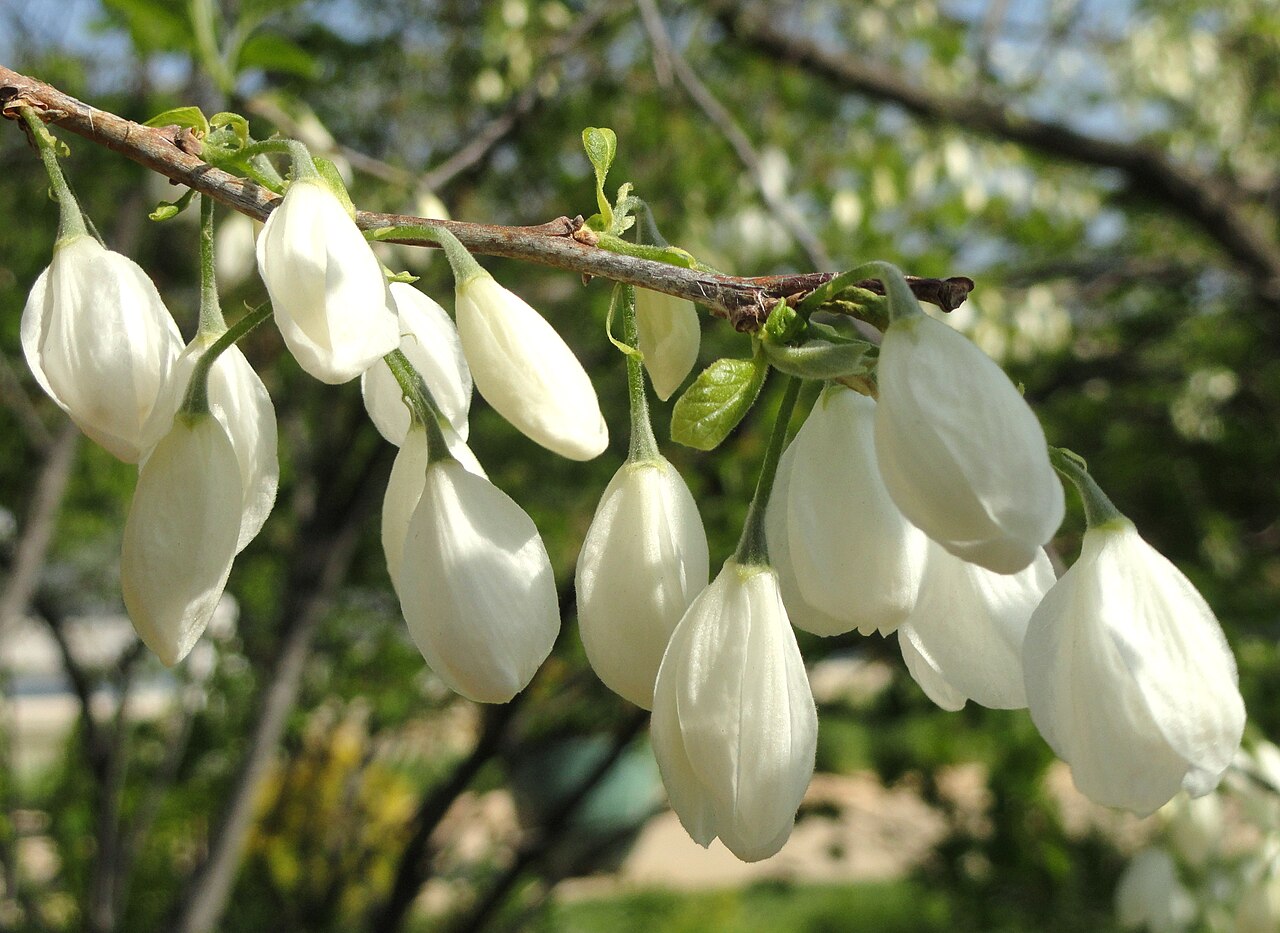
Two-winged silverbell (Halesia diptera) gives a southeastern woodland garden a luminous spring display without becoming an enormous canopy tree. White bells hang beneath the branches as fresh leaves emerge. Later, green fruits develop two broad wings, the most useful field mark for separating this species from other silverbells. Its rounded crown and relatively low branching suit a view from a path or sitting area, where flowers can be appreciated from below.
This is a native tree of moist southeastern forests and bottomlands, not a drought-tolerant substitute for a street tree. A garden can be within the native range yet lack the root-zone moisture the tree needs. Give it a sheltered place with leaf litter, workable soil and room for a spreading crown. The usual landscape size is about 15–30 feet tall, although local conditions and individual plants vary.
The photographs include cultivated specimens; the large-flowered Magniflora form is identified in its captions. A photograph from an arboretum outside the natural range shows horticultural performance, not evidence of nativity there. For regional restoration, ask for locally appropriate, nursery-propagated stock rather than assuming that every named garden selection represents a nearby wild population.
Identification
Habit and branches
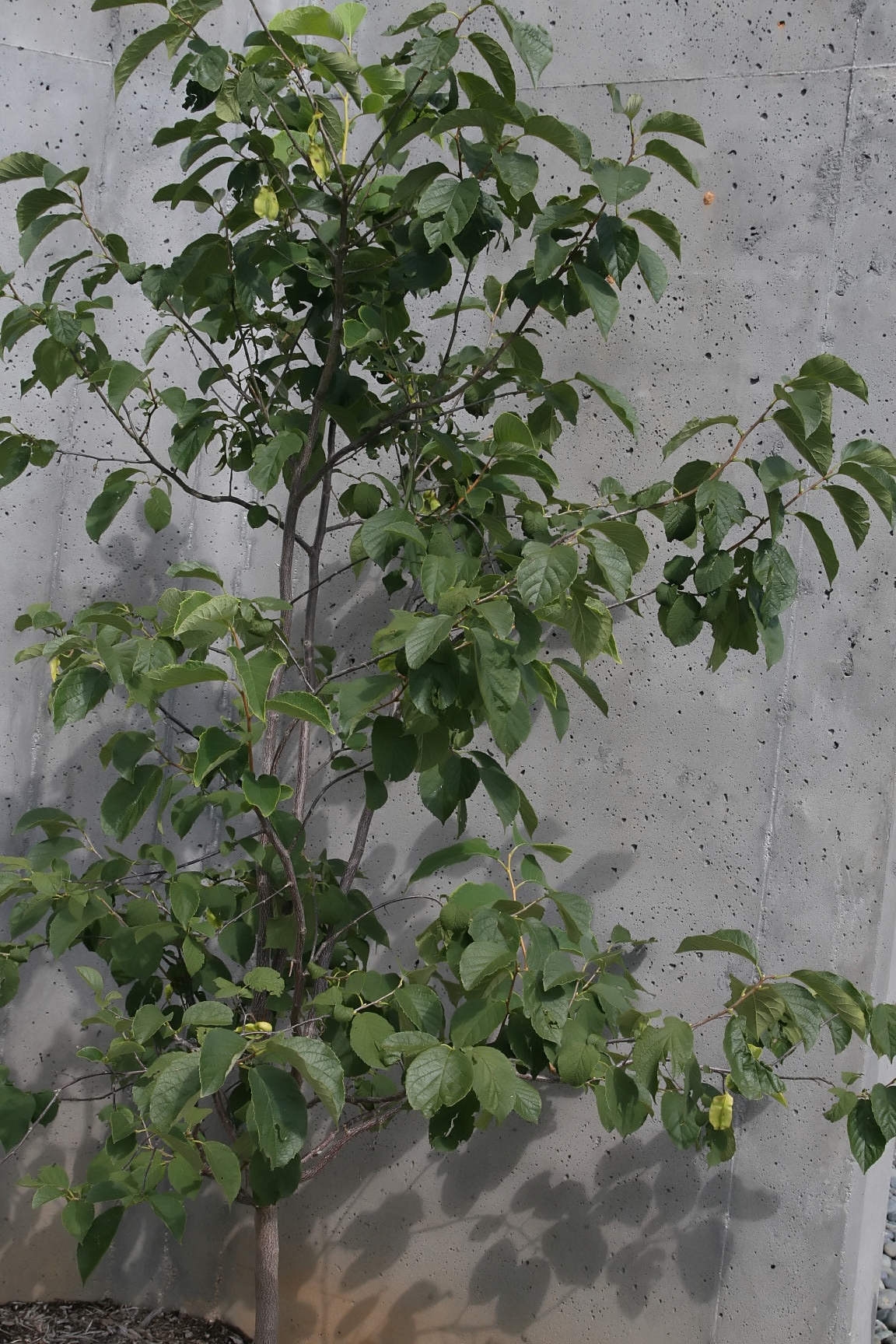
Look for a small deciduous tree or large shrub, often with multiple stems and a broad, rather open crown. Lower branches carry much of the spring display. Trees trained to a single trunk look different from unpruned woodland specimens; that difference does not by itself indicate a different species. Young bark may show contrasting streaks, while older surfaces become more irregular.
Leaves
Leaves are simple and alternate, broadly oval to somewhat widest above the middle, with toothed edges and visible side veins. They unfold green in spring and may turn yellow before falling. Leaves alone are not the strongest way to separate silverbells. When identifying a planted tree, retain photographs of a whole twig, leaf arrangement and fruit instead of relying on a single detached leaf.
Flowers
The pendant white flowers appear in spring and open into bells with lobed edges. Clusters are suspended below the branch rather than arranged as upright candles. Magniflora selections have a conspicuously large display, but flower size depends on the form and growing conditions. The bloom sequence is brief enough that a tree can appear unremarkable on a visit made a few weeks later.
Fruit and look-alikes
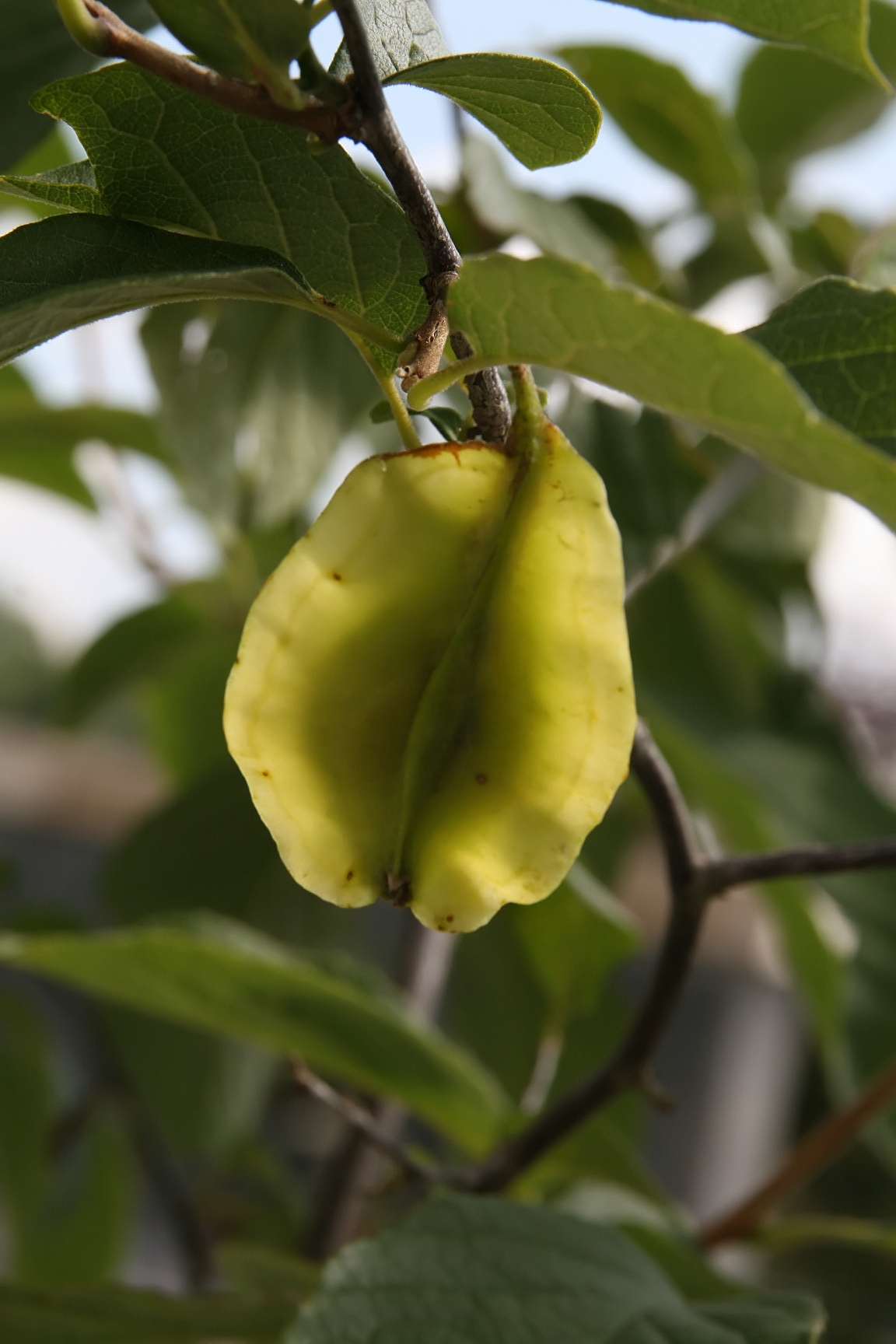
Mature fruits have two conspicuous wings. Carolina silverbell generally has four, making intact fruit more diagnostic than a casual comparison of white flowers. Examine several fruits because damage and viewing angle can hide a wing. Do not confuse this tree with unrelated snowdrops, snowbells or trees sold only under a common name; request Halesia diptera on the nursery label.
Quick Facts
| Scientific Name | Halesia diptera |
| Family | Styracaceae |
| Plant Type | Deciduous small tree or large shrub |
| Mature Height | Usually 15–30 ft; occasional taller specimens |
| Mature Spread | About 15–25 ft |
| Growth Rate | Moderate under suitable conditions |
| Sun Exposure | Part shade; sun with dependable moisture |
| Water Needs | Moist, draining soil; low drought tolerance |
| Soil Type | Humus-rich loam or sandy woodland soil |
| Soil pH | Acidic to near neutral |
| Bloom Time | Spring; timing varies locally |
| Flower Color | White |
| Fall Color | Yellow, variable |
| Fruit | Dry, two-winged fruit |
| Deer Resistant | Not reliably established; protect young trees |
| USDA Hardiness Zones | Approximately 5b–9a; provenance matters |
Native Range
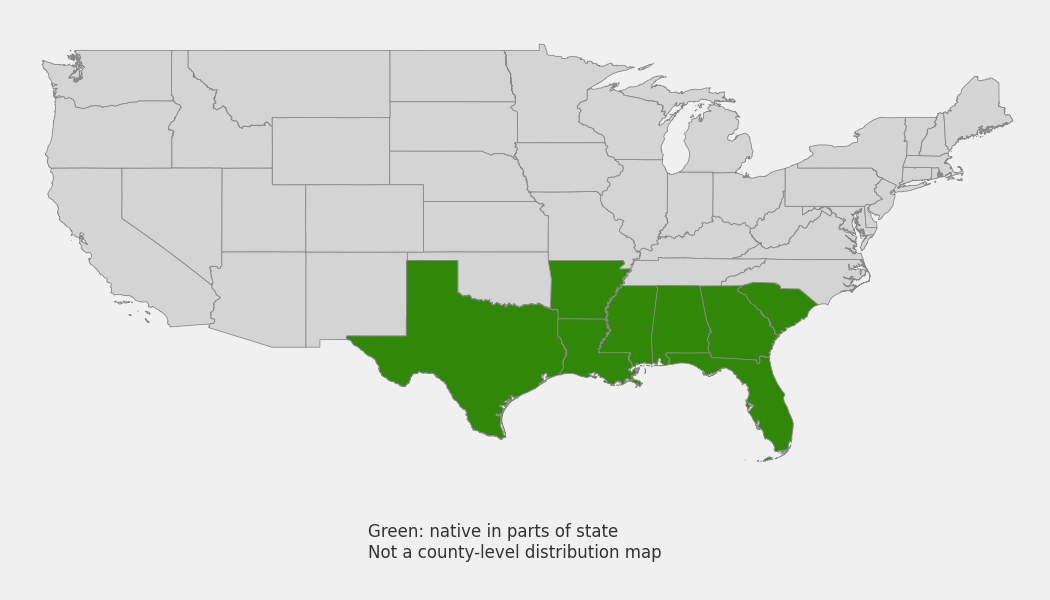
Kew lists Halesia diptera as native to Alabama, Arkansas, Florida, Georgia, Louisiana, Mississippi, South Carolina and Texas. The distribution follows suitable southeastern habitats, not every county or soil type within those states. In Texas it is an eastern woodland species, not a tree of the dry western part of the state. The regional lists for Alabama–Georgia–Mississippi and Arkansas–Louisiana therefore apply, but local sourcing still matters.
Wild habitat includes moist woods, stream-associated slopes and bottomlands. These settings explain why an established tree may tolerate occasional wetness while struggling in a compacted, permanently stagnant planting hole. A wetland association is not a promise that roots can remain submerged in a sealed landscape depression. Look at both drainage and summer moisture when evaluating a planting site.
The state map is a broad orientation tool. It deliberately does not shade states merely because botanical gardens grow the tree there. For a conservation planting, consult county records and the local flora, then match the nursery source to the intended site. Hardiness and native range answer different questions: winter survival outside the range does not make the species locally native. The combined Arkansas–Louisiana–eastern Oklahoma–eastern Texas list is broader than this species: Oklahoma is not included in the native range used here.
📋 Regional plant list: Alabama, Georgia & Mississippi
Growing & Care Guide
Light and siting
A sheltered woodland edge with bright filtered light is a useful starting point. Full sun can work where soil moisture is dependable, but a south-facing wall or paved court adds heat and drying that a simple sunlight label misses. Before planting, watch the proposed spot through an afternoon and note reflected heat, summer shade and prevailing winds. Avoid forcing the crown beneath a low utility line.
Soil and drainage
Use the existing soil as the basis of the planting bed rather than making a tiny pocket of rich amendment inside heavy clay. A soil test can identify excessive alkalinity before the tree is purchased. Maintain an organic surface layer, but leave the trunk flare visible. If water stands after ordinary rains, investigate the drainage problem rather than assuming a bottomland tree will cure it.
Water through establishment
Water the root ball and the soil just outside it, then check moisture before repeating. Newly planted roots occupy a much smaller volume than the eventual crown. A tree can wilt in a landscape that looks generally damp if its original container root ball has dried. Conversely, daily shallow irrigation can keep the surface wet without developing a resilient root system. Adjust to rainfall and soil texture.
Planting and spacing
Plant at the depth where the upper structural roots begin, not at the top of excess nursery soil piled over the trunk. Inspect circling roots before placing the tree. Allow roughly the expected mature crown width rather than planning around the small container size. A mulched area clear of turf reduces mower damage and competition while letting the tree retain attractive low branches.
Pruning
Choose early whether the tree will have a single main trunk or a natural multi-stemmed form. Remove damaged or crossing growth with modest, well-placed cuts, and preserve the lower flowering framework where space allows. Repeated shearing removes the graceful outline and can reduce the display. Do not top an established tree to solve a poor siting decision; consult a qualified arborist for structural problems.
Propagation and purchasing
Nursery propagation is preferable to digging woodland plants. Seed-grown trees and named selections are not interchangeable: a seedling need not retain the flower size or habit of Magniflora. Seed dormancy can make home propagation slow, so obtain a supplier-specific protocol rather than expecting fresh seed to sprout like an annual. Record the source and selection name for future reference.
Troubleshooting
Leaf scorch, poor growth and early leaf drop warrant a check of moisture, root depth and soil chemistry before applying fertilizer. A flowering tree does not need routine pesticide treatment merely because a few insects visit it. Look for a repeated pattern of injury and identify the cause. If branches die back after a wet season, inspect drainage; after a dry season, inspect the root zone and irrigation coverage.
Landscape Uses
- Small flowering tree beside a woodland path, with room for low branches.
- Moist native garden on an appropriate southeastern site.
- Sheltered edge of a rain garden where water drains between storms.
- A spring focal point above lower woodland perennials, without crowding the trunk.
Wildlife & Ecological Value
For pollinators
Open flowers attract visiting insects, and Extension lists bees and butterflies among the visitors. Observe the actual visitors in your garden rather than assuming a particular specialist relationship. Keep broad-spectrum sprays away from blooming branches. A short spring bloom is most useful as part of a planting that offers other flowers before and after it.
For birds
The crown contributes structure, perching space and cover in a layered garden. The dry fruits should not be described as juicy bird berries. Its value is best understood alongside surrounding shrubs and trees rather than reduced to an unsupported claim that it feeds every songbird. Preserve healthy branching and nearby understory habitat.
For mammals
Protect young trunks and roots from mechanical damage and browsing where these are local problems. Do not advertise the tree as deer-proof without local experience. A temporary guard needs room for growth and regular inspection; an abandoned tight guard can damage a tree long after the initial browsing risk has passed.
In a woodland planting
The practical ecological benefit comes from adding an appropriate native woody layer without replacing an existing diverse understory. Retain leaf litter where possible and avoid disturbing streambanks to install ornamental specimens. Native status is not a reason to dig plants from public land or from a small wild population.
Cultural & Historical Uses
The name Halesia commemorates Stephen Hales, while diptera refers to two wings. That descriptive epithet makes an unusually useful bridge between a botanical name and a visible identification feature. Older labels and horticultural accounts may use slightly different author citations; the tree remains recognizable through its full scientific name and fruit characters.
Magniflora has been treated as a botanical variety and as a horticultural designation. Garden references often emphasize its larger flowers. This article keeps cultivated Magniflora photographs labeled rather than presenting them as proof of the appearance of every wild plant. A plant name on a sales tag should include enough detail to distinguish that selection from unselected stock.
This guide documents landscape and botanical use, not a medicinal or edible use. No specific traditional preparation is recommended here. If researching cultural history, follow a named historical source and a clearly identified species; information for another silverbell or an unrelated plant called snowdrop cannot safely be transferred to Halesia diptera.
Frequently Asked Questions
Is it native throughout the Southeast?
No. It is native in parts of eight southeastern states, but county distribution and habitat remain important. A state-level listing does not make every upland, coastal dune or dry urban site suitable.
How do I distinguish it from Carolina silverbell?
Examine mature fruit: two prominent wings support Halesia diptera, while Carolina silverbell typically has four. Leaves and white bells alone are easier to confuse.
Can it grow in full sun?
Yes where moisture is reliable, but filtered light is often a gentler choice. Reflected heat and drought can make a nominally sunny planting unsuitable.
Why is my tree not flowering heavily?
Age, seasonal weather, pruning and site conditions all matter. Check whether pruning removed flowering wood, and assess root health before trying to force bloom with fertilizer.
Does Magniflora mean a different species?
It is a large-flowered form associated with Halesia diptera. Keep the selection or variety label when purchasing; do not assume seedlings will reproduce the same garden traits.
📋 Also listed: Arkansas, Louisiana, Eastern Oklahoma & Eastern Texas — not native to Oklahoma
Sources & Further Reading
- NC State Extension: Halesia diptera
- Kew: accepted name and native states
- University of Florida: silverbells
- LSU AgCenter: silverbell in landscapes
- University of Arkansas tree database
Find Native Plants
Ask growers about nursery propagation and regional provenance. Browse our AL native plant nurseries, GA native plant nurseries, MS native plant nurseries, AR native plant nurseries, LA native plant nurseries directory for suppliers. Explore the native nursery finder.