
Pitch Pine (Pinus rigida)
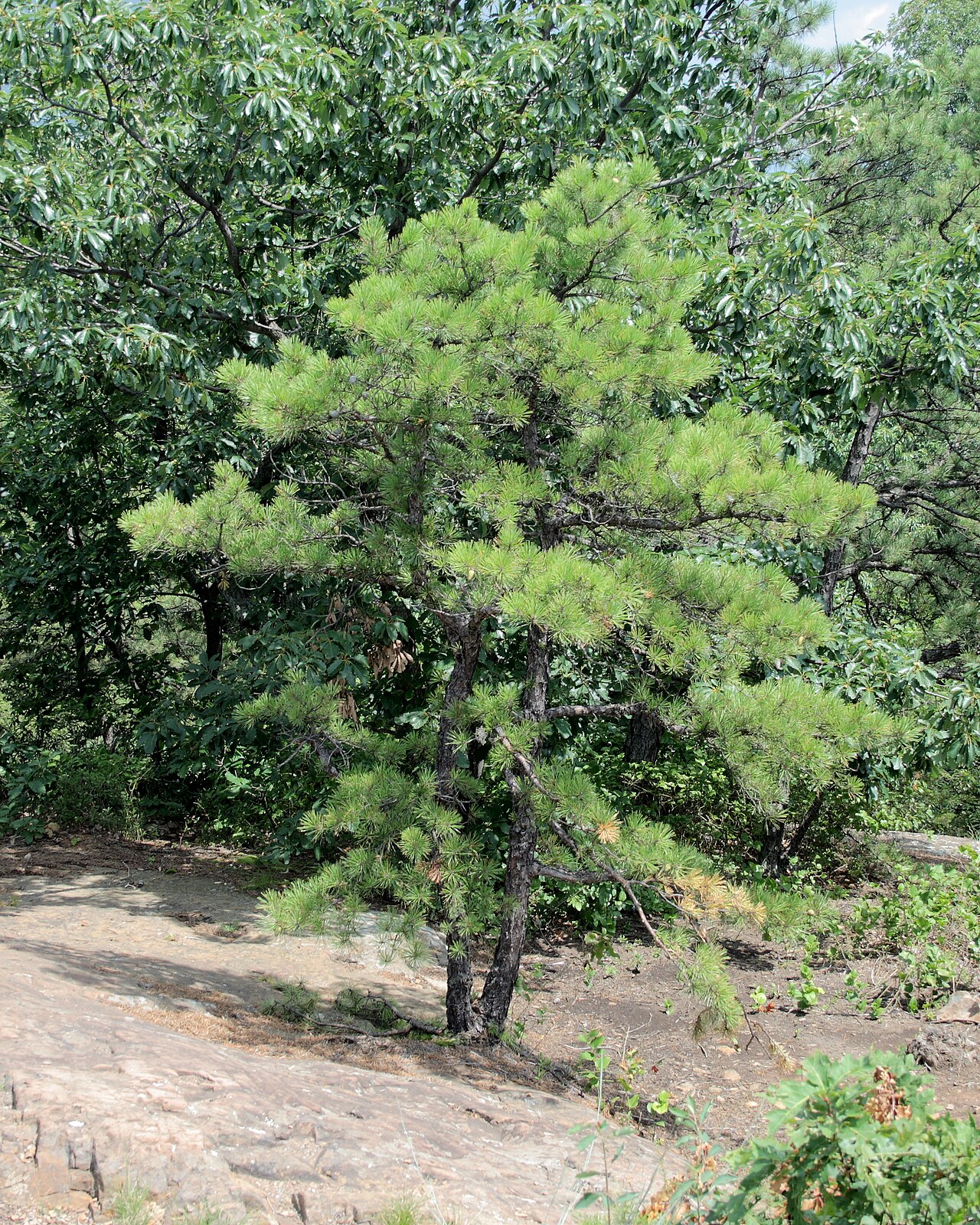
Pinus rigida, commonly known as Pitch Pine, is a tough, irregularly shaped conifer native to the sandy barrens, rocky ridgetops, and fire-prone woodlands of the northeastern and Appalachian United States. Where other trees fail — thin, nutrient-poor sand, exposed bedrock, repeated fire — Pitch Pine thrives, and that toughness has made it a defining tree of landscapes like the New Jersey Pine Barrens, Cape Cod’s outer beaches, and the dry ridgelines of the Appalachian Mountains. It is rarely a tidy or symmetrical tree, and that is exactly the point: its twisted trunks, tufted branches, and scrubby silhouette are adaptations to wind, poor soil, and fire that make it one of the most distinctive native pines in its range.
Pitch Pine typically grows 40 to 60 feet tall, though trees on the harshest sites — windswept coastal dunes or bare granite outcrops — may stay stunted at a fraction of that height for decades. It is easily told apart from other eastern pines by its needles in bundles of three, its thick, deeply furrowed bark, and its habit of sprouting tufts of foliage directly from the trunk and even from old stumps, a trait called epicormic sprouting that few other pines share. Its cones are often serotinous, meaning they stay sealed with resin and only open to release seed when heated by fire — a direct adaptation to the fire regimes that have shaped its range for thousands of years.
For native plant gardeners and land managers working with dry, sandy, or rocky sites, Pitch Pine offers something few ornamental conifers can: a genuinely tough, low-input tree that supports a specialized community of wildlife, including several moth species that depend on it entirely. It is not a tree for a manicured foundation planting, but for restoration of barrens habitat, erosion control on poor sandy soils, or a naturalistic woodland garden, it has few equals among native pines.
Identification
Pitch Pine is identified most easily by its three-needle bundles, thick plated bark, and irregular, often flat-topped or scraggly crown. Young trees have a more conical shape, but with age the crown becomes broad, open, and asymmetrical, shaped by wind, fire, and the loss of lower branches. On the poorest sites — dunes, bald rock, exposed ridgelines — mature trees may be no more than 20 feet tall and heavily contorted.
Bark & Stems
Mature bark is thick, dark reddish-brown to nearly black, and broken into irregular, flat-topped plates separated by deep furrows — a structure that insulates the cambium from all but the hottest fires. One of Pitch Pine’s most distinctive traits is its tendency to sprout new foliage directly from the trunk, branches, and even the root collar after fire or injury, called epicormic sprouting. Few North American pines can resprout from the trunk this way, and it is one of the most reliable field marks for the species.
Leaves
Needles are yellow-green to dark green, 3 to 5 inches long, stiff, and slightly twisted, growing in bundles (fascicles) of three — the standard check that separates Pitch Pine from two-needle pines like Virginia Pine and Red Pine in the same range. Needles persist 2 to 3 years before shedding, giving the crown a somewhat sparse, tufted look compared to denser pines.
Flowers & Cones
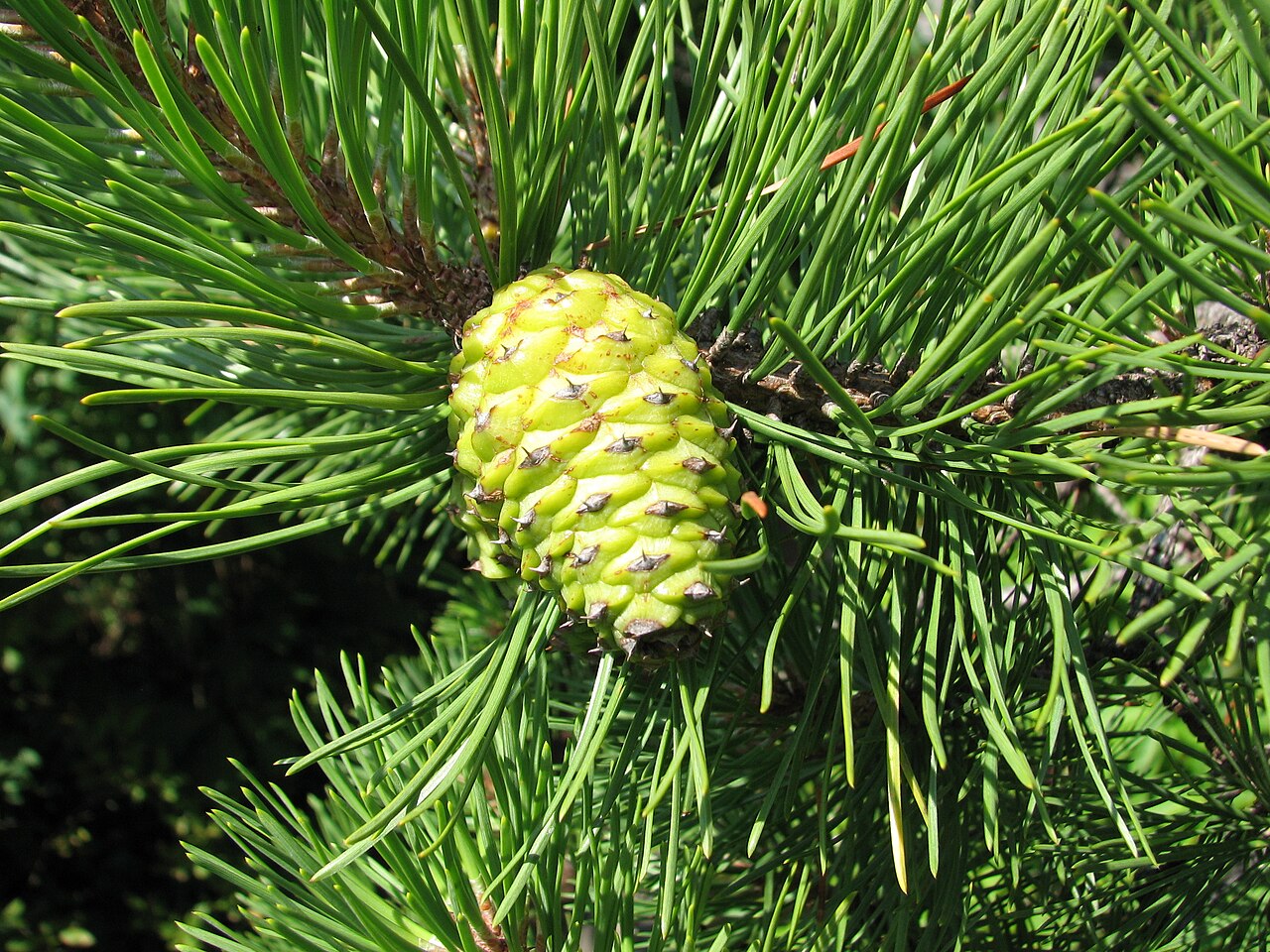
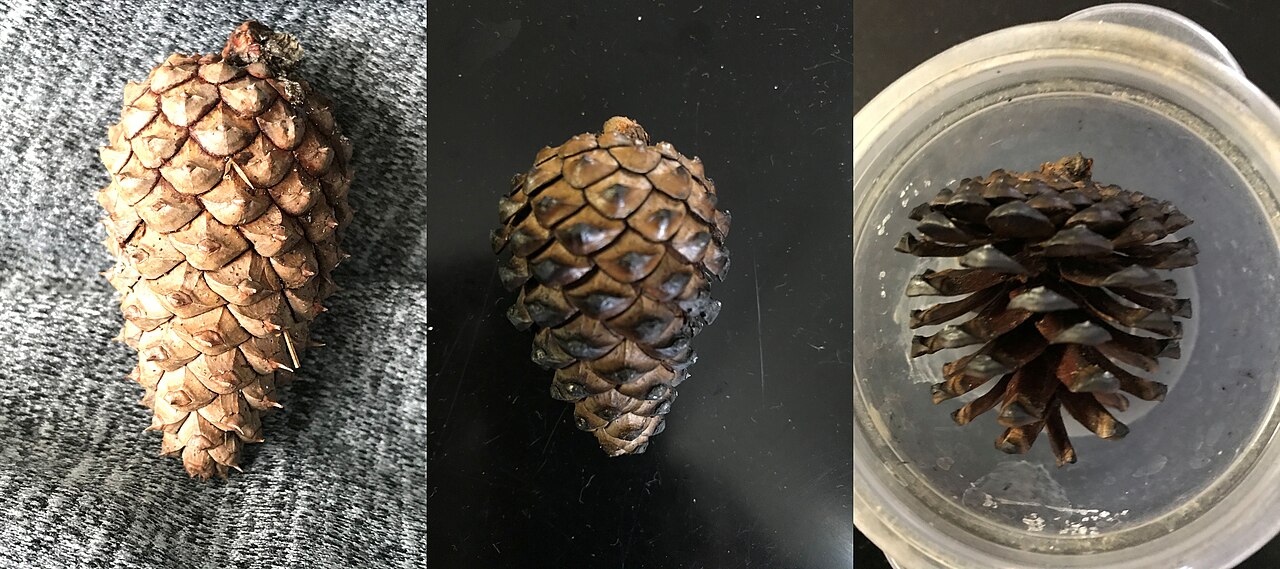
Like all pines, Pitch Pine is wind-pollinated, producing small yellow male pollen cones in spring and inconspicuous female cones that take two years to mature. Mature seed cones are 1.5 to 3.5 inches long, egg-shaped, and armed with a short, sharp prickle on each scale. Many cones are serotinous — sealed shut with resin and remaining closed on the tree for years until fire melts the resin and triggers seed release onto the freshly cleared, mineral-rich soil below. Not every tree or every cone is strongly serotinous; the trait varies by population and is most pronounced in frequently burned barrens.
Quick Facts
| Scientific Name | Pinus rigida |
| Family | Pinaceae (Pine) |
| Plant Type | Evergreen Coniferous Tree |
| Mature Height | 40–60 ft (stunted to 15–20 ft on poor sites) |
| Mature Spread | 20–35 ft, often asymmetrical |
| Growth Rate | Slow to Moderate |
| Sun Exposure | Full Sun |
| Water Needs | Low |
| Soil Type | Sandy, rocky, or shallow; very poor to average fertility |
| Soil pH | 4.5–6.5 (acidic) |
| Bloom Time | April – May (pollen cones) |
| Flower Color | Yellow (male cones) |
| Fall Color | Evergreen (no fall color change) |
| Fruit | Egg-shaped cones, 1.5–3.5 in, often serotinous |
| Deer Resistant | Yes |
| USDA Hardiness Zones | 4–7 |
Native Range
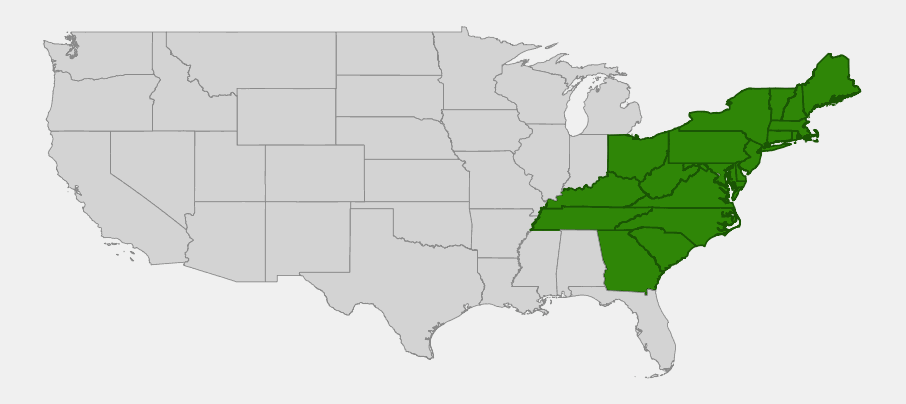
Pitch Pine is native to the eastern United States, ranging from coastal Maine and the mountains of southern Quebec and Ontario south through New England, New York, and the Mid-Atlantic states, and down the Appalachian Mountains into eastern Tennessee, western North Carolina, upstate South Carolina, and the mountains of northern Georgia. It is most abundant and most recognizable on the sandy coastal plain of New Jersey and Long Island and along the sandy soils of southeastern Massachusetts and Cape Cod, but it also forms distinctive stands on dry, rocky Appalachian ridgetops hundreds of miles inland.
Across this range, Pitch Pine occupies sites that most other trees avoid: deep, excessively drained sands with little organic matter; shallow soils over exposed bedrock; and windswept coastal headlands and dunes. It is the signature tree of the New Jersey Pine Barrens, where it dominates vast stretches of fire-maintained woodland, and it plays a similar role on the sand plains of Long Island, Cape Cod, and the New Jersey coastal plain. In the Appalachians, it is typically confined to dry, south- or west-facing ridges and bald rock outcrops where competition from hardwoods is limited.
Pitch Pine’s range and abundance are closely tied to fire history. Decades of fire suppression across much of the Northeast have allowed hardwoods to crowd out Pitch Pine in many areas where it once dominated, since its seedlings need the open, mineral soil and reduced competition that periodic fire provides. Where prescribed fire or wildfire still occurs — most notably in the Pine Barrens — Pitch Pine remains vigorous and self-renewing; elsewhere it persists mainly on the thinnest, least hospitable soils that hardwoods cannot colonize.
📋 Regional plant lists featuring Pitch Pine: Northern New England · Southern New England · New York, Pennsylvania & New Jersey · Delaware, New Jersey & New York · Maryland, Virginia & West Virginia · Indiana & Ohio · Kentucky & Tennessee · North & South Carolina · Alabama, Georgia & Mississippi
Growing & Care Guide
Pitch Pine is one of the easiest native conifers to grow on poor, dry sites, but it is equally one of the quickest to resent being coddled. It is built for scarcity — lean soil, full sun, and minimal water — and gardeners who try to grow it like a typical landscape conifer, with rich soil and regular irrigation, often end up with a weak, disease-prone tree instead of the tough specimen the species is known for.
Light
Pitch Pine requires full sun. It is intolerant of shade at every life stage, and seedlings in particular need open, sun-exposed mineral soil to establish — one reason it struggles to regenerate in areas where fire suppression has allowed a closed hardwood canopy to develop.
Soil & Water
This is a tree for difficult soils: deep sand, gravel, or shallow rocky ground with low fertility and sharp drainage. It is strongly adapted to drought and performs poorly in rich, moist, or compacted soils, where it becomes more susceptible to root disease and storm damage. Established trees need no supplemental irrigation outside of extreme, prolonged drought. Avoid amending the planting site with compost or fertilizer — lean soil is a feature, not a deficiency, for this species.
Planting Tips
Plant young container-grown or bare-root stock in early spring. Choose the sunniest, driest, sandiest or rockiest spot available; a site that seems too poor for most trees is often ideal for Pitch Pine. Space trees 15 to 25 feet apart for a naturalistic barrens or ridge planting. Avoid low-lying, wet, or heavy-clay ground, where Pitch Pine performs poorly compared with wetland-adapted pines.
Pruning & Maintenance
Little pruning is needed or desirable; the irregular, wind-sculpted form is part of the tree’s character. Remove only dead or hazardous branches. Because Pitch Pine naturally sprouts from the trunk and stump, unwanted sprouts can simply be left or removed as desired without harming the tree’s health. Where practical and permitted, periodic prescribed fire — managed by professionals — is the single most effective tool for maintaining healthy Pitch Pine stands and triggering seed release from serotinous cones.
Landscape Uses
Pitch Pine fills a narrow but valuable niche in native landscaping:
- Barrens and dune restoration on sandy coastal or inland sites
- Erosion control on steep, rocky, or sandy slopes where little else will establish
- Wildlife habitat plantings in fire-adapted pine-oak woodland restorations
- Difficult-site specimen tree for poor, dry, exposed ground
- Windbreaks on coastal or ridge sites exposed to salt spray and wind
Fire Ecology
Few eastern trees are as closely tied to fire as Pitch Pine. Its thick, insulating bark allows mature trees to survive low- and moderate-intensity surface fires that would kill thinner-barked competitors, and its unusual ability to resprout from the trunk, branches, and root collar lets it recover even after a fire scorches the canopy. Many populations also produce serotinous cones that stay sealed with resin for years, opening only when heat from fire melts the resin and releases seed onto the bare, nutrient-rich ash bed below — conditions ideal for seedling establishment. In the New Jersey Pine Barrens and similar landscapes, a regular fire return interval of roughly 6 to 25 years keeps Pitch Pine dominant; without it, longer-lived hardwoods gradually take over.
Wildlife & Ecological Value
Pitch Pine anchors one of the most specialized plant communities in the eastern United States, and several insects and birds depend on it directly.
For Pollinators
As a wind-pollinated conifer, Pitch Pine offers no nectar, but its foliage is a larval host for a number of moth species tied specifically to pine barrens habitat, including the pine devil moth and several pinion moths. These moths, in turn, are an important food source for breeding songbirds and bats in barrens ecosystems.
For Birds
Pine Warblers, Brown-headed Nuthatches, and Eastern Towhees are closely associated with Pitch Pine woodlands, foraging for insects in its bark and foliage and nesting in its open, multi-layered canopy. Seed-eating birds such as Pine Siskins and Red Crossbills feed on Pitch Pine seed when cones open, and Wild Turkeys forage on the ground beneath stands for seed and insects.
For Mammals
White-tailed deer rarely browse Pitch Pine, which is one reason it holds up well in areas with heavy deer pressure, but small mammals including red squirrels and white-footed mice feed on the seeds. The open, sandy ground maintained by fire beneath Pitch Pine stands also supports ground-nesting and burrowing wildlife adapted to barrens conditions.
Ecosystem Role
Pitch Pine is a foundation species of pine barrens ecosystems — rare, globally significant plant communities built around frequent fire, sandy soil, and a suite of specialized plants and animals found nowhere else. By tolerating and even requiring periodic fire, Pitch Pine maintains the open, sun-exposed conditions that barrens wildflowers, moths, and reptiles depend on; without it, and without fire, these communities convert to generic oak-hardwood forest and lose much of their specialized biodiversity.
Cultural & Historical Uses
Pitch Pine takes its common name from its exceptionally resinous wood, which colonial-era Americans tapped and processed for naval stores — pitch, tar, and turpentine used to waterproof and maintain wooden ships. Resin-rich knots and stumps, sometimes called “fatwood” or “lighter pine,” were prized as reliable fire-starting material because they burn hot and fast even when damp, a use that continues informally today among campers and woodworkers.
The wood itself is coarse-grained, knotty, and resinous, generally considered inferior to other eastern pines for fine lumber, but it was historically used for charcoal, mine timbers, railroad ties, and rough construction where durability under poor conditions mattered more than appearance. In the New Jersey Pine Barrens, Pitch Pine supported a regional charcoal and bog-iron industry during the 18th and early 19th centuries, and the tree remains the defining species of that region’s cultural and ecological identity.
Indigenous peoples throughout its range used Pitch Pine resin medicinally as a salve for wounds and skin ailments, and the inner bark was occasionally used as an emergency food source. Today, Pitch Pine is valued less for direct economic use than for its role in habitat restoration, with land managers in the Northeast increasingly using prescribed fire to restore Pitch Pine barrens for the rare moths, birds, and plants that depend on them.
Frequently Asked Questions
Why does Pitch Pine have such a scraggly, irregular shape?
Its irregular form comes from growing on the poorest, most exposed sites — thin sandy or rocky soil, constant wind, and periodic fire. Rather than a flaw, this gnarled growth habit is a direct adaptation to conditions that would stunt or kill most other trees.
Does Pitch Pine need fire to survive?
Not every individual tree needs fire, but Pitch Pine populations as a whole depend on periodic fire to regenerate. Fire clears competing hardwoods, exposes the bare mineral soil seedlings need, and in many populations triggers serotinous cones to open and release seed. Without occasional fire, hardwoods eventually shade out Pitch Pine stands.
Can I grow Pitch Pine in average garden soil?
You can, but it is not where the species performs best. Pitch Pine is adapted to lean, sandy, or rocky soil and full sun; in richer, moister garden soil it tends to grow weaker and become more prone to disease and storm damage than it would on a poor, well-drained site.
Is Pitch Pine the same as the “fatwood” used for fire-starting?
Fatwood (also called lighter pine) is resin-saturated heartwood, most often taken from old Pitch Pine or longleaf pine stumps and knots. Pitch Pine’s naturally high resin content makes it one of the most common sources of fatwood in the eastern United States.
Is Pitch Pine deer resistant?
Yes, deer generally avoid browsing Pitch Pine, which makes it a reliable choice in landscapes where deer pressure limits other planting options.

Looking for a nursery that carries Pitch Pine?
Browse our native plant nursery directory: Maine, Massachusetts, Maryland & Kentucky · New Hampshire, New York, New Jersey, Ohio & North Carolina · Vermont, Rhode Island, Pennsylvania, Virginia, Tennessee & South Carolina · Connecticut, Delaware & Georgia · West Virginia