Needle Palm (Rhapidophyllum hystrix)
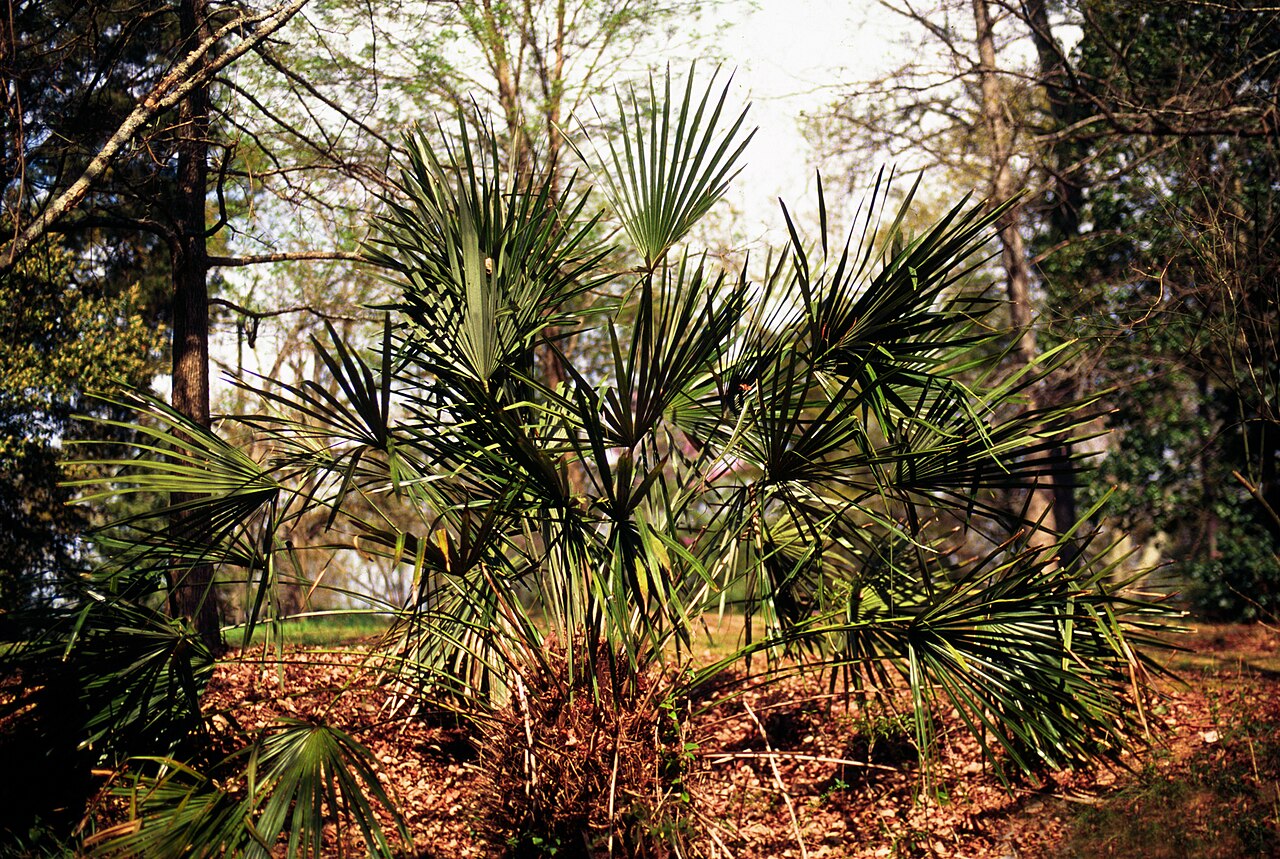
Rhapidophyllum hystrix, the Needle Palm, is a shrubby, clump-forming palm native to the shaded forests of the southeastern United States. It is the only species in its genus, and it earns both its common name and its species name (hystrix means “porcupine”) from the long, sharp, needle-like spines that bristle around the base of every clump. Above that armored core, glossy fan-shaped leaves arch outward on slender stalks to form a dense, tropical-looking mound usually 3 to 6 feet tall.
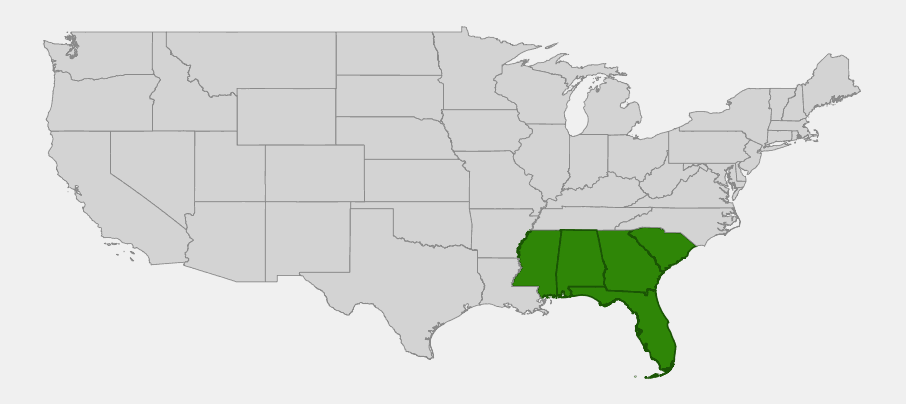
What makes the needle palm special is its toughness. It is widely considered the most cold-hardy palm in the world, regularly surviving winters in the single digits and, in sheltered spots, brief dips near 0°F. In the wild it grows in moist, shady hardwood hammocks, floodplain forests and limestone ravines from South Carolina through Georgia, Florida, Alabama and Mississippi, often under live oaks, magnolias and spruce pines.
For gardeners across the Southeast, needle palm is one of the best native choices for a shady spot that needs bold, evergreen texture. It grows slowly, needs almost no care once established, shrugs off deer, and adds a lush look that no other cold-hardy native shrub can match. Because wild plants have been dug for the nursery trade, always buy nursery-propagated needle palms rather than collected plants.
Identification
Needle palm grows as a low, spreading clump rather than a tree. Each clump is made up of several short, stout stems that stay close to the ground, surrounded by a thick mat of fibers and spines. The leaves rise from these stems on long stalks, so a mature clump looks like a rounded mound of fans, usually 3 to 6 feet tall and 4 to 8 feet wide.
Trunk & Spines
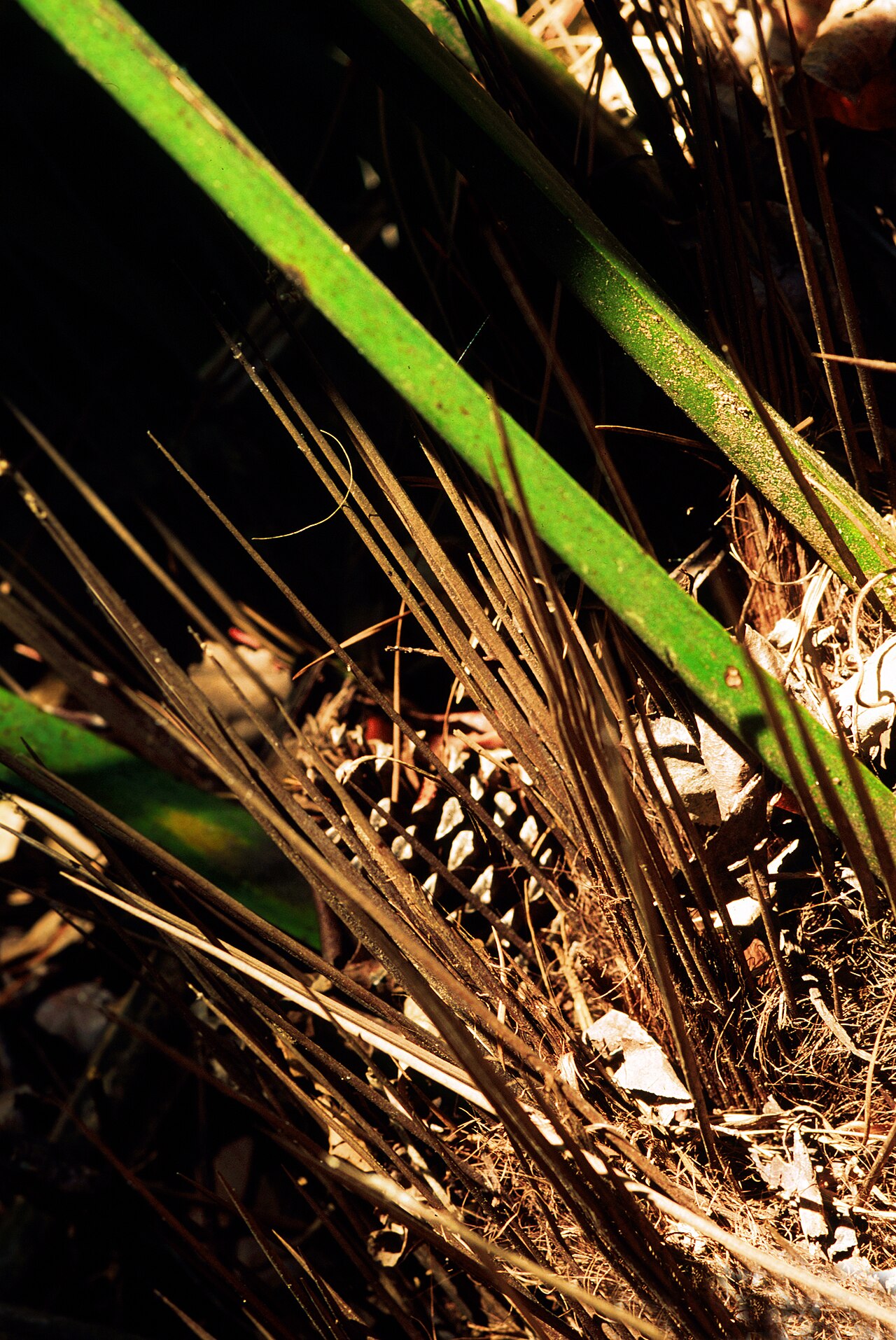
The trunks are short, usually less than 3 feet tall, and often lie partly on or below the ground. They are wrapped in a brown, burlap-like mesh of leaf-base fibers, and from this mesh grow dozens of slender, very sharp black-brown spines 4 to 10 inches long. The spines point outward and upward around the growing point, protecting the bud and the flowers and fruit that form there. They are sharp enough to puncture gloves, so plant needle palm away from paths and handle it carefully.
Leaves
The leaves are palmate (fan-shaped), roughly 2 to 4 feet across, and deeply split into stiff, pointed segments. They are dark, glossy green on top and noticeably silvery or gray-green underneath, which gives the clump a shimmering look when the wind turns the leaves over. The smooth, spineless leaf stalks are 2 to 4 feet long and lift the fans well above the spiny base.
Flowers & Fruit
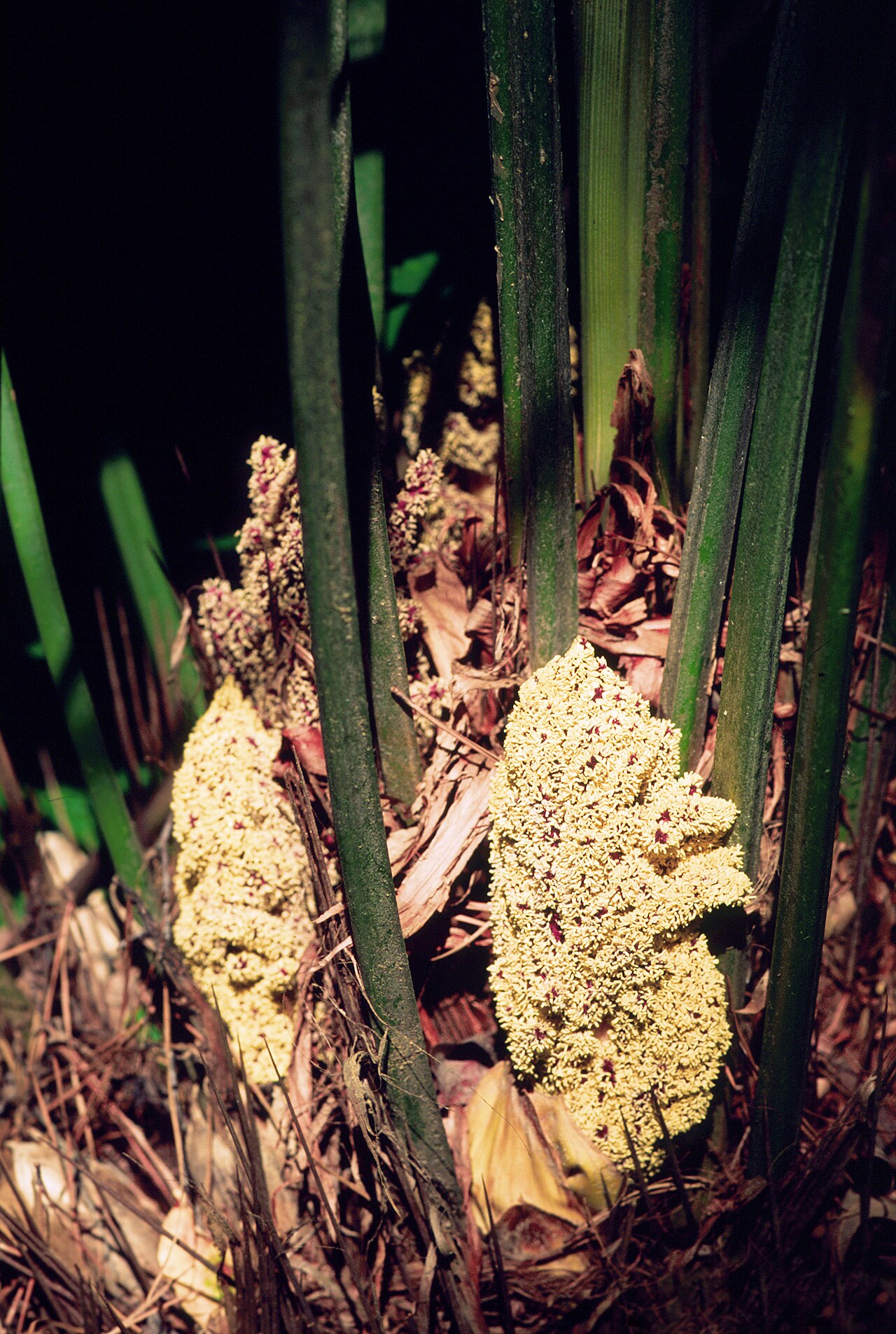
Flowers appear in late spring and early summer in short, dense clusters tucked down among the spines at the base of the leaves, where they are easy to miss. The cream-colored to purplish blooms are visited and pollinated mainly by small beetles, including weevils. Individual plants usually carry mostly male or mostly female flowers. Female flowers develop into fuzzy, egg-shaped, reddish-brown fruits about an inch long that ripen in late summer and fall, still hidden in the spiny core.
Quick Facts
| Scientific Name | Rhapidophyllum hystrix |
| Family | Arecaceae (Palm) |
| Plant Type | Evergreen clumping shrub palm |
| Mature Height | 3–6 ft (occasionally to 8 ft) |
| Mature Spread | 4–8 ft (clumps widen slowly with age) |
| Growth Rate | Slow |
| Sun Exposure | Part Shade to Shade (tolerates sun with steady moisture) |
| Water Needs | Average to moist; drought tolerant once established |
| Soil Type | Rich, moist, well-drained loam or sand; tolerates limestone |
| Soil pH | Slightly acidic to alkaline (about 5.5–8.0) |
| Bloom Time | May – June |
| Flower Color | Cream to purplish, hidden at the base |
| Fall Color | None (evergreen) |
| Fruit | Fuzzy reddish-brown drupes about 1 in, late summer–fall |
| Deer Resistant | Yes |
| USDA Hardiness Zones | 7–10 (6b in sheltered sites) |
Native Range
Needle palm is native to the coastal plain and lower Piedmont of the southeastern United States. Its range runs from southern South Carolina through Georgia and northern and central Florida, west across southern Alabama to southern Mississippi. It is nowhere especially common; instead it appears in scattered colonies, sometimes large ones, wherever the right shady, moist habitat occurs.
Typical needle palm habitat is a rich, shaded hardwood forest: river floodplains and terraces, moist slopes above creeks, limestone sinks and ravines, and the hardwood hammocks of north Florida. The soil is usually moist but not waterlogged for long, and often influenced by limestone or shell, which keeps it near neutral. Needle palm grows beneath a canopy of live oak, southern magnolia, spruce pine, American beech and other hardwoods, often alongside dwarf palmetto, American beautyberry and yaupon.
Because its seeds are heavy and fall close to the parent, needle palm spreads slowly, and many colonies are very old. Collection of wild plants for landscaping reduced some populations in the past, and Florida lists the species as commercially exploited, which restricts harvesting from the wild. Today needle palm is widely grown from seed in nurseries, so there is no reason to buy wild-dug plants.
📋 Regional plant lists featuring Needle Palm: Georgia, Alabama & Mississippi · North Carolina & South Carolina
Growing & Care Guide
Needle palm is one of the easiest palms to grow, as long as you give it the shade and steady moisture it gets in the wild. Once established it is long-lived, nearly pest-free and needs very little attention.
Light
Needle palm is naturally an understory plant. It looks its best in light to medium shade, such as under high oak canopies or on the north and east sides of buildings, where the leaves stay deep green. It tolerates full sun, especially near the coast, if the soil stays reasonably moist, but sun-grown plants are usually more compact and yellower. Deep, dark shade slows growth further but is tolerated.
Soil & Water
Plant needle palm in rich, well-drained soil that stays evenly moist. It handles sandy, loamy or limestone-based soils and a wide pH range. Water regularly through the first two growing seasons. After that, established clumps are surprisingly drought tolerant and can also handle brief flooding, which reflects their floodplain origins. A 2- to 3-inch layer of leaf litter or shredded bark mulch keeps roots cool and moist, just as the forest floor does.
Planting Tips
Plant container-grown needle palms in spring or early summer so roots establish before winter. Set the plant at the same depth it grew in the pot; burying the crown can cause rot. Give it plenty of room, at least 6 to 8 feet from walkways, doors and play areas, because the spines are hidden under the leaves and easy to brush against. At the cold edge of its range (zone 6b to 7a), choose a sheltered spot near a south- or east-facing wall and mulch the base heavily in late fall.
Pruning & Maintenance
Very little pruning is needed. Cut off old brown leaves at the base of their stalks when they become unsightly, wearing thick gloves and long sleeves. Never cut into the spiny center, which holds the plant’s single growing point for each stem. Needle palm has few pest or disease problems and does not need regular fertilizer; a light feeding with a palm fertilizer in spring can help on very poor sandy soils.
Propagation
Needle palm is grown from seed. Collect ripe fruit in fall, clean off the fuzzy pulp and sow the seeds about half an inch deep in moist potting mix. Germination is slow and uneven and can take several months to over a year, so patience is required. Mature clumps also produce offshoots (suckers) that can be carefully divided from the parent with a sharp spade, though young suckers often struggle and seed-grown plants usually establish better.
Landscape Uses
- Shade gardens under oaks, pines and magnolias, where few evergreens give such bold texture
- Woodland and naturalistic plantings with dwarf palmetto and American beautyberry
- Cold-hardy tropical look in zones 7 and 8; see our guide to cold-hardy palms
- Security and barrier plantings below windows, where the spines discourage intruders
- Foundation plantings on the shaded side of a house
- Wildlife cover, since the spiny clumps shelter small animals
Wildlife & Ecological Value
Needle palm is easy to overlook in the forest, but its spiny clumps play a quiet role in southern woodland ecosystems.
For Pollinators
The flowers are pollinated mainly by small beetles, especially weevils, that feed and breed in the flower clusters. This beetle partnership is typical of many palms and is part of why the flowers sit low and hidden among the spines. Small bees and flies also visit the blooms.
For Birds
Small birds such as wrens and towhees forage and shelter in and around the dense clumps, where the spines keep predators at a distance. The fruits are held too deep in the spiny core for most birds to reach.
For Mammals
The fuzzy fruits fall to the ground among the spines, where they are eaten by black bears, raccoons, opossums, squirrels and other mammals that can work around the needles. These animals also carry some seeds away from the parent plant. The clumps provide protected cover for rabbits and other small mammals.
Ecosystem Role
As an evergreen layer in the shady understory, needle palm adds year-round cover and structure to southern hardwood forests and helps hold soil on stream terraces and slopes. Old, undisturbed colonies are a sign of long-stable forest, so they are worth protecting where they occur.
Cultural & Historical Uses
Needle palm has fewer recorded traditional uses than its relatives such as the saw palmetto and cabbage palm, probably because its spines make it so unpleasant to handle. Its leaves and fibers were occasionally used in the same ways as other southern palms, for thatch, weaving and cordage, but it was never an important food or fiber plant.
The plant’s main human story is horticultural. Nineteenth-century botanists were struck by a palm that could survive real winters, and needle palm became a prized plant for southern gardens. In recent decades it has become famous among “hardy palm” enthusiasts, who grow it well north of its native range, in places such as Washington, D.C., and coastal New Jersey and New York, often with winter protection.
That popularity came with a cost. For years, landscapers dug mature clumps from the wild, which damaged some old colonies. Florida now lists needle palm as commercially exploited, and gardeners everywhere can help by choosing nursery-grown plants and leaving wild colonies alone.
Frequently Asked Questions
How cold-hardy is needle palm?
Needle palm is often called the world’s most cold-hardy palm. Established plants commonly survive single-digit temperatures, and plants in sheltered spots have survived near 0°F with only leaf damage. Young plants are less hardy, so protect them with mulch and frost cloth during their first winters in colder zones.
Are needle palm spines dangerous?
The spines are very sharp and can cause painful punctures, so plant needle palm away from paths, play areas and doorways, and wear thick gloves when working near the base. The spines are not poisonous, but any deep puncture should be cleaned well.
Does needle palm grow a trunk?
Only a short one. Needle palm usually has several very short trunks, often under 3 feet, that stay close to the ground and are hidden by the spines and leaves. It stays a shrub-sized clump rather than growing into a tree.
Can needle palm grow in full sun?
Yes, if the soil stays moist, especially in humid coastal areas. In hot, dry inland sites, full sun often yellows the leaves, and the plant looks its best in light to partial shade.
How fast does needle palm grow?
Slowly. Expect a young plant to take several years to reach 3 feet. Steady moisture, light shade and rich soil give the fastest growth.

Looking for a nursery that carries Needle Palm?
Browse our native plant nursery directory: Florida & Georgia · Alabama · Mississippi · South Carolina