
Black Locust (Robinia pseudoacacia)
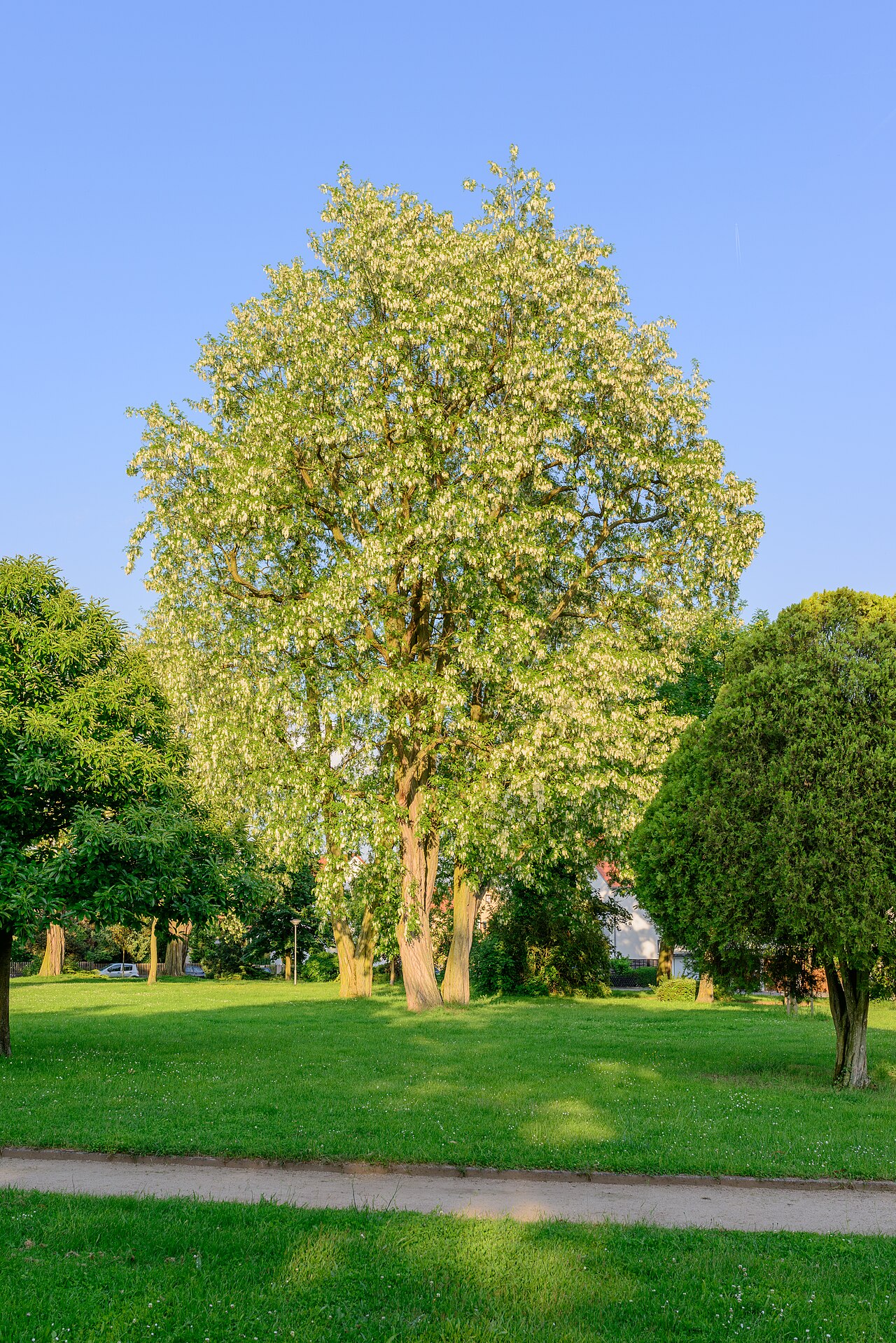
Robinia pseudoacacia, the Black Locust, is a fast-growing, nitrogen-fixing tree in the pea family, native to two separate pockets of the eastern United States: the Appalachian Mountains and the Ozark-Ouachita uplands. It is best known for its deeply furrowed bark, airy compound leaves, and the heavy clusters of fragrant white flowers that cover the crown for a week or two each spring, drawing honeybees from miles around.
In the wild, black locust grows on dry slopes, old fields, and disturbed ground where few other trees can compete, often forming dense colonies from root sprouts. Its wood is exceptionally rot-resistant, and its roots host nitrogen-fixing bacteria that improve poor soils, which is why it has been planted so widely for erosion control, fence posts, and reclamation far beyond its small native range.
That same toughness is a double-edged sword for gardeners. Black locust grows quickly in soil too poor or dry for most trees, but it suckers aggressively, self-seeds readily, and is considered invasive or weedy in many states and countries well outside its native Appalachian and Ozark range. Plant it only within or near its native region, give it room to sucker, and keep young children and livestock away from the toxic bark, leaves, and seeds.
Identification
Black locust is a medium to large deciduous tree, typically reaching 30 to 50 feet with an open, irregular crown, though old trees in good soil can top 80 feet. Trunks are often short and forked, and the tree readily sends up root suckers, so a single planted tree frequently becomes a small grove over time.
Bark & Trunk
Young bark is smooth and olive-brown, but it quickly develops the tree’s most recognizable feature: thick, deeply furrowed, dark gray-brown ridges that look almost braided or rope-like running up the trunk. Twigs carry a pair of short, stout spines at each leaf node, especially on vigorous young growth and root sprouts; older branches lose most of their spines.
Leaves
Leaves are pinnately compound, 6 to 14 inches long, made up of 7 to 19 oval leaflets about an inch long with smooth margins. Each leaflet folds shut at night or before a storm, a trait shared with several other legumes. Foliage is a soft blue-green through summer and turns a muted, often unremarkable yellow in fall before dropping.
Flowers & Fruit
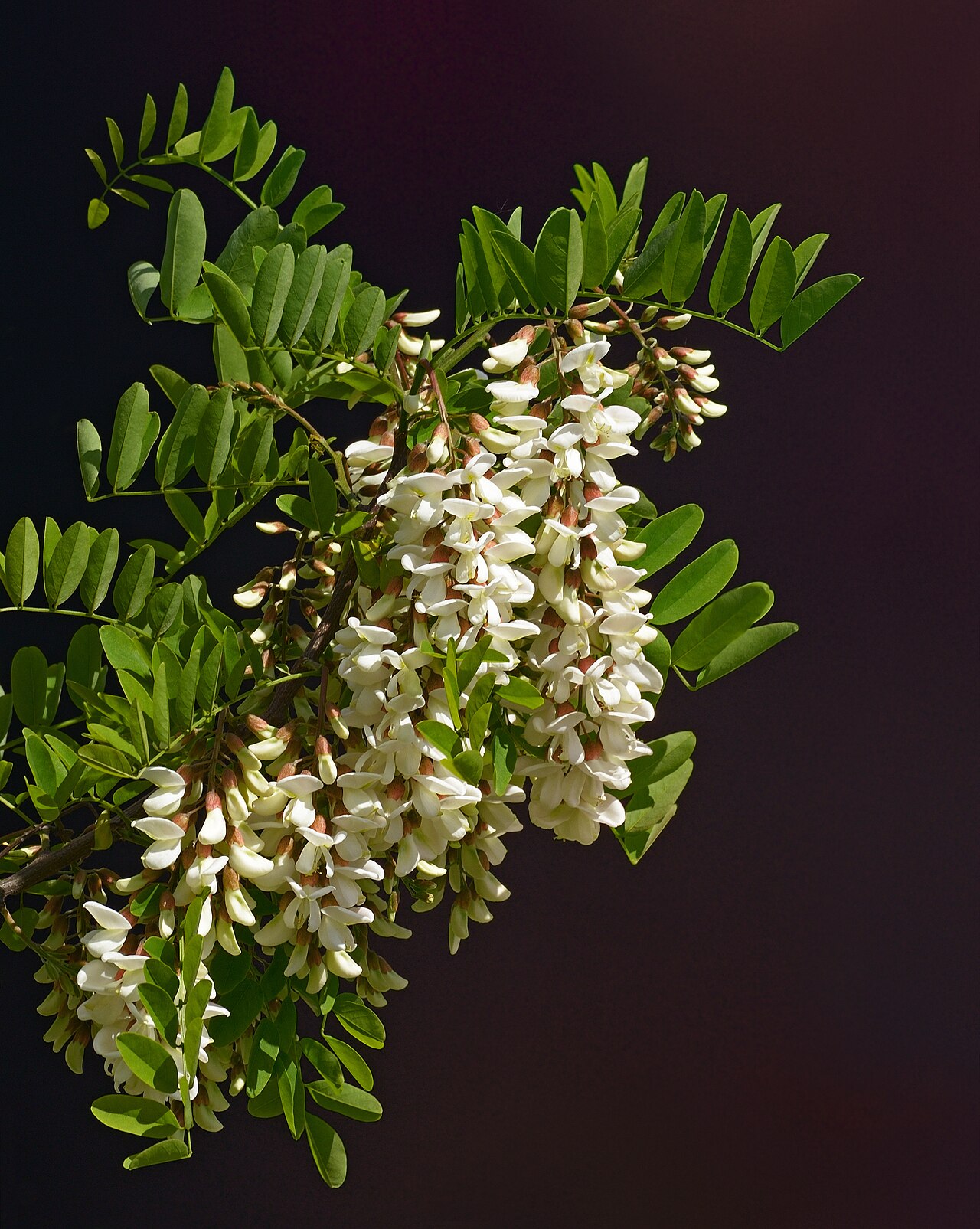
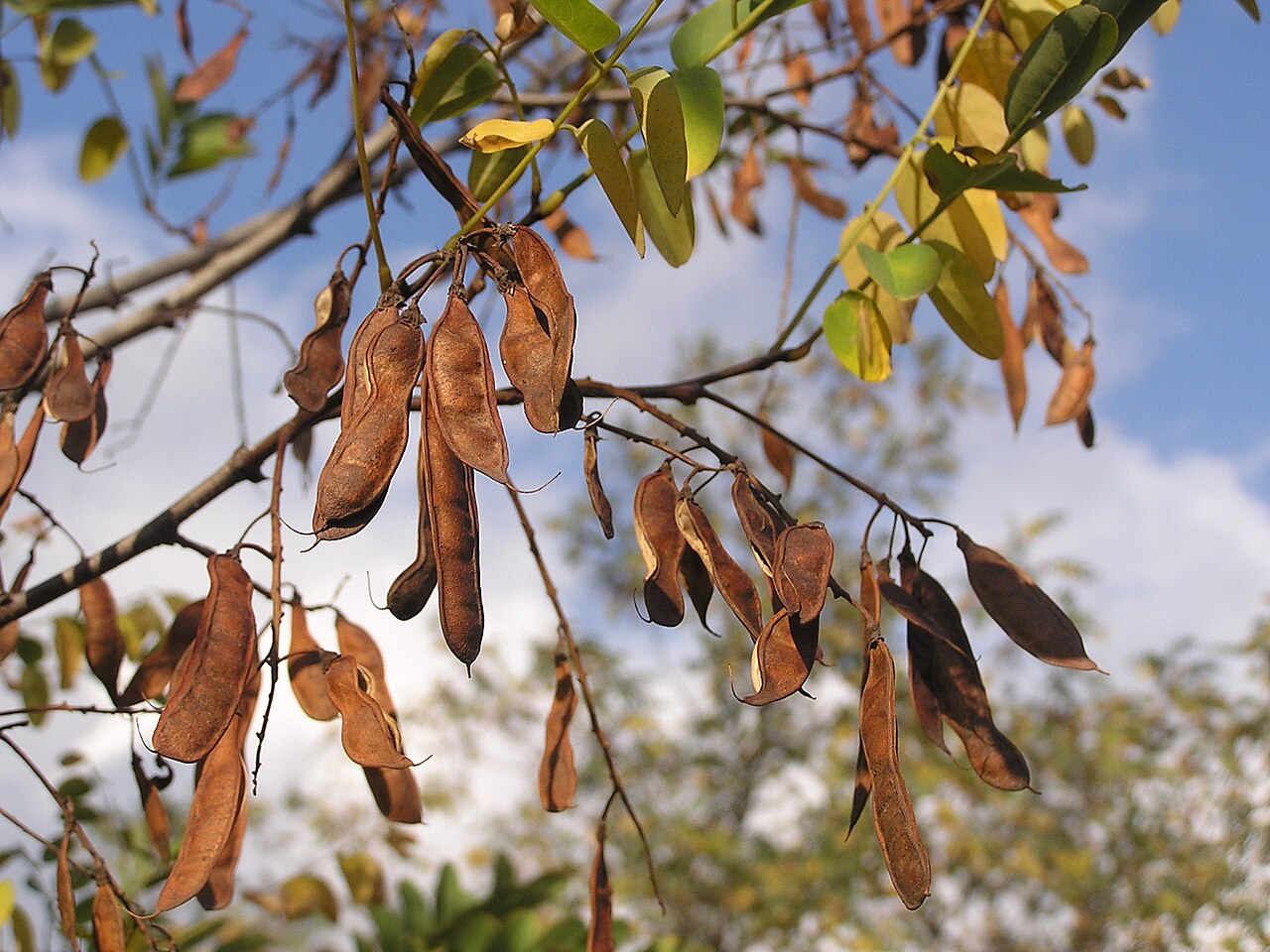
In May and June, black locust produces drooping clusters (racemes) of fragrant, white, pea-shaped flowers, each cluster 4 to 8 inches long and packed with dozens of blooms. The flowers are a major nectar source for honeybees and are the basis of prized “locust honey” in parts of the tree’s range. Flowers give way to flat, smooth, reddish-brown seed pods 2 to 4 inches long, each holding 4 to 8 small hard seeds; the pods persist on the bare branches well into winter.
Quick Facts
| Scientific Name | Robinia pseudoacacia |
| Family | Fabaceae (Pea/Legume) |
| Plant Type | Deciduous tree |
| Mature Height | 30–50 ft (occasionally to 80 ft) |
| Mature Spread | 20–35 ft |
| Growth Rate | Fast |
| Sun Exposure | Full Sun to Part Shade |
| Water Needs | Average to dry; very drought tolerant once established |
| Soil Type | Adaptable; thrives in poor, sandy, or rocky soil |
| Soil pH | Wide range, about 4.6–8.2 |
| Bloom Time | May – June |
| Flower Color | White, fragrant |
| Fall Color | Muted yellow, not showy |
| Fruit | Flat brown pods 2–4 in, persisting into winter |
| Toxicity | Bark, leaves, and seeds toxic if ingested; not edible |
| USDA Hardiness Zones | 3–8 |
Native Range
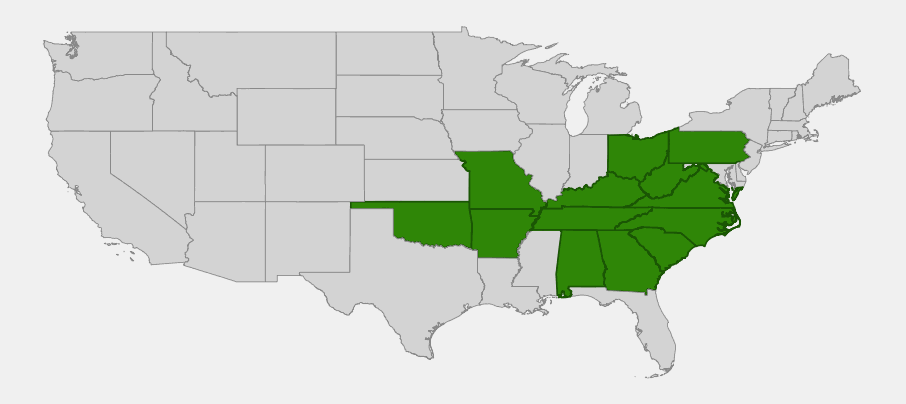
Black locust has a naturally disjunct, surprisingly small native range for such a widely known tree. The eastern population centers on the Appalachian Mountains, from central Pennsylvania and southern Ohio south through West Virginia, Virginia, Kentucky, and Tennessee to northern Georgia, northern Alabama, and northwestern South Carolina. A separate western population occupies the Ozark and Ouachita uplands of southern Missouri, northern and west-central Arkansas, and eastern Oklahoma.
Within this native range, black locust favors dry, rocky, or sandy slopes, open woods, and disturbed ground such as old fields and forest edges, where its ability to fix nitrogen and tolerate poor soil gives it an edge. Because the species was planted so extensively for erosion control, mine reclamation, and fence posts starting in the colonial era, it has naturalized far beyond this native core across most of the continental United States, southern Canada, and much of Europe and Asia, where it is often classed as an invasive species. Gardeners outside the native range should weigh that spread potential before planting.
📋 Regional plant lists featuring Black Locust: New York, Pennsylvania & Northern New Jersey · Ohio & Indiana · Maryland, Virginia & West Virginia · Kentucky & Tennessee · North Carolina & South Carolina · Georgia, Alabama & Mississippi · Illinois, Iowa & Missouri · Arkansas, Louisiana, Eastern Oklahoma & Eastern Texas
Growing & Care Guide
Black locust is remarkably easy to grow and asks for almost nothing once established, which is exactly why it has spread so far beyond its native range. Within that range, it earns its keep as a fast shade tree for tough sites where little else thrives.
Light
Give black locust full sun for the densest flowering and strongest form. It tolerates part shade, especially as a young tree establishing beneath an open canopy, but growth slows and bloom lessens with less light.
Soil & Water
This is a tree built for difficult ground: dry, sandy, rocky, or compacted soils that would stress most species suit it well, thanks in part to nitrogen-fixing bacteria living in nodules on its roots. It tolerates poor fertility and drought once established, needing supplemental water only through its first year or two. Good drainage matters more than fertility; black locust does poorly in consistently wet or poorly drained soil.
Planting Tips
Plant bare-root or container trees in fall or early spring. Choose the site carefully and permanently: black locust sends up root suckers for a considerable distance from the trunk, especially if roots are disturbed by mowing or digging, so avoid planting near vegetable gardens, septic lines, or foundations. Stake young trees loosely in windy sites until the root system is established, since the wood is strong but young trunks can lean in soft or sandy soil.
Pruning & Maintenance
Prune young trees to establish a single strong leader and remove the double spines’ most vigorous watersprouts, since storm damage and limb breakage are more common on older, multi-trunked trees. Remove root suckers promptly by cutting (not mowing, which can stimulate more suckering) if a tidy single-trunk form is wanted. Established trees need no fertilizer and tolerate hard pruning if size control becomes necessary.
Propagation
Black locust grows readily from seed after scarification (nicking or soaking the hard seed coat) and cold stratification, and it also spreads naturally by root suckers, which can be dug and transplanted while dormant. Because of its vigorous suckering and self-seeding, gardeners usually have more trouble controlling spread than propagating new plants.
Landscape Uses
- Erosion control and reclamation on steep, dry, or disturbed slopes within its native range
- Fast shade or windbreak tree for poor-soil sites where few trees establish quickly
- Pollinator gardens, since the spring bloom is a major honeybee nectar source alongside black cherry and smooth sumac
- Naturalistic woodland edges within the native Appalachian or Ozark range, paired with sassafras and persimmon
- Rot-resistant fence posts and lumber, a traditional farm use that remains popular today
Wildlife & Ecological Value
Black locust plays a mixed but genuine role in the ecosystems of its native range, most notably as a soil builder and nectar source.
For Pollinators
The fragrant May flower clusters are a heavyweight nectar source for honeybees and native bees alike, producing a light, delicately flavored honey prized in parts of the tree’s range and across Europe where it is cultivated for the purpose. Bumblebees and other long-tongued bees are the most effective pollinators, able to trip the flower’s pea-type hinge mechanism.
For Birds
Cavity-nesting birds, including woodpeckers, use black locust trunks, since the wood’s durability means dead limbs persist for years as standing snags. Seed-eating birds take some seeds from the persistent winter pods, though the hard coat limits how many species bother.
For Mammals
Deer and rabbits browse young foliage and twigs despite the toxins present in the bark, leaves, and seeds, and the dense thickets formed by root suckers offer cover for small mammals. Humans and livestock should never eat any part of this tree; bark, leaves, and especially seeds contain toxic compounds that have sickened and killed horses, cattle, and children who mistook the pods for an edible legume.
Ecosystem Role
As a nitrogen-fixing legume, black locust improves fertility in the poor, disturbed soils it favors, often paving the way for less pioneer-tolerant species to follow. Within its native Appalachian and Ozark range this is a genuine ecological service; outside that range, the same traits let it outcompete native vegetation, and it is listed as invasive or restricted in numerous states and countries. Always confirm local status before planting outside the native range shown above.
Cultural & Historical Uses
Black locust wood is exceptionally dense, strong, and rot-resistant, rivaling some tropical hardwoods for durability in ground contact. Early American settlers prized it for fence posts, wagon wheel hubs, and ship trunnels (the wooden pegs that fastened a vessel’s timbers), and it remains a favored choice for fence posts, tool handles, and outdoor furniture today because it resists decay for decades without chemical treatment.
The tree was also central to one of American forestry’s earliest large-scale planting efforts. Because it grows fast on poor ground and fixes its own nitrogen, black locust was planted by the millions during the Dust Bowl era and afterward for shelterbelts, mine-land reclamation, and erosion control, a program whose success is part of why the species now grows so far outside its small native range.
Despite its toxicity to humans and livestock, several Native American groups in the tree’s native range used the strong wood for bows and tool handles, and the showy, fragrant flowers have long been noted by beekeepers and naturalists as one of the most dependable spring nectar flows in the eastern forest.
Frequently Asked Questions
Is black locust poisonous?
Yes. The bark, leaves, and especially the seeds contain toxic compounds that are dangerous to humans, horses, cattle, and other livestock if eaten. Never consider any part of this tree edible, despite its membership in the pea family.
Is black locust invasive?
Within its native Appalachian and Ozark-Ouachita range, it is a normal part of the forest. Outside that range, its vigorous root suckering and prolific self-seeding have made it invasive or weedy across much of North America, Europe, and Asia, so check local status before planting it away from the native range shown above.
Why does my black locust keep sending up new shoots?
Root suckering is normal, especially after the roots are disturbed by digging, mowing close to the trunk, or storm damage. Cut suckers off at ground level rather than mowing them, which tends to trigger even more sprouting.
How fast does black locust grow?
Very fast for a hardwood tree, often 3 feet or more per year when young in good conditions, which is part of why it was so widely planted for quick shade and erosion control.
Can I use black locust wood for fence posts?
Yes, this is one of its most traditional uses. Black locust heartwood is naturally rot-resistant and can last 20 years or more in ground contact without any chemical treatment.

Looking for a nursery that carries Black Locust?
Browse our native plant nursery directory: Pennsylvania, Virginia, Tennessee & South Carolina · Ohio, North Carolina & Oklahoma · West Virginia · Kentucky & Missouri · Georgia · Alabama & Arkansas