
Shadscale (Atriplex confertifolia)
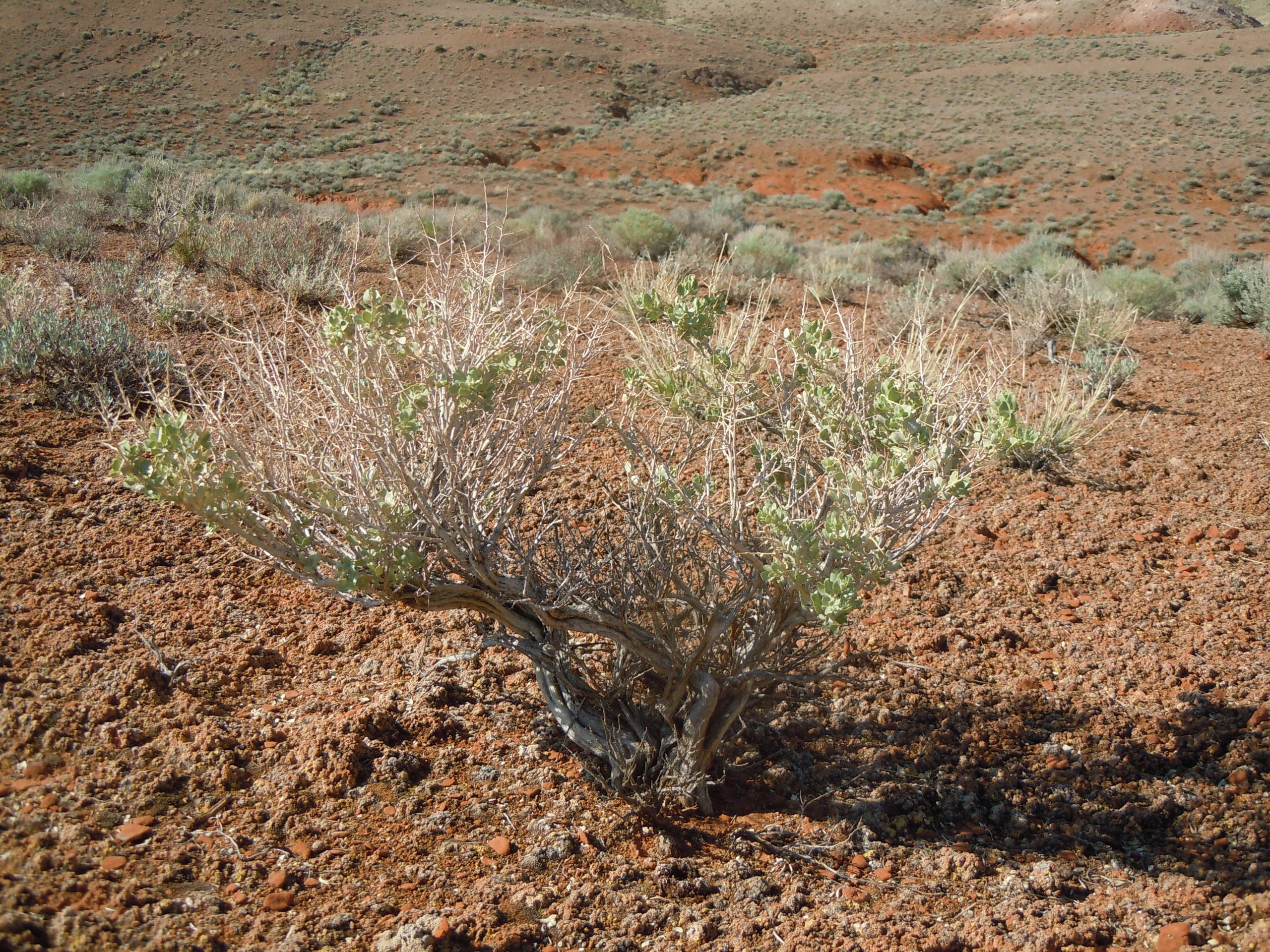
Atriplex confertifolia, commonly known as Shadscale or Shadscale Saltbush, is one of the toughest and most characteristic shrubs of the North American desert West. A member of the Amaranthaceae (formerly Chenopodiaceae, or goosefoot) family, it dominates the driest, saltiest valley floors of the Great Basin and Colorado Plateau, often forming nearly pure stands where almost nothing else can survive. Its name comes from a simple observation: in the open desert, Shadscale is sometimes the only plant casting any shade at all.
Shadscale is a low, rounded, densely branched shrub rarely exceeding 3 feet tall, armed with stiff, spine-tipped twigs and clothed in small, grayish, scurfy leaves that reflect sunlight and conserve moisture. It is dioecious — individual plants are either male or female — and reproduces by wind-pollinated flowers followed by distinctive papery, winged fruiting bracts on female plants. Few native shrubs tolerate the combination of drought, cold, heat, and salinity that Shadscale handles routinely, making it a defining indicator species of salt-desert shrubland across the Intermountain West.
For gardeners and restorationists working in high-desert, alkaline, or water-limited sites from eastern Oregon to the Texas panhandle, Shadscale offers something few ornamental shrubs can: a genuinely bulletproof native adapted to exactly those harsh conditions, with real wildlife and forage value built in.
Identification
Shadscale forms a compact, rounded to irregular mound of rigid, intricately branched stems, typically wider than tall. Its silvery-gray, low-key appearance is easy to overlook, but up close it has several distinctive features.
Form and Stems
Mature plants grow 1 to 3 feet tall and often similarly wide, with stiff gray-brown branches that end in sharp, spine-like tips — a trait that helps protect the shrub from browsing. The growth habit is dense and rounded, giving older plants a tight, wind-sculpted look typical of exposed desert flats.
Leaves
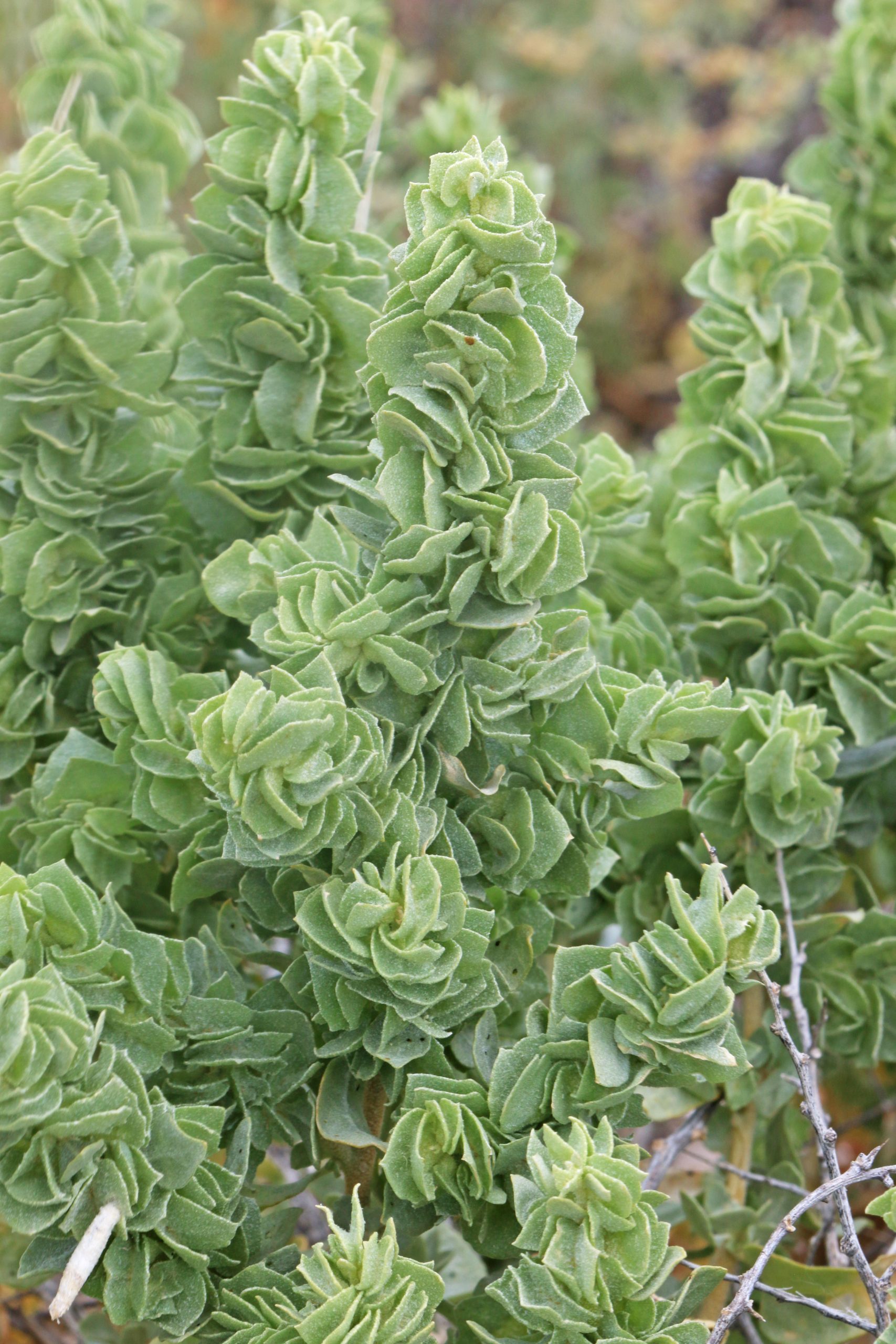
The leaves are small — generally ½ to 1 inch long — oval to nearly round, thick, and covered in tiny silvery scales that give the whole plant a grayish-green, frosted appearance. This scurfy coating reflects intense desert sunlight and reduces water loss, the same adaptation seen in many other saltbush species. Leaves are alternately arranged and persist through much of the year, since Shadscale is evergreen or semi-evergreen depending on local conditions.
Flowers & Fruit
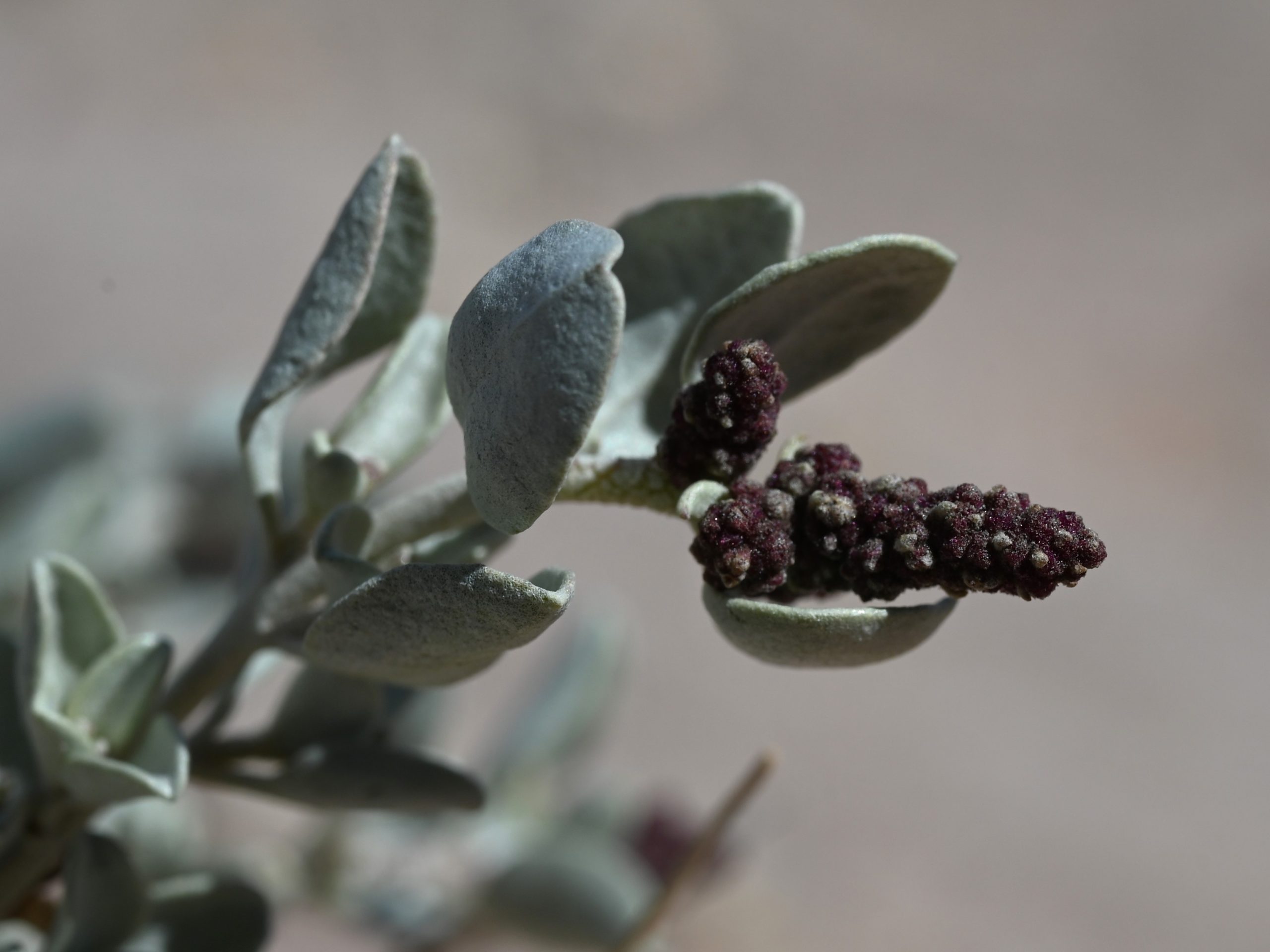
Shadscale is dioecious, meaning separate male and female plants. Male flowers are small, greenish, and clustered in inconspicuous spikes; female flowers lack petals and are easy to miss until they mature into fruit. The fruiting structures are the most identifiable feature: each seed is enclosed in two fused, papery, toothed or winged bracts, forming small clusters that dry to a tan or straw color by late summer and persist on the shrub, rattling in the wind. These distinctive bracts are a quick way to confirm identification among the many similar-looking saltbush species.
Quick Facts
| Scientific Name | Atriplex confertifolia |
| Family | Amaranthaceae (Goosefoot) |
| Plant Type | Evergreen/Semi-evergreen Shrub |
| Mature Height | 1–3 ft |
| Spread | 1–3 ft, rounded form |
| Growth Rate | Slow |
| Sun Exposure | Full Sun |
| Water Needs | Very Low |
| Soil Type | Dry, often saline or alkaline; sandy to clay |
| Soil pH | 7.0–9.0 (neutral to strongly alkaline) |
| Foliage | Small, scurfy, silvery gray-green |
| Bloom Time | Spring (March–May, varies by latitude) |
| Salt Tolerance | Very High |
| Deer/Browse Resistant | Moderately (spiny twigs discourage browsing) |
| USDA Hardiness Zones | 4–9 |
Native Range
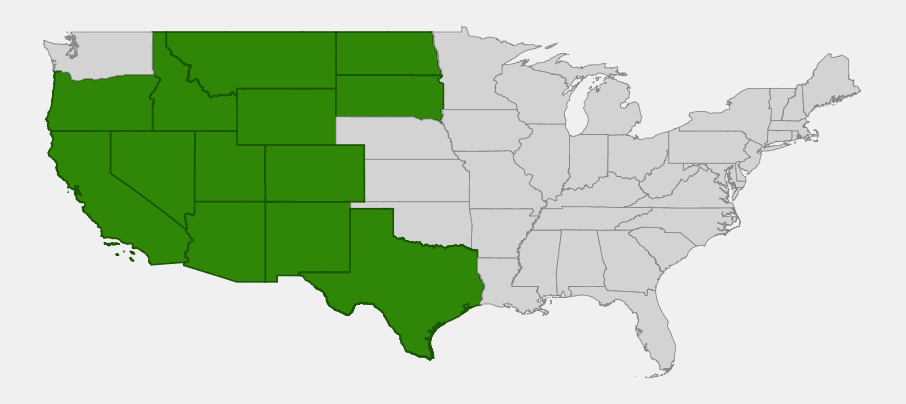
Shadscale is native across the arid Intermountain West, from eastern Oregon and the Snake River Plain of Idaho south through Nevada, Utah, and Arizona, east through Colorado, New Mexico, and the western Dakotas and Texas panhandle, and north into Montana and Wyoming. It is most abundant and often dominant in the Great Basin and Colorado Plateau, where it forms the “salt desert shrub” vegetation type on the driest, often saline valley bottoms below the elevation where sagebrush takes over.
Within this range, Shadscale typically occupies the harshest available ground: alkaline flats, old lakebed sediments, gravelly bajadas, and heavy clay soils that pond briefly after storms and then bake hard and dry. It often forms nearly pure stands in these extreme sites, transitioning to mixed shrubland with Big Sagebrush, Greasewood, and Rubber Rabbitbrush on slightly better-drained or less saline ground.
📋 Regional plant lists featuring Shadscale: Arizona & New Mexico · Utah & Western Colorado · Idaho, Eastern Oregon & Eastern Washington · Montana & Wyoming · North Dakota, South Dakota & Western Minnesota
Growing & Care Guide
Shadscale is the opposite of a fussy plant: it asks for almost nothing and resents being coddled. The key to success is choosing the right site — hot, dry, and sunny — and then mostly leaving it alone.
Light
Shadscale needs full sun. It is a plant of open desert flats and will not thrive in shade or under tree canopy; crowding or shading from taller, faster-growing plants is one of the few things that reliably kills it.
Soil & Water
This is one of the most salt- and drought-tolerant native shrubs in North America, equally at home in sandy, gravelly, or heavy clay soils as long as drainage is reasonable and competition is minimal. It thrives in neutral to strongly alkaline soils where many other plants fail outright, and once established needs no supplemental irrigation in most of its native range. Established plants can be killed by overwatering or by planting in rich, well-watered garden beds — Shadscale wants lean, mineral soil, not amended loam.
Planting Tips
Plant in fall or early spring from container stock, watering only enough to establish roots during the first season. Avoid fertilizing or heavy mulching, both of which favor weeds and fungal problems over the shrub’s natural low-fertility strategy. Space plants 2 to 4 feet apart for a naturalistic desert shrubland look; because growth is slow, mature spacing takes years to fill in, which is normal for this species.
Maintenance
Shadscale needs essentially no maintenance once established. It does not require pruning, though old, dead interior twigs can be thinned out for appearance. It is naturally resistant to most pests and diseases, an advantage of thriving in conditions too harsh for many pathogens and insects to persist.
Landscape Uses
Shadscale fits a narrow but important niche in native landscaping:
- Xeriscaping in hot, dry, alkaline sites where little else survives
- Rangeland and disturbed-land restoration in salt desert shrub communities
- Erosion control on saline or sodic soils with minimal organic matter
- Wildlife habitat plantings paired with Winterfat and sagebrush
- Low-water demonstration gardens showcasing true desert-adapted natives
Fire Ecology
Shadscale is generally poorly adapted to fire; its slow growth and lack of vigorous resprouting mean burned plants are often killed outright or take many years to recover. Because it typically grows on sparsely vegetated, low-fuel ground, however, fire has historically been infrequent in true Shadscale communities, and the recent spread of invasive annual grasses that carry fire into these stands is considered a significant threat to the shrub’s long-term persistence in parts of its range.
Wildlife & Ecological Value
Despite its modest appearance, Shadscale is a foundational species in the salt desert shrub ecosystem, supporting wildlife that depend on exactly the harsh habitat it occupies.
For Wildlife Forage
Pronghorn, mule deer, and jackrabbits browse Shadscale foliage, particularly in winter when more palatable forage is scarce, and the shrub is an important component of winter range for many Great Basin herds. Numerous small mammals, including kangaroo rats and various ground squirrels, use the dense, spiny branch structure for cover and nest nearby.
For Birds
Sagebrush-steppe birds such as sage thrashers, Brewer’s sparrows, and horned larks use Shadscale stands for nesting cover and foraging, especially in areas where it mixes with sagebrush and rabbitbrush to create structural diversity in otherwise sparse desert vegetation.
Ecosystem Role
As one of the few shrubs able to colonize the most saline and alkaline ground in the Intermountain West, Shadscale plays an outsized role in stabilizing soil on desert valley floors and playa margins that would otherwise be nearly bare. Its presence indicates — and helps maintain — soil conditions that support a specialized community of desert plants and animals found nowhere else. Because it tolerates ground too harsh for most competitors, Shadscale often serves as a nurse plant, its canopy providing the only shade and wind shelter available for tree seedlings or smaller desert annuals in these extreme environments.
Cultural & Historical Uses
Indigenous peoples of the Great Basin, including Shoshone, Paiute, and Goshute communities, historically used Shadscale leaves and young shoots as an emergency or minor food source, typically boiled to reduce the salty, bitter flavor, though it was never a dietary staple compared to pinyon nuts, camas, or other more productive desert foods — this is recorded history, not a foraging recommendation, since palatability and preparation varied widely and the plant’s salt content makes it unappealing raw. The ash of burned Shadscale was sometimes used as a mineral supplement or added to tobacco and other preparations among some Great Basin groups.
In the era of western range livestock grazing, Shadscale became economically significant as winter forage for sheep and cattle across the Great Basin, and rangeland scientists have studied it extensively as an indicator of salt desert shrub ecosystem health. Today it remains primarily valued for restoration, rangeland management, and as an exceptionally hardy choice for truly water-wise native landscaping in the driest parts of the West.
Frequently Asked Questions
Is Shadscale toxic to livestock or pets?
Shadscale is not considered toxic and has long been used as rangeland forage for sheep and cattle, particularly in winter. Like many saltbush species it has a naturally salty flavor, which limits how much animals typically eat rather than posing a poisoning risk.
Why is Shadscale so spiny?
The stiff, spine-tipped twigs are thought to help deter excessive browsing in an environment where forage is scarce, allowing the shrub to persist on marginal rangeland where competition for every available bite of vegetation is intense.
Can Shadscale grow in regular garden soil?
It can, but it performs best — and lives longest — in lean, mineral, well-drained soil similar to its native desert habitat. Rich, frequently watered garden beds tend to shorten its life and encourage the diseases it normally avoids in the wild.
How do male and female Shadscale plants differ?
Shadscale is dioecious: male plants produce small greenish flower spikes but no visible fruit, while female plants develop the distinctive papery, winged seed bracts that are the easiest way to identify the species and tell the sexes apart later in the season.
Is Shadscale good for erosion control?
Yes, particularly on saline or alkaline soils where few other native shrubs will establish. Its extensive root system and tolerance of poor, disturbed ground make it valuable for stabilizing exposed desert soils in restoration projects.

Looking for a nursery that carries Shadscale?
Browse our native plant nursery directory: Oregon · California · Idaho · Utah / Texas / South Dakota · Arizona · New Mexico / Nevada / North Dakota · Colorado · Wyoming · Montana