
Foamflower (Tiarella cordifolia)
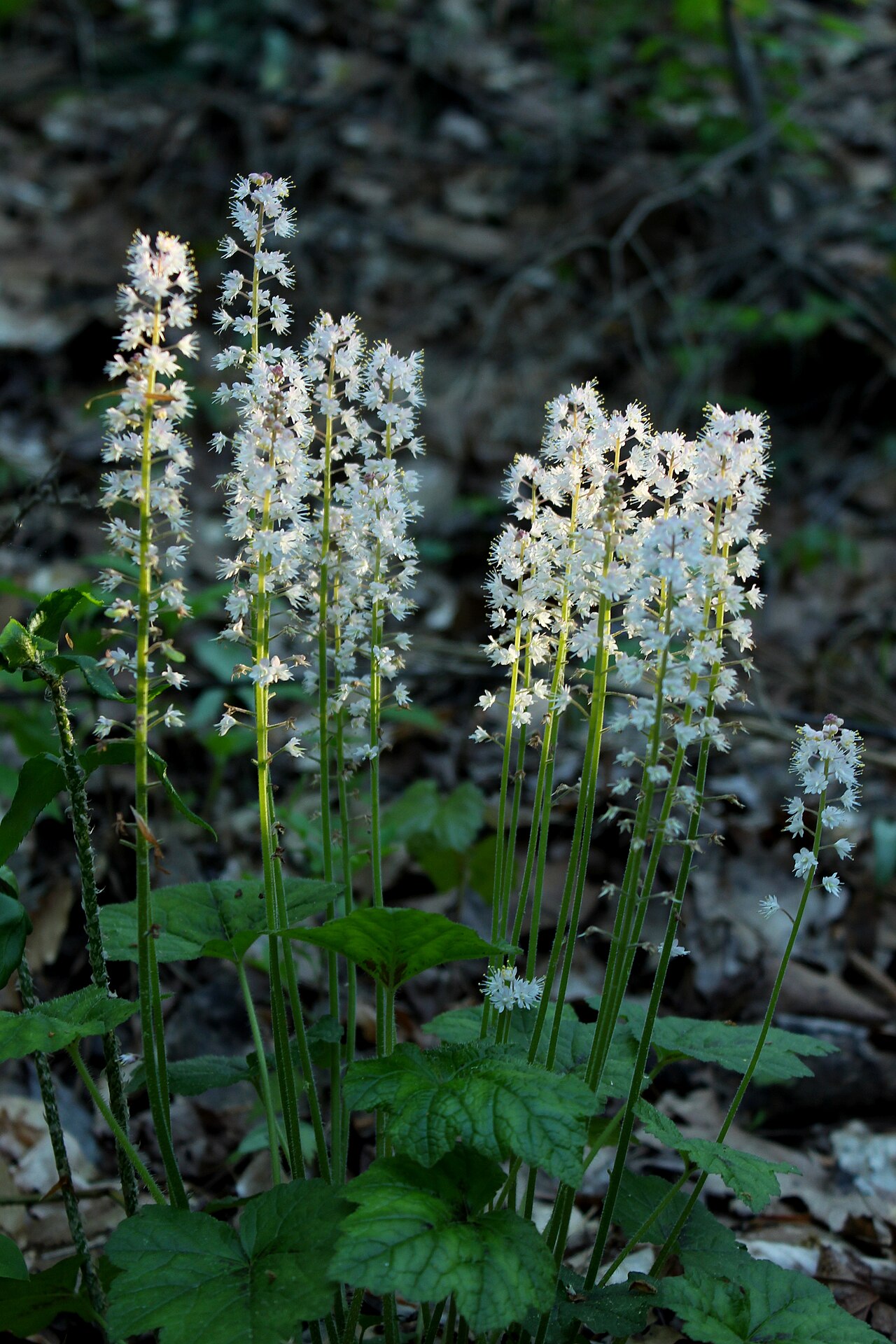
Tiarella cordifolia, the Foamflower, is one of the most beloved native groundcovers of the eastern deciduous forest, prized for the airy spikes of white flowers that seem to froth up out of the leaf litter every spring. Also called heartleaf foamflower, Allegheny foamflower, or coolwort, it forms low, spreading mats of soft, hairy, heart-shaped leaves that stay attractive from early spring through fall, with flower spikes rising 6 to 12 inches above the foliage for several weeks in mid-spring.
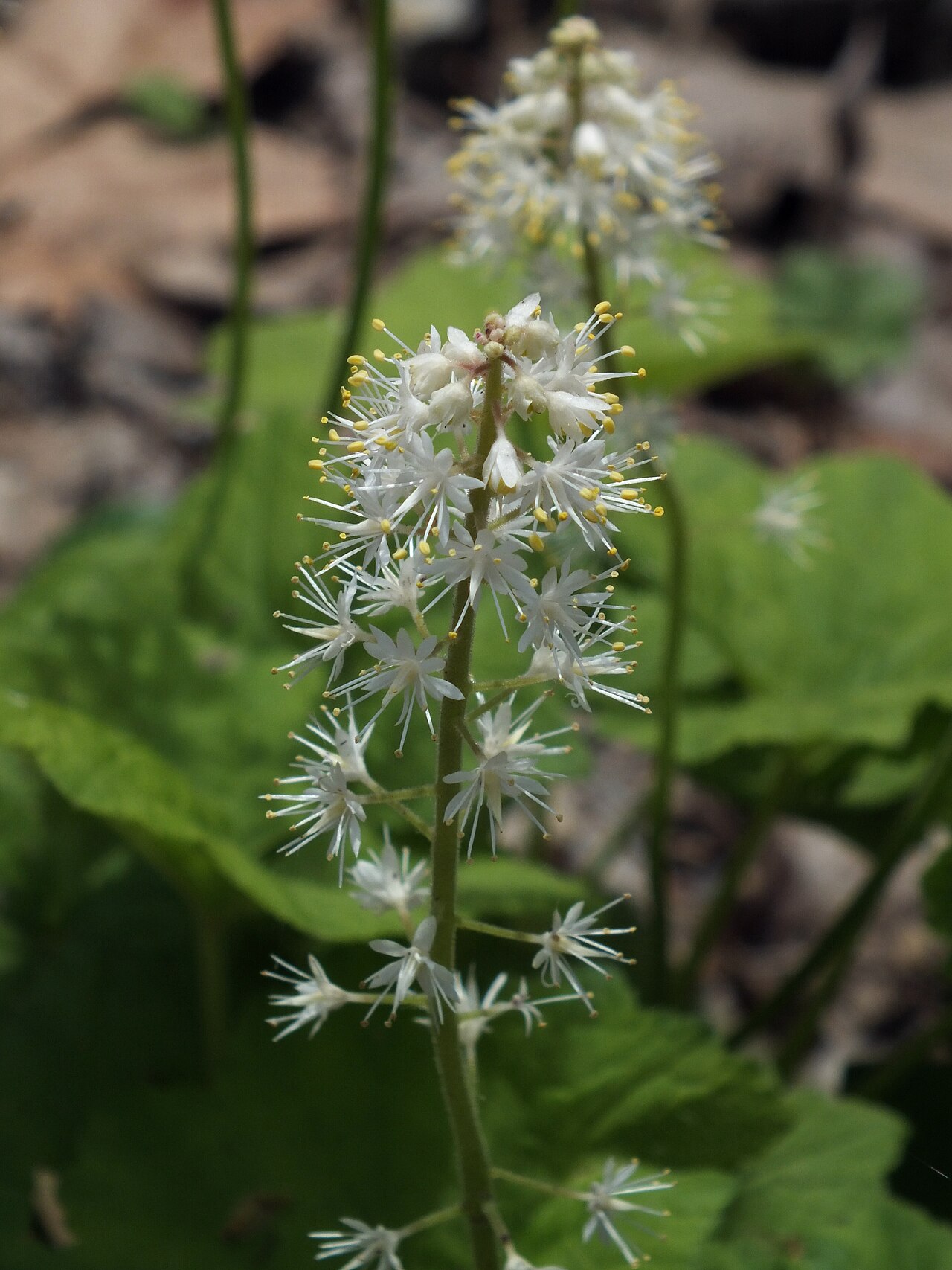
Foamflower grows naturally in the rich, moist understory of hardwood and mixed forests, often carpeting shaded slopes and streambanks alongside other spring ephemerals and woodland wildflowers. Each tiny flower has five slender petals and ten long stamens that give the cluster its characteristic feathery, foam-like texture, usually pure white but sometimes blushed with pink. By midsummer the plant settles into a tidy, semi-evergreen mat of foliage that often takes on bronze or reddish tones through winter.
For shade gardeners from New England to the Appalachians and the Southeast, foamflower is one of the most dependable native groundcovers available: it spreads readily by stolons to form a dense, weed-suppressing carpet, needs almost no care once established, and offers real early-season value to woodland pollinators. It pairs beautifully with ferns, wild ginger, and spring ephemerals in a naturalistic shade garden.
Identification
Foamflower is a low, mat-forming herbaceous perennial that spreads by leafy stolons, gradually knitting together into broad colonies where conditions suit it. Individual rosettes stay under a foot tall even in bloom.
Leaves
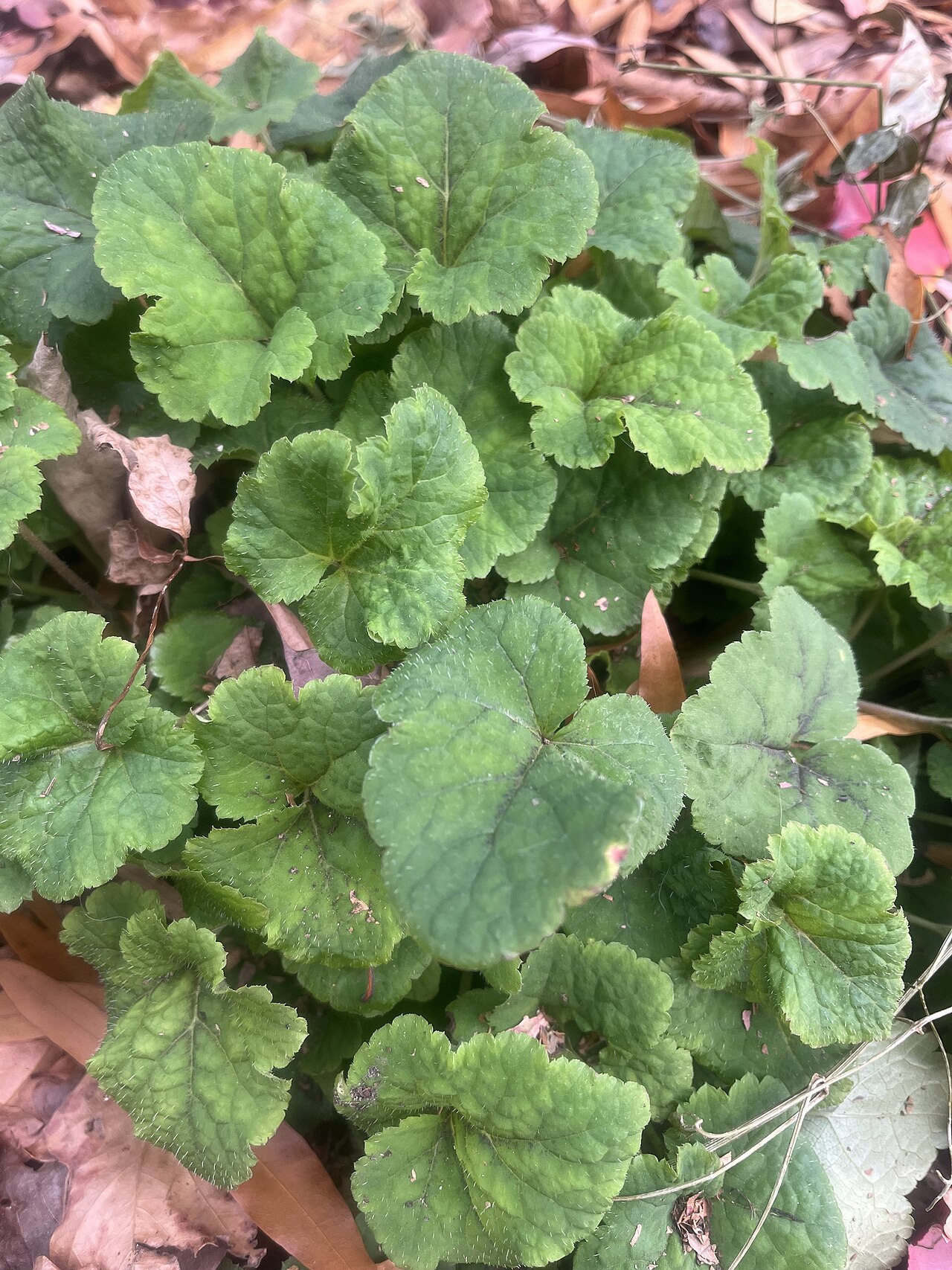
The basal leaves are heart-shaped to shallowly lobed, 2 to 4 inches long, with soft hairs on both surfaces and scalloped, toothed margins. They rise on slender, hairy leafstalks directly from the base of the plant and often show a darker reddish-brown blotch along the central veins, especially in cooler weather. Foliage is semi-evergreen in much of its range, turning bronze-red in winter before fresh green growth emerges in spring.
Flowers
In mid-spring, leafless flowering stems rise 6 to 12 inches above the foliage, each tipped with a dense, slender raceme of 15 to 50 small white flowers. Every flower has five narrow petals and ten stamens noticeably longer than the petals, which gives the whole spike its fuzzy, foam-like appearance from a distance. Flowers are usually white, occasionally tinged pink in bud or with pink-flushed stamens.
Fruit & Seeds
After bloom, each flower forms a small, two-parted seed capsule with unequal halves, splitting open to release tiny seeds. The seed capsules are inconspicuous and rarely noticed in the garden, since the plant relies mainly on stolons for its steady spread.
Quick Facts
| Scientific Name | Tiarella cordifolia |
| Family | Saxifragaceae (Saxifrage) |
| Plant Type | Herbaceous, Semi-Evergreen Groundcover Perennial |
| Mature Height | 6–12 in in bloom; foliage mat 4–6 in |
| Mature Spread | Spreads indefinitely by stolons to form a dense colony |
| Growth Rate | Moderate to fast once established |
| Sun Exposure | Part Shade to Full Shade |
| Water Needs | Average to moist; not drought tolerant in dry shade |
| Soil Type | Rich, moist, well-drained woodland soil high in organic matter |
| Soil pH | Slightly acidic, about 5.5–6.5 |
| Bloom Time | April – May |
| Flower Color | White, occasionally pink-tinged |
| Fall Color | Foliage often turns bronze to reddish through winter |
| Fruit | Small, inconspicuous two-parted seed capsules |
| Deer Resistant | Yes, generally avoided by deer and rabbits |
| USDA Hardiness Zones | 4–9 |
Native Range
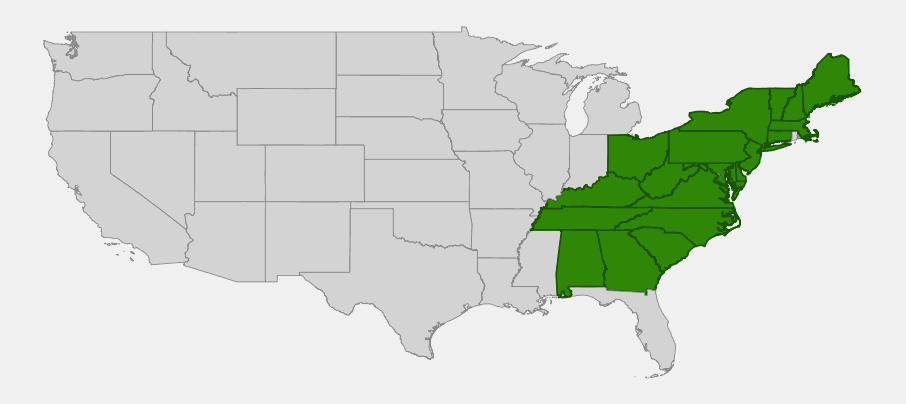
Foamflower is native to the deciduous forests of the eastern United States, from New England and upstate New York south through the Mid-Atlantic and Appalachians into the Piedmont of the Carolinas and Georgia, with a range extending west to Ohio, Kentucky and Tennessee. It is most abundant in the rich cove forests and moist slopes of the Appalachian Mountains, where it often forms extensive colonies along shaded trails and streambanks.
Typical foamflower habitat is a moist, humus-rich hardwood or mixed forest: shaded ravines, stream terraces, north-facing slopes, and the cool understory beneath oaks, beeches, tulip poplars and hemlocks. It usually grows alongside other spring woodland wildflowers such as wild ginger, mayapple, trillium and various ferns, and tolerates a range of soil moisture as long as deep shade and organic-rich soil are present.
Taxonomists have recently split the wide-ranging eastern Tiarella cordifolia complex into several related species with narrower ranges, but plants sold and grown as Tiarella cordifolia are widely available from native plant nurseries throughout its range. In the garden it stays well-behaved within reasonable bounds, spreading steadily but not aggressively, and it is a mainstay of shade-garden and native-plant trade rather than a species collected from the wild.
📋 Regional plant lists featuring Foamflower: New Hampshire, Maine & Vermont · Connecticut, Massachusetts & Rhode Island · New York, Pennsylvania & Northern New Jersey · Delaware, Southern New Jersey & Long Island · Maryland, Virginia & West Virginia · North Carolina & South Carolina · Kentucky & Tennessee · Ohio & Indiana · Georgia, Alabama & Mississippi
Growing & Care Guide
Foamflower is one of the easiest and most rewarding native groundcovers for a shaded garden, as long as it gets the moist, humus-rich soil it enjoys in the wild. Once settled in, it needs very little attention and slowly fills in to form an attractive, weed-suppressing carpet.
Light
Foamflower does best in part to full shade, such as under high deciduous canopy or on the north side of a building. It tolerates a bit more morning sun if the soil stays consistently moist, but hot afternoon sun scorches the leaves and slows growth. Deep shade is well tolerated, though bloom may be slightly lighter than in dappled light.
Soil & Water
Plant foamflower in rich, well-drained soil amended with leaf mold or compost, mimicking the organic forest floor it grows in naturally. It prefers consistent moisture and does not tolerate prolonged drought, especially in its first year or two. A 2-inch layer of shredded leaf mulch helps retain moisture, suppress weeds, and replicate natural litter conditions while the colony establishes.
Planting Tips
Set out container plants in spring or fall, spacing them 12 to 18 inches apart if you want full coverage within two to three seasons, since the stolons will fill the gaps. Water regularly through the first growing season. Foamflower combines beautifully with ferns, wild ginger, and other spring ephemerals, and makes an excellent edging plant along shaded woodland paths.
Pruning & Maintenance
Very little maintenance is needed. Shear back tattered winter foliage in early spring before new growth emerges, and remove spent flower stalks after bloom if a tidier look is wanted, though they are not unattractive left in place. Divide congested clumps in early spring or fall to control spread or to propagate new plants elsewhere in the garden.
Propagation
The easiest method is division: dig and separate rooted stolon sections in spring or fall and transplant them directly. Foamflower can also be grown from seed sown in fall and left to cold-stratify outdoors over winter, though division gives faster, more reliable results for most gardeners.
Landscape Uses
- Woodland groundcover beneath deciduous trees, where it forms a dense, weed-suppressing mat
- Shaded path edging along garden walkways and woodland trails
- Native shade gardens paired with ferns, wild ginger and spring ephemerals
- Erosion control on shaded slopes and streambanks
- Rock gardens in shaded, moisture-retentive pockets
- Container and small-space gardens for its tidy, long-season foliage interest
Wildlife & Ecological Value
Foamflower may be small and ground-hugging, but its early spring bloom and dense evergreen foliage make it a valuable, quietly productive member of the woodland garden community.
For Pollinators
The spring flower spikes attract a range of native bees, syrphid flies, and small beneficial insects at a time when few other nectar sources are available in the forest understory. The long stamens make pollen easily accessible to small-bodied pollinators.
For Birds
While not a major food source for birds directly, the dense foliage mat provides shelter and foraging habitat for ground-feeding songbirds and supports the insects that many birds rely on during the breeding season.
For Mammals
Foamflower is rarely browsed by deer or rabbits, making it a reliable choice in gardens where browsing pressure is a concern. Its tidy, low growth does not provide significant cover for larger mammals but adds to the overall habitat value of a layered woodland planting.
Ecosystem Role
As a low, spreading groundcover, foamflower helps stabilize soil on shaded slopes and streambanks, suppresses erosion-prone bare ground, and contributes to the structural diversity of the forest floor. Dense, long-established colonies are a hallmark of undisturbed, high-quality woodland habitat.
Cultural & Historical Uses
Foamflower has a modest but real place in Indigenous ethnobotany. Some Native American groups used preparations of the plant for minor ailments, including as a traditional remedy applied to sore mouths in infants, as recorded by regional botanical sources. These uses are historical practices, not medical advice, and this article does not recommend foamflower for any therapeutic use.
Its larger cultural legacy is horticultural rather than medicinal. Foamflower has long been admired by American gardeners for its reliable spring bloom and handsome foliage, and it became a parent species for numerous garden cultivars selected for leaf pattern, flower color and growth habit, many of which remain popular in the nursery trade today. Within its native range, straight-species foamflower continues to be valued specifically for its role in native plant and pollinator gardening.
Frequently Asked Questions
Does foamflower spread aggressively?
It spreads steadily by stolons to form a dense groundcover, but it is not considered aggressive or weedy. Give it the space of a woodland bed or path edge, and it will gradually knit together into an attractive, well-behaved mat rather than invading unrelated areas.
Is foamflower evergreen?
It is semi-evergreen through much of its range, holding attractive, often bronze-tinted foliage through a mild winter. In colder parts of its range, foliage may die back more fully, with fresh growth returning reliably in spring.
Can foamflower grow in dry shade?
Not well. Foamflower needs consistently moist, humus-rich soil to thrive, and it struggles in dry shade under shallow-rooted trees. For dry shade, look for more drought-tolerant native groundcovers instead.
What is the difference between foamflower and bishop’s cap (Mitella diphylla)?
The two are closely related and grow in similar habitats, but foamflower’s basal leaf hairs point outward at roughly a right angle, while bishop’s cap has backward-pointing hairs and leaves along its flowering stem. Foamflower’s basal leaves are also typically broader and more heart-shaped.
How fast does foamflower spread?
Growth is moderate to fast once established, often filling in a planting area within two to three growing seasons under good conditions. Consistent moisture and rich soil speed the process considerably.
