
Bog Birch (Betula pumila)
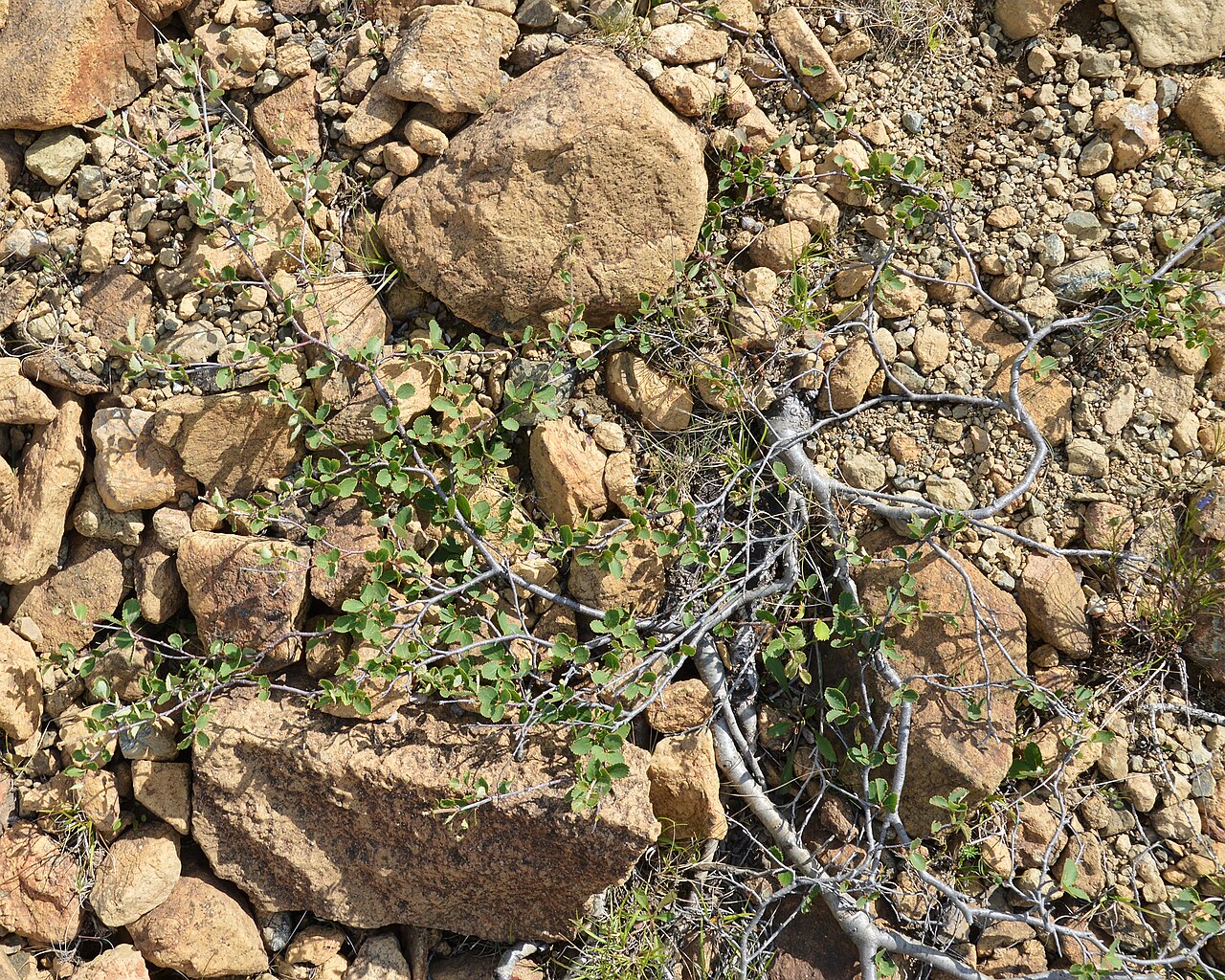
Betula pumila, commonly known as bog birch or swamp birch, is a short, many-stemmed shrub in the birch family (Betulaceae) found across the northern tier of the United States and Canada. Unlike its towering tree-form relatives, bog birch rarely exceeds 10 feet and often grows in dense, rounded thickets, making it easy to overlook until you notice the small, rounded, toothed leaves and fine, twiggy branching that mark it as a birch at a glance.
True to its name, bog birch is a wetland specialist. It is most at home in calcareous (alkaline) fens, bogs, swamp margins, and wet meadows, where it tolerates saturated, often mineral-rich soils that would drown most other woody plants. In the upper Midwest and Great Lakes region it forms extensive shrub thickets in open fens alongside sedges and other wetland shrubs; in the Northeast and the disjunct Rocky Mountain/Pacific Northwest populations it tends to occupy smaller, scattered wetland pockets, and in several New England states it is uncommon enough to be tracked as a state-rare plant.
Because it is so tightly tied to wetland hydrology, bog birch is not a general-purpose landscape shrub — it is best suited to rain gardens, pond margins, bioswales, and restoration plantings where consistently moist to wet soil is already part of the design. Where that niche exists, it is a tough, cold-hardy native that asks for very little once its roots are in reliably damp ground.
Identification
Bog birch grows as a low, rounded, densely branched shrub, usually 2 to 10 feet tall, often wider than it is tall, forming colonies from root suckers in favorable wetland sites.
Bark & Stems
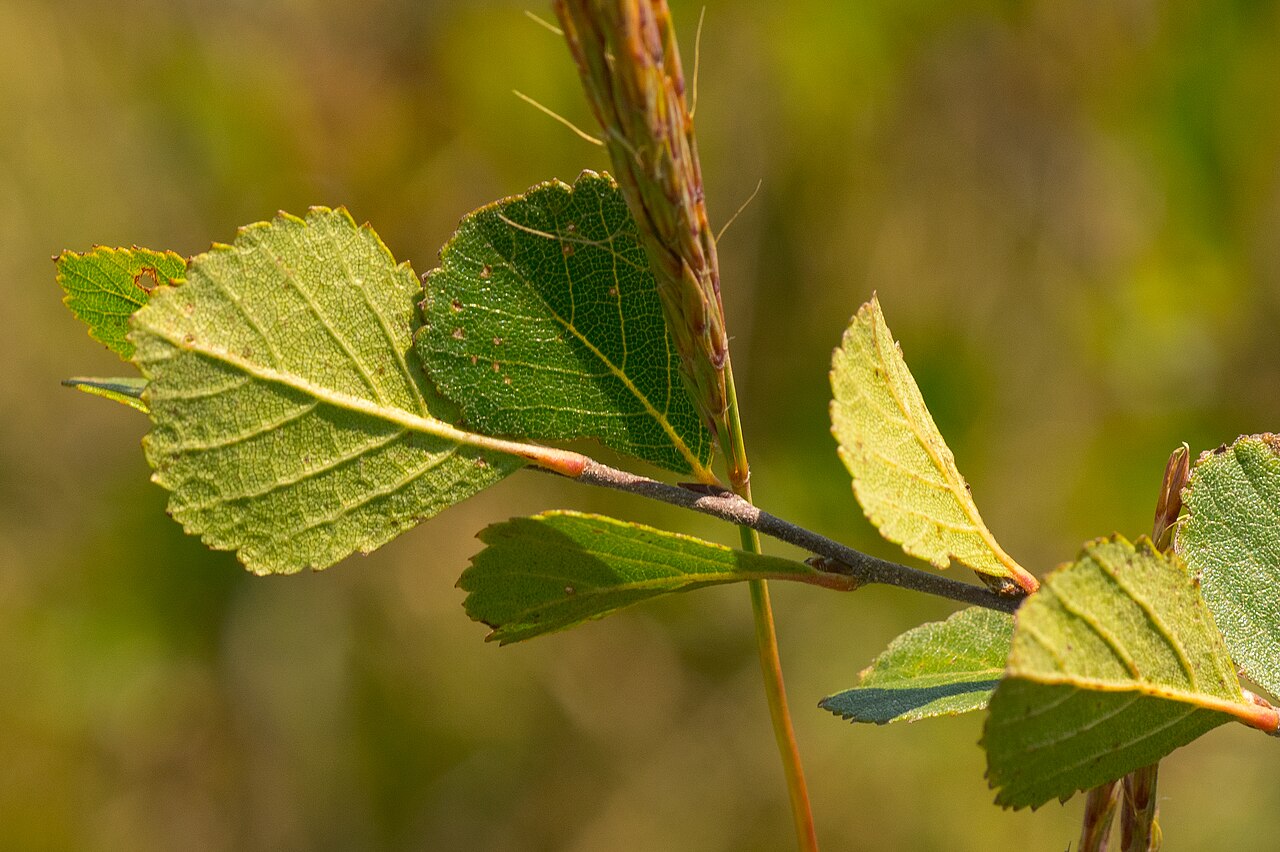
Young twigs are slender, reddish-brown, and covered with small warty resin glands that give them a slightly rough, dotted texture — a useful field mark distinguishing bog birch from similar wetland shrubs. Older stems turn gray-brown; unlike paper birch, bog birch bark does not peel into sheets.
Leaves
Leaves are small, typically ½ to 1½ inches long, oval to nearly round, with a coarsely toothed margin and a short leaf stalk. They are dark green and slightly leathery above, paler and often glandular-dotted beneath, turning yellow in fall. The rounded shape and small size distinguish bog birch from the more elongated, finely double-toothed leaves of paper birch and yellow birch.
Flowers
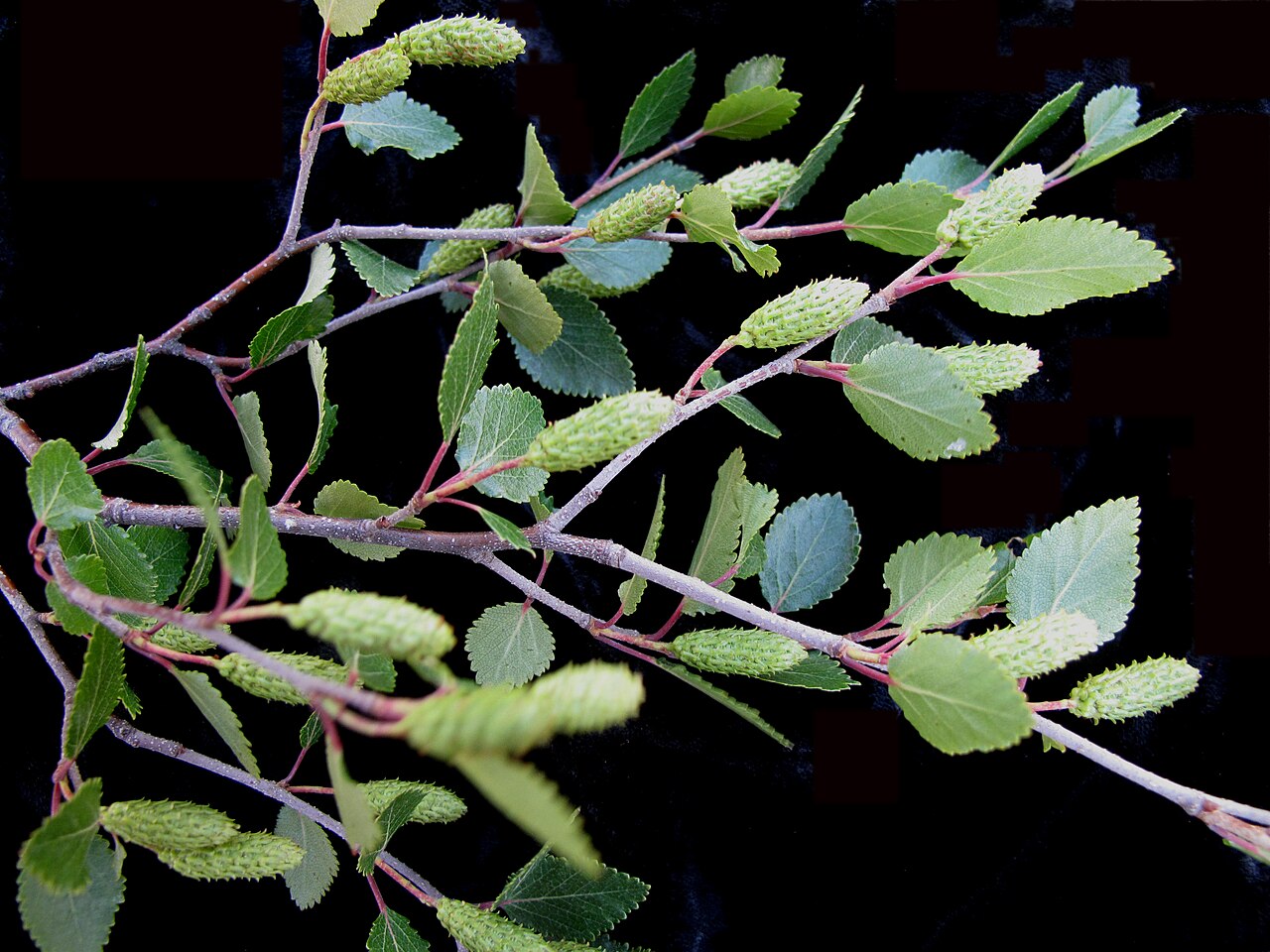
Like other birches, bog birch is wind-pollinated and produces separate male and female catkins on the same plant in spring, before or as the leaves emerge. Male catkins are slender, drooping, and 1 to 1.5 inches long; female catkins are shorter, upright or spreading, and mature into small woody conelike structures by late summer.
Fruit & Seeds
The mature female catkins break apart to release tiny winged nutlets, dispersed by wind and water across the wet, open habitats bog birch favors. Seed production is prolific in good years, helping the shrub colonize newly exposed wet soil and disturbed fen edges.
Quick Facts
| Scientific Name | Betula pumila |
| Family | Betulaceae (Birch) |
| Plant Type | Deciduous Shrub |
| Mature Height | 2–10 ft |
| Mature Spread | 4–10 ft |
| Growth Rate | Moderate |
| Sun Exposure | Full Sun to Part Sun |
| Water Needs | High (wetland obligate) |
| Soil Type | Saturated to consistently moist; peaty, mucky, or mineral-rich fen soils |
| Soil pH | Neutral to alkaline (calcareous fens); tolerates acidic bogs too |
| Bloom Time | April – May (catkins, before or with leaf-out) |
| Flower Color | Greenish-brown catkins |
| Fall Color | Yellow |
| Fruit | Small winged nutlets in woody catkins |
| Deer Resistant | No (browsed by deer, especially in winter) |
| USDA Hardiness Zones | 2–6 |
Native Range
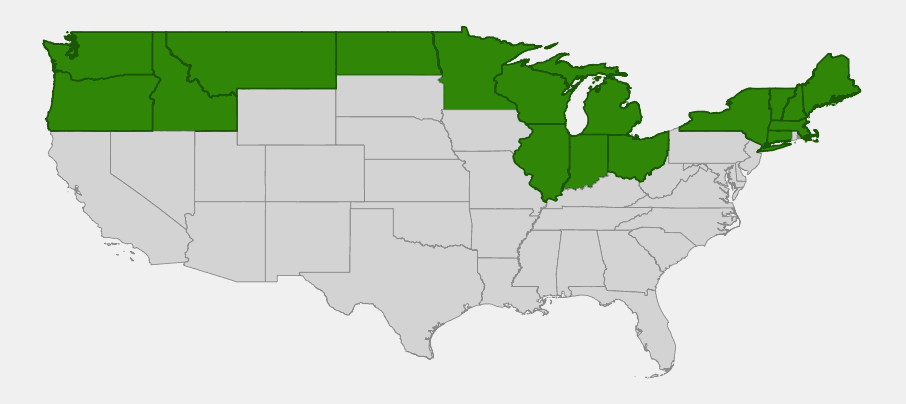
Bog birch has a broad but patchy range across the northern United States and Canada. It is common across the upper Midwest and Great Lakes states — Minnesota, Wisconsin, Michigan, Illinois, Indiana, and Ohio — where calcareous fens and wet prairie remnants provide its preferred habitat. A second concentration occurs across the Northeast, including New York, Vermont, New Hampshire, Maine, Massachusetts, and Connecticut, where it is locally uncommon and tracked as rare in several of these states. A separate, disjunct population occurs in the northern Rockies and Pacific Northwest — Montana, North Dakota, Idaho, Oregon, and Washington — a remnant of a wider post-glacial distribution.
Across this range, bog birch is consistently a wetland indicator species, found in calcareous fens, sedge meadows, bog margins, swamp edges, and wet, open shrub thickets, usually on saturated soils with a stable, high water table. It is not found in the dry Great Plains, the interior Mountain West away from its Rocky Mountain outliers, or the Southeast, so garden use outside its mapped range and outside a genuinely wet planting site is not appropriate.
Several states where bog birch occurs hold only small, scattered populations, and it is listed as a species of conservation concern in parts of New England. Gardeners in those areas should favor nursery-propagated stock over wild collection and should confirm local rarity status before planting at a restoration site.
📋 Regional plant lists featuring Bog Birch: Connecticut, Massachusetts & Rhode Island · New Hampshire, Maine & Vermont · New York, Pennsylvania & Northern New Jersey · Illinois, Iowa & Missouri · Ohio & Indiana · Michigan, Wisconsin & Eastern Minnesota · North Dakota, South Dakota & Western Minnesota · Montana & Wyoming · Idaho, Eastern Oregon & Eastern Washington · Western Oregon & Western Washington
Growing & Care Guide
Bog birch succeeds wherever a garden can offer sustained wet soil — the single non-negotiable requirement for this wetland shrub.
Light
Bog birch grows best in full sun to light part shade. In open fens it often forms dense thickets in full sun; in more shaded wetland margins it grows looser and more open, flowering and fruiting somewhat less.
Soil & Water
This is a true wetland shrub: it needs consistently moist to saturated soil and does not tolerate drought or extended dry spells. It is well suited to pond edges, stream margins, rain gardens, and bioswales that stay wet for most of the growing season. It tolerates a range of soil pH from the mildly acidic conditions of bogs to the distinctly alkaline, mineral-rich soils of calcareous fens, which is unusual versatility for a wetland shrub.
Planting Tips
Plant in spring so roots can establish before the stress of summer heat. Choose a site that stays wet through most of the growing season — standing water for part of the year is acceptable, as is a consistently high water table. Space plants 4 to 6 feet apart if building a thicket for restoration or screening, since the shrub spreads by root suckers over time.
Pruning & Maintenance
Little pruning is needed. Remove dead or winter-damaged stems in late winter or early spring. Because bog birch suckers from the base, it can be allowed to form a natural thicket or periodically thinned to control its spread in smaller garden settings.
Landscape Uses
Bog birch fits specialized wet-site plantings rather than general garden beds:
- Rain gardens and bioswales that stay consistently wet
- Pond and stream margin plantings
- Wetland and fen restoration projects
- Naturalized thickets for wildlife cover in wet ground
- Erosion control on saturated streambanks and swamp edges
Wildlife & Ecological Value
Bog birch plays an outsized ecological role in the fen and wetland communities it inhabits, providing food and structure in habitats where woody cover is often limited.
For Birds
The dense branching provides nesting sites and cover for wetland and shrub-edge birds, while the small seeds produced in the woody catkins are eaten by songbirds, including redpolls and other finches that forage on birch seed through fall and winter.
For Mammals
White-tailed deer and moose browse bog birch twigs and foliage, especially in winter when other browse is scarce; in parts of its northern range it is an important winter food source for moose. Beaver also use bog birch for food and construction material where it grows along wetland margins.
For Pollinators
As a wind-pollinated species, bog birch does not rely on insect pollinators, but its catkins provide an early pollen source for some native bees in spring, and the shrub’s structure supports insects that in turn feed wetland birds.
Ecosystem Role
In calcareous fens, bog birch is often a dominant or co-dominant shrub, helping define the structure of this globally uncommon wetland type. Its root systems help stabilize peaty, saturated soils, and its thickets provide thermal cover and travel corridors for wildlife moving through open wetland habitat.
Cultural & Historical Uses
Indigenous peoples across the northern tier of North America used various birch species, including bog birch, for practical purposes where larger paper birch was unavailable — the flexible young stems were sometimes used in basketry and small woven items, and birch generally held cultural and material importance across northern Indigenous communities.
Bog birch itself has never been a major commercial species, unlike paper birch with its bark and timber uses; its small stature and wetland habitat limited large-scale harvest. Historically, it has been most valued by botanists and naturalists as an indicator species for calcareous fens, a wetland type that supports many rare plants, and its presence often signals a site worth protecting.
Today bog birch is primarily of interest to ecological restoration projects, wetland mitigation plantings, and native plant gardeners with the right wet site, rather than for any ongoing traditional or commercial use.
Frequently Asked Questions
Can bog birch grow in a regular garden bed?
Not successfully. Bog birch is a wetland obligate species that needs consistently moist to saturated soil. It will struggle and likely die in average garden soil that dries out between waterings.
Is bog birch the same as paper birch or river birch?
No. Bog birch is a much smaller, shrubby species with small rounded leaves, distinct from the tall, tree-form paper birch (Betula papyrifera) or river birch (Betula nigra). It does not develop peeling white or papery bark.
Why is bog birch rare in some states where it’s native?
In parts of New England, bog birch depends on calcareous fens, a wetland type that is itself uncommon and has been reduced by drainage and development. Where the habitat is rare, the plant is rare too.
Does bog birch have fall color?
Yes, its leaves turn a clear yellow in autumn, though the display is more subtle than larger tree-form birches because of the shrub’s smaller leaf size and low stature.
What other native shrubs pair well with bog birch in a wet planting?
Speckled alder and meadowsweet are common wetland associates across much of bog birch’s range and share similar moisture requirements, making them natural companions in a rain garden or restoration planting.

Looking for a nursery that carries Bog Birch?
Browse our native plant nursery directory: CT · MA, ME, MI, MN, MT · NH, NY, OH, ND · VT · IL, IN, ID · WI · OR · WA
Other wetland natives to pair with bog birch: speckled alder and meadowsweet.