
Darlington Oak (Quercus hemisphaerica)
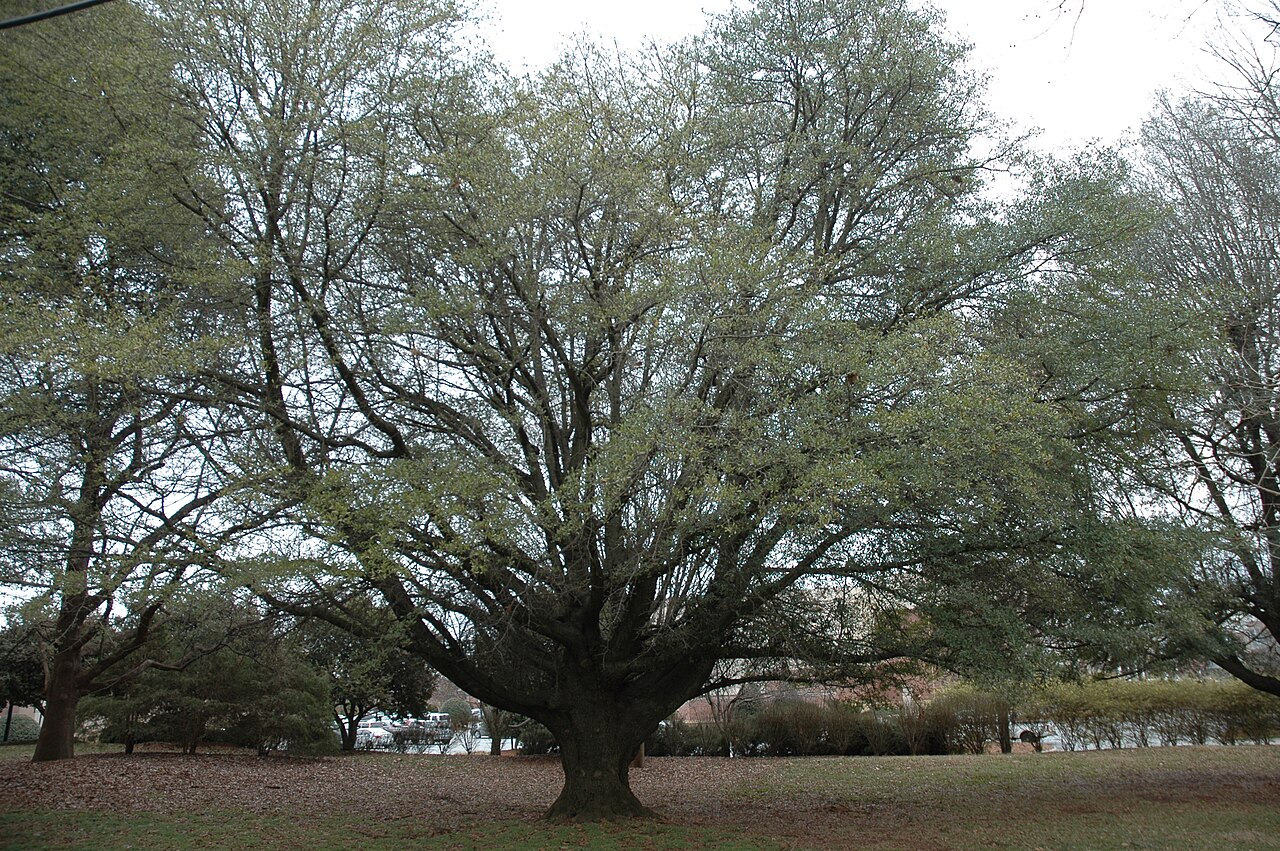
Quercus hemisphaerica, commonly called Darlington Oak or Sand Laurel Oak, is a fast-growing, semi-evergreen tree of the southeastern coastal plain. It belongs to the red oak group and is closely related to, and often confused with, swamp laurel oak (Quercus laurifolia); the two were long treated as a single species and are still routinely sold and planted under the generic name “laurel oak.” Darlington Oak is distinguished by its preference for drier, sandier upland sites, while swamp laurel oak favors wetter bottomland ground.
In the landscape, Darlington Oak quickly becomes a medium to large tree with a broad, rounded crown and narrow, willow-like leaves that persist through most of the winter before dropping just as new leaves emerge in spring — an evergreen-leaning habit that sets it apart from most other oaks in its range. Its smooth-margined, unlobed leaves surprise many gardeners who expect an oak leaf to be lobed; this leaf shape, shared with water oak and willow oak, is common among southern members of the red oak group.
Darlington Oak is valued across the Southeast as a quick-shade tree for new landscapes, tolerant of sandy, droughty soils and coastal conditions. It grows fast and lives a moderate lifespan compared with long-lived oaks like live oak, which makes it a practical choice where shade is needed sooner rather than later, though it is more prone to storm damage and decline in old age than slower-growing oaks.
Identification
Darlington Oak typically reaches 60 to 80 feet tall with a trunk 2 to 3 feet in diameter and a broad, rounded to oval crown nearly as wide as the tree is tall. It grows quickly for an oak, often 2 feet or more per year when young, and can become a substantial shade tree within a couple of decades.
Bark & Stems
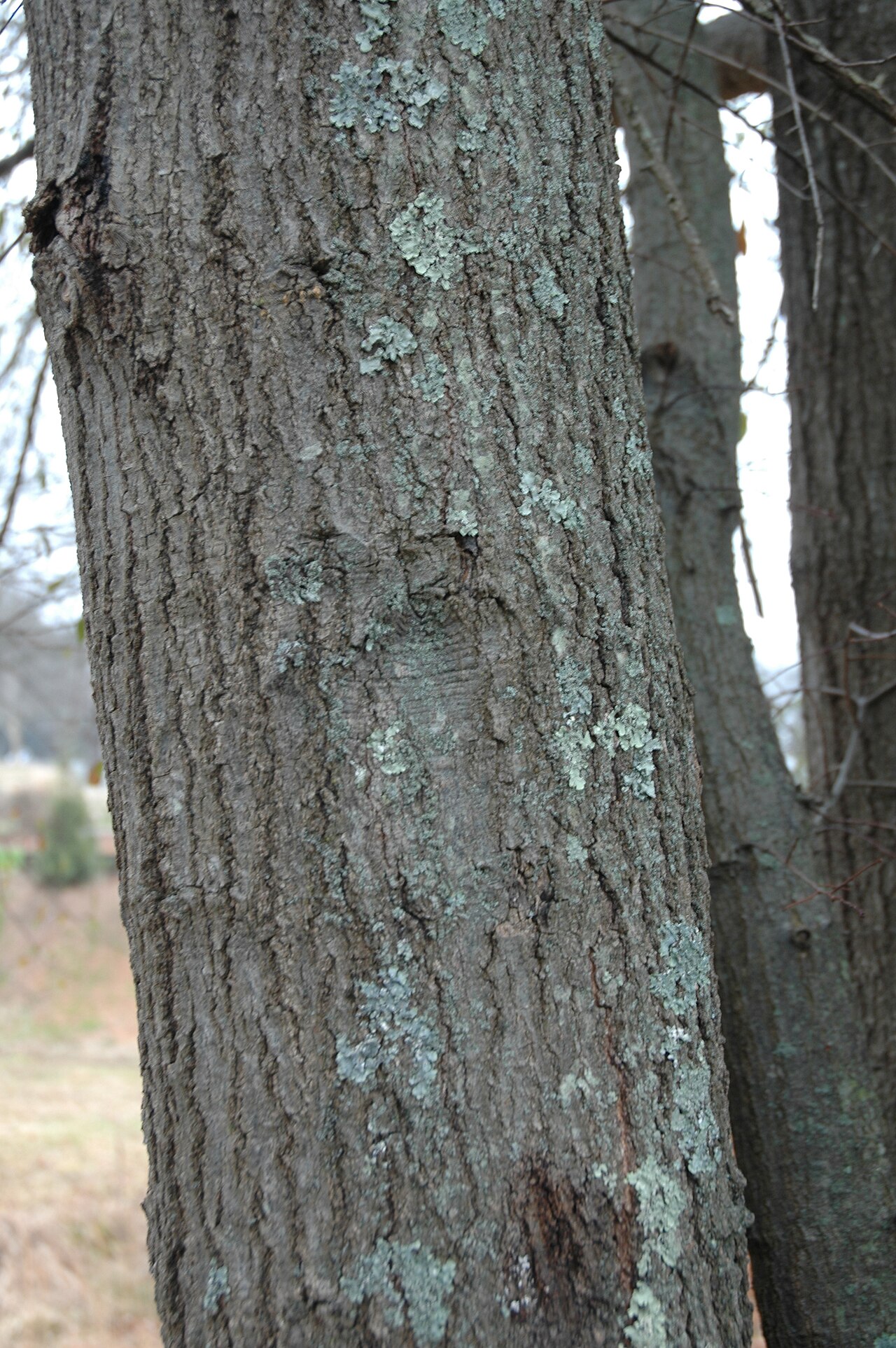
Bark is dark gray-brown and smooth on young trees, developing shallow furrows and flattened ridges with age, often mottled with patches of pale gray-green lichen on older trunks. Twigs are slender, smooth and reddish-brown to gray.
Leaves
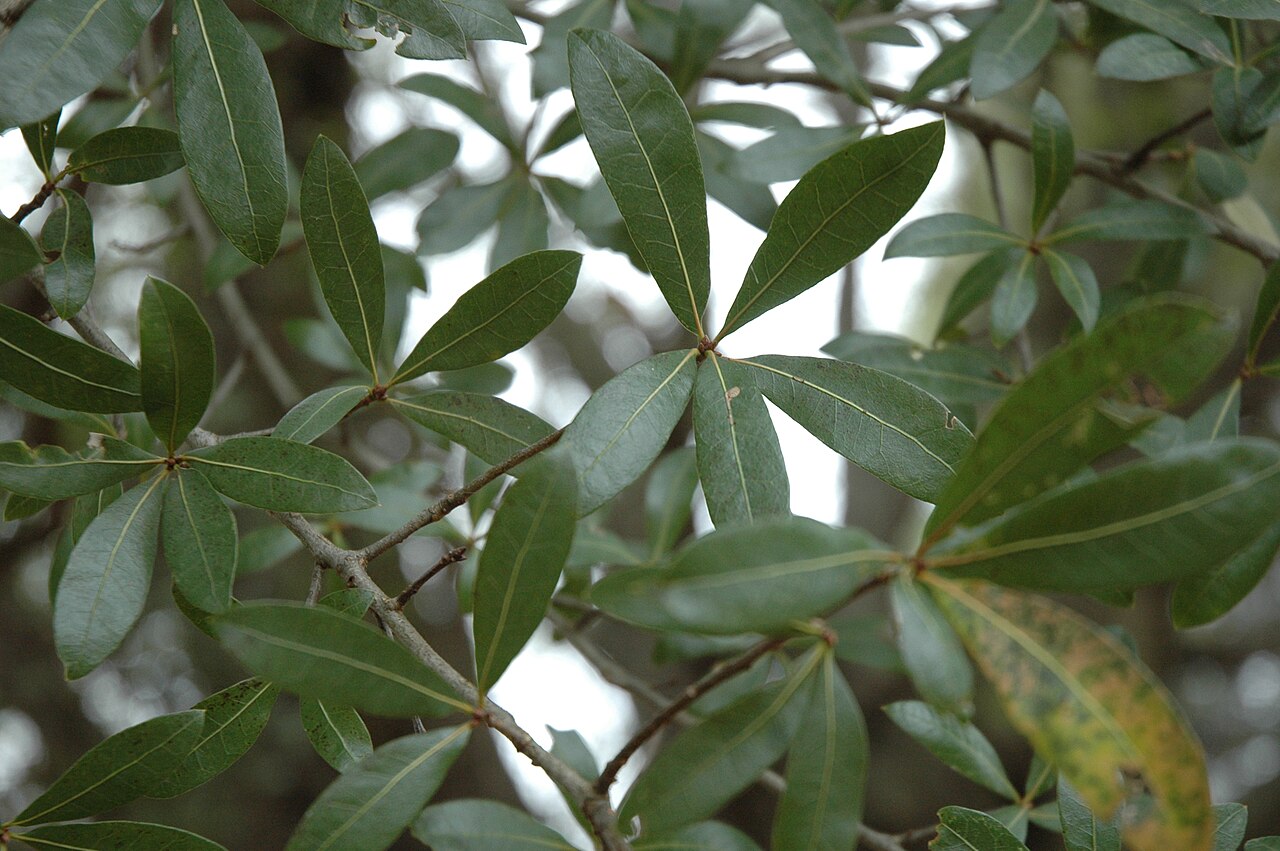
Leaves are simple, alternate, 1 to 5 inches long and narrowly elliptical to oblong, tapering to a single bristle tip at the apex with margins that are entire (unlobed) or occasionally shallowly toothed near the tip — quite unlike the deeply lobed leaves of red oak or white oak. They are leathery, glossy dark green above and paler beneath, and semi-evergreen, dropping in late winter just before the new leaves emerge, so the tree is rarely fully bare for long.
Flowers & Fruit
Like other oaks, Darlington Oak is wind-pollinated and monoecious, with slender drooping male catkins and small female flowers appearing with new growth in spring. Acorns mature over two seasons and are small, rounded to hemispheric, about 1/2 inch across, dark brown to nearly black at maturity, with a thin, shallow cap covering roughly a third of the nut. Mature trees can produce heavy acorn crops valuable to wildlife.
Quick Facts
| Scientific Name | Quercus hemisphaerica |
| Family | Fagaceae (Beech) |
| Plant Type | Semi-evergreen Tree |
| Mature Height | 60–80 ft (occasionally to 100 ft) |
| Mature Spread | 50–70 ft |
| Growth Rate | Fast |
| Sun Exposure | Full Sun |
| Water Needs | Low to moderate; drought tolerant once established |
| Soil Type | Dry to average, sandy, well-drained |
| Soil pH | Acidic to slightly acidic (about 5.0–6.5) |
| Bloom Time | March – April |
| Flower Color | Yellow-green (inconspicuous) |
| Fall Color | None; leaves stay green into winter |
| Fruit | Small dark acorns, about 1/2 in, biennial |
| Deer Resistant | Moderate |
| USDA Hardiness Zones | 7–9 |
Native Range
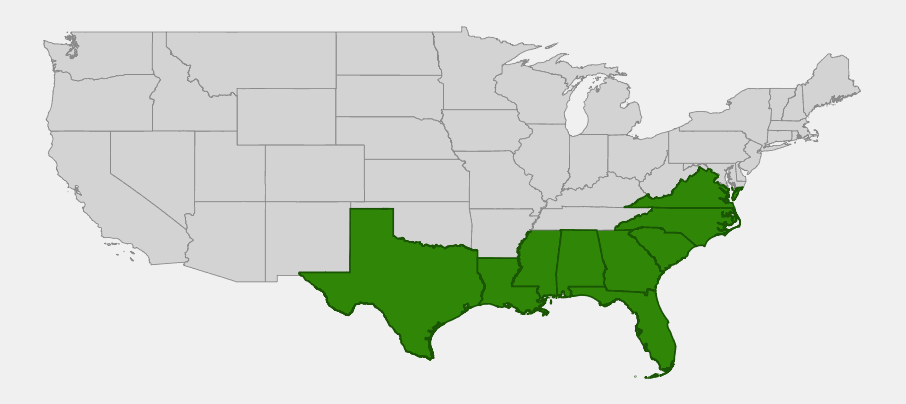
Darlington Oak is native to the coastal plain of the southeastern and south-central United States, from southeastern Virginia south through the Carolinas, Georgia and Florida, and west along the Gulf Coast through Alabama, Mississippi, Louisiana to eastern Texas. It is especially common on the sandy soils of the lower coastal plain and barrier-island fringe.
Typical habitat is dry to mesic sandy uplands: sandhills, old dune ridges, open woodlands and disturbed ground, where it often colonizes quickly alongside loblolly pine and turkey oak. It tolerates considerably drier, sandier soil than its close relative swamp laurel oak, which is more often found along streams and in moist bottomland. Darlington Oak also tolerates salt spray and sandy coastal conditions reasonably well, making it a common tree in older neighborhoods near the coast.
Because Darlington Oak and swamp laurel oak were historically treated as one species and are still frequently sold under the single name “laurel oak” in the nursery trade, gardeners planting a laurel oak outside this native coastal-plain range, for example well inland or north of Virginia, should confirm they are getting locally appropriate stock rather than assuming native status.
📋 Regional plant lists featuring Darlington Oak: Georgia, Alabama & Mississippi · Arkansas, Louisiana, Eastern Oklahoma & Eastern Texas · North Carolina & South Carolina · Maryland, Virginia & West Virginia
Growing & Care Guide
Darlington Oak is one of the easiest native shade trees to establish across the Southeast, prized for how quickly it fills in a new landscape once planted in the right spot.
Light
Plant in full sun for the best form and fastest growth. Young trees tolerate light shade but develop a more open, leggy habit without good direct light.
Soil & Water
This oak thrives in dry to average, well-drained, sandy soil and handles drought well once established, though regular watering speeds up establishment in the first one to two years. It is not particular about soil fertility and performs well in the lean, acidic sands typical of the coastal plain. Avoid heavy, poorly drained clay, where it is more prone to root problems.
Planting Tips
Plant container-grown stock in fall or early spring, giving the tree plenty of room to reach its eventual 50- to 70-foot spread; keep it well away from houses, driveways and underground utilities. Because it grows quickly, stake young trees loosely for the first year or two if the planting site is windy, and remove stakes once the root system is established.
Pruning & Maintenance
Prune to establish a strong central leader and well-spaced scaffold branches while the tree is young, since fast growth can produce weak branch unions that split in storms later on. Avoid pruning in spring and early summer, when sap-feeding beetles that spread oak wilt are most active; late fall or winter pruning is safest. Darlington Oak is relatively short-lived for an oak (often 50 to 90 years) and more storm-prone than slower-growing species, so periodic inspection for structural issues pays off as the tree matures.
Propagation
Propagate from acorns, which should be collected as soon as they drop in fall, since they lose viability quickly and do not tolerate drying out. Plant promptly about an inch deep in the garden or in deep containers that accommodate the taproot; a normal outdoor winter provides enough chilling for spring germination.
Landscape Uses
Darlington Oak’s speed and toughness make it useful in several settings:
- Fast shade tree for new landscapes and developments
- Street and park tree in coastal and sandhill communities
- Screen or windbreak on dry, sandy sites near the coast
- Wildlife plantings for acorn-dependent birds and mammals
- Erosion control on sandy slopes and disturbed ground
Wildlife & Ecological Value
As a common, fast-growing oak of the coastal plain, Darlington Oak contributes significantly to local food webs and habitat structure, especially in the sandy uplands where it often dominates the canopy.
For Pollinators
Like other oaks, it hosts a remarkable diversity of native moth and butterfly caterpillars, which make up the bulk of the diet many songbirds feed their nestlings. The early-spring catkins also provide pollen for some generalist bees.
For Birds
Acorns are eaten by wild turkeys, blue jays, woodpeckers and many songbirds, and the dense, semi-evergreen canopy provides valuable winter cover in a season when many other hardwoods stand bare. Blue jays are especially important acorn dispersers, caching far more than they retrieve.
For Mammals
White-tailed deer, gray squirrels and fox squirrels rely heavily on the acorn crop, particularly in years when other mast trees produce poorly. Squirrels in turn help disperse and plant seed across the landscape.
Ecosystem Role
Darlington Oak is an early-successional component of coastal-plain sandhill and upland pine-oak communities, often establishing quickly on disturbed or open ground alongside loblolly pine and later giving way to longer-lived oaks like live oak in older stands. Its heavy leaf drop in late winter adds organic matter to otherwise lean, sandy soils.
Cultural & Historical Uses
For much of the nineteenth and twentieth centuries, Darlington Oak was not clearly separated from swamp laurel oak, and the two were sold, planted and discussed together under the common name “laurel oak” across the South. That taxonomic split is relatively recent and still causes confusion in the nursery trade, where “laurel oak” on a plant tag may refer to either species.
The wood has seen only modest commercial use, mainly as firewood and low-grade lumber, since the tree’s moderate lifespan and susceptibility to storm damage and heart rot in old age make it less valuable than longer-lived oaks for timber. Its chief historical importance has been horticultural: a quick, reliable shade tree for the rapidly developing towns and suburbs of the twentieth-century Southeast, where homeowners wanted shade sooner than slower oaks like live oak could provide.
Today Darlington Oak remains widely planted as a street and shade tree throughout its native range, valued more for its fast growth and tolerance of sandy, dry soils than for any historical use.
Frequently Asked Questions
What is the difference between Darlington Oak and laurel oak?
“Laurel oak” is a common name applied to two closely related species: Darlington Oak (Quercus hemisphaerica), which favors drier, sandier upland soil, and swamp laurel oak (Quercus laurifolia), which favors wetter bottomland sites. They were long treated as one species and are still often sold interchangeably as “laurel oak.”
Is Darlington Oak evergreen?
It is semi-evergreen. Leaves typically stay green through most of winter and drop just before new growth emerges in spring, so the tree is rarely bare for more than a few weeks, unlike fully deciduous oaks.
How fast does Darlington Oak grow?
Quite fast for an oak, often 2 feet or more per year when young and well sited. That speed is a major reason it is popular as a shade tree, though it also means the wood and branch structure are somewhat weaker than slower-growing oaks.
Is Darlington Oak a good choice near a house?
It works well as a shade tree if given room for its eventual 50- to 70-foot spread and kept well away from the foundation and utility lines. Because it is more prone to storm damage and decline in old age than species like live oak, periodic pruning to build strong branch structure when young is worthwhile.
Can you eat Darlington Oak acorns?
Not without processing. Like most red oak group acorns, they are high in bitter tannins and are not palatable raw; they are valuable wildlife food rather than a human food source.

Looking for a nursery that carries Darlington Oak?
Browse our native plant nursery directory: Alabama · Florida & Georgia · Louisiana & Mississippi · North Carolina · South Carolina, Texas & Virginia