
Muscadine (Vitis rotundifolia)
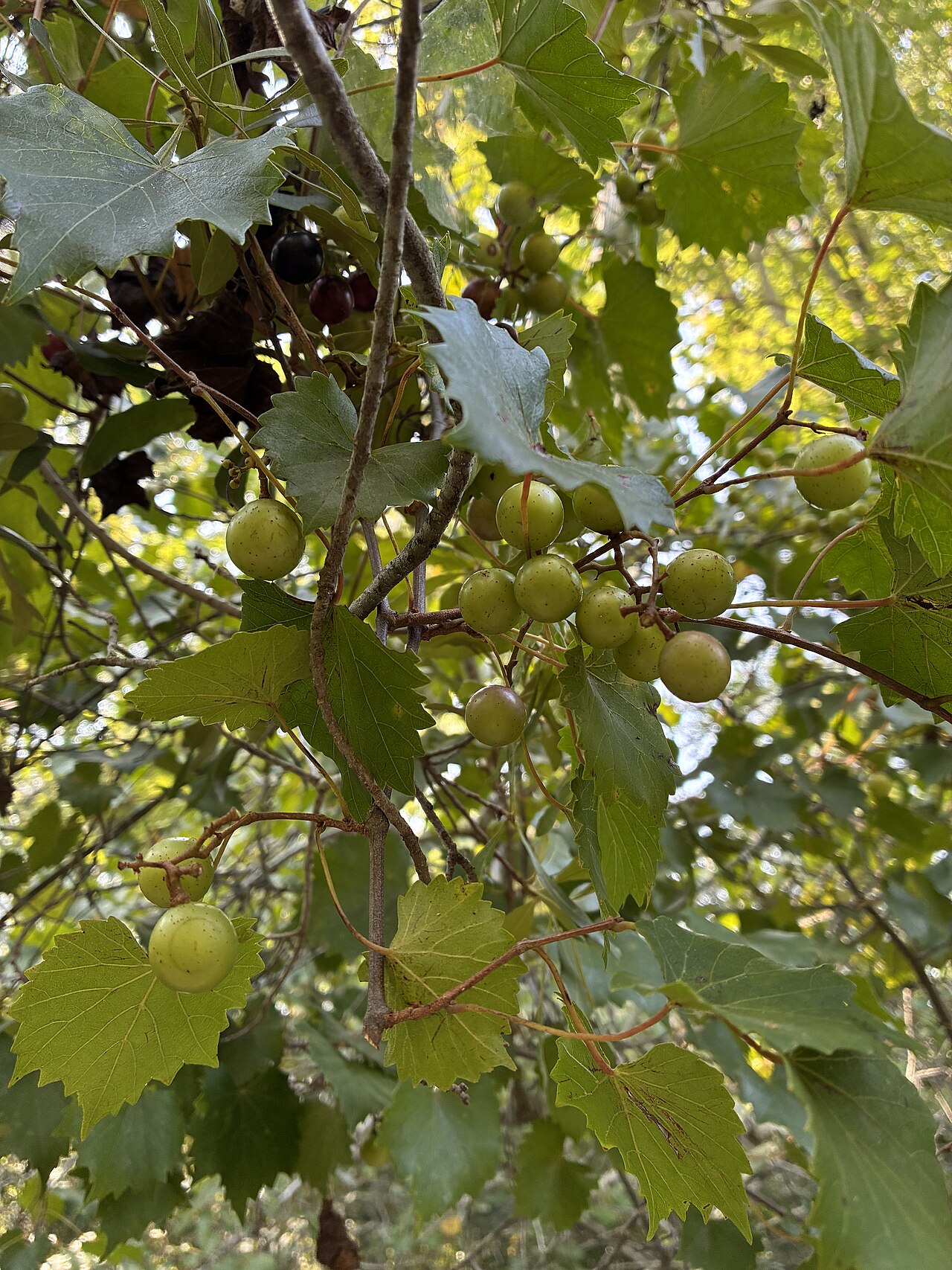
Vitis rotundifolia, commonly known as Muscadine or Muscadine Grape, is a vigorous, high-climbing native vine of the Vitaceae (grape) family found throughout the warm, humid Southeast. It is the wild ancestor of the muscadine grapes grown commercially across the South, including the well-known bronze “scuppernong” selections first recorded in coastal North Carolina. Unlike many ornamental vines, Muscadine is both a genuinely useful wildlife plant and a source of good, edible fruit for people — a rare combination among native vines.
In the wild, Muscadine climbs high into trees using tendrils, forming dense, twisting masses of woody stems that can reach 60 feet or more into the canopy of mature forest edges, fencerows, and floodplains. Its leaves are rounded and coarsely toothed, its small greenish flowers are sweetly fragrant in late spring, and its thick-skinned fruit ripens through late summer and fall in small, loose clusters rather than the tight bunches typical of European grapes. The fruit is genuinely edible, eaten fresh off the vine, cooked into jelly, or pressed for wine and juice — a tradition with deep roots across the rural South.
Muscadine is an excellent choice for a native plant garden with space to let a vigorous vine run — along a sturdy fence, over an arbor, or up into an existing tree at the woodland edge. It asks for little once established, tolerates heat, humidity, and periodic drought better than most grapes, and feeds an enormous range of wildlife, from songbirds to foxes to white-tailed deer, in addition to producing a genuine harvest for the gardener.
Identification
Muscadine is a woody, deciduous, high-climbing vine, distinguished from other native grapes by several reliable field marks. It typically climbs 60 to 100 feet into mature trees where support allows, or sprawls widely as a tangled groundcover where no support is present.
Bark & Stems
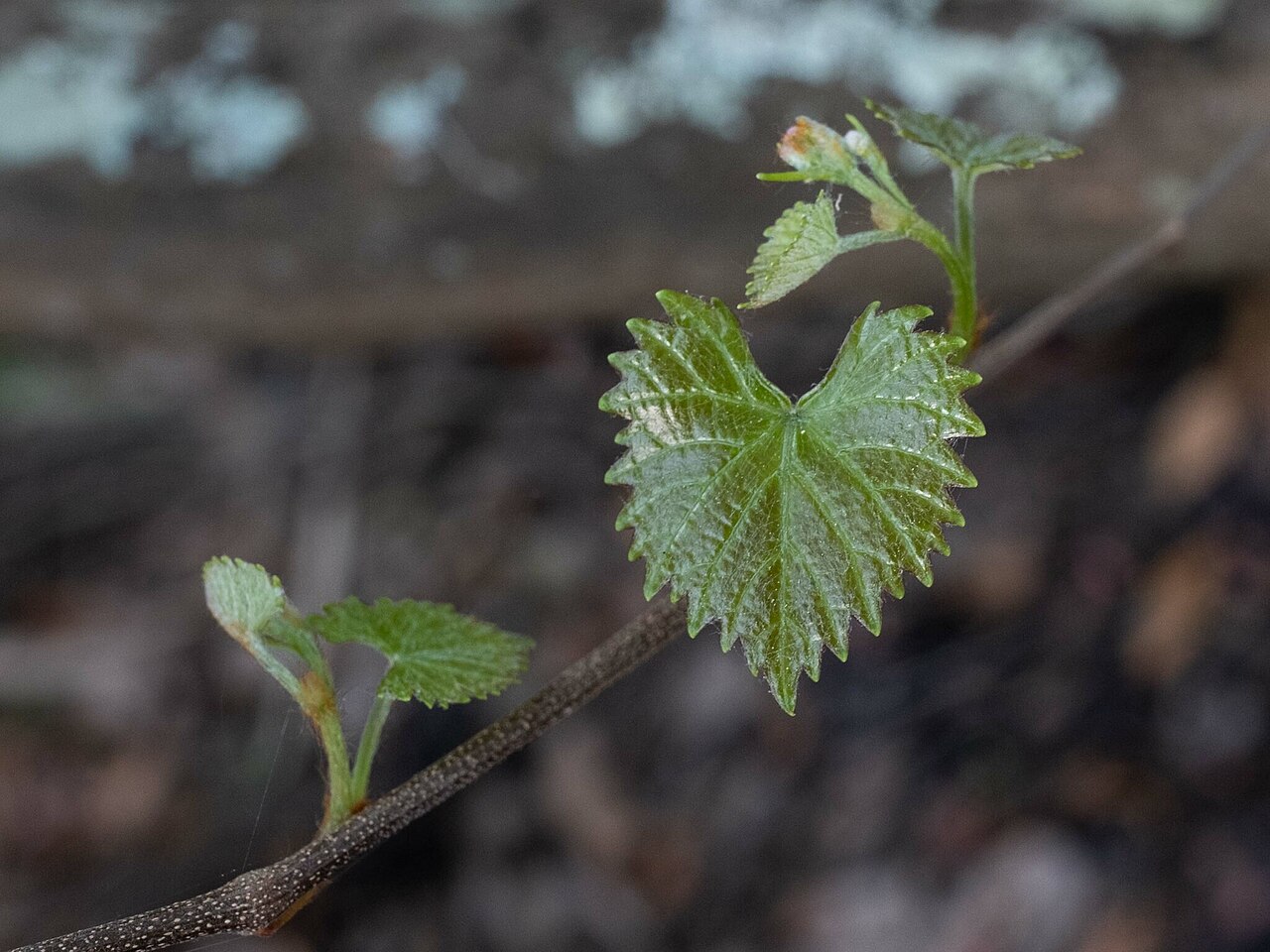
Unlike most grapevines, whose bark peels and shreds in long gray strips, Muscadine bark stays tight against the stem, dotted with small, pale lenticels (breathing pores) rather than shredding. The tendrils are unbranched — a single, simple curl rather than the forked tendrils typical of other native grapes — which is one of the most reliable ways to confirm an identification in the field.
Leaves
Leaves are simple, alternate, and rounded to heart-shaped, 2 to 5 inches across, with coarse, even teeth along the margin and a glossy, almost leathery sheen. They lack the dense, felty hairs found on the undersides of many other wild grape species, giving Muscadine foliage a cleaner, smoother look both above and below.
Flowers & Fruit
Small, fragrant, greenish-white flowers bloom in short clusters in late spring. Most wild vines are functionally either male or female, so fruiting vines need a pollen source nearby — a detail worth knowing if a planted vine never sets fruit. The fruit is a round, thick-skinned berry up to about an inch across, bronze to purple-black depending on the variety, ripening from late summer into fall. Fruits mature and drop individually over several weeks rather than ripening all at once in a tight bunch, so fruit is typically gathered a little at a time, or collected from the ground beneath the vine.
Quick Facts
| Scientific Name | Vitis rotundifolia |
| Family | Vitaceae (Grape) |
| Plant Type | Deciduous Woody Vine |
| Mature Length | 60–100 ft, given support to climb |
| Growth Rate | Fast |
| Sun Exposure | Full Sun to Part Shade |
| Water Needs | Moderate; drought tolerant once established |
| Soil Type | Adaptable; thrives in sandy, well-drained soil |
| Soil pH | 5.5–6.5, tolerates wider range |
| Bloom Time | May – June |
| Flower Color | Greenish-white, fragrant |
| Fall Color | Yellow |
| Fruit | Round bronze-to-black berries, to 1 in, edible |
| Deer Resistant | No (deer browse foliage and fruit) |
| USDA Hardiness Zones | 6–9 |
Native Range
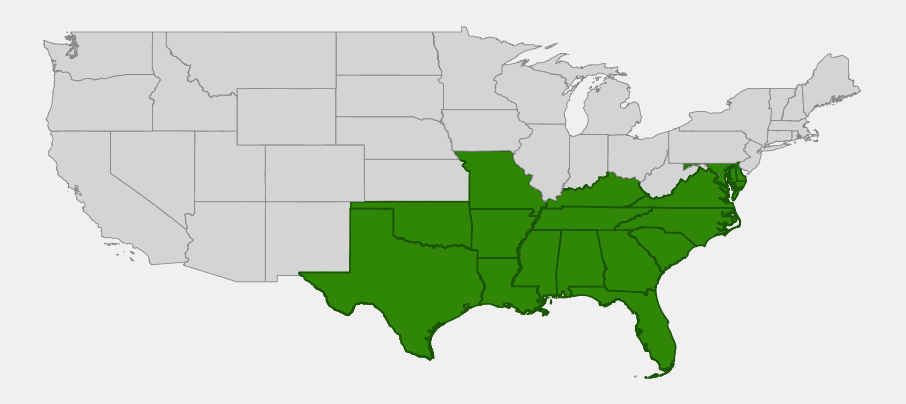
Muscadine is native to the warm, humid Southeast and lower mid-Atlantic, found from Delaware and Maryland south through Virginia, North Carolina, South Carolina, Georgia, and Florida, and west across the Gulf states into Mississippi, Alabama, Tennessee, Kentucky, Arkansas, Louisiana, Oklahoma, Texas, and Missouri. It is a true coastal-plain-to-piedmont species, most abundant in the lower, warmer parts of its range, and generally absent from the northern mid-Atlantic, New England, and the colder interior states beyond its documented range.
In the wild, Muscadine favors forest edges, fencerows, floodplains, and thickets, where it can climb into existing trees for light. It is especially common along the margins of bottomland hardwood forests and in disturbed, sunny edge habitat, and it tolerates the sandy, well-drained soils typical of the Southeastern coastal plain better than most other native grapes.
Muscadine has also been cultivated and selected for fruit quality for centuries, and bronze-skinned “scuppernong” type vines in particular have a long documented history in coastal North Carolina. Planted vines are common well beyond the vine’s documented wild range as a fruit crop; gardeners outside the native range noted above should treat Muscadine as a non-native fruiting vine there rather than a native planting.
📋 Regional plant lists featuring Muscadine: Arkansas, Louisiana, Eastern Oklahoma & Eastern Texas · Delaware, Southern New Jersey & Long Island, New York · Maryland, Virginia & West Virginia · Georgia, Alabama & Mississippi · Illinois, Iowa & Missouri · Kentucky & Tennessee · North Carolina & South Carolina
Growing & Care Guide
Muscadine is one of the easiest native fruiting plants to grow in the Southeast, thriving in the same heat and humidity that frustrates many other grape species, and asking for little beyond sturdy support and an annual pruning.
Light
Full sun produces the heaviest flowering and fruiting, though established vines tolerate part shade, especially at a woodland edge where they can climb up into the canopy to reach better light.
Soil & Water
Muscadine is naturally adapted to sandy, well-drained soils and is notably more heat- and drought-tolerant than European or most other native grapes once its roots are established. Good drainage matters more than soil fertility; avoid heavy, poorly drained clay where water stands after rain.
Planting Tips
Give Muscadine a strong structure to climb from day one — a sturdy arbor, fence, or pergola built to support real weight, since a mature vine becomes heavy and woody. Space vines at least 10 to 20 feet apart if growing more than one, and plant both a male and a perfect-flowered (self-fruitful) selection nearby if fruit production matters, since many wild vines are functionally single-sexed.
Pruning & Maintenance
Prune annually in late winter while the vine is fully dormant; pruning a actively growing muscadine causes heavy “bleeding” of sap. Cut back the previous year’s growth to short spurs along a permanent framework of main stems, which keeps the vine productive and prevents it from collapsing under its own weight.
Propagation
Muscadine is most reliably propagated from hardwood or layering techniques, since named fruiting selections do not come true from seed. Seed propagation is possible for naturalizing wild-type vines but produces variable, often less palatable fruit.
Landscape Uses
Muscadine serves a number of practical roles in a native landscape:
- Arbor or pergola cover providing dense summer shade
- Fence-line screening for privacy along property edges
- Wildlife food plot plantings for game and songbirds
- Edible landscaping, producing fruit for fresh eating, jelly, and wine
- Naturalized woodland-edge plantings where it can climb into existing trees
Wildlife & Ecological Value
Few native vines match Muscadine for sheer wildlife traffic — its fruit, foliage, and tangled cover support a remarkably broad range of animals through the year.
For Pollinators
The fragrant late-spring flowers attract native bees and other generalist pollinators at a time when many other nectar sources have finished blooming for the season.
For Birds
Wild turkey, songbirds, and woodpeckers all feed on the ripening fruit through late summer and fall, and the dense, twisting vine tangles provide excellent nesting cover and protection from predators.
For Mammals
White-tailed deer, raccoons, opossums, foxes, and black bears all eat Muscadine fruit and browse the foliage, making it one of the more valuable wildlife food sources in southeastern forest edges and bottomlands.
Ecosystem Role
As a canopy-climbing vine, Muscadine adds structural complexity to forest edges, creating cover at multiple heights that supports a wider range of wildlife than the trees it climbs would alone. Its abundant fall fruit crop is an important late-season food source that helps many species build fat reserves ahead of winter.
Cultural & Historical Uses
Muscadine has one of the longest documented histories of any native North American fruit. Indigenous peoples across the Southeast gathered the wild fruit for food long before European contact, and early colonists quickly adopted it, noting its abundance along the coastal plain. The bronze-skinned “scuppernong” type, named for North Carolina’s Scuppernong River, is often cited as the first grape cultivated in North America, with written references dating back to the 1500s and 1600s.
Through the eighteenth and nineteenth centuries, Muscadine became an important dooryard and farmstead crop across the rural South, grown for fresh eating, jelly, and homemade wine, often trained over simple arbors near the house. That tradition continues today: Muscadine is still commercially grown throughout the Southeast, prized for its thick skin, musky-sweet flavor, and strong resistance to the diseases and pests that trouble many European grape varieties in humid climates.
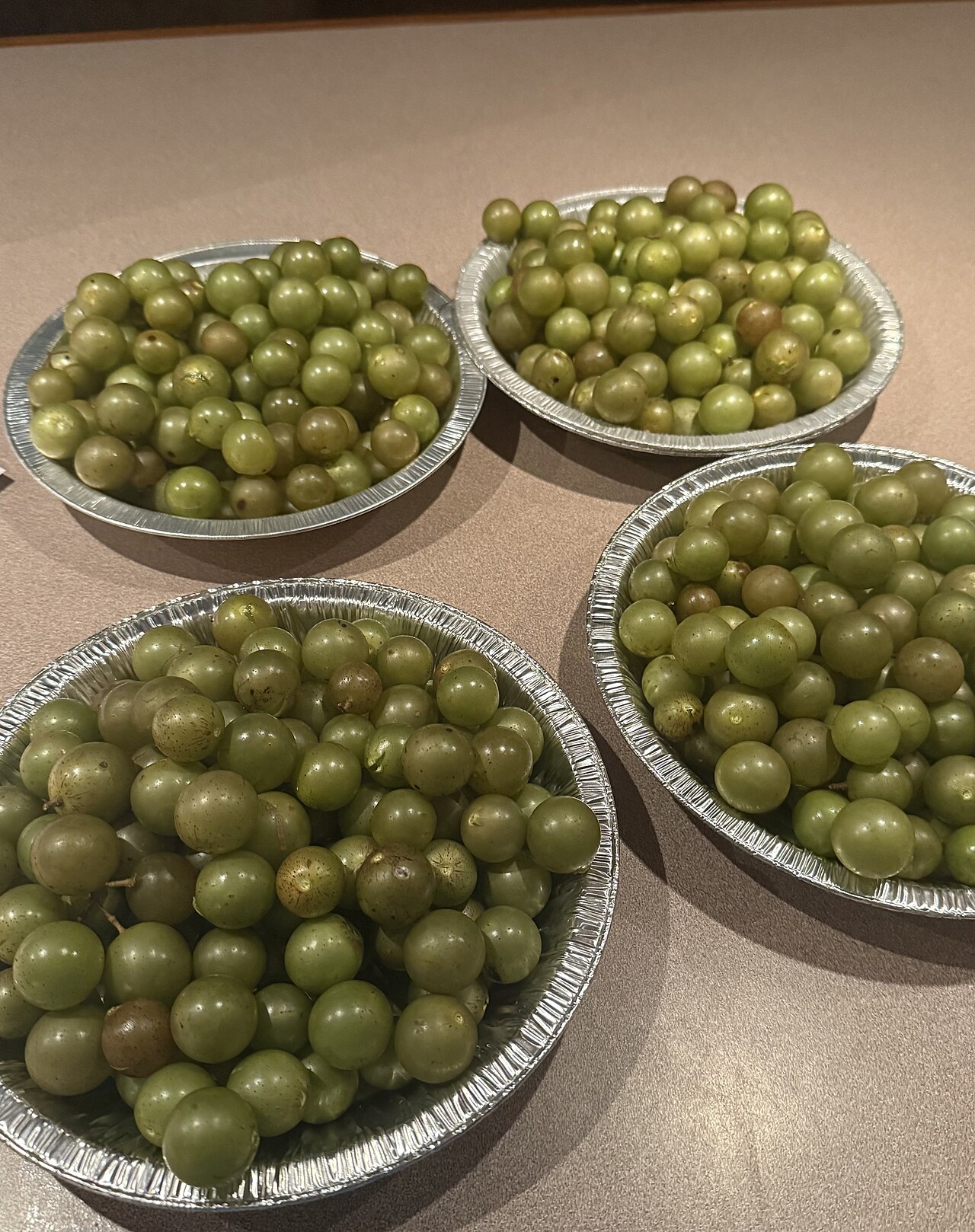
The fruit remains genuinely useful in the kitchen — eaten fresh, cooked down into jelly and preserves, or pressed into juice and wine — making Muscadine one of relatively few native vines that offer both strong wildlife value and a real harvest for the people who grow it.
Frequently Asked Questions
Is Muscadine fruit safe to eat?
Yes. Muscadine fruit is edible and has a long history of use for fresh eating, jelly, and wine. Most people spit out the thick skin and seeds, which are tough and not generally eaten.
Why didn’t my Muscadine vine produce fruit?
Many wild Muscadine vines are functionally either male or female rather than self-fruitful. A female vine needs a male or perfect-flowered vine nearby to set fruit; check which type you have before assuming something is wrong.
How big of a structure does Muscadine need?
Plan for a sturdy, permanent structure. A mature vine becomes heavy and woody over the years, so a flimsy trellis will eventually fail; a well-built arbor, fence, or pergola works best.
Is Muscadine the same as the grapes sold in grocery stores?
No. Grocery store table grapes are usually European grape (Vitis vinifera) selections. Muscadine is a distinct native species with thicker skin, a muskier flavor, and fruit that ripens individually rather than in tight bunches.
Does Muscadine need regular watering once established?
Not much. Established vines tolerate periodic drought well, especially in the sandy, well-drained soils typical of its native range, though consistent moisture during fruit development improves the harvest.
