Slippery Elm (Ulmus rubra)
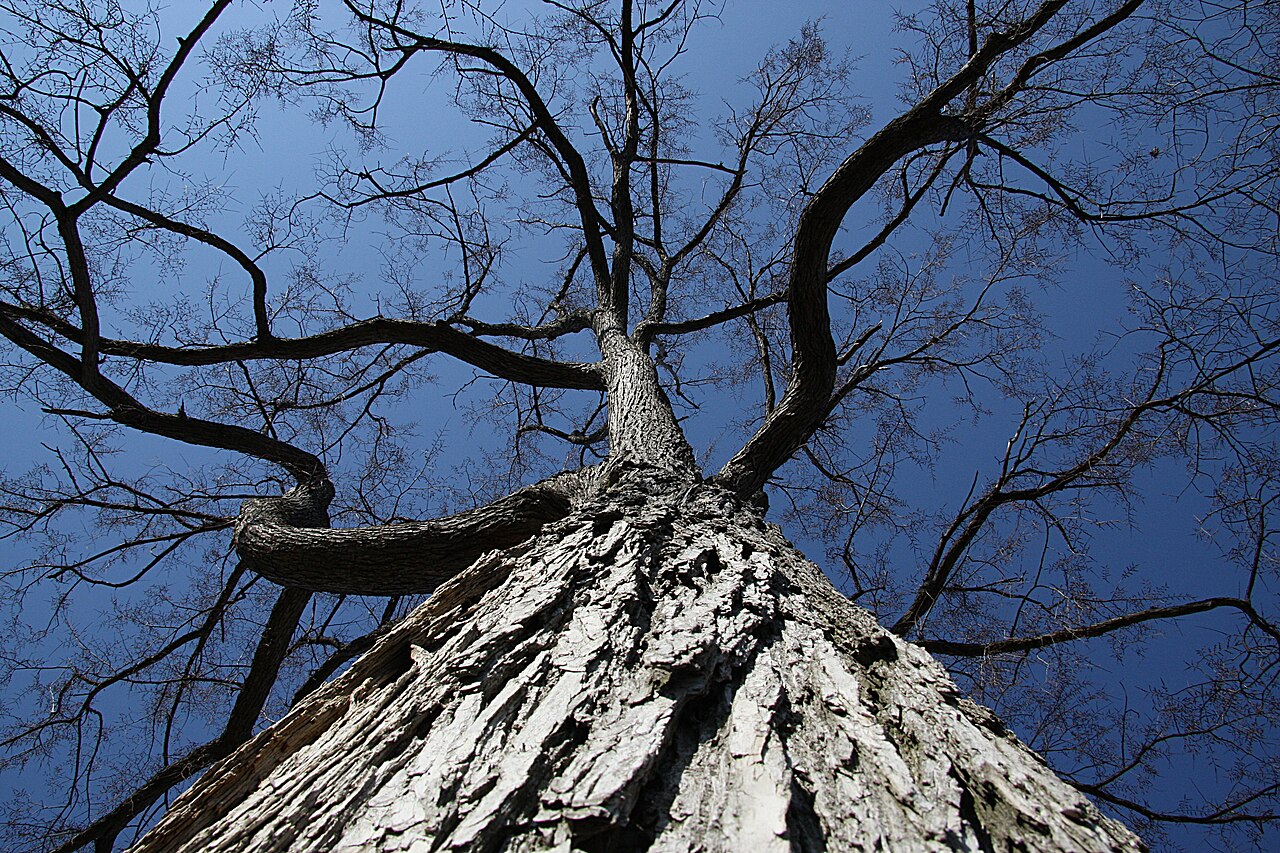
Ulmus rubra, commonly called Slippery Elm or Red Elm, is a tough, fast-growing shade tree native to the woodlands of eastern and central North America. It belongs to the Ulmaceae (elm) family and gets its common name from the mucilaginous, slimy texture of its inner bark when it is chewed or wetted — a trait that gave the tree a long history of use among Indigenous peoples and early settlers alike. Gardeners and foresters also know it as Red Elm, a nod to the reddish-brown color of the freshly cut inner bark.
In the landscape, Slippery Elm is a medium-to-large deciduous tree with an open, spreading crown, rough sandpapery leaves, and deeply furrowed gray-brown bark. It typically reaches 40 to 60 feet tall with an equal spread, making it a substantial shade tree for parks, farmsteads, and larger residential lots. It grows quickly in youth, tolerates a wide range of soils including heavy clay and limestone-derived ground, and adapts to both sun and partial shade — qualities that have long made it a dependable tree on the working landscapes of the Midwest, Appalachians, and Southeast.
Like its close relative the American Elm, Slippery Elm is vulnerable to Dutch elm disease, and this disease has killed a significant number of wild and planted trees since arriving in North America in the twentieth century. It tends to be somewhat less susceptible than American Elm, and healthy specimens are still a regular sight across its native range, but anyone planting one should go in with realistic expectations rather than assuming immunity. For native plant gardeners willing to accept that risk, Slippery Elm remains a valuable, fast-establishing shade tree with real wildlife value and a long cultural history.
Identification
Slippery Elm is usually a single-trunked tree with an irregular, broad-topped crown of ascending and spreading branches. Mature trees commonly stand 40 to 60 feet tall, occasionally taller on good sites, with trunk diameters of 1 to 2 feet. The silhouette is less perfectly vase-shaped than American Elm, with a flatter, more open crown.
Bark & Stems
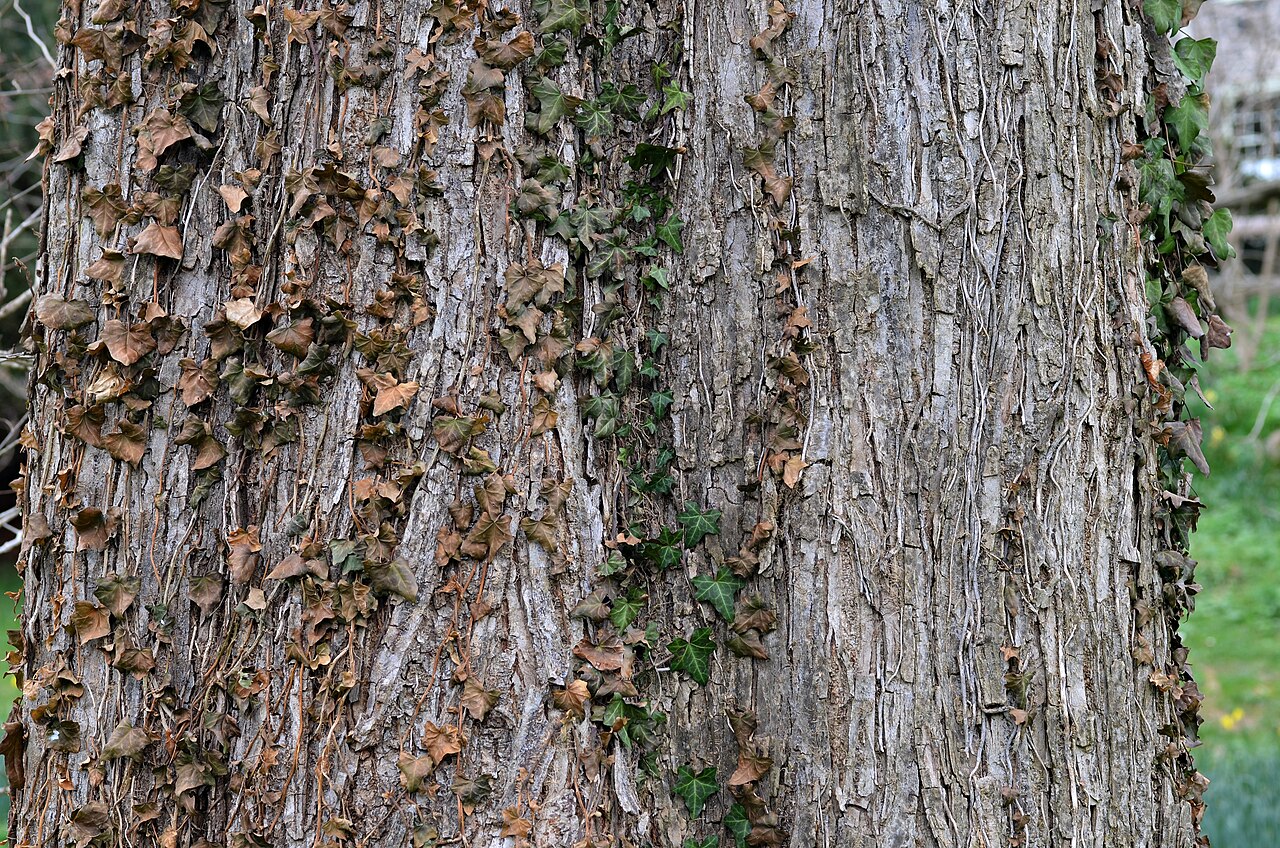
The outer bark is gray-brown to dark gray, breaking into long, flat-topped ridges separated by shallow furrows — coarser and less scaly than American Elm bark. The most distinctive feature is underneath: slice into the inner bark and it is reddish-brown, thick, and fragrant, turning slick and mucilaginous when chewed or soaked in water. This slipperiness is the source of both the common name and its long history of use. Twigs are gray-brown and noticeably hairy (pubescent), rougher to the touch than the smoother twigs of American Elm, and the winter buds are dark and covered in rusty hairs.
Leaves
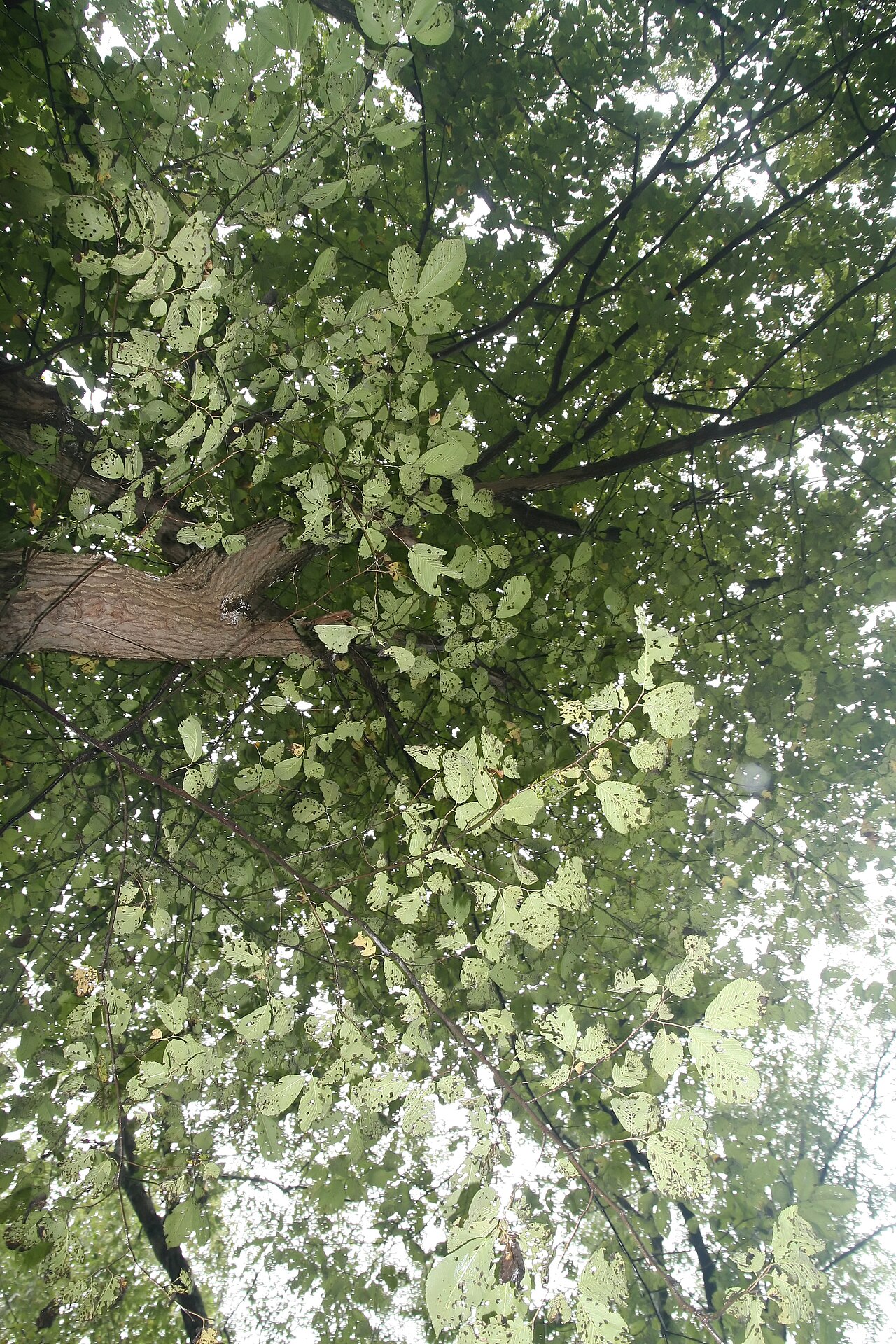
Leaves are alternate, simple, and elliptical to obovate, typically 4 to 7 inches long with doubly serrate (saw-toothed) margins and a lopsided, asymmetrical base typical of elms. The upper surface is dark green and distinctly rough and sandpapery to the touch — a quick way to tell Slippery Elm from American Elm, whose leaves are smoother above. The underside is paler and softly hairy. Fall color is an unremarkable dull yellow.
Flowers & Fruit
Slippery Elm flowers in late winter to early spring, before the leaves emerge, in small reddish-green clusters along the twigs. The perfect flowers are wind-pollinated and easy to overlook. They are followed by round, flattened samaras (winged seeds) about ¾ inch across, deeply notched at the tip. Unlike American Elm, whose samara margins are fringed with hairs, Slippery Elm’s samaras are hairless along the edge but have a patch of fine down directly over the seed cavity — a reliable identification feature when the two species grow together.
Quick Facts
| Scientific Name | Ulmus rubra |
| Family | Ulmaceae (Elm) |
| Plant Type | Deciduous Tree |
| Mature Height | 40–60 ft (occasionally to 80 ft) |
| Mature Spread | 35–50 ft |
| Growth Rate | Medium to Fast |
| Sun Exposure | Full Sun to Part Shade |
| Water Needs | Moderate |
| Soil Type | Adaptable; best in moist loam, tolerates clay and limestone soils |
| Soil pH | 6.0–8.0 |
| Bloom Time | March – April, before leaves emerge |
| Flower Color | Reddish-green (inconspicuous) |
| Fall Color | Dull yellow |
| Fruit | Round, notched samara (winged seed), ¾ in |
| Deer Resistant | Moderate (seedlings are browsed) |
| USDA Hardiness Zones | 3–9 |
Native Range
Slippery Elm is native to a broad swath of eastern and central North America, from southern Quebec and Ontario south through the Great Lakes states, the Mississippi and Ohio valleys, and the Appalachians, west to the eastern Great Plains and central Texas. It is a familiar tree across the Midwest, the mid-Atlantic, and the uplands of the South. It becomes scarce or absent at the northeastern and southeastern edges of this region — it is not considered part of the native flora of far northern New England or peninsular Florida, areas where cooler summers or sandy coastal soils fall outside its preferred conditions.
Within its range, Slippery Elm is a tree of rich upland woods, limestone-influenced soils, river terraces, and lower slopes, often growing with sugar maple, basswood, hackberry, and other hardwoods on fertile, well-drained ground. It is less tied to wet bottomlands than some other elms and shows up readily along fencerows, old pastures, and disturbed edges, where its fast growth lets it establish quickly.
Dutch elm disease, caused by an introduced fungus spread by elm bark beetles, has killed large numbers of elms across North America since the disease arrived in the 1930s. Slippery Elm is generally considered somewhat less susceptible than American Elm, and it has not disappeared from the landscape the way American Elm nearly did in many areas, but it is not resistant, and mature trees can still be lost to the disease. Anyone adding Slippery Elm to a planting plan should understand this risk rather than expect a disease-proof tree.
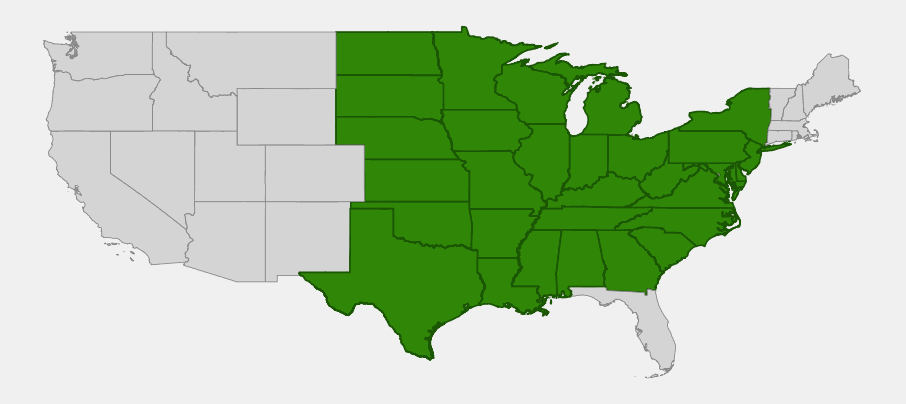
📋 Regional plant lists featuring Slippery Elm: North Dakota, South Dakota & Western Minnesota · Nebraska, Kansas & Eastern Colorado · Arkansas, Louisiana, Eastern Oklahoma & Eastern Texas · Illinois, Iowa & Missouri · Michigan, Wisconsin & Eastern Minnesota · Ohio & Indiana · Kentucky & Tennessee · Georgia, Alabama & Mississippi · North Carolina & South Carolina · Maryland, Virginia & West Virginia · New York, Pennsylvania & Northern New Jersey · Delaware, Southern New Jersey & Long Island, New York
Growing & Care Guide
Slippery Elm is an easygoing, fast-growing shade tree that tolerates far more neglect and poor soil than many ornamental trees, which is part of why it has persisted so widely across farms and fencerows.
Light
Slippery Elm grows best in full sun, where it develops the fullest, most symmetrical crown, but it tolerates part shade well, especially as a young tree establishing in the understory of a more open woodland.
Soil & Water
This tree is notably adaptable, growing in clay, loam, or rocky limestone-derived soils, and tolerating both acidic and distinctly alkaline conditions better than many native hardwoods. It prefers consistent moisture while establishing but handles short dry spells once mature. Avoid permanently waterlogged sites; it is more at home on upland ground than in standing water.
Planting Tips
Plant bare-root or container stock in fall or early spring. Give young trees a wide, open planting site — Slippery Elm’s broad mature crown needs 35 to 50 feet of room to spread without crowding structures or power lines. Stake young trees only if the site is windy, and remove stakes within a year or two.
Pruning & Maintenance
Prune in late winter to remove dead, crossing, or weakly attached branches, and to establish strong scaffold branching while the tree is young. Watch for wilting or yellowing of individual branches in summer, an early sign of Dutch elm disease; prompt removal of an infected limb, cutting well below any visible staining in the wood, can sometimes save the rest of the tree if caught early. Avoid pruning wounds during the growing season when elm bark beetles, which spread the disease, are most active.
Propagation
Slippery Elm is most commonly propagated from seed. The samaras ripen quickly in spring and lose viability fast, so they should be collected and sown, or stratified, soon after they fall. Seedlings grow quickly in their first few years. Cuttings are possible but less commonly used than seed propagation for this species.
Landscape Uses
Slippery Elm fits a range of practical landscape roles:
- Fast shade tree for large lots, farmsteads, and parks
- Windbreaks and hedgerows in rural and agricultural settings
- Reforestation and restoration plantings on upland sites
- Wildlife plantings, where its seeds and foliage support birds and mammals
- Tolerant street or farmyard tree for difficult, alkaline, or compacted soils
Wildlife & Ecological Value
Slippery Elm supports a wide range of wildlife across the seasons, from early-spring insects visiting its flowers to the squirrels and birds that rely on its seed crop.
For Pollinators
The small, wind-pollinated flowers open before most other plants are in bloom, offering an early pollen source for some native bees and flies active in late winter, even though the tree does not depend on insects for pollination.
For Birds
Northern bobwhite and various songbirds eat the samaras, and the tree’s broad, furrowed trunk provides nesting cavities for woodpeckers and other cavity-nesting birds, especially in older, partially decayed trees.
For Mammals
Squirrels and other small mammals feed heavily on the seed crop in spring, and white-tailed deer browse the foliage and young seedlings, sometimes heavily enough to limit regeneration in high-deer-density areas.
Ecosystem Role
As a fast-growing, early-successional hardwood, Slippery Elm readily colonizes old fields, fencerows, and forest gaps, helping stabilize soil and shade out more aggressive weeds while slower-growing hardwoods establish beneath it. Its early, abundant seed crop makes it an important spring food source in a season when little else is producing seed.
Cultural & Historical Uses
Slippery Elm has one of the best-documented histories of plant use among the native hardwoods of eastern North America. Indigenous peoples across its range, including Cherokee, Iroquois, and many other nations, historically stripped and dried the mucilaginous inner bark, which becomes soft and slippery when powdered and mixed with water. Early settlers adopted this practice as well, and dried, powdered Slippery Elm bark became a well-known household remedy throughout the nineteenth century, carried by physicians and sold in general stores across the frontier.
This history is worth understanding as history rather than as a recommendation — the bark trade was significant enough that it affected wild elm populations in some areas, and the inner bark continues to be harvested commercially today for use in herbal lozenges and supplements. Modern readers interested in Slippery Elm’s traditional uses should talk to a qualified health professional rather than treat old herbal lore as medical guidance.
Beyond bark, the wood of Slippery Elm has been used for furniture, fence posts, and boxes, valued for being tough and resistant to splitting, though it is less commercially important as lumber than oak or hickory. The tree’s dense, interlocked wood grain, the same trait that made it hard to split for firewood, also made it historically useful for wheel hubs and other parts that needed to resist cracking under stress.
Frequently Asked Questions
Is Slippery Elm the same as American Elm?
No. They are closely related and often grow together, but Slippery Elm has rougher, sandpapery leaf surfaces, hairier twigs and buds, and a reddish, mucilaginous inner bark, while American Elm has smoother leaves and a more classic vase-shaped crown.
Will Slippery Elm get Dutch elm disease?
It can. Slippery Elm is generally somewhat less susceptible than American Elm, but it is not resistant, and healthy trees can still be infected and killed by the disease. Watch for sudden wilting or yellowing of individual branches in summer and prune out infected wood promptly.
Is the inner bark safe to use at home?
This page describes the historical use of the inner bark as background, not as health advice. Anyone considering using Slippery Elm bark products today should consult a qualified health professional rather than rely on traditional lore alone.
How fast does Slippery Elm grow?
It grows at a medium to fast rate, often adding 2 feet or more per year while young, especially on fertile, well-drained soil in full sun.
Does Slippery Elm need a lot of care once established?
Not much. It is one of the more tolerant native shade trees, handling poor, compacted, or alkaline soils well. The main ongoing task is watching for and pruning out any Dutch elm disease symptoms promptly.