
Arctic Brome (Bromus kalmii)
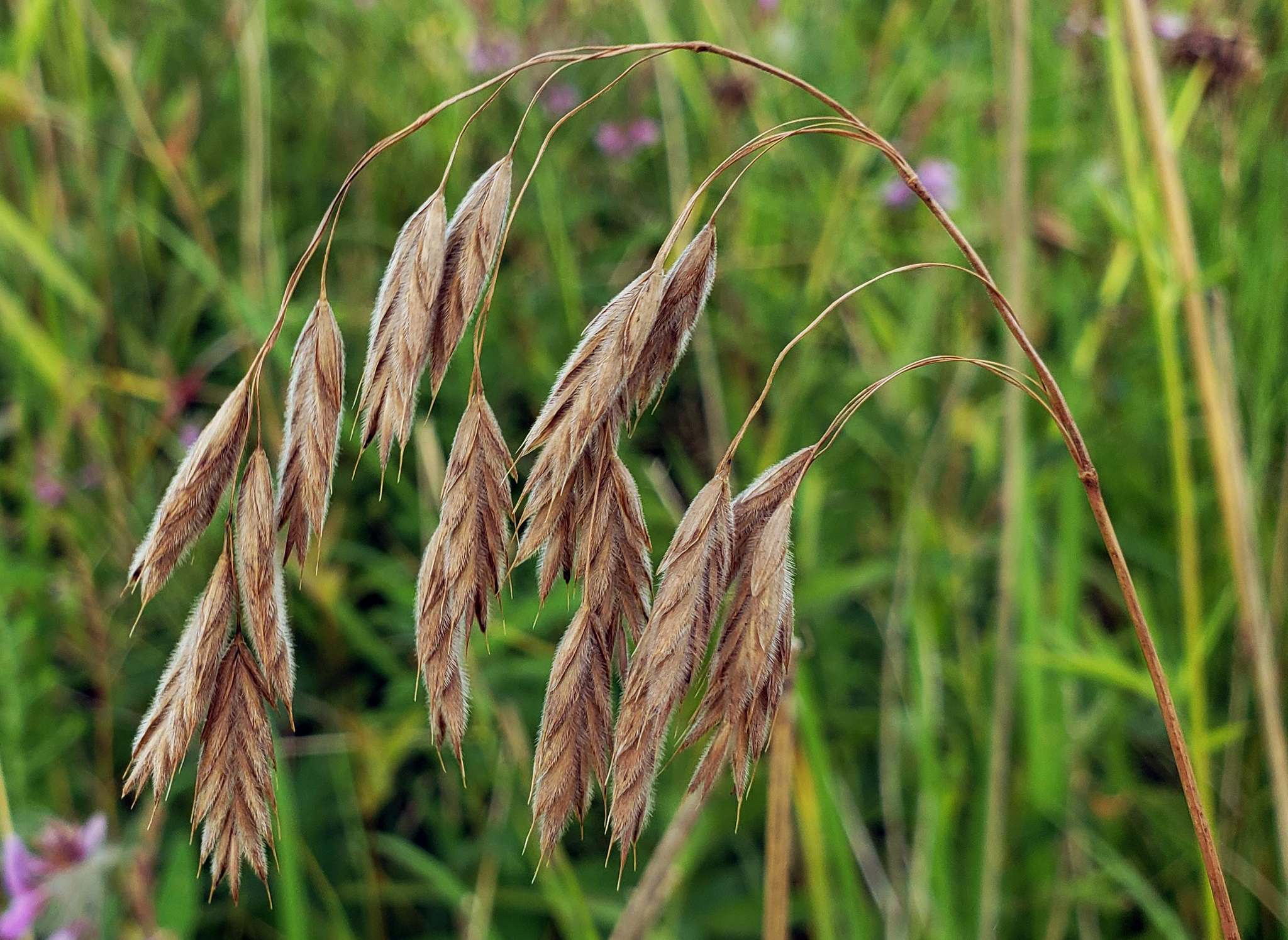
Bromus kalmii, commonly called Arctic Brome or Kalm’s Brome (for the Swedish-Finnish naturalist Pehr Kalm, who collected it in the 1700s), is a modest but distinctive native bunchgrass of prairies, open woods, and calcareous meadows across the north-central and northeastern United States and the Great Lakes region. Despite the common name, it has nothing to do with the Arctic — the name is an older, somewhat misleading English rendering tied to its taxonomic history, and many botanical sources now prefer “Kalm’s Brome” for clarity.
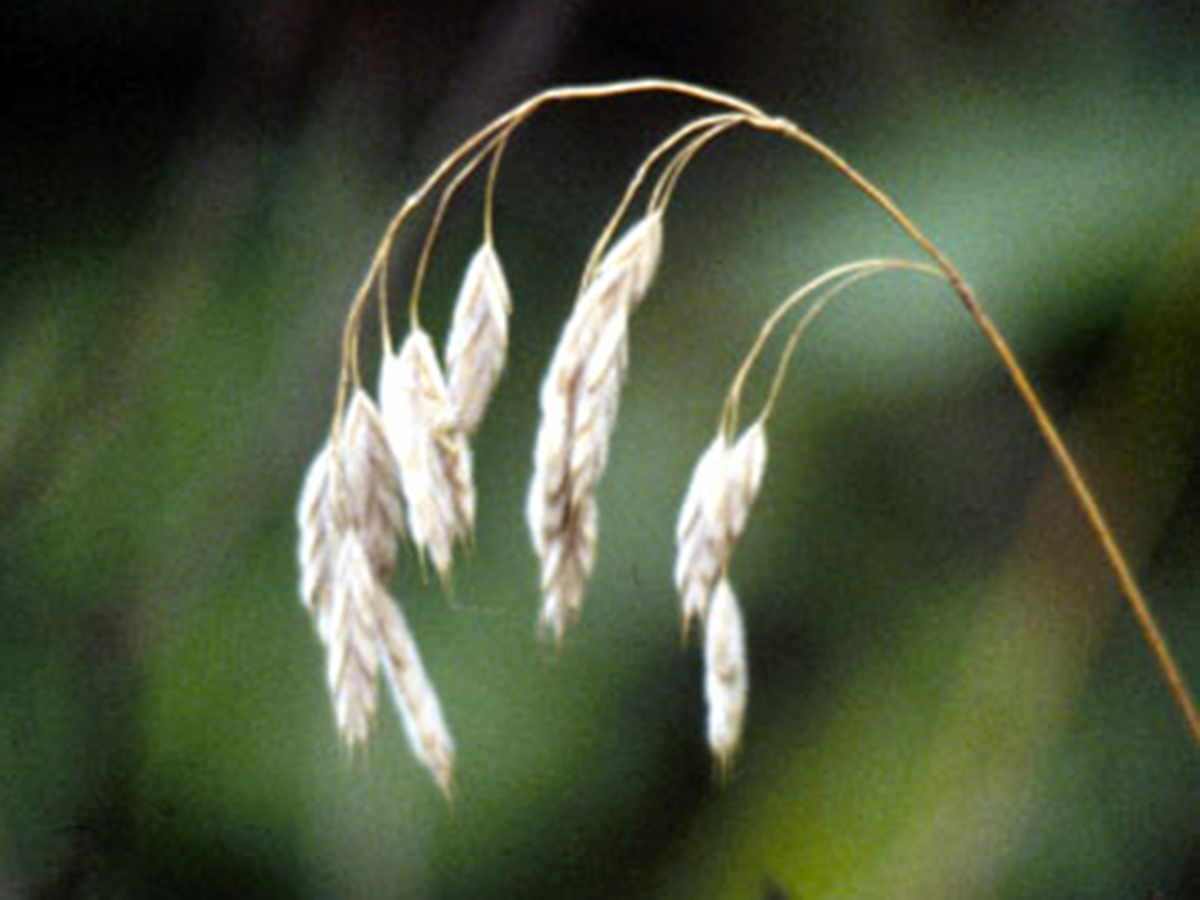
What sets Arctic Brome apart from the many other native and introduced bromes sharing its range is its narrow, crowded, few-branched panicle and its densely silky-hairy spikelets, which hang in a loose, slightly one-sided cluster from slender, arching branchlets. The effect, especially backlit in late-summer sun, is delicate and almost feathery — a quiet standout in a prairie or meadow planting once you know to look for it.
This is a plant of calcareous ground: dry prairies, limestone glades, fens, and open woodland edges where the soil chemistry favors a particular community of lime-loving plants. It is increasingly uncommon in parts of its range as those habitats have been lost to development and agriculture, making it a worthwhile addition to native prairie restorations and conservation plantings on appropriate soils.
Identification
Arctic Brome is a perennial bunchgrass with solitary or loosely tufted culms (stems) growing 1.3 to 4 feet tall, finely hairy just below the nodes. It has a relatively narrow, upright form compared to showier prairie grasses, blending easily into mixed-grass stands until the seed heads emerge.
Leaves
Each plant typically bears three to five, occasionally six, leaf blades that are firm, somewhat rough-textured (scabrous), and either hairy or smooth, 3 to 7 inches long and up to ⅜ inch wide. The sheaths are mostly shorter than the stem internodes and each has a characteristic V-shaped cleft at the top. The ligule — the small membranous flap where blade meets sheath — is short, about 1/50 inch.
Flowers & Seed Heads
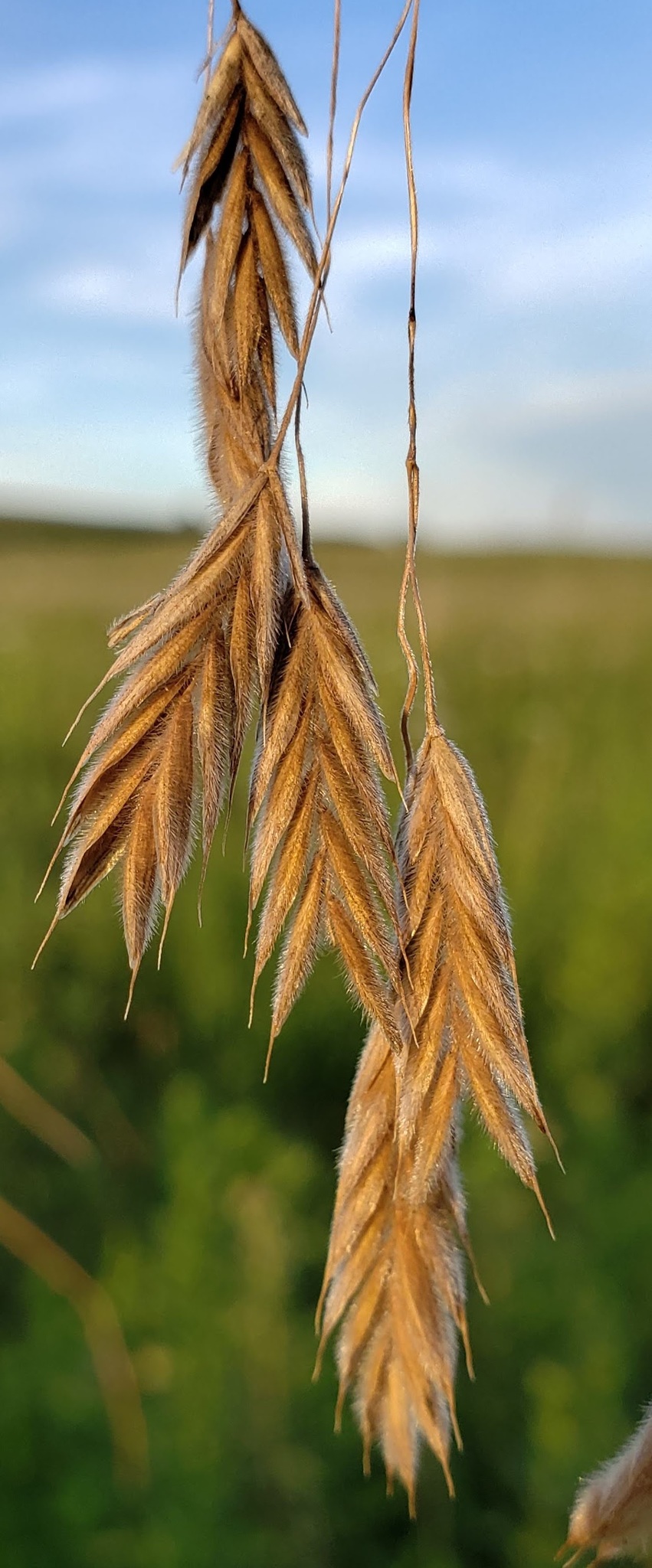
The inflorescence is a narrow, crowded panicle 2 to 6 inches long, with slender lower branches bearing just one or two spikelets each, giving the whole head an airy, uncrowded look despite its narrow profile. Spikelets are five- to eleven-flowered, 0.55 to just over 1 inch long, with glumes bearing short, closely pressed hairs — the lower glume three-nerved, the upper five-nerved. The lemmas are densely hairy across their whole surface, a key field mark distinguishing this species from smoother-glumed bromes, and taper to short, straight awns about 1/16 inch long. Flowering runs from July through August.
Fruit & Seeds
The grain matures inside the persistent, hairy spikelets through late summer and into fall. Seed set is typically modest compared to more weedy brome relatives, consistent with its character as a conservative, slow-to-spread native of stable, high-quality habitat.
Quick Facts
| Scientific Name | Bromus kalmii (syn. Bromopsis kalmii) |
| Family | Poaceae (Grass) |
| Plant Type | Perennial Bunchgrass |
| Mature Height | 1.3–4 ft (in flower) |
| Mature Spread | 1–1.5 ft clump |
| Growth Rate | Slow to Moderate |
| Sun Exposure | Full Sun to Part Shade |
| Water Needs | Low to Moderate |
| Soil Type | Sandy, rocky or loamy; calcareous preferred |
| Soil pH | 7.0–8.0 (neutral to alkaline) |
| Bloom Time | July – August |
| Flower Color | Green, drying to buff-tan |
| Fall Color | Straw-tan |
| Fruit | Awned grain in hairy, five- to eleven-flowered spikelets |
| Deer Resistant | Somewhat (grazed occasionally, not preferred) |
| USDA Hardiness Zones | 3–7 |
Native Range
Arctic Brome is native to the north-central and northeastern United States and the Great Lakes region, from the Dakotas east through the upper Midwest to New England, and south through the Ohio Valley and Mid-Atlantic uplands, with a range that continues into eastern Canada. Within this broad area it is patchy rather than continuous, closely tracking the calcareous soils it prefers.
It typically grows in dry to moist open areas and thickets, especially on calcareous substrates: dry prairies, limestone glades and bluffs, calcareous fens, sedge meadows, open woods, sand dunes, and jack pine or oak savanna. This narrow habitat preference, more than any broad climate limitation, shapes where the species turns up across its range.
Because quality calcareous prairie and fen habitat has declined sharply with agricultural conversion and development, Arctic Brome is uncommon to locally rare in parts of its range, and gardeners in the Midwest and Northeast should check their state’s rare-plant status before collecting wild seed.
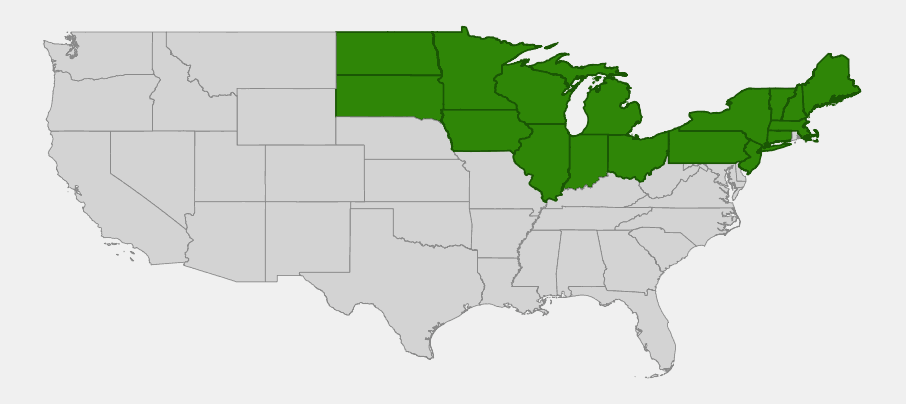
📋 Regional plant lists featuring Arctic Brome: North Dakota, South Dakota & Western Minnesota · Michigan, Wisconsin & Eastern Minnesota · Illinois, Iowa & Missouri · Ohio & Indiana · New York, Pennsylvania & Northern New Jersey · New Hampshire, Maine & Vermont · Connecticut & Massachusetts
Growing & Care Guide
Arctic Brome is not a common nursery item, but where seed or plugs are available, it rewards gardeners working on calcareous soils with a graceful, well-behaved addition to a prairie or meadow planting.
Light
Grows best in full sun to light part shade, matching its native habitat along prairie and open-woodland edges. More shade generally means fewer flowering stems and a looser, less vigorous clump.
Soil & Water
This species wants neutral to alkaline, calcium-rich soil — sandy, rocky, or loamy ground over limestone is ideal. It tolerates both dry prairie conditions and the seasonally moist soils of calcareous fens, but it is not well suited to acidic soils, where it tends to struggle or fail outright. Established plants need little supplemental water beyond normal rainfall.
Planting Tips
Establish from seed sown in fall, allowing natural cold stratification over winter, or from nursery plugs set out in spring or fall. Test soil pH before planting if you’re unsure whether your site is calcareous enough; amending with ground limestone can help on marginal sites. Space plugs about 12 to 18 inches apart in a prairie planting.
Pruning & Maintenance
Minimal maintenance is needed. In a managed prairie planting, periodic dormant-season mowing or prescribed fire every few years (where permitted and safe) helps control woody encroachment and benefits this and other conservative prairie grasses. In a garden setting, simply cut back dead growth in late winter.
Landscape Uses
Arctic Brome fits best in specialized, soil-matched plantings:
- Calcareous prairie restorations and native seed mixes
- Limestone rock gardens and alkaline-soil plantings
- Fen and wet-meadow restoration on appropriate calcareous sites
- Conservation plantings aimed at supporting regionally uncommon native grasses
- Mixed-grass meadow plantings alongside little bluestem and prairie dropseed
Wildlife & Ecological Value
As a conservative native grass of high-quality prairie and fen habitat, Arctic Brome supports the broader web of prairie wildlife even though it is not a dominant or showy species on its own.
For Birds
Seed-eating grassland birds forage on the grain produced by mature spikelets, and the bunchgrass form offers some nesting cover and concealment in prairie and meadow plantings, particularly where it grows among taller associated grasses.
For Mammals
The foliage is grazed occasionally by deer and other herbivores but is not a preferred forage species, which helps it persist in prairie remnants under moderate grazing or browsing pressure.
For Pollinators
Like other grasses, Arctic Brome is wind-pollinated and offers no nectar, but its presence as part of a diverse native prairie or fen community supports the overall habitat structure that pollinators and other insects depend on.
Ecosystem Role
Because it is closely tied to calcareous prairie and fen habitats that have become increasingly rare, Arctic Brome serves as something of an indicator species — its presence often signals a relatively intact, high-quality remnant plant community worth conserving. Its root system contributes to soil stability on the dry, thin soils typical of limestone glades and prairie knolls.
Cultural & Historical Uses
Arctic Brome carries the name of Pehr Kalm, the Swedish-Finnish naturalist and student of Linnaeus who traveled through eastern North America in the 1740s collecting plants and documenting natural history; the species was later described and named in his honor. Unlike many prairie grasses with long histories of use by Indigenous peoples as forage, thatching, or food, there is no significant documented record of a distinct traditional use specific to this species, likely owing to its relatively low abundance compared to dominant tallgrass prairie species like big bluestem or Indian grass.
In more recent history, Arctic Brome has drawn attention primarily from botanists and conservationists tracking the decline of calcareous prairie and fen habitat across the Midwest and Northeast, where it now serves as a quiet marker of ecological quality rather than a plant with any commercial or utilitarian legacy.
Today, its main significance is to native-plant gardeners and prairie restorationists seeking to rebuild the full diversity of grassland species on appropriate calcareous soils, rather than relying only on the handful of dominant grasses typically available in commercial seed mixes.
Frequently Asked Questions
Is Arctic Brome actually from the Arctic?
No. Despite the common name, Arctic Brome is native to the north-central and northeastern United States and the Great Lakes region, nowhere near the Arctic. The name is a long-standing but misleading English common name; many botanical references now prefer “Kalm’s Brome,” after the naturalist Pehr Kalm.
Why won’t Arctic Brome grow in my garden?
The most common reason is soil chemistry. This species strongly prefers neutral to alkaline, calcium-rich soils and tends to struggle or fail in acidic ground. If your soil is acidic, amending with ground limestone or choosing a different native grass better suited to your soil is usually more successful than trying to force this species to thrive.
Is Arctic Brome invasive?
No. It is a native species, and in much of its range it is uncommon to locally rare rather than aggressive. It is not listed as invasive or weedy anywhere.
How can I tell Arctic Brome apart from other native bromes?
The combination of a narrow, crowded, few-branched panicle with densely silky-hairy spikelets and lemmas, plus its strong association with calcareous soils, helps distinguish it from most other native Bromus species in its range, several of which have smoother or less uniformly hairy spikelets.
Is Arctic Brome rare or protected?
Its status varies by state; it is considered uncommon to rare in several parts of its range due to habitat loss. Gardeners should check their state natural heritage program’s rare-plant list and avoid wild collection where it is protected, sourcing nursery-propagated seed or plants instead.

Looking for a nursery that carries Arctic Brome?
Browse our native plant nursery directory: Connecticut · Illinois, Indiana & Iowa · Maine, Massachusetts, Michigan & Minnesota · New Hampshire, New Jersey, New York, North Dakota & Ohio · Pennsylvania, South Dakota & Vermont · Wisconsin