
Spurred Butterfly Pea (Centrosema virginianum)
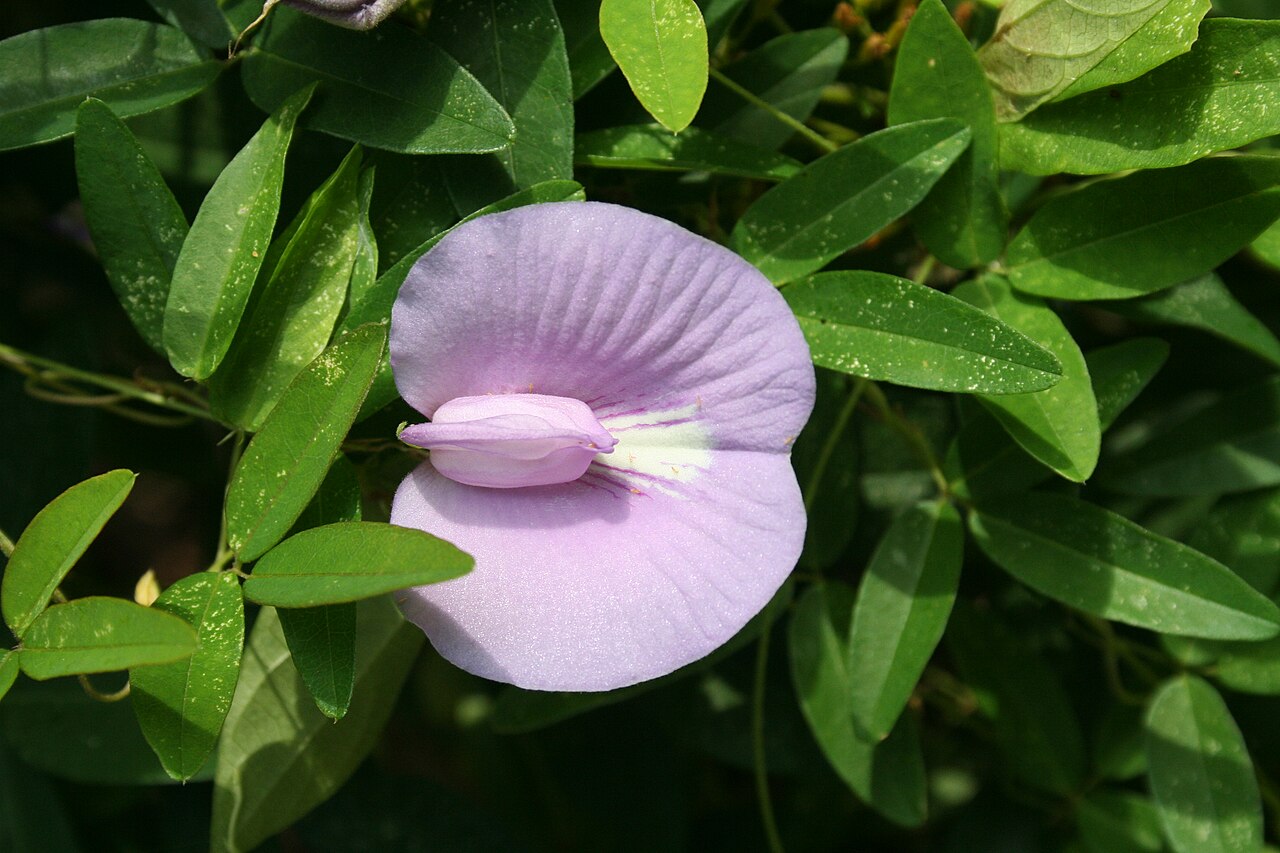
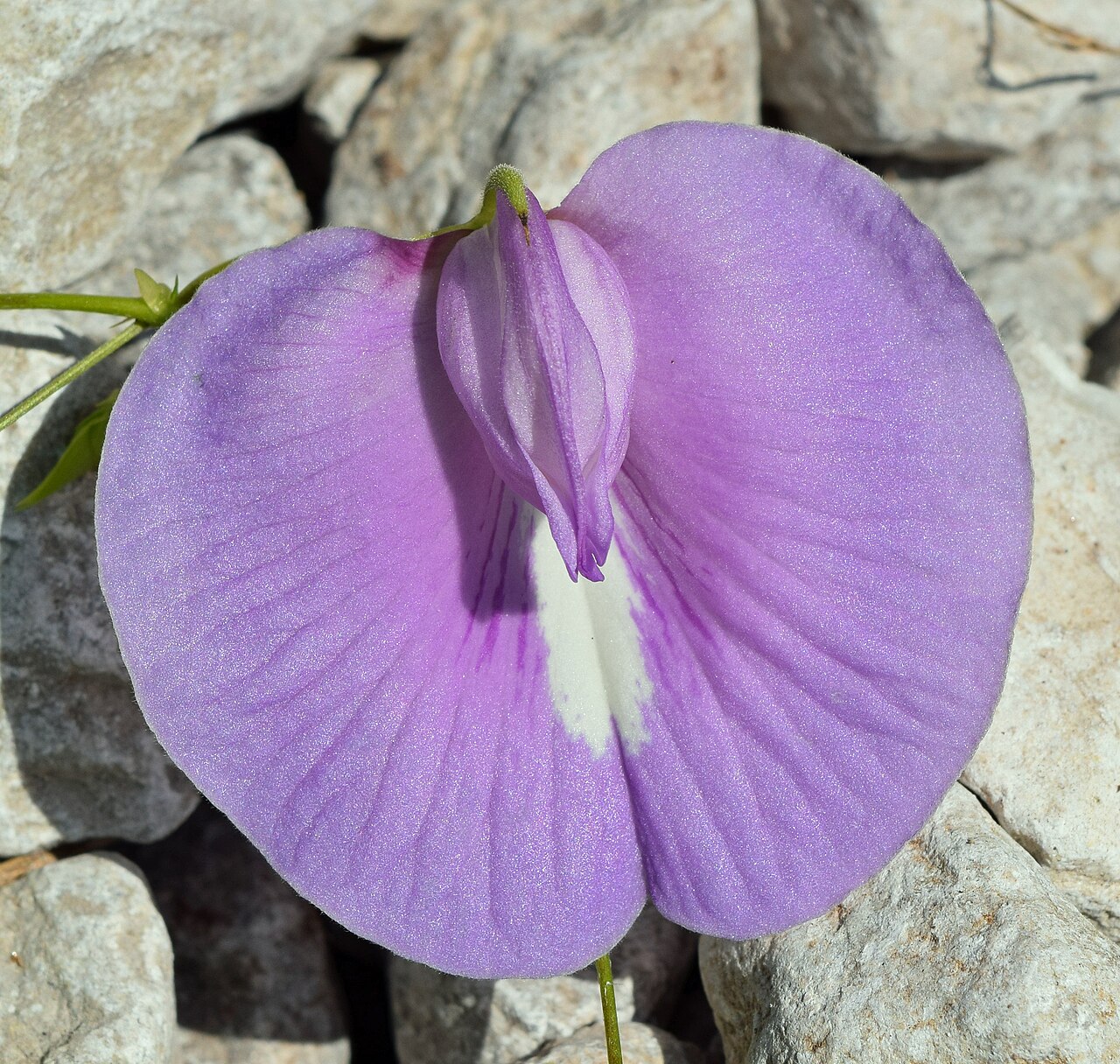
Centrosema virginianum, commonly called Spurred Butterfly Pea, is a slender, twining perennial vine native to sunny pinelands, coastal uplands, and open woodland edges across the southeastern United States. A member of the bean family (Fabaceae), it is instantly recognizable in bloom: each flower is a broad, upside-down lavender-to-pale-violet “banner” petal nearly two inches across, with a small hooked keel petal tucked underneath like a tiny beak. That resupinate (upside-down) flower structure is unusual among native legumes and is the plant’s most distinctive identification feature.
Spurred butterfly pea grows as a low, sprawling or climbing vine, rarely more than a couple of feet off the ground unless it finds something to lean on — a fence, a shrub, a clump of broomsedge. It spreads both by seed and by shallow rhizomes, so an established patch tends to form a loose, trailing groundcover rather than a single climbing stem. Because it fixes atmospheric nitrogen through root nodules, it quietly enriches the sandy, nutrient-poor soils of the pine savannas and coastal scrub where it is most common.
For gardeners in the Southeast, this vine is an easy, low-maintenance way to add months of lavender-blue color to a sunny native planting. It thrives on neglect, tolerates poor dry soils, comes back reliably from its rootstock, and feeds a long list of native bees and other pollinators through the warm season. It is an outstanding, underused choice for fence lines, split-rail trellises, and naturalistic meadow plantings in its native range.
Identification
Spurred butterfly pea is a herbaceous, twining-to-trailing perennial vine that dies back to a woody rootstock in winter across most of its range and resprouts each spring. Stems are thin, wiry, and slightly hairy, typically reaching one to two meters in length when supported, though plants without something to climb simply sprawl along the ground.
Leaves
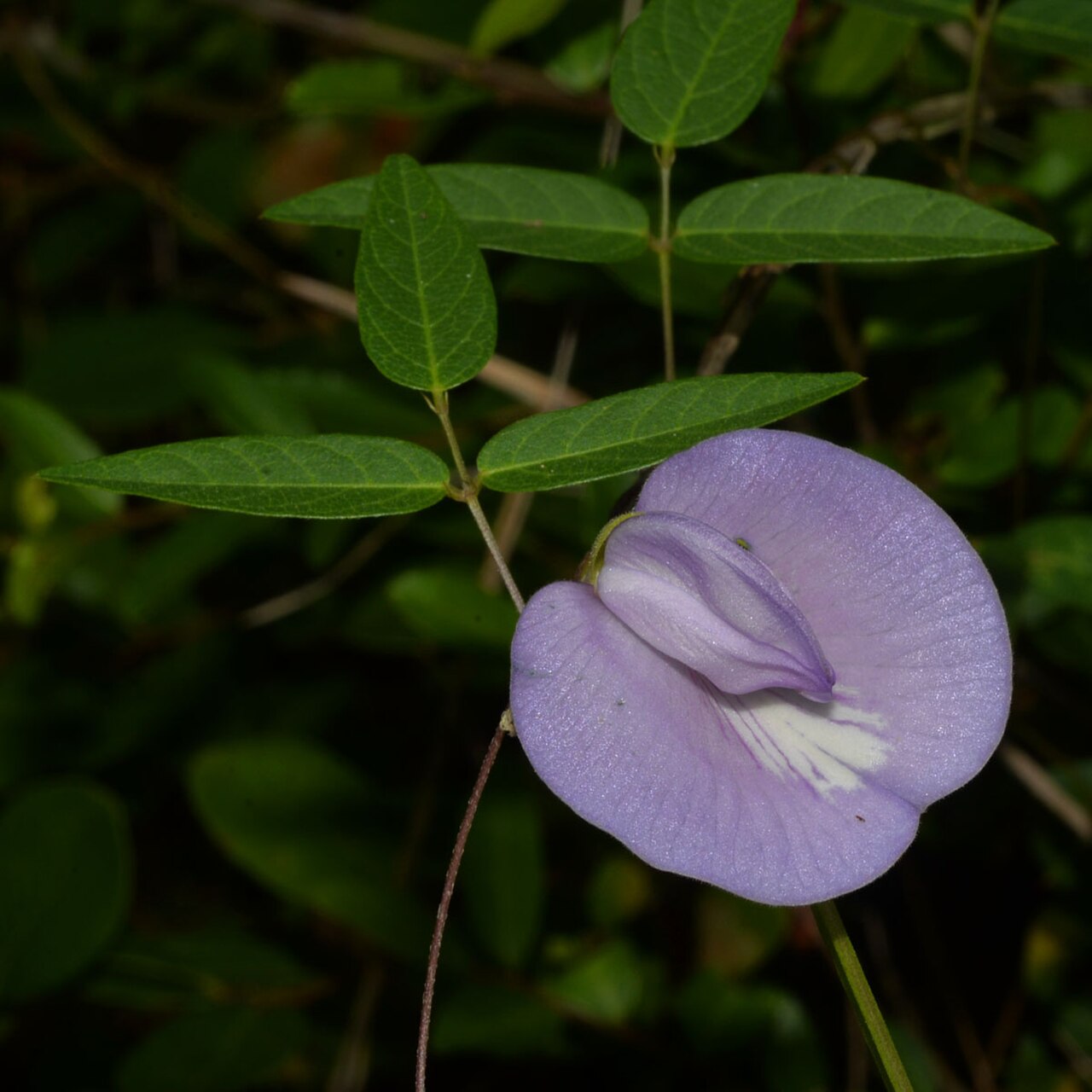
Leaves are alternate and pinnately divided into three leaflets, a trifoliate pattern shared with many legumes. Individual leaflets are variable in shape — lanceolate to narrowly oval — one to four inches long, with a pointed or rounded tip and a short leaf stalk. The leaflets are a glossy medium green above and slightly paler below, and the small, thread-like stipules at the base of each leaf often drop early.
Flowers
Flowers are borne singly or in small clusters of up to four on a short stalk arising from the leaf axils, opening from late spring through fall across most of the range and nearly year-round in Florida. The corolla is the showiest part of the plant: a large, rounded banner petal in shades of lavender, pale violet, or occasionally near-white, marked with fine purple veins radiating from a pale throat. Unlike most pea-family flowers, the banner faces downward and the keel petal — housing the reproductive parts — points upward, an adaptation that forces visiting bees to trip the flower’s pollination mechanism from below.
Fruit & Seeds
After pollination, flowers give way to slender, flattened seedpods two to four inches long that split open at maturity to release four to ten small, dark brown seeds. The seed coat is hard and can keep seeds viable in the soil for a year or more, which helps the species persist through periodic fire and drought.
Quick Facts
| Scientific Name | Centrosema virginianum |
| Family | Fabaceae (Legume/Pea) |
| Plant Type | Herbaceous twining/trailing perennial vine |
| Mature Height | Trailing or climbing to 3–6 ft |
| Mature Spread | Spreads by seed and shallow rhizomes |
| Growth Rate | Moderate to fast in a growing season |
| Sun Exposure | Full sun to part shade |
| Water Needs | Low to average; drought tolerant once established |
| Soil Type | Sandy, well-drained; tolerates poor, dry soils |
| Soil pH | Acidic to neutral |
| Bloom Time | Late spring through fall (nearly year-round in Florida) |
| Flower Color | Lavender to pale violet with purple veining |
| Fall Color | None notable; foliage dies back after frost |
| Fruit | Slender flattened seedpods, 2–4 in |
| Deer Resistant | No; foliage is browsed by deer and other wildlife |
| USDA Hardiness Zones | 8–11 |
Native Range
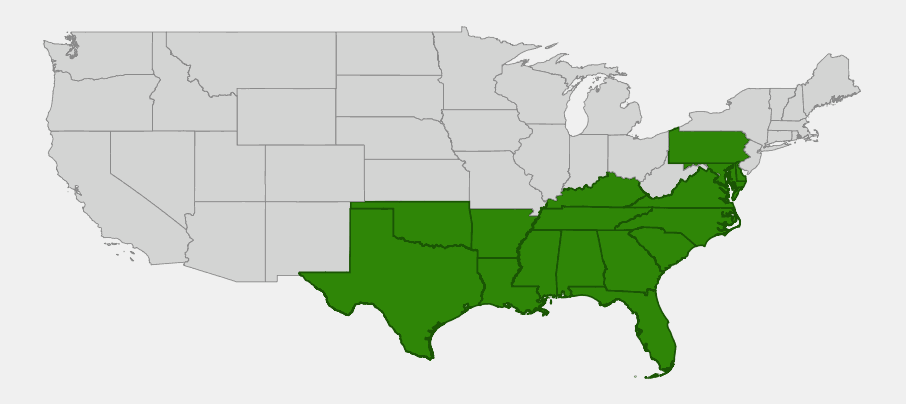
Spurred butterfly pea is native to the Coastal Plain and lower Piedmont of the southeastern United States, from Delaware and Maryland south through the Carolinas, Georgia, and Florida, and west along the Gulf Coast through Alabama, Mississippi, Louisiana, Arkansas, eastern Oklahoma, and eastern Texas. Scattered native populations also occur inland in Kentucky, Tennessee, and parts of Pennsylvania. The species continues south through Mexico, Central America, and the Caribbean into South America, making it far more widespread in the tropics than in the United States.
Within this range it favors open, sunny habitats on well-drained sandy soils: longleaf pine savannas and flatwoods, sandhill scrub, coastal dunes and maritime hammocks, roadsides, and the edges of dry upland woods. It is especially characteristic of fire-maintained pine-wiregrass ecosystems, where periodic burning keeps the canopy open and favors the sun-loving groundcover plants, including this one, that make up the diverse herb layer.
Spurred butterfly pea is adapted to fire. Established plants resprout vigorously from their perennial rootstock after a burn, and seasonal prescribed burning does not measurably reduce the plant’s nitrogen-fixing activity. In the absence of fire or other disturbance that keeps competing vegetation low, populations tend to decline as shrubs and canopy trees shade out the open understory this species needs.
📋 Regional plant lists featuring Spurred Butterfly Pea: Georgia, Alabama & Mississippi · Arkansas, Louisiana, Eastern Oklahoma & Eastern Texas · North Carolina & South Carolina · Delaware, Southern New Jersey & Long Island · Maryland, Virginia & West Virginia · Kentucky & Tennessee · New York, Pennsylvania & Northern New Jersey
Growing & Care Guide
Spurred butterfly pea is about as low-maintenance as native vines get, provided it has the sunny, well-drained spot it asks for. It is not a plant for rich garden beds or regular irrigation — give it poor soil and plenty of sun and it rewards you with a long bloom season and almost no upkeep.
Light
Full sun produces the most flowers and the densest growth. The vine tolerates light shade, especially in the hottest part of its range, but blooms more sparsely and stretches toward available light when shaded for much of the day.
Soil & Water
This species is built for sandy, nutrient-poor, well-drained soils and actually performs worse in rich, moisture-retentive garden soil, where it can become leggy and more prone to fungal problems. Once established, it needs little supplemental water and handles the dry spells typical of sandhill and coastal habitats without trouble. Good drainage matters more than soil fertility — avoid heavy clay or any spot that stays wet.
Planting Tips
Set out container plants in spring after the last frost, spacing them about 18 to 24 inches apart if you want a filled-in patch within a season or two. Because the hard-coated seeds germinate slowly and unevenly, nursery-grown plants or pre-scarified seed will establish faster than seed sown directly. Give the vine something low to scramble over — split-rail fencing, a wire trellis, or simply other sturdy perennials — or let it trail as a groundcover.
Pruning & Maintenance
Little pruning is needed. Cut the vine back to the base after the foliage is killed by frost in winter; it will resprout from the rootstock in spring. In frost-free parts of Florida, where the plant may stay semi-evergreen, an occasional trim keeps it tidy and encourages fresh flowering growth.
Propagation
Propagate from seed collected once the pods begin to split, or by division of the rhizomatous rootstock in spring. Scarifying the hard seed coat (nicking it or soaking it in warm water overnight) speeds up and improves germination considerably compared with untreated seed.
Landscape Uses
Spurred butterfly pea fits naturally into several native garden styles:
- Sunny meadow or wildflower plantings, where it weaves through grasses and other low perennials
- Fence lines and split-rail trellises that give the twining stems something to climb
- Sandy, dry gardens where many other flowering perennials struggle
- Pollinator gardens that benefit from its long bloom season
- Restoration plantings in longleaf pine and sandhill habitats
- Erosion control on dry, sandy slopes and road cuts
Wildlife & Ecological Value
As a native legume in fire-maintained pine ecosystems, spurred butterfly pea punches well above its weight ecologically, feeding pollinators, enriching soil, and supporting the broader food web of the longleaf pine understory.
For Pollinators
The flower’s resupinate structure is specifically adapted for large bees, which must land on and “trip” the keel petal to access pollen and nectar — a mechanism that effectively filters out smaller, less effective pollinators. Large native bees, including bumblebees and carpenter bees, are the primary visitors and most efficient pollinators. The plant blooms over a long season, providing a dependable nectar and pollen source through much of the warm months.
For Birds
Seeds and foliage are eaten opportunistically by ground-feeding birds of open pine woodlands, and the tangled, low growth habit offers cover for birds foraging near the ground.
For Mammals
The high protein and mineral content typical of legume foliage makes this vine attractive browse for white-tailed deer and other herbivores, which is part of why it is not considered deer resistant.
Ecosystem Role
Like other native legumes of the longleaf pine-wiregrass ecosystem, spurred butterfly pea fixes atmospheric nitrogen through root nodules, helping to enrich the notoriously poor, sandy soils typical of pine savannas and sandhills. It thrives under a regular fire regime and recovers quickly from seasonal prescribed burns, making it a useful indicator of healthy, frequently burned pine understory. Its hard seeds can persist in the soil seed bank for a year or more, allowing the species to reappear after disturbance even where adult plants have been temporarily absent.
Cultural & Historical Uses
Spurred butterfly pea has not been a major food, fiber, or medicinal plant historically, and it carries no significant recorded uses in Indigenous or early American ethnobotany comparable to those of larger native legumes. Its primary historical significance lies in its ecological role within longleaf pine savannas, an ecosystem that itself has deep cultural ties to the naval stores (turpentine and tar) industry and later to prescribed-fire forestry traditions across the Southeast.
Botanically, the species has long attracted attention for its unusual flower structure. Early botanists noted the resupinate (upside-down) orientation of the blossom as a distinguishing trait of the genus Centrosema, and it remains a useful teaching example of how flower architecture in the pea family can evolve to favor specific pollinators.
In recent decades, interest in spurred butterfly pea has grown mainly among native plant gardeners and land managers restoring longleaf pine habitat, who value it as an easy, resilient groundcover that signals a healthy, open, fire-adapted understory.
Frequently Asked Questions
Is spurred butterfly pea the same as the tropical butterfly pea used for blue tea?
No. The plant used for butterfly pea flower tea is Clitoria ternatea, a related but different vine in the same pea family. Spurred butterfly pea (Centrosema virginianum) is a separate, North American native species and is not grown or harvested for tea.
Will spurred butterfly pea climb a trellis?
Yes, given something to grab onto, the twining stems will climb a few feet up a trellis, fence, or shrub. Without support, it simply trails along the ground as a loose groundcover.
Does this vine need fire to survive in the garden?
No. Fire helps maintain its wild pine-savanna habitat by keeping competing shrubs from shading it out, but in a garden setting, regular sun exposure and occasional cutting back of encroaching vegetation accomplish the same thing.
Is spurred butterfly pea aggressive or invasive?
Within its native range it is a well-behaved, slow-spreading perennial, not an aggressive spreader. It is native only to the described U.S. range and should not be planted as a substitute in regions where it does not naturally occur.
How do I get spurred butterfly pea to flower more?
Give it full sun and lean, well-drained soil. Overly rich soil, too much shade, or excess water tend to produce more leafy growth and fewer flowers.

Looking for a nursery that carries Spurred Butterfly Pea?
Browse our native plant nursery directory: Alabama & Arkansas · Delaware, Florida & Georgia · Kentucky, Louisiana, Maryland & Mississippi · North Carolina & Oklahoma · Pennsylvania, South Carolina, Tennessee, Texas & Virginia