
American Dittany (Cunila origanoides)
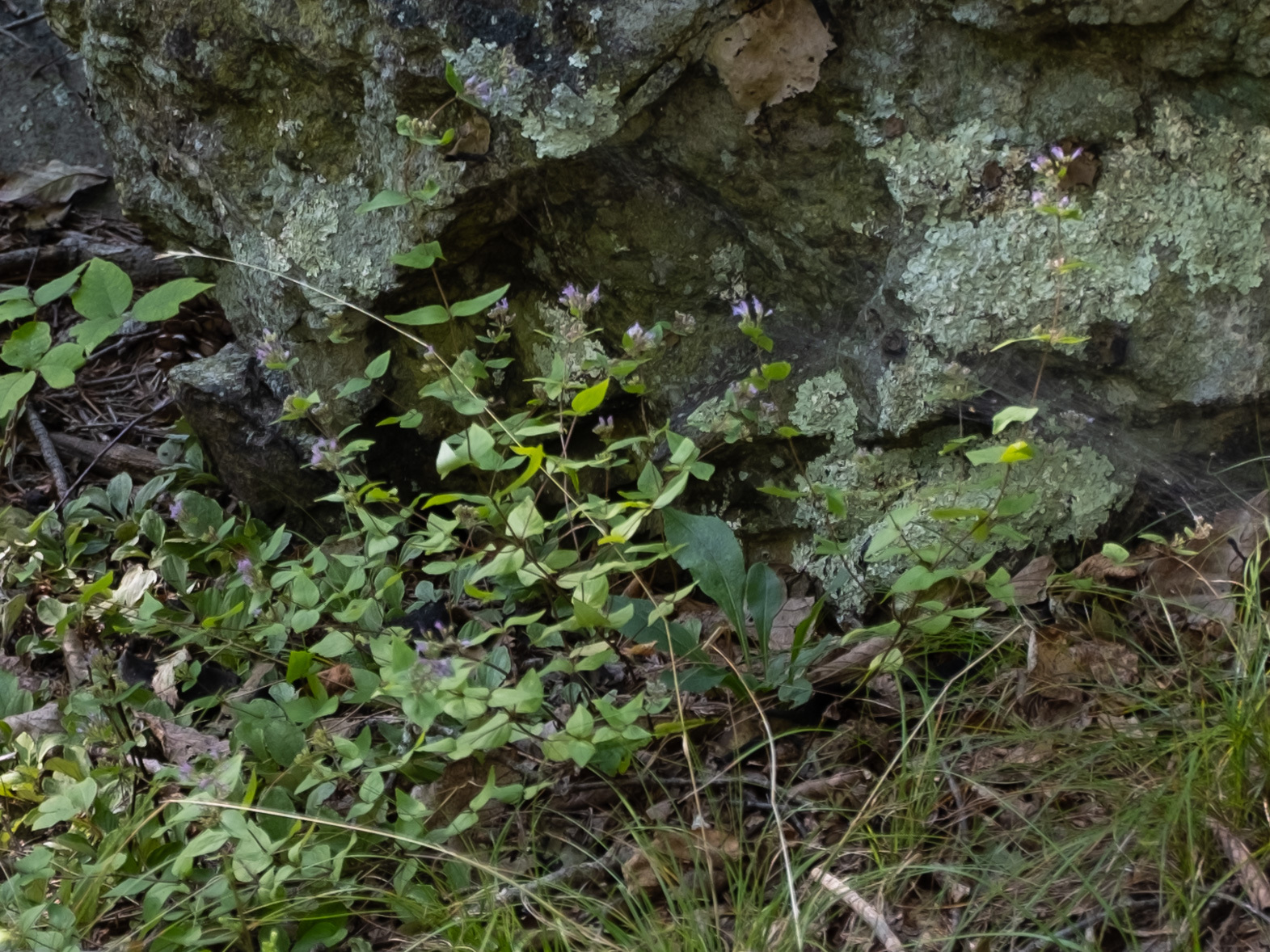
Cunila origanoides, commonly called American Dittany (also known as common dittany, stone mint, or wild oregano), is a small, aromatic native perennial of dry, rocky woodlands across the eastern and central United States. It is the only member of its genus native to North America, and it belongs to the mint family, Lamiaceae, sharing that family’s square stems and fragrant foliage. Crushed leaves release a strong, pleasant thyme-like scent, and the plant has a long history as a home remedy tea, giving rise to its folk name “dittany” after an unrelated but similarly aromatic Mediterranean herb.
American dittany is a low, wiry subshrub, usually 8 to 18 inches tall, with slender, branching, square stems that turn reddish-purple as the season progresses. Small, airy clusters of pale lavender to pink flowers appear in late summer and persist into fall, right when most woodland wildflowers have already finished blooming, making this an unusually late and welcome source of nectar for pollinators. In winter, established clumps of American dittany are also one of a small handful of native plants known to produce delicate “frost flowers” — ribbons of ice that extrude from the base of the stems on the season’s first hard freezes.
For gardeners with a dry, rocky, partly shaded spot where little else thrives, American dittany is an excellent, low-maintenance native groundcover-type perennial. It asks for almost nothing once established, tolerates the thin, infertile soils found around rock outcrops and open woodland, and rewards the gardener with a long season of fragrance, late-season color for pollinators, and a genuine winter spectacle on frosty mornings.
Identification
American dittany is best recognized by its small size, wiry reddish stems, strongly aromatic foliage, and sparse, airy clusters of small lavender flowers that bloom later in the year than almost any other woodland wildflower in its range.
Stems
Stems are slender, sharply four-angled (square in cross-section, typical of the mint family), stiff, and much-branched. They start out green to purplish in spring, deepening to a rich reddish-purple as the plant matures through summer, then turning brown and woody by fall. Mature plants form a loose, low mound 8 to 18 inches tall and about as wide, with ascending to sprawling stems.
Leaves
Leaves are opposite, stalkless or nearly so, and relatively small — about ¾ to 1½ inches long — in a lance-shaped to ovate outline with finely toothed, slightly fringed margins. They are a medium to dark green, dotted with tiny glandular pores visible on close inspection, and release a strong, pleasant thyme-like fragrance when crushed or brushed against.
Flowers & Fruit
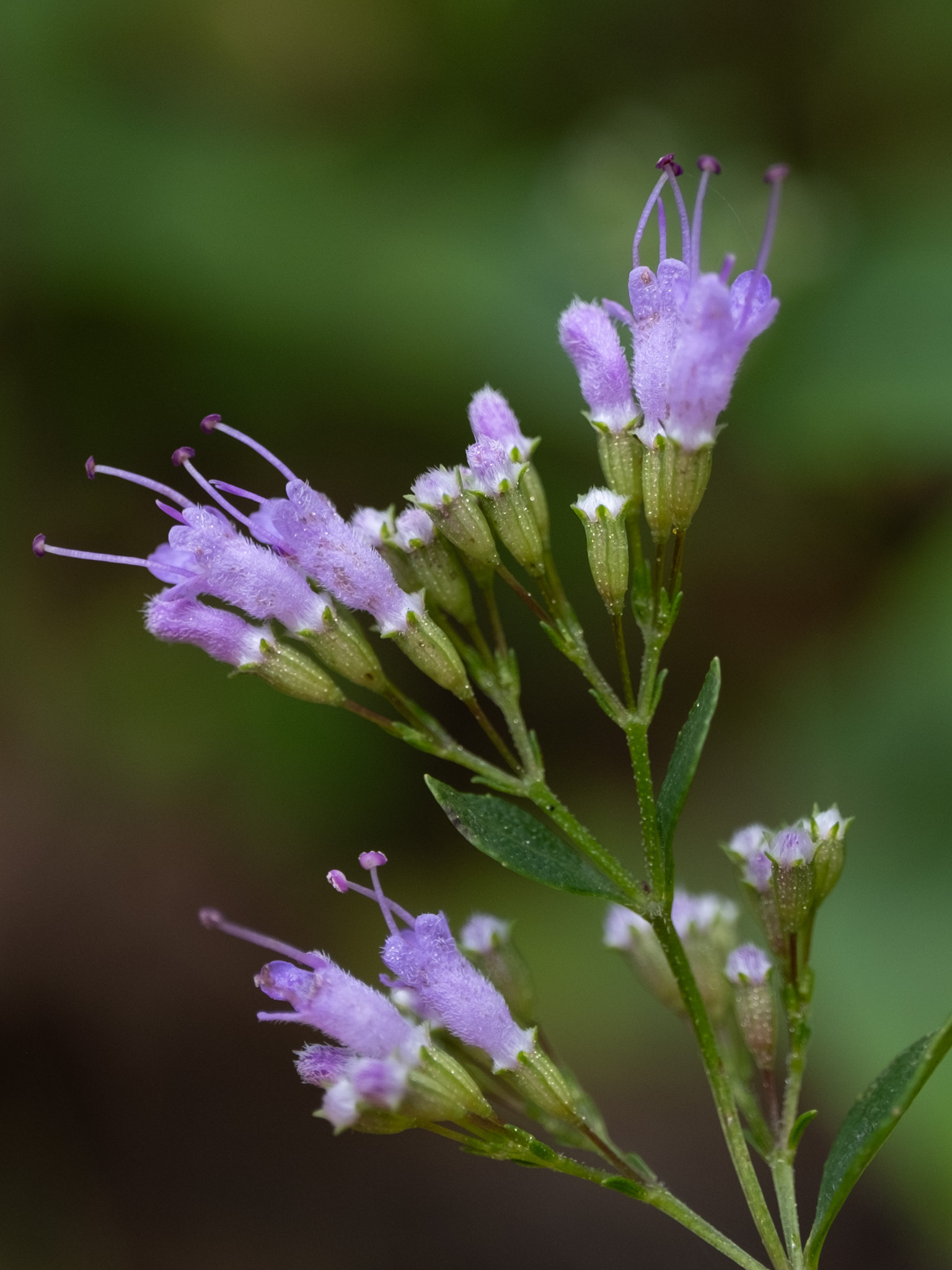
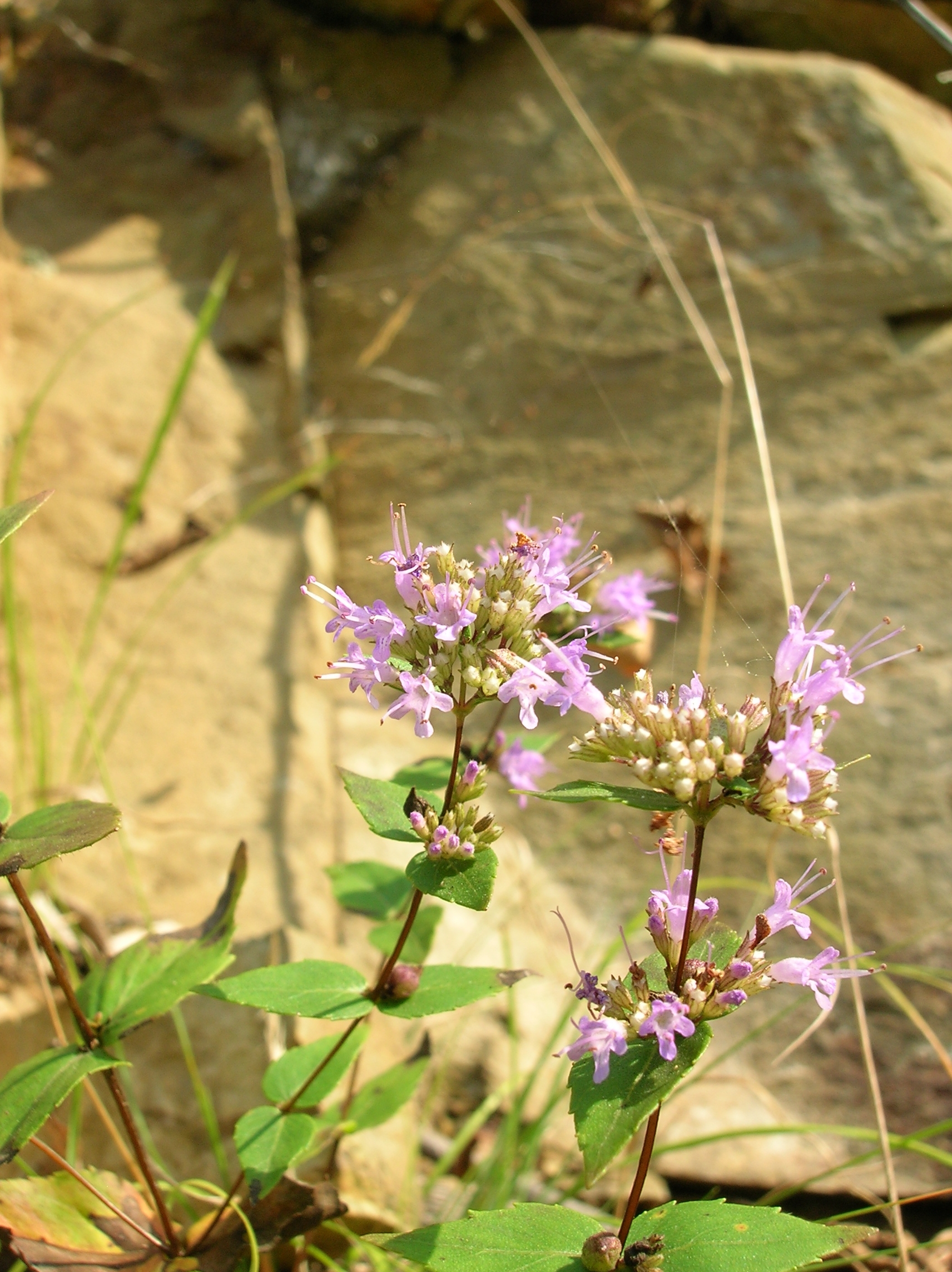
Small, loose clusters of flowers appear at the leaf axils and stem tips from late summer into mid-autumn. Each individual flower is tiny — about a quarter inch long — with a tubular, pale lavender to pink (rarely white) corolla, two conspicuously long stamens, and a style that both extend well beyond the petals, giving the flower clusters an airy, whiskery look. This late, prolonged bloom period is unusual among native woodland plants and makes American dittany valuable to fall pollinators, including migrating monarch butterflies. Flowers are followed by tiny dry nutlets, light enough to be dispersed by wind.
Quick Facts
| Scientific Name | Cunila origanoides |
| Family | Lamiaceae (Mint) |
| Plant Type | Herbaceous perennial / low subshrub |
| Mature Height | 8–18 in |
| Mature Spread | 8–18 in, forming a low mound |
| Growth Rate | Slow to moderate |
| Sun Exposure | Full sun to part shade |
| Water Needs | Low; drought tolerant once established |
| Soil Type | Thin, rocky, well-drained soil; tolerates poor fertility |
| Soil pH | Acidic to neutral (also found on circumneutral/calcareous rock) |
| Bloom Time | Late July – October |
| Flower Color | Pale lavender to pink (rarely white) |
| Fall Color | Stems deepen to reddish-purple; foliage browns after frost |
| Fruit | Tiny dry nutlets |
| Deer Resistant | Yes (aromatic foliage is avoided by deer and groundhogs) |
| USDA Hardiness Zones | 5–9 |
Native Range
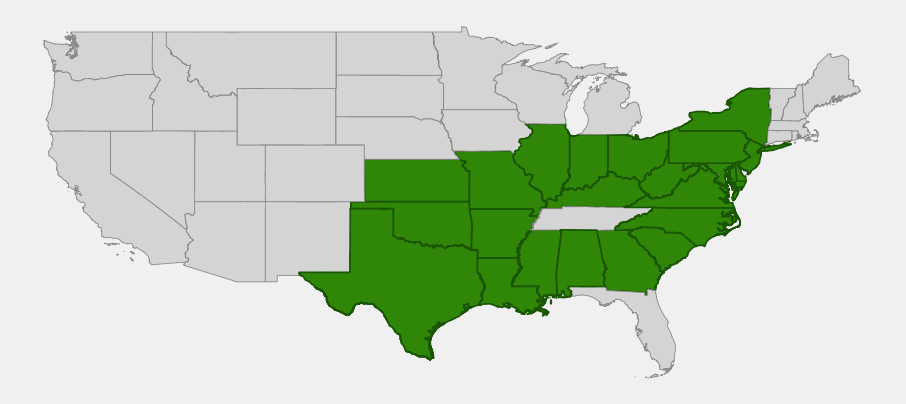
American dittany is native across a broad swath of the central and eastern United States, from Texas, Oklahoma, Kansas and Louisiana in the west and south, north through Missouri, Illinois, Indiana and Ohio, to New York, New Jersey, Pennsylvania and Delaware in the northeast, and east to the Carolinas. Within this range it is often local and tied closely to a specific kind of habitat rather than being common everywhere.
Typical habitat is dry, rocky, upland woodlands, thinly wooded bluffs and ridges, and the thin soil pockets and ledges of sandstone, shale or limestone outcrops, often in the company of oak-hickory woodland. It is usually found in higher-quality natural areas where the ground layer is relatively open and competition from aggressive vegetation is limited, since American dittany does not compete well against taller, denser ground cover.
Because it depends on this specific combination of dry soil and exposed rock, American dittany tends to occur as scattered, locally common colonies rather than forming extensive stands, and some populations at the edges of its range — including in the Northeast — are considered uncommon or are tracked by state natural heritage programs.
📋 Regional plant lists featuring American Dittany: New York, Pennsylvania & Northern New Jersey · Delaware, Southern New Jersey & Long Island · Maryland, Virginia & West Virginia · North Carolina & South Carolina · Georgia, Alabama & Mississippi · Arkansas, Louisiana, Eastern Oklahoma & Eastern Texas · Kentucky & Tennessee · Ohio & Indiana · Illinois, Iowa & Missouri
Growing & Care Guide
American dittany is an easy, rewarding plant once you give it the lean, well-drained conditions it expects — the main mistake gardeners make is treating it like a typical rich-soil perennial, which tends to produce floppy growth and reduces its natural toughness.
Light
American dittany grows well across a wide range of light, from full sun to medium (part) shade. In more sun it stays more compact and flowers a bit more heavily; in part shade, typical of its woodland-edge habitat, it grows slightly taller and looser but still flowers reliably in fall.
Soil & Water
This species wants thin, rocky, sharply drained soil and performs poorly in rich, consistently moist garden beds, where excess moisture on the foliage can encourage a rust fungus. A lean, gravelly or rocky soil mix that mimics its natural outcrop habitat is ideal; it tolerates both acidic and circumneutral to calcareous (limestone-influenced) conditions. Established plants are drought tolerant and need no supplemental watering beyond the first season.
Planting Tips
Site American dittany in a rock garden, along a dry stone wall, or at the edge of a woodland path where soil is naturally thin and competing vegetation is sparse. Keep taller, more aggressive perennials and groundcovers away from new plantings, since American dittany does not compete well against dense neighbors. It establishes readily from nursery-grown container plants; division of mature clumps in spring is also possible.
Pruning & Maintenance
Very low maintenance. Cut back the previous season’s woody stems in late winter or early spring before new growth emerges, if a tidier look is wanted; otherwise the dried stems can be left through winter, since they are part of how the plant produces its “frost flower” ice formations on cold mornings. No fertilizer is needed, and extra richness in the soil tends to work against this plant rather than for it.
Landscape Uses
- Rock gardens and dry stone wall plantings, where its scale and toughness fit perfectly
- Woodland garden edges with part shade and thin, well-drained soil
- Late-season pollinator gardens, filling a fall nectar gap most natives have already finished
- Fragrance gardens, for the thyme-scented foliage
- Winter interest plantings, where frost flower formation can be observed on cold mornings
Wildlife & Ecological Value
American dittany’s unusually late bloom period makes it a genuinely important resource for pollinators at a time of year when most other native wildflowers have already finished.
For Pollinators
The small flowers are visited by a variety of flies and bees, and the species is recognized as a moderately important nectar source for monarch butterflies during their fall migration, when few other native plants are still in bloom. Its late flowering period, from August into October, helps bridge the gap between summer wildflowers and the first hard frosts.
For Insects & Wildlife
American dittany is the sole known host plant for the caterpillars of a small, specialized leaf-mining moth, Stephensia cunilae, which feeds only on this species. The plant’s strong mint fragrance makes the foliage unpalatable to deer, groundhogs and other mammalian browsers, which generally avoid it.
Ecosystem Role
By tolerating thin, rocky soils where most plants cannot establish, American dittany contributes ground-layer plant diversity to dry oak-hickory woodlands and rock-outcrop plant communities that are otherwise sparsely vegetated, and its persistence in high-quality natural areas makes it a useful indicator of relatively undisturbed woodland habitat.
Cultural & Historical Uses
American dittany has a long history as a home remedy herb among European settlers in the eastern United States, who dried and steeped its leaves as a tea valued for its pleasant, thyme-like flavor. This tea was traditionally used for headaches, colds and fevers, and to promote sweating and menstruation; an essential oil distilled from the plant was also used historically as an antiseptic and stimulant. These are documented historical folk uses, not medical advice, and the plant’s modern value lies chiefly in its ornamental and ecological role rather than any recommended therapeutic use.
The common name “dittany” borrows from an unrelated Mediterranean herb, Dittany of Crete (Origanum dictamnus), which American dittany superficially resembles in fragrance and appearance, though the two are only distantly related. The species’ most memorable natural history trait is its production of “frost flowers”: on the first hard freezes of autumn, sap exuded from cracks near the base of the stems freezes into delicate curling ribbons of ice, a phenomenon shared by only a handful of other plants, including the related but unrelated genus Verbesina (frostweed).
Frequently Asked Questions
What are “frost flowers” and does American dittany really make them?
Yes. On the season’s first hard freezes, sap can be pushed out through cracks near the base of American dittany’s stems and freeze into thin, curling ribbons or petals of ice — a true “frost flower.” This is one of the plant’s most distinctive and photographed features and is best looked for on clear, cold mornings in late fall.
Is American dittany the same as Dittany of Crete used in cooking?
No. American dittany (Cunila origanoides) is a different, unrelated plant native to North America; Dittany of Crete (Origanum dictamnus) is a Mediterranean oregano relative. They share a similar aromatic quality and a common name, but are not the same species and are not interchangeable in traditional Mediterranean recipes.
Can American dittany be grown in regular garden soil?
It can tolerate ordinary garden soil if taller, more aggressive plants are kept from crowding it, but it performs best and stays most compact in lean, rocky, sharply drained soil similar to its natural habitat. Overly rich or consistently wet soil can lead to floppy growth and fungal problems.
Is American dittany deer resistant?
Yes. Its strongly aromatic, mint-scented foliage is generally avoided by deer, groundhogs and other mammalian browsers, making it a reliable choice in areas with deer pressure.
When does American dittany bloom, and why does that matter for pollinators?
It blooms from late summer into October, later than most other native wildflowers in its range. This late bloom period provides a valuable nectar source for bees, flies and migrating monarch butterflies at a time when many other native nectar plants have already finished flowering for the year.

Looking for a nursery that carries American Dittany?
Browse our native plant nursery directory: Alabama & Arkansas · Delaware & Georgia · Illinois, Indiana & Kansas · Kentucky, Louisiana, Maryland, Missouri & Mississippi · North Carolina, New Jersey, New York, Ohio & Oklahoma · Pennsylvania, South Carolina, Texas & Virginia · West Virginia