
Blue Dicks (Dichelostemma capitatum)
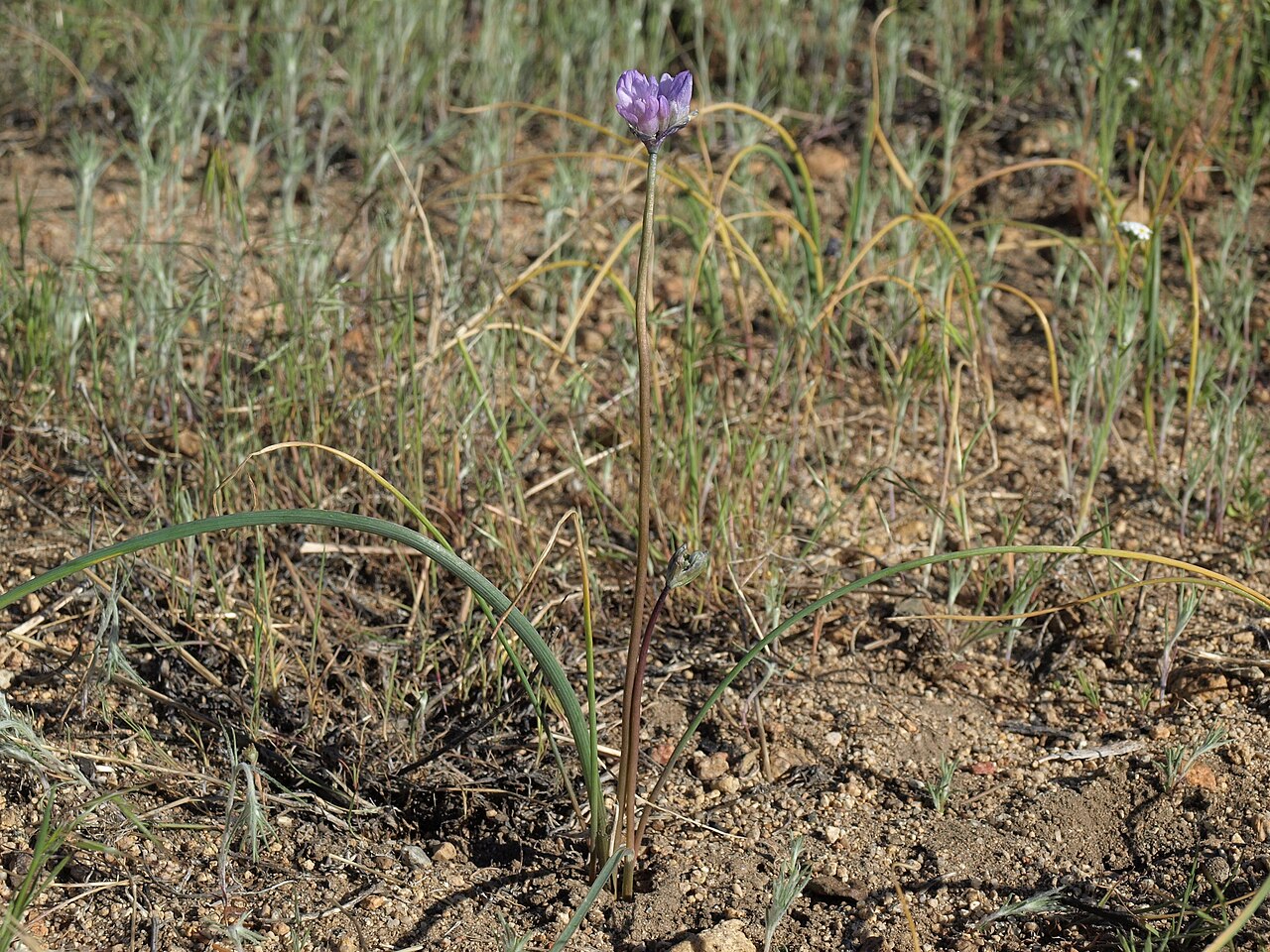
Dichelostemma capitatum, commonly called Blue Dicks and also sold under the name Wild Hyacinth, is a cormous spring wildflower of the western United States that produces one of the most reliable early-season flower shows in California’s grasslands and deserts. It is also known botanically as Dipterostemon capitatus, the name adopted by some modern references such as the Jepson eFlora, though Dichelostemma capitatum remains the name most commonly used in gardening and conservation sources.
A leafless, wiry flower stalk rises 6 inches to 2 feet from an underground corm, topped by a tight, head-like cluster of 2 to 15 funnel-shaped flowers in shades of blue-purple, pink-purple or occasionally white. The stalk is often slightly twisted and fleshy, and one or two long, grass-like basal leaves typically wither by the time the flowers fully open, so the blooms frequently appear to rise straight from bare ground. Blue dicks is a true fire-follower and disturbance specialist: after wildfire or other disturbance clears competing vegetation, dormant corms that may have waited years underground can suddenly produce fields of flowers the following spring.
For gardeners in the Southwest, blue dicks is an easy, low-water bulb for naturalizing in a dry meadow, rock garden or California-native border. It pairs beautifully with other spring ephemerals such as California poppy, and because the corms multiply by offsets, a small planting slowly becomes a larger drift over the years.
Identification
Blue dicks is a low-growing, herbaceous perennial that emerges from an underground corm each year, reaching 6 inches to 2 feet tall at flowering, depending on moisture and site conditions. The entire plant above ground is temporary, dying back to the dormant corm by early summer.
Corm & Leaves
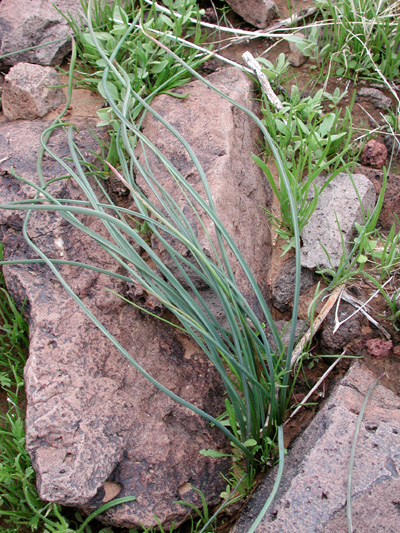
The plant grows from a fibrous-coated underground corm, which produces small cormlets (offsets) on short stolons each year, allowing colonies to slowly spread. One to three narrow, grass-like basal leaves 4 to 16 inches long emerge first in late winter, but they are typically withered or shriveled by full bloom time, giving the flower stalk a bare, leafless appearance.
Flowers
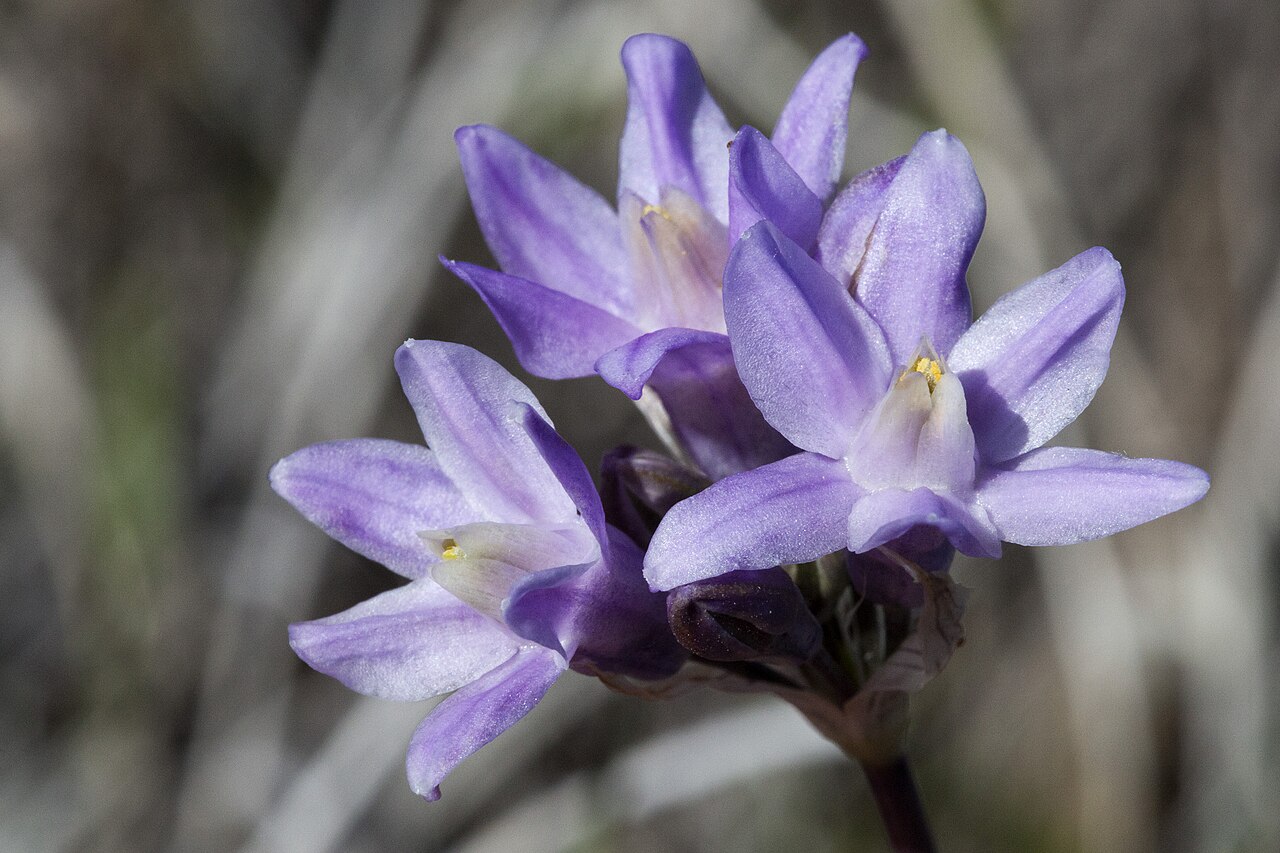
The inflorescence is a dense, head-like umbel of 2 to 15 flowers clustered tightly at the stalk’s tip, subtended by papery, often purple-tinged bracts. Each flower has a narrow, cylindrical to bell-shaped tube about ¼ to ½ inch long, flaring into six petal-like lobes (tepals) in blue-purple, pink-purple, or occasionally white. Inside, six stamens with deeply notched, lance-shaped white appendages surround the pistil. Flowering peaks from March into April, varying with elevation and rainfall, and a given flower head often opens over several days.
Fruit & Seeds
After flowering, a small three-chambered capsule develops, splitting open to release angular black seeds. The plant reproduces both by seed and, more reliably in the short term, by vegetative cormlets that detach from the parent corm, which is why disturbed or recently burned sites can fill with blue dicks even without a fresh seed crop.
Quick Facts
| Scientific Name | Dichelostemma capitatum (syn. Dipterostemon capitatus) |
| Family | Asparagaceae (subfamily Brodiaeoideae) |
| Plant Type | Herbaceous perennial from a corm |
| Mature Height | 6 in – 2 ft in flower |
| Mature Spread | Single stem per corm; colonies spread by offsets |
| Growth Rate | Moderate; colonies thicken over several years |
| Sun Exposure | Full Sun to Part Shade |
| Water Needs | Low once established; moist during winter-spring growth |
| Soil Type | Well-drained soils, including rocky, sandy or clay |
| Soil pH | Adaptable, about 6.0–8.0 |
| Bloom Time | March – April |
| Flower Color | Blue-purple, pink-purple, occasionally white |
| Fall Color | Not applicable (dormant by early summer) |
| Fruit | Small three-chambered capsule with black seeds |
| Deer Resistant | Moderate (corms are dug and eaten by deer and other wildlife) |
| USDA Hardiness Zones | 7–10 |
Native Range
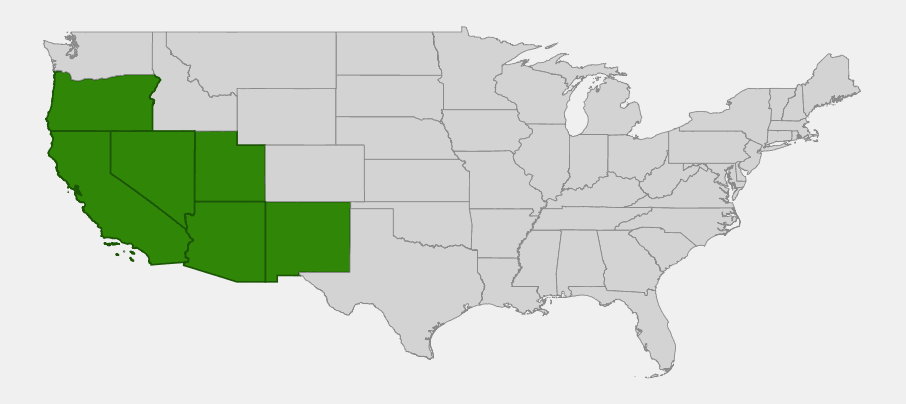
Blue dicks is native to the western United States, most abundant across California from the coast to the Sierra Nevada foothills and south through the deserts, and extending east into southern Nevada, Arizona, New Mexico and southern Utah, as well as into southwestern Oregon. Its range continues south into northwestern Mexico. It is widely planted and sold horticulturally outside this range, but gardeners in other regions should confirm with local extension sources before assuming it is native to their area.
It grows across a remarkable range of elevations, from near sea level to over 7,000 feet, and occupies many plant communities: coastal sage scrub, valley and foothill grassland, chaparral, oak woodland, desert scrub, pinyon-juniper woodland and open coniferous forest. It is especially conspicuous as a post-fire and post-disturbance species in chaparral and grassland, where dormant corms can produce dramatic flowering displays the spring after a burn, even in sites where few plants were visible in prior years.
Because wildfire suppression and conversion of grassland to development or agriculture have reduced the open, periodically disturbed habitat blue dicks favors, populations can decline locally where fire has been absent for many decades and shading shrub cover increases. The species remains common and secure range-wide, but it is a good illustration of how fire and disturbance history shape where native bulbs persist.
📋 Regional plant lists featuring Blue Dicks: Arizona & New Mexico · Utah & Western Colorado · Western Oregon & Western Washington
Growing & Care Guide
Blue dicks is one of the easiest western native bulbs to grow, asking for little beyond good drainage and a dry summer rest, the same conditions it experiences in the wild.
Light
Plant in full sun to light part shade. In warmer, low-elevation gardens, a little afternoon shade can help prolong the bloom, but in most of its range full sun produces the strongest flowering. It is well suited to open, unshaded meadow or grassland-style plantings.
Soil & Water
Blue dicks tolerates a wide range of soils, from sandy and rocky to clay, as long as drainage is reasonably good; corms are prone to rot in soil that stays soggy through summer. Water during the winter and spring growing season if rainfall is sparse, then withhold water almost entirely once the foliage yellows, mimicking the dry summers of its native range. Established plantings are genuinely drought tolerant and need no irrigation once dormant.
Planting Tips
Plant corms in fall, 3 to 4 inches deep, in a well-drained spot. Space corms 3 to 6 inches apart for a naturalistic drift; they will slowly fill in as offsets form over the years. Blue dicks grows well tucked among bunchgrasses or other low wildflowers, where its bare winter appearance is less noticeable. Avoid summer watering in beds planted with blue dicks and other California-native bulbs that need a dry dormant season.
Pruning & Maintenance
No pruning is needed; simply let the foliage yellow and wither naturally after bloom, since the plant is still drawing energy back into the corm at that stage. Mowing or cutting back a meadow planting can be done only after the foliage has fully died back for the season.
Propagation
The simplest method is dividing and replanting the small cormlets that form around the base of mature corms in summer dormancy. Seed is also viable and germinates readily when sown in fall, but seedlings take several years to reach flowering size, so dividing cormlets gives faster results for garden plantings.
Landscape Uses
Blue dicks suits many dry, sunny native garden styles:
- Naturalized meadow and grassland plantings with native bunchgrasses
- Dry rock gardens and gravel beds
- Wildflower mixes alongside California poppy and lupine
- Low-water, fire-wise landscaping in chaparral-adjacent gardens
- Habitat restoration on disturbed or recently burned sites within its native range
Wildlife & Ecological Value
Blue dicks is a cornerstone food source in the western spring landscape, feeding wildlife both above and below ground.
For Pollinators
The flowers are visited by a range of native bees, including bumblebees and solitary bees, as well as butterflies and other insects seeking early-season nectar. Because it blooms in large stands, especially after fire, it can provide a significant nectar pulse at a time when few other flowers are available.
For Mammals
The starchy corms are an important food for black bears, mule deer, ground squirrels, pocket gophers and introduced wild pigs, among other animals. Historically, California Indigenous peoples across much of the state and the Great Basin relied on blue dicks corms as a significant traditional food source, harvesting and managing patches over generations.
Ecosystem Role
As corms are dug up and partly eaten by animals, detached cormlets are dispersed and the soil is aerated and loosened, which helps the species recolonize disturbed ground. Blue dicks is also a classic fire-follower, and its rapid post-fire flowering helps stabilize bare soil and provide early floral resources while slower-growing perennials are still recovering.
Cultural & Historical Uses
Blue dicks corms were an important food plant for Indigenous peoples across California, the Great Basin and the Southwest for countless generations. Corms were traditionally dug before, during or after flowering depending on the tribe, season and family practice, then eaten raw, roasted or boiled; their flavor and texture have been compared to a mild, starchy chestnut or potato.
Harvesting was far from haphazard: traditional gathering grounds were visited annually and actively tended, with practices such as breaking off small cormlets for replanting, sparing some whole plants, and periodic burning that helped keep the ground open and encouraged vigorous corm production. This long history of indigenous land management is now recognized by ecologists as a likely reason some blue dicks populations remain so dense and productive today.
In modern California native-plant horticulture, blue dicks has become popular as an easy, reliable spring bulb, prized for its drought tolerance and ability to naturalize in meadow and grassland gardens with minimal care.
Frequently Asked Questions
Is Blue Dicks the same plant as Dipterostemon capitatus?
Yes. Botanists have moved this species between genera several times; it was long placed in Brodiaea, then Dichelostemma, and some modern classifications, including the Jepson eFlora, now treat it as the sole species in the genus Dipterostemon. Dichelostemma capitatum remains the name most widely used in gardening, nursery and conservation references.
Why do my Blue Dicks have no leaves when they flower?
That is normal. The narrow, grass-like leaves emerge first in late winter but typically wither before or during full bloom, so by the time the flower cluster opens, the stalk often looks bare or leafless. This does not harm the plant; it is simply the natural growth cycle of a bulb that conserves energy for flowering and seed.
Do I need to water Blue Dicks in summer?
No, and you generally should not. Blue dicks goes fully dormant by early summer and needs a dry rest period, just as it would in its native Mediterranean-climate and desert habitats. Summer irrigation can cause the corms to rot.
Can Blue Dicks corms be eaten?
The corms were historically an important traditional food for Indigenous peoples across much of the plant’s range, eaten raw, roasted or boiled. Because look-alike bulbs in other families can be toxic, positive identification by an expert is essential before any foraging, and planted garden bulbs should simply be left to grow and spread rather than harvested.
Does Blue Dicks need fire to bloom?
No, but it often blooms especially heavily after fire. Dormant corms can persist underground for years, waiting for a disturbance like fire to clear competing vegetation and open up sunlight and soil nutrients; this is why burned grassland or chaparral sometimes produces spectacular blue dicks displays the following spring.

Looking for a nursery that carries Blue Dicks?
Browse our native plant nursery directory: California · Arizona · New Mexico & Nevada · Utah · Oregon