
Globe Gilia (Gilia capitata)
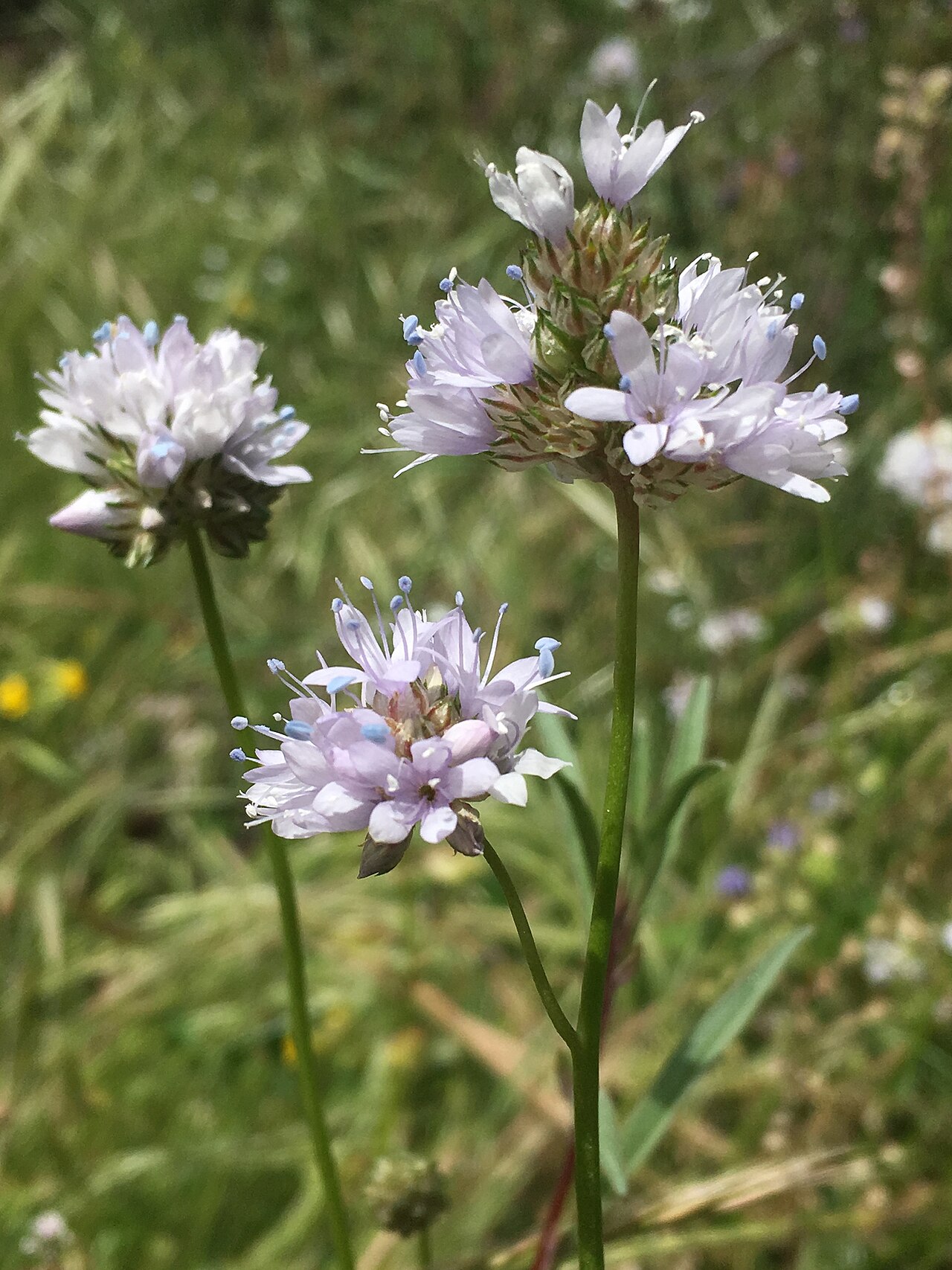
Gilia capitata, commonly called Globe Gilia (also known as bluehead gilia, blue field gilia, or blue-thimble-flower), is a cheerful western wildflower instantly recognizable by its tight, ball-shaped clusters of small lavender-blue flowers held atop wiry, airy stems. A member of the phlox family (Polemoniaceae), it is one of the most widely grown native California wildflowers, equally at home in a wildflower meadow, a pollinator garden, or scattered informally through a dry border.
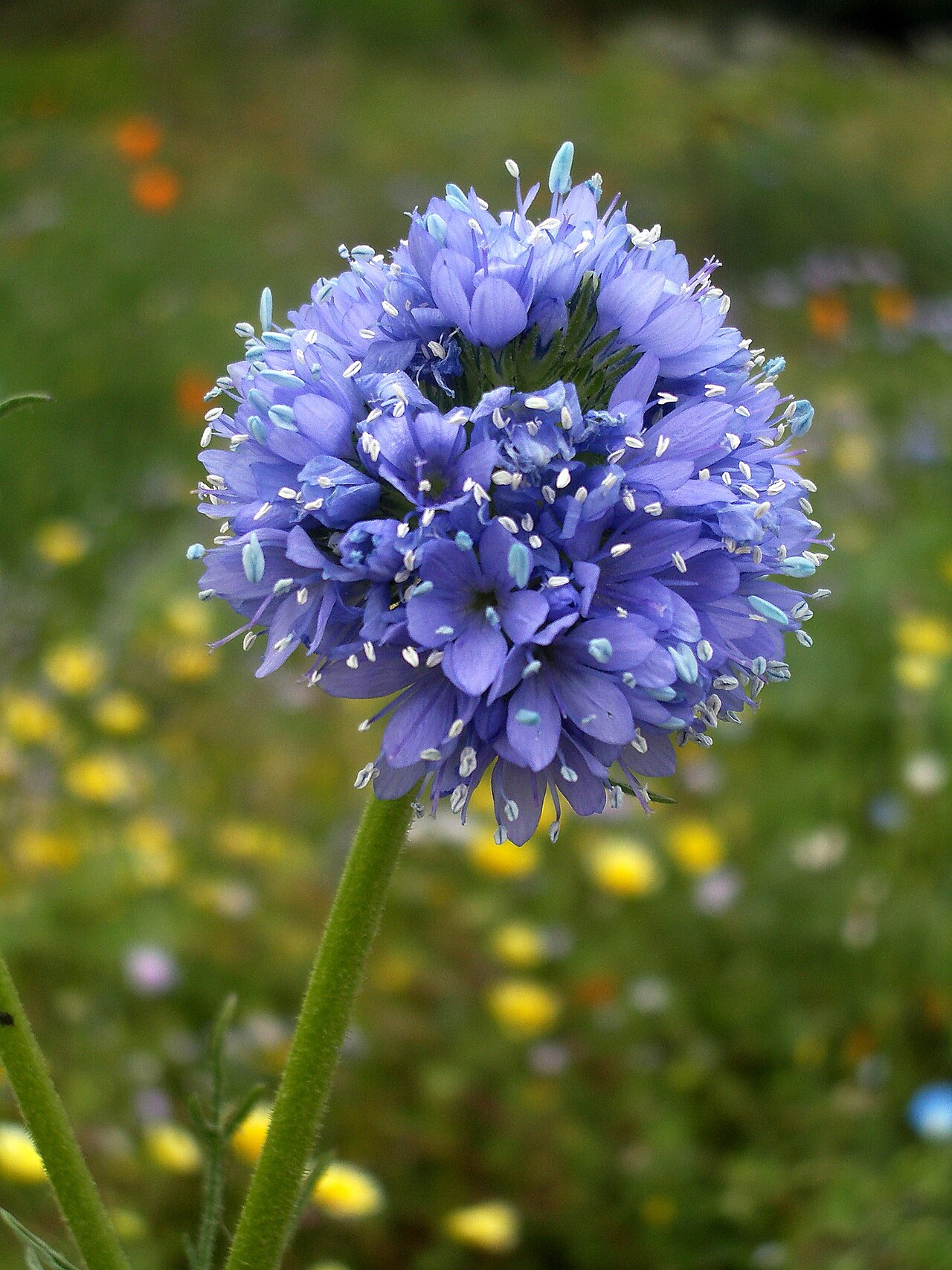
Globe Gilia is a fast-growing annual, germinating with fall or winter rains and flowering from late spring into summer before setting seed and dying back for the year. Its finely divided, almost fern-like foliage gives the plant a light, airy texture, while the round flower heads — each packed with 50 to 100 tiny tubular flowers — rise well above the leaves on slender, branching stems. The effect in a mass planting is a drift of soft blue pompoms nodding in the breeze.
Because it germinates and blooms quickly from seed, Globe Gilia is a favorite for quick, colorful wildflower displays and pollinator plantings across its native western range. It has also been planted in pollinator gardens well outside that range, including parts of the eastern United States, where it is not native and should be considered an introduced garden plant rather than a wild component of the local flora.
Identification
Globe Gilia is an erect annual herb, typically 4 inches to about 3 feet (10–90 cm) tall depending on growing conditions, with slender, branching, leafy stems. The herbage is somewhat fleshy and can bear fine glandular hairs, giving plants a faintly sticky feel in some populations.
Leaves
The leaves are alternate and finely divided into narrow, toothed or lobed segments, giving the foliage a lacy, almost carrot-top texture. Lower leaves are larger and more deeply cut; upper leaves are smaller and less divided. The fine-textured foliage is easy to distinguish from the bolder leaves of many other wildflowers sharing its habitat.
Flowers
The signature feature of Globe Gilia is its flower arrangement: tight, spherical heads of 50 to 100 small flowers clustered at the tips of the branches. Each individual flower has a narrow tube opening into a spreading, five-lobed corolla in shades of lavender-blue to light blue, occasionally white or pink. The stamens protrude slightly beyond the petals and are typically white, tipped with blue or pink anthers, giving each flower head a slightly fuzzy, pincushion appearance. Bloom runs from late spring into summer, with the exact timing shifting earlier at lower, warmer elevations and later in the mountains.
Fruit & Seeds
After flowering, each small flower is replaced by a tiny, several-seeded capsule that dries and splits open at maturity. The seeds are small and numerous; in many populations they become mucilaginous (sticky) when wetted, which helps them adhere to soil and germinate readily with the first rains of the following season.
Quick Facts
| Scientific Name | Gilia capitata |
| Family | Polemoniaceae (Phlox) |
| Plant Type | Annual forb/wildflower |
| Mature Height | 4 in – 3 ft (10–90 cm) |
| Mature Spread | 8–16 in, branching habit |
| Growth Rate | Fast (completes life cycle in one season) |
| Sun Exposure | Full Sun to Part Sun |
| Water Needs | Low to moderate; best with winter/spring moisture |
| Soil Type | Sandy or rocky, well-drained |
| Soil pH | 6.0–7.5 (slightly acidic to neutral) |
| Bloom Time | Late April – July |
| Flower Color | Lavender-blue to light blue, occasionally white or pink |
| Fall Color | None (annual; plant dies back after seed set) |
| Fruit | Tiny dry capsule; not ornamental |
| Deer Resistant | Generally yes (occasional light browsing) |
| USDA Hardiness Zones | Grown as a cool-season annual in zones 3–10 |
Native Range
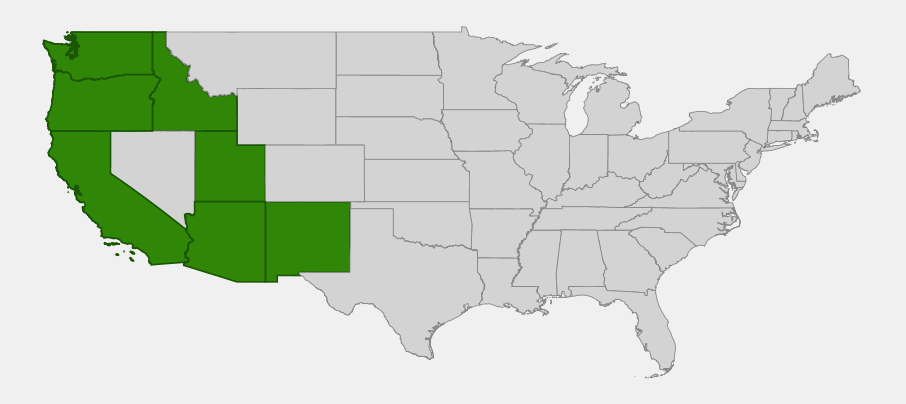
Globe Gilia is native to much of western North America, from British Columbia south through Washington, Oregon, California, Idaho, Utah, Arizona, and New Mexico, continuing into northern Mexico. California holds by far the greatest diversity of the species, with several recognized subspecies occupying different habitats — from coastal bluffs and dunes to Sierra Nevada foothills and interior valleys. It has also been widely planted as a pollinator-garden annual in parts of the eastern United States and even in Europe, but those eastern and overseas populations are introduced, not part of the plant’s native range, and should not be treated as wild native occurrences.
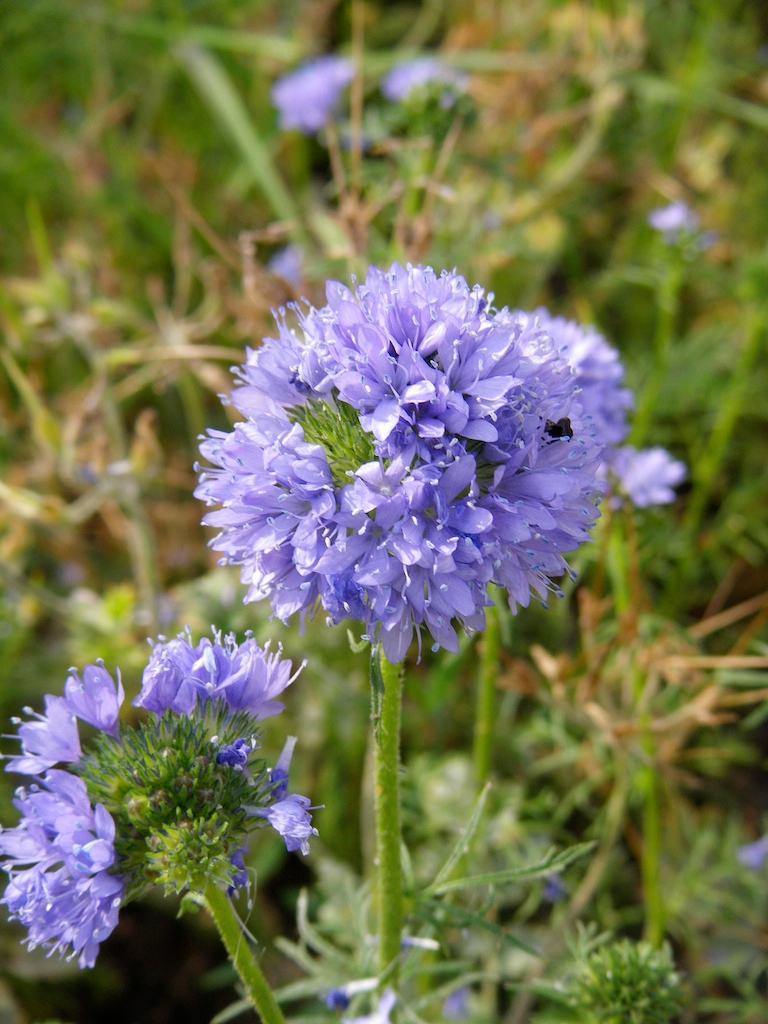
Within its native range, Globe Gilia grows in a wide variety of open, sunny habitats, especially sandy or rocky soils: coastal scrub and dunes, chaparral openings, grasslands, dry foothill slopes, and desert or semi-desert flats. Different subspecies specialize in different settings — for example, the dune-dwelling G. c. ssp. chamissonis is restricted to central California’s coastal sand dunes, while G. c. ssp. abrotanifolia (Ball Gilia), the form pictured on this page, favors inland scrub and grassland in Southern California.
Common associates vary by habitat but often include other spring-blooming native annuals such as lupines, poppies, and clarkias, along with native bunchgrasses and low shrubs. Because it germinates readily from a persistent seed bank after disturbance or fire, Globe Gilia is frequently one of the first wildflowers to reappear in a recovering burned or disturbed site within its native range.
📋 Regional plant lists featuring Globe Gilia: Utah & Western Colorado · Arizona & New Mexico · Idaho, Eastern Oregon & Eastern Washington · Western Oregon & Western Washington
Growing & Care Guide
Globe Gilia is one of the easiest native California wildflowers to grow from seed, rewarding minimal effort with a quick, cheerful show of blue flower balls that pollinators find irresistible.
Light
Plants need full sun to part sun for the best, most compact flowering. In too much shade, stems stretch and flop, and bloom is sparser.
Soil & Water
Globe Gilia thrives in lean, fast-draining soils — sandy or rocky ground suits it far better than rich, heavily amended garden beds. Like many California native annuals, it is adapted to a winter-wet, summer-dry rainfall pattern: moisture during germination and early growth in fall and winter, followed by a dry-down as the plant flowers, sets seed, and dies back in late spring or early summer. Overwatering, especially in summer, tends to shorten bloom and encourage disease rather than help the plant.
Planting Tips
Direct-sow seed in fall, ideally just ahead of the first autumn rains, scattering it over bare, lightly raked soil and pressing it in without burying it deeply — the seeds need light to germinate well. In regions with reliably cold, snowy winters, a well-timed early spring sowing can also work. Once established in a sunny, well-drained spot, Globe Gilia will often self-sow and return in subsequent years without replanting.
Pruning & Maintenance
No pruning is needed. Leaving spent plants in place after bloom allows seed to mature and disperse for next year’s display; cut back and remove the dried plants once seed drop is complete if a tidier look is wanted. No fertilizing is necessary — like many native annuals, Globe Gilia performs best in lean soil.
Propagation
Propagation is by seed, direct-sown outdoors in fall. No stratification is typically required for most populations, though fresh seed and good seed-to-soil contact improve germination. Because the species self-sows readily once established, ongoing propagation from an existing patch is usually effortless.
Landscape Uses
Globe Gilia’s quick growth and airy texture make it useful in several settings:
- Wildflower meadows and seed mixes for fast, reliable color
- Pollinator gardens — bees and butterflies visit the flowers heavily
- Dry, sunny borders with sandy or rocky soil
- Post-fire or disturbed-site restoration within its native range
- Cut flowers, where the round blue heads add novel texture to informal arrangements
Wildlife & Ecological Value
Globe Gilia is a popular stop for a wide range of pollinating insects during its relatively brief but showy bloom season.
For Pollinators
The dense flower heads attract native bees, honeybees, and butterflies in large numbers; the tightly packed arrangement of small flowers lets a single visit deliver nectar and pollen from many flowers at once, making it an efficient and popular forage plant. Its early-to-mid-season bloom helps bridge the gap between earlier and later-blooming native wildflowers.
For Birds & Mammals
Seed-eating birds take advantage of the small seeds once capsules mature and dry, and the dense stands of foliage and flowers provide minor cover for ground-dwelling insects and small creatures during the growing season. The plant is not a major food source for larger mammals and is generally left alone by deer.
Ecosystem Role
As a fast-colonizing native annual, Globe Gilia plays a useful role in open, disturbed, or recently burned ground within its native range, helping stabilize soil and add floral resources while slower-growing perennials reestablish. Its persistent seed bank allows populations to reappear reliably after fire or other disturbance, a pattern typical of many fire-adapted California wildflowers.
Cultural & Historical Uses
Globe Gilia does not carry the extensive, well-documented ethnobotanical record of some other California native wildflowers. It has chiefly been valued, historically and today, for its ornamental and ecological qualities rather than for food, medicine, or craft use, and early 20th-century California wildflower seed catalogs — a once-thriving regional industry — commonly listed it among the native annuals offered to home gardeners for naturalistic plantings.
Its enduring popularity in wildflower seed mixes reflects a long history of appreciation for the plant’s reliability and color rather than any practical or medicinal tradition, and that ornamental role remains its primary cultural significance today.
Frequently Asked Questions
Is Globe Gilia native to the eastern United States?
No. It is native to the western United States, British Columbia and northern Mexico. It has been introduced and planted as a pollinator-garden annual in parts of the East, but it is not a native component of eastern plant communities there.
Will Globe Gilia come back every year?
It is an annual, so individual plants complete their life cycle and die within one growing season. However, it readily self-sows in a suitable sunny, well-drained site, so an established planting often returns reliably from seed year after year.
Does Globe Gilia need rich garden soil?
No — it actually performs best in lean, sandy, or rocky soil with good drainage. Rich, heavily fertilized soil tends to produce floppy growth and can reduce flowering.
What is the difference between Globe Gilia and Ball Gilia?
“Ball Gilia” is a common name used for Gilia capitata ssp. abrotanifolia, one of several recognized subspecies of Globe Gilia found mainly in Southern California scrub and grassland; the species as a whole is usually called Globe Gilia, bluehead gilia, or blue field gilia.
Is Globe Gilia good for pollinators?
Yes — it is considered an excellent pollinator plant, attracting large numbers of native bees, honeybees, and butterflies during its bloom period, and it is commonly included in native pollinator seed mixes for this reason.

Looking for a nursery that carries Globe Gilia?
Browse our native plant nursery directory: Arizona · California · Idaho · New Mexico · Oregon · Utah · Washington