
Sticky Cinquefoil (Potentilla glandulosa)
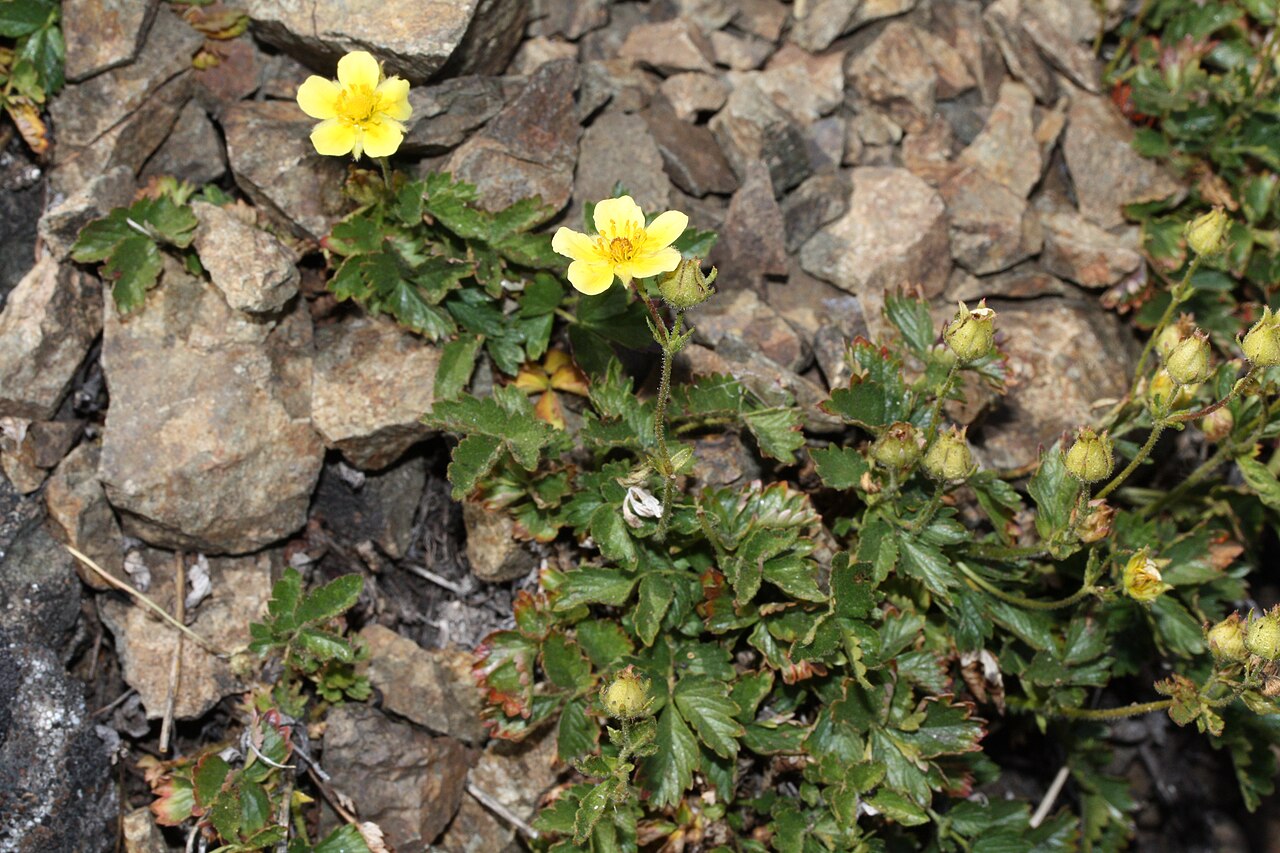
Potentilla glandulosa — often listed as Drymocallis glandulosa in newer floras — is commonly known as Sticky Cinquefoil or Gland Cinquefoil for the fine, glandular hairs that cover its stems, leaves, and calyces and give the whole plant a faintly resinous, sticky feel when brushed. It is a native perennial forb of the Pacific states and the northern Rocky Mountains, a member of the rose family (Rosaceae) and a relative of strawberries, roses, and the other native cinquefoils.
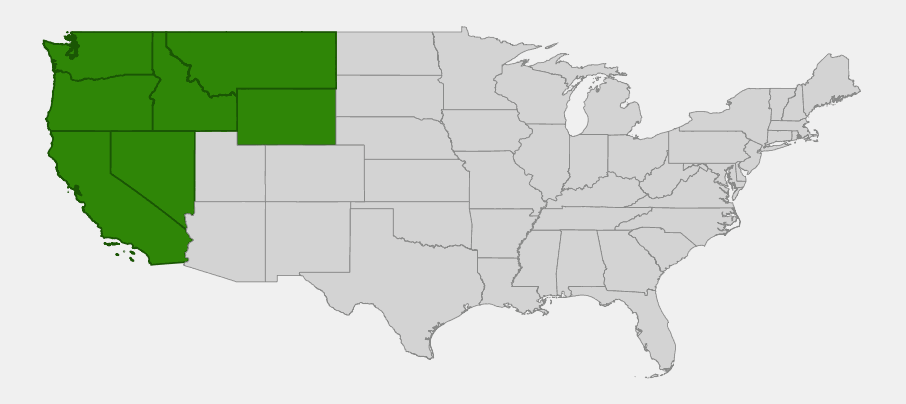
Sticky Cinquefoil grows as a clump of erect to sprawling, hairy stems topped with loose, open clusters of pale cream to soft yellow flowers, each about ½ to ¾ inch across with five rounded petals. The basal leaves are pinnately divided into toothed, strawberry-like leaflets, giving the plant a somewhat coarse, textured look even before it flowers. It is a common sight on dry rocky slopes, open woodland edges, and talus in the mountains of California, Oregon, Washington, Nevada, Idaho, Montana, and Wyoming.
Because it is unshowy compared with brighter native wildflowers, Sticky Cinquefoil is often overlooked, but it is a reliable, low-maintenance perennial for dry rock gardens and naturalized slopes where many garden plants struggle. Its tolerance for lean, rocky soil and summer drought makes it a good match for xeric native plantings throughout its western range.
Identification
Sticky Cinquefoil is a herbaceous perennial that forms a basal clump of leaves with flowering stems rising 1 to 2½ feet tall. The entire plant — stems, leaf stalks, and flower calyces — is covered in glandular hairs that are sticky to the touch and give off a faint resinous scent when handled, a reliable field character that separates it from most other yellow-flowered cinquefoils.
Stems
Flowering stems are slender, often reddish at the base, and branch loosely near the top into an open, airy inflorescence. They are covered in a mix of short glandular hairs and longer spreading hairs, which is what gives the plant its sticky texture. Older stems can become somewhat woody at the base, but the plant does not form true woody structure the way a shrub would.
Leaves
Most of the foliage is basal, arranged in a loose rosette. Each leaf is pinnately compound, with five to nine toothed, oblong leaflets arranged along a central stalk, resembling a strawberry or wild rose leaf in miniature. The leaflets are dull green above and paler beneath, with coarse, rounded teeth along the margins. Stem leaves are smaller and fewer, reducing in size higher up the flowering stalk.
Flowers
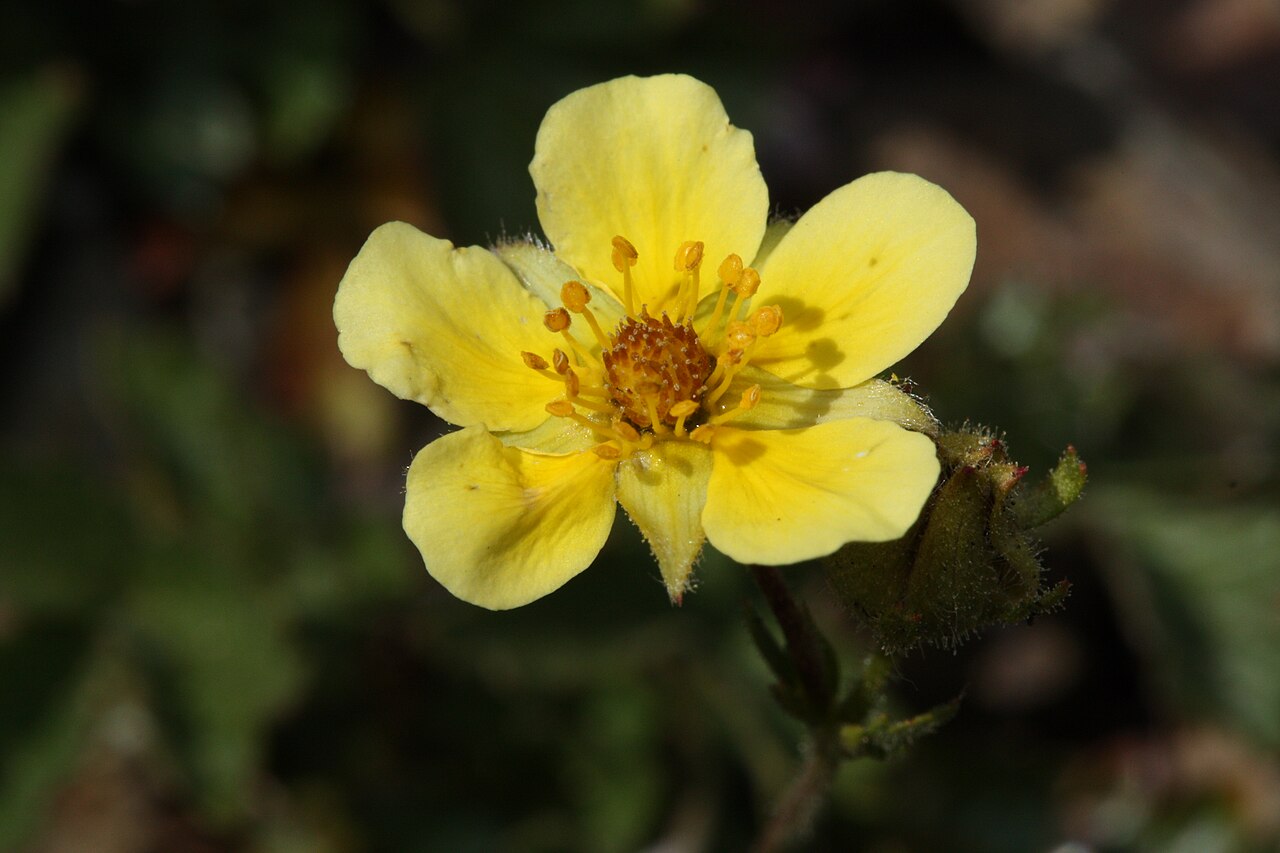
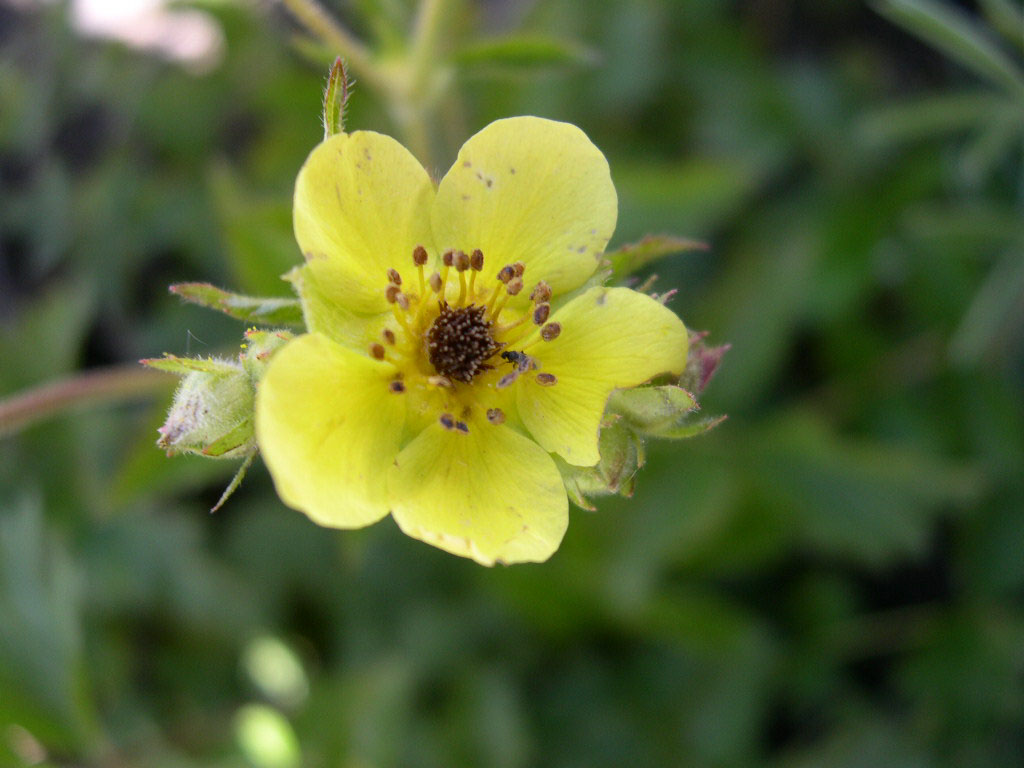
Flowers appear in loose, branched clusters (cymes) at the tips of the stems from late spring into midsummer. Each flower has five broad, rounded petals in pale cream to soft butter-yellow, surrounding a cluster of golden stamens and a central boss of pistils. The petals are typically about as long as the hairy, pointed sepals behind them, giving the open flower a somewhat flat, understated look compared with the brighter yellow of some other cinquefoils.
Fruit & Seeds
After flowering, each flower matures into a small cluster of dry, single-seeded achenes held within the persistent, hairy calyx. The seed heads are inconspicuous and not showy, and the plant spreads primarily by seed rather than by runners or rhizomes.
Quick Facts
| Scientific Name | Potentilla glandulosa (syn. Drymocallis glandulosa) |
| Family | Rosaceae (Rose) |
| Plant Type | Herbaceous Perennial Forb |
| Mature Height | 1–2½ ft |
| Mature Spread | 1–1½ ft |
| Growth Rate | Moderate |
| Sun Exposure | Full Sun to Part Shade |
| Water Needs | Low to Moderate |
| Soil Type | Rocky, gravelly or well-drained loam |
| Soil pH | 6.0–7.5 (slightly acidic to neutral) |
| Bloom Time | May – July |
| Flower Color | Pale cream to soft yellow |
| Fall Color | None notable; foliage dies back |
| Fruit | Small dry achenes, not ornamental |
| Deer Resistant | Yes (sticky, hairy foliage is rarely browsed) |
| USDA Hardiness Zones | 4–8 |
Native Range
Sticky Cinquefoil is native to the Pacific states and the northern Rockies, ranging from Washington and western Montana south through Oregon and Idaho to California and Nevada, with its southeastern limit in Wyoming. It is most common in the mountains, where it grows from the lowland foothills up into subalpine meadows and open forest.
Across this range, Sticky Cinquefoil favors open, well-drained sites: rocky slopes, talus and scree, dry meadows, and the margins of coniferous forest where enough light reaches the ground. It tolerates considerable summer drought once established, which reflects the dry-summer climate of much of its native range, and it is often found growing directly out of rock crevices and gravelly soil where competition from taller plants is limited.
Sticky Cinquefoil is not considered rare or of conservation concern across its range as a whole, though some of its regional varieties are more local in distribution. It is not weedy or invasive, and gardeners should be careful to distinguish it from non-native, sometimes invasive cinquefoils such as sulphur cinquefoil (Potentilla recta), which has brighter yellow flowers and a coarser, more aggressive growth habit.
📋 Regional plant lists featuring Sticky Cinquefoil: Western Oregon & Western Washington · Idaho, Eastern Oregon & Eastern Washington · Montana & Wyoming
Growing & Care Guide
Sticky Cinquefoil is an easygoing, low-water perennial that rewards gardeners who give it the lean, well-drained conditions it enjoys in the wild. It is not a plant for rich garden beds or regular irrigation; it performs best where it has to work a little for water and light.
Light
Full sun produces the most compact, floriferous plants, especially at higher or cooler elevations. In hot, low-elevation gardens, light afternoon shade helps prevent the foliage from scorching during the driest part of summer. Avoid deep or constant shade, which encourages lanky, sparse growth and fewer flowers.
Soil & Water
Sharp drainage is the single most important factor for success. Rocky, gravelly, or sandy loam suits Sticky Cinquefoil best; it does poorly in heavy clay or any soil that stays wet. Water regularly the first season to establish a deep root system, then taper off — established plants tolerate extended summer drought and generally need no supplemental water beyond occasional deep soakings in very dry years.
Planting Tips
Plant in fall or early spring so roots can establish before summer heat arrives. Rock gardens, gravel beds, and the gaps between stepping stones are ideal settings, mimicking the talus and rocky slopes where the plant grows wild. Space plants 12 to 18 inches apart to allow the basal rosettes room to fill out without crowding.
Pruning & Maintenance
Little maintenance is needed. Cut back spent flowering stems after bloom if a tidier appearance is wanted, though leaving them standing does no harm and provides some winter structure. Divide congested clumps every few years in early spring if the center of the plant begins to die out.
Propagation
Sticky Cinquefoil is most easily grown from seed sown in fall to allow natural cold stratification over winter, or started indoors with eight to ten weeks of cold stratification before spring sowing. Established clumps can also be divided in early spring.
Landscape Uses
Sticky Cinquefoil fits naturally into dry, informal plantings:
- Rock gardens and gravel gardens where drainage is sharp
- Dry slopes and banks that are difficult to irrigate
- Native wildflower meadows at middle to high elevation
- Pollinator gardens as a modest, long-blooming filler plant
- Xeriscaping alongside sagebrush, bunchgrasses, and other dryland natives
Wildlife & Ecological Value
Though modest in appearance, Sticky Cinquefoil contributes to the diversity of dry mountain plant communities and provides forage and nectar during the drier months of the growing season.
For Pollinators
The open, flat flowers are easily accessible to a wide range of small native bees, syrphid flies, and other short-tongued pollinators. Because it blooms over an extended period from late spring into midsummer, it helps bridge the gap between earlier and later-blooming wildflowers in dry mountain meadows.
For Birds
Small songbirds and ground-foraging birds occasionally feed on the tiny seeds, though Sticky Cinquefoil is not a major food source compared with grasses and larger-seeded forbs in the same habitats.
For Mammals
The glandular, sticky, somewhat bitter foliage is rarely browsed by deer or elk, which makes it a reliable, low-conflict choice in gardens near wildland edges where deer pressure is high.
Ecosystem Role
As one of many small perennial forbs rooted in rocky, disturbed, or open soils, Sticky Cinquefoil helps stabilize thin mountain soils and fills niches between shrubs and grasses in dry plant communities, adding structural and bloom-time diversity that supports a broader community of pollinating insects.
Cultural & Historical Uses
Sticky Cinquefoil has a modest history of use among Indigenous peoples of the Pacific Northwest and Great Basin, where various Potentilla species were occasionally used in traditional plant medicine, typically prepared as infusions associated with the astringent, tannin-rich qualities common throughout the genus. Documentation specific to this species is limited compared with some of its more widely used relatives.
The plant has little recorded history of use as food, and its primary value to people today is horticultural and ecological rather than practical. Its common names — Sticky Cinquefoil and Gland Cinquefoil — both reference the same distinctive trait: the fine glandular hairs that cover the stems and flowers, a feature botanists have long used to separate Potentilla glandulosa and its relatives from other cinquefoils in the field.
In recent decades, interest in regionally appropriate, low-water native plants has brought Sticky Cinquefoil into wider use in native plant gardens and restoration seed mixes throughout its western range, where it is valued for its drought tolerance and long bloom period rather than for any historical use.
Frequently Asked Questions
Is Sticky Cinquefoil the same plant as Drymocallis glandulosa?
Yes. Botanists have reclassified many of the shrubby, glandular cinquefoils into the genus Drymocallis, so this species appears as Drymocallis glandulosa in some newer references and as Potentilla glandulosa in others, including the USDA PLANTS database. Both names refer to the same plant.
Why is it called “sticky” cinquefoil?
The stems, leaves, and flower calyces are covered in fine glandular hairs that feel noticeably sticky or tacky when touched and give off a faint resinous scent, a trait that helps distinguish it from other similar-looking cinquefoils in the field.
Does Sticky Cinquefoil spread aggressively?
No. It grows as a well-behaved clump that increases slowly from the base and spreads only by seed, not by running stolons or rhizomes, so it stays where it is planted rather than spreading through a garden bed.
Is Sticky Cinquefoil deer resistant?
Generally, yes. The sticky, hairy foliage is not a preferred browse for deer or elk, making it a reasonably reliable choice in gardens with significant deer pressure, though no plant is completely deer-proof when other food is scarce.
Can Sticky Cinquefoil tolerate garden irrigation, or does it need to stay dry?
Established plants tolerate occasional garden watering as long as the soil drains well, but they do not need regular irrigation once rooted in and generally perform better, with sturdier stems and less disease, when kept on the drier side.

Looking for a nursery that carries Sticky Cinquefoil?
Browse our native plant nursery directory: California · Oregon · Washington · Nevada · Idaho · Montana · Wyoming