
Mealycup Sage (Salvia farinacea)
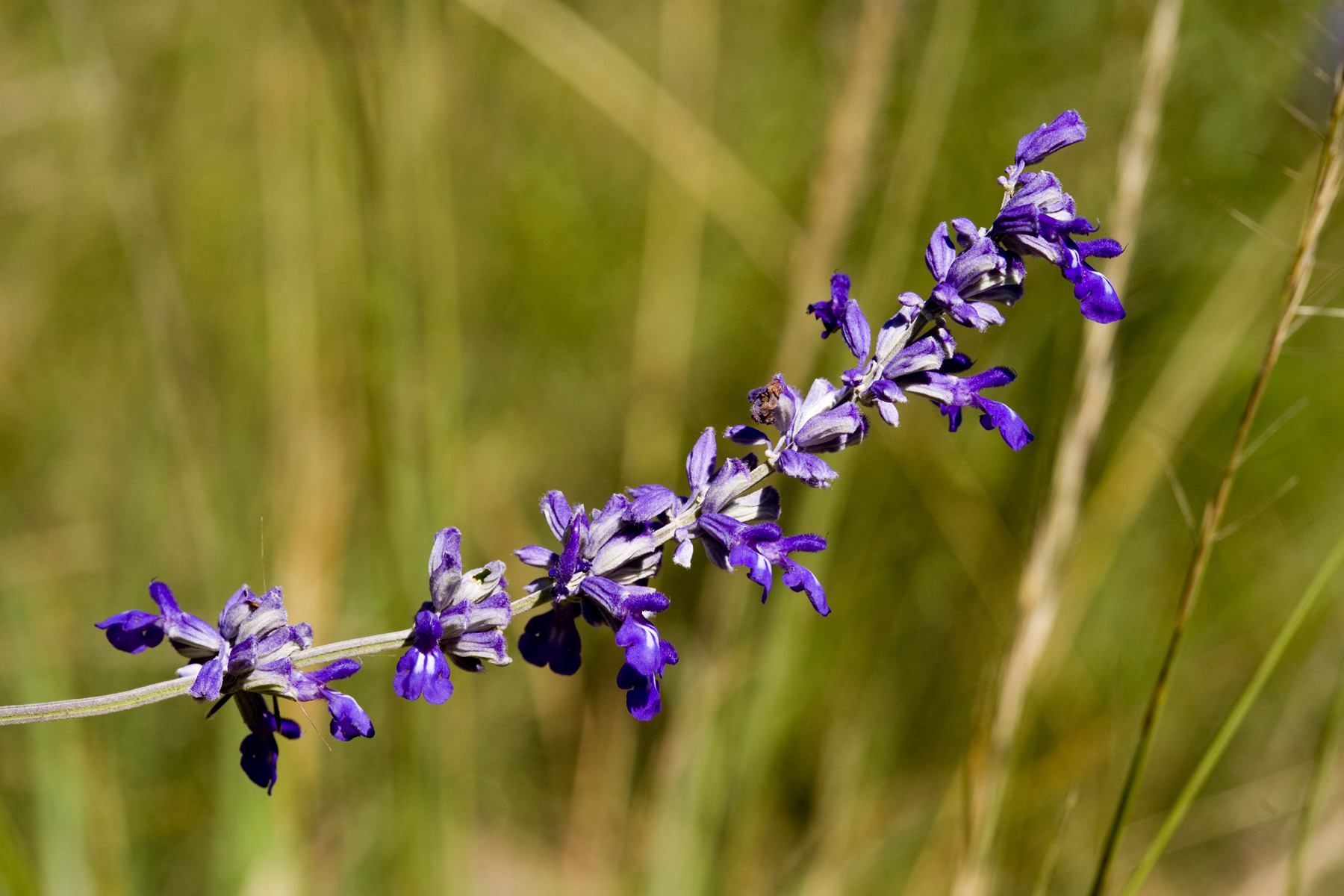
Salvia farinacea, commonly called Mealycup Sage or mealy blue sage, is a narrow-leaved, herbaceous perennial of the dry prairies, limestone slopes, and desert canyons of Texas, New Mexico, and Oklahoma. The name “mealycup” refers to the fine, white, powdery (farinose) hairs that coat the calyx — the cup-like structure holding each flower — giving it a frosted, mealy appearance that contrasts beautifully with the vivid violet-blue of the blooms above it.
In the wild, Mealycup Sage forms an upright to somewhat sprawling clump of narrow, aromatic, lance-shaped leaves topped from late spring through fall by slender spikes of two-lipped flowers. Unlike many of its velvety-leaved Salvia relatives, its foliage has a glossy, almost polished look, a useful field mark for telling it apart from similar native sages. The plant is remarkably heat- and drought-tolerant, thriving in exactly the kind of lean, rocky, sun-baked ground that defines much of its native range.
Mealycup Sage has also become one of the most widely planted ornamental salvias in American gardens far outside its native range, popularized through cultivars like ‘Victoria Blue.’ Gardeners within Texas, New Mexico, and Oklahoma looking to support local pollinators and keep their plantings regionally authentic should seek out the straight native species rather than a named cultivar bred primarily for uniform bedding-plant habit.
Identification
Mealycup Sage is an upright to sprawling herbaceous perennial, typically 18 to 36 inches (45–90 cm) tall, forming a clump of multiple square stems from a woody base.
Stems
Stems are square in cross-section, as in all mints, slender, and often branching in the upper half of the plant. They are usually covered in fine, whitish hairs, especially near the flowering tips, giving young growth a slightly frosted look that echoes the texture of the flower calyces.
Leaves
Leaves are opposite, narrowly lance-shaped to linear, 1 to 3 inches (2.5–7.5 cm) long, and mostly clustered in the lower half of the plant. Unlike the dull, velvety leaves typical of many Salvia species, Mealycup Sage leaves have a shiny, somewhat glossy upper surface, a distinguishing trait that separates it at a glance from look-alike native sages.
Flowers
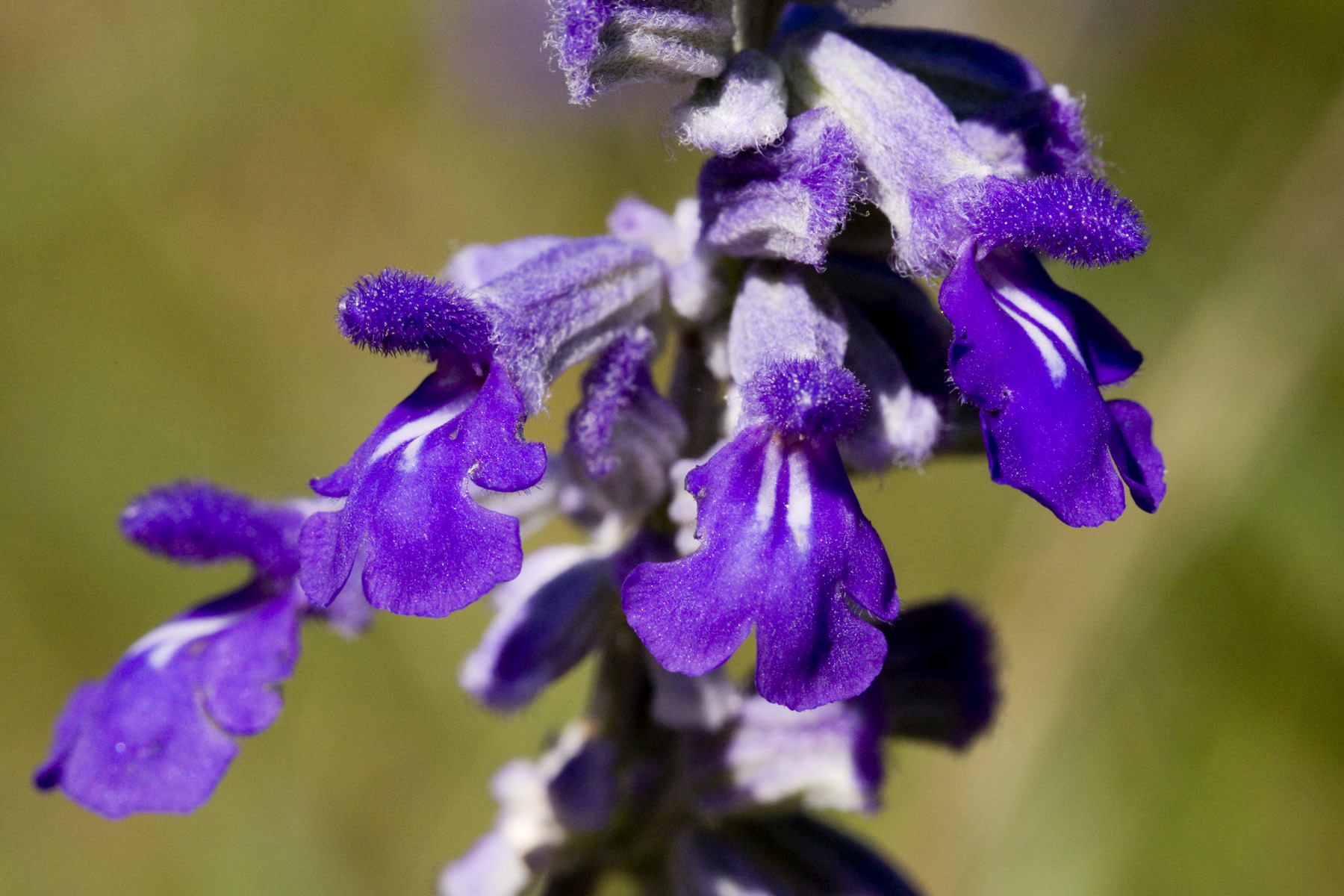
Flowers are borne in whorled spikes at the ends of the stems, each flower violet-blue to occasionally white, tubular, and two-lipped, roughly half an inch long. The defining feature is the calyx: densely covered in fine white or pale blue hairs that give it a dusty, “mealy” texture, visible even before the petals open. Bloom runs from roughly April through October, often continuing until the first hard frost, making this one of the longest-blooming native wildflowers across its range.
Fruit & Seeds
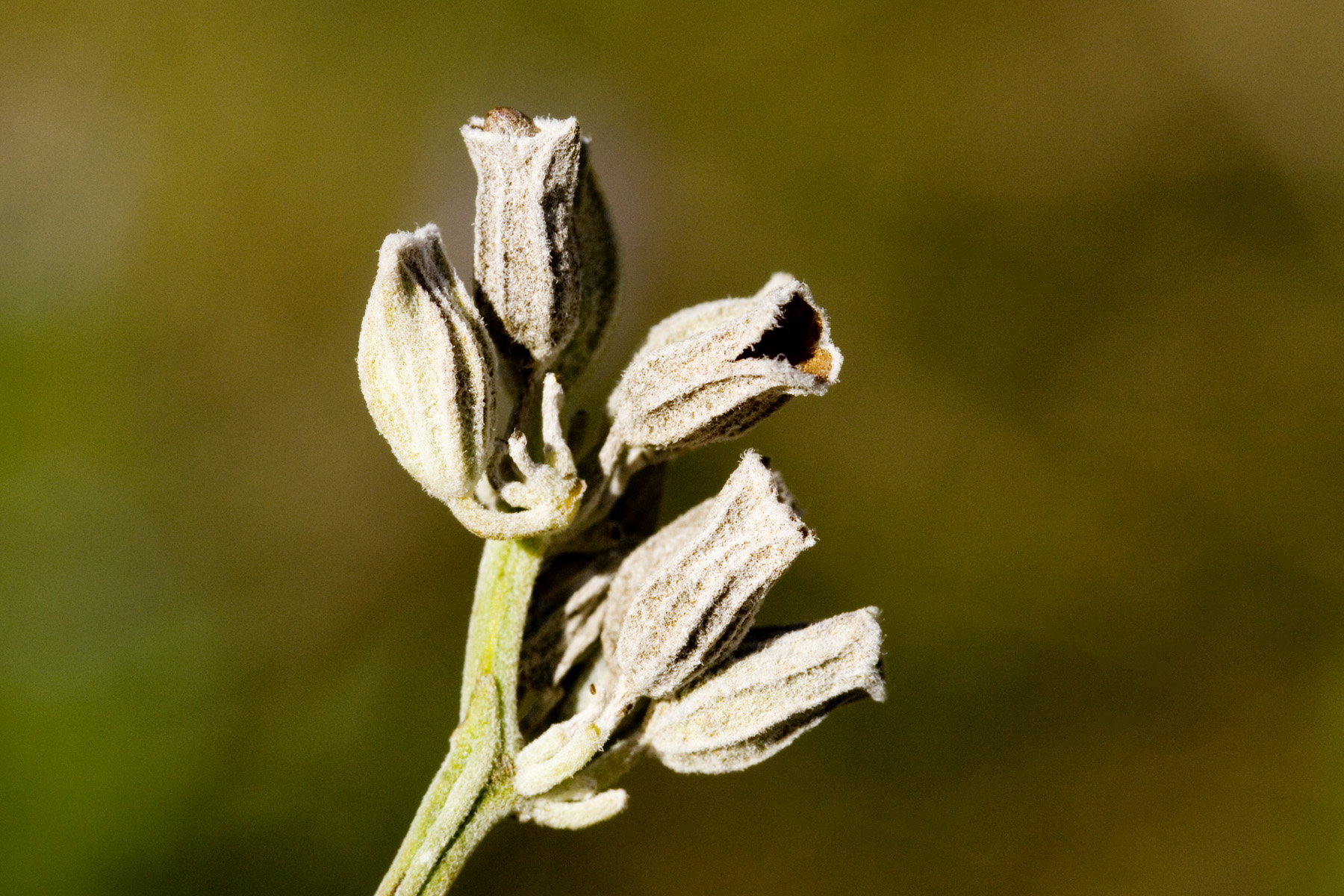
After flowering, each bloom leaves behind four small, dry nutlets cupped within the persistent, mealy calyx. The dried seed heads remain attractive and structural through fall and into winter, and are readily collected for propagation or left standing for seed-eating birds.
Quick Facts
| Scientific Name | Salvia farinacea |
| Family | Lamiaceae (Mint) |
| Plant Type | Herbaceous Perennial |
| Mature Height | 18–36 in (45–90 cm) |
| Mature Spread | 18–24 in (45–60 cm) |
| Growth Rate | Moderate to Fast |
| Sun Exposure | Full Sun to Light Shade |
| Water Needs | Low once established |
| Soil Type | Well-drained; rocky, calcareous or loamy |
| Soil pH | 6.5–8.0 (neutral to alkaline) |
| Bloom Time | April – October |
| Flower Color | Violet-blue (occasionally white) |
| Fall Color | None; foliage persists green into fall |
| Fruit | Small dry nutlets in mealy calyx |
| Deer Resistant | Yes (aromatic foliage) |
| USDA Hardiness Zones | 7–10 |
Native Range
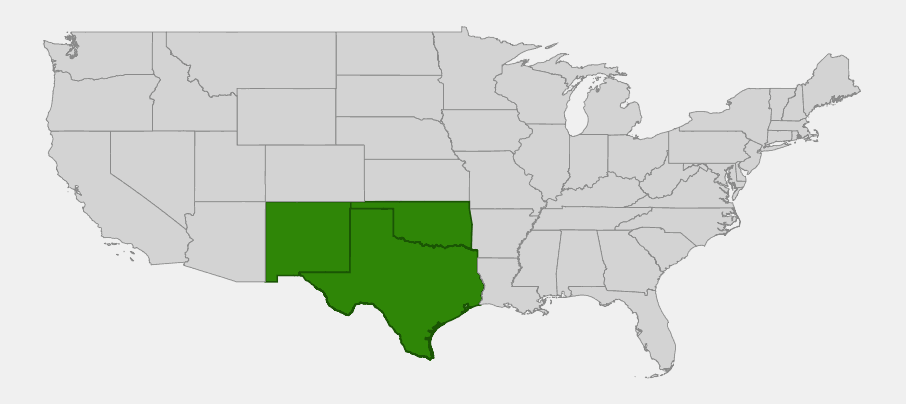
Mealycup Sage is native to Texas, New Mexico, and Oklahoma, extending south into Nuevo León, Mexico. Within Texas, it is especially characteristic of the limestone country of the Edwards Plateau and the Blackland Prairies, but it also occurs west into the Trans-Pecos and Chihuahuan Desert country, and across the Rio Grande Plains of South Texas.
It grows at a wide range of elevations, from prairie flats near sea level to desert canyons and foothills above 6,000 feet (1,800 m) in the mountains of West Texas and New Mexico. Typical habitat includes dry prairies, limestone glades, rocky canyon slopes, woodland edges, and other open, well-drained sites with calcareous or neutral soils — it is rarely found in wet or heavy-clay ground.
Mealycup Sage is widely planted as an ornamental well beyond this native range, including in gardens from the Gulf Coast to the Mid-Atlantic and parts of the West. Outside Texas, New Mexico, and Oklahoma, it should be considered a garden plant rather than a wild native, and gardeners in those other regions looking for a regionally native alternative should check their own state’s native plant resources.
📋 Regional plant lists featuring Mealycup Sage: Arizona & New Mexico
Growing & Care Guide
Mealycup Sage is forgiving and fast-growing, rewarding gardeners with months of steady bloom in exchange for sun and good drainage.
Light
Plant in full sun for the heaviest bloom; it will tolerate light afternoon shade, especially in the hottest parts of its range, but flowering slows noticeably in deeper shade.
Soil & Water
Well-drained soil is essential — this is a plant of rocky prairies and limestone slopes, not wet ground, and it is notably tolerant of alkaline, calcareous soils that frustrate many other perennials. Once established, it handles extended dry spells well, needing only occasional deep watering during the hottest months to keep blooming strongly. Avoid heavy, poorly drained clay or consistently damp sites.
Planting Tips
Set out plants or direct-sow seed in spring after the last frost. Space plants 18 to 24 inches apart to allow for their mature spread and good air movement. Mealycup Sage establishes quickly and often blooms the first year from seed.
Pruning & Maintenance
Deadheading spent flower spikes encourages continued rebloom through the long flowering season. In regions where it survives as a true perennial, cut plants back hard in late winter before new spring growth begins; in colder parts of its range it may behave as a reseeding annual or short-lived perennial, returning readily from seed even where the parent plant does not survive winter.
Propagation
Propagate by seed sown in spring, or by dividing established clumps in early spring. Self-sown seedlings are common around established plants and can be transplanted or thinned as needed.
Landscape Uses
Mealycup Sage’s long bloom season and drought tolerance suit it to many garden roles:
- Pollinator and butterfly gardens for season-long nectar
- Xeriscape and water-wise borders on rocky or alkaline soil
- Prairie and meadow restoration plantings within its native range
- Cottage-style perennial beds mixed with other Texas Hill Country natives
- Cut flower gardens, since the long spikes hold up well in arrangements
Wildlife & Ecological Value
Mealycup Sage’s exceptionally long bloom period makes it one of the more valuable season-long nectar sources across its native Texas, New Mexico, and Oklahoma range.
For Pollinators
Bees — including many native bee species alongside honeybees — and butterflies visit the flowers steadily from spring through fall, a bloom window that few other native perennials in the region can match. Its continuous flowering helps bridge nectar gaps between the shorter bloom periods of many prairie wildflowers.
For Birds
Hummingbirds, particularly during migration through Texas and the Southern Plains, regularly visit the tubular flowers, and seed-eating birds forage on the dried seed heads left standing into winter.
For Mammals
Aromatic foliage makes Mealycup Sage generally unpalatable to deer and rabbits, a practical benefit in the many parts of its range where browsing pressure is heavy.
Ecosystem Role
As a long-blooming component of Texas prairie and limestone glade plant communities, Mealycup Sage helps anchor pollinator food webs through the heat of summer, when many spring-blooming wildflowers have already finished. Its deep, drought-adapted root system also contributes to soil stability on the rocky slopes and thin prairie soils it favors.
Cultural & Historical Uses
Mealycup Sage has long been a familiar wildflower of the Texas Hill Country and Blackland Prairies, noted by early botanists and still a common sight along roadsides and limestone outcrops across its native range. It was formally described by English botanist George Bentham in 1833, and the specific epithet farinacea, Latin for “floury” or “mealy,” directly references the powdery texture of its calyx.
Unlike some of its Salvia relatives, Mealycup Sage does not have a significant documented history of Indigenous food or medicinal use; its primary cultural significance has been horticultural. Beginning in the twentieth century, selections and cultivars of the species — most famously ‘Victoria Blue’ — were bred for compact, uniform habit and became staples of American bedding-plant horticulture, spreading the species’ popularity far beyond its native Texas, New Mexico, and Oklahoma range.
Today, Mealycup Sage remains a touchstone plant for Texas native-plant gardening and Hill Country landscaping in particular, valued both for its long bloom season and as a readily available, reliably regional native for gardeners wanting to support local pollinators with an authentically wild Texas wildflower.
Frequently Asked Questions
Is Mealycup Sage the same as the ‘Victoria Blue’ salvia sold at garden centers?
‘Victoria Blue’ is a popular cultivar selected from this species for a compact, uniform bedding-plant habit. The wild species, Salvia farinacea, grows a bit larger and looser and is the better choice for gardeners specifically wanting to support local wildlife with a straight native plant.
Where is Mealycup Sage actually native?
Its native range is limited to Texas, New Mexico, and Oklahoma, extending into Nuevo León, Mexico. It is grown as an ornamental annual or perennial in many other states, but those plantings are garden specimens rather than wild native populations.
How long does Mealycup Sage bloom?
Remarkably long for a native perennial — typically from April through October, and sometimes until the first hard frost, especially with occasional deadheading.
Does Mealycup Sage need winter protection?
Within its native Texas, New Mexico, and Oklahoma range it generally survives as a true perennial. In colder climates outside that range it may die back over winter but often returns reliably from self-sown seed.
Is Mealycup Sage deer resistant?
Yes, generally. Its aromatic foliage makes it a lower-browse-pressure choice compared to many non-aromatic perennials, though no plant is completely deer-proof under heavy browsing pressure.

Looking for a nursery that carries Mealycup Sage?
Browse our native plant nursery directory: Texas · New Mexico & Oklahoma