
Autumn Sage (Salvia greggii)
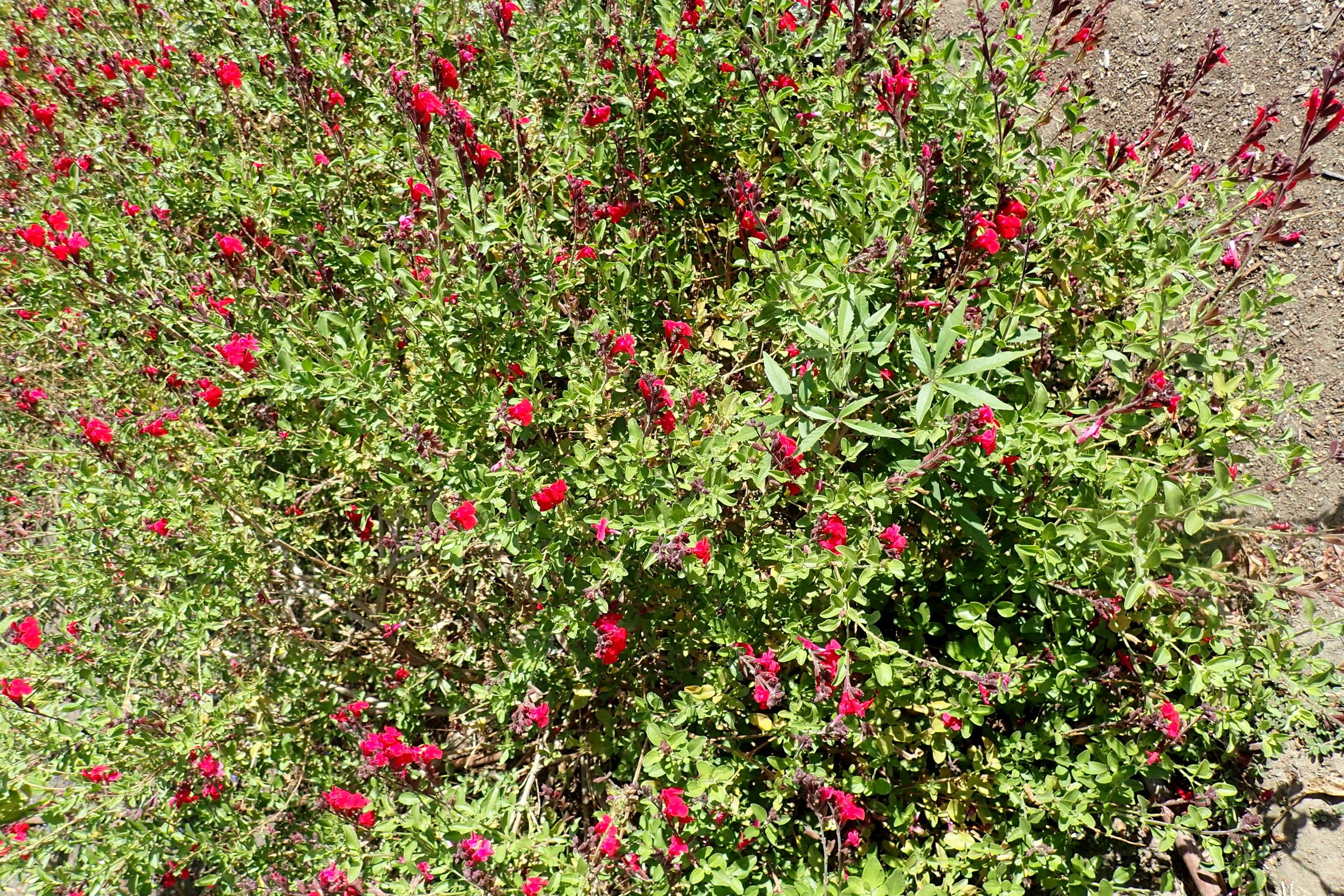
Salvia greggii, commonly called Autumn Sage or Cherry Sage, is a small, wiry-stemmed shrub in the mint family (Lamiaceae) native to the limestone hill country and dry canyons of central, south and west Texas. Despite the name, it is not restricted to autumn bloom: in the wild it flowers heaviest in spring and again in fall, with scattered blooms through the summer heat whenever rain allows. Its tubular, two-lipped flowers come in shades of red, pink, orange, purple or white depending on the population, and they are a magnet for hummingbirds working their way along rocky Texas hillsides.
In the wild, Autumn sage grows on well-drained, often rocky or limestone slopes across the Edwards Plateau and the dry hills of the Trans-Pecos, usually in full sun with minimal soil and almost no supplemental water once established. The plant forms a low, rounded mound 2 to 3 feet tall and wide, with small, mintily aromatic leaves that stay evergreen in mild winters and drop or go semi-deciduous where winters turn hard.
Autumn sage has become one of the most widely planted native shrubs in Texas gardens and beyond, prized for its long bloom season, toughness in heat and drought, and reliable hummingbird traffic. It is commonly sold well outside its native range — as far as the Southeast, the Mid-Atlantic and the Pacific states — where it performs as a garden plant rather than a true native; gardeners in those regions should treat it as an adapted ornamental, not a local native, and look first to species native to their own region.
Identification
Autumn sage is a low, many-branched subshrub, typically 2 to 3 feet tall and about as wide, though old plants on good sites can reach closer to 4 feet. The stems are slender and somewhat woody at the base, staying softer and greener toward the tips, which gives the whole plant a loose, airy look rather than a dense, clipped one.
Stems & Foliage
Young stems are green to reddish and slightly hairy, becoming light brown and woody with age. Leaves are opposite, small — usually ½ to 1 inch long — oval to elliptic, with a smooth or very finely toothed margin. They are a soft, dull green and release a mild, minty-resinous scent when brushed or crushed, a reliable clue that you are looking at a member of the mint family.
Flowers
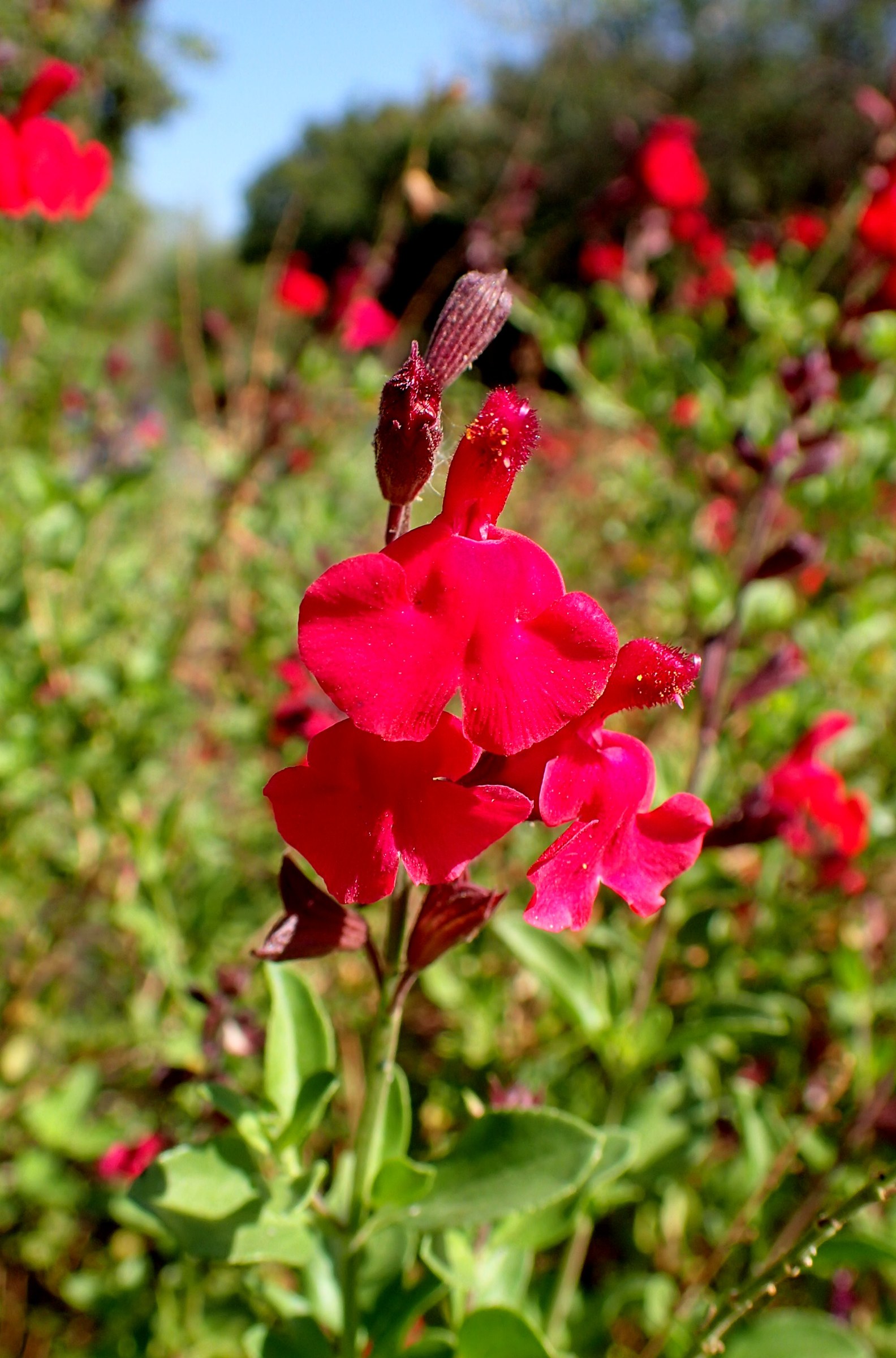
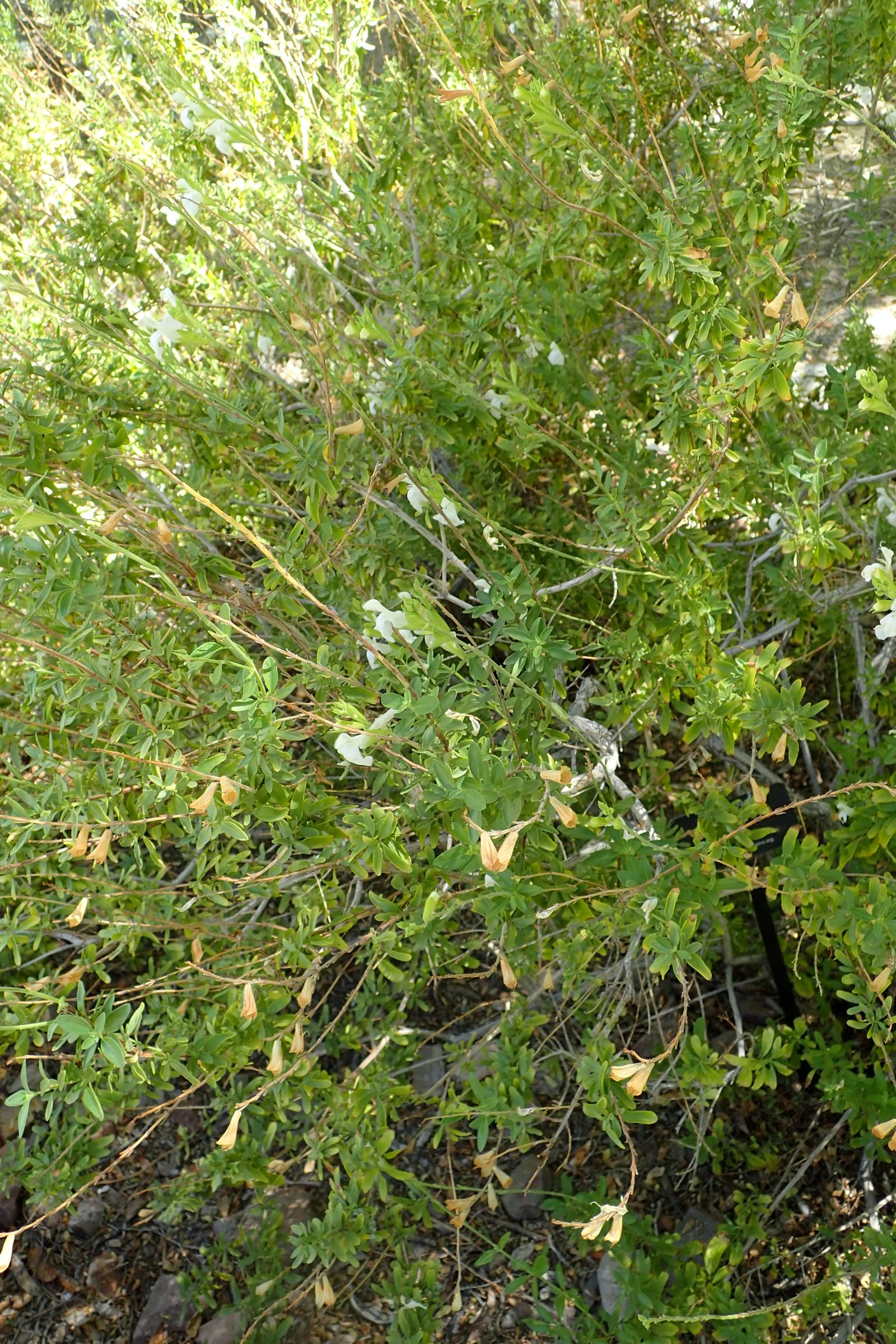
Flowers are borne in loose spikes (racemes) above the foliage, each flower about ¾ to 1 inch long with the classic two-lipped salvia shape: a small upper hood and a broader, three-lobed lower lip that serves as a landing platform for pollinators, though hummingbirds simply hover and probe. Flower color varies strikingly across the species’ range and in cultivation, from brick red and cherry pink to orange, magenta, purple and white, often with several colors present in a single wild population.
Fruit & Seeds
After flowering, each flower leaves behind a small dry calyx holding four tiny nutlets, typical of the mint family. The seed is not showy and is rarely the reason anyone notices the plant — the long bloom season is the main event.
Quick Facts
| Scientific Name | Salvia greggii |
| Family | Lamiaceae (Mint) |
| Plant Type | Woody-based perennial subshrub |
| Mature Height | 2–3 ft (to about 4 ft on good sites) |
| Mature Spread | 2–3 ft |
| Growth Rate | Moderate to fast |
| Sun Exposure | Full Sun to Part Sun |
| Water Needs | Low once established |
| Soil Type | Well-drained, rocky or limestone soils; also sand and loam |
| Soil pH | Neutral to alkaline; tolerates limestone |
| Bloom Time | March – November, heaviest spring and fall |
| Flower Color | Red, pink, orange, purple or white depending on population |
| Fall Color | None distinct; foliage stays green or semi-evergreen |
| Fruit | Inconspicuous dry nutlets |
| Deer Resistant | High (aromatic foliage discourages browsing) |
| USDA Hardiness Zones | 7–10 (deciduous in colder parts of zone 7) |
Native Range
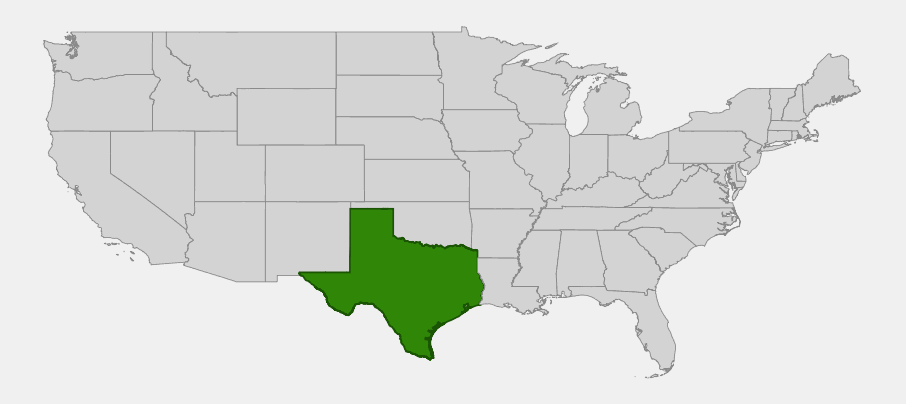
Autumn sage is native to Texas, where its range runs through the limestone hill country of the Edwards Plateau — the area around Austin, San Antonio, Kerrville and Bandera — and west through the drier canyons and mountains of the Trans-Pecos toward Big Bend. From there its range continues south into the Chihuahuan Desert of northern Mexico, reaching as far as San Luis Potosí. BONAP county records and the Lady Bird Johnson Wildflower Center both place the U.S. portion of its native range entirely within Texas; it is not a documented native of New Mexico or Arizona, though it is grown as an ornamental there and throughout the Southwest.
Typical habitat is rocky, well-drained slopes and canyon walls, often directly on limestone or caliche, in full sun to light shade along the margins of Ashe juniper and live oak woodlands. These are harsh sites — thin soil, intense summer heat, and long dry stretches — which is exactly why the species is such a dependable low-water garden plant anywhere its hardiness allows.
Because it roots and blooms so readily from cuttings, Autumn sage has become a nursery staple across the southern and western United States, sold under dozens of named color selections. None of that cultivated range should be read as native range: outside Texas and adjacent northern Mexico, Autumn sage is a well-behaved garden shrub, not a wild native plant, and it is worth saying so plainly since the species shows up so often in generic “southwestern native” plant lists that stretch its true range.
📋 Regional plant lists featuring Autumn Sage: Autumn sage’s native range (central and west Texas) is not fully covered by any current regional list on this site; see our full native plant directory to browse Texas natives.
Growing & Care Guide
Autumn sage is about as forgiving as a flowering shrub gets, provided you give it the one thing it truly demands: sharp drainage. Give it that, and it rewards you with bloom from spring frost to fall frost and almost no maintenance.
Light
Full sun produces the densest growth and the most flowers. Autumn sage also tolerates part sun or light afternoon shade, especially in the hottest parts of its range, where a little relief from the harshest sun can keep foliage looking fresher through midsummer. In too much shade, plants get leggy and bloom sparsely.
Soil & Water
Well-drained soil is non-negotiable; Autumn sage struggles and often rots in heavy, poorly drained clay, especially over winter. Rocky, limestone-based or sandy soils suit it best. Water regularly through the first growing season to establish a deep root system, then back off — established plants are genuinely drought tolerant and often do best with occasional deep watering rather than frequent light watering. Avoid planting in low spots where water collects.
Planting Tips
Plant in spring or fall so roots can establish before the stress of summer heat or winter cold. On clay soils, raise the planting area or amend generously with coarse grit to improve drainage, or plant on a slope. Space plants about 2 to 3 feet apart for a filled-in bed, allowing for their natural mounding habit.
Pruning & Maintenance
Autumn sage blooms best on newer growth, so a hard pruning in late winter — cutting the whole plant back by a third to half — keeps it compact and floriferous rather than woody and sparse. Light shearing or tip-pinching through the growing season encourages repeat flushes of bloom. Avoid heavy pruning in late fall, which can reduce winter hardiness.
Landscape Uses
- Hummingbird gardens, where its long bloom season keeps feeders busy from spring through fall
- Xeriscapes and rock gardens paired with other low-water Texas natives such as Scarlet Sage
- Low informal hedges along paths and borders
- Mixed perennial beds for season-long color with minimal watering
- Slope and bank plantings on rocky or caliche soils where many shrubs fail
- Container and patio plantings in hot, sunny spots
Wildlife & Ecological Value
Autumn sage’s long bloom season makes it an unusually reliable nectar source through a Texas summer that leaves many other plants dormant or scorched.
For Pollinators
Bees, including native bees and honeybees, work the flowers steadily, and the tubular shape is especially well suited to long-tongued pollinators. Butterflies visit as well, though the flower form favors hovering or probing visitors over the broad landing-pad flowers that butterflies prefer most.
For Birds
Hummingbirds are the signature visitors — Black-chinned and Ruby-throated hummingbirds in particular rely on Autumn sage’s red and pink forms through migration and the breeding season, and the plant’s near-continuous bloom from spring through fall fills gaps when other nectar plants are between flushes.
For Mammals
The aromatic foliage is rarely browsed, which is part of why the species holds up so well in deer country. It offers modest cover value for small wildlife within its low, branching structure.
Ecosystem Role
On the thin, rocky soils of the Edwards Plateau, Autumn sage is one of a relatively small group of shrubs able to establish and persist, helping stabilize caliche slopes and providing a long nectar season in a landscape where many wildflowers bloom in a single short burst.
Cultural & Historical Uses
The species name honors Josiah Gregg, a 19th-century trader and naturalist who traveled extensively through Texas and the Southwest in the 1840s and collected plant specimens that were later sent to botanists for description; more than twenty species carry his name as a result. Autumn sage itself does not have a well-documented history of use by Indigenous peoples in the way some of its sage relatives do, and no medicinal use is established for the species — if you see historical claims about culinary or medicinal sage uses, they generally refer to other, unrelated “sage” plants, not to this one.
Its modern history is almost entirely horticultural. Texas and Southwestern nurseries began breeding and naming color selections of Autumn sage in the late 20th century, and it is now one of the most recognizable low-water flowering shrubs sold across the southern and western United States, prized above all for blooming through heat that stops most other perennials cold.
Within its native Hill Country range, Autumn sage remains a familiar sight along rocky roadcuts and canyon trails, often the only spot of color on an otherwise bleached midsummer hillside.
Frequently Asked Questions
Is Autumn sage the same as culinary sage?
No. Culinary sage is Salvia officinalis, a different species from the Mediterranean. Autumn sage is grown for its flowers and wildlife value, not as a kitchen herb, and there is no established food or medicinal use for the leaves.
Is Salvia greggii native to New Mexico or Arizona?
No. Its documented native range is limited to Texas and adjoining northern Mexico. It is widely and successfully grown as an ornamental in New Mexico, Arizona and well beyond, but those plantings are cultivated, not wild populations.
Why do the flowers come in so many colors?
Wild populations across the Texas Hill Country and Trans-Pecos naturally include red, pink, orange, purple and white forms, sometimes within the same canyon. Nurseries have selected and named many of these color forms as named cultivars.
How much water does Autumn sage need once established?
Very little. After the first year of regular watering to build roots, established plants are genuinely drought tolerant and often bloom best with infrequent, deep watering rather than frequent sprinkling, which can encourage root rot.
Will Autumn sage survive a hard freeze?
Established plants tolerate typical Texas Hill Country winters and recover from light frost damage by resprouting from the base. In the coldest part of its hardiness range, expect it to die back to the ground in a hard freeze and regrow from the roots in spring.

Looking for a nursery that carries Autumn Sage?
Browse our native plant nursery directory: Texas