Wingstem (Verbesina alternifolia)
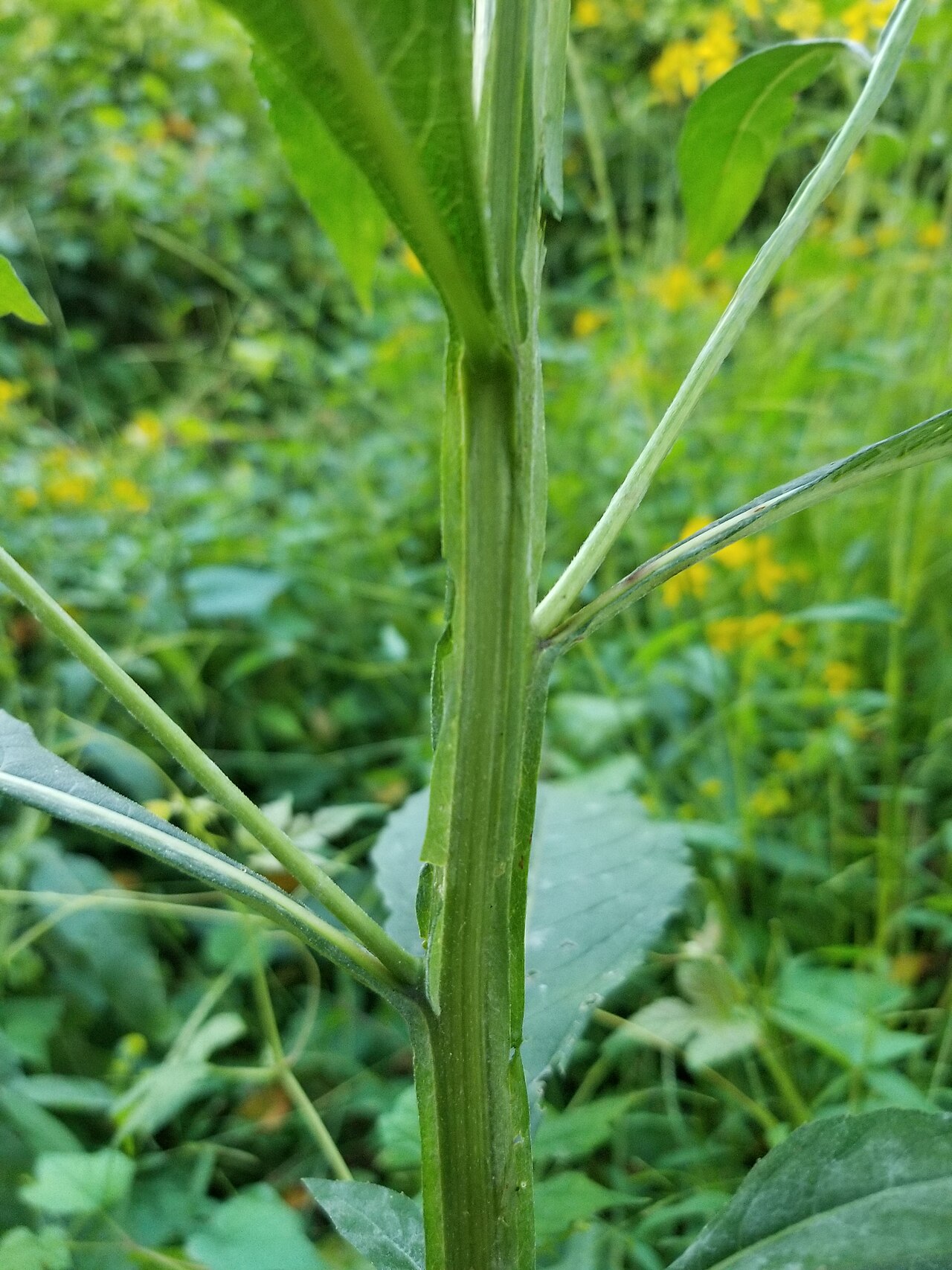
Verbesina alternifolia, commonly called Wingstem or yellow ironweed, is a tall, coarse-textured perennial wildflower of the Asteraceae (aster family) found across a huge swath of the eastern and central United States. It is named for the distinctive “wings” — thin, leafy ridges formed by the leaf bases running down the stem — that make it identifiable at a glance even without flowers. Despite the second common name, it is not related to the true ironweeds (Vernonia); the name comes only from its coarse, upright habit.
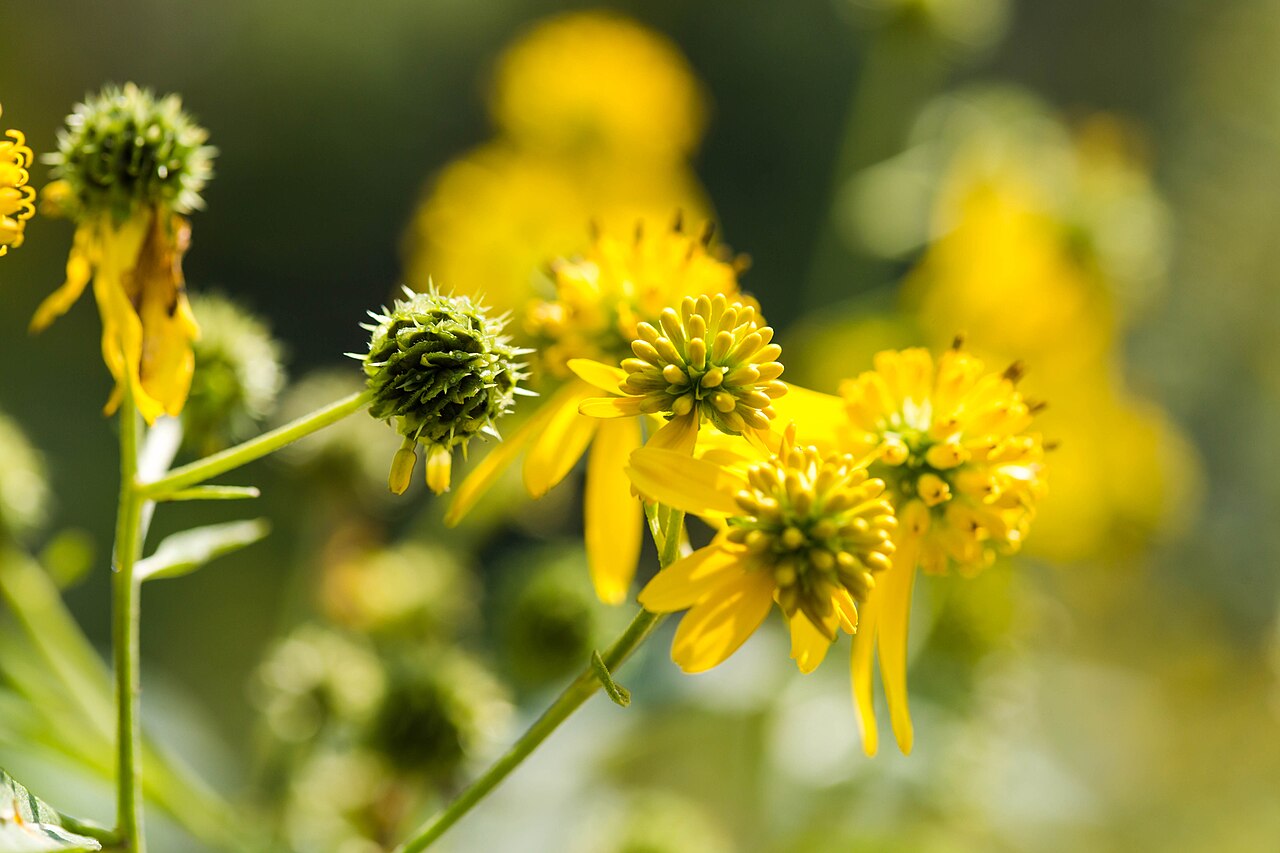
Wingstem favors the moist, fertile low ground it shares with floodplain forests and streamside meadows, where it often forms substantial colonies by spreading underground rhizomes. Each unbranched stem shoots straight up, 3 to 8 feet tall, before branching into a loose, flat-topped spray of flower heads in late summer. The flowers have an intentionally untidy look — a handful of drooping yellow rays surrounding a ball of greenish-yellow disk florets — that is easy to recognize once you know to look for it.
For native gardeners with a damp, sunny-to-partly-shaded corner, Wingstem is an excellent choice: it asks for almost nothing, blooms for weeks when few other tall wildflowers are still going, and is one of the best late-season nectar sources for long-tongued bees and butterflies in its range. It spreads with some enthusiasm, so give it room, or plant it where a loose, naturalistic colony is exactly what you want.
Identification
Wingstem is an upright, usually unbranched herbaceous perennial reaching 3 to 8 feet tall, branching only near the top where the flower heads are held. It dies back to the ground each winter and resprouts from a woody rootstock and spreading rhizomes the following spring.
Stems
The defining feature is the stem itself: the base of each leaf runs down and fuses to the stem, forming narrow, raised, leafy wings that extend for most of the stem’s length. These wings are green, slightly toothed along their outer edge, and visible from a short distance, making Wingstem one of the easiest tall composite wildflowers to identify outside of bloom.
Leaves
Leaves are simple, lance-shaped to elliptic, 4 to 10 inches long, with a toothed margin and a rough, sandpapery texture on both surfaces. Leaf arrangement is usually alternate on mature plants, though young first-year seedlings often show opposite leaves before switching to the alternate pattern as the plant matures.
Flowers & Seeds
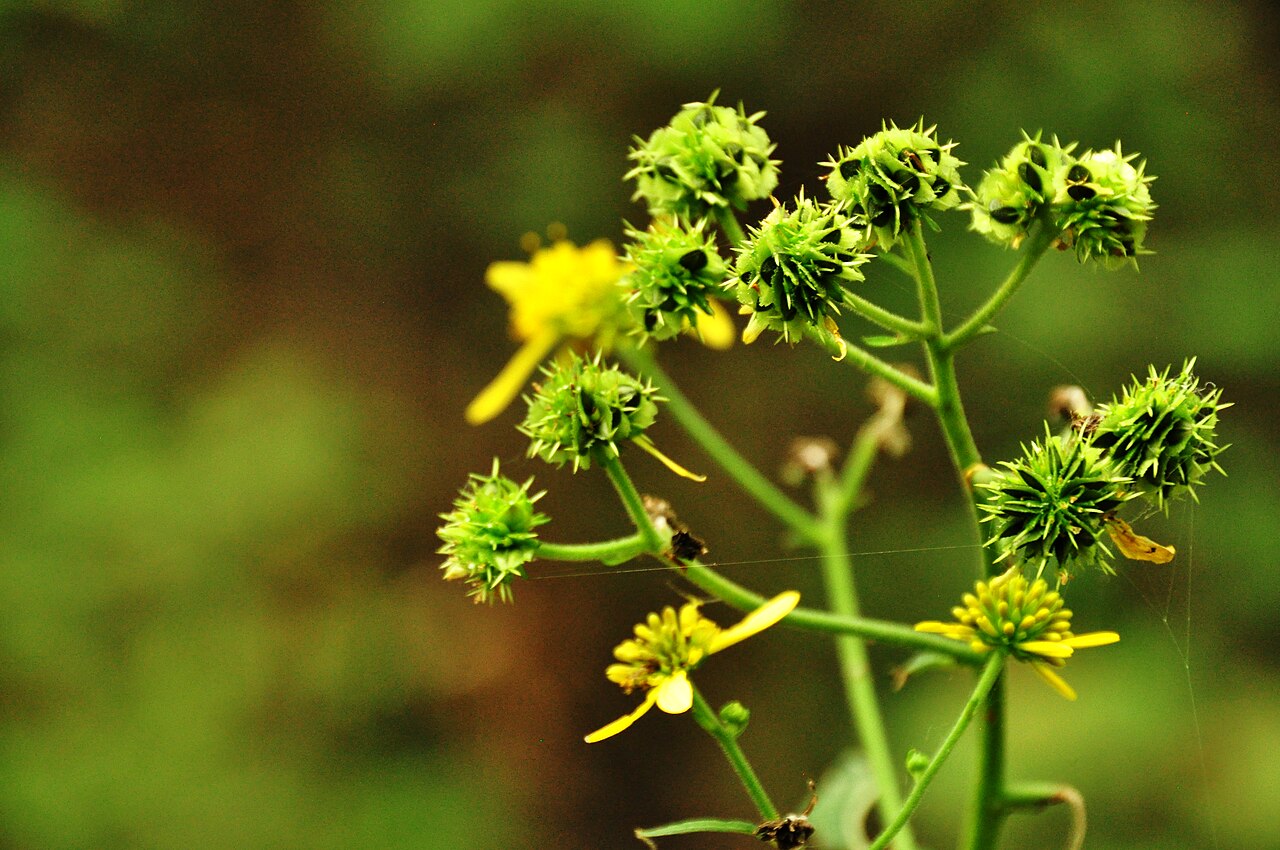
Flower heads appear from late July into October, each about 1 to 2 inches across, with just a handful of yellow ray florets (often as few as 2 to 5, each notched at the tip and curling downward) surrounding a dense, greenish-yellow dome of tubular disk florets. Heads are borne in loose, flat-topped to rounded clusters of a dozen or more at the top of the plant. After bloom, the flower heads dry into spiky, bur-like seed heads that persist into winter and are an easy identification feature on their own.
Quick Facts
| Scientific Name | Verbesina alternifolia (syn. Actinomeris alternifolia) |
| Family | Asteraceae (Aster) |
| Plant Type | Herbaceous Perennial Wildflower |
| Mature Height | 3–8 ft |
| Mature Spread | 1–3 ft per stem (colonies spread wider by rhizome) |
| Growth Rate | Fast |
| Sun Exposure | Full Sun to Part Shade |
| Water Needs | Moderate to High |
| Soil Type | Moist, rich loam; tolerates occasional flooding |
| Soil pH | 5.5–7.5 (slightly acidic to neutral) |
| Bloom Time | Late July – October |
| Flower Color | Bright yellow |
| Fall Color | Foliage yellows and dies back after frost |
| Fruit | Dry, spiky, bur-like seed heads; not a food plant for people |
| Deer Resistant | Yes (foliage is bitter and rarely browsed) |
| USDA Hardiness Zones | 4–9 |
Native Range
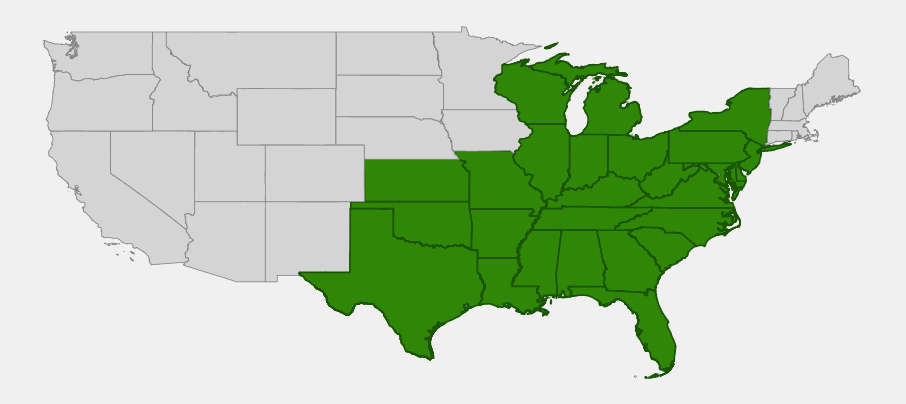
Wingstem is native across most of the eastern and central United States, from New York and Pennsylvania south through the Mid-Atlantic and the Southeast to Florida and east Texas, and west through the Ohio Valley and the Mississippi Valley to Kansas and Missouri. It is absent as a native plant from New England north of New York, from the Upper Midwest (Minnesota and Iowa), and from the Great Plains and West.
Across this range it grows in consistently moist, fertile ground: floodplain forests and their edges, streamside meadows, moist bottomland woods, and the damp borders between woodland and open meadow. It also readily colonizes disturbed ground with adequate moisture, such as ditches and low roadsides, and can behave somewhat weedy in rich, wet soil.
Gardeners west of the Plains, in the Pacific Northwest, or in northern New England should note that Wingstem is not native to those regions even where it is occasionally cultivated; check a regional native plant list before planting it outside its eastern and central range.
📋 Regional plant lists featuring Wingstem: New York, Pennsylvania & Northern New Jersey · Delaware, Southern New Jersey & Long Island · Maryland, Virginia & West Virginia · North Carolina & South Carolina · Georgia, Alabama & Mississippi · Kentucky & Tennessee · Ohio & Indiana · Illinois, Iowa & Missouri · Michigan, Wisconsin & Eastern Minnesota · Nebraska, Kansas & Eastern Colorado · Arkansas, Louisiana, Eastern Oklahoma & Eastern Texas
Growing & Care Guide
Wingstem is about as low-maintenance as tall native wildflowers get, provided you give it the moist, fertile soil it asks for and enough room for it to spread. It rewards very little fuss with weeks of late-season bloom when most other tall perennials are finishing up.
Light
Full sun produces the sturdiest stems and the heaviest bloom; in part shade, especially under high, open tree canopy near a stream, plants grow a bit taller and lankier but still flower well. Deep shade reduces flowering substantially.
Soil & Water
Give it moist to consistently wet, fertile soil — the kind found along streambanks and in bottomland woods. It tolerates occasional flooding and short dry spells once established, but performs poorly in dry, sandy, or nutrient-poor ground. No special pH amendment is usually needed in average garden loam.
Planting Tips
Plant in spring after the last frost, siting it where its height and spreading habit won’t crowd smaller neighbors — a streambank, rain garden edge, or the back of a moist perennial border all work well. Space plants at least 2 feet apart to allow for rhizome spread, and stake in very windy, exposed sites, since the tall, unbranched stems can lean after heavy rain.
Pruning & Maintenance
Cut stems back to the ground after frost blackens the foliage, or leave the dried seed heads standing through winter for birds and winter interest, then clear them in early spring. If the colony spreads further than wanted, dig and remove unwanted rhizomes in spring; division at that time is also the easiest way to share or relocate plants.
Landscape Uses
Wingstem is best used where its scale and spreading habit are an asset rather than a problem:
- Rain gardens and streambank plantings in consistently moist soil
- Naturalized meadow or woodland-edge colonies where it can spread freely
- Late-season pollinator plantings alongside Joe-Pye Weed and Ironweed
- Back-of-border accent in a large, informal perennial bed
- Erosion-holding cover on damp slopes near water
Wildlife & Ecological Value
Wingstem’s late-summer bloom window makes it an outsized contributor to pollinator and bird habitat in the weeks before frost, when many other nectar sources have finished.
For Pollinators
The flowers are especially attractive to long-tongued insects — bumblebees, honeybees, and a range of butterflies and skippers — which can reach the nectar tucked at the base of the disk florets. Short-tongued insects such as many flies and wasps visit less often. It is also a larval host plant for the gold moth and the silvery checkerspot butterfly.
For Birds
Seeds are eaten by goldfinches and other seed-eating songbirds through fall and into winter, and the dense summer growth offers cover for ground-feeding birds along the floodplain edges where Wingstem typically grows.
For Mammals
The bitter foliage is rarely browsed by white-tailed deer or rabbits, which is part of why established colonies can grow so thickly undisturbed — a practical advantage in gardens where deer pressure limits other flowering perennials.
Ecosystem Role
In floodplain forests and wet meadows, Wingstem’s spreading rhizomes help stabilize damp, disturbance-prone soil, and its dense colonies provide structure and late-season nectar in habitats that can otherwise go quiet after midsummer. It readily recolonizes disturbed, flood-scoured ground, helping these moist habitats recover their plant cover after high water.
Cultural & Historical Uses
Wingstem does not have the deep documented history of food or medicinal use that many other eastern wildflowers carry, but its abundance along rivers and in bottomland forests made it a familiar sight to Indigenous peoples and early settlers moving through the eastern floodplains. Its common name “yellow ironweed” reflects an old, informal habit of lumping coarse, late-blooming yellow composites together with the unrelated true ironweeds in folk usage, rather than any shared chemistry or history between the two groups.
In more recent decades, Wingstem has become a recognizable late-summer wildflower along greenway trails, urban parks, and river corridors throughout its range, often appreciated simply as a reliable, low-maintenance source of color when many spring and early-summer wildflowers have finished blooming.
Today its main interest is horticultural and ecological rather than historical: it is increasingly offered by native plant nurseries for rain gardens and pollinator plantings, valued for exactly the toughness and late bloom time that made it a background presence in wild floodplain meadows for so long.
Frequently Asked Questions
Is Wingstem the same plant as ironweed?
No. “Yellow ironweed” is just a folk name for Wingstem; true ironweeds are a different genus, Vernonia, with purple rather than yellow flowers. Wingstem is a Verbesina, in the aster family alongside sunflowers and black-eyed Susans.
Will Wingstem take over my garden?
It spreads by rhizome and can form substantial colonies in consistently moist, fertile soil, so give it room or plan to divide and thin it periodically. In drier or less fertile soil it spreads much more slowly.
Does Wingstem need staking?
Established plants in reasonably sheltered sites usually stand on their own, but very exposed, windy locations or unusually rich soil can produce tall, top-heavy stems that benefit from a stake or discreet support.
Is Wingstem deer resistant?
Generally yes — the bitter foliage is rarely a preferred browse for white-tailed deer, which makes it a dependable choice in gardens with heavy deer pressure.
When does Wingstem bloom, and for how long?
Typically from late July into October depending on latitude, giving several weeks of continuous bloom right when many other tall native wildflowers are winding down for the year.

Looking for a nursery that carries Wingstem?
Browse our native plant nursery directory: Illinois, Indiana & Kansas · Ohio, Oklahoma, North Carolina, New Jersey & New York · Michigan, Missouri, Louisiana, Mississippi, Kentucky & Maryland · Wisconsin & West Virginia · Arkansas & Alabama · Georgia, Florida & Delaware · South Carolina, Tennessee, Virginia, Pennsylvania & Texas