Damianita (Chrysactinia mexicana)
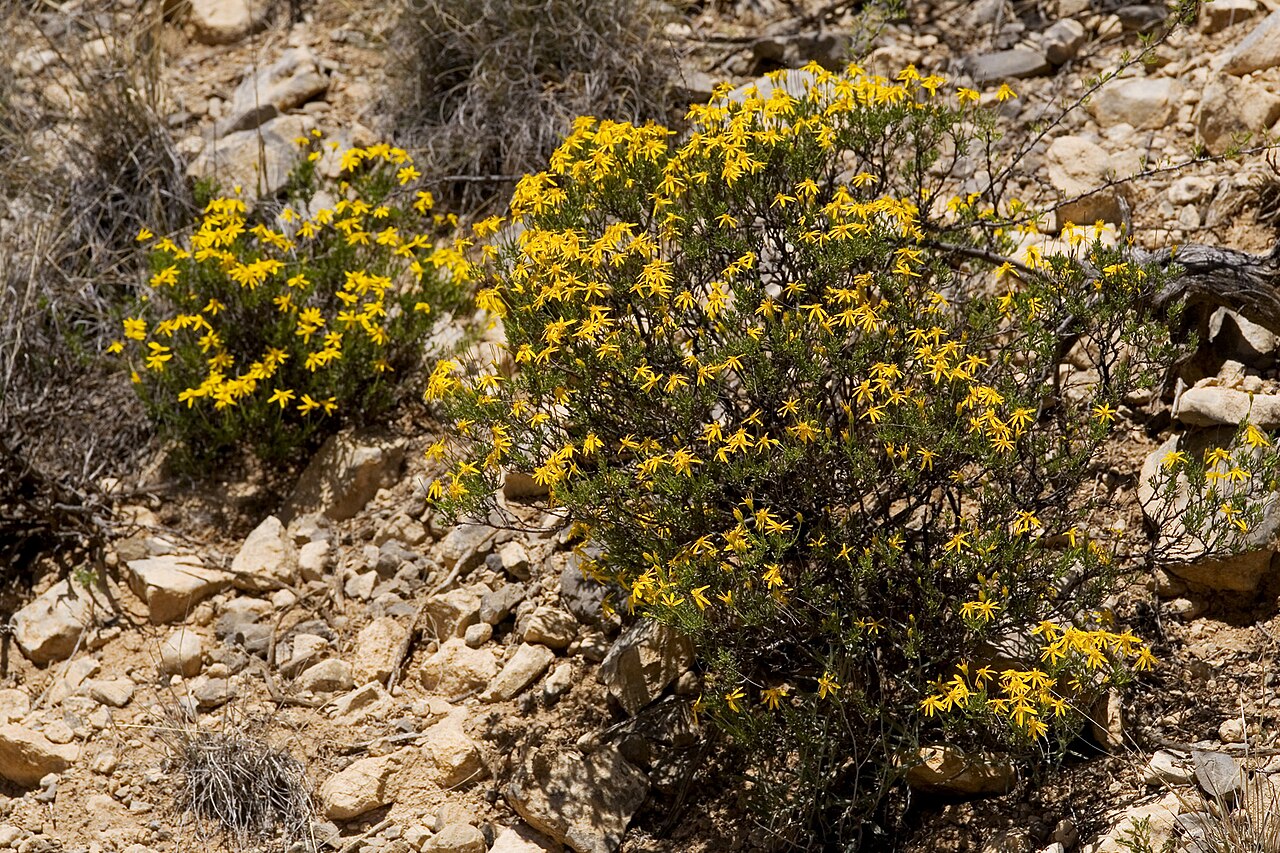
Chrysactinia mexicana, commonly known as damianita or damianita daisy, is a low, rounded, evergreen subshrub native to the limestone hills and desert grasslands of west and south Texas and southern New Mexico, extending south into the Chihuahuan Desert of Mexico. A member of the Asteraceae (aster or sunflower family), it is beloved in Southwestern gardens for its tidy mounded form, aromatic foliage, and an extravagant late-spring flush of bright yellow, daisy-like flowers that can nearly hide the plant’s dark green leaves.
In its native habitat, damianita grows directly out of thin, rocky, often limestone-derived soils on dry slopes, caliche flats and desert grassland, typically no more than 1,500 to 6,500 feet in elevation. Individual plants form neat, rounded cushions 12 to 24 inches tall and wide, built from many thin, wiry stems densely clothed in short, needle-like, resinous leaves. The foliage releases a distinctive sharp, resinous fragrance when brushed or crushed, a trait shared with several of its desert-adapted relatives.
Damianita’s combination of extreme drought tolerance, cold hardiness well below what many assume for a desert plant, and a long, showy bloom period has made it one of the most widely planted native shrubs in Texas and New Mexico xeriscaping. It thrives on neglect, rewarding gardeners who resist the urge to overwater or over-fertilize it.
Identification
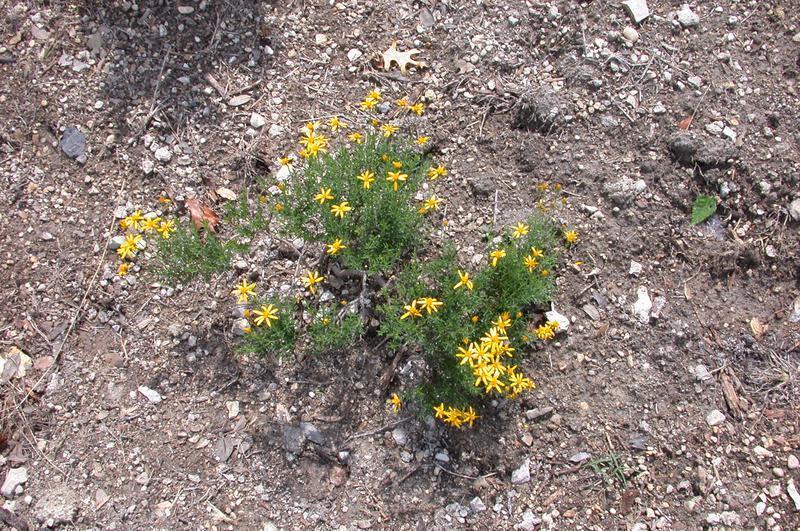
Damianita is a small, rounded, woody-based subshrub with a distinctive fine, needle-leaved texture that sets it apart from most other Southwestern perennials.
Stems & Growth Form
The plant develops many thin, wiry stems radiating upward and outward from a central woody base, creating a dense, rounded or dome-shaped mound typically 1 to 2 feet tall and slightly wider. Older plants can become somewhat woody and open at the center, which is one reason occasional light shearing keeps the form tight.
Leaves
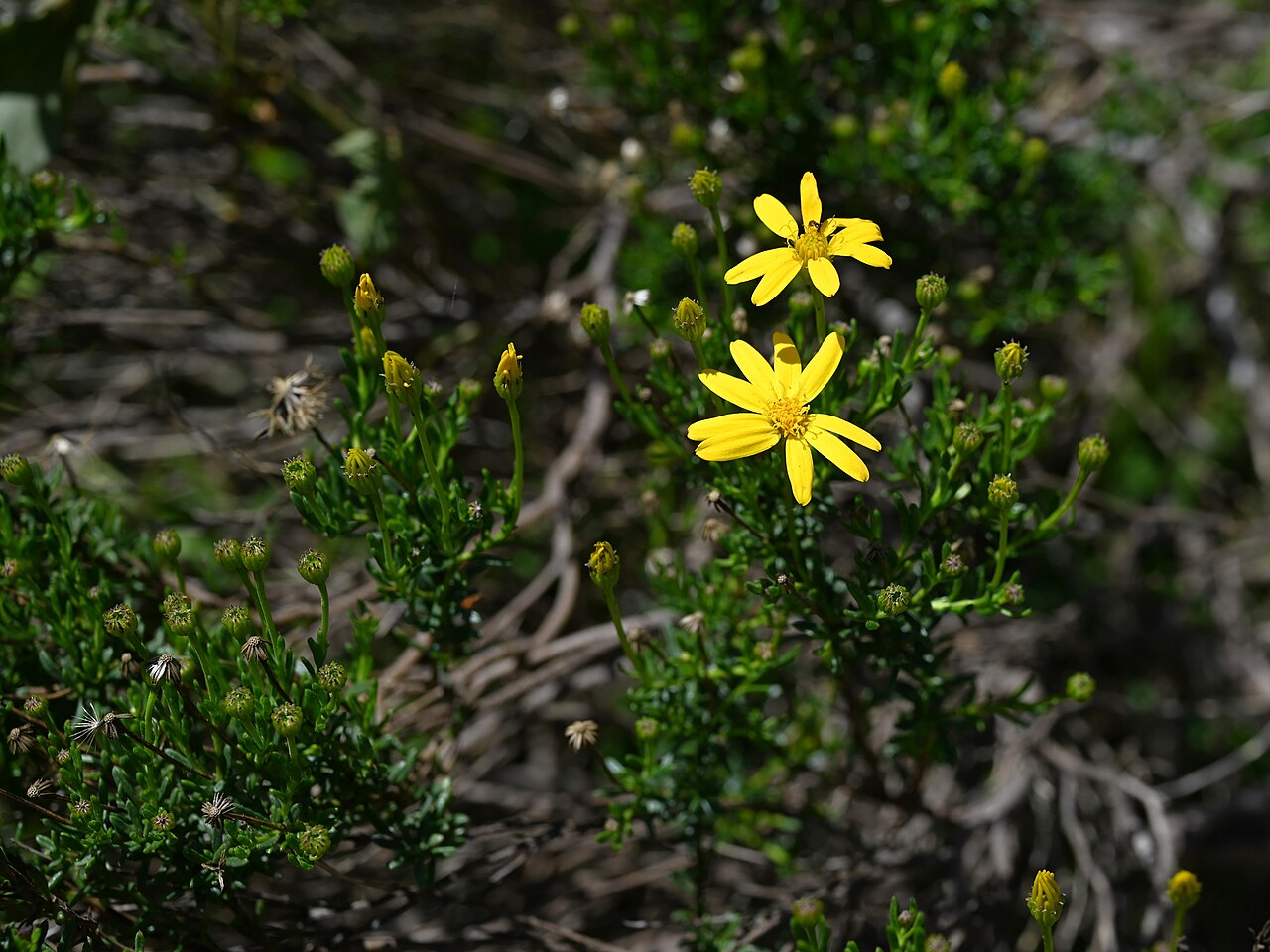
Leaves are small, narrow and needle-like, under ⅜ inch long and less than 1/16 inch wide, crowded densely along the stems. Dark green and dotted with tiny glandular pits visible with a hand lens, the leaves are strongly aromatic, resinous, and evergreen, giving the plant year-round structure even when not in bloom.
Flowers & Fruit
From April through June, and sporadically after summer rains into fall, damianita produces a profusion of bright golden-yellow, daisy-like flower heads about ¾ to 1 inch across, each with 8 to 10 broad ray florets surrounding a central disk. The bloom is so dense in a good year that the foliage can be almost completely obscured. Flowers give way to small, dry, single-seeded fruits (cypselae) typical of the sunflower family, each tipped with a tuft of bristles that aids wind dispersal.
Quick Facts
| Scientific Name | Chrysactinia mexicana |
| Family | Asteraceae (Aster/Sunflower) |
| Plant Type | Evergreen subshrub |
| Mature Height | 1–2 ft |
| Mature Spread | 1.5–2.5 ft |
| Growth Rate | Slow to moderate |
| Sun Exposure | Full Sun |
| Water Needs | Low |
| Soil Type | Rocky, caliche or limestone-derived, well-drained |
| Soil pH | Neutral to alkaline |
| Bloom Time | April – June, with sporadic rebloom after rain |
| Flower Color | Golden yellow |
| Fall Color | Evergreen, no notable fall color change |
| Fruit | Small bristle-tipped dry achenes |
| Deer Resistant | Yes (aromatic, resinous foliage) |
| USDA Hardiness Zones | 7–10 |
Native Range
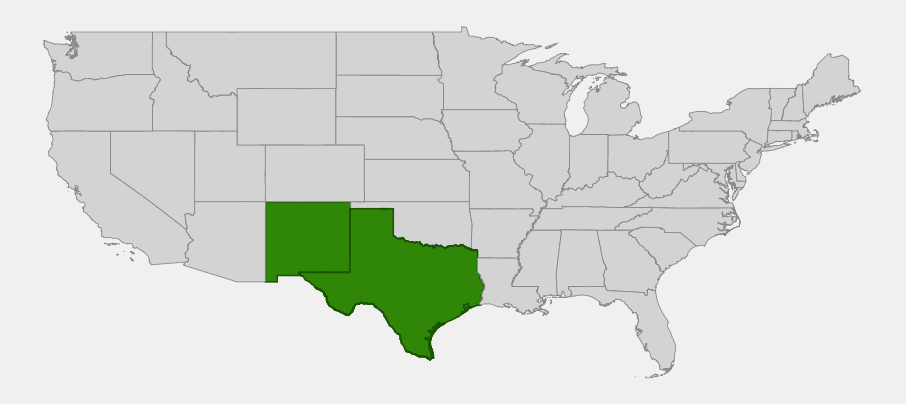
Damianita is native to the Chihuahuan Desert region, occurring from the Trans-Pecos and Edwards Plateau of west and south-central Texas west into the bootheel and southern desert grasslands of New Mexico, and south through the Mexican states bordering the Rio Grande. Within this range it favors dry limestone and caliche substrates, from flat desert grassland to rocky foothill slopes.
It is characteristically found growing directly from crevices in exposed limestone or on thin, gravelly caliche soils where few other shrubs can establish, often alongside creosote bush, sotol, and various agaves and cacti. Its tolerance of intense summer heat, alkaline soils and extended drought reflects the harsh conditions of its native Chihuahuan Desert grassland and scrubland habitat.
Although damianita is sold and planted as an ornamental well beyond Texas and New Mexico, including in parts of Arizona and California, those plantings are horticultural rather than part of its natural range; gardeners outside west Texas and southern New Mexico should treat it as an introduced xeriscape plant rather than a locally native one.
📋 Regional plant lists featuring Damianita: South and West Texas · Arizona & New Mexico
Growing & Care Guide
Damianita is close to a perfect low-maintenance shrub for hot, dry, alkaline-soil gardens — it simply needs sun, sharp drainage, and to be left alone.
Light
Give damianita full sun. It is one of the most sun- and heat-tolerant native shrubs available for Southwestern landscapes and will become leggy, sparse-flowering and prone to disease in shade.
Soil & Water
This species demands sharp drainage and is unmatched in rocky, caliche or limestone gravel soils, where it is virtually immune to the summer droughts that stress other landscape plants. It tolerates strongly alkaline soil without any amendment and actually performs better in lean, mineral soil than in rich garden beds. Once established, usually within one growing season, damianita needs no supplemental irrigation in its native range except during extended extreme drought. Overwatering, rich soil, or heavy mulch against the crown are the most common causes of root and crown rot.
Planting Tips
Plant container specimens in fall or early spring to allow roots to establish before summer heat arrives. Space plants 18 to 24 inches apart for a continuous low hedge or massed planting, or further apart to showcase individual mounds among rock and gravel. Avoid planting in low spots where water collects after storms.
Pruning & Maintenance
Light shearing after the main spring bloom keeps damianita’s mound tight and encourages denser growth and a stronger rebloom; plants left unpruned for many years can become woody and open in the center. Remove any dead stems in late winter. Damianita has no significant pest or disease problems when grown in appropriately lean, well-drained soil.
Landscape Uses
Damianita’s compact form and long bloom season make it versatile in xeric landscapes:
- Rock gardens and gravel beds where its mounded form and bloom stand out
- Low border or informal hedge massed along a dry, sunny edge
- Caliche and limestone slope restoration on Edwards Plateau or Trans-Pecos properties
- Pollinator and xeriscape gardens paired with agave, sotol and cacti
- Container planting on hot patios where reflected heat would stress less tolerant plants
- Erosion control on dry, rocky banks
Wildlife & Ecological Value
Damianita’s dense spring and fall bloom periods make it a valuable, reliable nectar source in the harsh Chihuahuan Desert landscape, where flowering resources can otherwise be scarce for much of the year.
For Pollinators
The bright yellow flowers attract a wide variety of native bees, small butterflies and other beneficial insects, particularly during the heavy spring bloom. Because damianita often reblooms after summer monsoon rains, it provides a second pulse of nectar when many spring-blooming desert plants have already finished.
For Birds
Small songbirds forage for insects drawn to the flowers, and the dense, twiggy structure of older plants provides modest cover for ground-foraging birds in open desert grassland.
For Mammals
The strongly aromatic, resinous foliage makes damianita unpalatable to deer and most browsing mammals, which is part of why it persists so reliably in grazed rangeland and why it is valued as a deer-resistant landscape plant.
Ecosystem Role
As one of relatively few shrubs able to colonize bare limestone and caliche outcrops, damianita helps stabilize thin desert soils and adds structural and floral diversity to otherwise sparse Chihuahuan Desert grassland communities, filling a niche between low forbs and larger desert shrubs like creosote bush.
Cultural & Historical Uses
Damianita has long been used in traditional Mexican herbal medicine, where the aromatic foliage was brewed as a tea, though this plant should not be confused with the unrelated “damiana” (Turnera diffusa), a different species sometimes marketed for similar folk uses; the similarity of common names has caused persistent confusion between the two plants in both folklore and the modern herbal trade.
Ranchers and residents of the Trans-Pecos and Chihuahuan Desert borderlands have long recognized damianita as an indicator of dry, rocky, often overgrazed range, since its resinous, unpalatable foliage allows it to persist and even increase where more palatable grasses have been reduced by livestock.
Its modern significance is almost entirely horticultural: since the mid-20th century, damianita has become a signature plant of Texas and New Mexico xeriscaping, prized by water-conscious gardeners and municipalities for roadside and median plantings where its drought tolerance and long bloom season reduce both water use and maintenance.
Frequently Asked Questions
Is damianita the same plant as damiana used in herbal teas?
No, despite the similar name. Damianita (Chrysactinia mexicana) is a different species from damiana (Turnera diffusa), and the two should not be used interchangeably; this page covers damianita only as a landscape native, not as an herbal product.
How cold-hardy is damianita?
Established plants are reliably hardy to USDA zone 7, tolerating winter lows well below 0°F for short periods, which is one reason it performs so well across the wide temperature swings of west Texas and New Mexico.
Why isn’t my damianita blooming heavily?
Too much shade, too much water, or overly rich soil are the most common causes of sparse bloom. Move or plant damianita in full sun with lean, rocky, fast-draining soil for the heaviest flower display.
Can damianita be planted in California or Arizona gardens?
It can be grown there as a drought-tolerant ornamental, but it is not native outside Texas, New Mexico and adjacent Mexico, so it does not provide the same regional ecological value there as it does within its true native range.
Does damianita need fertilizer?
No. It is adapted to thin, nutrient-poor rocky soils, and fertilizing typically produces weak, floppy growth and reduced flowering rather than a healthier plant.

Looking for a nursery that carries Damianita?
Browse our native plant nursery directory: Texas · New Mexico