Texas Needlegrass (Nassella tenuissima)
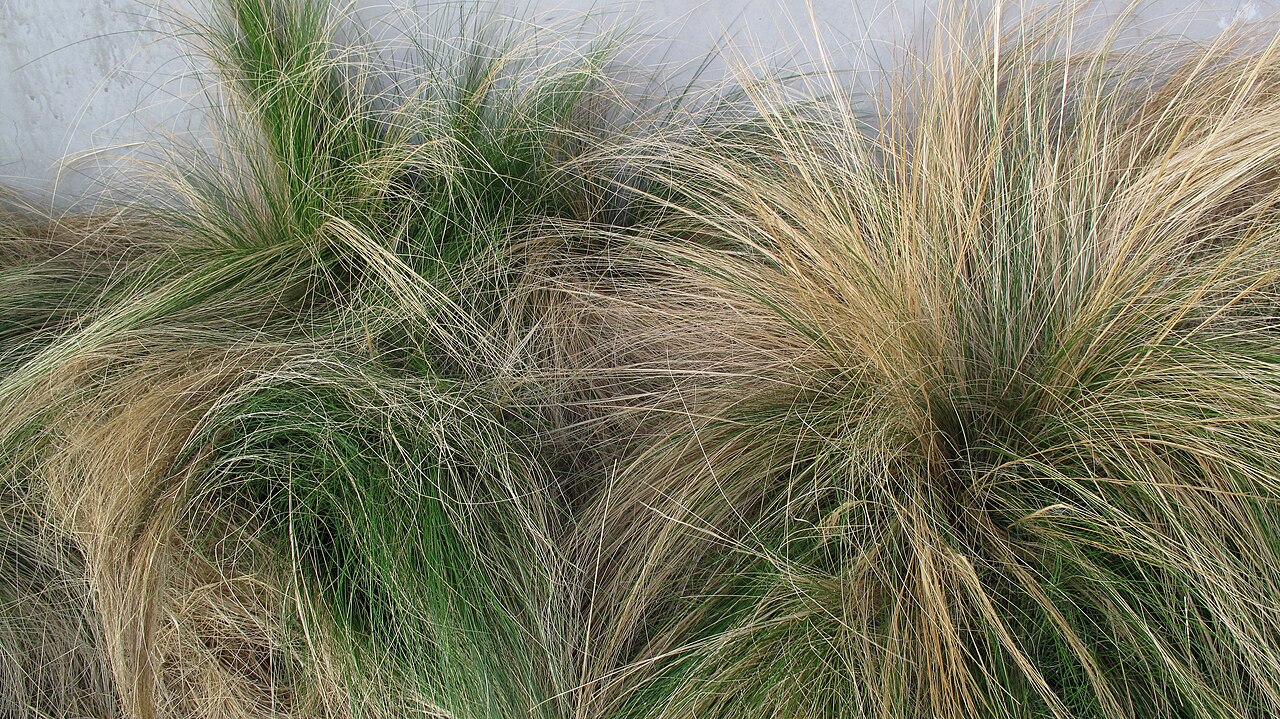
Nassella tenuissima (syn. Stipa tenuissima), commonly called Texas needlegrass, finestem needlegrass, or Mexican feathergrass, is a small, warm-season bunchgrass native to the limestone hills and rocky plains of the Edwards Plateau and Trans-Pecos region of Texas, adjoining New Mexico, and northern Mexico. It belongs to the Poaceae (grass family) and is prized for its extraordinarily fine, hair-thin foliage that moves with the slightest breeze, giving established clumps a soft, flowing texture unlike almost any other native grass.
In the wild, Texas needlegrass grows in thin, rocky, often calcareous soils on open slopes, caliche outcrops and dry grasslands where competition from taller grasses is limited by poor soil depth and summer drought. Clumps rarely exceed 18 to 24 inches tall and are just as wide, with slender, arching leaves topped in late spring by airy, silvery-green seed heads that fade to blond by midsummer and persist into winter.
Because of its fine texture and drought tolerance, Texas needlegrass has become a popular ornamental grass far outside its native range, especially in California and the Southwest. Gardeners there should know this species is not native to California or Nevada — it has escaped cultivation and is classified as a wildland-invasive species along the California coast by the California Invasive Plant Council. Within its true native range in Texas and New Mexico, however, it is a well-behaved, valuable component of native grasslands and xeric gardens.
Identification
Texas needlegrass is a cool-season-growing, warm-climate perennial bunchgrass that forms a dense basal tuft of threadlike leaves, with flowering stems rising just above the foliage in spring.
Leaves & Growth Form
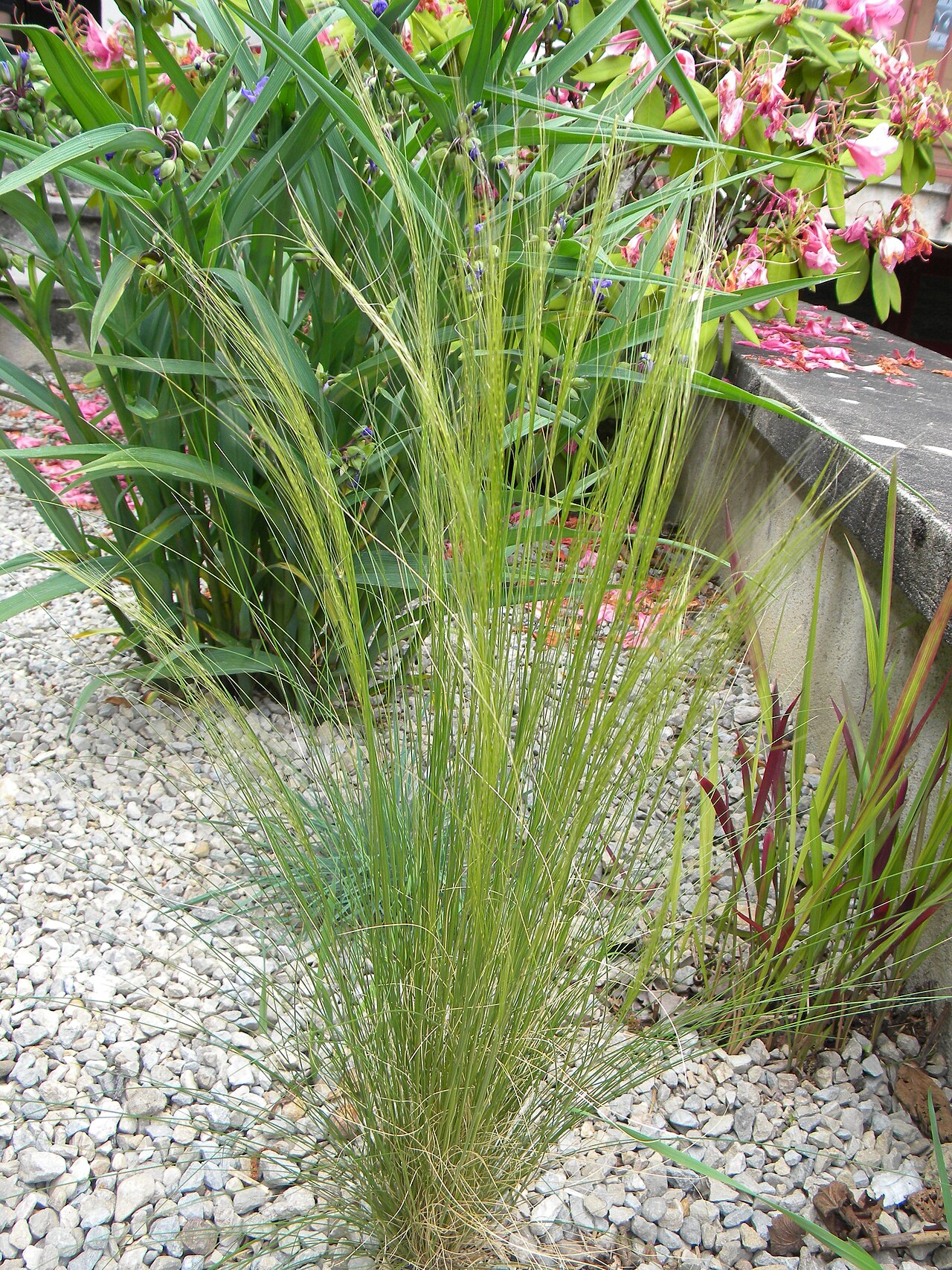
The leaves are tightly rolled (filiform), less than 1 mm wide, and feel almost like fine hair between the fingers. They are bright green to gray-green when fresh, arching outward and downward from a compact basal crown to form a rounded, fountain-like mound 12 to 24 inches tall and wide. The extreme fineness of the foliage, even compared with other fine-textured bunchgrasses such as pink muhly, is the single best field mark for this species.
Flowers & Seed Heads
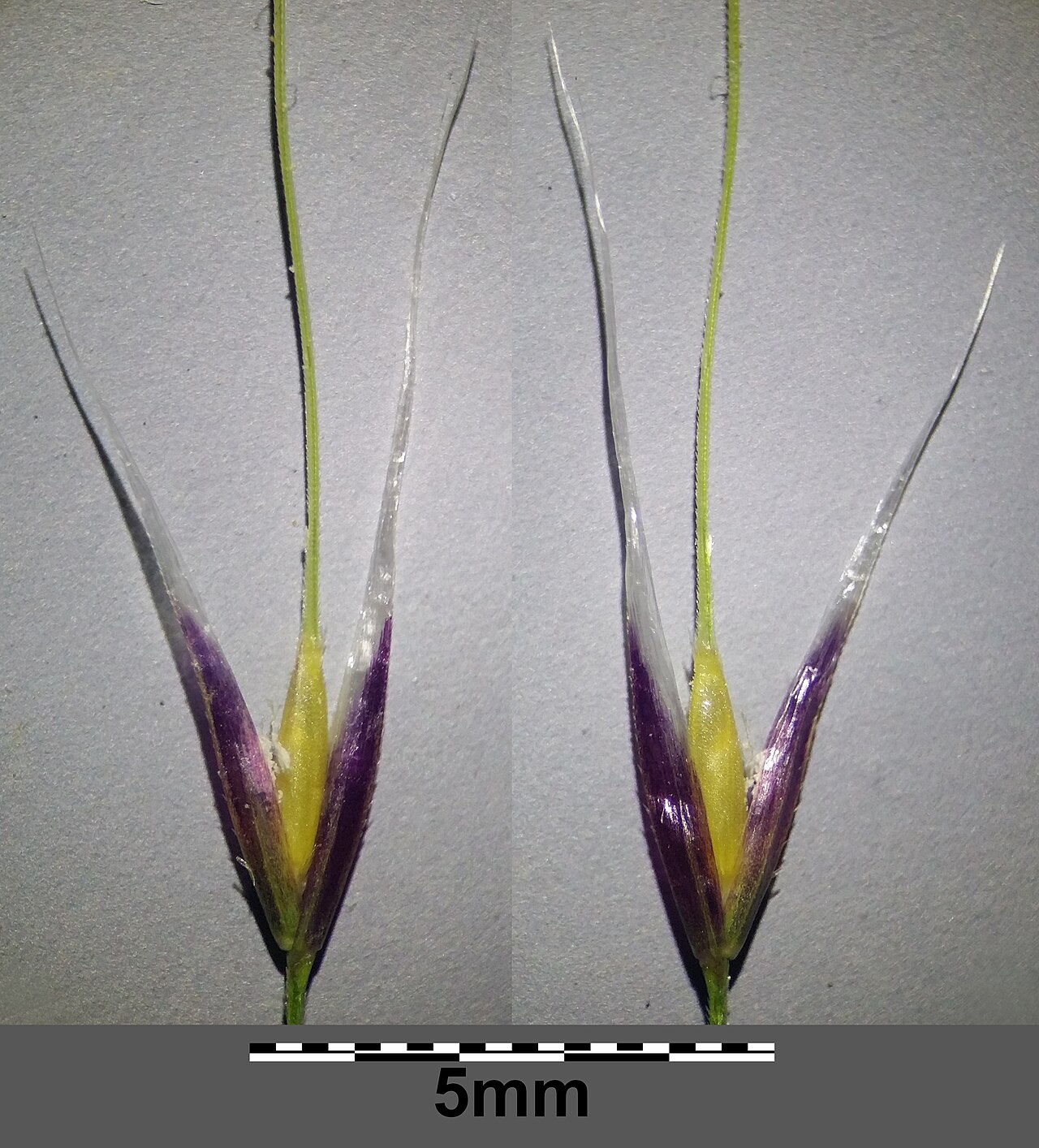
Flowering stems emerge in April and May, standing slightly above the foliage and bearing open, airy panicles of delicate, nodding spikelets. Each floret carries a single long, hair-fine awn, often 2 to 3 inches long, that is bent (geniculate) partway along its length. In bloom the whole clump takes on a hazy, silver-green cast; as the seed matures through early summer the panicles fade to a pale straw-blond that many gardeners find just as attractive as the green spring growth.
Fruit & Seeds
The fruit is a single-seeded caryopsis tipped with the long bent awn and a sharp, hardened callus at its base. This callus is adapted to drill the seed into soil cracks as the awn twists and untwists with changing humidity — the same mechanism found in needle-and-thread grass and other Nassella and Stipa relatives. The sharp calluses can work into animal fur, socks and bare skin, which is the reason for the common name “needlegrass.”
Quick Facts
| Scientific Name | Nassella tenuissima (syn. Stipa tenuissima) |
| Family | Poaceae (Grass) |
| Plant Type | Perennial warm-climate bunchgrass |
| Mature Height | 1–2 ft (foliage); flower stems to 2.5 ft |
| Mature Spread | 1–2 ft |
| Growth Rate | Moderate to fast |
| Sun Exposure | Full Sun |
| Water Needs | Low |
| Soil Type | Rocky, caliche, or well-drained sandy to loamy soils |
| Soil pH | Neutral to alkaline |
| Bloom Time | April – June |
| Flower Color | Silvery-green, aging to blond |
| Fall Color | Tan / straw-blond, persists into winter |
| Fruit | Awned caryopsis (grass seed) with sharp callus |
| Deer Resistant | Yes |
| USDA Hardiness Zones | 7–10 |
Native Range
Texas needlegrass is native to the limestone hill country, rocky plains and canyon slopes of central, south and west Texas, extending west into southern New Mexico and south into the Chihuahuan Desert of northern Mexico. Within Texas it is most abundant on the Edwards Plateau, in the Trans-Pecos, and across the South Texas Plains, where it grows on thin, well-drained, often calcareous soils that exclude many taller, more competitive grasses.
It typically occurs on open slopes, caliche outcrops, limestone ledges and dry grasslands from near sea level to around 5,000 feet in elevation, often alongside other short, drought-adapted bunchgrasses. It is not a wetland or riparian species and does poorly in heavy clay or poorly drained soil.
Outside this native range, Texas needlegrass has become widely planted as an ornamental, especially in California, where its fine texture and drought tolerance made it a landscaping favorite starting in the 1990s. It has since escaped cultivation along the California coast and is recognized by the California Invasive Plant Council as a species of concern that displaces native grassland species; it is not considered native or recommended for planting in California or Nevada gardens.
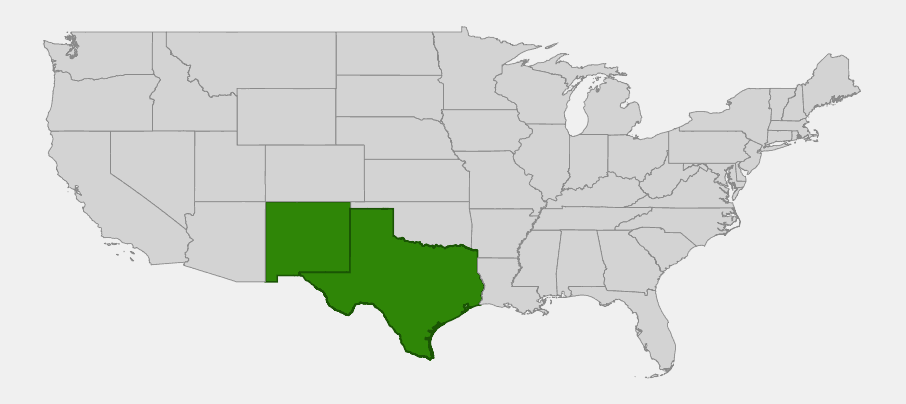
📋 Regional plant lists featuring Texas Needlegrass: South and West Texas · Arizona & New Mexico
Growing & Care Guide
Texas needlegrass is one of the easiest native grasses to grow in hot, dry gardens, and it is especially forgiving of poor, rocky soils that defeat many other ornamentals. Give it full sun and sharp drainage, and it requires almost no further care.
Light
Plant Texas needlegrass in full sun. It tolerates light afternoon shade in the hottest parts of its range but becomes thin and floppy with reduced flowering in significant shade. Full sun produces the tightest, most upright mounds and the best seed-head display.
Soil & Water
This species demands excellent drainage above almost everything else. It thrives in rocky, caliche, gravelly or sandy soils and tolerates neutral to strongly alkaline pH without issue. Once established, usually after one growing season, it needs no supplemental irrigation beyond natural rainfall in its native Texas and New Mexico range. Soggy, poorly drained or heavy clay soils that stay wet are the most common cause of failure, often leading to crown rot.
Planting Tips
Set out container plants in fall or early spring so roots can establish before summer heat. Space clumps 12 to 18 inches apart for a continuous drift, or further apart for an accent planting where individual mounds can be appreciated. Avoid amending planting holes with rich organic matter, which encourages root rot in a plant adapted to lean soils.
Pruning & Maintenance
Comb or hand-rake dead blades out of the clump in late winter before new growth begins; the fine leaves tend to accumulate thatch that can smother the crown if left unmanaged. Some gardeners simply cut the whole clump back to 3 to 4 inches every year or two to rejuvenate it. Because old flower stalks shed their sharp-awned seeds freely, remove spent seed heads before they mature if self-sowing near pets, bare feet or gravel paths is a concern.
Landscape Uses
Within its native Texas and New Mexico range, Texas needlegrass earns a place in many planting styles:
- Xeric and rock gardens paired with cacti and other low-water natives
- Caliche and limestone slope restoration on Edwards Plateau properties
- Mass plantings for a soft, flowing groundcover effect
- Container specimens on patios where its movement can be enjoyed up close
- Erosion control on dry, rocky banks
- Accent plant among boulders or gravel mulch
Wildlife & Ecological Value
As a native component of Texas and New Mexico grasslands, Texas needlegrass contributes forage, cover and structure to dry grassland and savanna ecosystems.
For Birds
Ground-foraging birds such as sparrows and quail use the dense basal tufts for nesting cover and feed on the ripened seed in summer. The fine foliage also provides nest-lining material for a variety of grassland songbirds.
For Mammals
Small mammals shelter within the dense clumps, and the young spring foliage is grazed by deer and other herbivores before the seed heads harden. The sharp awns, however, make mature seed heads unpalatable and even irritating if ingested or lodged in fur, which discourages heavy browsing once the plant sets seed.
For Pollinators
Like most grasses, Texas needlegrass is wind-pollinated and does not rely on insect pollinators, but its dense tufts provide shelter and overwintering habitat for ground-nesting native bees and beneficial insects in the surrounding landscape.
Ecosystem Role
On the thin, rocky soils of the Edwards Plateau and Trans-Pecos, Texas needlegrass is a pioneer species that stabilizes soil on slopes and outcrops where few other plants can establish. Its fibrous root system helps prevent erosion on caliche banks, and its presence alongside gramas and other short grasses supports the structural diversity that many grassland insects and reptiles depend on.
Cultural & Historical Uses
Texas needlegrass has no significant documented history of use by Indigenous peoples as a food or fiber plant, likely owing to its small size and the sharp, irritating awns of its seed. It was, however, a natural and unremarkable part of the short-grass and mixed-grass prairie vegetation that supported bison, pronghorn and cattle grazing across its native range for centuries.
In the 20th century, ranchers in the Edwards Plateau region came to regard dense stands of needlegrass with mixed feelings: while it provides spring forage, mature seed heads can work into the wool, hide and even eyes of grazing livestock, a problem shared with its many Nassella and Stipa relatives across the West.
Its modern reputation rests almost entirely on horticulture. Landscape designers discovered the plant’s fine texture and constant motion in the wind during the late 20th century, and it became a staple of Mediterranean-style and xeriscape gardens throughout the Southwest and California. That popularity, ironically, is what has made it a management concern outside its native range, even as it remains a well-adapted and uncontroversial native grass within Texas and New Mexico.
Frequently Asked Questions
Is Texas needlegrass the same plant sold as “Mexican feather grass”?
Yes. Mexican feather grass, feathergrass, and Texas or finestem needlegrass are all common names for Nassella tenuissima (formerly Stipa tenuissima). The scientific name is the most reliable way to confirm you have this species.
Is it safe to plant Texas needlegrass in California?
No. Although widely sold as an ornamental there, it is not native to California and has escaped cultivation to become a wildland weed along the coast. Gardeners in California and Nevada should choose a native bunchgrass such as purple needlegrass (Stipa pulchra) instead.
Will the seeds hurt my pets?
The sharp, awned seeds can work into fur, paws and skin much like foxtail grass seeds, so it is worth removing spent seed heads before they shatter if pets or bare feet frequent the planting area.
How much water does Texas needlegrass need once established?
Very little. Within its native Texas and New Mexico range, established clumps generally survive on natural rainfall alone and can suffer crown rot if watered as heavily as a typical lawn or perennial bed.
Does Texas needlegrass spread aggressively?
Within its native range it self-sows modestly but is kept in check by the same dry, rocky conditions that limit other plants. It is only outside its native range, in milder and moister climates such as coastal California, that it becomes weedy and spreads aggressively.

Looking for a nursery that carries Texas Needlegrass?
Browse our native plant nursery directory: Texas · New Mexico