Texas Ash (Fraxinus texensis)
Fraxinus texensis, commonly known as Texas Ash, is a small to medium deciduous tree native to the limestone canyons and rocky hillsides of south-central Oklahoma and central Texas. Botanists now generally treat this tree under the name Fraxinus albicans Buckley, with Fraxinus texensis recognized as a synonym reflecting a correction for nomenclatural priority — both names describe the same tree, and “Texas Ash” is the common name used for it under either scientific name. This member of the olive family (Oleaceae) is prized by Texas gardeners for a combination rare among ash trees: compact size, strong drought tolerance, and some of the most reliably brilliant fall color of any native Texas tree.
Unlike the larger, moisture-loving White Ash and Green Ash of the eastern United States, Texas Ash is adapted to thin, rocky, well-drained limestone soils and tolerates considerably more heat and drought once established. It typically grows 30 to 45 feet tall with a rounded, moderately dense crown, smaller leaves with fewer leaflets than its eastern relatives, and a fall display that regularly includes vivid yellow, orange, and burgundy-red in the same canopy.
For Central Texas and southern Oklahoma gardeners seeking a native shade tree adapted to rocky, alkaline soils, Texas Ash fills a niche few other natives occupy — though, like all ash species, it carries one significant modern caveat worth understanding before planting: the ongoing spread of the invasive Emerald Ash Borer across North America.
Identification
Texas Ash grows as a small to medium deciduous tree, 30 to 45 feet tall with a spread of 20 to 35 feet, developing a rounded, moderately open crown. Like other ashes, it has opposite branching — twigs and leaves emerge directly across from one another on the stem, a reliable identification feature that rules out many other tree genera at a glance.
Bark
Bark on mature trees is gray to gray-brown, developing the shallow, interlacing diamond-shaped furrows typical of ash species, though generally finer and less deeply ridged than White Ash.
Leaves
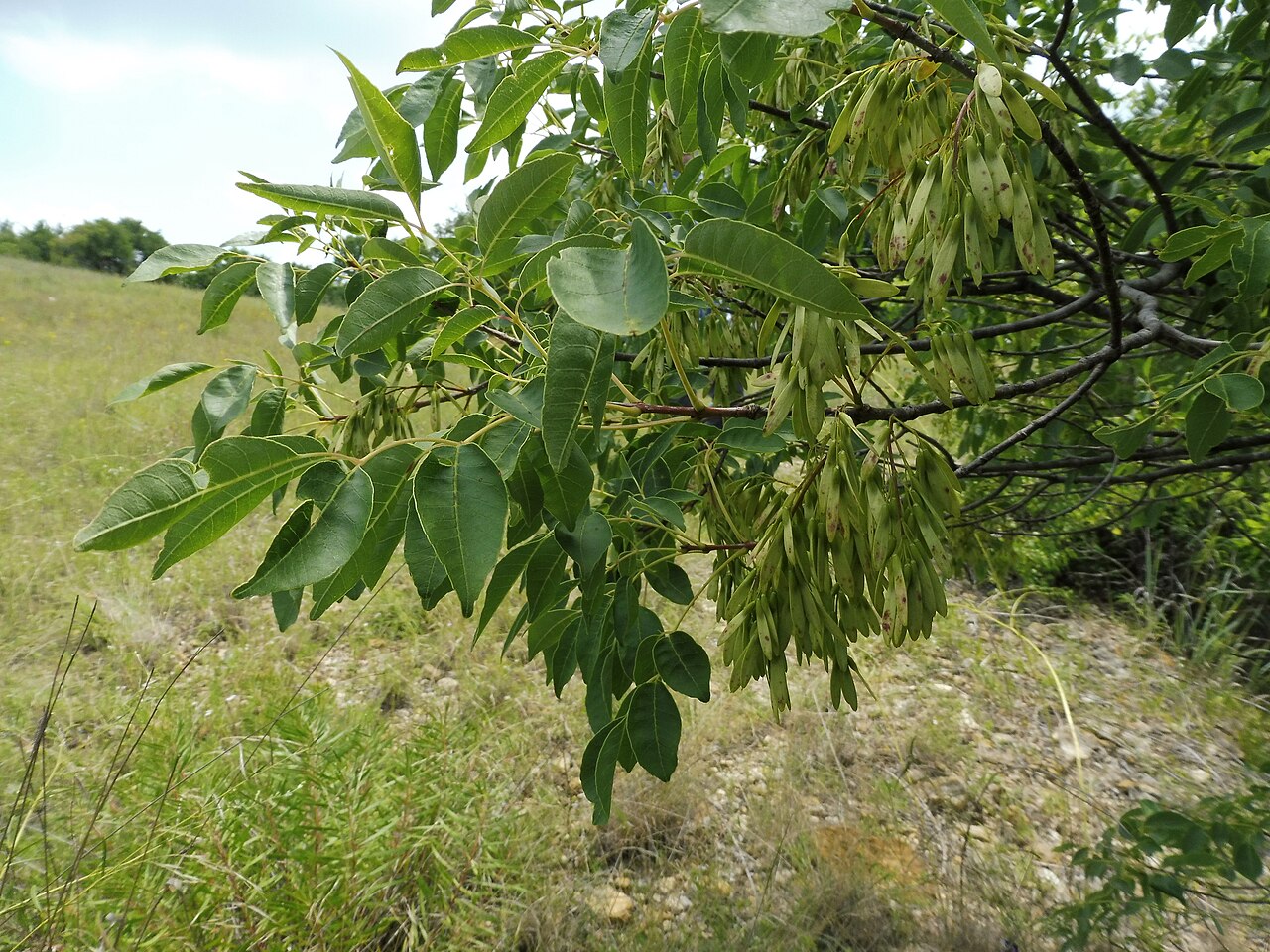
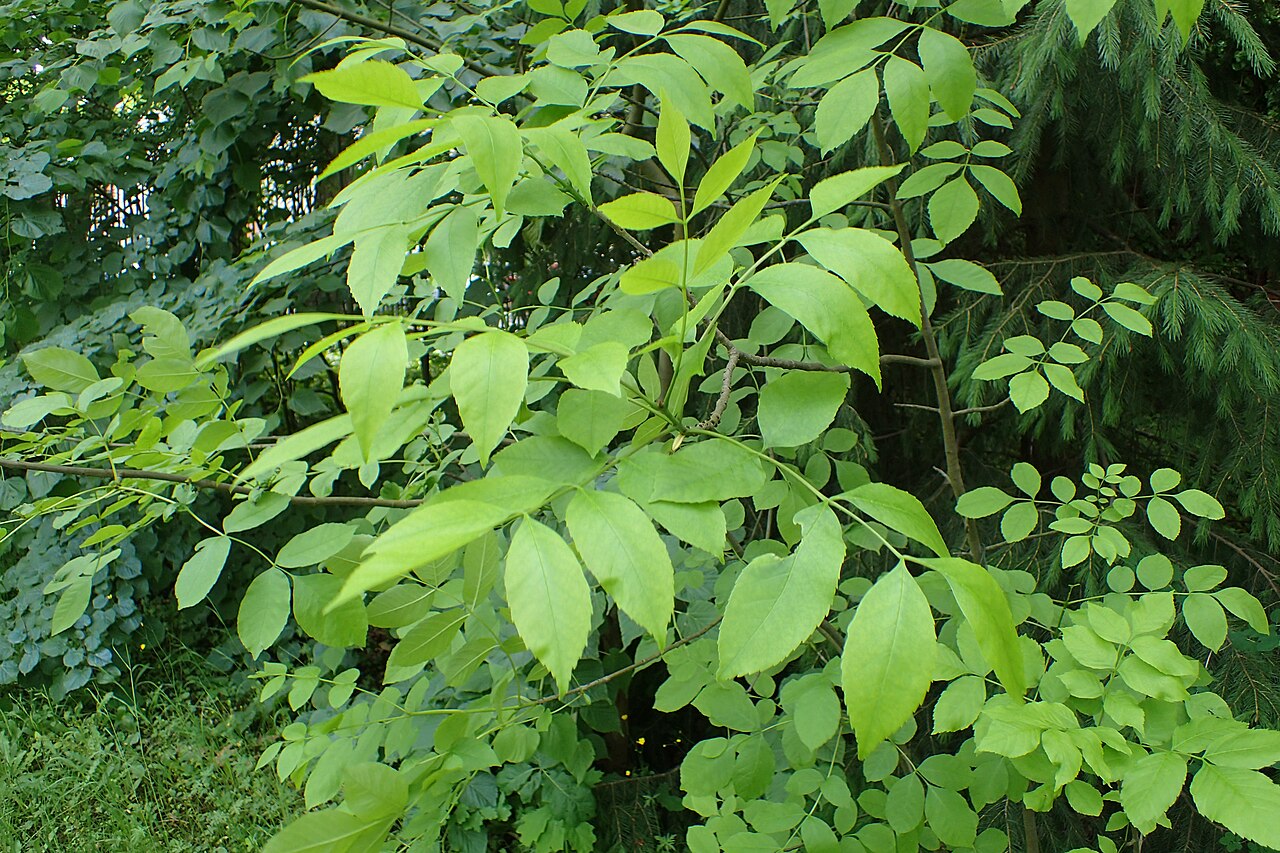
Leaves are opposite, pinnately compound, and notably smaller than those of White Ash, typically composed of 5 to 7 leaflets (sometimes as few as 3 to 5), each leaflet oval to elliptic with a finely toothed margin. The reduced leaflet count and smaller overall leaf size compared to White Ash reflect Texas Ash’s adaptation to a hotter, drier climate with less available soil moisture. Fall color is one of the species’ strongest selling points, regularly turning shades of yellow, orange, and deep red-burgundy, often with multiple colors present in the same canopy at once.
Flowers & Fruit
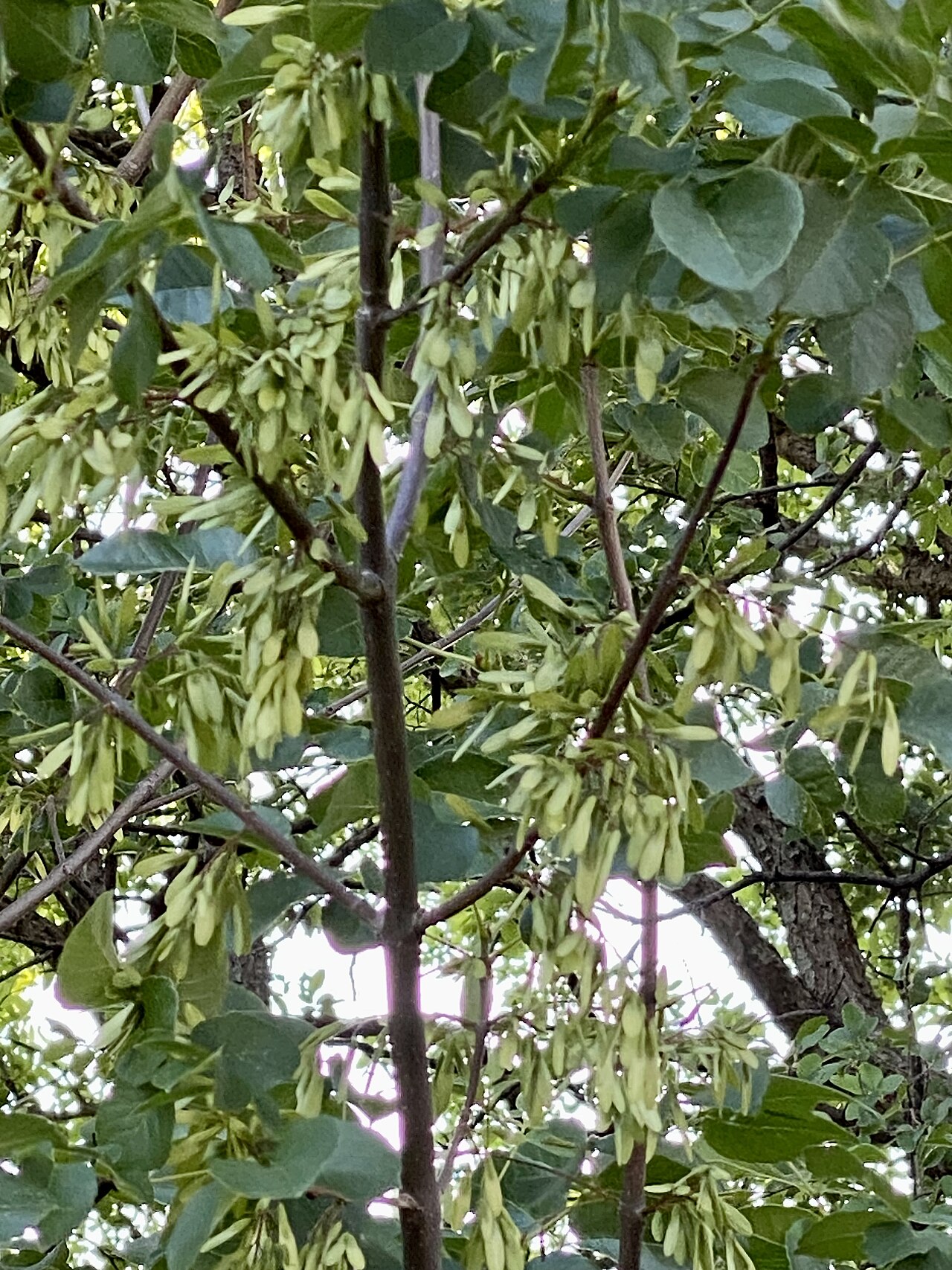
Like other ashes, Texas Ash is typically dioecious, meaning individual trees bear either male or female flowers, not both. Flowers are small, greenish, and wind-pollinated, appearing in early spring before the leaves. Female trees produce the fruit typical of the genus: single-winged samaras (“seeds” with a papery wing) that hang in loose clusters and disperse on the wind through fall and winter.
Quick Facts
| Scientific Name | Fraxinus texensis (accepted name: Fraxinus albicans) |
| Family | Oleaceae (Olive) |
| Plant Type | Deciduous Tree |
| Mature Height | 30–45 ft |
| Mature Spread | 20–35 ft |
| Growth Rate | Slow to Moderate |
| Sun Exposure | Full Sun to Part Shade |
| Water Needs | Low; good drought tolerance once established |
| Soil Type | Rocky, well-drained limestone soils |
| Soil pH | Neutral to alkaline (7.0–8.5) |
| Bloom Time | Early spring, before leaves emerge |
| Flower Color | Greenish (inconspicuous) |
| Fall Color | Yellow, orange, and red-burgundy |
| Fruit | Single-winged samaras on female trees |
| Deer Resistant | Moderate |
| USDA Hardiness Zones | 6–9 |
Native Range
Texas Ash is native to a relatively narrow band stretching from south-central Oklahoma south through the limestone hill country of central Texas. In Texas, it is concentrated across the Edwards Plateau and nearby counties, generally overlapping with the western and central portions of the state rather than the humid pine forests of East Texas.
Within this range, Texas Ash favors canyon bluffs, rocky limestone slopes in open woodland, and the margins of lakes and streams where soil is thin but moisture is seasonally available at depth. It is frequently found growing alongside other limestone-adapted species such as Plateau Live Oak, Lacey Oak, and Eastern Redbud.
Because its native range is confined to Oklahoma and Texas, Texas Ash should not be treated as a native option for gardeners elsewhere in the country, even where it is sometimes sold and grown successfully as an ornamental.
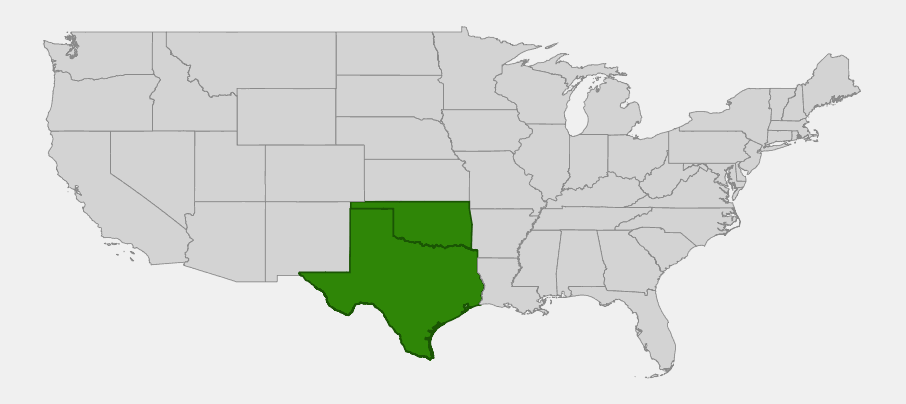
📋 Regional plant lists featuring Texas Ash: South and West Texas
Growing & Care Guide
Texas Ash is a relatively low-maintenance native shade tree once established, provided it is given the well-drained, rocky, alkaline conditions it has adapted to over millennia.
Light
Texas Ash grows well in full sun to part shade. In the wild it is often found on open, rocky slopes in full sun, though it also establishes successfully in the dappled light of oak-juniper woodland edges.
Soil & Water
This tree is adapted to thin, rocky, well-drained limestone soils and has notably better drought tolerance than White Ash or Green Ash once its root system is established, generally needing supplemental irrigation only through its first two to three growing seasons. It tolerates alkaline soils that cause chlorosis in many other species, making it a reliable choice on Central Texas’s characteristic caliche and limestone ground.
Planting Tips
Plant container-grown trees in fall or winter to allow roots to establish before summer heat arrives. Because female trees produce a seasonal litter of samaras, gardeners who want to avoid volunteer seedlings or seed litter may prefer to source a male tree, though sex cannot typically be determined until a young tree flowers for the first time.
Pruning & Maintenance
Prune in winter dormancy to establish good branch structure while the tree is young; mature trees need only routine removal of dead or crossing limbs. Texas Ash has moderate wood strength and benefits from early structural pruning to avoid weak branch unions as the canopy matures.
A Note on Emerald Ash Borer
Every native North American ash species, including Texas Ash, is vulnerable to the Emerald Ash Borer (Agrilus planipennis), an invasive beetle that has killed hundreds of millions of ash trees since its introduction and continues to spread across the continent. As of this writing it has not yet caused the widespread losses in Texas ash populations seen in the Midwest and Northeast, but gardeners in or near areas with confirmed infestations should consult current state agriculture or extension guidance before investing heavily in ash plantings, and should never move firewood or untreated ash nursery stock across quarantine lines.
Landscape Uses
Texas Ash serves well in several landscape roles:
- Native shade tree for rocky, alkaline Central Texas and south-central Oklahoma landscapes
- Fall color specimen — among the most reliable native trees for autumn color in its range
- Xeriscaping and low-water landscape design once established
- Street or parking lot tree where its moderate mature size and drought tolerance suit constrained sites
- Restoration plantings on limestone slopes within its native range
Wildlife & Ecological Value
Texas Ash contributes meaningfully to the ecology of the limestone woodlands it inhabits, despite being a less showy wildlife plant than many flowering natives.
For Birds & Mammals
The samaras produced by female trees are eaten by a range of seed-eating birds and small mammals, and the tree’s foliage provides browse for deer, particularly on young growth. As a canopy tree, it also contributes nesting habitat and structural diversity to Hill Country woodlands.
For Insects
Ash species host a range of native moth caterpillars, which in turn support nesting songbirds. Like other members of the genus Fraxinus, Texas Ash plays an important supporting role in regional food webs — a role made more urgent by the ongoing decline of ash trees across North America due to the invasive Emerald Ash Borer.
Ecosystem Role
As one of relatively few canopy-forming deciduous trees adapted to thin, rocky, alkaline limestone soils, Texas Ash adds structural and species diversity to Edwards Plateau woodlands often dominated by live oak and juniper, and its deep fall color contributes meaningfully to the seasonal character of Hill Country landscapes.
Cultural & Historical Uses
Texas Ash has not historically been as commercially significant as White Ash, whose strong, flexible wood became the standard material for tool handles, baseball bats, and furniture across the eastern United States. Texas Ash’s smaller stature and more limited range meant it saw comparatively modest use, generally limited to local fence posts, fuel wood, and small-scale woodworking within its native Hill Country and south-central Oklahoma range.
Its primary modern significance is horticultural rather than historical: as Central Texas landscaping has increasingly embraced native, drought-adapted species over the past several decades, Texas Ash has gained recognition as one of the few native trees combining true fall color with genuine heat and drought tolerance — a combination that is otherwise hard to find among trees adapted to the limestone soils of the region.
The taxonomic history of the species is itself a small piece of botanical history: though widely known for over a century as Fraxinus texensis, the application of nomenclatural priority rules eventually established Fraxinus albicans Buckley as the correct accepted name, since it was published earlier under botanical naming rules — a reminder that plant names can shift over time even when the plant growing in the landscape has not changed at all.
Frequently Asked Questions
Is Texas Ash the same as Fraxinus albicans?
Yes. Fraxinus texensis and Fraxinus albicans refer to the same tree; current USDA PLANTS and botanical nomenclature treat Fraxinus albicans Buckley as the accepted name, with Fraxinus texensis as a synonym. Both are called Texas Ash.
How is Texas Ash different from White Ash?
Texas Ash is smaller overall, with fewer and smaller leaflets, and is considerably more drought- and heat-tolerant, reflecting its adaptation to hot, rocky, alkaline Texas and Oklahoma limestone soils rather than the richer, moister soils White Ash typically favors farther east.
Is Texas Ash at risk from Emerald Ash Borer?
Yes — all native North American ash species, including Texas Ash, are susceptible to this invasive beetle. Infestations have been most severe in the Midwest and Northeast so far, but the pest continues to spread, and gardeners should follow current state guidance and avoid moving firewood across quarantine areas.
Does Texas Ash produce good fall color every year?
It is one of the more reliable native Texas trees for fall color, typically producing yellow, orange, and red-burgundy tones, though as with most deciduous trees, the intensity and timing of color can vary somewhat with weather conditions each year.
How much water does a young Texas Ash need?
Water newly planted trees regularly through their first two to three growing seasons to establish a deep root system. After that, established Texas Ash trees are quite drought tolerant and typically need supplemental water only during extended, severe dry spells.