California Juniper (Juniperus californica)
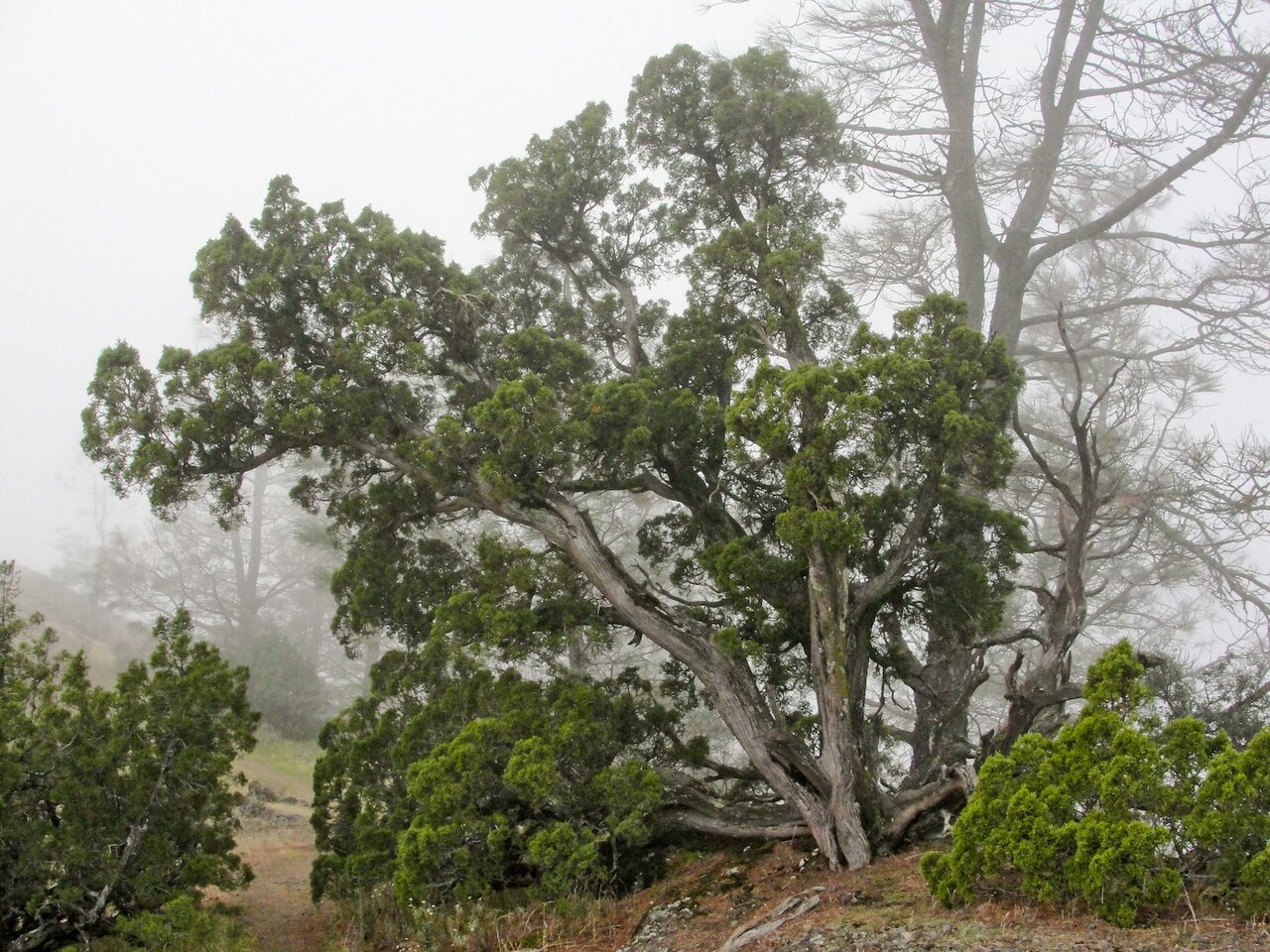
Juniperus californica, the California Juniper, is a tough, aromatic evergreen conifer of the state’s dry interior — a familiar presence on rocky desert-edge slopes, high chaparral, and pinyon-juniper woodland from the inner Coast Ranges to the Mojave Desert fringe. Usually a sprawling, multi-trunked shrub, it occasionally develops into a small, gnarled tree on favorable sites, with a silhouette shaped as much by wind and drought as by its own genetics.
California Juniper belongs to the cypress family and shares the scale-like, jointed foliage typical of junipers, along with the fleshy, berry-like cones that give the genus its common association with gin flavoring, though this species’ fruit is used by wildlife rather than people. It is dioecious, meaning individual plants are either male or female, with female plants producing the bluish, waxy-coated “berries” that are such an important food source for desert wildlife.
For gardeners in California’s hot, dry interior and high desert regions, California Juniper is about as low-maintenance as a native shrub gets: slow-growing, long-lived, and essentially drought-proof once established, asking only for the sun and good drainage it already has in the wild.
Identification
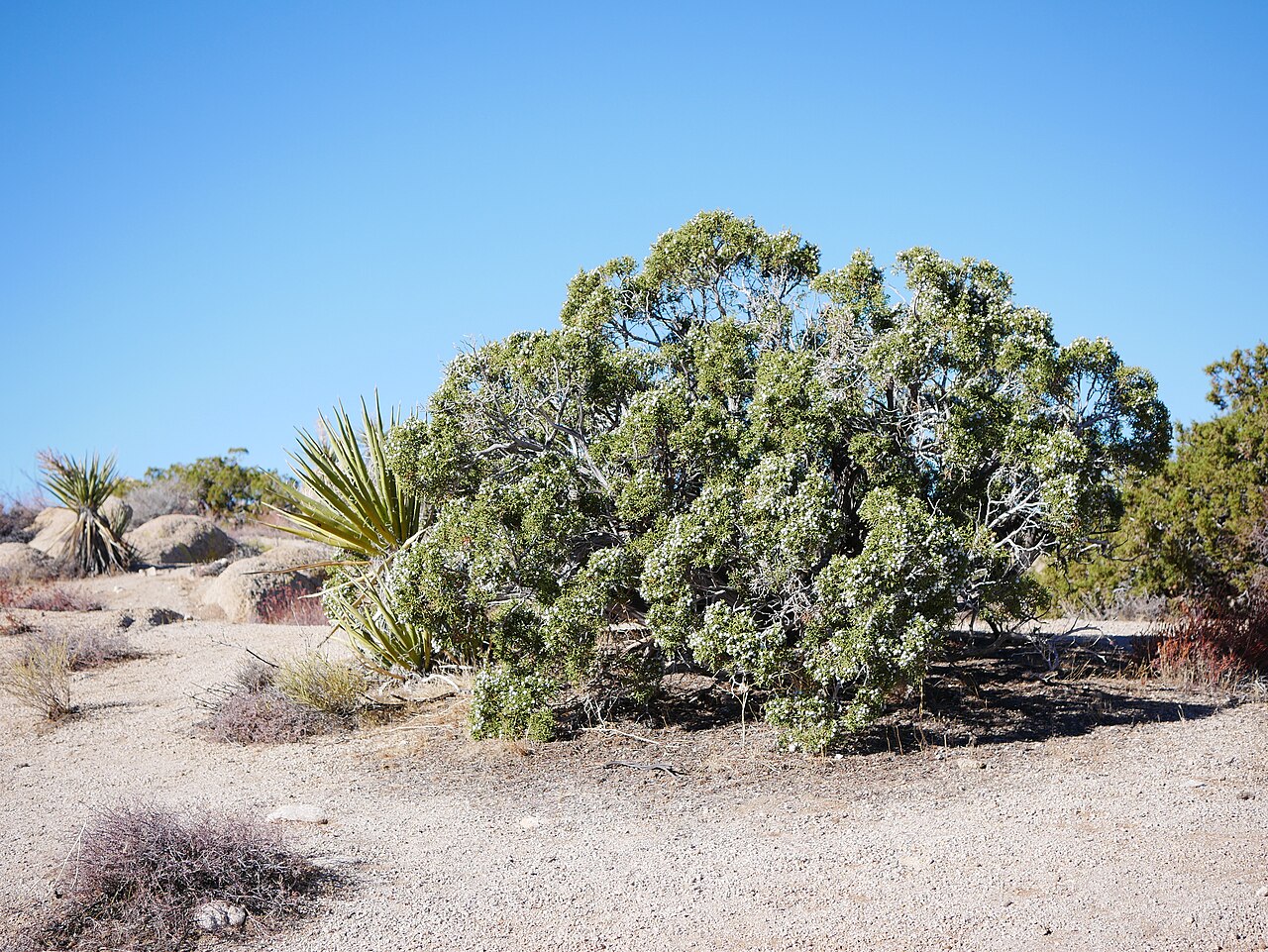
California Juniper most often grows as a broad, multi-trunked shrub 10 to 25 feet tall and wide, with a dense, irregular, rounded crown. On especially favorable sites — sheltered canyons, deeper soils, or higher-rainfall margins of its range — it can develop a single dominant trunk and take on a small, gnarled tree form reaching 25 to 30 feet or more, with picturesque twisted limbs reminiscent of old junipers found at higher elevations.
Bark
Bark is thin, fibrous, and shreddy, ranging from ashy gray to reddish-brown, peeling in long strips on older trunks. The trunk often develops a twisted, sculptural character with age, especially on tree-form specimens growing in rocky, exposed sites.
Leaves
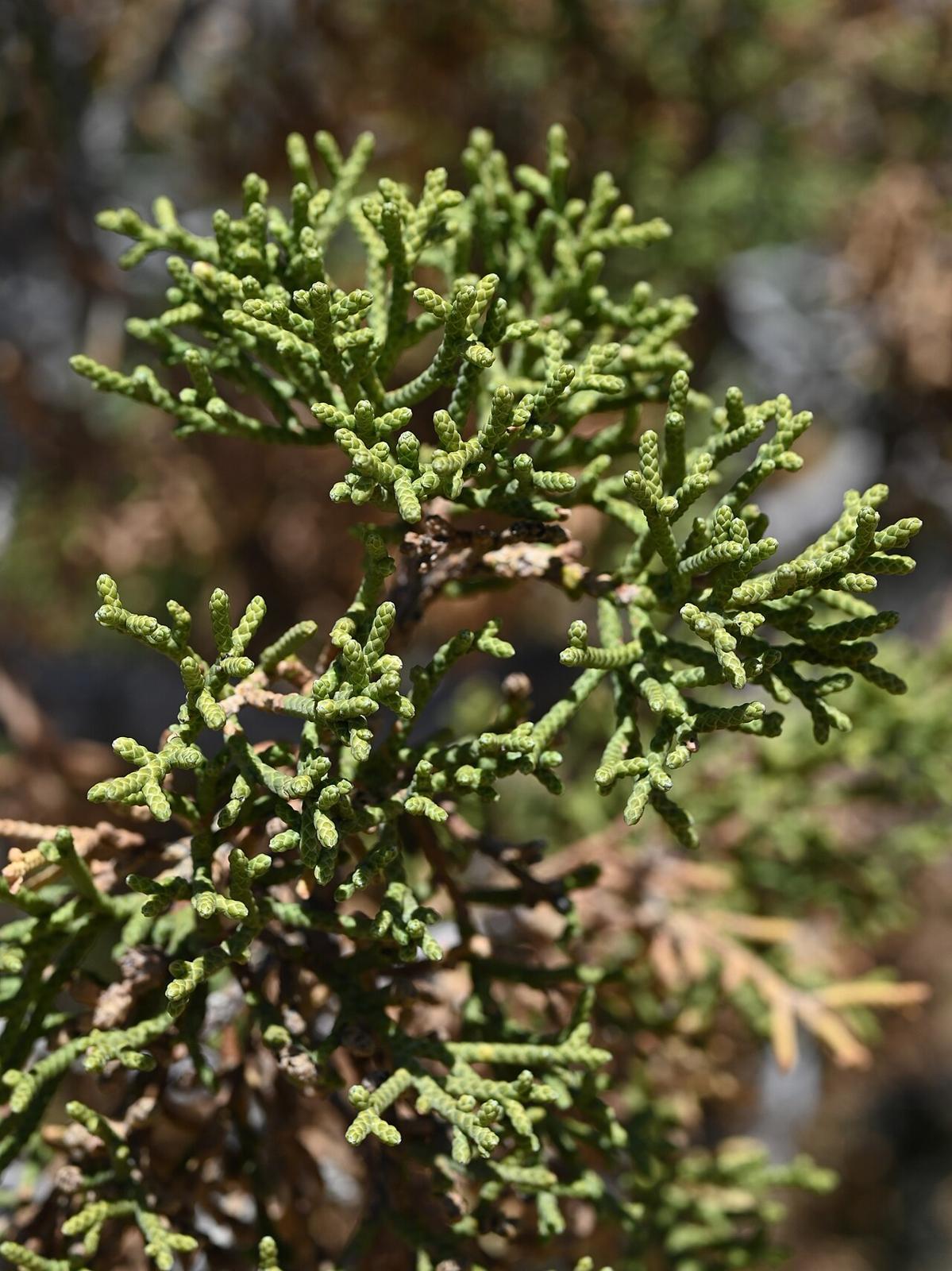
Foliage consists of small, scale-like leaves pressed tightly against slender, jointed branchlets, giving the foliage a braided or cord-like texture typical of many junipers. Color ranges from gray-green to yellow-green depending on site conditions and season. Crushed foliage releases a strong, resinous juniper scent.
Flowers & Fruit
As a dioecious conifer, California Juniper has separate male and female plants; male plants produce small, inconspicuous pollen cones in late winter to early spring, while female plants bear the familiar fleshy, berry-like seed cones. These “juniper berries” are rounded, about ⅓ to ½ inch across, ripening from green to a dusty blue-purple with a whitish waxy bloom, typically over about two growing seasons.
Quick Facts
| Scientific Name | Juniperus californica |
| Family | Cupressaceae (Cypress) |
| Plant Type | Evergreen Shrub or Small Tree |
| Mature Height | 10–25 ft (occasionally to 30 ft as a tree) |
| Mature Spread | 10–25 ft |
| Growth Rate | Slow |
| Sun Exposure | Full Sun |
| Water Needs | Very low once established |
| Soil Type | Well-drained; rocky, sandy, or gravelly soils |
| Soil pH | 6.5–8.0 (neutral to alkaline) |
| Bloom Time | February – March (pollen cones) |
| Flower Color | Not applicable (conifer; inconspicuous cones) |
| Fall Color | None (evergreen) |
| Fruit | Blue-purple berry-like cones, ⅓–½ in, on female plants |
| Deer Resistant | Yes |
| USDA Hardiness Zones | 7–10 |
Native Range
California Juniper is native primarily to California, found through the inner Coast Ranges, the Sierra Nevada foothills, the Transverse and Peninsular Ranges, and the western edge of the Mojave and Colorado Deserts. Its range also extends in a more limited, scattered fashion into the desert margins of southern Nevada and northwestern Arizona near the California border, and south through most of Baja California, Mexico, including Cedros and Guadalupe Islands.
Across this range, California Juniper typically occupies dry, rocky slopes, flats, and washes in pinyon-juniper woodland, high chaparral, and desert-edge scrub, generally between about 1,000 and 5,000 feet in elevation. It is strongly associated with well-drained, often rocky or sandy soils and is one of the most drought-adapted native conifers in the state, frequently growing alongside Joshua trees, yuccas, and desert chaparral shrubs at the western edge of the Mojave Desert.
Because its range into Nevada and Arizona is limited to scattered populations near the California border rather than broad distribution across those states, California Juniper is best considered primarily a California species with marginal extensions eastward, and gardeners outside the immediate border region of those neighboring states should treat it as non-local.
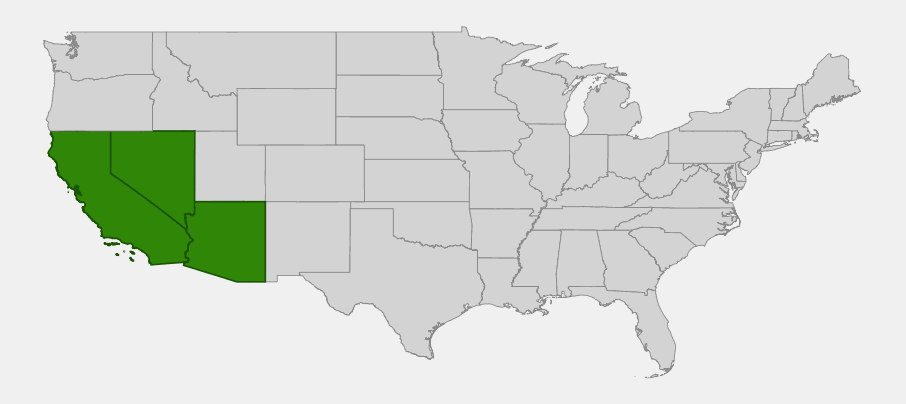
📋 Regional plant lists featuring California Juniper: California & Nevada · Arizona & New Mexico
Growing & Care Guide
California Juniper is one of the most drought-proof native conifers available for California and desert-edge Southwest gardens, requiring very little once its root system is established.
Light
Grow California Juniper in full sun, matching the open, exposed conditions of its native desert-edge and foothill habitat. It develops a dense, compact form with strong sun exposure and tends to thin out and grow leggy in significant shade.
Soil & Water
This juniper thrives in well-drained, rocky, sandy, or gravelly soils, including alkaline soils that many other natives struggle with, and is extremely drought tolerant once established, typically needing no supplemental irrigation beyond natural rainfall. Overwatering, especially in heavier or poorly drained soils, is the most common cause of decline in cultivated plants.
Planting Tips
Plant from small container stock in fall to take advantage of any winter rainfall, and water sparingly through the first one to two years while the root system establishes. Because the species is slow-growing, give it patience as well as space — 15 to 25 feet from structures or other plants — to accommodate its eventual spreading, multi-trunked form.
Pruning & Maintenance
California Juniper needs little pruning beyond removing dead wood, which is useful both for appearance and for reducing fire fuel near structures. Avoid heavy shearing, which disrupts the plant’s naturally irregular, sculptural form; selective thinning of interior deadwood preserves the character that makes mature specimens so visually striking.
Landscape Uses
- Specimen plant valued for its sculptural, wind-shaped form
- Xeriscape and rock garden anchor plant in hot, dry sites
- Wildlife garden supporting birds and mammals that eat the berry-like cones
- Erosion control on dry, rocky slopes
- Natural screening in desert-edge and foothill landscaping
Wildlife & Ecological Value
California Juniper is a significant food and shelter source for wildlife across the dry interior and desert-edge habitats it occupies, especially valuable because its berry-like cones mature through the lean winter months.
For Birds
Phainopepla, Cedar Waxwings, and other berry-eating birds feed heavily on the juniper’s fleshy cones, often during winter when other food sources are scarce, and in doing so help disperse the seeds across the landscape. The dense evergreen foliage also provides valuable nesting and roosting cover in otherwise open, exposed terrain.
For Mammals
Coyotes, gray foxes, and other mammals eat the berry-like cones and help disperse seeds through their droppings, while the dense branching structure offers shelter for small mammals navigating open desert-edge habitat. Where California Juniper grows near grazing land, livestock and deer occasionally browse the foliage, though it is not a preferred forage.
For Pollinators
As a wind-pollinated conifer, California Juniper does not rely on insect pollinators, but its structure contributes indirectly to the pollinator community by providing shelter and microclimate in the otherwise sparse plant cover of high desert and chaparral habitat.
Ecosystem Role
As one of the hardiest native conifers in its range, California Juniper helps stabilize soil on dry, rocky slopes where few other woody plants can establish, and its long-lived, slow-growing nature means mature specimens represent decades of accumulated habitat value. It is an important component of pinyon-juniper woodland, a widespread vegetation type across the interior West that supports its own distinct wildlife community.
Cultural & Historical Uses
California Juniper held significant value for Indigenous peoples across its range, including groups in the Mojave Desert and interior California, who used the berry-like cones as a food source, ground the dried fruit into meal, and used the fibrous, shreddy bark for cordage, sandals, and other woven items. The aromatic wood was also used for fuel and small implements.
Historically, the species’ twisted, weathered form on exposed desert-edge sites made it a recognizable landmark plant in parts of its range, and old-growth specimens — some estimated at well over a century old given the species’ slow growth — are valued today as living evidence of long-undisturbed desert-edge habitat.
In modern landscaping, California Juniper has found a niche among gardeners seeking genuinely water-wise, low-maintenance native conifers, particularly as interest grows in xeriscaping and habitat gardening across California’s increasingly water-constrained interior and desert-adjacent regions.
Frequently Asked Questions
Are California Juniper berries edible?
The berry-like cones have historically been eaten by Indigenous peoples after processing, and they are an important wildlife food source, but they are primarily valuable left for birds and mammals that depend on them rather than harvested for home use.
Do I need a male and female plant to get berries?
Yes. California Juniper is dioecious, meaning individual plants are either male or female, and only female plants produce the berry-like seed cones. If you want fruit for wildlife value, you will need both a male plant nearby (even a wild one, since pollen travels by wind) and a female plant.
Why do some California Junipers look like trees and others like shrubs?
Growth form depends heavily on site conditions. On harsh, shallow-soil, wind-exposed sites the species usually stays a sprawling multi-trunked shrub, while on deeper soils or more sheltered sites it can develop a single dominant trunk and grow into a small, gnarled tree.
Is California Juniper native to Arizona and Nevada?
It has scattered native populations in southern Nevada and northwestern Arizona near the California border, but the species is overwhelmingly a California plant; it should not be assumed native across either neighboring state as a whole.
How much water does California Juniper need in the garden?
Very little. Once established, it typically survives on natural rainfall alone throughout its native range, and consistent supplemental irrigation, especially in summer, is more likely to cause problems than help the plant.

Looking for a nursery that carries California Juniper?
Browse our native plant nursery directory: California · Nevada · Arizona