Tree Cholla (Cylindropuntia imbricata)
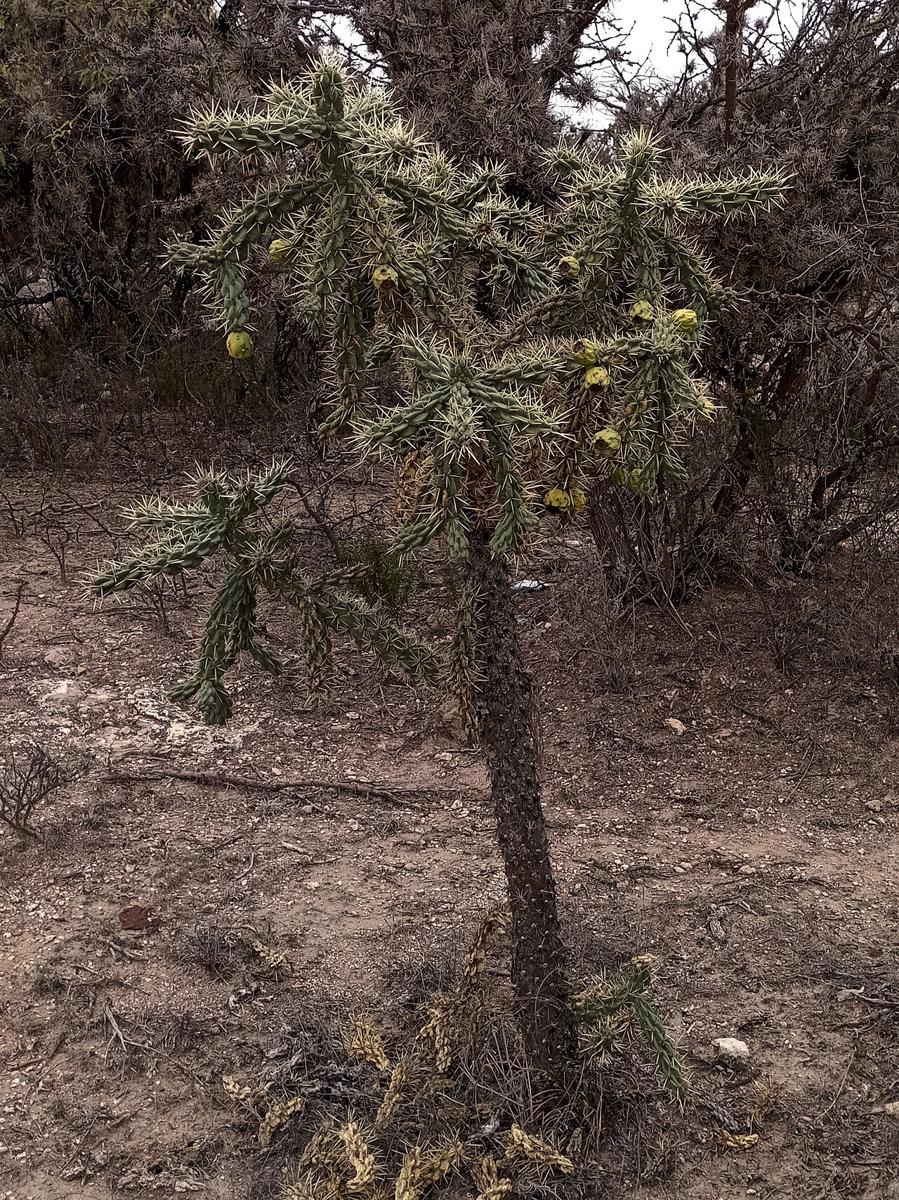
Cylindropuntia imbricata, commonly called Tree Cholla (also cane cholla, walking-stick cholla, or chainlink cactus), is the cactus that makes people stop and stare on the high plains and desert grasslands of the Southwest. Unlike the low, sprawling prickly pears most gardeners picture when they hear “cactus,” tree cholla grows upright on a single woody trunk, branching into a candelabra of cylindrical, spine-covered joints that can reach 3 to 10 feet tall. In early summer it is topped with magenta-pink flowers, and through fall and winter it carries bright yellow, persistent fruit that hang on long after the bloom is gone.
Tree cholla is remarkably cold-hardy for a cactus, which is why it ranges from the hot Chihuahuan Desert of West Texas up into the pinyon-juniper foothills of Colorado above 6,000 feet elevation. It tolerates winter lows well below zero, intense summer heat, and some of the poorest, rockiest soil in North America. Each joint is armed with long, papery-sheathed spines that catch the light and give the plant its other common name, “chainlink cactus,” for the way the woody skeleton looks once the flesh has weathered away.
For xeriscape and wildlife gardeners in its native range, tree cholla is a structural standout: a true architectural accent that needs no irrigation once established, blooms reliably, and feeds hummingbirds, bees, and birds through most of the year. It does need to be sited with care, since the barbed spines detach easily and are genuinely painful to brush against, but given a spot away from foot traffic it is one of the toughest and most rewarding native cacti a Southwestern garden can hold.
Identification
Tree cholla is unmistakable once mature: a shrub-sized to small-tree-sized cactus with a stout, woody, often blackened trunk and an open, branching crown of cylindrical joints. Plants typically reach 3 to 8 feet tall, occasionally to 10 feet in the best sites, with an irregular, candelabra-like silhouette.
Stems & Trunk
The trunk and oldest branches become genuinely woody, developing a thick, corky, dark gray-brown bark that can persist as a distinctive hollow, hole-riddled skeleton for years after the plant dies, a souvenir prized by crafters and rock-garden enthusiasts. The younger, actively growing joints are cylindrical, blue-green to gray-green, 4 to 12 inches long and an inch or so thick, covered in low, wart-like tubercles that each bear a cluster of spines.
Spines
Each areole carries 8 to 30 spines, typically silvery-tan to yellowish and ½ to 1¼ inches long, loosely sheathed so they glint and rattle slightly in the wind. The spines detach from the plant far more readily than their size suggests, so segments that break off can hitch a ride on skin, fur, or clothing; handle the plant only with heavy gloves and long tongs.
Flowers
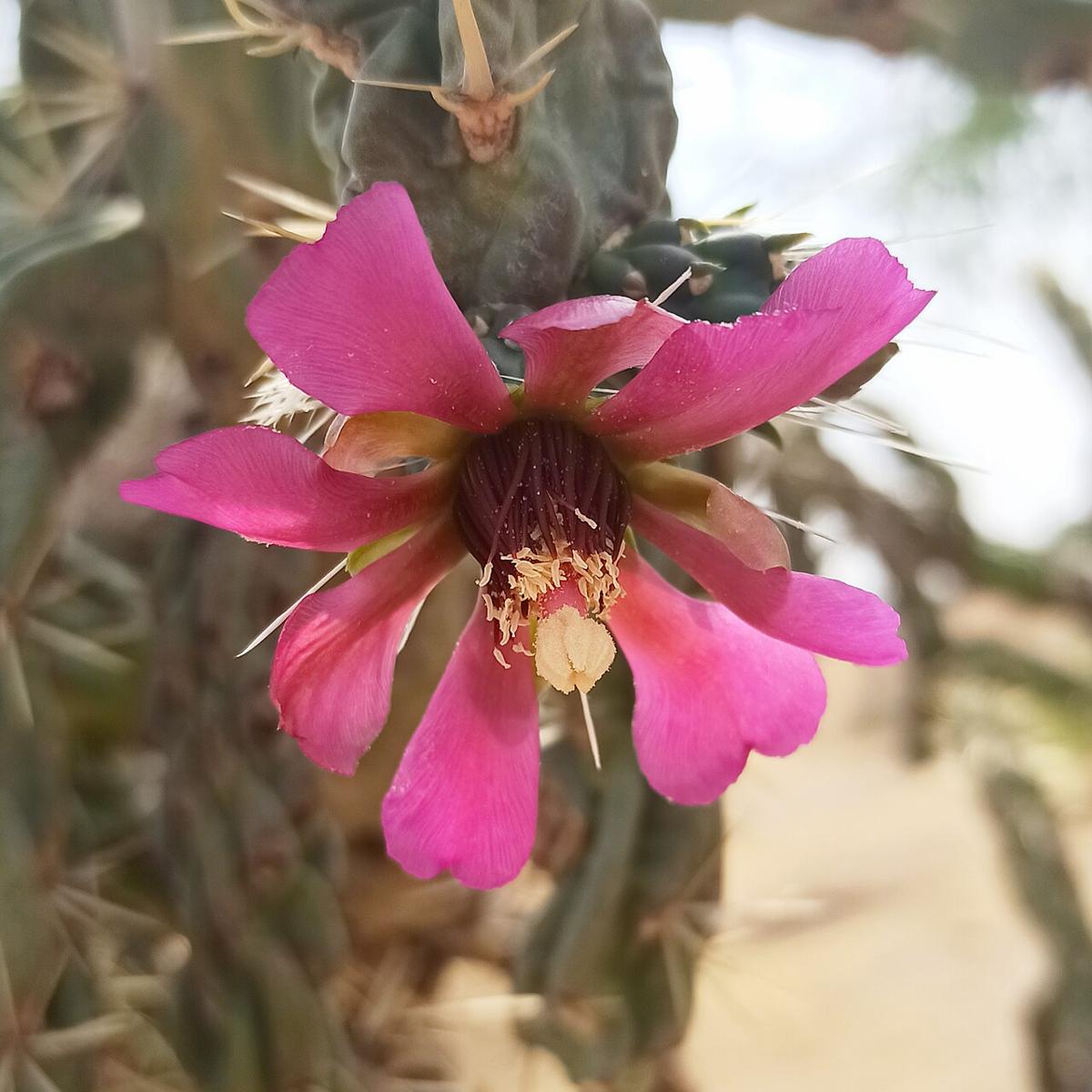
Flowers open from late May through July, usually one to a few per joint near the stem tips. They are cup-shaped, 2 to 3 inches across, with glossy, magenta-pink to purple petals surrounding a cluster of pale yellow-green stigmas. Each bloom opens for only a few days but a well-grown plant produces a long, staggered flush over several weeks.
Fruit & Seeds
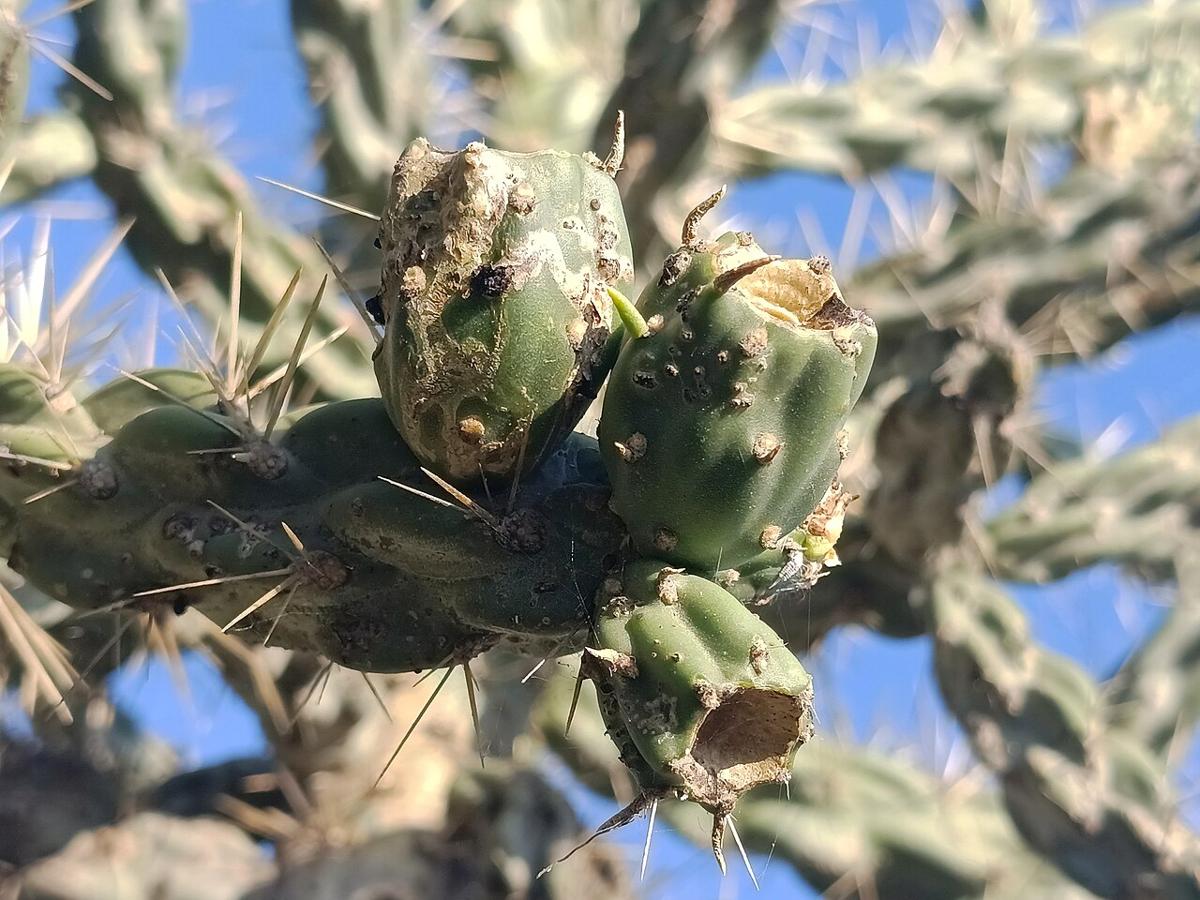
The fruit is a spineless, knobby, yellow berry about 1 to 1½ inches long that ripens in fall and often remains on the plant, slowly shriveling, well into the following spring. Unusually for a cactus, the fruit can sprout new plantlets directly from its areoles (a trait called proliferation), so an old fruit sometimes looks like a small chain of fused fruits.
Quick Facts
| Scientific Name | Cylindropuntia imbricata |
| Family | Cactaceae (Cactus) |
| Plant Type | Tree-like cholla cactus |
| Mature Height | 3–8 ft (rarely to 10 ft) |
| Mature Spread | 3–6 ft, open and irregular |
| Growth Rate | Slow |
| Sun Exposure | Full Sun |
| Water Needs | Low; drought tolerant once established |
| Soil Type | Rocky, sandy or caliche; sharply drained |
| Soil pH | Neutral to alkaline (about 6.5–8.5) |
| Bloom Time | Late May – July |
| Flower Color | Magenta-pink to purple |
| Fall Color | None (evergreen stems) |
| Fruit | Yellow, spineless, persists fall–spring |
| Deer Resistant | Yes |
| USDA Hardiness Zones | 5–10 |
Native Range
Tree cholla is native to the southern Rocky Mountain foothills and the Chihuahuan and southern Great Plains grasslands, from southeastern Colorado and western Kansas south through most of New Mexico and Arizona into West and Central Texas, with outlying populations in the Oklahoma panhandle, and south into northern Mexico. It is one of the most cold-tolerant tree-form cacti in North America, which lets it climb into pinyon-juniper and short-grass prairie country that is far too cold for most other columnar cacti.
Across this range, tree cholla grows in desert grassland, Chihuahuan Desert scrub, juniper and pinyon-juniper woodland edges, and dry, rocky hillsides and arroyo banks, generally between about 3,000 and 7,000 feet elevation. It favors well-drained, often caliche or gravelly soils and full sun, and it is frequently found scattered among mesquite, creosote bush, and various grasses rather than in dense stands.
Tree cholla has also become a widely cultivated and sometimes naturalized ornamental outside its native range, including parts of California, the Mediterranean, and Australia, where it is regarded as a weed in some pastures; it is not native to California or Nevada despite showing up occasionally in southwestern gardens there. Plant it only within its native Southwestern range, and avoid letting fallen joints root in disturbed ground nearby.
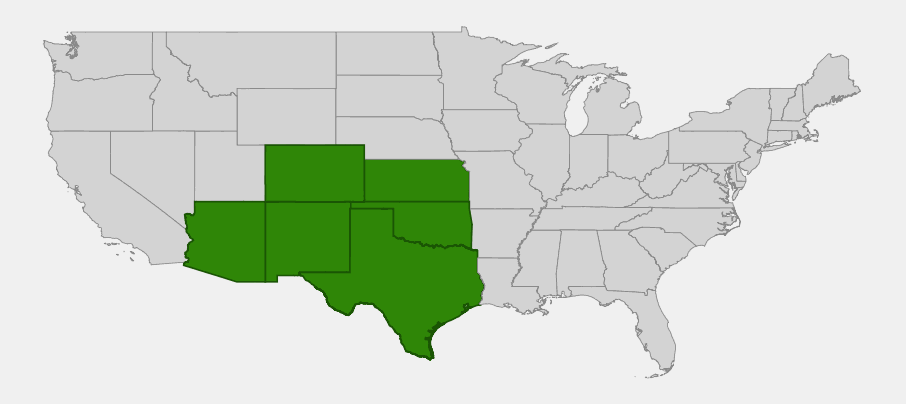
📋 Regional plant lists featuring Tree Cholla: Arizona & New Mexico · Texas
Growing & Care Guide
Tree cholla thrives on neglect. Give it full sun, sharp drainage and room to spread its spiny arms, and it will outlast almost anything else in a xeriscape bed with virtually no attention for decades.
Light
Full sun is essential. Tree cholla flowers and forms its best upright form only with at least six to eight hours of direct sun a day; in shade it stretches, flowers poorly, and becomes prone to rot.
Soil & Water
Plant in rocky, sandy or gravelly soil with excellent drainage; heavy clay that holds winter moisture is the fastest way to kill this cactus through root and stem rot. Water deeply but infrequently the first year to establish roots, then back off almost entirely. Established plants need no supplemental water except in the driest years, and they are more likely to suffer from overwatering than drought.
Planting Tips
Plant in spring after the last frost so roots can establish before the first hard freeze. Always wear thick leather gloves and use long tongs or folded cardboard to handle the plant; the spines detach into skin at the slightest touch and are difficult to remove. Site it well away from paths, patios, play areas and pet runs, and give it 3 to 6 feet of clearance on all sides as it matures.
Pruning & Maintenance
Pruning is rarely needed and is best avoided; any cut or broken joint should be removed carefully with tongs, since fallen joints root readily and can start unwanted new plants nearby. Tree cholla has essentially no pest or disease problems in well-drained soil and does not need fertilizer. In cultivation outside caliche soils, a layer of coarse gravel mulch around the base helps keep the root crown dry.
Propagation
The easiest method is by stem cuttings: remove a joint with tongs, let the cut end callus and dry for one to two weeks in a shady spot, then set it an inch or two into dry, sandy soil and withhold water until roots form. Seed propagation is slower and less reliable, requiring scarification and warm temperatures to germinate.
Landscape Uses
- Xeriscape focal points, where its vertical, candelabra form adds structure few other natives can match
- Wildlife and pollinator gardens alongside honey mesquite and native grasses
- Security plantings below windows or along fence lines, where the spines discourage foot traffic
- Rock gardens and gravel beds in Southwestern and high-desert landscapes
- Habitat restoration on disturbed caliche or rocky ground within its native range
Wildlife & Ecological Value
Tree cholla punches well above its weight as a wildlife plant across the Southwestern grasslands and deserts where it grows.
For Pollinators
The large, nectar-rich flowers draw native bees, honey bees, and butterflies through late spring and early summer, and the bloom window overlaps with the arrival of migrating hummingbirds, which also visit regularly.
For Birds
Cactus wrens, curve-billed thrashers and other desert birds frequently nest within the spiny branches, which shelter eggs and nestlings from predators. Several bird species also eat the persistent yellow fruit through fall and winter, when other food is scarce.
For Mammals
Pack rats, ground squirrels and other small mammals shelter among the spines, while javelina and other larger animals will eat the fruit and, in hard times, the pads themselves despite the spines. In some overgrazed rangelands, dense cholla patches have expanded, a reminder that it is a true native component of a healthy, varied grassland rather than something to encourage in monoculture.
Ecosystem Role
As a long-lived, slow-growing perennial, tree cholla adds structural diversity to otherwise low, grassy or shrubby plant communities, providing cover height that few other native plants in its range can offer, and its old woody skeletons continue to provide habitat value long after the plant itself has died.
Cultural & Historical Uses
Indigenous peoples of the Southwest, including Puebloan and Apache groups, made practical use of nearly every part of tree cholla. The woody, hole-riddled skeletons that remain after the plant dies were collected and used as walking sticks, lamp bases, and in construction of fences and small structures, a tradition that continues today among craftspeople who sell “cholla wood” pieces at Southwestern markets.
The ripe fruit was gathered, de-spined, and eaten fresh or dried for storage, and in some traditions the young, tender joints were also roasted and eaten after careful removal of the spines, similar to the preparation of prickly pear pads. These foods provided a reliable seasonal resource in an often sparse desert landscape.
Today tree cholla’s main cultural role is horticultural and decorative: dried cholla skeletons are widely sold for aquarium decor, craft projects and rustic garden art, and the living plant has become a signature feature of xeriscape design throughout the Southwest, prized for the same toughness and striking form that made it useful to the people who lived alongside it for centuries.
Frequently Asked Questions
Is tree cholla dangerous to touch?
Yes, handle it with care. The spines detach from the plant easily and lodge in skin on the lightest contact, and barbed micro-spines (glochid-like structures) can make removal painful. Always use thick gloves and tongs, and keep tree cholla well away from paths, play areas and pet runs.
How fast does tree cholla grow?
Slowly. A young plant may take several years to reach 2 to 3 feet, and a full 6- to 8-foot specimen with a thick woody trunk can be decades old. Patience is part of growing this cactus.
Can tree cholla survive freezing winters?
Yes, remarkably well for a cactus. It is hardy to USDA zone 5 and routinely survives winter lows well below 0°F in parts of its Colorado and New Mexico range, which is unusual among tree-form cacti.
Is tree cholla the same as “jumping cholla”?
No. “Jumping cholla” usually refers to a different species, Cylindropuntia fulgida, native to Arizona and Sonora. Tree cholla’s joints do detach readily when brushed, which gives it a similar reputation, but it is a distinct species with a more cold-hardy, wider range.
Does tree cholla need fertilizer?
No. It is adapted to poor, rocky native soils and generally performs worse, with weaker and more rot-prone growth, if fertilized. Skip supplemental feeding entirely.

Looking for a nursery that carries Tree Cholla?
Browse our native plant nursery directory: New Mexico & Oklahoma · Texas · Arizona · Colorado