Texas Hummingbird Mint (Agastache cana)
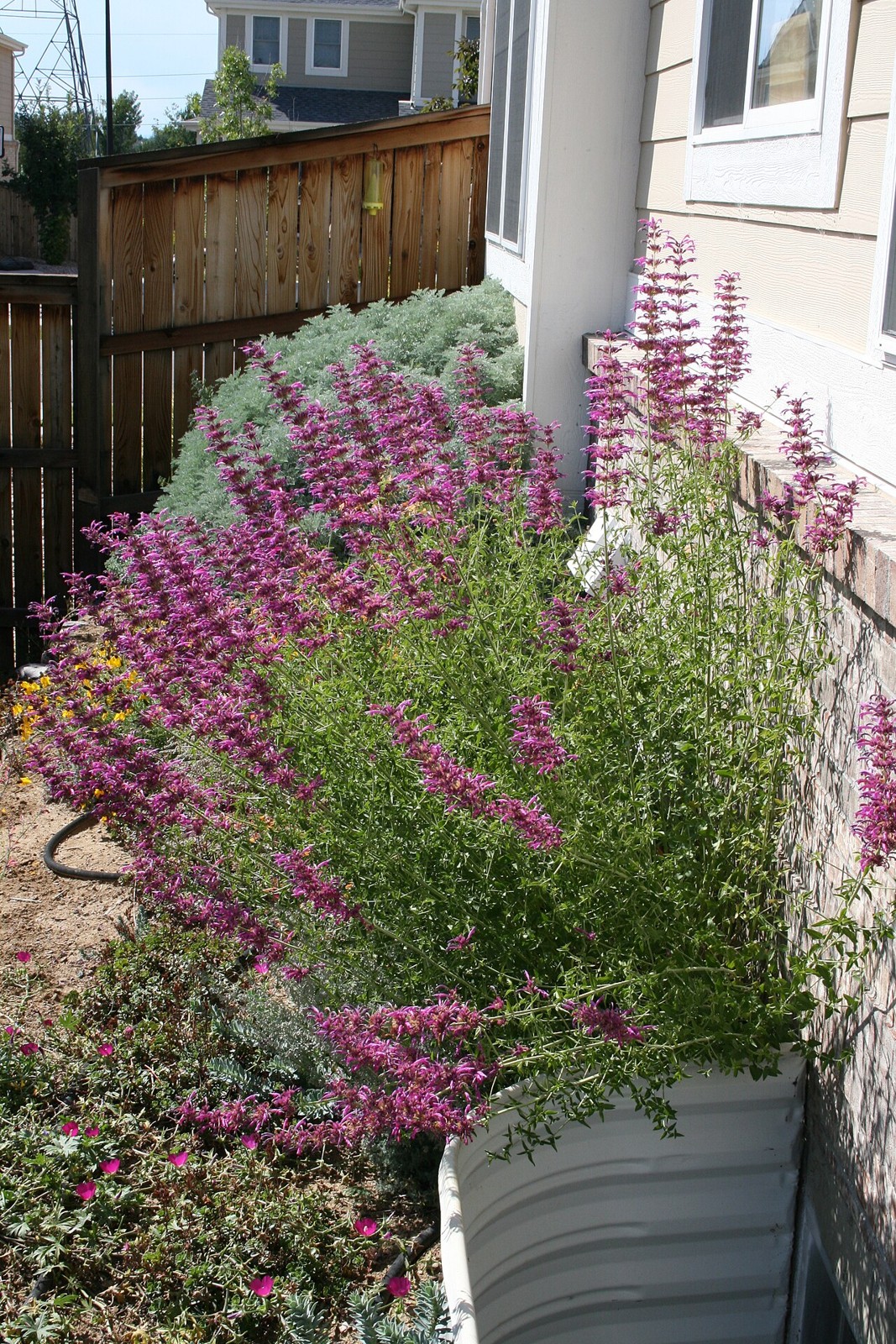
Agastache cana, widely known as Texas Hummingbird Mint, Mosquito Plant, or Double Bubble Mint, is a fragrant, rose-pink-flowered perennial native to the limestone cliffs and rocky canyons of far west Texas and New Mexico. A member of the mint family (Lamiaceae), it is instantly recognizable by its tall spikes of raspberry-pink, tubular flowers and foliage that releases a sweet, bubblegum-like scent when brushed or crushed — the source of its popular “Double Bubble Mint” nickname among gardeners.
In the wild, Texas Hummingbird Mint is a true rock-dweller, rooting into crevices and cracks on granite and limestone cliff faces and canyon walls where few other plants can establish. This naturally spare, well-drained habitat has made it an outstanding candidate for xeric gardens, where its showy, long-blooming flower spikes attract hummingbirds, butterflies, and bees in large numbers from midsummer through fall.
Despite its restricted native range, Texas Hummingbird Mint has become a popular, widely available nursery plant across hot, dry regions of the Southwest, valued as much for its wildlife appeal as for its fragrance and months-long bloom display. Gardeners within and beyond its native Trans-Pecos and New Mexico range have embraced it as a dependable, drought-tolerant pollinator magnet.
Identification
Texas Hummingbird Mint is an upright, woody-based perennial typically reaching 2 to 4 feet tall and 2 to 3 feet wide, with multiple stems rising from a basal clump. Like other members of the mint family, its stems are square in cross-section, a quick way to confirm identification in the field.
Leaves
The leaves are opposite, gray-green, triangular to lance-shaped, and about 1 to 2 inches long with scalloped or toothed margins. When crushed, the foliage releases a distinctive sweet, bubblegum-like fragrance, a trait that gives the plant one of its common nicknames and makes it a favorite for planting near paths and seating areas where the scent can be enjoyed.
Flowers
From midsummer through fall, typically July through October, Texas Hummingbird Mint produces dense, whorled spikes of tubular, two-lipped flowers in vivid raspberry-pink to rose-purple, each spike reaching 8 to 12 inches long atop the upright stems. The abundant, nectar-rich flowers bloom over an unusually long season and are a major draw for hummingbirds, for which the plant’s alternate common name is a direct tribute.
Fruit & Seeds
Following pollination, the plant produces small, dry nutlets typical of the mint family, held within the persistent calyx along the spent flower spike. Seed production is modest, and many gardeners propagate the plant primarily from cuttings or nursery divisions rather than seed.
Quick Facts
| Scientific Name | Agastache cana |
| Family | Lamiaceae (Mint) |
| Plant Type | Herbaceous/Semi-Woody Perennial |
| Mature Height | 2–4 ft |
| Mature Spread | 2–3 ft |
| Growth Rate | Moderate |
| Sun Exposure | Full Sun to Part Sun |
| Water Needs | Low |
| Soil Type | Rocky, gravelly, or sandy, well-drained |
| Soil pH | 6.5–8.0 |
| Bloom Time | July – October |
| Flower Color | Raspberry-pink to rose-purple |
| Fall Color | None notable; foliage gray-green year-round |
| Fruit | Small dry nutlets (typical of mint family) |
| Deer Resistant | Yes (aromatic foliage deters browsing) |
| USDA Hardiness Zones | 6–9 |
Native Range
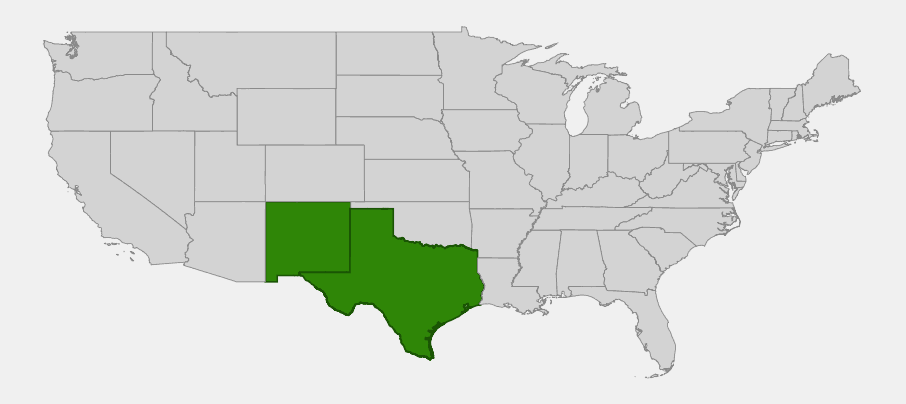
Texas Hummingbird Mint is native to a relatively narrow range centered on the Trans-Pecos region of far west Texas and extending into southern and central New Mexico. It is most closely associated with the rugged canyon and cliff country of this border region rather than being broadly distributed across either state.
Within its range, Texas Hummingbird Mint is a true cliff and crevice specialist, typically found rooted directly into cracks of granite and limestone rock faces, canyon walls, and steep rocky slopes where soil is minimal and drainage is sharp. This naturally harsh habitat explains the plant’s strong intolerance of wet or poorly drained garden soil.
Because its native range spans both Texas and New Mexico, Texas Hummingbird Mint is appropriate for regional native-plant lists covering the South and West Texas Trans-Pecos as well as Arizona and New Mexico landscapes. Its popularity as a nursery plant has led to widespread cultivation well beyond this native range, but gardeners elsewhere should recognize it as a regional specialty rather than a broadly native species.
📋 Regional plant lists featuring Texas Hummingbird Mint: South and West Texas · Arizona & New Mexico
Growing & Care Guide
Texas Hummingbird Mint is a rewarding, easy-care perennial for hot, dry gardens, provided it is given the sharp drainage its cliff-dwelling nature demands.
Light
Full sun produces the strongest flowering and most compact growth, though light afternoon shade is tolerated, especially in the hottest parts of its range. Too much shade results in leggy, floppy growth and fewer flowers.
Soil & Water
Sharp drainage is essential — this is a plant adapted to rooting in bare rock crevices, and it will not tolerate heavy clay or consistently moist soil. Rocky, gravelly, or sandy soils are ideal. Once established, it needs only occasional supplemental water during extended dry spells and should never be planted in a low spot where water collects.
Planting Tips
Plant in spring after the danger of frost has passed, choosing a site with excellent drainage such as a raised bed, rock garden, or slope. Space plants 2 to 3 feet apart to allow for mature spread and good air circulation, which helps prevent fungal problems in humid climates.
Pruning & Maintenance
Cut plants back hard in late winter or early spring, to within a few inches of the base, to encourage fresh, vigorous growth and the best flowering display. Deadheading spent flower spikes during the growing season can encourage additional blooms. In regions with wet winters, raised or sharply drained planting sites help prevent crown rot during the dormant season.
Landscape Uses
Texas Hummingbird Mint’s long bloom season and wildlife appeal make it valuable in many settings:
- Hummingbird and pollinator gardens as a season-long nectar source
- Rock gardens and xeriscape beds mimicking its natural cliff habitat
- Mixed perennial borders paired with other drought-tolerant natives
- Container plantings on patios where its fragrance can be enjoyed up close
- Slope and raised bed plantings where excellent drainage is easy to provide
- Fragrance gardens, thanks to its bubblegum-scented foliage
Wildlife & Ecological Value
Texas Hummingbird Mint is an exceptional wildlife plant, living up to its common name as one of the most reliable hummingbird-attracting natives for hot, dry gardens.
For Pollinators
The abundant, nectar-rich flower spikes attract large numbers of native bees, bumblebees, and butterflies throughout its long midsummer-to-fall bloom season, making it a valuable late-season nectar source when many other plants have finished flowering.
For Birds
Hummingbirds are especially drawn to the tubular raspberry-pink flowers, which are well-suited to their feeding behavior, and the plant is widely recommended in hummingbird garden plans across the Southwest for exactly this reason.
For Mammals
The aromatic, bubblegum-scented foliage is generally unpalatable to deer and other browsing mammals, making Texas Hummingbird Mint a reliably deer-resistant choice for gardens where browsing pressure is a concern.
Ecosystem Role
As a specialist of rock crevices and cliff faces, Texas Hummingbird Mint occupies a niche with very little plant competition, and its extended bloom period helps support pollinator populations through the hottest, driest part of the Chihuahuan Desert growing season when floral resources can otherwise be scarce.
Cultural & Historical Uses
Texas Hummingbird Mint does not carry the deep historical ethnobotanical record of larger desert succulents like agave and sotol, but its common names reflect long-standing popular recognition of its most notable traits: the bubblegum-like fragrance of its crushed foliage gave rise to “Mosquito Plant” and “Double Bubble Mint” as nicknames, while its strong appeal to hummingbirds earned it the name by which it is most widely known today.
The species was first scientifically described in the genus Cedronella before being reclassified into Agastache, reflecting ongoing taxonomic refinement within the broader hyssop and giant-hyssop group of the mint family. In recent decades, Texas Hummingbird Mint has become one of the more commercially successful native plant introductions from the Trans-Pecos and New Mexico borderlands, popularized through the native-plant nursery trade for its wildlife value and striking, long-blooming flowers.
Today, its primary significance is horticultural and ecological: a regional specialty turned garden favorite, prized for bringing a genuine piece of Chihuahuan Desert canyon country into gardens well beyond its native cliffs.
Frequently Asked Questions
Why is it called “Double Bubble Mint”?
The nickname comes from the sweet, bubblegum-like fragrance released when the gray-green foliage is crushed or brushed against — a distinctive trait shared with few other native plants.
Is Texas Hummingbird Mint the same as other Agastache species sold as “hummingbird mint”?
No. Several Agastache species are marketed under similar common names. Agastache cana specifically is native to the Trans-Pecos and New Mexico canyon country and is distinguished by its raspberry-pink flowers and bubblegum scent; other species may have different flower colors, fragrances, and native ranges.
Why did my Texas Hummingbird Mint die over winter?
The most common cause is poor drainage combined with winter moisture — this is a cliff-dwelling plant that needs sharp drainage year-round, and wet, cold crowns are prone to rot. Raised or sloped plantings with gritty soil greatly improve winter survival.
How can I encourage more flowers?
Cut the plant back hard in late winter, provide full sun, and avoid overwatering or overly rich soil, which can produce lush foliage at the expense of flowering. Deadheading spent spikes during the season can also prolong bloom.
Is Texas Hummingbird Mint safe around pets?
It is not reported as toxic and, as a true mint-family plant, is generally considered safe; its strong fragrance tends to discourage pets from chewing on it in the first place.

Looking for a nursery that carries Texas Hummingbird Mint?
Browse our native plant nursery directory: Texas · New Mexico