Prairie Celestial Lily (Nemastylis geminiflora)
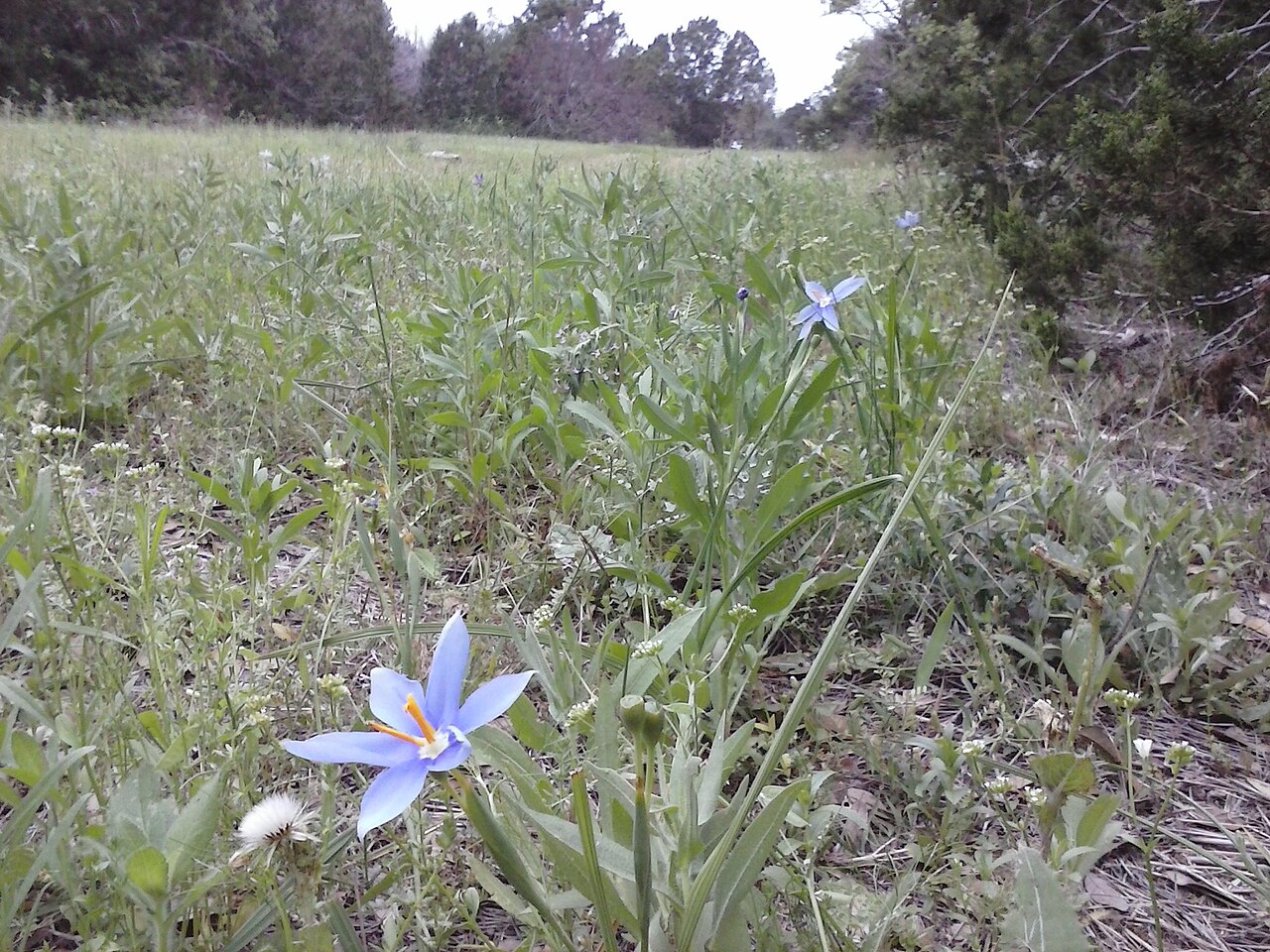
Nemastylis geminiflora, commonly called Prairie Celestial Lily (also prairie pleatleaf or simply celestial lily), is a small bulbous perennial in the iris family native to prairies and open woodlands across the south-central United States, from the Ozarks and eastern Kansas south through Oklahoma and Texas. Each spring it sends up delicate, pleated grass-like leaves and, for a few glorious weeks, a succession of six-petaled, sky-blue to violet-blue flowers that open in early morning and close by early afternoon — each individual bloom lasting only a single day.
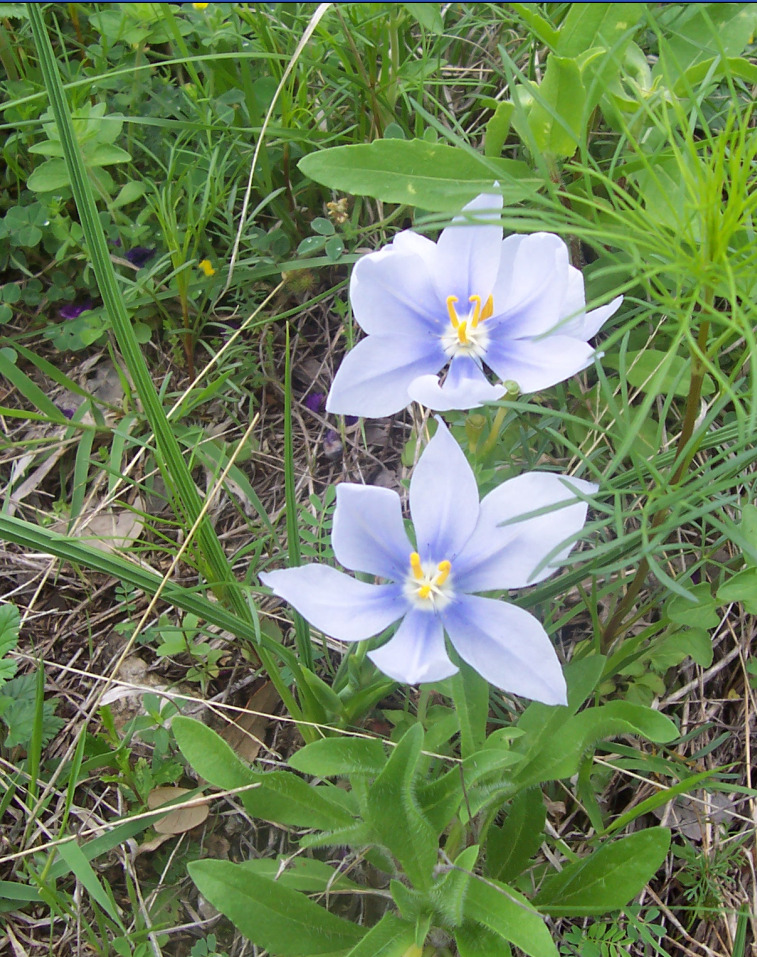
The flowers are the plant’s claim to fame: a clear, luminous blue rarely seen in North American wildflowers, set off by a small white-and-yellow throat and golden stamens. Because the blooms are so fleeting and the plant so easily overlooked between flowering seasons, finding a patch of Prairie Celestial Lily in bloom feels like a small discovery, even where it is locally common.
Prairie Celestial Lily thrives in native, undisturbed prairie and open woodland soils and does not compete well with aggressive turf grasses, which is part of why it has become uncommon in areas converted to improved pasture or lawn. It remains a cherished find for Texas and Oklahoma wildflower enthusiasts each spring.
Identification
Prairie Celestial Lily grows from a small underground bulb called a corm, sending up slender stems to about 8 to 14 inches tall, sometimes taller in favorable conditions.
Leaves
Each stem is clasped by one to four narrow, linear leaves up to about 4 inches wide at most (usually much narrower) and folded lengthwise near the base, with a distinctive pleated or ribbed texture along the veins that gives the species its common name “pleatleaf.” The foliage closely resembles coarse grass when not in flower.
Flowers
The flowers are the standout feature: six petal-like tepals in a clear sky-blue to violet-blue, arranged in a flat, star-like shape about 1.5 to 2.5 inches across, with a small white or pale throat and prominent orange-yellow stamens at the center. True to the “geminiflora” (twin-flowered) name, flowers are often produced in pairs from the same spathe, though usually only one opens at a time. Each individual flower opens in early morning and closes by midday or early afternoon, lasting just a single day, with a stem producing a succession of blooms over its flowering period. Bloom season runs primarily from March through May.
Fruit & Seeds
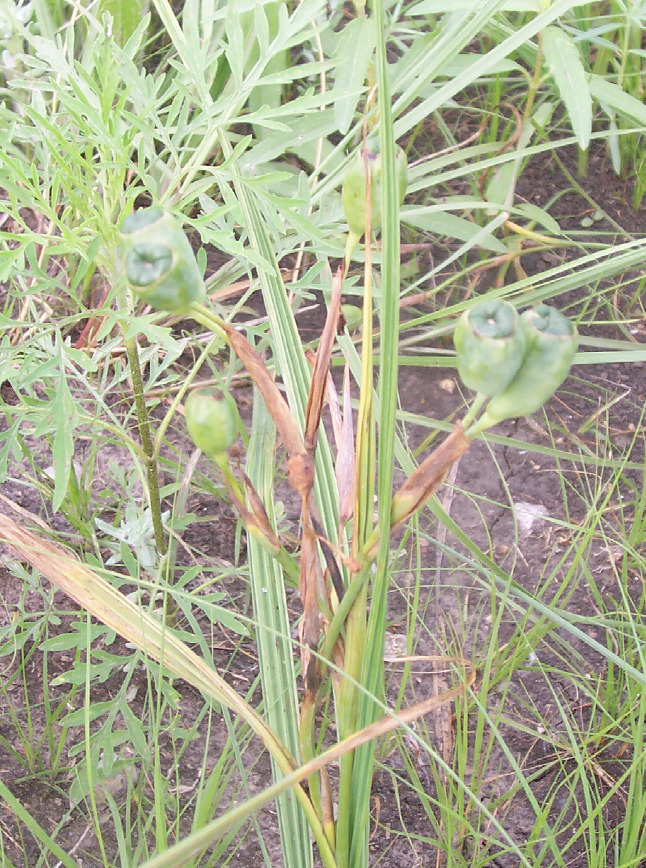
After flowering, an oval, three-chambered seed capsule develops, ripening and splitting open to release small, dark, rounded seeds. The capsules are inconspicuous and typically go unnoticed among the surrounding grass.
Quick Facts
| Scientific Name | Nemastylis geminiflora |
| Family | Iridaceae (Iris) |
| Plant Type | Bulbous (cormous) perennial forb |
| Mature Height | 8–14 in |
| Mature Spread | 4–6 in per clump |
| Growth Rate | Slow |
| Sun Exposure | Full Sun to Part Shade |
| Water Needs | Average; moist in spring, drier in summer dormancy |
| Soil Type | Prairie loam, rocky or clay soils; well-drained |
| Soil pH | Neutral to slightly acidic or alkaline |
| Bloom Time | March – May |
| Flower Color | Sky-blue to violet-blue |
| Fall Color | None; foliage dies back by early summer |
| Fruit | Small oval seed capsule, inconspicuous |
| Deer Resistant | Moderately (not a preferred browse) |
| USDA Hardiness Zones | 6–9 |
Native Range
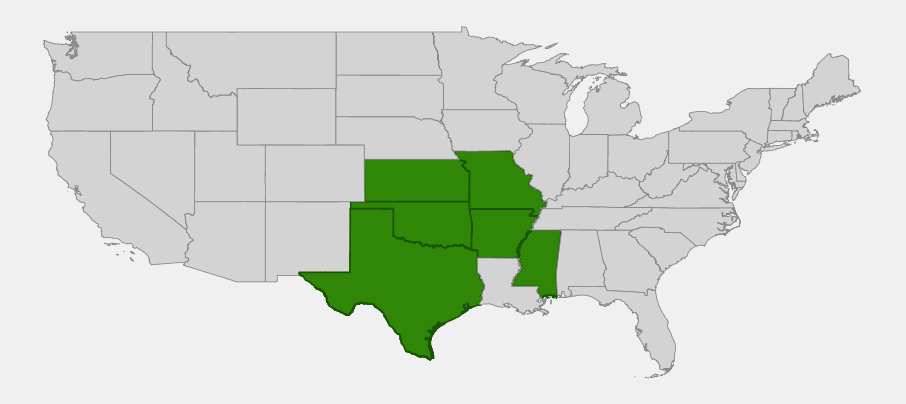
Prairie Celestial Lily is native to the south-central United States, with its main range running from the Ozark region of Missouri and eastern Kansas south through Oklahoma and across much of Texas, with scattered populations recorded in Arkansas and Mississippi. It grows in native prairies, open rocky glades, and open woodland edges, generally on undisturbed ground that has not been plowed or heavily improved for pasture.
Within its range, Prairie Celestial Lily is most reliably found on the deep prairies of north-central and central Texas and Oklahoma, where it grows alongside native bunchgrasses in largely unbroken sod. The outlying populations in Missouri, Kansas, Arkansas, and Mississippi tend to be more localized and are considered rare in those states, reflecting the species’ preference for intact native grassland that has become increasingly scarce across its range.
Because it depends on undisturbed native soils and does not persist well where land has been plowed, heavily grazed, or converted to introduced turf grass, Prairie Celestial Lily is a good indicator of quality remnant prairie, and its presence is often taken as a sign of a healthy, intact grassland community.
📋 Regional plant lists featuring Prairie Celestial Lily: South and West Texas
Growing & Care Guide
Prairie Celestial Lily is a charming but slow-to-establish native bulb best suited to prairie gardens and naturalistic plantings that mimic its undisturbed grassland habitat.
Light
Full sun to light part shade suits this species best, matching the open prairie and woodland-edge conditions where it grows naturally. Too much shade reduces flowering.
Soil & Water
Plant in well-drained prairie loam, rocky, or clay soil; the corms dislike waterlogged ground, especially during summer dormancy. Average moisture in spring during active growth and flowering is ideal, tapering off as the plant goes dormant in summer heat. Established plantings tolerate typical regional rainfall without supplemental irrigation.
Planting Tips
Prairie Celestial Lily establishes best in undisturbed or minimally disturbed native soil rather than tilled garden beds, and it can take a few seasons to settle in and bloom reliably from transplanted corms or seed. Because it is easily shaded out or outcompeted by aggressive turf and pasture grasses, give it space among native bunchgrasses rather than planting it into a lawn of introduced species. Source corms or plants only from reputable native plant nurseries, never from wild-collected stock, since populations can be locally vulnerable to disturbance.
Pruning & Maintenance
No pruning is needed. Allow the foliage to die back naturally after flowering in late spring, since this recharges the corm for the next season. The plant goes fully dormant in summer and reappears the following spring; avoid disturbing the soil where corms are known to be dormant.
Landscape Uses
Prairie Celestial Lily is best used in naturalistic, prairie-style plantings:
- Native prairie restoration and reconstruction plantings
- Wildflower meadows interplanted with native bunchgrasses
- Rock gardens on well-drained soil in sun to part shade
- Naturalized borders where spring ephemerals are welcome
Wildlife & Ecological Value
Though a small and short-blooming species, Prairie Celestial Lily contributes meaningfully to early-season pollinator resources in native prairie remnants.
For Pollinators
The flowers attract native bees, which visit during the single morning each bloom is open to collect pollen from the prominent orange-yellow stamens. Because the flowering window is so short, each day’s blooms represent a brief but concentrated nectar and pollen opportunity within the prairie community.
For Birds & Mammals
The plant has no major documented direct food value for birds or mammals; its ecological contribution lies chiefly in its role as a pollinator resource and as an indicator species for prairie quality.
Ecosystem Role
As a species that persists only in largely undisturbed native grassland, Prairie Celestial Lily serves as a quiet marker of prairie health. Its presence often signals that a site has escaped the plowing, heavy grazing, or conversion to introduced turf grasses that eliminate many native prairie forbs, making it valuable both ecologically and as a conservation indicator.
Cultural & Historical Uses
Prairie Celestial Lily has no significant documented history of traditional or practical use. Its primary historical significance is botanical and conservation-related: as remnant prairie has become increasingly rare across its range, this species has drawn attention from native plant societies and prairie conservation groups as an indicator of high-quality, undisturbed grassland.
Its brief, vivid blue flowers have also made it a favorite subject for Texas and Oklahoma wildflower photographers and naturalists, who prize the challenge of catching the blooms open during their narrow morning window.
Frequently Asked Questions
Why do Prairie Celestial Lily flowers only last one day?
Each individual flower opens in early morning and closes by early afternoon, lasting just a single day. The plant compensates by producing a succession of flowers from the same stem over its spring bloom period, so a patch may show fresh blooms for several weeks even though no single flower lasts long.
Is Prairie Celestial Lily rare?
It is not considered globally rare (ranked “Apparently Secure” by NatureServe), but it depends on undisturbed native prairie habitat, which has become scarce in parts of its range. It is more localized and uncommon toward the edges of its range in Missouri, Kansas, Arkansas, and Mississippi than in its Texas and Oklahoma core.
Can I grow Prairie Celestial Lily in a regular garden bed?
It can be grown in a garden, but it establishes best in well-drained soil among native grasses rather than in a tilled, heavily amended bed, and it may take a couple of seasons to settle in and bloom reliably.
What does “pleatleaf” refer to?
The common name “prairie pleatleaf” describes the plant’s narrow leaves, which are folded lengthwise near the base and have a pleated or ribbed texture along their veins, distinguishing them from plain grass blades.
When is the best time to see Prairie Celestial Lily in bloom?
Look for it in native prairie remnants from March through May, and visit in the morning — the flowers close by early afternoon, so afternoon walks will usually miss the show.

Looking for a nursery that carries Prairie Celestial Lily?
Browse our native plant nursery directory: Texas · Oklahoma · Kansas · Missouri & Mississippi · Arkansas