Seep Muhly (Muhlenbergia reverchonii)
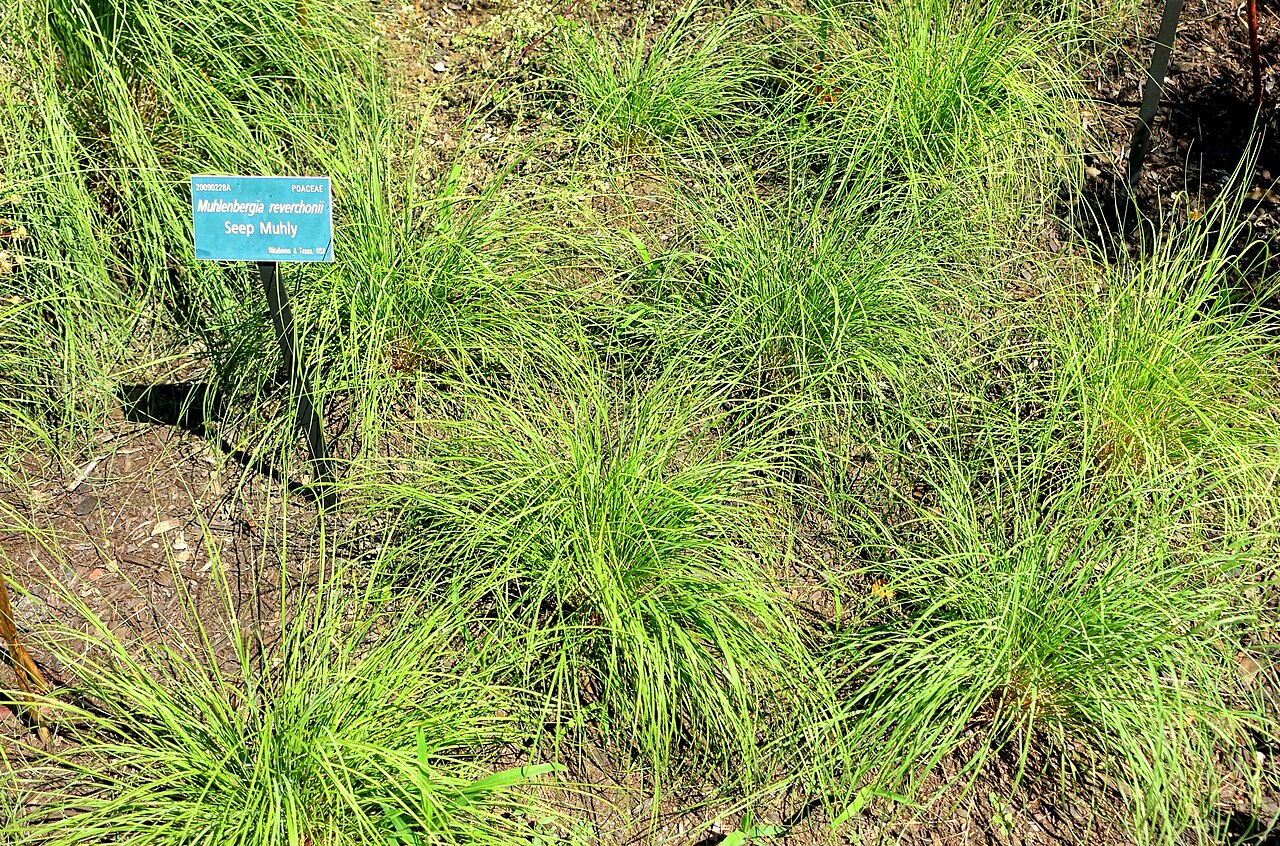
Muhlenbergia reverchonii, known as Seep Muhly, is a fine-textured native bunchgrass of the limestone grasslands that stretch from central Oklahoma through central Texas. It is one of the smaller, neater muhly grasses, forming tight, rounded tufts of thread-like foliage that stay a fresh green through the growing season and turn soft tan in winter. In late summer and fall, airy, pinkish-gray flower panicles rise just above the foliage, giving the clump a soft, hazy halo that has made seep muhly increasingly popular in designed landscapes well beyond its native range.
True to its common name, seep muhly favors the seeps, spring-fed flats, and damp limestone outcrops of the Edwards Plateau and similar terrain, where water reaches the surface over calcareous rock. Despite this habitat preference, the species has proven to be a tough, adaptable garden plant that tolerates considerably drier conditions than its wild haunts would suggest, and it has become a go-to choice for low, fine-textured grass plantings in warm climates.
Selected under the trade name ‘Undaunted’, seep muhly has moved from a locally distributed Texas-Oklahoma native into a widely available nursery plant valued for its neat habit, long season of interest, and reliable winter hardiness compared to many of its showier muhly relatives.
Identification
Seep muhly is a small, warm-season perennial bunchgrass forming dense, rounded clumps 1 to 3 feet tall and about as wide, with very fine, wiry leaf blades that give the whole plant a soft, mounded texture.
Foliage
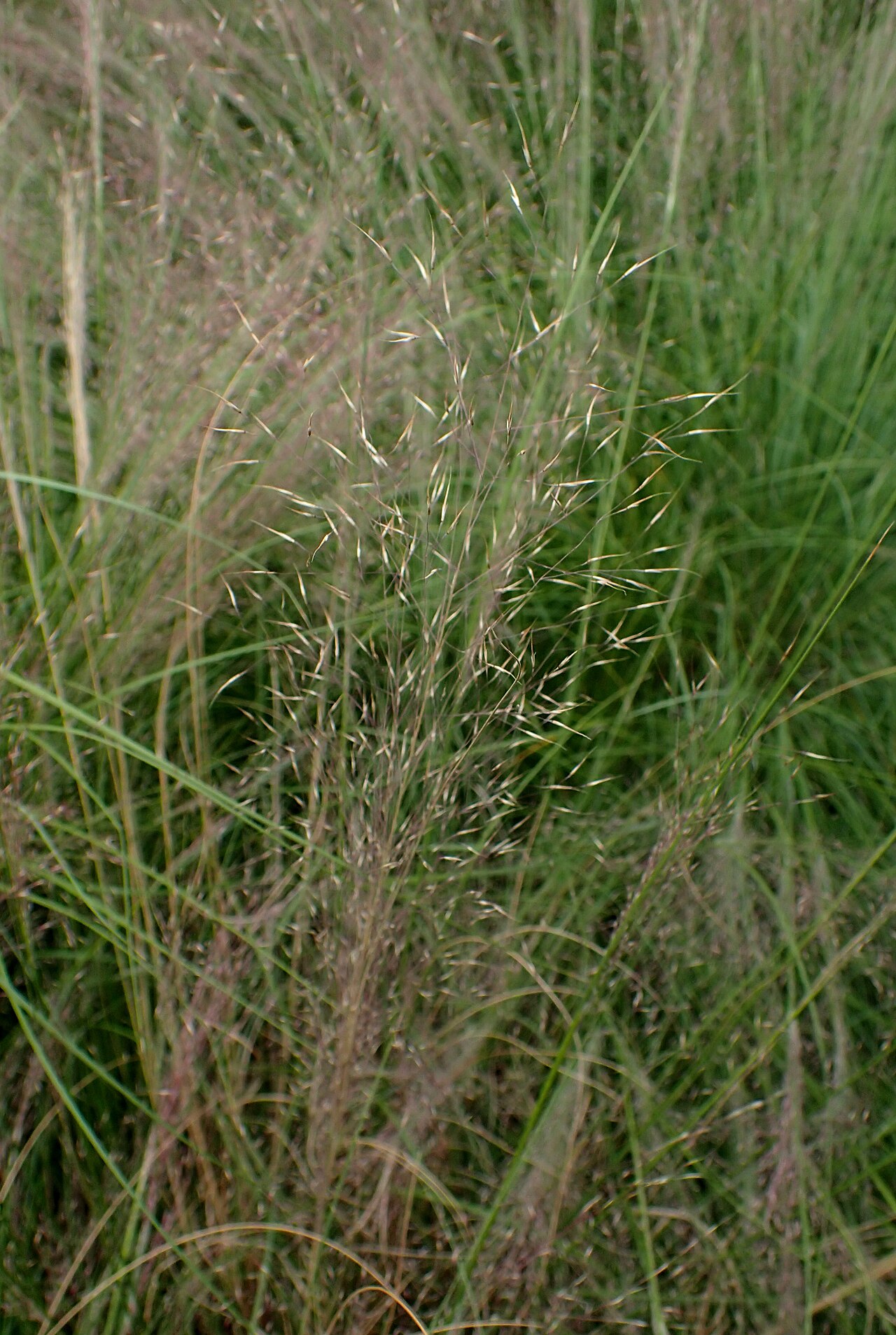
Leaves are thread-thin, rolled or folded, and bright to medium green through spring and summer, radiating outward from the clump’s base in a dense, finely textured mound. The foliage has a notably soft appearance compared to coarser bunchgrasses, and it holds its form well without flopping.
Flowers & Seed Heads
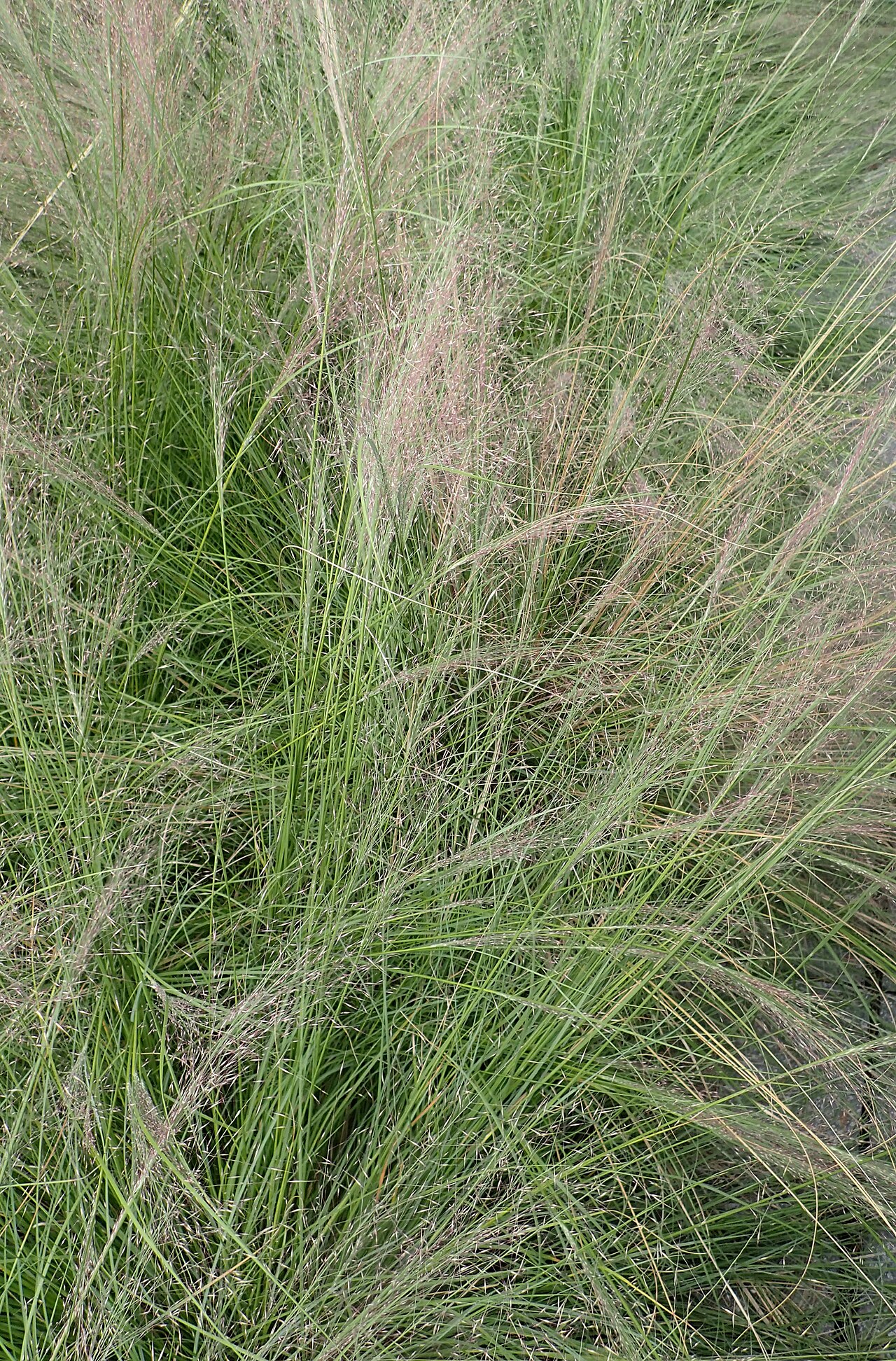
From late summer into fall, airy, diffuse flower panicles rise 6 to 12 inches above the foliage on thin stems. The panicles are purplish-pink to gray when fresh, catching backlight beautifully, and fade to a buff tan as the seed matures. The combination of fine foliage and cloud-like seed heads gives mature clumps a soft, luminous quality, especially in low morning or evening light.
Growth Habit
The clumping, non-spreading growth habit means seep muhly stays where it is planted rather than running or self-seeding aggressively, making it predictable and easy to use in a designed bed as well as in naturalistic plantings.
Quick Facts
| Scientific Name | Muhlenbergia reverchonii |
| Family | Poaceae (Grass) |
| Plant Type | Warm-Season Perennial Bunchgrass |
| Mature Height | 1–2 ft foliage; 2–3 ft in bloom |
| Mature Spread | 1.5–2.5 ft, rounded clump |
| Growth Rate | Moderate |
| Sun Exposure | Full Sun to Part Shade |
| Water Needs | Average; drought tolerant once established |
| Soil Type | Rocky, limestone-based; tolerates clay and caliche |
| Soil pH | Neutral to alkaline |
| Bloom Time | Late summer – fall |
| Flower Color | Pinkish-gray, fading to tan |
| Fall Color | Foliage fades to buff tan |
| Fruit | Small grain-like caryopsis, not ornamentally significant |
| Deer Resistant | Yes |
| USDA Hardiness Zones | 5–9 |
Native Range
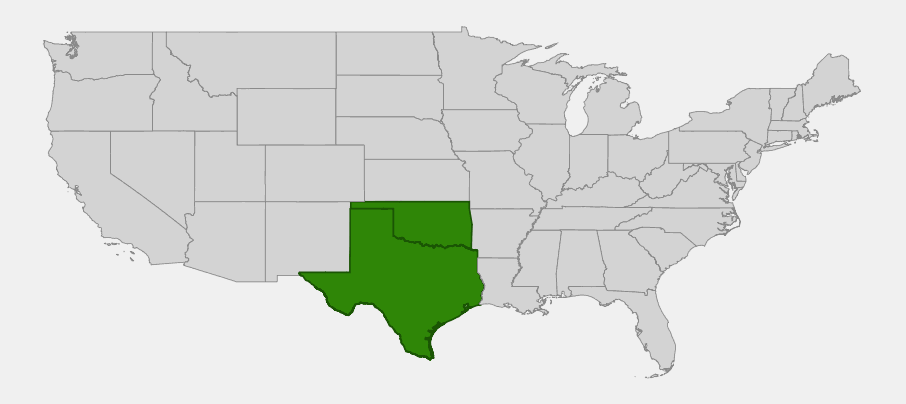
Seep muhly has a notably small native range, limited to central Oklahoma and central Texas, where it grows in a band of limestone-influenced grassland and savanna habitat. It is most closely associated with the Edwards Plateau and the Lampasas Cut Plain of Texas and the Arbuckle Mountains area of Oklahoma.
True to its common name, the species favors sites where water reaches the surface over limestone: seeps, spring heads, moist rocky flats, and the margins of streams on calcareous soils, generally below about 2,100 feet elevation. Unlike many muhly grasses that tolerate pure sand or very dry uplands, seep muhly in the wild is tied to this specific pattern of shallow, rocky, intermittently moist limestone ground.
Because its native range is so limited, seep muhly is not a dominant grassland species across a broad area the way species like silver bluestem are; instead it occurs in more localized, often small populations tied closely to limestone geology. It is not considered rare or at risk, however, and its popularity in horticulture has if anything raised awareness of the species well beyond its home range.
📋 Regional plant lists featuring Seep Muhly: South and West Texas
Growing & Care Guide
Seep muhly is a forgiving, low-maintenance grass that performs well in gardens across a much wider range of conditions than its narrow native range would suggest.
Light
Full sun produces the densest clumps and the best bloom, but seep muhly also handles light to part shade, making it more flexible than many prairie grasses for use under high tree canopy or on the east side of buildings.
Soil & Water
In the garden, seep muhly adapts to a wide range of soils, including rocky limestone ground, clay, and even average garden loam, as long as drainage is reasonable. It appreciates consistent moisture while establishing and performs best with average water, but mature plants handle considerable drought, needing far less supplemental water than its moist, seep-fed native habitat might suggest.
Planting Tips
Plant container-grown seep muhly in spring so it has a full growing season to establish before winter. Space plants 18 to 24 inches apart for a continuous low border or massed planting, or use singly as an accent. It combines well with other short grasses and rock-garden perennials, especially in limestone-influenced soils.
Pruning & Maintenance
Cut the entire clump back to a few inches in late winter before new growth starts, to remove the previous year’s tan foliage and seed stalks. Seep muhly needs no fertilizer in typical garden soils and has no significant pest or disease problems, making it one of the lower-maintenance ornamental grasses available.
Landscape Uses
- Low borders and edging, where its neat, rounded form stays tidy without shearing
- Rock gardens and limestone-soil plantings that mimic its native habitat
- Mass plantings for a soft, textured groundcover effect
- Container and small-space gardens, given its compact mature size
- Pollinator and prairie-style gardens paired with native wildflowers
- Erosion control on gentle slopes with rocky or calcareous soil
Wildlife & Ecological Value
As a native bunchgrass, seep muhly contributes quietly but steadily to the grassland and savanna communities it grows in.
For Pollinators
Like most grasses, seep muhly is wind-pollinated and does not offer nectar, but its fine structure provides cover and microhabitat for ground-dwelling insects that in turn support pollinators and other wildlife in the broader landscape.
For Birds
Small seed-eating birds forage on the tiny grass seeds through fall and winter, and the dense clump base offers shelter and nesting material for ground-nesting songbirds in prairie and savanna habitat.
For Mammals
Seep muhly is not a preferred browse for deer, which is part of why it holds up well in gardens with deer pressure, and the fine foliage provides cover for small mammals moving through grassland habitat.
Ecosystem Role
As a clumping, non-aggressive native grass tied to limestone seeps and rocky grassland, seep muhly helps stabilize soil on the thin, rocky ground typical of the Edwards Plateau and similar terrain, while its narrow habitat preference makes it a useful indicator of calcareous, moisture-influenced grassland sites.
Cultural & Historical Uses
Seep muhly has no significant documented traditional food, fiber, or medicinal use; like most fine-leaved native bunchgrasses, its primary historical role was simply as a component of the native grassland forage base across central Texas and Oklahoma ranchland, grazed incidentally along with other grasses.
Its modern cultural significance is almost entirely horticultural. Texas native-plant breeders and nurseries recognized the species’ garden potential for its neat form, long season of textural interest, and tolerance of limestone soils, leading to the introduction of the selection ‘Undaunted’, which has been widely planted in xeriscapes and designed landscapes across much of the warmer United States, well beyond the species’ small native range.
This horticultural success has made seep muhly something of an ambassador for Texas and Oklahoma native grasses, introducing gardeners nationwide to the broader value of native bunchgrasses in low-water landscaping.
Frequently Asked Questions
Is seep muhly the same as ‘Undaunted’ muhly grass?
‘Undaunted’ is a selected cultivar of the species Muhlenbergia reverchonii, chosen for its compact habit and cold hardiness. The straight species and the ‘Undaunted’ selection are essentially the same plant, with ‘Undaunted’ simply being a particularly garden-worthy selection widely sold in nurseries.
Does seep muhly need wet soil, given its name?
No. While it grows naturally around limestone seeps and spring-fed ground, cultivated seep muhly adapts well to average garden moisture and tolerates real drought once established; it does not need boggy or constantly wet soil to thrive.
How is seep muhly different from pink muhly grass?
Pink muhly (Muhlenbergia capillaris) is a larger grass with showier, more intensely pink-magenta plumes native to the southeastern and Gulf Coast states, while seep muhly is smaller, more compact, and native specifically to central Texas and Oklahoma limestone country, with softer, less vividly colored panicles.
How cold hardy is seep muhly?
It is one of the more cold-hardy muhly grasses, reliably perennial through USDA zone 5, which has made it popular well north of its native Oklahoma-Texas range.
When should I cut back seep muhly?
Cut the clump back to a few inches in late winter, just before new spring growth begins. Cutting earlier removes winter texture and interest; cutting later risks damaging emerging new shoots.

Looking for a nursery that carries Seep Muhly?
Browse our native plant nursery directory: Texas