Golden Star (Triteleia ixioides)
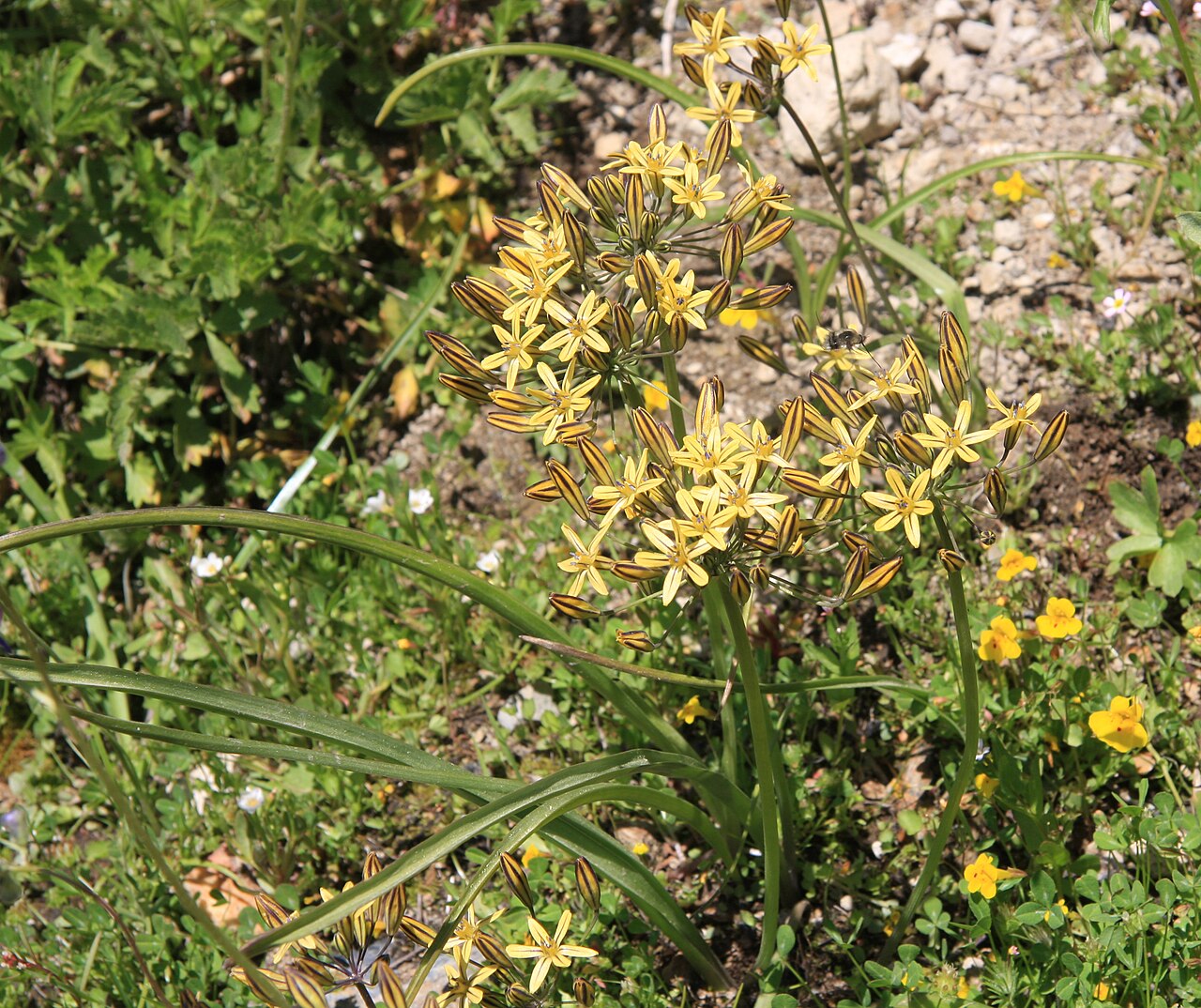
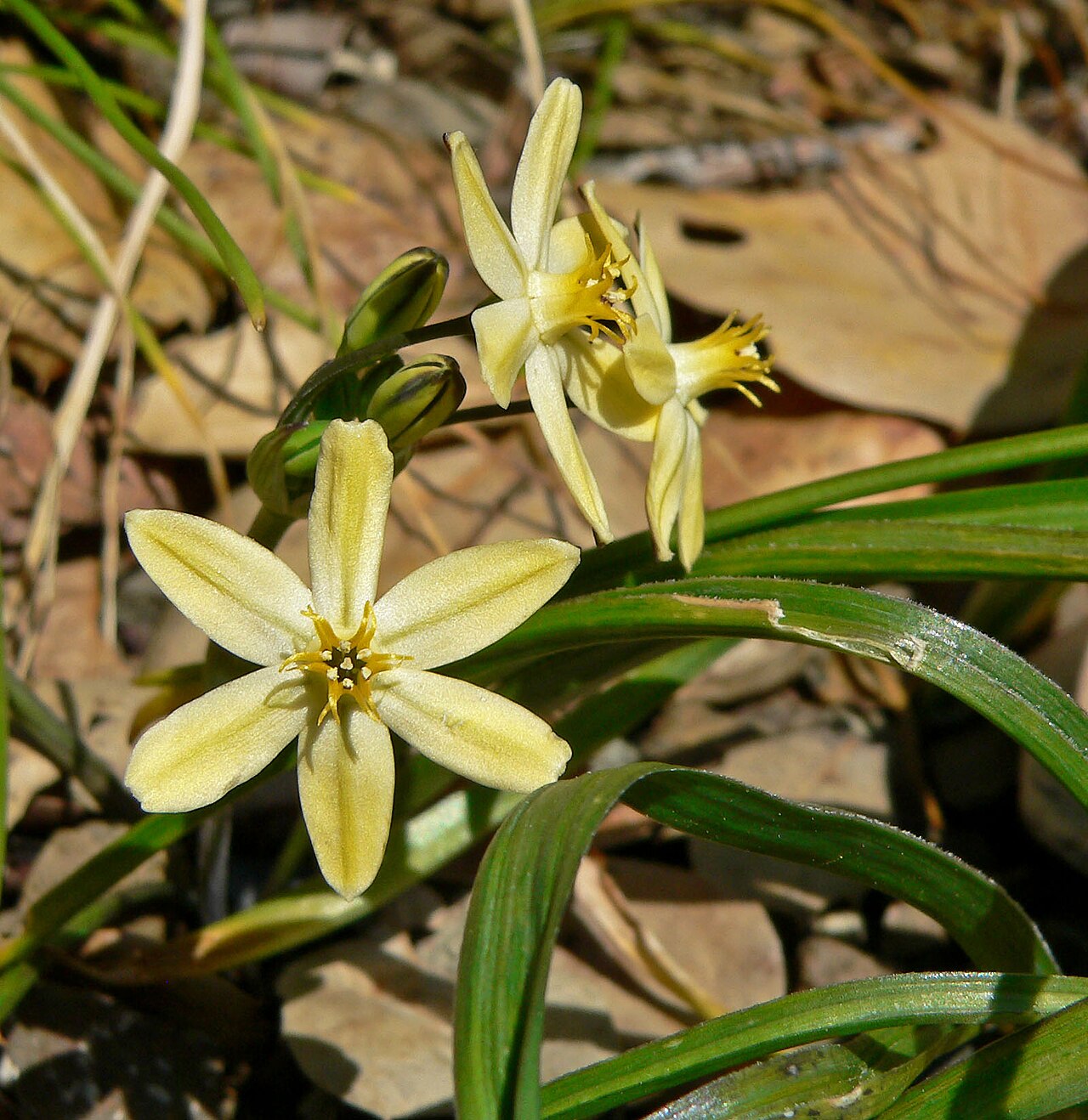
Triteleia ixioides, widely known as golden star or “pretty face,” is one of California’s cheeriest spring bulbs, producing a rounded cluster of bright yellow, star-shaped flowers atop a bare, wiry stalk. Each of the six petal-like tepals carries a thin, dark greenish-black to purplish-brown stripe down the center, giving the flower a crisp, graphic look that stands out even from a distance in open grassland and rocky slopes. The plant belongs to the Themidaceae (brodiaea) family, the same group of western American bulbs that includes harvest brodiaea and blue dicks.
Golden star grows from a small corm that lies dormant through the dry California summer and fall, sending up a single grass-like leaf and then a leafless flowering stem each spring. It is one of the most widespread and variable members of its genus, with several recognized subspecies differing mainly in flower size and petal texture, found from the Oregon Siskiyous south through most of California’s foothill and mountain country. Because it tolerates poor, rocky soil and needs no summer water, golden star has become a popular, easy-care choice for native plant gardens throughout its range.
In the wild, look for golden star on dry slopes, open woodland, and rocky outcrops from the coast ranges to the Sierra Nevada foothills, generally blooming from late April into July depending on elevation. In the garden, it rewards a spot with good drainage and full sun, multiplying slowly into small patches of cheerful yellow blooms each spring.
Identification
Golden star is a perennial herb 6 to 24 inches tall, growing from a small, fibrous-coated corm. A single, narrow, somewhat fleshy basal leaf emerges in late winter, often withering by the time the plant flowers.
Flowers
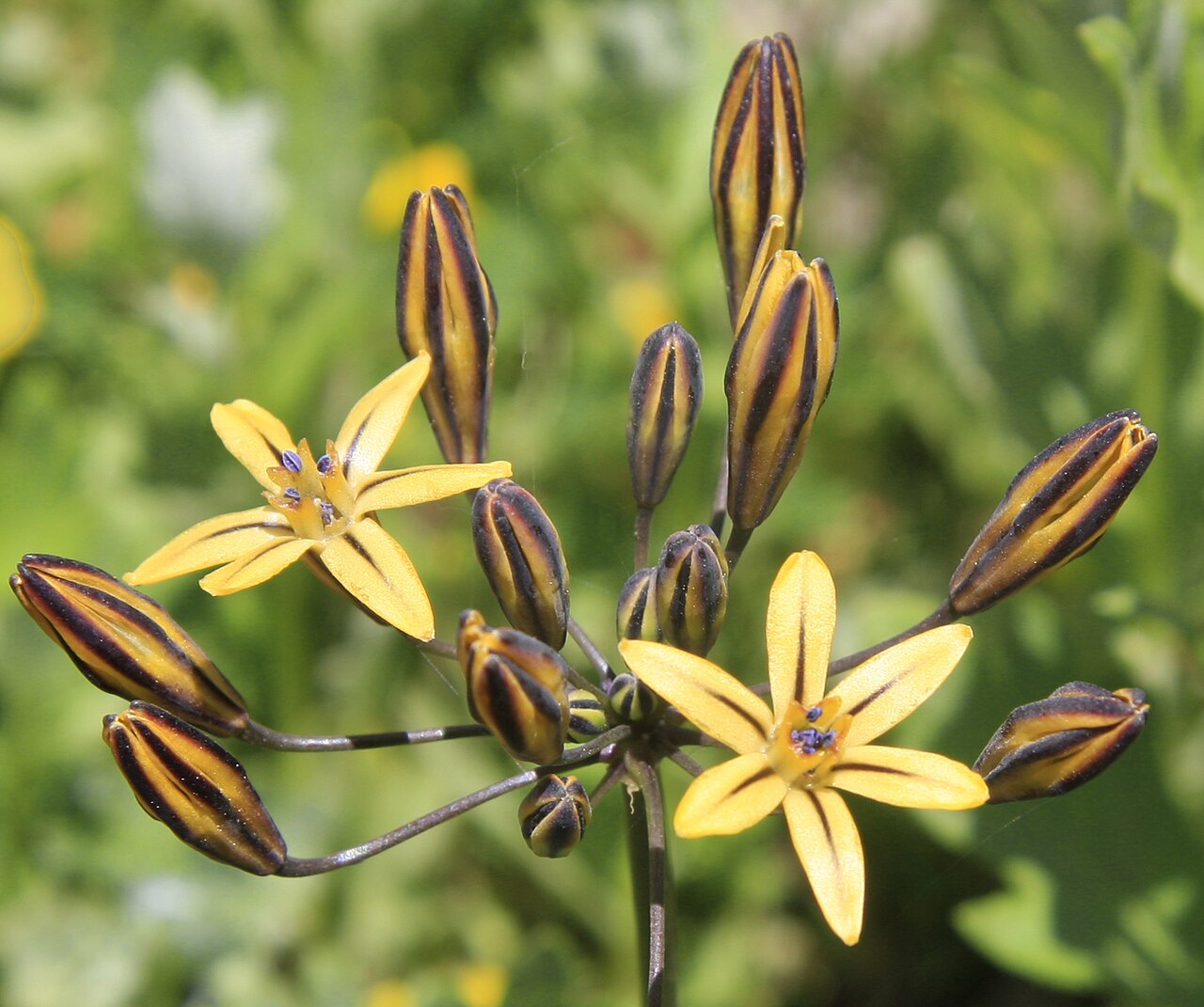
The leafless flowering stalk ends in a rounded umbel of 4 to 15 (occasionally more) star-shaped flowers on slender stalks of roughly equal length, giving the cluster a tidy, hemispherical shape, unlike the looser, uneven clusters of harvest brodiaea. Each flower is ½ to 1 inch across, bright yellow to pale cream, with six spreading, pointed tepals, each marked by a narrow dark stripe (greenish, purplish, or blackish depending on subspecies) running down the midline. Six stamens with yellow or purplish anthers sit at the flower’s center. Bloom time runs from April into July, with higher-elevation and northern populations flowering later in the season.
Leaves & Stem
A single linear, slightly fleshy leaf up to 16 inches long arises from the corm in late winter and usually dries up by or before flowering. The flowering stem is wiry, smooth, and leafless, sometimes with a slight waxy bloom.
Fruit
Each pollinated flower develops into a small, three-angled capsule containing black, angular seeds, maturing and splitting open by mid to late summer as the rest of the plant disappears underground for the dry season.
Quick Facts
| Scientific Name | Triteleia ixioides |
| Family | Themidaceae (Brodiaea) |
| Plant Type | Perennial bulb (corm) |
| Mature Height | 6–24 in (15–60 cm) |
| Growth Rate | Slow |
| Sun Exposure | Full Sun to Light Shade |
| Water Needs | Low; none in summer dormancy |
| Soil Type | Well-drained, rocky to loamy; tolerates poor soil |
| Soil pH | 6.0–7.5 (neutral) |
| Bloom Time | April – July |
| Flower Color | Bright yellow to cream, dark-striped petals |
| Dormancy | Summer and fall (corm only) |
| Deer Resistant | Mostly yes; corms attract rodents |
| USDA Hardiness Zones | 7–10 |
Native Range
Golden star is native to California, where it is one of the most widely distributed native bulbs, occurring through the Coast Ranges, Sierra Nevada foothills and lower mountains, the Klamath-Siskiyou region, and much of the state’s interior valleys and chaparral country. Its range extends north into southwestern Oregon. It grows from near sea level to around 8,000 feet in the Sierra, on dry, open, often rocky sites in grassland, chaparral, oak woodland, and open coniferous forest.
Golden star is not native to Nevada, Washington, or states east of the Cascades and Sierra; plants sold outside California and southwestern Oregon should be treated as garden subjects rather than regional natives.
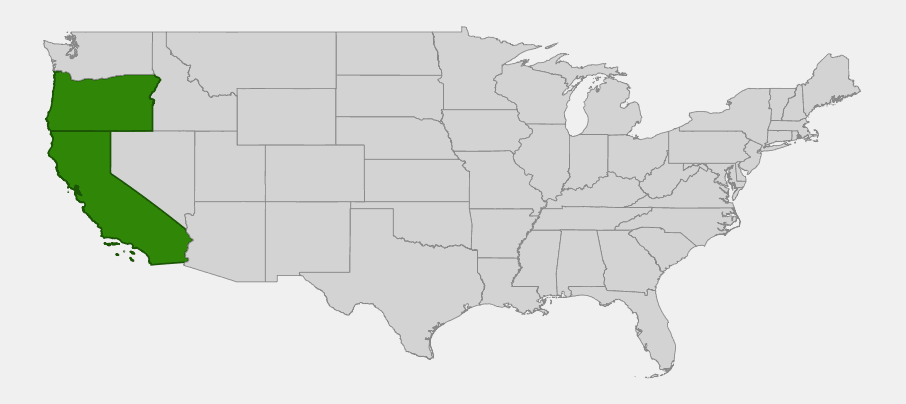
📋 Regional plant lists featuring golden star: California & Nevada · Western Oregon & Western Washington
Growing & Care Guide
Golden star is one of the easiest native California bulbs to grow, tolerant of poor soil and summer neglect, and reliable in a dry native garden year after year.
Light
Full sun produces the best flowering, though golden star also tolerates light, open shade such as beneath deciduous oaks.
Soil & Water
Give it well-drained soil — rocky, gravelly, or sandy soils are ideal, though it also grows in ordinary garden loam as long as drainage is adequate. Water during the fall-to-spring growing season if rainfall is light, then stop completely once the leaf yellows in late spring. Like other California geophytes, golden star needs a dry summer dormancy to thrive long-term.
Planting Tips
Plant corms in fall, about 3 inches deep, in a site that will not be irrigated in summer. Golden star looks best planted in drifts of a dozen or more corms rather than singly, since the individual flower clusters, while cheerful, are not large. It combines well with other dry-summer natives such as California poppy, blue-eyed grass, and native bunchgrasses.
Pests & Problems
Gophers and ground squirrels will dig up the corms. The plant is otherwise trouble-free, and the most common cultivation mistake is excess summer water, which rots the dormant corm.
Landscape Uses
Golden star works well in:
- Dry rock gardens and gravel plantings
- Unirrigated wildflower meadows, massed for color
- Oak woodland gardens, naturalized under open canopy
- California native bulb collections
- Chaparral restoration on dry, rocky sites
Wildlife & Ecological Value
Golden star is a reliable spring nectar source in California’s dry grassland and woodland habitats, playing a modest but valuable role for native pollinators.
For Pollinators
The open, star-shaped flowers are visited by a range of native bees and other insects able to easily access the exposed stamens and nectar. The rounded flower cluster, holding several blooms open at once, makes an efficient foraging stop, and the plant’s broad elevation range means it provides nectar across a long stretch of the spring-to-summer bloom season as different populations flower at different times.
For Mammals
Ground squirrels and pocket gophers dig up and eat the starchy corms, a natural check on population size and the main reason gardeners in rodent-heavy areas sometimes plant corms in buried wire baskets.
Ecosystem Role
As a geophyte, golden star is part of the community of native bulbs that fill California’s dry, rocky, and chaparral-adjacent habitats where few other perennials can persist through the long summer drought. Its wide elevational and geographic range makes it one of the more resilient native bulbs in disturbed or recovering grassland and woodland sites.
Cultural & Historical Uses
Like other members of the brodiaea family, golden star’s corms are edible and were historically gathered by California Indigenous peoples as a food source, typically roasted or boiled. The common name “pretty face” reflects the flower’s cheerful appearance rather than any historical use. Today the species is grown almost entirely as an ornamental native bulb; digging wild corms is neither legal on most public lands nor necessary, as nursery-propagated corms are available from California native plant specialists.
Frequently Asked Questions
Why is golden star also called “pretty face”?
“Pretty face” is simply a common nickname reflecting the cheerful, star-shaped yellow flowers with their crisp dark stripes — it has no particular historical or ethnobotanical meaning.
How is golden star different from harvest brodiaea?
Golden star has bright yellow, dark-striped flowers in a tidy, rounded cluster, while harvest brodiaea has violet-blue flowers in a looser, uneven cluster with distinctive white staminodia. Golden star also tends to bloom somewhat earlier in the season.
Does golden star need summer water?
No — it should not be watered in summer. The corm needs a dry dormant period to survive and rebloom; summer irrigation is the most common cause of failure in cultivation.
Can golden star grow in part shade?
Yes, it tolerates light, open shade such as beneath deciduous oaks, though flowering is best in full sun.
How long does it take for golden star to spread into a patch?
Established corms multiply slowly by offsets over several years; planting a dozen or more corms together gives a fuller display sooner than relying on natural increase alone.

Looking for a nursery that carries golden star?
Browse our native plant nursery directory: California · Oregon