Mormon Tea (Ephedra antisyphilitica)
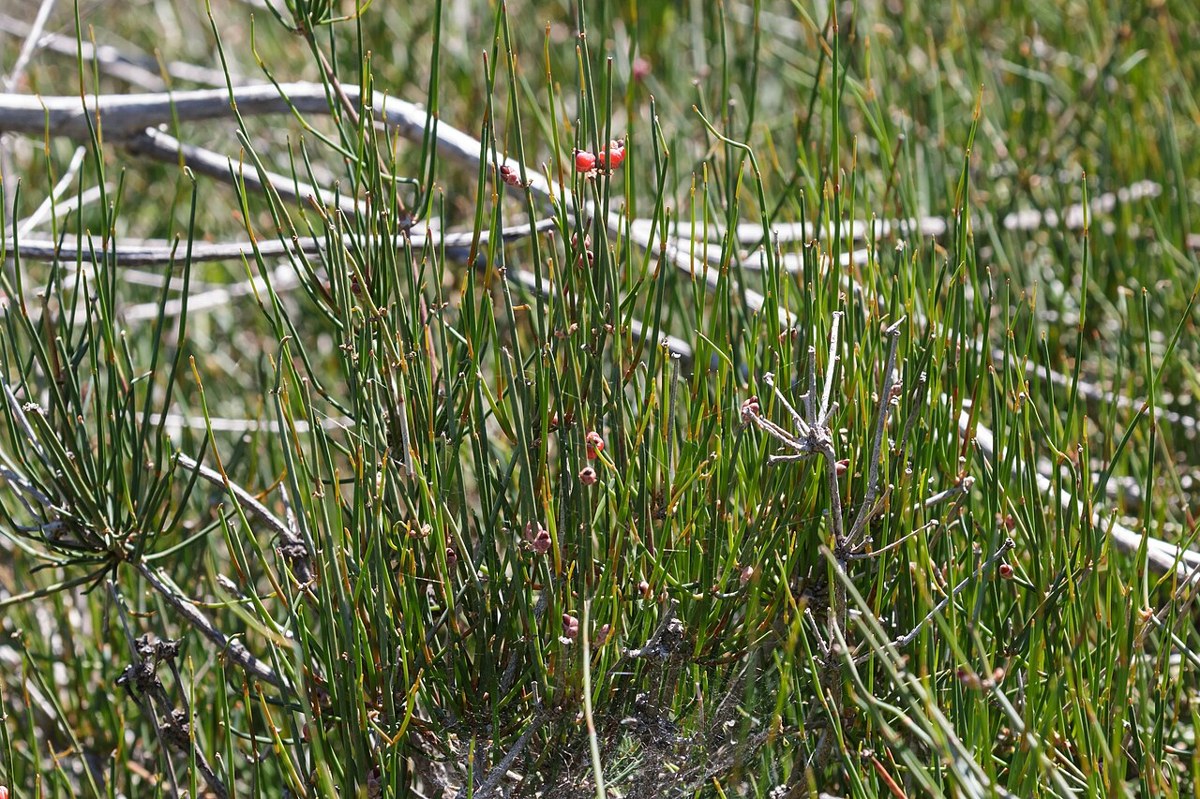
Ephedra antisyphilitica, commonly called Mormon Tea, Clapweed, or Texas Ephedra, is a wiry, broom-like shrub of the Texas and New Mexico borderlands. It belongs to the Ephedraceae, an ancient family of gymnosperms distantly related to pines rather than to true flowering plants — a fact immediately apparent once you look closely: there are no true leaves, only tiny scale-like bracts at each stem joint, and the plant photosynthesizes through its jointed, blue-green to yellow-green stems. The scrambling, somewhat untidy clumps are easy to overlook until the bright red fruit ripens in summer, or until a hiker brushes past one and notices the springy, almost rubbery stems.
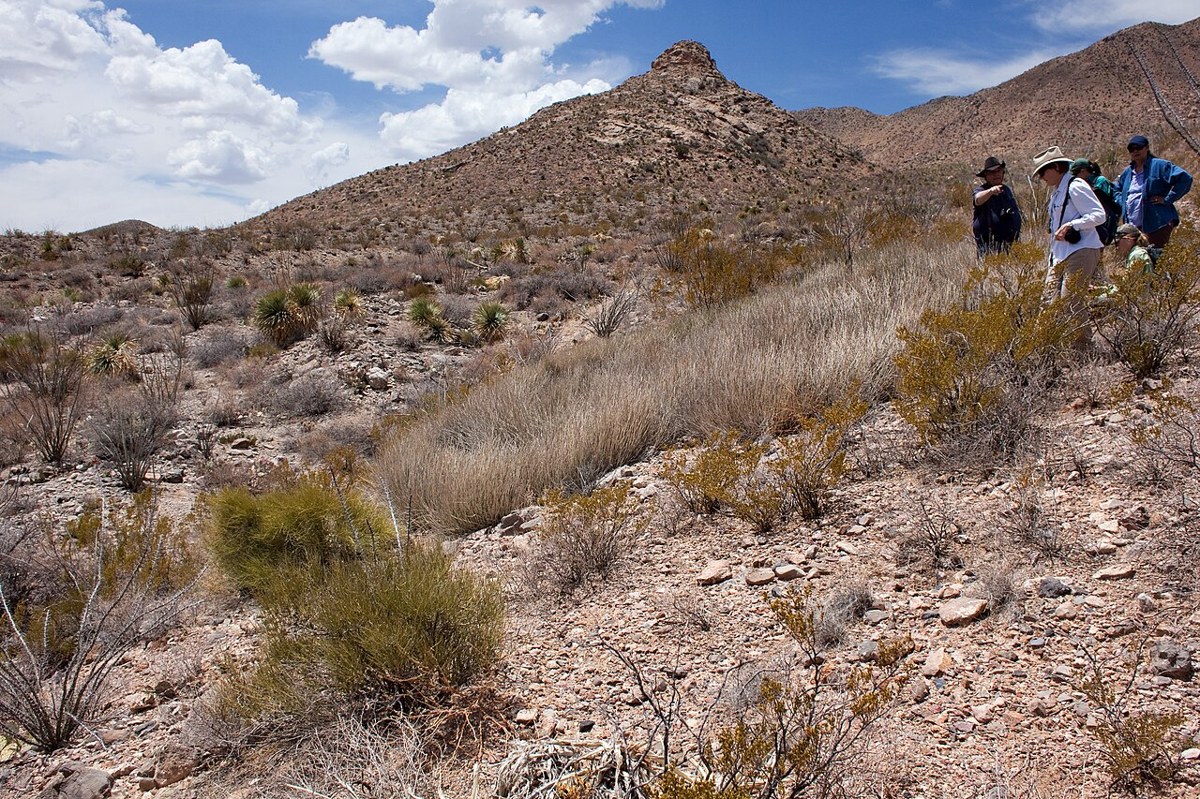
This is a plant of hard caliche ridges, limestone hillsides, and dry brushland in the southern Edwards Plateau, the Trans-Pecos, and the plains of south and west Texas, extending west into southeastern New Mexico. It thrives in soils too thin, rocky, and alkaline for most other shrubs, often sharing space with creosote bush, mesquite, and various cacti. Mature plants form loose, rounded mounds 2 to 5 feet tall and about as wide, made up of dozens of slender, jointed stems that arch outward from a woody base.
Mormon Tea is dioecious — individual plants are either male or female — and only female plants produce the small, berry-like fruit that gives the species much of its ornamental and wildlife interest. Despite the common name shared with several of its western relatives, the “tea” made from this and other Ephedra species was historically brewed by travelers and Indigenous peoples of the Southwest, though modern gardeners grow it chiefly for its tough constitution, textural interest, and value to desert wildlife rather than for consumption.
Identification
Mormon Tea is best recognized by its mass of slender, jointed, leafless green stems arising from a woody crown, giving the whole plant a scrubby, broom-like or horsetail-like silhouette. The stems are the plant’s primary photosynthetic organ, a strategy well suited to its hot, dry, sun-baked habitat.
Stems
Stems are erect to spreading, 2–5 feet long, yellow-green to blue-green, distinctly jointed every 1–2.5 inches, and roughened with fine longitudinal ridges that are easily felt by running a finger along a stem. New growth is more flexible and brighter green; older stems toward the base become gray, woody, and rigid. The overall growth habit is a tangled, rounded clump rather than a single trunk.
“Leaves”
True leaves are absent. In their place, each stem joint bears a pair of tiny, papery, triangular scales less than ¼ inch long, which function more as vestigial bracts than as photosynthetic leaves. These scales are often reddish-brown and inconspicuous, quickly overlooked against the green stems.
Flowers
Because Ephedra is a gymnosperm, it does not produce true flowers; instead it bears small cone-like structures at the stem joints in spring. Male plants produce tiny, yellow, pollen-bearing cones in tight clusters; female plants produce small, inconspicuous ovulate cones that, after pollination, swell into fleshy, berry-like structures.
Fruit & Seeds
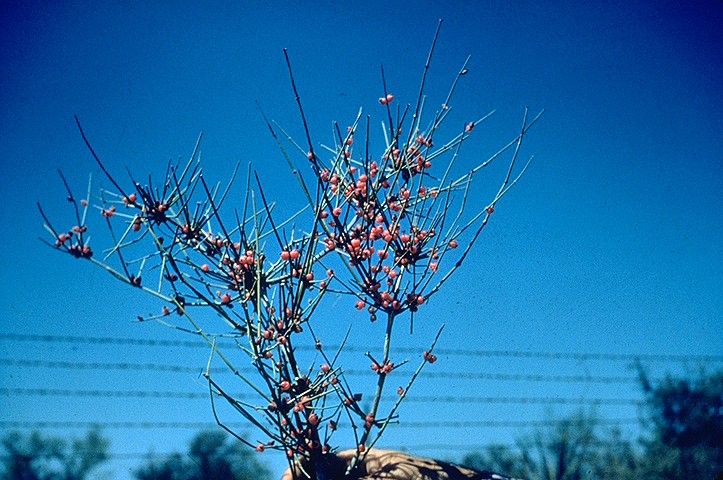
On female plants, the fertilized cones mature by midsummer into small, ovoid, bright orange-red fleshy “fruits” about ⅜ inch long, clustered at the stem joints. Each contains one or two hard brown seeds. The fruit is the most conspicuous and attractive feature of the plant, persisting into late summer and drawing birds and small mammals.
Quick Facts
| Scientific Name | Ephedra antisyphilitica |
| Family | Ephedraceae (Joint-fir) |
| Plant Type | Evergreen Shrub (leafless, jointed stems) |
| Mature Height | 2–5 ft |
| Mature Spread | 2–5 ft |
| Growth Rate | Slow |
| Sun Exposure | Full Sun |
| Water Needs | Low |
| Soil Type | Caliche, limestone, rocky or sandy; very well-drained |
| Soil pH | 7.0–8.5 (neutral to alkaline) |
| Bloom Time | March – May (cones) |
| Flower Color | Yellow (male cones), inconspicuous (female cones) |
| Fall Color | None (stems stay green year-round) |
| Fruit | Bright orange-red fleshy cones, on female plants only |
| Deer Resistant | Yes |
| USDA Hardiness Zones | 6–9 |
Native Range
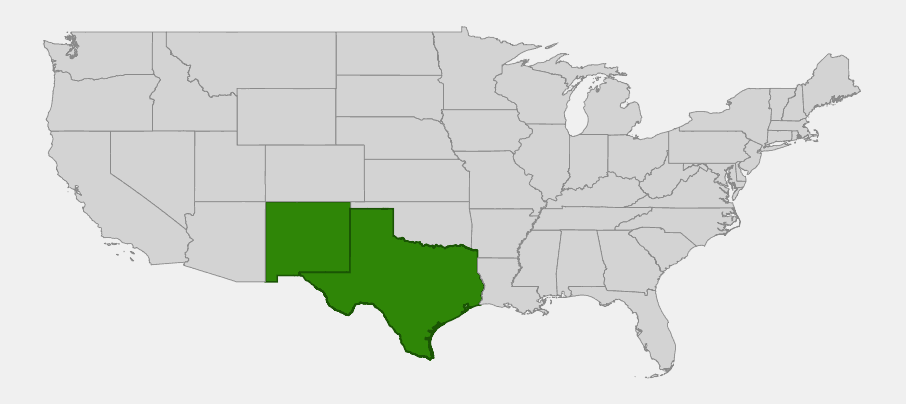
Mormon Tea is native to the southern Great Plains and Chihuahuan Desert borderlands, found across central, southern, and western Texas and extending into southeastern New Mexico. It is most abundant on the Edwards Plateau, in the Trans-Pecos, and across the brushy plains of south Texas, generally staying south and west of a line running roughly from the Texas Panhandle down through the Hill Country.
Across this range it grows on dry limestone and caliche hillsides, rocky outcrops, and gravelly or sandy flats, almost always in full sun and well-drained, often shallow or alkaline soil. It is a common associate of creosote bush, honey mesquite, blackbrush acacia, and various prickly pear and cholla cacti in desert scrub and thorn-scrub plant communities, and it also turns up on limestone bluffs and caprock edges in the Hill Country and Trans-Pecos.
Mormon Tea is not a plant of moist or humid climates, and gardeners east of its native range should not expect it to persist in heavy clay or regularly irrigated beds. Within its native Texas–New Mexico range, however, it is a long-lived, drought-adapted component of the native flora rather than a species of conservation concern.
📋 Regional plant lists featuring Mormon Tea: South and West Texas · Arizona & New Mexico
Growing & Care Guide
Mormon Tea is a plant for gardeners who want texture and toughness rather than showy bloom. Once established it needs almost nothing from the gardener, making it a staple of xeriscape and rock-garden plantings throughout its native range.
Light
Give it full sun. Mormon Tea evolved in open, sun-blasted caliche flats and hillsides, and it grows lanky and sparse with too much shade. A full-sun exposure keeps the stem clumps dense and compact.
Soil & Water
Excellent drainage is non-negotiable; this is a plant of rocky, caliche, and limestone soils, and it will not tolerate standing water or heavy, poorly drained clay. It is highly drought tolerant once established, needing supplemental water only during the first year or two after planting. Established clumps can go through entire dry summers on rainfall alone. Avoid regular irrigation, which encourages root rot and weak, floppy growth.
Planting Tips
Plant from containers in fall or early spring, choosing a site with sharp drainage — a slope, raised bed, or gravelly berm is ideal. Amend heavy soils with coarse gravel or decomposed granite rather than compost. Space plants 3–4 feet apart to allow for their mature spread. Because the species is dioecious, a gardener wanting the ornamental red fruit should plant several individuals to improve the odds of having both sexes present.
Pruning & Maintenance
Mormon Tea needs essentially no pruning. Occasionally thin out old, woody, unproductive stems at the base in late winter to keep the clump looking fresh, but avoid shearing, which ruins its naturally wiry form. It has no significant pest or disease problems in well-drained soil.
Propagation
Propagate from seed collected from ripe red fruit in summer, cleaned of pulp and sown in fall, or from semi-hardwood stem cuttings taken in summer and rooted in a fast-draining sand or perlite mix. Germination and rooting are both slow and somewhat unpredictable, consistent with the plant’s generally slow growth rate.
Landscape Uses
- Xeriscape and rock gardens, where its texture contrasts with broad-leaved succulents and cacti
- Caliche and limestone slope stabilization on untillable, rocky ground
- Wildlife and bird gardens, for the fruit on female plants
- Low-water hedgerows or screens in hot, dry sites
- Restoration plantings on disturbed caliche or limestone outcrops
Wildlife & Ecological Value
In its arid native habitat, Mormon Tea contributes food and cover disproportionate to its modest, scrubby appearance.
For Birds
Mockingbirds, quail, and various sparrows and thrashers eat the fleshy red fruit on female plants, while the tangled stems provide low, dense cover for ground-nesting and brush-dwelling birds such as Scaled Quail and Northern Bobwhite in brushland habitats.
For Mammals
Jackrabbits and cottontails browse the stems in lean seasons, and small rodents take shelter in the dense base of mature clumps. Pronghorn and mule deer will browse Mormon Tea when preferred forage is scarce, though it is not a primary food source and is generally considered deer resistant in garden settings.
For Pollinators
Unlike true flowering plants, Ephedra is wind-pollinated rather than insect-pollinated, so it offers little nectar value. Its small cones nonetheless provide minor forage for pollen-collecting insects in early spring, when few other blooms are available on dry caliche sites.
Ecosystem Role
As one of relatively few evergreen, deep-rooted shrubs able to colonize thin caliche and limestone soils, Mormon Tea helps stabilize rocky slopes and marginal ground that would otherwise be nearly bare. Its persistence through drought and its year-round structure make it a reliable, low-key anchor species in Chihuahuan Desert scrub and south Texas thorn-scrub plant communities.
Cultural & Historical Uses
Several species of Ephedra across the American Southwest share the common name “Mormon Tea,” a reference to the historical practice among Mormon settlers of brewing the stems into a caffeine-free beverage as a substitute for coffee or black tea, which their faith discouraged. Indigenous peoples of Texas and the Southwest, including various groups across the Trans-Pecos and northern Mexico, brewed similar teas from Ephedra stems long before European contact, and used the plant in various traditional remedies.
The species name antisyphilitica reflects a historical, now-discredited belief that the plant could treat syphilis — a claim rooted in 19th-century folk medicine rather than in any proven pharmacological property, and one with no basis in modern evidence. The plant does contain ephedrine-related alkaloids in trace amounts, far lower than in the Asian species historically used to produce the stimulant ephedrine, but home preparations are not a reliable or recommended source of any medicinal compound.
Beyond its historical use as a beverage plant, Mormon Tea has long served as forage of last resort for livestock and wildlife on overgrazed rangeland, and its wiry stems have occasionally been used in basketry and cordage by Indigenous peoples of the region. Today its primary value is horticultural and ecological rather than medicinal — a tough, low-water native for gardeners working with difficult caliche soils.
Frequently Asked Questions
Is Mormon Tea the same plant as the Asian species used to make ephedrine?
No. Ephedrine as a commercial stimulant and decongestant is derived primarily from Asian Ephedra sinica and related species, which contain much higher alkaloid concentrations. Ephedra antisyphilitica contains only trace amounts and is not used commercially as a source of ephedrine.
Does Mormon Tea have leaves?
Not true leaves. The stems themselves do the photosynthesizing; what look like leaves are tiny, scale-like bracts at each joint, a few millimeters long.
Why didn’t my Mormon Tea produce any red fruit?
The species is dioecious, meaning individual plants are either male or female, and only female plants bear fruit. If your plant is male, or if there is no plant of the opposite sex nearby, it will never fruit regardless of how well it’s growing.
How much water does Mormon Tea need once established?
Very little. Established plants in their native Texas and New Mexico range typically survive on natural rainfall alone and can suffer from root problems if watered too often, especially in heavier soils.
Will Mormon Tea grow outside of Texas and New Mexico?
It can succeed in other hot, dry, alkaline-soil climates with excellent drainage, but it is not well suited to humid regions or heavy clay soils, and should not be relied on as a garden plant outside dry Southwestern conditions similar to its native range.

Looking for a nursery that carries Mormon Tea?
Browse our native plant nursery directory: Texas · New Mexico