Tenaza (Havardia pallens)
Havardia pallens (formerly classified as Pithecellobium pallens), commonly called Tenaza, Ape’s Earring, or huajillo, is an upright, fine-textured evergreen tree or large shrub of the South Texas thornscrub. Where most Tamaulipan thornscrub trees sprawl into a rounded, brushy shape, Tenaza is distinctive for its tall, upright, almost columnar growth habit — long, straight branches reaching skyward rather than spreading wide, which makes it useful as a narrow accent or screening tree in tight spaces.
The feathery, pale green, bipinnately compound leaves give Tenaza a soft, almost fern-like texture that stands out against the stiffer foliage of its thornscrub neighbors. In late spring and summer, usually timed to rain events, the tree covers itself in small, fragrant, cream-colored puffball flowers, followed by reddish-brown seed pods that persist into fall.
Young Tenaza trees carry noticeable spines, but as the tree matures the spines become less prominent, making older specimens more garden-friendly than their juvenile form suggests. In South Texas landscapes, Tenaza works well as a narrow screen, specimen tree, or wildlife planting wherever a tall, slender native silhouette is wanted.
Identification
Tenaza grows as an evergreen tree or large shrub 10 to 20 feet tall, occasionally reaching 30 feet, with an upright, narrow-crowned form built from long, straight, mostly vertical branches.
Bark & Stems
Bark is smooth and thin, gray to reddish-gray. Young branches and juvenile growth carry noticeable straight spines at the nodes; mature trees retain fewer and less conspicuous spines than young plants, an identification clue when comparing specimens of different ages.
Leaves
Leaves are bipinnately compound and finely textured, pale green, with roughly 5 pairs of pinnae, each pinna bearing 10 to 14 pairs of small leaflets — a feathery, almost mimosa-like appearance that is evergreen to semi-evergreen depending on winter severity.
Flowers
Small, fragrant, cream-colored flowers are packed into dense, rounded puffball heads 2 to 5 inches across in loose clusters, blooming in late spring and summer, often triggered by rain. The scent and heavy bloom make flowering Tenaza trees a magnet for bees.
Fruit & Seeds
The fruit is a flat, papery, reddish-brown legume pod, 2 to 5 inches long, containing lustrous brown-black seeds. Pods split open at maturity and persist on the tree for some time after releasing their seeds.
Quick Facts
| Scientific Name | Havardia pallens (syn. Pithecellobium pallens) |
| Family | Fabaceae (Legume/Pea) |
| Plant Type | Evergreen to Semi-Evergreen Tree / Large Shrub |
| Mature Height | 10–20 ft (3–6 m), to 30 ft |
| Mature Spread | 15–25 ft |
| Growth Rate | Moderate |
| Sun Exposure | Full Sun to Part Shade |
| Water Needs | Low once established |
| Soil Type | Sandy, caliche, or clay loam; well-drained |
| Soil pH | Neutral to alkaline |
| Bloom Time | Late spring–summer, after rain |
| Flower Color | Cream/white |
| Fall Color | None notable |
| Fruit | Reddish-brown legume pods, 2–5 in |
| Deer Resistant | Yes, especially young spiny growth |
| USDA Hardiness Zones | 9a–11 |
Native Range
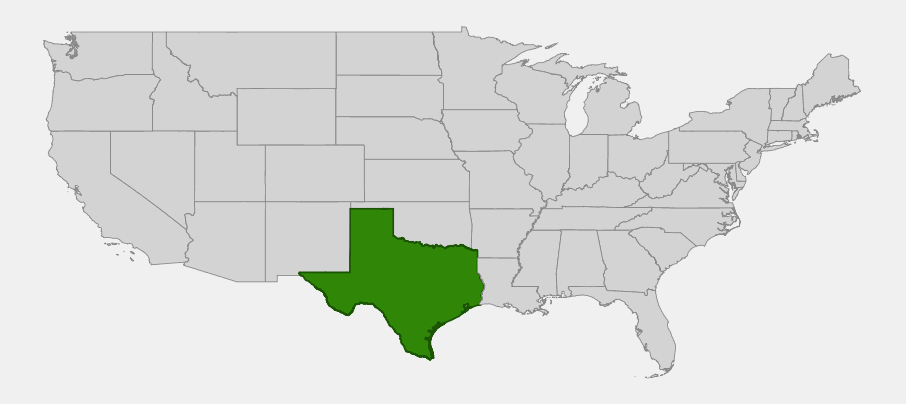
Tenaza is native to South Texas, concentrated in the Rio Grande Plain and the brushlands of the lower Rio Grande Valley, with its range continuing south through eastern Mexico. Its U.S. distribution places it firmly within the Tamaulipan thornscrub ecoregion that defines much of the native plant character of South Texas.
Within its native range, Tenaza grows scattered through mixed thornscrub brush on well-drained clay, loam, or caliche soils, generally as a component of a diverse shrub-and-small-tree community rather than in pure stands. Its upright growth habit lets it compete for light even among denser, rounder-growing neighbors.
Tenaza is not reliably cold-hardy outside the subtropical conditions of its native South Texas range, and hard freezes can cause significant dieback, which is why it should be planted within or very near its native counties rather than farther north in Texas.
📋 Regional plant lists featuring Tenaza: South and West Texas
Growing & Care Guide
Tenaza is a resilient, low-maintenance choice for South Texas landscapes once established, rewarding patience in its early years with a distinctive upright form that few other native trees can match.
Light
Full sun produces the best flowering and the most compact, upright growth. Tenaza also tolerates light to moderate shade, growing somewhat looser under partial canopy.
Soil & Water
This species adapts to sandy, caliche, or clay-loam soils as long as drainage is adequate, and it does not tolerate standing water. Water young plants regularly through their first one to two growing seasons; established Tenaza is drought tolerant and typically blooms in response to seasonal rains rather than needing regular irrigation.
Planting Tips
Plant from containers in spring, taking advantage of Tenaza’s narrow, upright form to use it where a wide-spreading tree would not fit — along a fence line, as a narrow screen, or as a vertical accent among lower shrubs. Handle young plants carefully, since juvenile spines are sharp.
Pruning & Maintenance
Minimal pruning is needed; the naturally upright habit holds its shape without much intervention. Remove dead or damaged wood as needed, and expect reduced spininess as the tree matures, which makes later-stage maintenance easier than working with young plants.
Propagation
Propagate from seed collected from dry, mature pods; scarifying or briefly soaking the hard seed coat improves germination, as with most legumes in this family.
Landscape Uses
- Narrow screen or hedge where a wide-spreading tree won’t fit
- Vertical accent among lower thornscrub shrubs
- Pollinator garden for its fragrant summer bloom
- Wildlife hedgerow combining cover and seasonal flowers
- Thornscrub restoration plantings in South Texas
Wildlife & Ecological Value
Tenaza contributes both floral and structural value to South Texas thornscrub wildlife communities across its growing season.
For Pollinators
The fragrant, rain-triggered summer flower flush draws bees heavily, including native bees and honeybees, at a time when thornscrub flowering can otherwise be patchy and rainfall-dependent.
For Birds
The upright branching provides perching and nesting structure, and seed-eating birds take advantage of the seeds released from mature pods in fall.
Ecosystem Role
As a nitrogen-fixing legume, Tenaza contributes to soil fertility within the thornscrub community, and its distinct upright growth form adds vertical structural diversity to a habitat type otherwise dominated by rounded, sprawling shrubs. That extra height and openness gives songbirds a sightline advantage for spotting predators while still roosting within dense, thorny protection, a combination few other thornscrub species offer in the same plant.
For Mammals
Small mammals use the base of mature Tenaza clumps for cover, and the fallen seed pods are occasionally taken by rodents foraging the thornscrub floor once the pods have dropped and begun to break down after winter.
Cultural & Historical Uses
Like many thornscrub legumes, Tenaza’s dense wood has historically been used locally in South Texas and northern Mexico for fence posts and small construction uses, valued for durability in a landscape where larger timber trees are scarce.
The name “huajillo,” shared informally with a few other regional legumes, reflects the plant’s long-standing familiarity to ranchers and rural communities across the Tamaulipan thornscrub, where its upright silhouette and seasonal bloom are recognizable landscape features.
In modern landscaping, Tenaza is valued primarily as an ornamental native accent tree, prized for its unusual upright form and its ability to fit into narrow planting spaces where a typical spreading thornscrub tree would not.
Frequently Asked Questions
Is Tenaza thorny?
Young trees have noticeable spines, but mature trees carry fewer and less prominent spines, making established Tenaza more garden-friendly than its juvenile form suggests. Handle young plants with care.
How is Tenaza different from other South Texas thornscrub trees?
Its upright, almost columnar growth habit sets it apart — most thornscrub trees and shrubs sprawl into a rounded form, while Tenaza grows tall and narrow, making it useful for tight spaces.
When does Tenaza bloom?
Late spring through summer, often triggered by rainfall rather than a fixed calendar date, producing fragrant cream-colored puffball flower clusters that are heavily visited by bees.
Is Tenaza cold-hardy?
Not reliably outside USDA zones 9a–11. Hard freezes can cause significant dieback, so it should be planted within or near its native South Texas range.
What is Tenaza good for in a landscape?
Its narrow, upright form makes it ideal as a screen or vertical accent where a wide-spreading tree would not fit, while still providing the pollinator and wildlife value of a true South Texas native.

Looking for a nursery that carries Tenaza?
Browse our native plant nursery directory: Texas