Texas Sedge (Carex texensis)
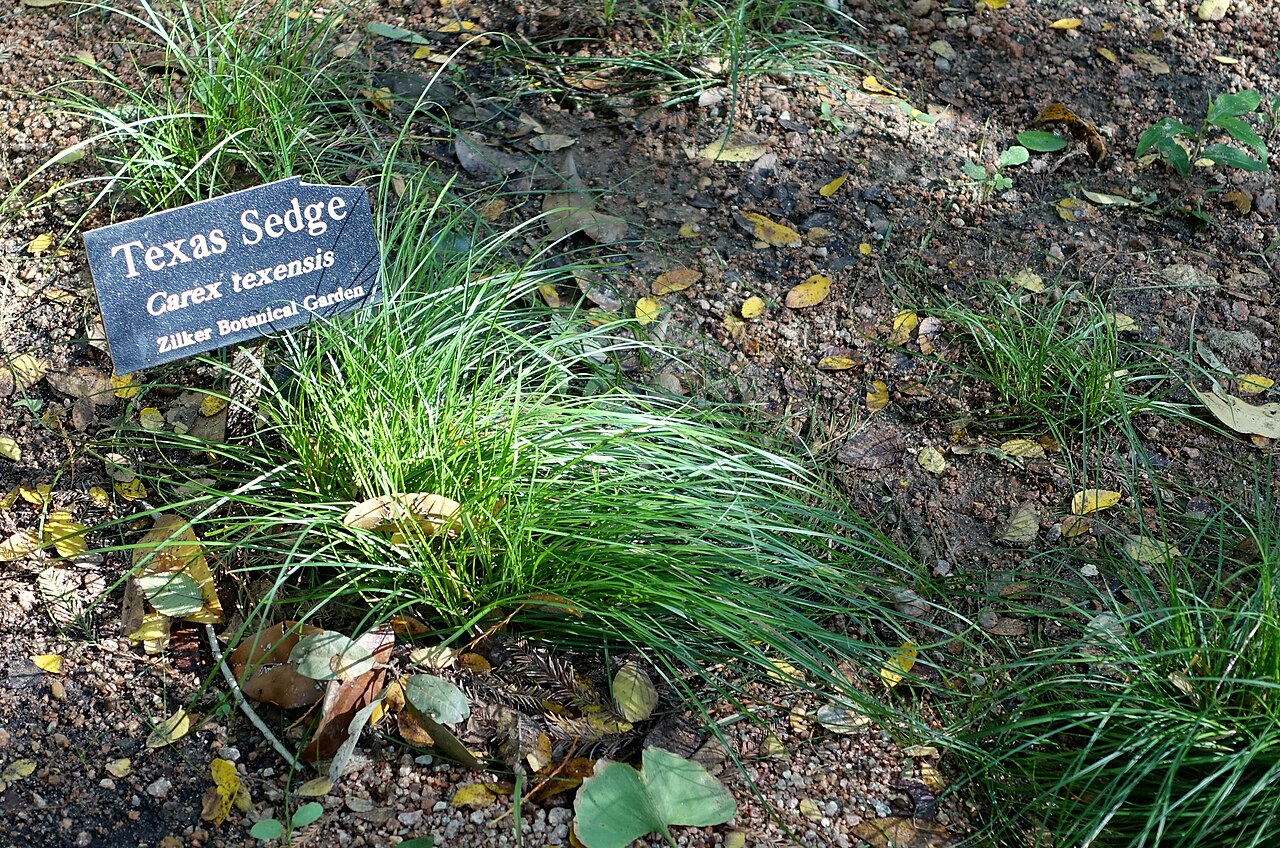
Carex texensis, commonly called Texas Sedge, is a small, fine-textured, clump-forming sedge that despite its name is one of the most widely distributed native sedges in the eastern half of the United States. Each plant forms a neat, arching, grass-like mound just 4 to 12 inches tall, making it one of the best native substitutes for turf grass in shady spots where ordinary lawns struggle.
Texas sedge spreads slowly by short rhizomes, gradually knitting individual clumps into a dense, low, evergreen-to-semi-evergreen carpet that tolerates light foot traffic, occasional mowing and the dry shade found under established trees — conditions that stump most conventional groundcovers. In spring, slender stalks lift small, inconspicuous spikelets just above the foliage, easy to miss unless you’re looking closely.
For gardeners from Texas to the Mid-Atlantic frustrated by bare, patchy turf under oaks and other shade trees, Texas sedge offers a genuinely low-maintenance, true native alternative: no mowing required (though it tolerates occasional mowing), minimal water once established, and a fine, soft texture that looks good year-round.
Identification
Texas sedge is a low, clump-forming (cespitose) perennial sedge, typically 4 to 12 inches tall, with slender, grass-like leaves arching outward in a loose fountain shape.
Growth Habit
Plants form dense, fibrous-rooted tufts that spread slowly via short rhizomes rather than aggressive runners, so a planting thickens gradually into a solid patch over a few seasons without becoming invasive. Foliage stays evergreen to semi-evergreen through mild winters, fading only in hard freezes or prolonged drought.
Leaves
Leaves are narrow, grass-like, 1 to 2 millimeters wide, with a fine, soft texture that sets Texas sedge apart from coarser native sedges. The foliage arches gracefully outward from the base, giving each clump a tidy, fountain-like profile.
Flowers
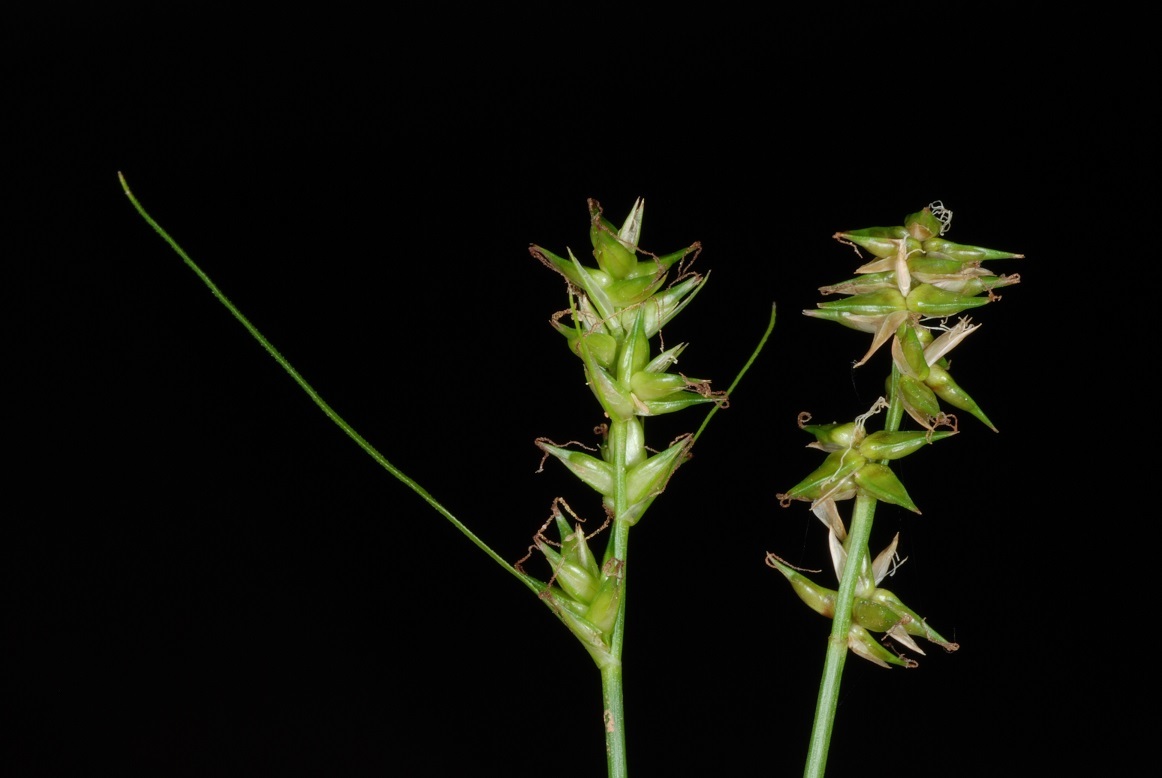
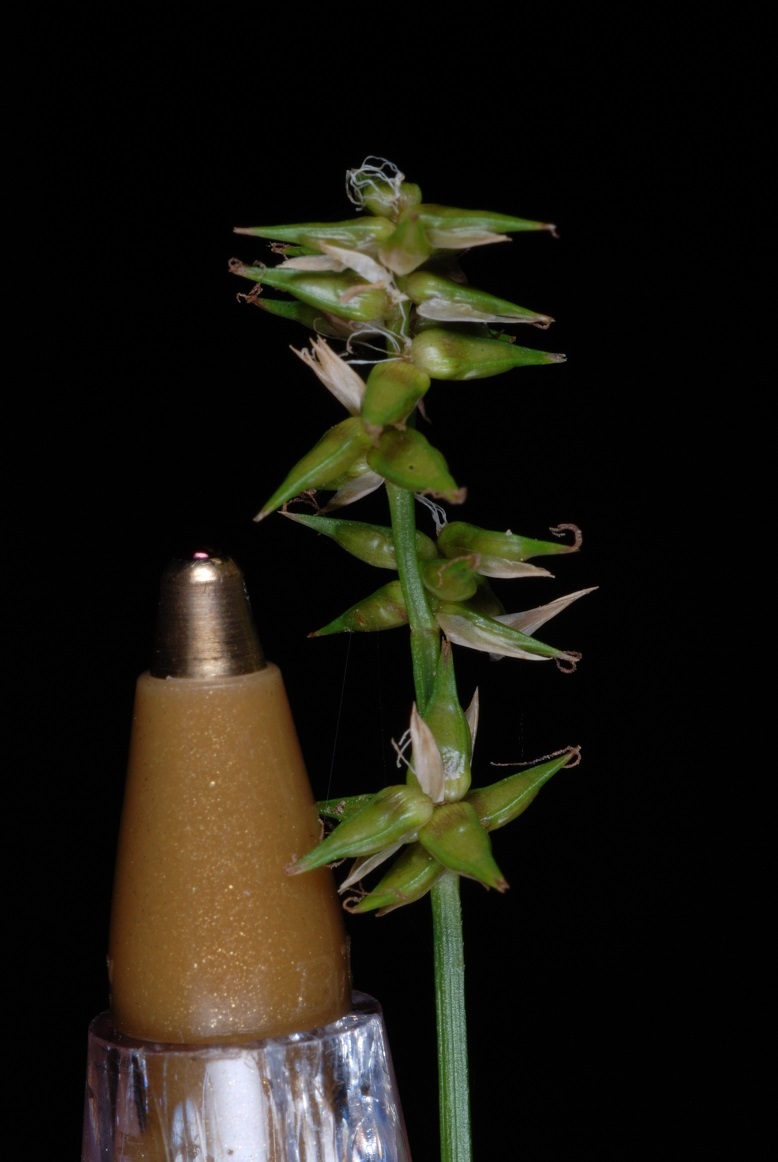
In spring, slender flowering stalks rise just above the foliage, each bearing small, inconspicuous spikelets — a terminal male spikelet and one or more lower female spikelets with pointed, beaked perigynia (the small sacs that enclose each seed). Like most sedges, the flowers are wind-pollinated and visually unremarkable, easy to overlook against the fine foliage.
Fruit & Seeds
Each female spikelet matures into a cluster of small, beaked, three-sided seed sacs (perigynia) that ripen in late spring to early summer, each containing a single seed. The pointed, slightly bristly beaks are a useful close-up identification feature distinguishing this species from similar fine-leaved Carex species.
Quick Facts
| Scientific Name | Carex texensis |
| Family | Cyperaceae (Sedge) |
| Plant Type | Evergreen to semi-evergreen perennial sedge |
| Mature Height | 4–12 in |
| Mature Spread | 8–12 in per clump, slowly colonizing |
| Growth Rate | Slow to moderate |
| Sun Exposure | Part Shade to Shade (tolerates more sun with moisture) |
| Water Needs | Average; drought tolerant once established |
| Soil Type | Adaptable; clay, loam or sandy soils |
| Soil pH | Slightly acidic to neutral (about 5.5–7.0) |
| Bloom Time | March – May (inconspicuous) |
| Flower Color | Green, not showy |
| Fall Color | None; foliage stays green into winter |
| Fruit | Small beaked seed sacs (perigynia), late spring |
| Deer Resistant | Yes |
| USDA Hardiness Zones | 6–9 |
Native Range
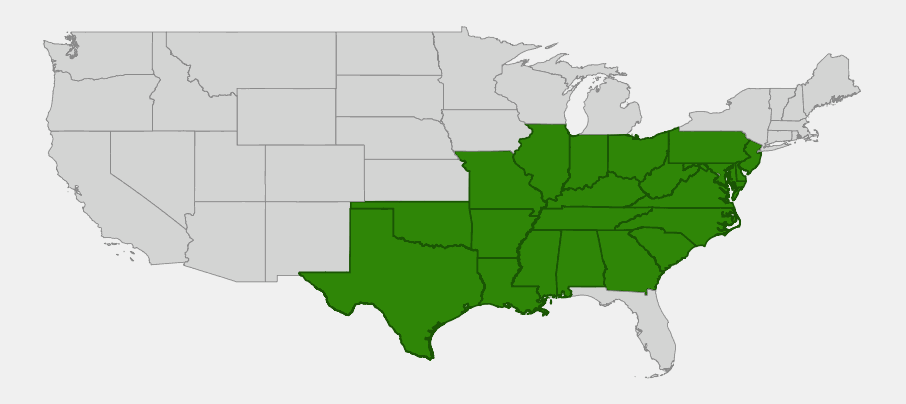
Texas sedge has a broad native range across the eastern and south-central United States, from Texas and Oklahoma east through the lower Midwest and Appalachians to the Mid-Atlantic coast. Despite the common name, it is actually more a plant of the greater Southeast and Mid-Atlantic than a Texas specialty, and it is considered one of the most common sedges in central Texas as well as a frequent native sedge from the Carolinas to Pennsylvania.
It grows in a wide range of wooded and semi-open habitats: upland hardwood and pine-hardwood forests, woodland edges, old fields and increasingly, lawns and shaded urban landscapes where it has proven to be a reliable native turf substitute. It tolerates both dry and moist shade, a combination that is genuinely hard to find among groundcover choices.
Texas sedge is not native to the West Coast; a scattered presence in California reflects escaped or planted populations rather than a natural range, so West Coast gardeners should not treat it as a local native.
📋 Regional plant lists featuring Texas Sedge: South & West Texas · Arkansas, Louisiana, Eastern Oklahoma & Eastern Texas · Georgia, Alabama & Mississippi · Kentucky & Tennessee · Illinois, Iowa & Missouri · Ohio & Indiana · Maryland, Virginia & West Virginia · North Carolina & South Carolina · New York, Pennsylvania & Northern New Jersey · Delaware, Southern New Jersey & Long Island, NY
Growing & Care Guide
Texas sedge is remarkably forgiving. Give it reasonable drainage and a spot that isn’t baking in full, reflected summer sun, and it asks for very little else.
Light
Part shade to full shade suits it best, mimicking its natural woodland-edge habitat; it is one of the few native groundcovers that genuinely thrives in dry shade under established trees. It tolerates more sun if given consistent moisture, but foliage tends to look its finest with some protection from harsh afternoon sun.
Soil & Water
Texas sedge adapts to a wide range of soils, from clay to sandy loam, as long as drainage is reasonable. It handles both dry shade and periods of average moisture, and established clumps are notably drought tolerant for a sedge, though they appreciate supplemental water during extended summer dry spells, especially in full sun.
Planting Tips
Plant container-grown sedge in spring or fall, spacing plants 8 to 12 inches apart for groundcover coverage, closer for a quicker-filling lawn alternative. As a true clumping, slow-spreading species, Texas sedge will not aggressively invade adjacent beds, but full coverage as a lawn substitute does take a season or two to fill in completely.
Pruning & Maintenance
Little maintenance is needed. An occasional mowing on the highest deck setting (or a once-a-year trim with a string trimmer) in late winter tidies up old foliage and flowering stalks before spring growth resumes, but mowing is optional rather than required, unlike turf grass. The plant tolerates light foot traffic, making it suitable for informal paths with occasional use.
Propagation
Propagate by division of established clumps in spring or fall, or by seed sown in fall for natural cold stratification over winter. Division is the faster, more reliable method for filling in a groundcover planting.
Landscape Uses
- Native lawn alternative for shaded yards where turf grass struggles
- Dry shade groundcover under mature oaks and other shade trees
- Woodland garden edging along paths and planting beds
- Erosion control on shaded slopes, thanks to its fibrous root system
- Container and small-space plantings, where its fine texture adds softness
Wildlife & Ecological Value
Though it lacks showy flowers, Texas sedge plays a quiet but useful role in the woodland and garden ecosystems where it grows.
For Pollinators
As a wind-pollinated sedge, Texas sedge offers little direct nectar or pollen value to pollinators, but its dense foliage provides shelter and microhabitat for small insects at ground level.
For Birds
Ground-feeding birds forage through sedge clumps for insects, and the small seeds are eaten by some seed-eating songbirds, though they are not a major food source compared to larger-seeded native grasses.
For Mammals
Texas sedge is rarely browsed by deer, which makes it a dependable groundcover choice in landscapes with heavy deer pressure. Small mammals use dense sedge patches for cover.
Ecosystem Role
As a shade-tolerant groundcover, Texas sedge helps stabilize soil and suppress erosion on wooded slopes and under tree canopies where little else grows densely, and its evergreen to semi-evergreen habit provides year-round ground-level structure in forest and garden settings alike.
Cultural & Historical Uses
Texas sedge has no significant recorded history of traditional food, medicinal or craft use by Indigenous peoples or early settlers, unlike some larger, more conspicuous sedge species used historically for basketry or thatching.
Its primary cultural significance today is horticultural: as interest in native lawn alternatives has grown across the South and Mid-Atlantic, Texas sedge has become one of the most widely recommended native sedges for replacing or reducing traditional turf grass in shaded landscapes.
Frequently Asked Questions
Is Texas sedge only native to Texas?
No, despite the name. Texas sedge is native across a broad swath of the south-central, southeastern and Mid-Atlantic United States, from Texas to Pennsylvania and New Jersey, and is actually more frequently encountered in parts of the Southeast than in Texas itself.
Can Texas sedge replace my lawn?
In shaded areas, yes. It is widely used as a native turf substitute in part shade to shade, tolerating light foot traffic and occasional mowing, though it does not perform as a sun-loving, heavy-traffic lawn the way turf grasses do.
Does Texas sedge need to be mowed?
No, mowing is optional. An occasional late-winter trim tidies up old foliage, but unlike turf grass, Texas sedge does not require regular mowing to look good or stay healthy.
Will Texas sedge spread aggressively into my garden beds?
No. It spreads slowly by short rhizomes and stays in a clumping, well-behaved form rather than sending out aggressive runners, so it is easy to keep within a defined planting area.
Is Texas sedge native to California?
No. Occasional reports from California reflect planted or escaped populations rather than a natural range; its true native range is the south-central and eastern United States.

Looking for a nursery that carries Texas Sedge?
Browse our native plant nursery directory: Texas, Tennessee, Virginia, South Carolina & Pennsylvania · Oklahoma, Ohio, North Carolina & New Jersey · Arkansas & Alabama · Louisiana, Mississippi, Kentucky, Missouri & Maryland · Georgia & Delaware · Illinois & Indiana · West Virginia