Texas Palafoxia (Palafoxia texana)
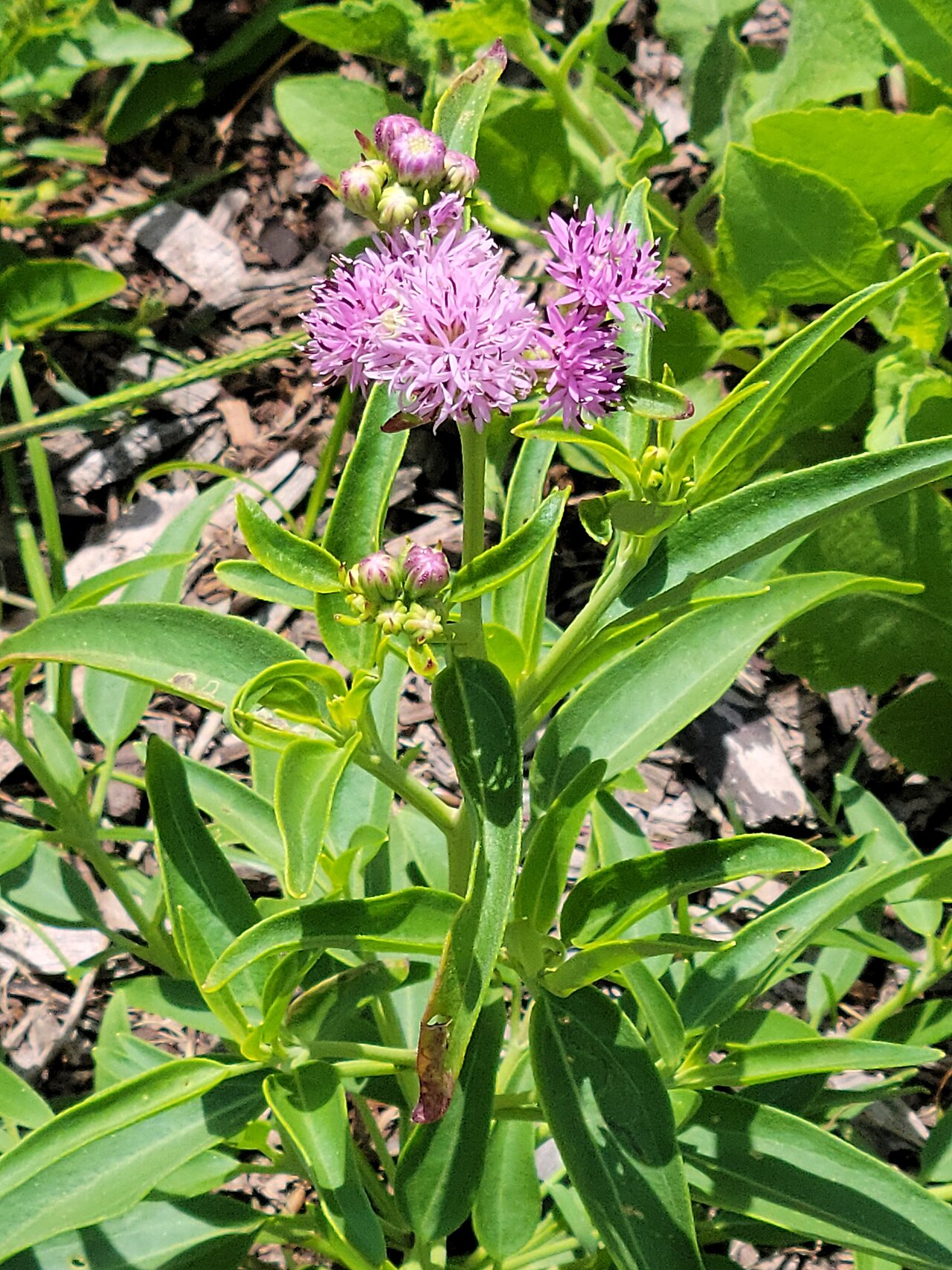
Palafoxia texana, commonly called Texas Palafoxia or Texas palafox, is a modest but charming Texas wildflower that most gardeners outside its native range have never heard of. It grows as an upright annual or short-lived perennial to about 2 to 3 feet, topped from late spring through fall with small, fuzzy, pom-pom-like clusters of pale pink to lavender-pink flowers that have no petal-like rays at all, just a dense tuft of disc florets.
Texas palafoxia is one of several palafoxias native to Texas, a genus named for José de Palafox y Melzi, a Spanish general who fought against Napoleon’s armies. This particular species is a true Texas-and-Louisiana endemic in the wild, found almost nowhere else, and it quietly does its job in open, sunny, often sandy ground: roadsides, fields, riverbanks and disturbed sites where it has little competition.
For a native-plant gardener in central or eastern Texas, Texas palafoxia offers an easy, long-blooming filler for a sunny wildflower bed. It self-sows readily where happy, asks for very little water once established, and keeps a steady trickle of small butterflies and bees visiting all summer, even during the hottest, driest stretches when flashier flowers have shut down.
Identification
Texas palafoxia is an upright, lightly branched annual or short-lived perennial herb, typically reaching 1.5 to 2.5 feet tall, occasionally taller in rich soil. The whole plant has a slightly succulent, smooth to lightly hairy look, quite different from the bristly, rough-leaved look of many prairie composites.
Stems
Stems are slender, round, pale green and mostly smooth, branching loosely toward the top of the plant where the flower clusters form. Older stems near the base can take on a reddish-brown tint.
Leaves
Leaves are alternate, narrowly lance-shaped to elliptic, about 2 to 4 inches long, with smooth (entire) margins and a slightly thickened, almost fleshy texture. They clasp the stem loosely at the base and narrow to a point at the tip, giving the plant a clean, uncluttered look even when not in bloom.
Flowers
Flower heads are small, rounded and fuzzy, about half an inch across, made up entirely of disc florets in shades of pale pink to lavender-pink — there are no ray florets (“petals”) at all. Several heads cluster loosely at the stem tips, giving an airy, pom-pom effect rather than a single large bloom. Texas palafoxia’s heads are noticeably smaller than those of its showier relative, showy palafoxia (Palafoxia hookeriana). Bloom runs from April into October, peaking in the heat of summer.
Fruit & Seeds
Each floret matures into a slender, ribbed, one-seeded fruit (technically a cypsela, often loosely called an achene) tipped with a tuft of bristles that aid wind dispersal, typical of the aster family.
Quick Facts
| Scientific Name | Palafoxia texana |
| Family | Asteraceae (Aster/Sunflower) |
| Plant Type | Annual to short-lived perennial wildflower |
| Mature Height | 1.5–2.5 ft (occasionally to 2.7 ft) |
| Mature Spread | 1–1.5 ft |
| Growth Rate | Fast |
| Sun Exposure | Full Sun |
| Water Needs | Average to moist; tolerates short dry spells once established |
| Soil Type | Sandy or sandy-loam soils; tolerates disturbed ground |
| Soil pH | Slightly acidic to neutral (about 5.5–7.0) |
| Bloom Time | April – October |
| Flower Color | Pale pink to lavender-pink |
| Fall Color | None notable |
| Fruit | Small bristle-tipped cypselae, late summer–fall |
| Deer Resistant | Moderate |
| USDA Hardiness Zones | 8–9 |
Native Range
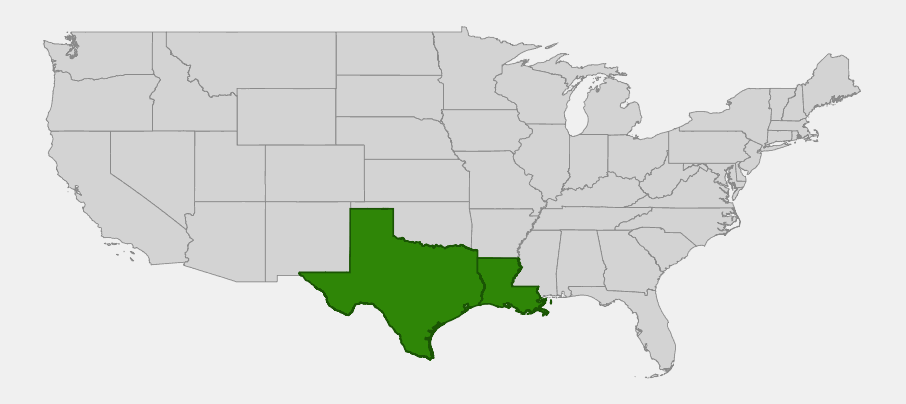
Texas palafoxia is a near-endemic of the south-central United States, found in the wild only in Texas and adjacent Louisiana. Within Texas it is most common across the central and eastern parts of the state, from the Blackland Prairies and Post Oak Savannah through the Pineywoods toward the Louisiana line.
Typical habitat is open, disturbed or periodically flooded ground with sandy to sandy-loam soil: roadsides, old fields, pipeline and utility corridors, and the sandy banks and shores of rivers and lakes. It takes advantage of bare or lightly vegetated ground where taller, more aggressive plants haven’t yet closed in, which is part of why it does so well along roadsides and other regularly disturbed edges.
Because it germinates readily on bare sandy soil and blooms quickly, Texas palafoxia is a useful pioneer species in sandy prairie and savanna restorations, filling in open ground with color and pollinator forage while slower-growing perennials establish.
📋 Regional plant lists featuring Texas Palafoxia: South & West Texas · Arkansas, Louisiana, Eastern Oklahoma & Eastern Texas
Growing & Care Guide
Texas palafoxia is an easy, forgiving wildflower for a sunny spot with loose, sandy soil. It is not fussy, grows quickly from seed, and rewards minimal care with months of soft pink color.
Light
Give it full sun. Texas palafoxia flowers most heavily and stays most compact in at least six hours of direct sun a day; in shade it stretches, flops and blooms sparsely.
Soil & Water
Sandy or sandy-loam soil with good drainage suits it best, echoing the open, sandy ground it favors in the wild. It appreciates regular moisture while getting established and through the heat of summer, but established plants tolerate short dry spells without serious trouble. Heavy clay that stays wet is the one condition to avoid.
Planting Tips
Direct-sow seed in fall or early spring onto loosened, sandy soil, pressing seed in lightly rather than burying it deeply. Because it is an annual or short-lived perennial that self-sows freely, the easiest long-term approach is to let a planting re-seed itself each year rather than replanting from scratch. Thin or transplant seedlings to about 12 inches apart if a tidier look is wanted.
Pruning & Maintenance
No real pruning is needed. Deadheading spent flower clusters can extend bloom and tidy the plant’s appearance, but leaving some seed heads in place late in the season allows it to self-sow for next year. Cut plants back after frost has ended the season.
Propagation
Propagate by seed, sown directly outdoors or started in trays a few weeks before the last frost. Germination is usually quick in warm soil, and self-sown seedlings often appear on their own around an established planting each spring.
Landscape Uses
- Sandy wildflower meadows alongside Indian blanket and other sun-loving Texas natives
- Roadside and right-of-way plantings, where its tolerance of disturbed ground is an asset
- Pollinator gardens that need reliable summer-long bloom
- Prairie and savanna restoration as a fast, early-filling pioneer species
- Informal cottage-style borders for soft, airy texture among bolder perennials
Wildlife & Ecological Value
Though unassuming, Texas palafoxia pulls real weight as a nectar source through the long, hot Texas summer.
For Pollinators
The small disc-only flower heads attract a steady traffic of skippers, small butterflies, native bees and other short-tongued pollinators, especially valuable because its bloom period covers the mid-summer lull between spring wildflowers and fall asters.
For Birds
Seed-eating birds forage on the ripe cypselae in late summer and fall if plants are left standing rather than deadheaded completely.
For Mammals
Texas palafoxia is not a significant browse plant for deer or livestock, though light grazing is tolerated without killing the plant outright.
Ecosystem Role
As a fast-establishing pioneer of bare, sandy ground, Texas palafoxia helps stabilize disturbed soil and provides early floral resources while slower perennial grasses and forbs fill in around it, a useful niche in sandy prairie and savanna restoration work.
Cultural & Historical Uses
Texas palafoxia has no significant recorded history of use by Indigenous peoples or early settlers, and it does not appear in historical ethnobotanical accounts the way more widespread prairie plants do. It remains primarily known within the regional botanical and native-plant-gardening community rather than through any traditional use.
Its main modern role has been as a subject of botanical study and more recently as a candidate for Texas native-plant landscaping and restoration seed mixes, where its ease of establishment on sandy, disturbed ground has made it a practical, low-input choice.
Frequently Asked Questions
Is Texas palafoxia an annual or a perennial?
Both, depending on conditions and region: it often behaves as a true annual, but in milder, favorable sites it can persist and flower again as a short-lived perennial. Either way, it self-sows readily, so a planting tends to renew itself.
Why doesn’t Texas palafoxia have petals?
Like many members of the aster family, its flower heads are made up entirely of disc florets with no ray florets (“petals”). The fuzzy, pom-pom look comes from dozens of small tubular disc flowers packed tightly together.
How is Texas palafoxia different from showy palafoxia?
Showy palafoxia (Palafoxia hookeriana) has noticeably larger flower heads and is more associated with deep sand habitats, while Texas palafoxia has smaller heads and a somewhat broader range across sandy soils in central and eastern Texas and Louisiana.
Does Texas palafoxia need rich garden soil?
No — it actually prefers lean, sandy soil and can struggle or flop in overly rich, heavily amended beds. Average to sandy soil with good drainage gives the best, most compact growth.
Will Texas palafoxia take over my garden?
It self-sows but is not aggressively weedy; seedlings are easy to thin or remove where not wanted, and the plant does not spread by rhizomes or runners.