Heartleaf Hibiscus (Hibiscus martianus)
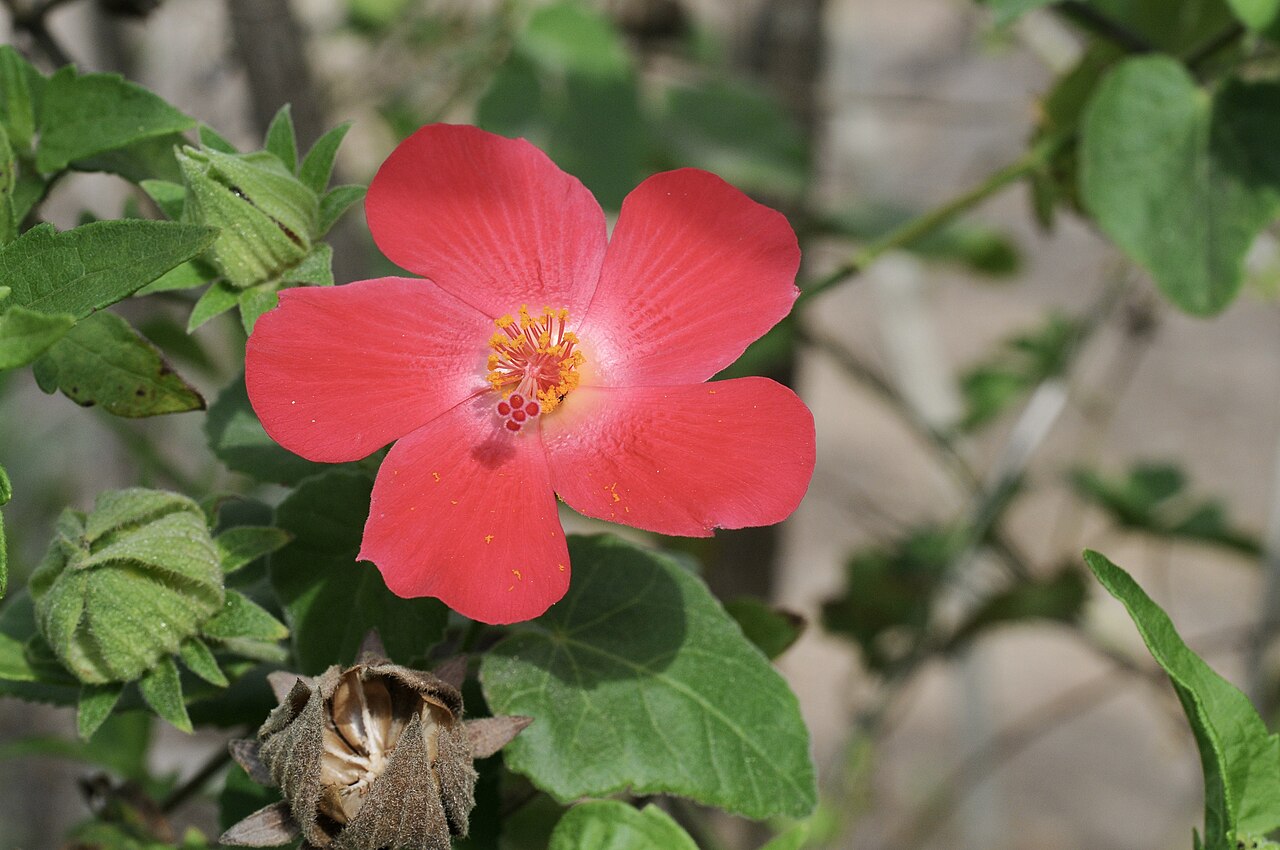
Hibiscus martianus, commonly called Heartleaf Hibiscus or heartleaf rosemallow (tulipán del monte in Spanish), is a tough, heat-loving little shrub found in the wild only in the brushlands of deep South Texas and adjacent Mexico. Despite its delicate, tissue-paper look, this is a plant built for drought and full sun, producing spectacular 2- to 3-inch crimson-red blooms through the hottest part of the Texas summer when most garden flowers have given up.
The common name comes from its leaves, which are broadly heart-shaped at the base — a simple, useful field mark that separates it from the many other wild mallows and hibiscus relatives found across Texas brush country. The flowers themselves are classic hibiscus: five overlapping, slightly crinkled petals surrounding a prominent central column of fused stamens dusted in golden pollen.
For South Texas gardeners, heartleaf hibiscus is an excellent low-water shrub for a sunny bed or large container, blooming nearly continuously from late spring through fall and asking for nothing more than good drainage and the occasional trim. Its nectar-rich flowers are a magnet for hummingbirds and butterflies throughout the growing season.
Identification
Heartleaf hibiscus is a low, woody-based perennial shrub or subshrub, typically 1 to 3 feet tall and about as wide, with a loose, somewhat sprawling habit.
Stems
Stems are slender, woody at the base and herbaceous toward the tips, often arching or sprawling rather than strictly upright. The plant tends to die back partially in hard freezes and resprout from the woody base in spring.
Leaves
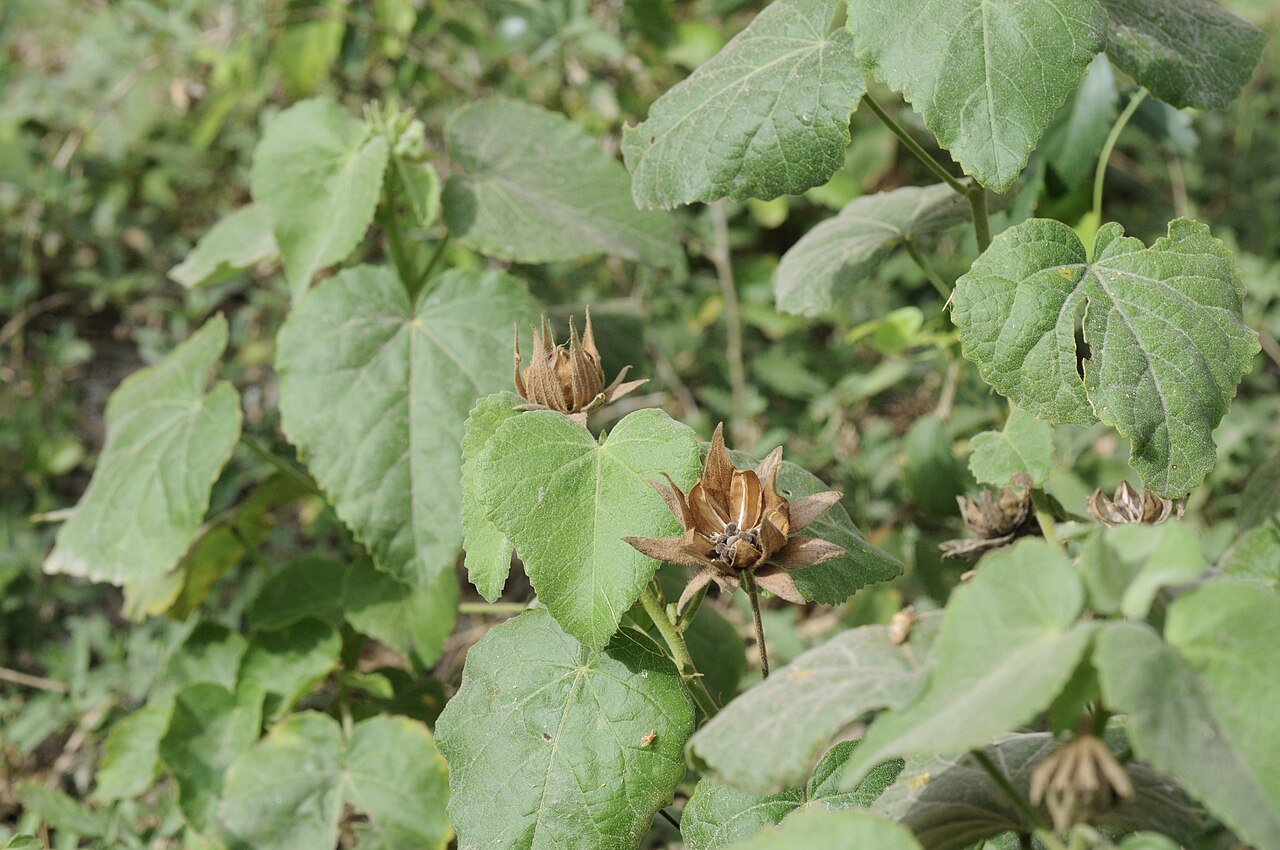
Leaves are the plant’s namesake feature: broadly heart-shaped (cordate) at the base, with a pointed tip and shallowly toothed margins, 1 to 3 inches long, and a soft, slightly velvety texture on both surfaces. This heart-shaped base distinguishes it from many other South Texas mallows with more triangular or lobed leaves.
Flowers
Flowers are large for the size of the plant, 2 to 3 inches across, with five overlapping, crimson-red petals and a central column of fused stamens tipped in golden-orange pollen, typical of the hibiscus family. Each flower opens for a single day, as is typical of many hibiscus relatives, but the plant produces a steady, reliable succession of new blooms from late spring through fall, so a well-grown plant rarely looks bare of flowers for long.
Fruit & Seeds
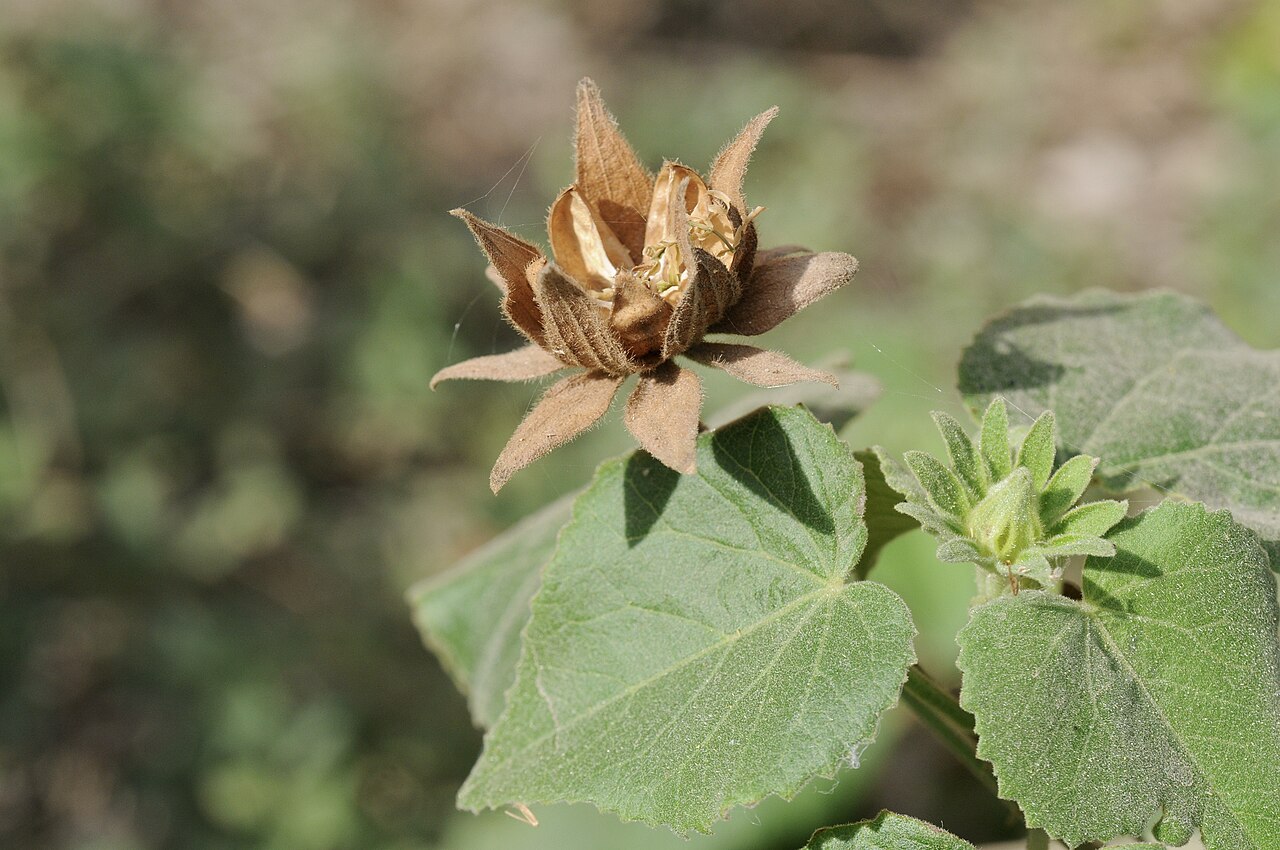
After flowering, each bloom is followed by a papery, pointed, bristly seed capsule held in a star-shaped cluster of persistent sepals. These dry, tan to brown capsules split open to release several small seeds and remain decorative on the plant well after the petals have dropped.
Quick Facts
| Scientific Name | Hibiscus martianus |
| Family | Malvaceae (Mallow) |
| Plant Type | Woody-based perennial shrub |
| Mature Height | 1–3 ft |
| Mature Spread | 1–3 ft |
| Growth Rate | Moderate |
| Sun Exposure | Full Sun to Part Shade |
| Water Needs | Low; drought tolerant once established, do not overwater |
| Soil Type | Gravelly, caliche or well-drained clay, loam or sandy loam |
| Soil pH | Neutral to alkaline (about 7.0–8.5) |
| Bloom Time | May – October |
| Flower Color | Crimson red |
| Fall Color | None notable |
| Fruit | Papery, bristly seed capsules, summer–fall |
| Deer Resistant | Moderate |
| USDA Hardiness Zones | 9–11 (root-hardy to about 20°F) |
Native Range
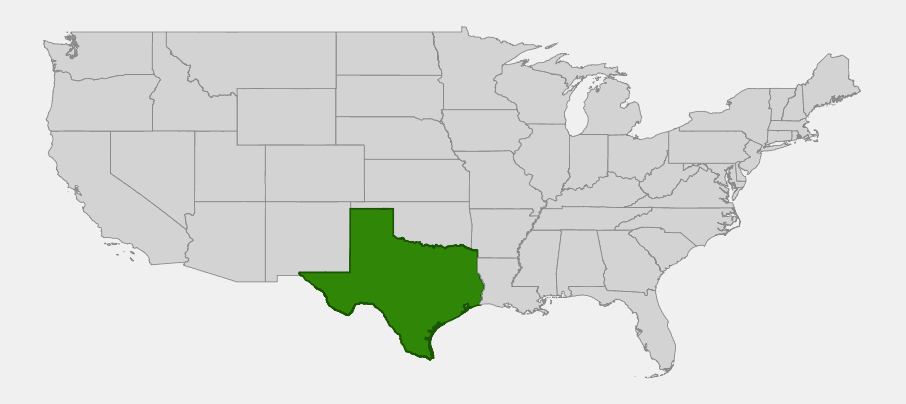
Heartleaf hibiscus is native to deep South Texas, essentially confined in the United States to the Rio Grande Plains and Rio Grande Valley, with its range continuing south into northeastern Mexico.
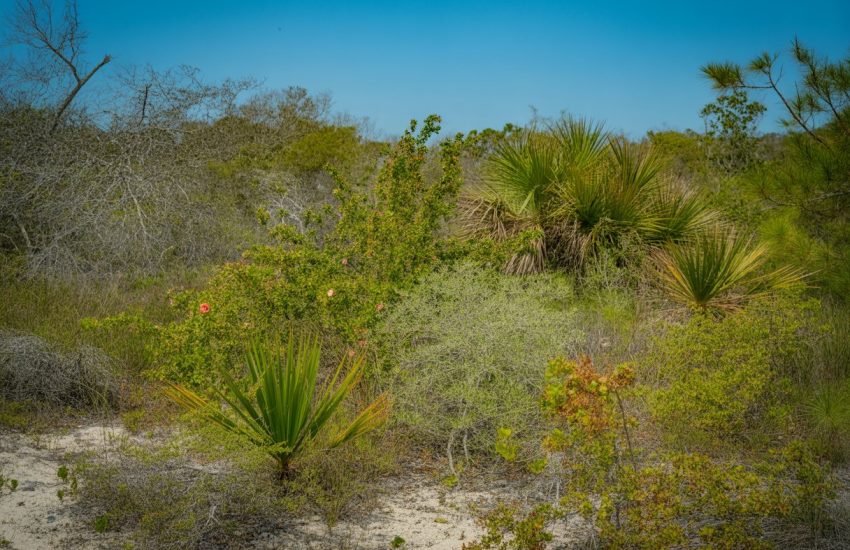
In the wild it grows in harsh, exposed habitats: canyons, talus slopes, gravelly hillsides, thorn-scrub (chaparral) and dry brushland, usually on thin, rocky or caliche soils with excellent drainage. These are tough sites with intense summer heat and unreliable rainfall, which is exactly the kind of punishment this plant is built to shrug off.
Because its native range in the U.S. is so narrow, heartleaf hibiscus is best known to South Texas gardeners and is still relatively uncommon in cultivation outside the Rio Grande Valley, even though it performs well as far north as Central Texas when given a warm microclimate and winter protection.
📋 Regional plant lists featuring Heartleaf Hibiscus: South & West Texas
Growing & Care Guide
Heartleaf hibiscus rewards a hands-off approach. Give it heat, sun and sharp drainage, and it blooms for months with very little fuss.
Light
Full sun gives the heaviest, most continuous bloom, though plants tolerate light afternoon shade in the hottest part of its range. Too much shade reduces flowering substantially.
Soil & Water
Good drainage is the single most important factor. Gravelly, caliche or well-drained clay, loam or sandy soils all work; what the plant cannot tolerate is soil that stays wet, which quickly leads to root rot. Water occasionally during the first growing season to establish a deep root system, then water sparingly — this is genuinely a low-water plant, and more gardeners kill it with kindness (overwatering) than with neglect.
Planting Tips
Plant in spring after the last frost, in a spot with excellent drainage; raised beds or slopes are ideal on heavier soils. Heartleaf hibiscus also does very well in containers, which allows gardeners outside its narrow native range to control winter moisture and move plants to shelter during hard freezes. It is not reliably cold hardy below about 20°F, so a heavy winter mulch over the root zone is worthwhile in zone 8b gardens at the cooler edge of its range.
Pruning & Maintenance
Trim off spent flowers and lightly shape the plant through the growing season to encourage continued blooming, even in the hottest weather. After a freeze knocks back top growth, wait until new growth resumes in spring before cutting back dead wood, since the woody base often resprouts even when stems look lost.
Propagation
Propagate from seed sown in warm soil in spring, or from softwood cuttings taken in late spring or summer, which root readily in a well-drained mix under humid conditions.
Landscape Uses
- Xeriscapes and rock gardens in South and Central Texas, where its drought tolerance shines
- Hummingbird and butterfly gardens, thanks to its long, reliable bloom season
- Container plantings on patios, which also makes winter protection easier outside its core range
- Mixed thornscrub or brush-country native beds alongside cenizo and other South Texas natives
- Small accent shrub at the front of a sunny border
Wildlife & Ecological Value
In the brushlands of South Texas, heartleaf hibiscus provides reliable nectar through the hottest months of the year, when many other flowering plants have slowed down.
For Pollinators
The large, open flowers attract a range of butterflies and native bees, with the exposed central column of stamens making pollen easy to access. The long individual bloom season, from late spring through fall, keeps it productive for pollinators across most of the growing year.
For Birds
Hummingbirds are frequent visitors to the red, nectar-rich flowers, drawn by both the color and the flower’s generous nectar reward, typical of many red-flowered hibiscus relatives.
For Mammals
Heartleaf hibiscus is not a primary browse plant for deer, and light grazing is generally tolerated without serious damage to an established shrub.
Ecosystem Role
As a component of Tamaulipan thornscrub and South Texas brush country, heartleaf hibiscus adds floral diversity and pollinator and hummingbird resources to an ecosystem adapted to heat and drought, helping support the pollinator communities that also service the region’s other native shrubs and wildflowers.
Cultural & Historical Uses
Heartleaf hibiscus is known locally in parts of its Mexican range by the Spanish name tulipán del monte (“wild tulip”), reflecting its showy, tulip-like flower form rather than any botanical relationship to true tulips. Beyond this common regional name, it has no significant recorded history of traditional food or medicinal use.
Its primary cultural role today is horticultural: as South Texas and broader Texas native-plant gardening has grown, heartleaf hibiscus has become appreciated as one of the showier low-water native shrubs available for the region’s increasingly drought-conscious landscapes.
Frequently Asked Questions
Why is my heartleaf hibiscus not blooming?
The most common cause is too much shade or too much water. This plant needs full sun and sharp drainage to bloom well; soggy soil or heavy shade both suppress flowering and can eventually kill the plant through root rot.
Is heartleaf hibiscus cold hardy?
Not very. Top growth is damaged below about 20°F, though the woody base often survives and resprouts in spring in zone 8b–9 gardens with reasonable winter protection. In colder areas, grow it in a container and bring it under cover for winter.
How long do individual flowers last?
Like many hibiscus relatives, each flower typically opens for just one day. The plant compensates with a long, steady succession of new blooms from late spring through fall, so a healthy plant is rarely without flowers for long.
Can I grow heartleaf hibiscus outside South Texas?
Yes, as far north as Central Texas, if given full sun, sharp drainage and winter protection; many gardeners also grow it successfully in containers that can be moved to shelter during hard freezes.
Does heartleaf hibiscus need fertilizer?
No, or very little. This is a lean-soil native adapted to nutrient-poor, rocky ground; heavy fertilizing tends to produce soft, lanky growth and fewer flowers rather than a healthier plant.

Looking for a nursery that carries Heartleaf Hibiscus?
Browse our native plant nursery directory: Texas