Leather Oak (Quercus durata)
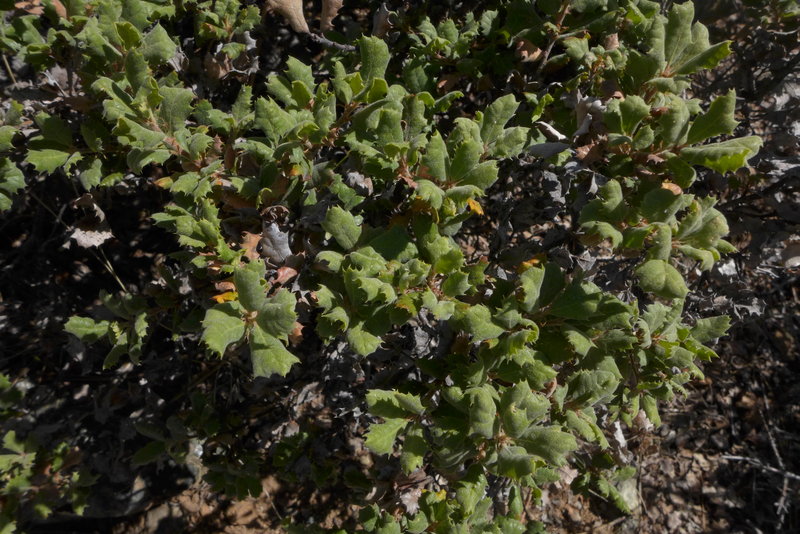
Quercus durata, commonly known as leather oak, is a low, rounded evergreen shrub closely tied to California’s unusual serpentine soils. Its thick, stiff, cupped leaves, which give the plant its common name, help it survive on the mineral-poor, well-drained ground that few other plants tolerate well. Though rarely more than a few feet tall, leather oak is an important, distinctive part of California’s serpentine chaparral.
Leather oak is largely restricted to the Coast Ranges and northern Sierra Nevada foothills of California, where it grows almost exclusively on serpentine-derived soils, an association so strong that the plant is considered a reliable indicator of this unusual geology. These soils, low in calcium and high in magnesium and heavy metals, exclude many common plants, giving leather oak and its serpentine-chaparral neighbors a landscape largely to themselves.
For California native-plant gardeners with rocky, lean, well-drained sites, leather oak is a tough, low-water shrub that asks for very little and offers year-round structure, soft gray-green texture and genuine regional authenticity, especially in gardens built around serpentine or other poor, rocky soils.
Identification
Leather oak is a dense, rounded, multi-stemmed evergreen shrub, typically 2 to 6 feet tall and often as wide, occasionally taller in favorable sites. It branches freely from the base, forming a compact mound rather than a single trunk.
Bark & Form
Stems are numerous, slender and gray-brown, densely packed to form a tight, rounded shrub. Unlike taller chaparral oaks, leather oak rarely develops a tree-like form even in old age.
Leaves
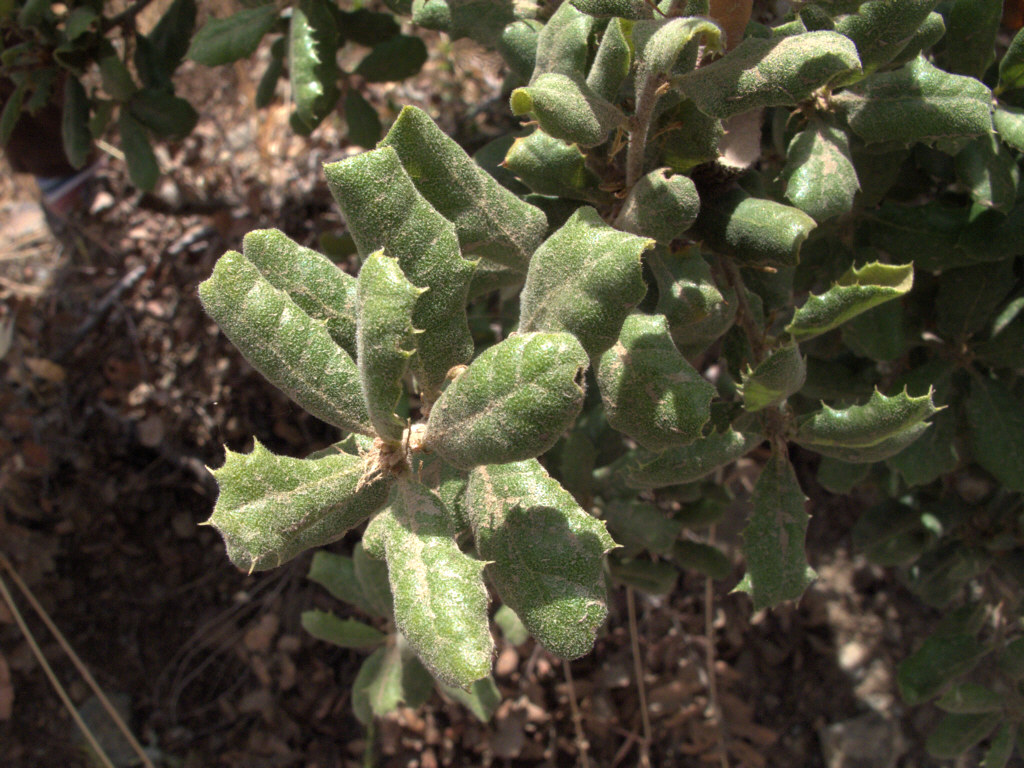
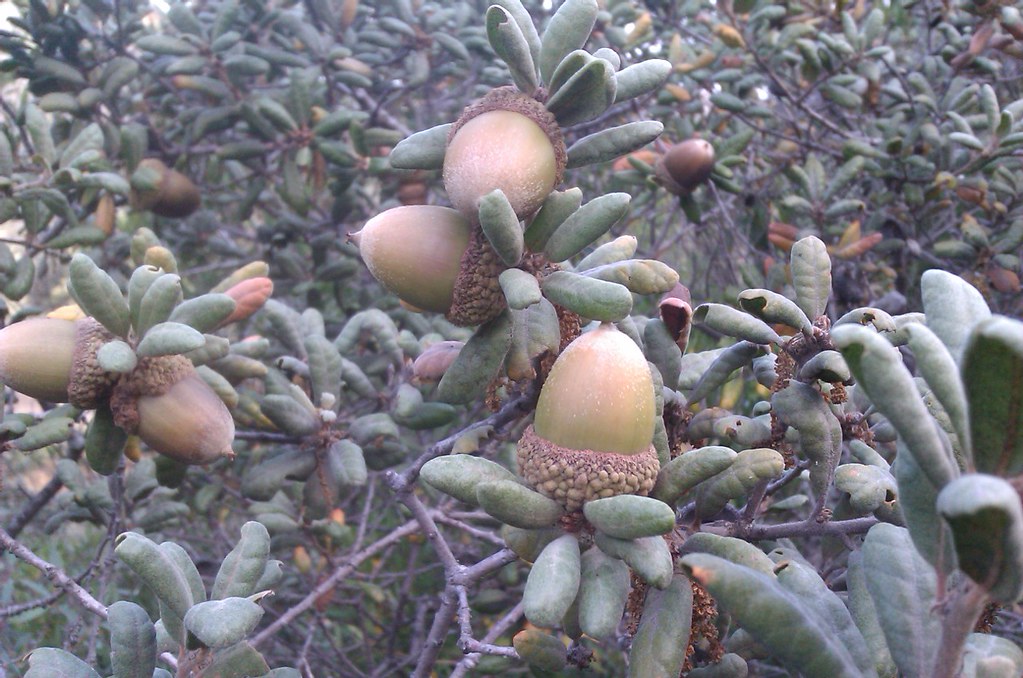
Leaves are small, 0.5 to 1.5 inches long, oval, thick and notably cupped or concave, with edges that curl slightly under, giving the foliage a stiff, leathery texture that is the species’ most distinctive trait. Leaf margins carry small spine-tipped teeth, and the surface is dull gray-green to olive, sometimes with fine hairs when young.
Flowers & Acorns
Like other oaks, leather oak produces small, inconspicuous male catkins in spring. Acorns are oval, roughly 0.5 to 1 inch long, maturing in a single season with a shallow, warty-scaled cup, and they are often produced abundantly in good years, an important food source given the plant’s wide distribution across serpentine chaparral.
Quick Facts
| Scientific Name | Quercus durata |
| Family | Fagaceae (Beech/Oak) |
| Plant Type | Evergreen shrub |
| Mature Height | 2–6 ft |
| Mature Spread | 3–8 ft |
| Growth Rate | Slow |
| Sun Exposure | Full Sun |
| Water Needs | Low; excellent drought tolerance once established |
| Soil Type | Rocky, serpentine or other lean, well-drained soils |
| Soil pH | Neutral to slightly alkaline; tolerates serpentine chemistry |
| Bloom Time | Spring (inconspicuous catkins) |
| Flower Color | Yellow-green catkins |
| Fall Color | None (evergreen) |
| Fruit | Small oval acorns, 0.5–1 in, maturing in one season |
| Deer Resistant | Yes |
| USDA Hardiness Zones | 8–10 |
Native Range
Leather oak is native to California, occurring mainly in the Coast Ranges from the Klamath region in the north down through the central and southern Coast Ranges, with additional populations in the northern Sierra Nevada foothills. It is largely absent from the Central Valley and from most of Southern California outside scattered serpentine outcrops.
The species is strongly, though not exclusively, associated with serpentine-derived soils: rocky, thin, mineral-imbalanced ground that supports a specialized plant community found almost nowhere else. Typical habitat is open chaparral and woodland edges on these soils, generally below about 5,000 feet, where leather oak often grows alongside California scrub oak, common manzanita and other chaparral shrubs adapted to lean soils.
Because serpentine soils are naturally patchy and often undeveloped due to their poor agricultural value, many leather oak populations remain intact, though some Coast Range stands face pressure from development and mining on or near serpentine outcrops. The species is not federally listed, but California conservation programs track serpentine-endemic plant communities closely given their rarity and ecological specialization.
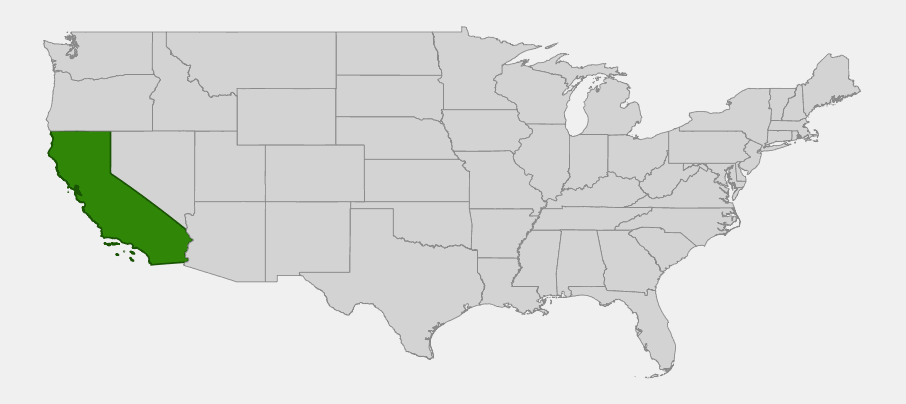
📋 Regional plant lists featuring Leather Oak: California & Nevada
Growing & Care Guide
Leather oak is an excellent choice for California gardeners with rocky, lean or serpentine-influenced soil who want a tough, low-water native shrub with genuine regional character. It is slow-growing but extremely low-maintenance once established.
Light
Plant in full sun. Leather oak grows naturally in open chaparral with strong exposure and performs best with abundant direct light.
Soil & Water
Give it rocky, well-drained soil; leather oak is naturally adapted to the mineral-poor chemistry of serpentine ground and also does well in ordinary lean, rocky garden soils, though it does not require serpentine specifically to thrive. Avoid rich, heavily amended soil and summer irrigation, which can promote root disease. Water occasionally during the first one to two years to establish, then let the plant rely on natural rainfall.
Planting Tips
Choose a site with sharp drainage and full sun, ideally on a slope or raised area where water does not collect. Plant young container stock in fall so roots establish during the cooler, wetter months. Avoid overly fertile garden beds, which run counter to the plant’s natural preference for poor, rocky ground.
Pruning & Maintenance
Very little pruning is needed; the plant naturally forms a tidy, rounded mound. Remove only dead or damaged wood. Leather oak has few pest or disease problems in appropriately dry, well-drained sites and needs no regular fertilizing, which can actually work against its natural low-nutrient adaptation.
Propagation
Leather oak is propagated from acorns, collected fresh in fall and sown promptly, since oak acorns do not store well. Use well-drained potting mix that mimics the plant’s rocky native soils, and protect young seedlings from rodents, which readily eat the acorns.
Landscape Uses
- Serpentine and rock garden plantings, where it reflects true regional plant communities
- Low-water chaparral gardens alongside California scrub oak and Eastwood manzanita
- Erosion control on dry, rocky slopes
- Wildlife hedgerows, providing cover and acorns in chaparral habitat gardens
- Fire-wise landscaping when properly spaced and maintained as part of defensible-space plant choices
Wildlife & Ecological Value
As a dominant shrub across much of California’s serpentine chaparral, leather oak supports a distinctive community of wildlife adapted to this unusual habitat.
For Pollinators
As a wind-pollinated oak, leather oak does not attract pollinating insects directly, but its dense branching provides shelter for insects that feed birds and other wildlife in the open, sun-exposed chaparral.
For Birds
The dense, low thickets offer valuable nesting and foraging cover for chaparral birds such as wrentits, California towhees and scrub-jays, the last of which also feed on and cache the acorns, aiding the species’ dispersal.
For Mammals
Acorns provide seasonal food for rodents and other small mammals, while the dense shrub cover shelters rabbits and other wildlife in open chaparral terrain. Mule deer may browse the foliage to a limited degree.
Ecosystem Role
Leather oak is a defining species of California’s serpentine chaparral, a rare plant community shaped by unusual soil chemistry that excludes many common species and supports a disproportionate share of the state’s endemic flora. By stabilizing rocky slopes and providing structure in this specialized habitat, leather oak plays an outsized ecological role relative to its modest size.
Cultural & Historical Uses
Leather oak has a less prominent documented history of use than larger California oaks, likely because its small stature and often remote, rocky serpentine habitat made it less practical to harvest for wood or large quantities of acorns compared with valley and live oaks. Where accessible, its acorns would have been gathered by Indigenous peoples along with those of other regional oaks.
Botanists and ecologists have long been drawn to leather oak as a classic example of a serpentine indicator species, and California’s serpentine plant communities, with leather oak as one of their signature members, remain an important subject of study in plant adaptation and soil ecology.
In recent decades, interest in California native-plant gardening has brought leather oak modest attention from gardeners working with rocky or serpentine-influenced sites, where it offers an authentic, low-maintenance alternative to non-native shrubs.
Frequently Asked Questions
Why is it called leather oak?
Its thick, stiff, cupped leaves have a tough, leathery texture unlike the thinner leaves of many other oaks, which gives the species its common name.
Does leather oak require serpentine soil to grow?
No. While it is strongly associated with serpentine soils in the wild and is considered an indicator species for this geology, leather oak also grows well in ordinary rocky, well-drained garden soils without serpentine chemistry.
How tall does leather oak get?
It typically stays a compact shrub 2 to 6 feet tall and similarly wide, forming a dense, rounded mound rather than a tree.
Is leather oak drought tolerant?
Yes, very much so. It is adapted to California’s dry chaparral and needs little to no supplemental water once established, making it a good choice for low-water gardens.
What is serpentine soil, and why does it matter for leather oak?
Serpentine soil forms from a distinctive rock type low in calcium and high in magnesium and heavy metals, which excludes many common plants. Leather oak is one of a specialized group of California plants adapted to tolerate these harsh conditions, making it an indicator of this unusual geology.

Looking for a nursery that carries Leather Oak?
Browse our native plant nursery directory: California